Right side heart failure. Credit: Scientific Animations CC4.0
A simple neck scan can identify men with double the risk of heart failure, according to a new study led by UCL researchers and funded by the British Heart Foundation and the National Institute for Health and Care Research.
A carotid ultrasound, like the ultrasound for pregnant women, is quick and painless, using a small handheld device moved gently over the neck to scan the arteries underneath.
When around 1600 men over the age of 70 received the scan, it showed the ‘flexibility’ of their carotid arteries – how much they stretch and expand with each heartbeat.
Researchers found that the quarter of men with the least flexible carotid arteries were 2.5 times more likely to develop heart failure than those with the most flexible carotid arteries.
These people could be encouraged by doctors to eat more healthily, do more exercise and take medications, if needed, to help reduce their risk of developing heart failure.
GPs do not currently routinely carry out the cheap and easy scan on healthy patients without symptoms. But, where GP surgeries have the capacity, offering a neck scan to older people to measure the flexibility of their arteries could help them better understand their risk of future heart failure, according to the researchers.
Having relied upon data from the British Regional Heart Study, which began in the 1970s and only involved men, researchers highlight that these findings next need to be looked at in women.
Dr Atinuke Akinmolayan (UCL Primary Care & Population Health), who is now a GP, said: “The carotid ultrasound is a safe, cheap and painless investigation, and our findings suggest it may be able to provide an early warning sign for heart failure.
“More research is needed, especially to see if this works for women, but this is something GPs could look at offering to people over the age of 60, where possible and believed needed.
“A patient who gets an ultrasound result indicating they may be at higher risk of future heart failure could have an important conversation with their doctor about lifestyle changes they could make to lower that risk.”
Doctors tend to scan the two carotid arteries, which run up either side of the neck, when someone has had a stroke or is at risk of a stroke following a transient ischaemic attack, known as a ‘mini-stroke’. A scan can identify carotid artery disease – a build-up of fatty material which can cause a stroke by breaking off and travelling into the brain or by narrowing the arteries and stopping blood reaching the brain.
However, the carotid arteries may be a red flag for heart failure also. This is because, when the carotid arteries become less flexible, they do not expand properly to let blood through. This can raise blood pressure, which forces the heart muscle to work harder. Over time, this can lead to heart failure.
The study, published in the Journal of the American Heart Association, looked at 1631 British men, aged 71 to 92, who had a carotid artery ultrasound between 2010 and 2012 as part of the British Regional Heart Study.
A carotid ultrasound, sometimes called a Doppler scan, takes an average of 15 to 30 minutes for most people, although this can vary.
A small handheld sensor is moved back and forth over the neck, generating sound waves which bounce off the arteries. That provides an echo which changes in frequency when blood flow is reduced in the blood vessels because they are narrowed by built-up fatty material.
The narrowing identified by a carotid scan can then be used to calculate the arteries’ flexibility, after factoring in other measures, including blood pressure. Researchers were able to identify the quarter of men with the least flexible carotid arteries, and the quarter of men whose carotid arteries were most flexible.
They then compared the rates of heart failure in each group over an average of six years after their neck scans.
Even after considering other causes of heart failure, like age, weight, smoking and whether people had previously suffered a heart attack, the quarter of men with the least flexible carotid arteries had 2.5 times the risk of developing heart failure, compared to the quarter with the most flexible carotid arteries.
In a separate finding, looking at the thickness of people’s carotid arteries rather than their flexibility, the study found that men with thicker carotid arteries were more likely to have a heart attack or die from one.
For every ‘unit’ increase in the thickness of the carotid artery wall – with a unit equalling 0.16 millimetres – the risk of having a heart attack increased by about 29 per cent, even after considering other relevant factors like age and weight.
However the thickness of the carotid arteries was not found to be significantly linked to future heart failure in the study.
There are around 200 000 new cases of heart failure diagnosed every year in the UK.
It occurs when the heart is not pumping blood around the body as well as it should, most commonly when the heart muscle has been damaged – for example, after a heart attack.
Heart failure can cause extreme fatigue, shortness of breath and fainting.
Professor Bryan Williams, chief scientific and medical officer at the British Heart Foundation (BHF), who is also Chair of Medicine at UCL Institute of Cardiovascular Science, said: “The findings of this study are interesting and show that stiffening of arteries is associated with increased risk of heart failure, most likely due to the heart having to work harder against the resistance caused by these stiffer arteries.
“It is an important signal that whenever we detect such changes in the carotid arteries, we should also be thinking of the potential impact on the heart and an increased risk of heart failure – which we have treatment strategies to prevent.”
This is the first study using a combination of immunotherapies in humans. The results show promise for sustained control of the virus.
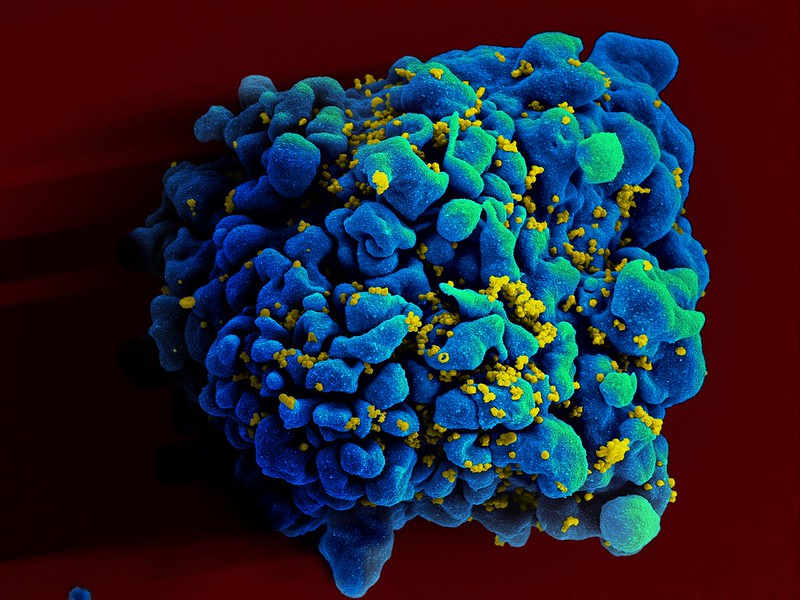
Colourised scanning electron micrograph of HIV (yellow) infecting a human T9 cell (blue). Credit: NIH
A new study from UC San Francisco shows it may be possible to control HIV without long-term antiviral treatment – an advance that points the way toward a possible cure for a disease that affects 40 million people around the world.
Treatment with a combination of experimental immunotherapy agents enabled 7 out of 10 participants to keep the virus at low levels for many months after going off antiretroviral therapy (ART).
The results appear on Dec. 1, World AIDS Day, in Nature.
The trial, which relied on a collaboration with nearly a dozen pharmaceutical companies and other partners in HIV research, offers a proof of concept that the approach could work. Although the study was small and did not include a control arm, investigators said the results are extremely encouraging.
“The majority had some evidence of control, which we believe is unprecedented,” said the paper’s co-senior author, Steven Deeks, MD, a professor of Medicine at UCSF who is in the Division of HIV, Infectious Diseases, and Global Medicine at Zuckerberg San Francisco General Hospital. “I do believe we are finally making real progress towards developing a therapy that may allow people to live a healthy life without the need of life-long medications.”
The trial was made possible by the Foundation for AIDS Research (amfAR)’s $20 million, five-year partnership with UCSF to advance AIDS cure research, launched in 2015. It was also supported by the National Institutes of Health (NIH).
Reprogramming the body’s immune system
Antiretroviral therapy (ART) was introduced in the 1990s and turned HIV infection from a death sentence into a chronic disease. But it is not a cure, and the virus stays in the body ready to reawaken as soon as someone stops taking ART.
The study was designed to test whether a triple combination of immunotherapies could reprogram the body’s immune system to control the virus after going off ART. Most of the participants had started ART soon after they acquired HIV, which helped preserve their immune response.
First, participants received a therapeutic vaccine to encourage their T cells to go after the latent HIV in their bodies. Then, they received an antibody cocktail to reduce the amount of HIV in the body. Finally, they were given another round of anti-HIV antibodies before being taken off ART.
Typically, when a person with HIV stops HIV medicines, the virus starts to rebound in about two weeks and then skyrockets. This time, only three of the 10 patients experienced the typical rapid rebound. Six maintained low levels of the virus for months, and one did not rebound at all.
The pouncing cat analogy
The investigators then examined the immune responses of those who controlled the virus to see how they did it.
“It turns out the controllers had T cells that were able to expand dramatically once they ran into the virus,” said Rachel Rutishauser, MD, PhD, an associate professor in UCSF’s Division of Experimental Medicine and co-senior author of the paper. “It’s like they were hanging out waiting for their target, kind of like a cat getting ready to pounce on a mouse.”
The treatment would need to be simplified and proved effective in much larger studies before it could replace standard HIV treatment.
“This is not the end game,” said Michael Peluso, MD, an assistant professor in UCSF’s Department of Medicine and the study’s first author. “But it proves we can push progress on a challenge we often frame as unsolvable.”
A study led by McMaster University researchers shows that a widely available and inexpensive medication not only prevents potentially serious stomach bleeding in critically ill patients, but also saves hospitals thousands of dollars.
Published in JAMA Network Open on Dec. 1, 2025, the study is the first to demonstrate the economic benefits of the medication, pantoprazole, when prescribed in hospital for mechanically ventilated patients in the intensive care unit (ICU). These patients on life support are at high risk of upper gastrointestinal bleeding, a complication caused by stress-induced ulcers in the stomach that can prolong hospital stays and increase costs.
“In an era of rising health-care costs, interventions that are both clinically effective and cost-saving are rare. Pantoprazole checks both boxes,” said Feng Xie, lead author of the study and a professor in the Department of Health Research Methods, Evidence and Impact at McMaster.
The findings build on the landmark Re-evaluating the Inhibition of Stress Erosions (REVISE) Trial led by McMaster, which established pantoprazole’s clinical effectiveness in preventing bleeding. The trial was run in 68 centres in eight countries and over 4800 patients were enrolled.
Until now, the economic impact of prescribing pantoprazole each day for patients on breathing machines had been unclear. The researchers conducted a cost-effectiveness analysis using international data from the REVISE trial, comparing outcomes and resource use between patients who received pantoprazole daily and those who did not. The results have significant implications for critical care practitioners, pharmacy departments, and policymakers.
“Pantoprazole costs between 50 cents and two dollars per dose across the country, yet our analysis showed how prescribing it to invasively ventilated patients can save healthcare resources by reducing bleeding events and reducing length of stay in the intensive care unit and hospital,” said senior author Deborah Cook, a professor in the Department of Medicine at McMaster.
“In the expensive, high-technology ICU setting, this is a simple, low-cost intervention that improves outcomes and reduces health-care costs,” adds Cook, a critical care physician practising at St. Joseph’s Healthcare Hamilton.
By Lushan Sundram, Senior Sales & Business Development Manager at Essential Employee Benefits
Despite making significant investments in employee benefits, many organisations continue to struggle with low employee engagement, growing healthcare expenses, and diminishing productivity. A lack of insight, not a lack of investment, seems to be the problem.
Even the most extensive medical coverage may fall short if the true health needs of the workforce are not thoroughly understood. Employers must first understand the individuals they are attempting to assist in order to make health benefits genuinely meaningful.
The business case for healthier workforces
It is now indisputable that employee well-being and company performance are related. Investing in the physical, mental, and social well-being of employees yields quantifiable benefits, according to numerous studies. According to research, a single unit improvement in staff health can result in an 80% boost in productivity, and well-run wellness programmes can yield a Return on Investment (ROI) of up to 6:1. Healthy workers are more engaged, more productive, and less likely to quit, demonstrating that promoting health, benefits businesses as well as individuals.
Moving from guesswork to insight
Understanding that health encompasses more than just physical well-being is the first step in creating pertinent and efficient medical coverage. Four important aspects are taken into account in a holistic approach: social, financial, mental and emotional, and physical welfare. The difficulty, though, is in understanding worker health without violating personal privacy. Data-driven platforms that provide aggregated insights while maintaining privacy hold the key to the solution. Digital nurse checks, for example, can evaluate vital signs including Body Mass Index (BMI) , blood pressure, body composition and more. Analysis of this anonymised data can then reveal patterns across age groups, genders, and departments. Employers can use these data to identify areas where their employees most need help, such as managing stress, preventing chronic diseases, or improving nutrition, all while maintaining complete compliance with privacy laws. Essentially, it gives leaders the insight they need to allocate resources strategically.
From one-size-fits-all to tailored support
Once health insights are gathered, employers can move beyond generic benefit structures. Tailored medical cover ensures that plans address the most pressing needs of specific employee groups. For example, one division might prioritise diabetes prevention, while another invests in weight management or mental health programmes.
Barriers to access are also addressed by meaningful medical cover. Employees may be deterred from obtaining private medical care by expensive premiums or difficult claims procedures. Instead, offering basic yet comprehensive cover promotes prompt treatment and keeps small problems from becoming more serious and expensive. Rather than concentrating only on reactive treatment, integrating preventative care contributes to the development of a sustainable culture of wellbeing.
Building loyalty through wellbeing
A targeted, data-driven benefits strategy does more than optimise healthcare spending, it strengthens trust and retention. Employee loyalty and engagement increase when they see that their employer truly cares about their well-being. Businesses with wellness programmes that are very successful report voluntary attrition rates of only 9%, whereas those with programmes that are less successful report rates of 15%.
This exemplifies the principles of Social Exchange Theory: when employees perceive that the organisation values them and supports their health, they reciprocate with loyalty and effort. In this way, wellbeing becomes a performance strategy, not merely a perk.
Partnering for precision and impact
To move from assumption to precision, many organisations are partnering with experts who use innovative, privacy-preserving tools to provide data-backed insights into workforce health. These insights enable executives to create inclusive and appropriate benefits that yield quantifiable increases in retention and productivity.
The capacity to act on data-driven health insights is a strategic imperative in a setting where healthcare expenditures and talent competitiveness are both on the rise. The healthiest, most resilient, and most dedicated workforces of tomorrow will be created by employers who make the investment to understand their employees today.
Mycobacterium tuberculosis drug susceptibility test. Photo by CDC on Unsplash
By Elri Voigt
From studies of new medicines and a mask used to diagnose TB, there was no shortage of interesting findings presented at the recent Union World Conference on Lung Health, held in Copenhagen, Denmark. Spotlight rounds up six studies that stood out.
1. People do better if we dispense all TB prevention pills at once
One of the most important questions in TB is how to best prevent people from getting ill if they’ve been exposed to the bug. While effective treatments to prevent TB disease in people who have been exposed exist, uptake has generally been poor.
Now, researchers have found that, dispensing all the pills in a three-month course of TB preventive Therapy (TPT) at once, instead of asking people to collect pills at the clinic every few weeks, led to many more people completing the treatment course.
The study, called ThiPhiSA, was conducted in four clinics and communities in KwaZulu-Natal. 268 households who qualified to receive TPT were enrolled in the trial. 301 participants from these households were randomised to one of two arms, explained Dr Adrienne Shapiro, Assistant Professor of Global Health and Infectious Diseases at the University of Washington.
In the first arm, 159 people were given a two-week supply of the standard of care 3HP (consisting of the drugs isoniazid and rifapentine, taken once a week for 3 months). They then had to go to clinic to receive their refills as per the clinic schedule. They received weekly sms reminders to take their pills and were visited by researchers at month one and two and at the end of the study.
In the second arm, 142 people were given all the pills for the full three-month course of 3HP at once. While no clinic visits were required, they were remotely registered at their clinics just in case they had to visit the clinic. This group also got weekly sms reminders to take their pills and were visited at month one and two and at the end of the study.
Whether people had taken their pills was assessed through self-reporting, as well as a calendar dosing diary, pill count and assessment of urine colour change if the visit was on a day when the participant had recently taken a dose of 3HP.
For those who had to go to the clinic at regular intervals to collect their pills, only 28% completed their treatment course. By contrast, 86% of those who had the full course dispensed at once completed their treatment.
Much of the difference was due to the fact that some people in the prior group simply did not go to the clinic every time to collect pills. There was also a drug stockout at one of the clinics – which somewhat skewed the results in favour of the latter group, but not enough so to change the fact that people were more likely to complete treatment if they got all the pills at once.
Dispensing a full course of TPT at once was safe, according to Shapiro, with no serious adverse events seen in the study.
“Multi-month delivery of TPT is safe, and person-friendly approaches improving the convenience of TPT should be adopted to decompress health facilities and improve TPT coverage to meet TB prevention goals,” she concluded.
2. A new medicine might help shorten TB treatment
Much TB research in recent years have focussed on reducing the duration of TB treatment – it typically takes six months. In addition, researchers have also been looking for medicines that have fewer side effects. Growing resistance to some existing TB drugs is also a concern.
One of the big talking points at this year’s conference was data on an experimental new drug called sorfequiline. It is thought that sorfequiline could be a replacement for bedaquiline, arguably the most important TB drug developed in recent decades. This is because sorfequiline appears to be more potent than bedaquiline and because of worries over TB strains that are resistant to bedaquiline.
The new data is from a phase 2 trial of sorfequiline used in combination with two other TB drugs – pretomanid and linezolid – to treat drug susceptible TB. The regimen is called SpaL for short. 309 participants with newly diagnosed TB were either given the standard of care first-line drugs isoniazid, rifampicin, pyrazinamide, and ethambutol (HRZE) for 26 weeks, the BPaL regimen consisting of the drugs bedaquiline, pretomanid and linezolid for 26 weeks (not all drugs in these first two arms are taken for the entire period), or one of three different doses – 25mg, 50mg or 100mg – of sorfequiline along with linezolid and pretomanid for 8 weeks.
Once those in the sorfequiline arms completed the initial 8-week course, they had to take the drugs isoniazid and rifampicin (HR) for another 7 weeks and were then tested for TB again. Meaning at this point they had gotten treatment for 15 weeks (or around 3 and a half months). If they tested negative and had no TB symptoms, they could stop treatment. But if they tested positive for TB and had symptoms then they’d have to continue taking isoniazid and rifampicin.
Among the participants who got sorfequiline, 64% in the 100mg arm were able to stop treatment after 15 weeks, compared to 46% in the 50mg arm, and 28% in the 25mg arm.
Study participants gave regular sputum samples that were tested for the presence of TB bacteria. The researchers then estimated the probability of a “stable sputum culture conversion at week 8”. In simple terms, this means the researchers wanted to find out what the probability is that all the TB bacteria had been killed by the different regimens after 8 weeks of treatment.
For the 25mg arm, there was 31% stable culture conversion, in the 50mg arm 48%, and in the 100mg arm 59%. For both HRZE and BPaL it was 45%. In other words, 100mg of sorfequiline plus pretomanid and linezolid showed better stable sputum culture conversion after eight weeks than HRZE, the regimen currently used to treat drug-susceptible TB in South Africa and most other countries.
“[W]e believe that SPaL is a promising four-month regimen,” said Dr Morounfolu Olugbosi, the medical lead for the study, which is being conducted by the non-profit TB Alliance.
The regimen was well tolerated at all dose levels, according to Olugbosi, with no difference in safety signals in the sorfequiline arm compared to the other treatment arms. “So that lack of observable difference is what we consider positive news,” he said.
While this trial looked at people with drug susceptible TB, the research team will be investigating how well it works for drug resistant TB in an upcoming phase 3 study, said Dr Maria Beumont, the Chief Medical Officer at TB Alliance, during a press conference.
Indeed, while these phase 2 results are promising, the real test for this drug will be in the larger phase 3 study to come.
3. Co-morbidities are really important when people have TB
A prospective cohort study in South Africa looked at the burden of co-morbidities and the impact it has on TB mortality. The researchers followed around 2 000 adults with pulmonary TB, diagnosed with Gene Xpert (a molecular TB test), and looked at mortality rates for 1 896 of those people after 15 months. Of those, 272 people (14.3%) had passed away during the study duration.
According to the study presenter, Dr Greta Wood, a Clinical Research Fellow in Infectious Diseases at the University of Liverpool, the prevalence of TB multimorbidity among the whole study group was 86%. Meaning most had TB as well as another illness or risk factor.
The researchers looked at five key co-morbidities identified by the World Health Organization (WHO) – HIV, smoking, undernutrition, diabetes and alcohol use. “These five key comorbidities alone explained over half of the mortality that we saw in this cohort,” Wood said.
The researchers found that the more co-morbidities a person had, the higher their risk of dying was when they got ill with TB. The risk of dying for someone with TB was 19% if they had three or more co-morbidities compared to 16% if they had two, and 11% if they had no co-morbidities.
The key conditions driving mortality in this group of people with TB is HIV and undernutrition. Undernutrition in particular was flagged in the study, as in this setting it was responsible for around one in five TB deaths in people under the age of 40, according to Wood.
“[I]n this cohort, we didn’t find an association between diabetes, smoking, alcohol and mortality, but that has been demonstrated in other settings,” she added.
This data should lead to urgent action, concluded Wood, saying that “to reduce the risk of death, we need to urgently start operationalising screening for these key five TB comorbidities and linking people into treatment”.
4. Point-of-care testing leads to people starting treatment faster
As shown in several studies at this year’s conference, the details of how TB services are delivered can make a significant difference to TB outcomes.
One such study, led by researchers from the University of Cape Town (UCT), explored whether it made a difference if someone had a TB test done at a mobile van, or had their sputum sample collected and sent off to a lab. In other words, the study was indirectly testing whether it makes a difference if someone gets a test result right after testing, versus having to wait a day or two to be contacted with a result.
The study, of over 7 000 people, was conducted in South Africa, Zambia, Zimbabwe, and Mozambique. Around half of those screened in the study were at high risk for TB and randomised to either receive point of care testing on a GeneXpert machine in a mobile van or centralised GeneXpert testing at a laboratory.
In the point of care arm, results were available for 1 641 people, and of those 55 (3.3%) had microbiologically confirmed TB. While 67 (4.1%) of the 1 632 tested in the centralised testing arm had microbiologically confirmed TB. Overall, across both arms, 93 of the people diagnosed with TB (76%) were successfully linked to care.
“When compared to those who had their Xpert performed at a central laboratory, those who had their Xpert done at point of care had a 43% lower probability of treatment initiation failure and initiated treatment twice as fast,” said Tahlia Perumal, a researcher at UCT, who presented the results. Participants in the point of care arm on average started treatment four days sooner than those whose TB tests were done in a centralised laboratory.
“[T]here is an argument to be made about the clinical significance of a four-day reduction. We are in the process of doing transmission modelling to be able to provide more granular details about the difference this may make in active case finding models in larger population sizes,” she said.
5. Promising signs for a portable TB test
In the above study, point-of-care testing was done in a relatively large machine in a mobile van. We may however be able to go much smaller.
Tessa Mochizuki, a Research Scientist at University of California in San Francisco, presented results from a multi-country study evaluating how accurate a portable, battery-operated testing device, called MiniDock MTB, was at diagnosing TB from sputum swabs and tongue swabs.
“The test is run on a small device about the size of my hand, and results are available in under 30 minutes, often even faster for positive results,” Mochizuki said.
1 380 people, aged 12 years and older with presumptive TB were enrolled across seven countries – South Africa, India, Nigeria, the Philippines, Uganda, Vietnam, and Zambia. Sputum samples from all participants were tested using two MIDGIT cultures (a test in which the bug will grow if present), smear microscopy (where the bug is looked for under a microscope), and GeneXpert Ultra (a molecular test).
Results from these tests were then compared with results from the MiniDock MTB machine.
For the tongue swab test, a healthcare worker runs a swab over the participants tongue for 30 seconds, then it is put into a buffer liquid, mounted on a testcard which is run through the portable machine. For the sputum swab, a swab is dipped into a test tube that contains sputum for about 15 seconds, put into a buffer liquid and mounted onto a testcard and run through the portable machine.
When comparing sputum swabs results to the Xpert Ultra results there was not a statistically significant difference, according to Mochizuki, as sputum swabs showed 87% sensitivity compared to GeneXpert Ultra’s 89%. Sensitivity is a measure of how likely the test is to detect a bug if the bug is present in the sample.
Tongue swabs performed a bit worse with 81% sensitivity. This was however much better than the 62% with microscopy. Microscopy is rarely used for TB diagnosis in South Africa, but this finding could be important in other countries where health systems haven’t switched as fully over to molecular testing as we’ve done here.
All sample types and tests achieved 98% specificity. Specificity is an indication of how likely a test is to give a negative result if the bug being tested for is not present in the sample.
These findings meet the WHO target product profile requirements – a minimum of 85% sensitivity and 98% specificity for sputum tests and a minimum of 75% sensitivity and 98% specificity for non-sputum tests.
“We submitted this data to the WHO guideline development group that convened last week, and we look forward to news on any official recommendations in the coming year,” Mochizuki said. “These results show that we can achieve high accuracy with a low-complexity platform, bringing molecular testing closer to people seeking care without sacrificing performance.”
6. A mask that can help diagnose TB
An even more interesting idea that some researchers have been working on is to use a diagnostic mask to diagnose TB.
At this year’s conference, Dr Rouxjeane Venter, a researcher based at the Clinical Mycobacteriology and Epidemiology (CLIME) research group at Stellenbosch University, presented a proof-of-concept study testing whether a mask, called the Avelo Mask, can be used to diagnose whether TB bacteria is present in the air a person breathes out.
58 adults, across four clinics in Cape Town, who had TB symptoms and tested positive for TB on a molecular test were given the mask to wear for 45 minutes. The filter in the mask is able to trap tiny particles from .3 micrometers and above – meaning it can trap viruses and bacteria. This filter is then pushed into a buffer tube using a sample stick – where it can be stored or tested directly. The mask as well as the stick and buffer tube are part of the Avelo mask kit developed by Avelo Diagnostics. For this study, the researchers used a qPCR test – a rapid test that looks for TB DNA – to detect TB bacteria.
When the mask filters were tested, 34 people were found to be negative for TB bacteria and 24 were positive. When compared to their Xpert Ultra sputum results, it was found that there were two false positives.
Overall, according to Venter, the mask had a sensitivity of 71% when compared to GeneXpert Ultra and 65% when compared to the Microbiological Reference Standard and a specificity of about 92%.
People with higher bacillary loads – meaning lots of bacteria – in their sputum were more likely to be positive, but there was still a large percentage of participants with low or very low bacillary loads that were picked up by the mask.
These numbers aren’t nearly as good as those for the MiniDock MTB, but it is positive that masks like these are showing promise. A long-standing problem in TB diagnosis is that not everyone can produce sputum samples. The more alternatives we have, be it tongue swabs or masks, the better.
The South African Health Products Regulatory Authority (SAHPRA) has officially been accepted as a member of the International Council for Harmonisation of Technical Requirements for Pharmaceuticals for Human Use (ICH), following an ICH assessment of compliance with requirements for membership, including a formal presentation outlining SAHPRA’s interest, progress, and milestones in implementing ICH principles.
The ICH is a unique global body that brings together regulatory authorities and the pharmaceutical industry to align scientific and technical standards for the registration of medicines. Since its establishment in 1990, it has evolved to support an increasingly globalised pharmaceutical environment. Its mission is to promote worldwide harmonisation to ensure that safe, effective, and high-quality medicines are developed and registered efficiently. This harmonisation is achieved through the development of ICH Guidelines, which are formulated through scientific consensus between regulators and industry experts. Successful adoption relies heavily on regulators’ commitment to implement these final Guidelines within their national systems.
The ICH Assembly met in person on 18-19 November 2025 in Singapore, in parallel with meetings of 12 Working Groups and preceded by meetings of the ICH Management Committee (MC) and the MedDRA Steering Committee (SC).
“ICH is delighted to welcome NAFDAC, Nigeria, and SAHPRA, South Africa, as new ICH Members, in addition to two new Observers: DIGEMAPS, Dominican Republic, and Philippine FDA, Philippines, bringing ICH to a total of 25 Members and 41 Observers.”
Welcoming SAHPRA’s membership, CEO Dr Boitumelo Semete-Makokotlela said: “This is a significant milestone for the South African Health Products Regulatory Authority. Membership of the ICH strengthens our commitment to the three pillars of safety, quality, and efficacy, while ensuring that our processes remain resource-efficient. This development allows SAHPRA to benchmark its regulatory practices against global best practice for the benefit of all people living in South Africa.”
Two global trials show durable improvements in skin clearance, itch, and quality of life by targeting OX40 immune receptor
Source: Unsplash CC0
An international team of investigators led by Emma Guttman-Yassky, MD, PhD, Waldman Professor and System Chair of the Kimberly and Eric J. Waldman Department of Dermatology at the Icahn School of Medicine at Mount Sinai, has reported results from the first phase 3 clinical trials of rocatinlimab, a novel treatment for moderate-to-severe atopic dermatitis (eczema). The landmark findings from the ROCKET-IGNITE and ROCKET-HORIZON studies were published in The Lancet.
Eczema affects hundreds of millions of people worldwide and is notoriously difficult to treat due to its complex and chronic inflammatory pathways. Current biologics focus on blocking “allergy” cytokines but fail to address the memory T cells that sustain disease activity. Rocatinlimab is the first antibody to selectively block the OX40 receptor on effector and memory T cells, rebalancing the immune system and altering the long-term course of disease.
Across the two global, double-blind, placebo-controlled randomised phase 3 clinical trials, nearly 1,500 patients were followed for 24 weeks, and rocatinlimab showed robust and lasting benefits. Patients receiving the treatment were three times more likely to achieve significant improvement in eczema severity, as measured by EASI and vIGA-AD scores, compared to those on placebo. Improvements continued beyond week 24, suggesting that the benefits strengthen over time. The therapy also led to meaningful reductions in itch, pain, and sleep disturbances, enhancing overall quality of life. Importantly, rocatinlimab was well tolerated, with adverse events comparable to placebo, and demonstrated high selectivity by reducing only the OX40R+ CD4+ T cells responsible for eczema’s persistence, without off-target effects.
“These findings represent a major advance for patients living with eczema, who often face years of uncontrolled symptoms and few effective options,” said physician scientist, Dr. Guttman-Yassky, lead author of the study. “By targeting memory T cells through OX40, rocatinlimab not only clears the skin and relieves itch, but continues to improve patients’ lives over time with a strong safety profile. This is the first phase 3 proof that rebalancing these immune cells can transform how we treat atopic dermatitis.”
The results establish OX40 as a validated treatment target in eczema and position rocatinlimab as a potential first-in-class therapy. Patients from the phase 3 trials are now being followed in the ROCKET-ASCEND extension study, which will track outcomes for up to two years. Additional research will explore its role in paediatric patients, in combination with other therapies, and in direct comparisons to existing systemic treatments.
Breast cancer cells. Image by National Cancer Institute
Triple-negative breast cancer is one of the most aggressive cancers. The name tells the story: It lacks the three main targets that make other types of breast cancers more treatable with powerful therapies.
UCLA researchers have developed a novel therapy that could fundamentally change the treatment plan for this deadly disease. In a study published in the Journal of Hematology & Oncology, the team details how this new type of immunotherapy, called CAR-NKT cell therapy, could attack tumors from multiple fronts while dismantling their protective shields.
“Patients with triple-negative breast cancer have been waiting far too long for better treatment options,” said senior author Lili Yang, a professor of microbiology, immunology and molecular genetics and a member of the Eli and Edythe Broad Center of Regenerative Medicine and Stem Cell Research at UCLA. “To finally have a therapy that shows superior cancer-fighting ability – and to be just one step away from clinical testing – is incredibly exciting.”
The therapy uses engineered immune cells called CAR-NKT cells, which can be mass-produced from donated blood stem cells and stored ready-to-use. This off-the-shelf approach offers an immediately available treatment option at a fraction of the cost of current personalized cell therapies, which can soar into the hundreds of thousands of dollars.
A triple threat against a triple-negative cancer
CAR-T cell therapies have transformed treatment for certain blood cancers by turning patients’ own immune cells into precision weapons. However, these therapies have struggled against solid tumours like breast cancer, which employ sophisticated defence mechanisms and constantly evolve to evade treatment.
To tackle these hurdles, the UCLA team’s cell therapy harnesses a rare but powerful type of immune cell called invariant natural killer T cell, or NKT cell. When equipped with a chimeric antigen receptor, or CAR, targeting mesothelin (a protein found on triple-negative breast cancer cells) these potent tumour-fighting cells gain the ability to recognise and destroy cancer through three distinct mechanisms.
The first mechanism uses the engineered CAR to target mesothelin, which is associated with more aggressive, metastatic disease. The second leverages the cells’ natural killer receptors that recognize more than 20 molecular markers, making it nearly impossible for tumours to evade all of them. The third employs the cells’ unique T cell receptor to reshape the tumour microenvironment by eliminating immunosuppressive cells.
“We’re not just targeting one molecular marker on cancer cells — we’re identifying dozens of them simultaneously,” said first author Yanruide (Charlie) Li, a postdoctoral scholar in the UCLA Broad Stem Cell Research Center Training Program. “It’s like attacking a fortress from every direction at once. The cancer simply can’t adapt fast enough to escape.”
When the research team tested the novel therapy on tumour samples from patients with late-stage metastatic breast cancer, the CAR-NKT cells successfully killed cancer cells in every single sample tested, while also eliminating the immunosuppressive cells that tumours recruit as protective escorts.
Engineering universal accessibility
Beyond its multipronged cancer-fighting capabilities, the CAR-NKT platform addresses critical barriers that have limited cell therapy access: manufacturing complexity and cost.
Current cellular immunotherapies require collecting each patient’s immune cells, shipping them to specialised laboratories for genetic modification, then returning the customized product into the patient weeks later — a process that can cost six figures and create dangerous delays for patients with aggressive cancers.
Yang’s team takes a fundamentally different approach. Because NKT cells naturally work with any immune system, they can be mass-produced from donated blood stem cells using a scalable system. A single donation could generate enough cells for thousands of treatments, reducing costs to approximately $5,000 per dose.
One product to tackle multiple cancers
The therapy’s promise extends beyond triple-negative breast cancer. Since mesothelin is also highly expressed in ovarian, pancreatic and lung cancers, the same cell product could potentially treat multiple cancer types that remain difficult to address with current immunotherapies.
With all preclinical studies complete for both triple-negative breast cancer and ovarian cancer, the team is preparing to submit applications to the Food and Drug Administration to begin clinical trials.
“We’ve walked 99 steps to get here,” Yang said. “We’re missing just one final step to begin clinical testing and demonstrate what this promising therapy can really do for patients.”
A young man’s determination to help the thousands of South Africans who cannot afford a quality prosthetic spurred him into action. It led him to design a pneumatic-actuated prosthetic foot, winning him the title of 2025 EDHE Studentpreneur of the Year at the seventh annual EDHE Entrepreneurship Intervarsity.
Mr Zanodumo Godlimpi, a postgraduate student at Walter Sisulu University, won R120 000 in overall prize money and a further R25 000 for another win in the Academic Research Commercialisation category.
A fellow prosthetic designer and innovator – Ms Amohetsoe Shale from Stellenbosch University – was named Top Student Womanpreneur, winning R25 000. Her company, Navu, designs and produces cost-effective, high-performance assistive technologies, beginning with a passive polycentric prosthetic knee. Ms Shale emerged a runner-up in the Academic Research Commercialisation category.
Below is the breakdown of the 2025EDHE Entrepreneurship Intervarsity Award winners:
The EDHE Studentpreneur of the Year
· Zanodumo Godlimpi (Walter Sisulu University), founder of a pneumatic-actuated and affordable prosthetic foot. (R120 000).
Top Student Womanpreneur
· Ms Amohetsoe Shale (Stellenbosch University) founder of the NAVU Group, who design affordable, high-performing prosthetic knees for amputees. (R25 000).
Existing Business – Tech
· Winner: Ms Kholofelo Makhubupetsi (University of Mpumalanga), co-founder of CSK Environmental Consulting which guides businesses towards sustainable practices while leveraging government grants. It helps organisations reduce greenhouse gas emissions and conserve biodiversity (R25 000).
· Runners-up: Ms Khanyisa Mokgolobotho and Ms Rosemary Erawemen (Stellenbosch University), co-founders of Techmed Connect, a company revolutionising South African healthcare with technology through innovative AI solutions and helping bridge language gaps (R10 000).
Existing Business – Social Impact
· Winner: Ms Malehu Mohale (University of Cape Town), founder of the Early Bird Testimony Academy, an online tutoring and mentorship platform. (R25 000).
· Runner-up: Mr Kabelo Makhetha (Central University of Technology), founder of OWA Jewellers which creates jewellery that blends African design with safety technology, making it a potential life-saving tool for individuals with conditions like epilepsy or dementia. (R10 000).
· 2nd runner-up: Mr Katleho Mphutlane (University of Fort Hare), co-founder of Incremental Education which seeks to bridge the gap between education and employability and empowers students with practical skills and global opportunities, focusing on supporting TVET college and university of technology students in tourism, hospitality and agriculture. (R10 000)
Existing Business – General
· Winner: Mr Tumelo Ratala (University of South Africa), founder of Drink & Print which offers purified water and printing services (R25 000).
· Runner-up: Mr Thando Mzimela (University of Cape Town), co-founder of uniMark by TM Agrichem that connects university students with essential services through an online platform that streamlines access to local businesses (R10 000).
Academic Research Commercialisation
· Winner: Zanodumo Godlimpi (Walter Sisulu University), founder of a pneumatic-actuated and affordable prosthetic foot. (R25 000).
· Runner-up: Ms Amohetsoe Shale (Stellenbosch University) founder of the NAVU Group who designs affordable, high-performing prosthetic knees for amputees. (R10 000).
The Entrepreneurship Development in Higher Education (EDHE), a programme of the Department of Higher Education and Training (DHET) administered and implemented by Universities South Africa (USAf), is the custodian of the annual EDHE Entrepreneurship Intervarsity. EDHE is predominantly funded through the University Capacity Development Programme (UCDP) of the DHET.
The Intervarsity is a platform designed to identify, recognise and celebrate top student entrepreneurs at South Africa’s 26 public universities. The event has, over the years, enjoyed the support of numerous private sector entities, including the Allan Gray Foundation, the Entrepreneurs’ Organisation and the SAB Foundation, which, in 2025, supports the initiative for the sixth year in a row.
Mr Phillip Tshabalala, Chief Director: Teaching, Learning and Research Development in the Department of Higher Education and Training, delivered the keynote address during the award ceremony. Labelling the event both timely and significant, he said it represented an important step forward in collective efforts to advance entrepreneurial universities.
Referencing the recent G20 Summit and its commitment to boost inclusive growth — with a strong focus on Africa and the broader Global South – he said: “Universities play a vital role in preparing students, not only to participate in the labour market as employees, but also to serve as future employers, industrialists, innovators and leaders. DHET works closely with universities, USAf and other key partners to transform the academic landscape. A major component of this transformation is the integration of entrepreneurship within our universities and in the curriculum nationally.
“I congratulate the winners who are part of a movement to turn the tide for economic growth in our country. May they continue with their businesses and mentor those who are still finding their way.”
Said Dr Kirston Greenop, Head of Corporate Citizenship, Standard Bank South Africa: “For us at Standard Bank, there are only two ways to achieve growth in this country – through education and with entrepreneurship. With these awards, and with the work done by EDHE, you combine the two and so, for us, it is an absolute win/win.
“Without a small and medium enterprise and entrepreneur base, this country is lost. We need to get the EDHE message out there to a wider community while celebrating its work. It is an absolute truth that when we invest in entrepreneurs, we invest in hope, in self-determination and in community upliftment.”
Mr Mahlubi “Chief” Mabizela, Director: Operations and Sector Support at USAf, emphasised the importance of entrepreneurship for higher education.
“Every graduate of higher education must come out equipped with entrepreneurial skills, whether or not they intend to use them thereafter. Universities cannot simply produce graduates who wait for jobs that may never come. Universities that embrace entrepreneurship remain relevant by aligning curriculum with societal and economic needs while producing well rounded graduates. Entrepreneurship fosters creativity, problem solving and adaptability; skills which are critical to compete, to participate in society, and for social development. In other words, entrepreneurship is not just about profit but about social innovation.
“Our ultimate aim is to have entrepreneurship embedded in the DNA of higher education, not as an elective, but as a pillar of the sector’s transformation,” he concluded.
Participating in the panel of judges for the 2025 EDHE Entrepreneurship Intervarsity Awards were Mrs Pabalelo Banks, representing Analytics X, Mr Billy Bokako from the Small Enterprises Development Agency, Ms Khwezi Cenenda, representing Avocado Vision, Ms Onthatile Ditshego from the SAB Foundation, Ms Uve Nathi Gcilishe from The Innovation Hub) and Mr Marshall Grant, representing the Garden Route Innovation Hub.
A new study shows that a TXA autoinjector delivers lifesaving treatment for severe bleeding as effectively as traditional IV methods – but in under five minutes and without the need for medical expertise. This breakthrough could transform trauma care in emergencies, making rapid, easy-to-administer treatment available in settings ranging from battlefields to roadside accidents, where every second counts.
In a major breakthrough for emergency and trauma medicine, a group of researchers led by Prof Arik Eisenkraft and Prof David Gertz of the Institute for Research in Military Medicine (IRMM), Faculty of Medicine at The Hebrew University of Jerusalem, partnered with the IDF Medical Corps, have demonstrated that a simple autoinjector device can rapidly deliver Tranexamic Acid (TXA), an antifibrinolytic drug that helps stabilise blood clots and reduce blood loss, with the same effectiveness as traditional intravenous (IV) administration.
The study, recently published in the peer-reviewed journal Injury, highlights the potential for this technology to save lives in pre-hospital and battlefield settings, where timely intervention is critical and IV access may be delayed or impossible.
In Trauma, Every Second Counts
Severe bleeding is the leading cause of preventable death in trauma situations, from combat zones to highway accidents. TXA is already widely used in hospitals and dedicated trauma centres and by pre-hospital emergency responders. However, the standard IV method of administration can be difficult to perform in chaotic, high-stress environments, leading to dangerous delays in treatment.
Research has shown that for every 15-minute delay in administering TXA, its effectiveness drops by 10%, underscoring the need for a faster, simpler solution.
In the new study, the researchers found that TXA delivered via autoinjector reached effective therapeutic levels in less than five minutes and remained active throughout the treatment window.
Importantly, outcomes were comparable to intravenous delivery, with stable haemodynamic parameters and effective clot formation observed across all test subjects.
“When someone is bleeding heavily, every minute matters,” said Dr Eisenkraft. “With this autoinjector, even non-medical responders can administer lifesaving treatment almost instantly – and that can mean the difference between life and death.”
“This innovation could transform trauma response in the field,” added Dr Gertz. “From combat zones to roadside accidents and natural disasters, the ability to deliver a proven treatment quickly and easily has the potential to save countless lives.”
The simplicity and portability of the autoinjector device allow it to be used widely by paramedics, first responders, and military medics, ensuring that TXA can be administered within the critical early minutes following severe injury.
This research builds on ongoing efforts by Hebrew University and IDF scientists to improve emergency medical care in high-risk environments, ensuring that patients receive fast, effective interventions when and where they need them most.