Avoiding Addiction and Hallucination in the Quest for New Anaesthetics

Photo by Louis Reed on Unsplash

Strategies to treat pain without triggering dangerous side effects such as euphoria and addiction have proven elusive. For decades, scientists have attempted to develop drugs that selectively activate one type of opioid receptor to treat pain while not activating another type of opioid receptor linked to addiction. Unfortunately, those compounds can cause a different unwanted effect: hallucinations. But a new study published in the journal Nature has identified a potential route to pain relief that neither triggers addiction nor activates the pathway that causes hallucinations.

Painkilling drugs such as morphine and oxycodone, as well as illegal street drugs such as heroin and fentanyl, activate what are known as mu opioid receptors on nerve cells. Those receptors relieve pain but also cause euphoria, contributing to addiction. An alternative strategy is to target another opioid receptor, called the kappa opioid receptor. Scientists attempting to make drugs that target only the kappa receptor have found that they also effectively relieve pain, but they can be associated with other side effects such as hallucinations.

Research led by Washington University School of Medicine in St. Louis has identified the potential mechanisms behind such hallucinations, with the goal of developing painkillers without this side effect. Using electron microscopes, the researchers identified the way that a natural compound related to the salvia plant selectively binds only to the kappa receptor but then causes hallucinations.

“Since 2002, scientists have been trying to learn how this small molecule causes hallucinations through kappa receptors,” said principal investigator Tao Che, PhD, an assistant professor of anesthesiology. “We determined how it binds to the receptor and activates potential hallucinogenic pathways, but we also found that other binding sites on the kappa receptor don’t lead to hallucinations.”

Developing new drugs to target these other kappa receptor binding sites may relieve pain without either the addictive problems associated with older opioids or the hallucinations associated with the existing drugs that selectively target the kappa opioid receptor.

Targeting the kappa receptor to block pain without hallucinations would be an important step forward, according to Che, because opioid drugs that interact with the mu opioid receptor have led to the current opioid epidemic, causing more than 100 000 overdose deaths in the US in 2021.

“Opioids, especially synthetic opioids such as fentanyl, have contributed to far too many overdose deaths,” Che said. “There’s no doubt we need safer pain-relieving drugs.”

Che’s team, led by first author Jianming Han, PhD, a postdoctoral research associate in Che’s laboratory, found that a class of signaling proteins called G proteins cause the kappa opioid receptor to activate several different pathways.

“There are seven G proteins linked to the kappa receptor, and although they are very similar to each other, the differences between the proteins may help explain why some compounds can cause side effects such as hallucinations,” Han said. “By learning how each of the proteins binds to the kappa receptor, we expect to find ways to activate that receptor without causing hallucinations.”

The function of the G proteins has largely been unclear until now, particularly the protein that activates the pathway lined to hallucinations.

“All of these proteins are similar to one another, but the specific protein subtypes that bind to the kappa receptor determine which pathways will be activated,” Che said. “We have found that the hallucinogenic drugs can preferentially activate one specific G protein but not other, related G proteins, suggesting that beneficial effects such as pain relief can be separated from side effects such as hallucinations. So we expect it will be possible to find therapeutics that activate the kappa receptor to kill pain without also activating the specific pathway that causes hallucinations.”


Source: Washington University School of Medicine

Depression Treatment Sees Positive Results from Lysergide Microdosing

Photo by Andrew Neel on Unsplash

Researchers have released positive topline data from a trial evaluating microdoses of lysergide, commonly known as LSD, in the treatment of major depressive disorder (MDD). The investigator-initiated Phase 2 trial was led by Prof Matthias Liechti and Dr Felix Mueller at University Hospital Basel (UHB) and the University Hospital of Psychiatry, and supported by Mindmed.

Lysergide is a potent semi-synthetic hallucinogen that has gained some notoriety as an illicit drug but in recent years has been investigated as a treatment for MDD, alongside other psychedelic drugs. The new trial compared lower and higher doses of lysergide, though at still small doses. Previous research also showed benefits in treating anxiety.

The topline data demonstrated significant, rapid, durable and beneficial effects of lysergide and its potential to mitigate symptoms of MDD. The high dose lysergide regimen in which 28 patients received 100µg at their first dosing day and 200µg at their second dosing day (separated by four weeks) resulted in statistically and clinically significant improvements on the primary endpoint, which was the change in clinician-rated depressive scores 6 weeks after the first administration as compared to control (whether or not the patient received a second administration).  The 27 members of the control group received a lower dose regimen of 25µg on both treatment days. Both groups had improvements compared to the placebo group. Data from the secondary endpoints were also encouraging, and the investigational drug was generally well-tolerated, as indicated by reported adverse events, changes in vital signs and laboratory values.

“We continue to be encouraged by the positive results being generated on the clinical activity of lysergide by our collaborators at UHB,” said Robert Barrow, Chief Executive Officer and Director of MindMed, the company behind the trial. “The statistically and clinically significant improvements observed in this study reinforce preliminary findings that have shown the clinical potential of lysergide in anxiety, depression and other brain health disorders.  These positive findings are particularly relevant to our MM-120 program in generalized anxiety disorder, given the high degree of comorbidity of GAD and MDD. I would like to congratulate and thank our collaborators at UHB for once again generating high quality clinical data that continue to support the progression of our pipeline.” 

Prof. Matthias Liechti, co-primary investigator of the trial, commented, “Historical studies of lysergide in MDD demonstrated rapid, robust and sustained improvement in depressive symptoms. We also observed improvement in depressive symptoms in patients with anxiety disorders in another of our recently published trials. We believed it was necessary to confirm the historical studies with ones using modern methods. Hence, we designed this randomised-controlled trial to assess the benefits of lysergide treatment in MDD. Importantly, an active small dose of lysergide was used as the control. We are extremely encouraged by the results we presented today, which demonstrate the strong, rapid and enduring improvements of this compound in patients suffering from MDD. We look forward to publishing the completed results in a peer-reviewed journal along with additional analyses. Our lab will continue investigating the therapeutic potential of lysergide and other psychedelics.”

MindMed supports the UHB Liechti Lab in conducting investigator-initiated trials for lysergide and other novel therapies and has exclusive access and rights to the data generated by these studies.

Source: MindMed

Time to Rethink Beta Blockers as Secondary Prevention for Heart Attack Survivors?

Photo by Robina Weermeijer on Unsplash

Secondary prevention after a heart attack, where beta blockers are used over the long term to curb the risk of further heart attacks or death, doesn’t seem to be warranted in patients who don’t have heart failure, suggests a large study published in the journal Heart.

The researchers found no difference in these risks between patients taking beta blockers more than a year after their heart attack and those not on these drugs.

Beta blockers are mostly used to manage abnormal heart rhythms, as well as angina and high blood pressure. They are routinely prescribed after a heart attack as secondary prevention to lower the risk of recurrence and other cardiovascular complications.

But it’s not clear if these drugs are warranted in patients who don’t have heart failure, or a potentially fatal complication of heart attack known as left ventricular systolic dysfunction (LVSD) beyond the first year.

Most of the current evidence is based on the results of clinical trials that predate major changes to the routine care of heart attack patients, explain the researchers.

The researchers drew on 43 618 adults who had had a heart attack between 2005 and 2016 that required hospital treatment, and whose details had been entered into the national Swedish register for coronary heart disease (SWEDEHEART).

None of these patients had heart failure or LVSD: 34 253 of them were prescribed beta blockers and were still on these drugs 1 year after hospital discharge; 9365 hadn’t been prescribed these drugs. Their average age was 64 and around 1 in 4 were women.

The researchers wanted to find out if there were any differences between the two groups in terms of deaths from any cause and rates of further heart attacks, revascularisation, or hospitalisation for heart failure.

The real time data showed that long term treatment with beta blockers wasn’t associated with improved cardiovascular outcomes during an average monitoring period of 4.5 years.

Some 6475 (19%) of those on beta blockers, and 2028 (22%) of those who weren’t, died from any cause, or had another heart attack, or required unscheduled revascularisation, or were admitted to hospital for heart failure.

After accounting for potentially influential factors, including demographics and relevant co-existing conditions, no significant difference was seen in rates of these events between the two groups.

As an observational study, it can’t establish cause. Additionally, despite being the largest study of its kind to date, the findings should be viewed in the context of certain limitations, acknowledge the researchers.

Patients weren’t randomised to treatment; only certain cardiovascular outcomes were included; there was no indication of how consistently patients took their drugs; nor any information on their health related quality of life.

And there were some differences between the two groups in respect of factors known to influence the risk of poor cardiovascular outcomes.

But, the researchers point out, beta blockers are associated with several side effects such as depression and fatigue, and it’s now time to reassess the value of long term treatment with these drugs in heart attack patients who don’t have heart failure or LVSD, they suggest.

In a linked editorial, Professor Ralph Stewart and Dr Tom Evans write: “Despite strong evidence that long-term beta-blockers can improve outcomes after [heart attack], it has been uncertain whether this benefit applies to lower risk patients who are taking other evidence-based therapies and who have a [normal functioning heart].”

They point out: “Recommendations on the duration of beta blocker therapy are variable or absent because this question was not specifically evaluated in clinical trials. Most patients take daily medications for many years after a [heart attack] because they believe they are beneficial.”

And they conclude: “[This] study raises an important question directly relevant to the quality of care –do patients with a normal [functioning heart] benefit from long term beta-blocker therapy after [heart attack]? To answer this question, more evidence from large randomised clinical trials is needed.”

Source: EurekAlert!

Curing HIV with a Dual Gene Editing Approach

Source: Pixabay CC0

Gene editing therapy aimed at two targets – HIV-1 and CCR5, the co-receptor that helps the virus get into cells – can effectively eliminate HIV infection, report scientists in PNAS. This is the first to combine a dual gene-editing strategy with antiretroviral drugs to cure animals of HIV-1.

“The idea to bring together the excision of HIV-1 DNA with inactivation of CCR5 using gene-editing technology builds on observations from reported cures in human HIV patients,” said Kamel Khalili, PhD, professor at the Lewis Katz School of Medicine. “In the few instances of HIV cures in humans, the patients underwent bone marrow transplantation for leukaemia, and the donor cells that were used carried inactivating CCR5 mutations.”

Dr Khalili and Howard E. Gendelman, MD, professor at UNMC, were senior investigators on the new study from the Lewis Katz School of Medicine at Temple University and the University of Nebraska Medical Center (UNMC). The two researchers have been long-time collaborators and have strategically combined their research strengths to find a cure for HIV.

“We are true partners, and what we achieved here is really spectacular,” Dr Gendelman said. “Dr Khalili’s team generated the essential gene-editing constructs, and we then applied those constructs in our LASER-ART mouse model at Nebraska, figuring out when to administer gene-editing therapy and carrying out analyses to maximise HIV-1 excision, CCR5 inactivation, and suppression of viral growth.”

In previous work, Drs Khalili and Gendelman and their respective teams showed that HIV can be edited out from the genomes of live, humanised HIV-infected mice, leading to a cure in some animals. For that research, CRISPR gene-editing technology for targeting HIV-1 was combined with a therapeutic strategy known as long-acting slow-effective release (LASER) antiretroviral therapy (ART). LASER ART holds HIV replication at low levels for long periods of time, decreasing the frequency of ART administration.

Despite being able to eliminate HIV in LASER-ART mice, the researchers found that HIV could eventually re-emerge from tissue reservoirs and cause rebound infection. This effect is similar to rebound infection in human patients who have been taking ART but suddenly stop or experience a disruption in treatment. HIV integrates its DNA into the genome of host cells, it can lie dormant in tissue reservoirs for long periods of time, out of reach of antiretroviral drugs. As a consequence, when ART is stopped, HIV replication renews, giving rise to AIDS.

To prevent rebound infection, Dr Khalili and colleagues began work on next-generation CRISPR technology for HIV excision, developing a new, dual system aimed at permanently eliminating HIV from the animal model. “From success stories of human HIV patients who have undergone bone marrow transplantation for leukaemia and been cured of HIV, our hypothesis was that the loss of the virus’s receptor, CCR5, is important to permanently eliminating HIV infection,” he explained. They developed a simple and more practical procedure for the inactivation of CCR5 that includes an IV inoculation of the CRISPR gene editing molecule.

Experiments in humanized LASER-ART mice carried out by Dr Gendelman’s team showed that the constructs developed at Temple, when administered together, resulted in viral suppression, restoration of human T-cells, and elimination of replicating HIV-1 in 58% of infected animals. The findings support the idea that CCR5 has a key role in facilitating HIV infection.

The Temple team also anticipates soon testing the dual gene-editing strategy in non-human primates.

The new dual CRISPR gene-editing strategy holds exceptional promise for treating HIV in humans. “It is a simple and relatively inexpensive approach,” Dr Khalili noted. “The type of bone marrow transplant that has brought about cures in humans is reserved for patients who also have leukaemia. It requires multiple rounds of radiation and is not applicable in resource-limited regions, where HIV infection tends to be most common.”

Source: Temple University Health System

Searching for Broad-spectrum Antiviral Agents for the Next Pandemic

Photo by National Cancer Institute on Unsplash

A new study has identified potential broad-spectrum antiviral agents that can target multiple families of RNA viruses with pandemic potential. The study, published in Cell Reports Medicine, tested an array of innate immune agonists that work by targeting pathogen recognition receptors, and found several agents that showed promise, including one that exhibited potent antiviral activity against members of RNA viral families.

The authors say recent epidemics as well as global climate change and the continuously evolving nature of the RNA genome indicate that arboviruses, viruses spread by arthropods such as mosquitoes, are prime candidates for the next pandemic after COVID. These include Chikungunya virus (CHIKV), Dengue virus, West Nile virus and Zika virus. The researchers write: “Given their already-demonstrated epidemic potential, finding effective broad-spectrum treatments against these viruses is of the utmost importance as they become potential agents for pandemics.”

Led by Gustavo Garcia Jr. in the UCLA Department of Molecular and Medical Pharmacology, researchers found that several antivirals inhibited these arboviruses to varying degrees. “The most potent and broad-spectrum antiviral agents identified in the study were cyclic dinucleotide (CDN) STING agonists, which also hold promise in triggering an immune defence against cancer,” said senior author Vaithi Arumugaswami, Associate Professor in the UCLA Department of Molecular and Medical Pharmacology.

“A robust host antiviral response induced by a single dose treatment of STING agonist cAIMP is effective in preventing and mitigating the debilitating viral arthritis caused by Chikungunya virus in a mouse model. This is a very promising treatment modality as Chikungunya virus-affected individuals suffer from viral arthritis years and decades from the initial infection,” Arumugaswami added.

“At molecular level, CHIKV contributes to robust transcriptional (and chemical) imbalances in infected skin cells (fibroblasts) compared to West Nile Virus and ZIKA Virus, reflecting a possible difference in the viral-mediated injury (disease pathogenesis) mechanisms by viruses belonging to different families despite all being mosquito-borne viruses,” said senior author Arunachalam Ramaiah, Senior Scientist in the City of Milwaukee Health Department.

“The study of transcriptional changes in host cells reveals that cAIMP treatment rescues (reverses) cells from the harmful effect of CHIKV-induced dysregulation of cell repair, immune, and metabolic pathways,” Ramaiah added.

The study concludes that the STING agonists exhibited broad-spectrum antiviral activity against both arthropod-borne- and respiratory viruses, including treaded SARS-CoV-2 and Enterovirus D68 in cell culture models.

Garcia notes, “The next step is to develop these broad-spectrum antivirals in combination with other existing antivirals and be made readily available in the event of future respiratory and arboviral disease outbreaks.”

Source: University of California – Los Angeles Health Sciences

Common Antibiotics Could Fight Resistant Bacteria

Photo by Myriam Zilles on Unsplash

A new test revealed that commonly available antibiotics can effectively treat antibiotic-resistant bacteria. They are not prescribed, however, because the gold-standard test predicts they will not work. The new test may improve the way antibiotics are developed, tested and prescribed – and it is openly available to all.

Published in Cell Reports Medicine, the research has significant implications in the fight against bacterial resistance by optimising the prescription and use of currently available antibiotics and enhancing the efforts to discover new ones.

Performed by UC Santa Barbara scientists, the research addressed a fundamental flaw in the healthcare paradigm for determining antibiotic resistance. It does not account for environmental conditions in the body that impact drug potency.

By simulating conditions in the body, the new test identified several effective antibiotics rejected by standard testing. Further, when the new and standard tests agreed — a nearly perfect prediction of treatment success or failure was observed.

The study required a tour de force screening of more than 500 antibiotic-bacteria combinations. The findings suggest that the standard test is incorrect ~15% of the time. And since physicians rely on this test for treatment decisions – it may lead to prescription of the wrong antibiotic.

‘People are not Petri plates’

The project was led by professor Michael Mahan and his UC Santa Barbara research team of Douglas Heithoff, Lucien Barnes and Scott Mahan, along with Santa Barbara Cottage Hospital physicians Lynn Fitzgibbons, M.D. and Jeffrey Fried, M.D., and professor John House of University of Sydney, Australia.

“People are not Petri plates – that is why antibiotics fail,” said Mahan. “Testing under conditions that mimic the body improves the accuracy by which lab tests predict drug potency.”

Physicians are aware of the flaws in the gold-standard test. When recommended antibiotics do not work, they must rely on their experience to decide on the appropriate antibiotic(s) for their patients.

This study provides a potential solution to address the disparity between antibiotics indicated by standard testing and actual patient outcomes.

“Reevaluation of FDA-approved antibiotics may be of far greater benefit than the time and cost of developing new drugs to combat antimicrobial resistance,” explained Santa Barbara Cottage Hospital physician Lynn Fitzgibbons, MD, an infectious disease physician, “potentially leading to significant life-savings and cost-savings.”

“Sepsis treatments are expensive and require long hospital stays,” explained Heithoff, “and testing and re-testing is not only time- and labour-intensive, but also leads to antibiotic resistance.”

The new test will lead to reduced costs for the healthcare industry in their efforts to identify new drugs to fight antimicrobial resistant infections.

“More accurate testing reduces the costs of drug discovery by streamlining detection of lead candidates long before expensive human clinical trials,” said professor John House of University of Sydney, a clinical veterinarian.

Jeffrey Fried, MD, a critical care physician, added: “Human clinical safety and efficacy studies will need to be conducted to assure these findings are applicable to patients with various infections and sepsis.”

Source: University of California – Santa Barbara

Sex Differences in Alzheimer’s Rates may be Caused by Stress Responses

Photo by Ravi Patel on Unsplash

Women are about twice as likely as men to be diagnosed with Alzheimer’s disease. Some of that is age: women outlive men in most countries, and advanced age is the strongest risk factor for Alzheimer’s. But not all of it explains the excess risk.

One such factor may be stress may be one such reason. A study published in Brain shows that the effect stress has on the brain differs by sex, at least in mice. In stressful situations, levels of the Alzheimer’s protein amyloid beta rises sharply in the brains of females but not males. In addition, the researchers identified a molecular pathway that is active in brain cells from female mice but not male mice, and showed that it accounts for the divergent responses to stress.

The findings, from researchers at Washington University School of Medicine in St. Louis, add to a growing collection of evidence that sex matters in health and disease. From cancer to heart disease to arthritis, scientists have found differences between males and females that could potentially affect how men and women respond to efforts to prevent or treat chronic diseases.

“How women respond to stress versus how men respond to stress is an important area of research that has implications for not just Alzheimer’s disease but other conditions, too,” said co-corresponding author Carla M. Yuede, PhD, an associate professor of psychiatry. “In recent years, the National Institutes of Health (NIH) has prioritized understanding sex differences in medicine. Stress is one area in which you can clearly see a difference between males and females. This study shows that reducing stress may be more beneficial for women than men, in terms of lowering the risk of Alzheimer’s disease.”

Stress falls into the category of socioeconomic risk factors, along with factors such as depression and social isolation, that together account for an estimated 8% of the risk of developing Alzheimer’s. That risk calculation, however, doesn’t take sex into account. Women consistently report higher levels of stress than men, and it affects them differently.

Corresponding author John Cirrito, PhD, an associate professor of neurology; Yuede; and first author Hannah Edwards, a graduate student in Cirrito’s lab, reasoned that stress also may affect women’s brains differently than men’s, and these differences may help explain the sex imbalance in Alzheimer’s disease.

To find out, they measured levels of amyloid beta in the brains of mice every hour for 22 hours, beginning eight hours before the mice experienced stress. The experience was equally stressful for male and female mice, as measured by the levels of stress hormones in their blood. But the responses in their brains were not the same.

In female mice, amyloid beta levels rose significantly within the first two hours and stayed elevated through the end of the monitoring period. In male mice, brain amyloid levels did not change overall, although about 20% of them did show a delayed and weak rise in amyloid levels.

Further experiments revealed that the difference comes down to a cellular stress response pathway in brain cells. Stress causes the release of a hormone known as corticotropin releasing factor. Neurons from female rodents take up the stress hormone, triggering a cascade of events that results in increasing levels of amyloid beta in the brain. In contrast, neurons from male rodents lack the ability to take up the stress hormone. It is not known whether there are similar sex differences in how human neurons take up stress hormones.

“There’s a fundamental biological difference between males and females in how they respond to stress at the cellular level, in both mice and people,” Cirrito said. “We don’t think that stress is the sole factor driving the sex difference in Alzheimer’s disease. There are many other differences between men and women – in hormones, lifestyle, other diseases they have – that undoubtedly contribute in some way. But that stress is driving one aspect of this sex difference I think is very likely.”

Source: Washington University School of Medicine

Gene Silencing Treatment Lowers Tau Proteins in Alzheimer’s Patients

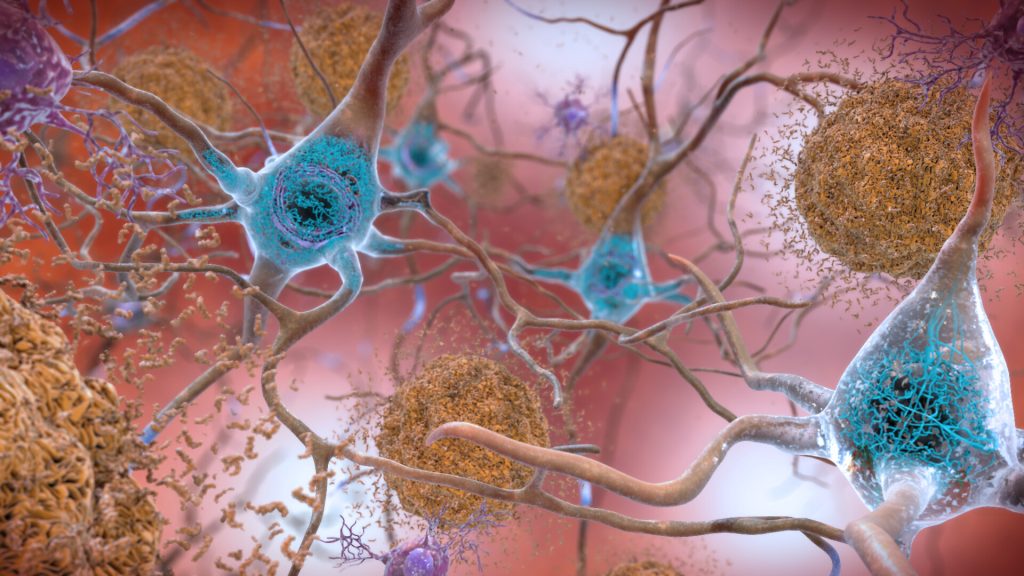
Neurons in the brain of an Alzheimer’s patient, with amyloid plaques caused by tau proteins. Credit: NIH

In a preliminary trial, a new ‘gene silencing’ treatment has been able to safely and successfully lower levels of the harmful tau protein known to cause the disease. This success, published in Nature Medicine, demonstrates that a ‘gene silencing’ approach could work in dementia and Alzheimer’s disease.

The approach uses a drug called BIIB080 (/IONIS-MAPTRx), which is an antisense oligonucleaotide (used to stop RNA producing a protein), to ‘silence’ the gene coding for the tau protein – known as the microtubule-associated protein tau (MAPT) gene. This prevents the gene from being translated into the protein in a doseable and reversible way. It also reduces production of that protein, altering the course of disease.

Further trials will be needed in larger groups of patients to determine whether this leads to clinical benefit, but the phase 1 results are the first indication that this method has a biological effect.

There are currently no treatments targeting tau. The drugs aducanumab and lecanemab – recently approved for use in some situations by the FDA – target a separate disease mechanism in AD, the accumulation of amyloid plaques.

The phase 1 trial enrolled 46 patients with an average age of 66, and looked at the safety of BIIB080, what it does in the body, and how well it targets the MAPT gene. The trial compared three doses of the drug, given by intrathecal injection (an injection into the nervous system via the spinal canal), with the placebo.

Results show that the drug was well tolerated, with all patients completing the treatment period and over 90% completing the post-treatment period.

Patients in both the treatment and placebo groups experienced either mild or moderate side effects – the most common being a headache after injection of the drug. However, no serious adverse events were seen in patients given the drug.

The research team also looked at two forms of the tau protein in the central nervous system (CNS) – a reliable indicator of disease – over the duration of the study.

They found a greater than 50% reduction in levels of total tau and phosphor tau concentration in the CNS after 24 weeks in the two treatment groups that received the highest dose of the drug.

Consultant neurologist Dr Catherine Mummery, who led the study, said: “We will need further research to understand the extent to which the drug can slow progression of physical symptoms of disease and evaluate the drug in older and larger groups of people and in more diverse populations.

“But the results are a significant step forward in demonstrating that we can successfully target tau with a gene silencing drug to slow – or possibly even reverse – Alzheimer’s disease, and other diseases caused by tau accumulation in the future.”

Source: Imperial College London

Higher Risk of Lymphoma in Patients Suffering from IBD

Source: CC0

Karolinska Institutet researchers have found that the risk of developing lymphoma is slightly elevated in inflammatory bowel disease (IBD) and, in recent years has been on the rise in patients with Crohn’s disease. Publishing in Clinical Gastroenterology and Hepatology, the researchers also observed a risk increase in patients taking modern IBD drugs, which was less strong for those not taking them. Thus, the lymphoma risk could be affected by both the medication and the disease activity itself.

Inflammatory bowel disease (IBD), which includes Crohn’s disease and ulcerative colitis, is a chronic intestinal inflammation that can increase the risk of developing lymph node cancer (lymphoma), a disease that affects the immune system.  

“Previous studies of the lymphoma risk of IBD have been too small to draw reliable conclusions,” says the study’s first author Ola Olén, consultant and docent at the Department of Medicine (Solna), Karolinska Institutet. “The studies have not taken into account of important systematic errors or been representative of today’s IBD patients.”  

The present study included almost 170 000 IBD patients identified in Swedish and Danish national registries between 1969 and 2019. Compared to patients with a matched population without IBD, patients with both Crohn’s disease and ulcerative colitis had a higher risk of lymphoma. The highest risk was in patients with Crohn’s disease, the increase being driven mainly by T-cell lymphoma and aggressive B-cell lymphoma.

“We found an elevated relative risk of different types of lymphoma in both Crohn’s disease and ulcerative colitis, but we need to point out that the absolute risk is very low,” says the study’s last author Jonas F Ludvigsson, consultant and professor at Karolinska Institutet.

“The increase in risk equates to only one extra case of lymphoma in 1000 people with IBD, who were followed for ten years.”

“Both inflammation and treatment play a part”

The risk of lymphoma has increased in patients with Crohn’s disease over the past two decades, which coincides with the increasing use of immunomodulating drugs for IBD. While the highest risk of developing the cancer was observed in patients who had received these drugs, the researchers found that patients who were not on such medication were also at a higher risk of lymphoma. 

“This finding indicates that both the inflammation in itself and its treatment play a part,” says Dr Olén. “Since there’s a lot of talk about the lymphoma risk associated with immunomodulating drugs, it’s important to make it clear that also the disease and the inflammation per se seem to drive the development of lymphoma. One has to take account of this and discuss it when prescribing modern treatments where there might be a concern that they will increase the risk of lymphoma.” 

Dr Olén says the teamaims to use more detailed data to determine whether the disease itself or its treatment is more important in terms of lymphoma risk.

Source: Karolinska Institutet

Meal Skipping, Diet Prescription Pills Least Effective Weight Loss Habits

Photo by Andres Ayrton on Pexels

A new study in the Journal of the American Heart Association links a healthier diet and increased exercise to weight loss that reduces heart disease risk – while associating skipping meals and taking prescription diet pills with minimal weight loss, weight maintenance or weight gain.

For many in the study sample of more than 20 000, losing a “clinically significant” 5% of their body weight did not eliminate their risk factors for cardiovascular disease, results showed. In fact, the average composite score on eight risk factors for heart disease was the same across the entirety of the study population – regardless of weight loss or gain.

The study is the first to compare weight-loss strategies and results in the context of the American Heart Association’s “Life’s Essential 8,” a checklist promoting heart disease risk reduction through the pursuit of recommended metrics for body weight, blood pressure, cholesterol, blood sugar, smoking, physical activity, diet and sleep.

The Ohio State University researchers found that overall, US adults had an average score of 60 out of 100 on the Essential 8 suggesting there is plenty of room for improvement even among those whose diet and exercise behaviours helped move the needle on some metrics.

“The Life’s Essential 8 is a valuable tool that provides the core components for cardiovascular health, many of which are modifiable through behaviour change,” said senior study author Colleen Spees, associate professor of medical dietetics in the School of Health and Rehabilitation Sciences at Ohio State.

“Based on the findings in this study, we have a lot of work to do as a country,” she said. “Even though there were significant differences on several parameters between the groups, the fact remains that as a whole, adults in this country are not adopting the Life’s Essential 8 behaviours that are directly correlated with heart health.”

Data for the analysis came from 20 305 U.S. adults aged 19 or older (average age of 47) who participated in the National Health and Nutrition Examination Survey (NHANES) between 2007 and 2016. Participants reported their smoking status, physical activity, average hours of sleep per night, weight history and weight loss strategy, and what they had eaten in the previous 24 hours. Health exams and lab tests measured their body mass index, blood pressure, LDL (bad) cholesterol and blood glucose.

The Ohio State researchers used the data to determine individuals’ values for Life’s Essential 8 metrics and assessed their diet quality according to the Healthy Eating Index, which gauges adherence to US Dietary Guidelines for Americans.

Of the sample, 17 465 participants had lost less than 5% of their body weight, maintained their weight or gained weight in the past year. The remaining 2840 reported intentional loss of at least 5% of their body weight in the same time frame.

“Clinically significant weight loss results in improvements in some health indices,” Spees said. “People should feel hopeful in knowing that losing just 5% of their body weight is meaningful in terms of clinical improvements. This is not a huge weight loss. It’s achievable for most, and I would hope that incentives people instead of being paralysed with a fear of failure.”

In this study, adults with clinically significant weight loss reported higher diet quality, particularly with better scores on intakes of protein, refined grains and added sugar, as well as more moderate and vigorous physical activity and lower LDL cholesterol than the group without clinically significant weight loss. On the other hand, the weight-loss group also had a higher average BMI and HbA1c blood sugar measure and fewer hours of sleep – all metrics that would bring down their composite Life’s Essential 8 score.

A greater proportion of people who did not lose at least 5% of their weight reported skipping meals or using prescription diet pills as weight-loss strategies. Additional strategies reported by this group included low-carb and liquid diets, taking laxatives or vomiting, and smoking.

“We saw that people are still gravitating to non-evidence-based approaches for weight loss, which are not sustainable. What is sustainable is changing behaviours and eating patterns,” Spees said.

Source: Ohio State University