Neurons Cause Metabolic Havoc after Spinal Injury

Conditions such as diabetes, heart attack and vascular diseases commonly diagnosed in people with spinal cord injuries can be traced to abnormal post-injury neuronal activity that causes abdominal fat tissue compounds to leak and pool in the liver and other organs, a new animal study published in Cell Reports Medicine has found.

After discovering the connection between dysregulated neuron function and the breakdown of triglycerides in fat tissue in mice, researchers found that a short course of the drug gabapentin, commonly prescribed for nerve pain, prevented the damaging metabolic effects of the spinal cord injury – though not without side effects.

Gabapentin inhibits a neural protein that, after the nervous system is damaged, becomes overactive and causes communication problems – in this case, affecting sensory neurons and the abdominal fat tissue to which they’re sending signals.

“We believe there is maladaptive reorganisation of the sensory system that causes the fat to undergo changes, initiating a chain of reactions – triglycerides start breaking down into glycerol and free fatty acids that are released in circulation and taken up by the liver, the heart, the muscles, and accumulating, setting up conditions for insulin resistance,” said senior author Andrea Tedeschi, assistant professor of neuroscience in The Ohio State University College of Medicine.

“Through administration of gabapentin, we were able to normalise metabolic function.”

Previous research has found that cardiometabolic diseases are among the leading causes of death in people who have experienced a spinal cord injury. These often chronic disorders can be related to dysfunction in visceral white fat (or adipose tissue), which has a complex metabolic role of storing energy and releasing fatty acids as needed for fuel, but also helping keep blood sugar levels at an even keel.

Earlier investigations of these diseases in people with neuronal damage have focused on adipose tissue function and the role of the sympathetic nervous system, but also a regulator of adipose tissue that surrounds the abdominal organs.

Instead, Debasish Roy, a postdoctoral researcher in the Tedeschi lab and first author on the paper, decided to focus on sensory neurons in this context. Tedeschi and colleagues have previously shown that a neuronal receptor protein called alpha2delta1 is overexpressed after spinal cord injury, and its increased activation interferes with post-injury function of axons, the long, slender extensions of nerve cell bodies that transmit messages.

In this new work, researchers first observed how sensory neurons connect to adipose tissue under healthy conditions, and created a spinal cord injury mouse model that affected only those neurons – without interrupting the sympathetic nervous system.

Experiments revealed a cascade of abnormal activity within seven days after the injury in neurons – though only in their communication function, not their regrowth or structure – and in visceral fat tissue. Expression of the alpha2delta1 receptor in sensory neurons increased as they over-secreted a neuropeptide called CGRP, all while communicating through synaptic transmission to the fat tissue – which, in a state of dysregulation, drove up levels of a receptor protein that engaged with the CGRP.

“These are quite rapid changes. As soon as we disrupt sensory processing as a result of spinal cord injury, we see changes in the fat,” Tedeschi said. “A vicious cycle is established – it’s almost like you’re pressing the gas pedal so your car can run out of gas but someone else continues to refill the tank, so it never runs out.”

The result is the spillover of free fatty acids and glycerol from fat tissue, a process called lipolysis, that has gone out of control. Results also showed an increase in blood flow in fat tissue and recruitment of immune cells to the environment.

“The fat is responding to the presence of CGRP, and it’s activating lipolysis,” Tedeschi said. “CGRP is also a potent vasodilator, and we saw increased vascularisation of the fat – new blood vessels forming as a result of the spinal cord injury. And the recruitment of monocytes can help set up a chronic pro-inflammatory state.”

Silencing the genes that encode the alpha2delta1 receptor restored the fat tissue to normal function, indicating that gabapentin – which targets alpha2delta1 and its partner, alpha2delta2 – was a good treatment candidate. Tedeschi’s lab has previously shown in animal studies that gabapentin helped restore limb function after spinal cord injury and boosted functional recovery after stroke.

But in these experiments, Roy discovered something tricky about gabapentin: the drug prevented changes in abdominal fat tissue and lowered CGRP in the blood, in turn preventing spillover of fatty acids into the liver a month later, establishing normal metabolic conditions. But paradoxically, the mice developed insulin resistance, a known side effect of gabapentin.

The team instead tried starting with a high dose, tapering off and stopping after four weeks.

“This way, we were able to normalise metabolism to a condition much more similar to control mice,” Roy said. “This suggests that as we discontinue administration of the drug, we retain beneficial action and prevent spillover of lipids in the liver. That was really exciting.”

Finally, researchers examined how genes known to regulate white fat tissue were affected by targeting alpha2delta1 genetically or with gabapentin, and found both of these interventions after spinal cord injury suppress genes responsible for disrupting metabolic functions.

Tedeschi said the combined findings suggest starting gabapentin treatment early after a spinal cord injury may protect against detrimental conditions involving fat tissue that lead to cardiometabolic disease – and could enable discontinuing the drug while retaining its benefits and lowering the risk for side effects.

Source: Ohio State University

The First Half of a Night’s Sleep Resets Brain Connections

…but not the second half

Source: CC0

During a night’s sleep, the brain weakens the new connections between neurons that had been forged while awake – but only during the first half, according to a new study in fish by UCL scientists.

The researchers say that their findings, published in Nature, provide insight into the role of sleep, but still leave an open question around what function the latter half of a night’s sleep serves.

The researchers say the study supports the Synaptic Homeostasis Hypothesis, a key theory on the purpose of sleep which proposes that sleeping acts as a reset for the brain.

Lead author Professor Jason Rihel (UCL Cell & Developmental Biology) said: “When we are awake, the connections between brain cells get stronger and more complex. If this activity were to continue unabated, it would be energetically unsustainable. Too many active connections between brain cells could prevent new connections from being made the following day.

“While the function of sleep remains mysterious, it may be serving as an ‘off-line’ period when those connections can be weakened across the brain, in preparation for us to learn new things the following day.”

For the study, the scientists used optically translucent zebrafish, with genes enabling synapses to be easily imaged. The research team monitored the fish over several sleep-wake cycles.

The researchers found that brain cells gain more connections during waking hours, and then lose them during sleep. They found that this was dependent on how much sleep pressure (need for sleep) the animal had built up before being allowed to rest; if the scientists deprived the fish from sleeping for a few extra hours, the connections continued to increase until the animal was able to sleep.

Professor Rihel added: “If the patterns we observed hold true in humans, our findings suggest that this remodelling of synapses might be less effective during a mid-day nap, when sleep pressure is still low, rather than at night, when we really need the sleep.”

The researchers also found that these rearrangements of connections between neurons mostly happened in the first half of the animal’s nightly sleep. This mirrors the pattern of slow-wave activity, which is part of the sleep cycle that is strongest at the beginning of the night.

First author Dr Anya Suppermpool (UCL Cell & Developmental Biology and UCL Ear Institute) said: “Our findings add weight to the theory that sleep serves to dampen connections within the brain, preparing for more learning and new connections again the next day. But our study doesn’t tell us anything about what happens in the second half of the night. There are other theories around sleep being a time for clearance of waste in the brain, or repair for damaged cells – perhaps other functions kick in for the second half of the night.”

Source: University College London

Menstrual Cycle Phases Linked to Increased Injury Risk for Female Athletes

Photo by Ashley Williams

Football players in England’s top-tier WSL were six times more likely to experience a muscle injury in the days leading up to their period compared to when they were on their period, according to a new study published in Medicine & Science in Sports & Exercise.

This the first prospective longitudinal study monitoring menstrual cycles alongside injuries in female footballers. The findings suggest there could be increased injury risk windows at particular times in the cycle.

Despite being a relatively small sample size, the data demonstrates the need to consider the menstrual cycle in elite sports, to reduce injury risk and to support the wellbeing of athletes.

Menstrual cycle symptoms are common and around two thirds of elite athletes feel that these can have negative impacts on their performance. There has been little previous research tracking injuries alongside the menstrual cycle in female sport, despite much speculation and anecdotal evidence suggesting that there may be some key times for increased injury risk. Given the increased professionalism, interest, growth, and investment in women’s sport, the authors say further research in this area is needed.

In this study, researchers at UCL and the University of Bath recorded time-loss injuries and menstrual cycle data for elite female football players across three seasons. All of the players were based at one Women’s Super League (WSL) club, the top tier of women’s football in England. During the study they tracked 593 cycles across 13 390 days, in which time 26 players experienced 74 injuries.

The authors divided each cycle into four main phases in their study. Each phase comes with assumed hormonal changes that have the potential to influence different aspects of a woman’s health and wellbeing.

Ally Barlow, first author of the study from the University of Bath and a physiotherapist at the WSL club, said: “We have been tracking player’s menstrual cycles for a number of seasons to observe trends in terms of symptoms and cycle characteristics. We were interested to learn more about the potential association between injury risk across the menstrual cycle. This study set out to collect specific scientific data so that we could learn more about the menstrual cycle and player’s injury risk.”

Analysis of the data found that players were six times more likely in the pre-menstrual phase (oestrogen and progesterone decrease to bring about the onset of menstruation) and five times more likely in the early-mid luteal phase (after ovulation when both oestrogen and progesterone are assumed to increase and remain high) to experience a muscle injury, compared to when they were in the menstrual phase.

Dr Georgie Bruinvels, senior author of the study from UCL Surgery & Interventional Science and the Institute of Sport, Exercise & Health (ISEH), said: “While these results must be viewed with caution, this data highlights a need to investigate this area further. Given the growth of women’s sport it’s an exciting time to be working in female physiology, but there are a number of known challenges when conducting research with female athletes, in part explaining why there is such a significant sex data gap.

“Conducting large-scale research is complex but must be prioritised to best support female athletes, and we hope studies like this will pave the way for this. Every woman has their own unique physiology, so it’s crucial to support and empower them in the right ways. If future research demonstrates that there are risk windows for certain injury types, we should be proactive in mitigating these risks to enable female athletes to exercise and compete on any given day.”

The authors emphasise that further data collected in a standardised manner is needed before the sports science community can start to look for biological explanations for this increased injury risk.

Dr Jo Blodgett, an author of the study from UCL Surgery & Interventional Science and the Institute of Sport, Exercise & Health (ISEH), said: “Though our sample size for this research was relatively small, we observed clear links between cycle phase and injury prevalence, and the size of the association – six times higher in the premenstrual phase and five times higher in the early-mid luteal phase for muscular injuries – was quite large.

“To better understand the variability in injury risk across the cycle we need more players and teams to continually track injury incidence, menstrual cycle and symptoms in a standardised manner. At the elite level, injuries to your squad can mean the difference between winning and losing, the difference between being crowned champions and runners-up. But perhaps more importantly, it means pain and suffering for players that could perhaps be avoided with better player-centred support.”

Source: University College London

Activists and Patients March on Gauteng Health Department Demanding Radiation Treatment

Nearly R800-million set aside for radiation treatment outsourcing has not been spent

Activists and patients marched on Tuesday in Johannesburg demanding radiation treatment for cancer. Photo: Silver Sibiya

By Silver Sibiya for GroundUp

Activists and cancer patients marched to the offices of the Gauteng department of health on Tuesday demanding that millions of rands allocated for radiation treatment for cancer patients be used.

SECTION27, Cancer Alliance and Treatment Action Campaign (TAC) called for the department to use R784-million set aside by the provincial treasury in March 2023 to outsource radiation treatment. They say not a single patient has received treatment through this intervention a year later.

In an open letter to health MEC Nomantu Nkomo-Ralehoko last week, Khanyisa Mapipa from SECTION27, Salomé Meyer from the Cancer Alliance and Ngqabutho Mpofu from TAC said that in March 2022, Cancer Alliance had compiled a detailed list of approximately 3000 patients who were awaiting radiation oncology treatment.

They said there were shortages of staff in the two radiation oncology centres in Gauteng, Steve Biko Academic Hospital and Charlotte Maxeke Johannesburg Academic Hospital. Charlotte Maxeke Hospital had only two operational machines compared to seven in 2020. Tenders for new equipment had been delayed and the backlog of patients was increasing, they said.

As a result, SECTION27 and Cancer Alliance had asked the provincial treasury to set aside R784-million to outsource radiation treatment. The money had been allocated in March 2023, but a year later, no service provider had been appointed.

“It has actually been four years since the matter was brought to the Department of Health,” said Mapipa on Tuesday. She said cancer patients were not getting the treatment they needed.

“We as Cancer Alliance and SECTION27 ran to Gauteng Treasury to ask them to allocate these funds. Gauteng Treasury responded and they gave this money, but this money is still sitting.”

Thato Moncho, who was diagnosed with breast cancer in September 2020, is one of the patients on the waiting list. She said she had faced many delays in her treatment. “I’ve had three recurrences of cancer and I need to have radiation six weeks after my surgery, which they failed to give me. I have pleaded with the MEC of Health and the Chief Executive Officer at Charlotte Maxeke to speed up the process so I can get my radiation but they failed.”

“I’m pleading: help us so we can get radiation to live a normal life with our family.”

Gauteng Department of Health spokesperson Motalatale Modiba said the department had received the memorandum and would respond to it. He acknowledged that there had been delays which he said were caused by tender processes.

“It is in our interest to ensure that we get to address the backlog of those that require treatment, and the department will formally respond to the concerns that have been raised.” He said a tender had been awarded.

“In May the process to treat patients will start in both hospitals.”

“The respective heads of oncology in Charlotte Maxeke and Steve Biko hospitals are busy with that process of onboarding.”

Republished from GroundUp under a Creative Commons Attribution-NoDerivatives 4.0 International License.

Source: GroundUp

A Model for Gentler Defibrillation for the Heart

Photo by Stephen Andrews: https://www.pexels.com/photo/shallow-focus-of-electrocardiogram-9408866/

Using light pulses as a model for electrical defibrillation, Göttingen scientists developed a method to assess and modulate the heart function. This has paved the way for an efficient and direct treatment for cardiac arrhythmias. This may be an alternative for the strong and painful electrical shocks currently used.

Cardiac arrhythmias account for around 15-20% of annual deaths worldwide. In case of acute and life-threatening arrhythmias, defibrillators can be used to restart the regular beating of the heart. A strong electrical pulse brings cardiac activity to a brief standstill before it can be resumed in an orderly way. Whereas this treatment can save lives very effectively, the strong electrical pulses can also have negative side effects such as damage of the heart tissue or strong pain.

“We developed a new and much milder method which allows the heart to get back into the right rhythm,” says Stefan Luther, Max Planck Research Group leader at the MPI-DS and professor the University Göttingen Medical Center. “Our results show that it is possible to control the cardiac system with much lower energy intensity,” he continues.

To test their method, the scientists, from the Max Planck Institute for Dynamics and Self-Organization (MPI-DS) and the University Göttingen Medical Center, used genetically modified mouse hearts that can be stimulated by light. In this setting, a sequence of optical light pulses is triggered using a closed-loop pacing algorithm. Each pulse is triggered in response to the measured arrhythmic activity.

With this pacing protocol, the team was able to effectively control and terminate cardiac arrhythmias even at low energy intensities that do not activate the heart, but only modulate its excitability.

“Instead of administering a single high-energy shock to restore normal heart rhythm, we use our understanding of the dynamics of cardiac arrhythmias to gently terminate them.” explains Sayedeh Hussaini, first author of the study.

“This results in a subtle treatment method with far less energy per pulse, more than 40 times less compared to the conventional strategy” she reports.

The research team will also use these findings to improve the control of arrhythmias using electrical pulses. This may result in advanced defibrillators causing less pain and side-effects for patients.

Source: Max Planck Institute for Dynamics and Self-Organization

X-chromosome Inactivation may Reduce Females’ Autism Risk

X-chromosome inactivation varies across different areas of brains. Here, fluorescent imaging data from a mouse reveal where the father’s X chromosome is most active (white) and least active (blue). Credit: Eric Szelenyi

A study using mice published in the journal Cell Reports suggests how chromosome inactivation may protect women from autism disorder inherited from their father’s X chromosome.

Because cells do not need two copies of the X chromosome, the cells inactivate one copy early in embryonic development, a well-studied process known as X chromosome inactivation. As a result of this inactivation, every female is made up of a mix of cells, some have an active X chromosome from her father and others from her mother, a phenomenon known as mosaicism. 

For many years, it has been thought that this was random and would result, on average, in a roughly 50/50 mix of cells, with 50% having an active paternal X chromosome and 50% an active maternal X chromosome.

Now a new study finds that, in the mouse brain at least, this is not the case. Instead, there appears to be a bias in the process that results in the paternal X chromosome being inactivated in 60% of the cells rather than the expected 50%.

When the X-linked mutation that is the most common cause of autism spectrum disorder is inherited from the father, the pattern of X-chromosome inactivation in the brain circuitry of females can prevent the effects of that mutation, the study found.

“This bias may be a way to reduce the risk of harmful mutations, which occur more frequently in male chromosomes,” said corresponding author Eric Szelenyi, acting assistant professor of biological structure at the University of Washington School of Medicine in Seattle.

The X-chromosome is of particular interest because it carries more genes involved in brain development than any other chromosome. Mutations in the chromosome are linked to more than 130 neurodevelopmental disorders, including fragile X syndrome and autism.

In the study, the researchers first determined the ratio of X chromosome inactivation in healthy mice by analyzing roughly 40 million brain cells per mouse. The scientists did this by using high-throughput volumetric imaging and automated counting. This analysis revealed a systematic 60:40 ratio across all possible anatomical regions.

They then examined what would happen if they genetically added a mouse model for fragile X syndrome. This syndrome is the most common form of inherited intellectual and developmental disability in humans.

They first tested the mice for behaviors thought to be analogous to those impaired in people with fragile X syndrome. These tests evaluate such things as their sensorimotor function, spatial memory and tendencies towards anxiety and sociability.

They found that the mice who inherited the mutation on their mother’s X chromosome, which are less likely to be inactivated in the 60:40 ratio, were more likely to exhibit behaviour analogous to fragile X syndrome. They exhibited more signs of anxiety, less sociability, poor performance in spatial learning, and deficits in sensorimotor function. 

But mice that inherited the mutation from one their father’s X chromosomes, which were more likely to be inactivated, did not appear impaired. 

“What was most interesting is that using each animal’s behavioural performance was most accurately predicted by X chromosome inactivation in brain circuits, rather than just looking at the brain as a whole, or single brain regions,” said Szelenyi. “This suggests that having more mutant X-active cells due to maternal inheritance increases overall disease risk, but specific mosaic pattern within brain circuitry ultimately decides which behaviors are impacted the most.”

“This suggests that the 20% difference in mutant X-active cells created by the bias can be protective against X mutations from the father, which occur more commonly,” he said.

The findings may also explain why symptoms of X-linked syndromes, like X-linked autism spectrum disorder, vary more in females than males.

Source: University of Washington

Scientists Discover Immune Key for Chronic Viral Infections

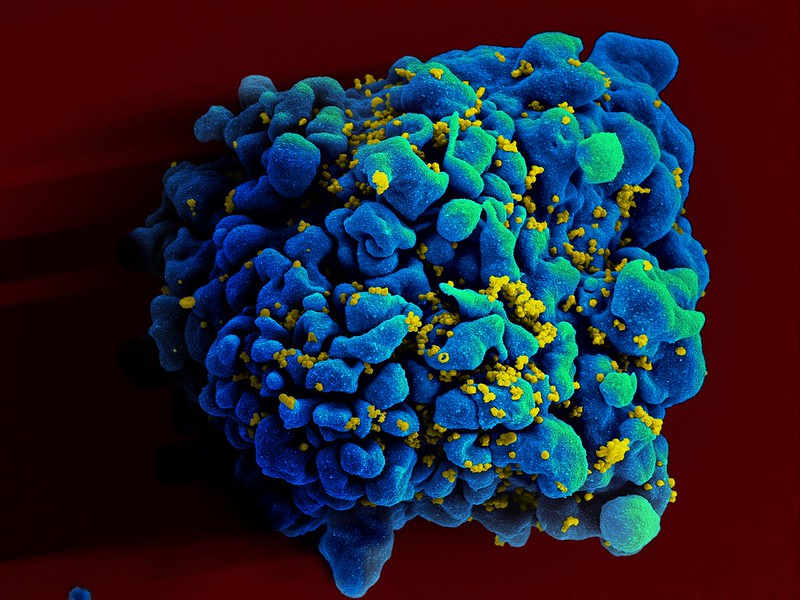
Colourised scanning electron micrograph of HIV (yellow) infecting a human T9 cell (blue). Credit: NIH

Australian researchers have discovered a previously unknown rogue immune cell that can cause poor antibody responses in chronic viral infections. The finding, published in the journal, Immunity, may lead to earlier intervention and possibly prevention of some types of viral infections such as HIV or hepatitis.

One of the remaining mysteries of the human immune system is why ‘memory’ B cells often only have a weak capacity to protect us from persistent infections.

In an answer to this, researchers from the Monash University Biomedicine Discovery Institute have now discovered that chronic viral infection induces a previously unknown immune B memory cell that does not produce high levels of antibodies.

Importantly the research team, led by Professor Kim Good-Jacobson and Dr Lucy Cooper, also determined the most effective time during the immune response for therapeutics such as anti-viral and anti-cancer drugs to better boost immune memory cell development.

“What we discovered was a previously unknown cell that is produced by chronic viral infection. We also determined that early intervention with therapeutics was the most effective to stop this type of memory cell being formed, whereas late intervention could not,” Professor Good-Jacobson said.

According to Dr Cooper, chronic viral infections have been known to alter our ability to form effective long-term protective antibody responses, but how that happens is unknown.

“In the future, this research may result in new therapeutic targets, with the aim to reduce the devastating effect of chronic infectious diseases on global health, specifically those that are not currently preventable by vaccines,” she said.

“Revealing this new immune memory cell type, and what genes it expresses, allows us to determine how we can target it therapeutically and whether that will lead to better antibody responses.”

The research team are also looking to see whether this population is a feature of long COVID, which results in some people having a reduced capacity to fight off the symptoms of COVID infection long after the virus has dissipated.

Source: Monash University

Could Diamond Dust Replace Gadolinium in MRI?

Photo by Mart Production on Pexels

An unexpected discovery surprised a scientist at the Max Planck Institute for Intelligent Systems in Stuttgart: nanometre-sized diamond particles, which were intended for a completely different purpose, shone brightly in a magnetic resonance imaging experiment – outshining the actual contrast agent, the heavy metal gadolinium.

The researchers, publishing their serendipitous discovery in Advanced Materials, believe that diamond nanoparticles, in addition to their use in drug delivery to treat tumour cells, might one day become a novel MRI contrast agent.

While the discovery of diamond dust’s potential as a future MRI contrast agent may never be considered a turning point in science history, its signal-enhancing properties are nevertheless an unexpected finding which may open-up new possibilities: diamond dust glows brightly even after days of being injected.

Perhaps it could replace gadolinium, which has been used in clinics to enhance the brightness of tissues to detect tumours, inflammation, or vascular abnormalities for more than 30 years. But when injected into a patient’s bloodstream, gadolinium travels not only to tumour tissue but also to surrounding healthy tissue. It is retained in the brain and kidneys, persisting months to years after the last administration and its long-term effects are not yet known. Gadolinium also causes a number of other side effects, and the search for an alternative has been going on for years.

Serendipity often advances science

Could diamond dust, a carbon-based material, become a well-tolerable alternative because of an unexpected discovery made in a laboratory at the Max Planck Institute for Intelligent Systems in Stuttgart?

Dr Jelena Lazovic Zinnanti was working on an experiment using nanometre-sized diamond particles for an entirely different purpose. The research scientist, who heads the Central Scientific Facility Medical Systems at MPI-IS, was surprised when she put the 3–5nm particles into tiny drug-delivery capsules made of gelatin. She wanted these capsules to rupture when exposed to heat. She assumed that diamond dust, with its high heat capacity, could help.

“I had intended to use the dust only to heat up the drug carrying capsules,” Jelena recollects.

“I used gadolinium to track the dust particles’ position. I intended to learn if the capsules with diamonds inside would heat up better. While performing preliminary tests, I got frustrated, because gadolinium would leak out of the gelatin – just as it leaks out of the bloodstream into the tissue of a patient. I decided to leave gadolinium out. When I took MRI images a few days later, to my surprise, the capsules were still bright. Wow, this is interesting, I thought! The diamond dust seemed to have better signal enhancing properties than gadolinium. I hadn’t expected that.”

Jelena took these findings further by injecting the diamond dust into live chicken embryos. She discovered that while gadolinium diffuses everywhere, the diamond nanoparticles stayed in the blood vessels, didn’t leak out and later shone brightly in the MRI, just as they had done in the gelatin capsules.

While other scientists had published papers showing how they used diamond particles attached to gadolinium for magnetic resonance imaging, no one had ever shown that diamond dust itself could be a contrast agent. Two years later, Jelena became the lead author of a paper now published in Advanced Materials.

“Why the diamond dust shines bright in our MRI still remains a mystery to us,” says Jelena.

She can only assume the reason is the dust’s magnetic properties: “I think the tiny particles have carbons that are slightly paramagnetic. The particles may have a defect in their crystal lattice, making them slightly magnetic. That’s why they behave like a T1 contrast agent such as gadolinium. Additionally, we don’t know whether diamond dust could potentially be toxic, something that needs to be carefully examined in the future.”

Source: Max Planck Institute for Intelligent Systems

A Common Practice in Rotator Cuff Surgery may be Counterproductive

Photo by Jafar Ahmed on Unsplash

A common practice of shoulder surgeons may be impairing the success of rotator cuff surgery, a new study from orthopaedic scientists and biomedical engineers at Columbia University suggests.

During the surgery, surgeons often remove the bursa, a cushion-like tissue, while repairing torn tendons in the shoulder joint – but the study, which is published in Science Translational Medicine, suggests that the small tissue in fact plays a role in helping the shoulder heal.

“It is common to remove the bursa during shoulder surgery, even for the simple purpose of visualising the rotator cuff,” says Stavros Thomopoulos, PhD, the study’s senior author and the Robert E. Carroll and Jane Chace Carroll Laboratories Professor of Orthopaedic Surgery at Columbia University Vagelos College of Physicians and Surgeons.

“But we really don’t know the role of the bursa in rotator cuff disease, so we don’t know the full implications of removing it,” Thomopoulos says. “Our findings in an animal model indicate that surgeons should not remove the bursa without carefully considering the consequences.”

The challenge of rotator cuff surgery

Most damage to tendons in the rotator cuff comes from wear and tear that accumulates over years of repetitive motions. Among people over 65, about half have experienced a rotator cuff tear, which can make simple daily tasks like combing one’s hair difficult and painful.

More than 500 000 rotator cuff surgeries are performed each year in the US to repair these injuries, restore range of motion, and alleviate pain, but failure is common – ranging from one in five surgeries in young patients to as high as 94% in elderly patients with large tears.

Rotator cuff repairs usually fail because of poor healing between tendon and bone where the tendon is reattached to the bone.

Bursa: friend or foe?

The bursa is a thin, fluid-filled sac originally thought to protect the tendons by providing a cushion between the tendons and adjacent bones.

The bursa often becomes inflamed, sometimes concurrently, when underlying tendons are injured, and surgeons often remove the tissue because they suspect it is a source of shoulder inflammation and pain. But recent studies suggest the tissue may be playing other biological roles besides mechanical cushioning, including promoting healing of injuries to the tendons in the shoulder.

To explore the role of the bursa in rotator cuff disease, Thomopoulos and graduate student Brittany Marshall examined rats with repaired rotator cuff injuries, with and without bursa removal.

Bursa removal impairs uninjured tendons

After the rats underwent repair of a rotator cuff injury, the researchers measured the mechanical properties of the repaired tendon and an adjacent undamaged tendon, the quality of the underlying bone, and changes to protein and gene expression.

The researchers found that the presence of the bursa protected the undamaged tendon by maintaining its mechanical properties and protected the bone by maintaining its morphometry. When the bursa was removed, strength of the undamaged tendon deteriorated and the bone quality deteriorated.

“The loss of mechanical integrity in the uninjured tendon in the absence of the bursa was striking,” Thomopoulos says. Uninjured tendons in the shoulder frequently degenerate over time after the initial injury, and “the animal data imply that retaining the bursa may prevent or delay progression of this pathology.”

In the damaged tendon, the researchers found that the bursa promoted an inflammatory response and activated wound healing genes, but no changes were seen in the mechanical properties of the repaired tendon two months after the repair. It’s possible that differences in mechanical properties would be detected after a longer healing period, Thomopoulos says, something that the research team is currently investigating.

“Overall, what we’re seeing is a beneficial role of the bursa for rotator cuff health, in contrast with the historical view that the inflamed bursa is detrimental,” says Thomopoulos.

The researchers documented similar changes to cells and proteins in bursa samples from patients who underwent surgery to repair rotator cuff injuries, suggesting comparable processes may occur in people.

The bursa as a drug delivery depot

If the bursa is not removed, the tissue could be used to deliver drugs to the repaired tendon to improve healing.

Thomopoulos and Marshall explored this possibility by injecting corticosteroid microspheres into the bursa of their rat model after tendon injury. Steroids are often used to treat musculoskeletal injuries and reduce inflammation.

“The treatment results are somewhat preliminary and require additional timepoints and mechanical characterisation before we can draw strong conclusions,” Thomopoulos says, “but our initial data supports the idea that the bursa can be therapeutically targeted to improve rotator cuff healing.”

Source: Columbia University Irving Medical Center

First-line Antibiotic for C. Diff may be Weakening

Clostridioides difficile. Credit: CDC

The antibiotic vancomycin, recommended as first-line treatment for infection caused by the deadly superbug Clostridioides difficile, may not be living up to its promise, according to new US-based research.

C. diff infection is the leading cause of death due to gastroenteritis in the US. It causes gastrointestinal symptoms ranging from diarrhoea and abdominal pain to toxic megacolon, sepsis and death.

Based on 2018 clinical practice guidelines, the use of oral vancomycin has increased by 54% in the past six years, but the clinical cure rates have decreased from nearly 100% in the early 2000’s to around 70% in contemporary clinical trials.

“Despite the increasing prevalence of data showing reduced effectiveness of vancomycin, there is a significant lack of understanding regarding whether antimicrobial resistance to these strains may affect the clinical response to vancomycin therapy,” reports Anne J. Gonzales-Luna, research assistant professor in the Department of Pharmacy Practice and Translational Research, UH College of Pharmacy, in the journal Clinical Infectious Diseases. “In fact, the prevailing view has been that antibiotic resistance to these strains are unlikely to impact clinical outcomes, given the high concentrations of vancomycin in stools.”

But the University of Houston College of Pharmacy team arrived at a different conclusion after sifting through research included in a multicentre study, which included adults treated with oral vancomycin between 2016-2021 for C. diff infection.

“We found reduced vancomycin susceptibility in C. difficile was associated with lower 30-day sustained clinical response and lower 14-day initial cure rates in the studied patient cohort,” said Gonzales-Luna.

The finding is cause for concern.

“It’s an alarming development in the field of C. diff as there are only two recommended antibiotics,” said Kevin Garey, professor of pharmacy practice and translational research. “If antimicrobial resistance increases in both antibiotics, it will complicate the management of C. diff infection leading us back to a pre-antibiotic era.”

Source: University of Houston