Category: Vaccines

New mRNA Vaccine Could Prevent Seasonal and Food Allergies

Photo by Corleto on Unsplash

A new mRNA vaccine stopped allergens from causing dangerous immune reactions and life-threatening inflammation in mice, according to researchers from the Perelman School of Medicine at the University of Pennsylvania and Cincinnati Children’s. The vaccine, outlined in the Journal of Clinical Investigation, may one day be tested and tailored to a variety of seasonal and food allergies.

“This is a potential breakthrough for millions of people worldwide who suffer from life-threatening allergies,” said Nobel laureate Drew Weissman, MD, PhD, Professor in Vaccine Research at Penn and co-lead of the study with Cincinnati Children’s Marc E. Rothenberg, MD, PhD.

Weissman, Penn colleagues Jilian Melamed, PhD, an assistant professor of Infectious Diseases, Mohamad-Gabriel Alameh, PhD, an assistant professor of Pathology and Laboratory Medicine, and the Cincinnati Children’s researchers led by Marc E. Rothenberg, MD, PhD, director of the division of Allergy and Immunology, modelled this new vaccine on the design of the COVID-19 mRNA lipid nanoparticle (LNP) vaccines.

This time, however, scientists tweaked the mRNA to instruct cells to produce proteins that resemble certain allergens. By presenting these proteins in a controlled way, the vaccine didn’t cause allergic reactions but did instruct the immune system to respond more appropriately in the future. And, when mice were later exposed to the respective allergens, the vaccines worked.

When mice with specific allergies were exposed to the allergens, none of the mice vaccinated with the respective allergy vaccine had an allergic reaction. Vaccinated mice had fewer allergy-related white blood cells, made fewer inflammation-causing proteins, and their lungs produced less mucus. Their airways were also protected against narrowing, which often happens during asthma, and they made special antibodies that protected against allergic reactions.

A platform with broad potential

Unlike traditional allergy shots, which involve repeated administration of purified allergens over months or years, the mRNA-based approach offers a more flexible solution. Because the mRNA can be tailored to encode proteins from different allergens, the platform could be adapted to treat a wide range of allergic conditions—from seasonal pollen allergies to food sensitivities and asthma. Additionally, many severe food allergies do not have vaccines to protect against severe allergic reactions.

“People with food allergies that can cause anaphylactic shock are rightfully fearful in social situations, eating out in public, sharing food, and engaging in other fun activities where there are food and allergens around,” said Weissman. “Allowing people to partake in foods they were never able to eat would be incredibly rewarding, but I’ll even be happy if we can one day introduce a vaccine that allows parents to breathe just a little easier when sending their kids to class birthday parties.”

The study represents a proof-of-concept that mRNA vaccines can be used not only to prevent infectious diseases but also to adjust immune responses in chronic conditions like allergies and even celiac disease. Researchers say the next steps include testing the vaccine’s safety in humans, determining how many allergens can be included in a single dose, and evaluating how long protection lasts.

“We saw mRNA vaccines save lives during the pandemic, and as the most-tested type of vaccine in history, we know it’s the safest and most effective vaccine ever created,” said Weissman. “We are deeply committed to continuing to uncover the potential of this technology.”

Source: Perelman School of Medicine at the University of Pennsylvania
A Vaccine Wake-up Call for South Africa

Time to work together to close vaccine gap putting children and communities at risk

Photo by Mufid Majnun on Unsplash

South Africa is facing a growing public health concern, as large numbers of children1 miss out on life-saving vaccinations.

According to Dr Zeina Elian, Vaccines Medical Head for Sanofi Africa, the country is seeing a resurgence in ‘zero dose’ communities. These are areas where children have not received a single routine vaccine. In low dose communities, under-immunisation is similarly leaving many children at risk for preventable diseases.

“We are seeing entire groups of children falling through the cracks,” says Dr Elian. “If these children remain unvaccinated, diseases we thought were under control can, and will, return.”

What is a ‘zero dose’ child?

A ‘zero dose’ child is one who has not received any of the vaccines scheduled under South Africa’s national Expanded Programme on Immunisation (EPI). “In these communities, children miss out on all opportunities for protection, leaving them vulnerable to highly contagious and often dangerous diseases like diphtheria, pertussis (whooping cough) and measles,” says Dr Elian.

Recent data shows South Africa had 220 000 zero-dose children1 in 2023, ranking it among the top 20 countries globally with the highest number of unvaccinated children. “We’ve seen outbreaks of whooping cough in the past year and are currently experiencing a rise in diphtheria cases. These diseases are preventable. Their return points directly to gaps in coverage,” says Dr Elian.

Role of the health care provider

Health care providers play a crucial role in catch-up vaccination. They identify patients who are behind on their vaccines, explain the importance of protection, and address concerns with clear, trusted information. With the right training and guidelines, they create safe and supportive environments where patients feel comfortable catching up on missed doses. By confidently recommending and administering vaccines, providers help close immunity gaps and protect both individuals and the wider community.

Vaccine hesitancy and misinformation put lives at risk

“Vaccine hesitancy and the spread of misinformation are undermining immunisation efforts. False information spreads faster than facts. Rebuilding trust in vaccines is crucial, not just to protect individuals, but to protect entire communities through herd immunity,” says Dr Elian.

Herd immunity means that when most people in a community are vaccinated, it becomes much harder for diseases to spread. This protects everyone, especially babies, the elderly, and people with health conditions who can’t get vaccinated themselves.

Dr Elian also stresses that we need to take flu more seriously. “We don’t talk enough about flu. People think it’s just a seasonal thing or a mild illness, but flu can be serious, especially for pregnant women, the elderly and people with chronic conditions. Every year, we have people ending up in hospital with flu complications. It’s vaccine-preventable, and yet uptake remains low.”

Immunisation is important at every stage of life

Vaccination is a lifelong health strategy, not just a childhood milestone. Dr Elian says that life-course immunisation means starting with vaccines during pregnancy and continuing through all stages of life. The aim is to protect people at the times they are most vulnerable, a need that changes as we age.

Key examples include:

  • Pregnant women: flu and whooping cough vaccines
  • Adolescents: HPV, tetanus, diphtheria and pertussis boosters
  • Young adults: meningococcal vaccines for students and military recruits
  • Adults: pertussis boosters every 5 to 10 years, especially for those with asthma or COPD
  • Older adults: annual flu vaccines and pneumococcal vaccines to prevent serious complications

According to the latest National Institute for Communicable Diseases (NICD) alert, in the current diphtheria outbreak2, 70% of cases occurred in adults, and the case-fatality rate was 21%. “These are not just childhood diseases,” says Dr Elian. “Adults are clearly vulnerable too. Lifelong immunisation must become standard in South Africa.”

Dr Elian adds that public and professional attitudes need to change.

“Every health appointment is a chance to check vaccine status. Not just for kids, but for parents, grandparents, students and workers. It’s a shift in culture, where we all become more proactive about protecting our health.”

Falling vaccination rates carry a heavy economic cost

While routine vaccines are free in the public system, indirect barriers such as time off work and transport costs persist. But the economic cost of illness is often much higher.

“Missing a day of work to vaccinate a child may feel like a loss, but missing five days to care for a sick child is far worse,” says Dr Elian. “For adults, illness can mean lost income, expensive treatment and even hospitalisation. At a national level, low vaccination coverage fuels more frequent and severe outbreaks, forcing costly catch-up campaigns, increasing the need for surveillance, and placing added strain on already stretched health systems. The economic toll includes reduced productivity and higher healthcare expenditure, making prevention through vaccination the far more cost-effective option.”

Act now to keep yourself, your family and community safe

Take a more active role in your health by speaking to healthcare professionals. “Every visit to the clinic or doctor is an opportunity to ask, ‘What vaccines do I need?’ ‘What about my children?’, ‘What’s recommended for my age or condition?’, ‘Am I up to date on my vaccines?’ That one question could prevent serious illness or even death,” says Dr Elian.

Dr Elian also advises parents and caregivers to check their children’s Road to Health booklets to ensure vaccines are up to date, especially before school entry.

“Vaccines save lives. They prevent suffering and they protect the people around us. But only if we use them.”

Quick facts

  • Since 1974, the Expanded Programme on Immunisation has saved more than 50 million lives3 across Africa.
  • Vaccines protect against serious diseases like diphtheria, pertussis (whooping cough), measles, flu, and more.
  • Childhood vaccines are free at public clinics.
  • South Africa is currently experiencing preventable disease outbreaks due to low vaccination rates.
  • Everyone has a role to play in preventing illness – parents, students, healthcare workers, and older adults.

Ask your healthcare provider if you’re due for a vaccine or booster.

References

1. Global updates on vaccination uptake 29 April 2025. Available from: https://knowledgehub.health.gov.za/system/files/2025-05/Global%20updates%20on%20vaccination%20uptake_final.pdf

2. NICD Diphtheria situational report (week 32 of 2025). Available from: https://www.nicd.ac.za/diphtheria-situational-report-week-32-of-2025

3. Africa Vaccination Week 2025: Message from Ms Shenaaz El-Halabi, WHO South Africa Representative | WHO | Regional Office for Africa. Available from: https://www.afro.who.int/countries/south-africa/news/africa-vaccination-week-2025-message-ms-shenaaz-el-halabi-who-south-africa-representative

Over 2.5 Million COVID Deaths Prevented Worldwide Thanks to Vaccines

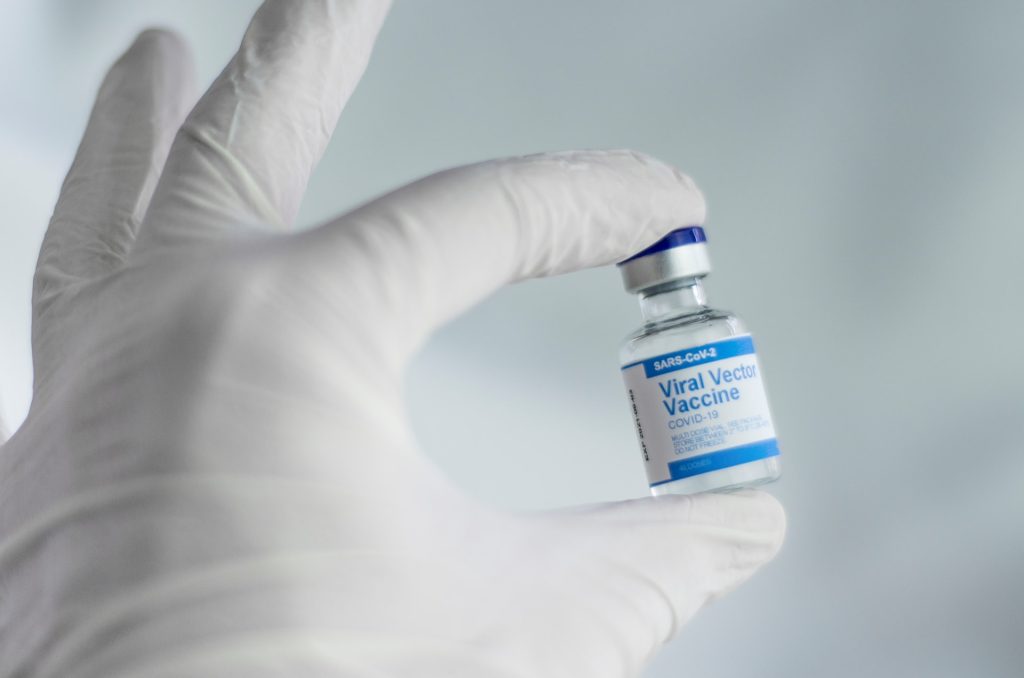
Gloved hand holding vial of Janssen COVID vaccine
Photo by Spencer Davis on Unsplash

Thanks to vaccinations against SARS-CoV-2 in the period 2020-2024, 2.533 million deaths were prevented at the global level, one death was avoided for every 5400 doses of vaccine administered. The 82% of the lives saved by vaccines involved people vaccinated before encountering the virus, 57% during the Omicron period, and 90% involved people aged 60 years and older. In all, vaccines have saved 14.8 million years of life (one year of life saved for 900 doses of vaccine administered).

These are some of the data released in an unprecedented study published in the journal Jama Health Forum and coordinated by Prof Stefania Boccia, Professor of General and Applied Hygiene at Università Cattolica, with contributions from Dr Angelo Maria Pezzullo, Researcher in General and Applied Hygiene, and D. Antonio Cristiano, a medical resident in Hygiene and Preventive Medicine. The two researchers spent a period at Stanford University, collaborating directly with the group of Professor John P.A. Ioannidis, director of the Meta-Research Innovation Center (METRICS), in the context of the project “European network staff eXchange for integrAting precision health in the health Care sysTems- ExACT” funded by the European Research Excellence Programme RISE project-Marie Slodowska Curie and coordinated by Professor Stefania Boccia.

Professor Boccia and Dr Pezzullo explain: “Before ours, several studies tried to estimate lives saved by vaccines with different models and in different periods or parts of the world, but this one is the most comprehensive because it is based on worldwide data, it also covers the Omicron period, it also calculates the number of years of life that was saved, and it is based on fewer assumptions about the pandemic trend.”

The experts studied worldwide population data, applying a series of statistical methods to figure out who among the people who became ill with COVID did either before or after getting vaccinated, before or after Omicron period, and how many of them died (and at what age). ‘We compared this data with the estimated data modeled in the absence of COVID vaccination and were then able to calculate the numbers of people who were saved by COVID vaccines and the years of life gained as a result of them,’ Dr Pezzullo explains.

It also turned out that most of the saved years of life (76%) involved people over 60 years of age, but residents in long-term care facilities contributed only with 2% of the total number. Children and adolescents (0.01% of lives saved and 0.1% of life years saved) and young adults aged 20-29 (0.07% of lives saved and 0.3% of life years saved) contributed very little to the total benefit.

Professor Boccia concludes: ‘These estimates are substantially more conservative than previous calculations that focused mainly on the first year of vaccination, but clearly demonstrate an important overall benefit from COVID-19 vaccination over the period 2020-2024. Most of the benefits, in terms of lives and life-years saved, have been secured for a portion of the global population who is typically more fragile, the elderly’.

Source: EurekAlert!

A Revolutionary ‘Single Shot’ Malaria Vaccine Delivery System

Oxford researchers have developed programmable microcapsules to deliver vaccines in stages, potentially eliminating the need for booster shots and increasing immunisation coverage in hard-to-reach communities.

Photo by Mufid Majnun on Unsplash

A team of scientists at the University of Oxford has developed an innovative vaccine delivery system that could allow a full course of immunisation – both initial and booster doses – to be delivered in just one injection. In preclinical trials, the technology provided strong protection against malaria, matching the efficacy of traditional multi-dose vaccination regimens.

Luca Bau, Senior Researcher from the Institute of Biomedical Engineering, said: ‘Reducing the number of clinic visits needed for full vaccination could make a major difference in communities where healthcare access is limited. Our goal is to help remove the barriers that stand in the way of people benefiting from life-saving medical innovations.’

The findings offer hope for a simpler, more effective approach to immunisation, particularly in regions where access to follow-up healthcare is limited.

A new weapon in the fight against preventable diseases

The research, published in Science Translational Medicine, addresses a major challenge in global health: ensuring people return for all required vaccine doses. Missed boosters are one of the biggest barriers to achieving full immunisation, leaving millions vulnerable to preventable infectious diseases.

To tackle this, the Oxford team developed tiny biodegradable capsules that can be co-injected with the first vaccine dose and programmed to release the booster dose weeks or months later. In a mouse model, this “single shot” strategy using the R21 malaria vaccine protected against the disease nearly as effectively as the standard two-dose schedule.

Simple, scalable, and injectable

The microcapsules are made using a patented chip-based microfluidics system that is compatible with existing pharmaceutical production methods. This means the technology can be scaled up rapidly for clinical use and eventual deployment in the field.

Romain Guyon, Post-Doctoral Scientist, inventor of the technology and the lead author on the study said: ‘Our approach solves three of the biggest problems in delayed vaccine delivery: how to make it programmable, injectable, and scalable. The microcapsules are precisely engineered to act as a tiny, timed-release vault, allowing us to dictate exactly when the booster dose is released. We believe this could be a gamechanger not just for malaria but for many other vaccines requiring multiple doses or other complex therapeutic regimens.’

The capsules are made from an approved biodegradable polymer (PLGA) and filled with the R21 malaria vaccine. Once injected, the priming dose works immediately, while the capsules burst within the body to release the booster after a set delay. Researchers were able to fine-tune this delay from two weeks to several months.

Looking ahead

The team is now working to adapt the manufacturing process in preparation for early-stage human trials, attracting interest from pharmaceutical partners and global health organisations.

Anita Milicic, Associate Professor at the Jenner Institute, Nuffield Department of Medicine, said: ‘This is the exciting first step in proving that it is possible to administer the full immunisation complement through a single injection. We now turn to the next challenge: adapting and refining the approach for translation into the clinic, towards ultimately delivering a real-world impact.’

If successful, this technology could revolutionise vaccination campaigns, particularly in areas where logistics and healthcare access make booster schedules impractical. With 20.5 million children missing routine vaccinations in 2022 alone, the implications of a truly single-dose vaccine could be enormous.

Source: University of Oxford

Can African Countries Meet 2030 Childhood Immunisation Goals?

Researchers analysed 1 million records from national health surveys in 38 African countries and found progress in childhood immunisation coverage – but many countries, including South Africa, may still fall short of global targets

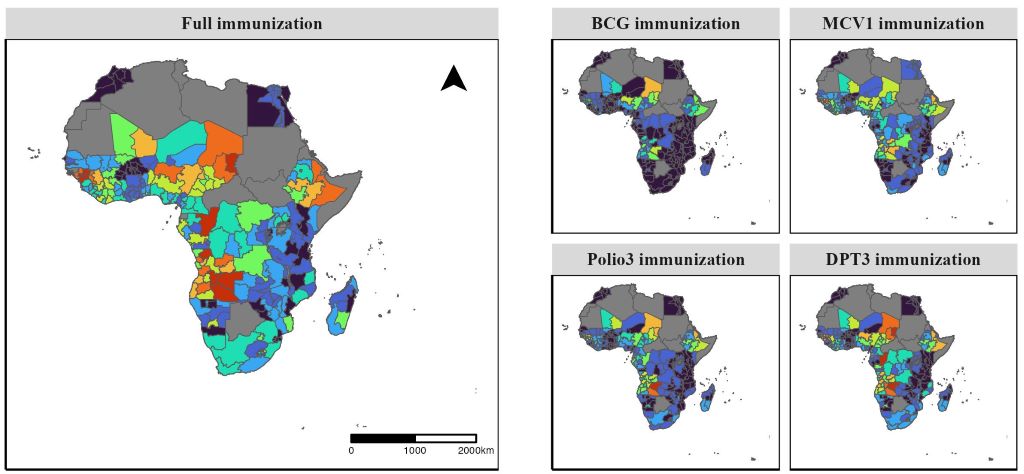
Maps of childhood immunisation coverage in African countries at regional level for 2020.

Image credit: Nguyen PT et al., 2025, PLOS Medicine, CC-BY 4.0

In the last two decades, childhood immunisation coverage improved significantly across most African countries. However, at least 12 countries, including South Africa, are unlikely to achieve global targets for full immunisation by 2030, according to a new study published July 29th in the open-access journal PLOS Medicine by Phuong The Nguyen of Hitotsubashi University, Japan, and colleagues.

Vaccines are one of the most effective ways to protect children from deadly diseases, yet immunisation coverage is still suboptimal in many African countries. Monitoring and progress in childhood immunisations at the national and local level is essential for refining health programmes and achieving global targets in these countries.

In the new study, researchers used childhood immunisation data contained in approximately 1 million records from 104 nationally representative Demographic and Health Surveys (DHS) conducted in 38 African countries between 2000 and 2019. Using modelling techniques, they estimated immunisation coverage trends through 2030 and assessed disparities across geographic regions and between socioeconomic groups.

The data showed overall improvements in immunisation coverage between 2000 and 2019. It forecast that, if current trends continue, most countries are projected to meet or exceed targets for achieving 80% or 90% coverage of vaccines against tuberculosis, measles, polio, diphtheria, pertussis (whooping cough), and tetanus. However, 12 of 38 countries are not on track to meet full immunisation goals, including high-development nations like South Africa, Egypt, and Congo Brazzaville. The study also pinpointed significant socioeconomic inequalities in coverage, with gaps in coverage of up to 58% between wealth quintiles. While these disparities were present across all countries, most are projected to shrink by 2030 –except in Nigeria and Angola, where inequalities are expected to persist or grow.

“These achievements are likely the result of sustained progress driven by decades of national and sub-national initiatives along with international support aimed at prioritising immunisation,” the authors say. “However, progress towards full immunisation coverage remains slow in 12 African countries examined. In most African nations, challenges related to vaccine affordability, accessibility, and availability remain major obstacles, driven by weak primary healthcare systems and limited resources.”

The authors add, “This study shows that while childhood immunisation coverage has improved in Africa, progress is uneven. Many countries and regions remain off track to meet global targets by 2030.”

The authors conclude, “Conducting this study reinforced how critical reliable sub-national data is for identifying communities being left behind. We hope the findings will help inform more equitable and targeted immunisation strategies.”

Provided by PLOS

RSV Vaccination of Pregnant Mothers Reduces Infant Hospitalisations by 72%

Source: Pixabay CC0

Researchers found the respiratory syncytial virus (RSV) vaccine, introduced across the UK in late summer 2024, led to a 72% reduction in babies hospitalised with the virus if the pregnant parent was vaccinated.

The findings, published in The Lancet Child and Adolescent Health, are the first to show the real-world effectiveness of the vaccine during pregnancy in the UK.

Uptake of the jab among those who are pregnant could help to limit the number of sick babies each winter, reducing hospital pressures, experts say. 

Virus protection

RSV is a common virus that causes coughs and colds but can lead to a severe lung infection called bronchiolitis, which can be dangerous in babies, with some requiring admission to intensive care. The virus is the main infectious cause of hospitalisation for babies in the UK and globally.

Receiving the vaccine during pregnancy helps to protect both parent and baby. Antibodies produced by the parent in response to the vaccine are passed to the foetus, providing protection from severe RSV for the first six months after birth.

Hospital admissions

The research team, led by the Universities of Edinburgh and Leicester, recruited 537 babies across England and Scotland who had been admitted to hospital with severe respiratory disease in the winter of 2024-2025, the first season of vaccine implementation. 391 of the babies tested positive for RSV. 

Parents of babies who did not have RSV were two times more likely to have received the vaccine before delivery than the parents of RSV-positive babies – 41% compared with 19%.

Vaccinate early

Receiving the vaccine more than 14 days before delivery offered a higher protective effect, with a 72% reduction in hospital admissions compared with 58% for infants whose pregnant parent was vaccinated at any time before delivery. 

Experts recommend getting vaccinated as soon as possible from 28 weeks of pregnancy to provide the best protection, as this allows more time for the parent to generate and pass on protective antibodies to the baby, but the jab can be given up to birth.

With the availability of an effective RSV vaccine shown to significantly reduce the risk of hospitalisation in young infants in the UK, there is an excellent opportunity for pregnant women to get vaccinated and protect themselves and their infants from RSV bronchiolitis this coming winter.

Dr Thomas Williams, Institute for Regeneration and Repair, Paediatric Consultant at the Royal Hospital for Children and Young People

Improve uptake

Previous research has found that only half of expectant parents in England and Scotland are currently receiving the RSV vaccine, despite its high success at preventing serious illness.

The findings highlight the importance of raising awareness of the availability and effectiveness of the new vaccine to help protect babies, experts say.

Source: The University of Edinburgh

A Surprise One-two Punch for a Universal Cancer Vaccine

Photo by Raghavendra V Konkathi on Unsplash

An experimental mRNA vaccine boosted the tumour-fighting effects of immunotherapy in a mouse-model study, bringing researchers one step closer to their goal of developing a universal vaccine to “wake up” the immune system against cancer.

Published in Nature Biomedical Engineering, the University of Florida study showed that like a one-two punch, pairing the test vaccine with common anticancer drugs called immune checkpoint inhibitors triggered a strong antitumor response.

A surprising element, researchers said, was that they achieved the promising results not by attacking a specific target protein expressed in the tumour, but by simply revving up the immune system — spurring it to respond as if fighting a virus. They did this by stimulating the expression of a protein called PD-L1 inside of tumours, making them more receptive to treatment. The research was supported by multiple federal agencies and foundations, including the National Institutes of Health.

Senior author Elias Sayour, MD, PhD, a UF Health paediatric oncologist, said the results reveal a potential new treatment path with broad implications for battling many types of treatment-resistant tumours.

“This paper describes a very unexpected and exciting observation: that even a vaccine not specific to any particular tumour or virus — so long as it is an mRNA vaccine — could lead to tumour-specific effects,” said Sayour, principal investigator at the RNA Engineering Laboratory within UF’s Preston A. Wells Jr. Center for Brain Tumor Therapy.

“This finding is a proof of concept that these vaccines potentially could be commercialised as universal cancer vaccines to sensitise the immune system against a patient’s individual tumour,” said Sayour, a McKnight Brain Institute investigator and co-leader of a program in immuno-oncology and microbiome research.

Until now, there have been two main ideas in cancer-vaccine development: To find a specific target expressed in many people with cancer, or to tailor a vaccine that is specific to targets expressed within a patient’s own cancer.

“This study suggests a third emerging paradigm,” said Duane Mitchell, M.D., Ph.D., a co-author of the paper. “What we found is by using a vaccine designed not to target cancer specifically but rather to stimulate a strong immunologic response, we could elicit a very strong anticancer reaction. And so this has significant potential to be broadly used across cancer patients — even possibly leading us to an off-the-shelf cancer vaccine.”

For more than eight years, Sayour has pioneered high-tech anticancer vaccines by combining lipid nanoparticles and mRNA. Short for messenger RNA, mRNA is found inside every cell — including tumor cells — and serves as a blueprint for protein production.

This new study builds upon a breakthrough last year by Sayour’s lab: In a first-ever human clinical trial, an mRNA vaccine quickly reprogrammed the immune system to attack glioblastoma, an aggressive brain tumor with a dismal prognosis. Among the most impressive findings in the four-patient trial was how quickly the new method — which used a “specific” or personalized vaccine made using a patient’s own tumor cells — spurred a vigorous immune-system response to reject the tumor.

In the latest study, Sayour’s research team adapted their technology to test a “generalized” mRNA vaccine — meaning it was not aimed at a specific virus or mutated cells of cancer but engineered simply to prompt a strong immune system response. The mRNA formulation was made similarly to the COVID-19 vaccines, rooted in similar technology, but wasn’t aimed directly at the well-known spike protein of COVID.

In mouse models of melanoma, the team saw promising results in normally treatment-resistant tumors when combining the mRNA formulation with a common immunotherapy drug called a PD-1 inhibitor, a type of monoclonal antibody that attempts to “educate” the immune system that a tumor is foreign, said Sayour, a professor in UF’s Lillian S. Wells Department of Neurosurgery and the Department of Pediatrics in the UF College of Medicine.

Taking the research a step further, in mouse models of skin, bone and brain cancers, the investigators found beneficial effects when testing a different mRNA formulation as a solo treatment. In some models, the tumors were eliminated entirely.

Sayour and colleagues observed that using an mRNA vaccine to activate immune responses seemingly unrelated to cancer could prompt T cells that weren’t working before to actually multiply and kill the cancer if the response spurred by the vaccine is strong enough.

Taken together, the study’s implications are striking, said Mitchell. “It could potentially be a universal way of waking up a patient’s own immune response to cancer,” Mitchell said. “And that would be profound if generalisable to human studies.”

The results, he said, show potential for a universal cancer vaccine that could activate the immune system and prime it to work in tandem with checkpoint inhibitor drugs to seize upon cancer—or in some cases, even work on its own to kill cancer.

The research team is now working to improve current formulations and move to human clinical trials as rapidly as possible.

Source: University of Florida Health

Operation Dudula Blocks Babies from Getting Vaccines

Vigilante group is controlling clinic queues in Johannesburg

Photo by William Fortunato on Pexels

By Kimberly Mutandiro

Mothers of newborn babies, turned away at public clinics in Johannesburg because they are not South African, say their children are missing out on lifesaving vaccines.

In recent months, vigilante group Operation Dudula has been taking control of clinic queues across Johannesburg, chasing away immigrants or telling them to stand separately from South Africans. It is alleged that some healthcare staff have been participating.

This is despite a 2023 ruling in the Gauteng High Court that pregnant and lactating women and young children should be granted free health care services regardless of their nationality. 

The court ordered the Gauteng Department of Health to change its policy denying immigrants healthcare, and to place notices on the walls at all healthcare facilities stating lactating women and children may not be denied access. This order is not being consistently complied with.

GroundUp visited the Jeppe Clinic last week and saw no such notice. There was a small group of Operation Dudula members pulling immigrants out of the queue and telling them to stand to one side.

Jane Banda, a Malawian national, was at the clinic. She has been struggling to get her seven-week-old baby vaccinated, but has been blocked every time by Operation Dudula. She fears her baby’s health may be at risk if she continues to miss essential vaccinations.

Aisha Amadu, an asylum seeker from Malawi, who has a two-year-old baby, had an appointment at Jeppe Clinic last week but was chased away by Operation Dudula.

Grace Issah, also from Malawi, has a 14-week-old baby who was due for a vaccine two weeks ago. But she has been chased away from clinics in Jeppe, Bez Valley and Hillbrow.

“I feel like giving up because it seems there is nothing that I can do. My husband has no money for private doctors,” she said.

Several other women said they have also been denied access to clinics in Malvern, Kensington, Rosettenville and Soweto.

The Socio-Economic Rights Institute (SERI) launched a case in the Gauteng High Court in 2024, on behalf of Kopanang Afrika Against Xenophobia (KAAX), the Inner City Federation, Abahlali BaseMjondolo, and the South African Informal Traders Forum.

The group is seeking an interdict to declare the actions of the vigilante group, which include denying healthcare to immigrants, unlawful. The matter was heard in June, and judgment was reserved.

Mike Ndlovu from KAAX says it is a constitutional right for everyone in South Africa to be able to access healthcare.

“What Operation Dudula and a few complicit nurses are doing is unconstitutional, a criminal act, and a betrayal of our democracy. Denying healthcare is a violation of basic human rights,” said Ndlovu.

Ndlovu called on healthcare workers to remember their professional duty: to care without discrimination.

Operation Dudula’s actions have been condemned by the South African Human Rights Commission.

Department of Health spokesperson Foster Mohale said the department is aware of the action by Operation Dudula, but denied that department staff members are involved.

“The health facility managers have been advised to alert the law enforcement agencies whenever they experience these protests because that is a security issue to enforce the law,” Mohale said.

Mohale did not respond to questions about whether the department has complied with the 2023 court order to put up the notices.

Zandile Dabula, spokesperson for Operation Dudula, did not respond to a request for comment. But Veli Ngobese, a member of the movement who was at Jeppe clinic on the day GroundUp visited, said: “We are targeting all people from outside the country. We want Home Affairs to start afresh. Foreign nationals who come into the country should come and invest because the ones we see are selling amagwinya [vetkoek], pushing trolleys, and selling peanuts, and we are the ones paying taxes.”

He said the group will be conducting daily protests until immigrants stop going to clinics.

Republished from GroundUp under a Creative Commons Attribution-NoDerivatives 4.0 International License.

Read the original article.

RSV Vaccine Reduces the Risk of Dementia, New Research Shows

Photo by Mika Baumeister on Unsplash

A new study by the University of Oxford, published in the journal npj Vaccines, shows that a vaccine against respiratory syncytial virus (RSV) is associated with a 29% reduction in dementia risk in the following 18 months. The findings suggest a novel explanation for how vaccines produce this effect.

Recent studies have shown convincingly that vaccines against shingles (Herpes zoster) reduce the risk of dementia. The shingles vaccine now in widespread use (Shingrix) has more of an effect than the previous one (Zostavax). A key difference between these vaccines is that Shingrix contains an ‘adjuvant’, an ingredient designed to enhance the vaccine’s effect. It is therefore possible that the adjuvant contributes to Shingrix’ greater effect than Zostavax on reducing dementia.

The new study, supported by the National Institute for Health and Care Research (NIHR) Oxford Health Biomedical Research Centre (OH BRC), supports this possibility. Researchers analysed the health records of over 430 000 people in the USA in the TriNetX network. They found that the Arexvy vaccine – which protects against respiratory syncytial virus (RSV), a common virus that causes cold-like symptoms – was also linked to a significantly lower risk of developing dementia. Arexvy, now offered to adults over 60, contains the same adjuvant as Shingrix. Both vaccines were similarly effective in reducing dementia risk compared to the flu vaccine (which does not contain the adjuvant); in the 18 months following receipt of Arexvy there was a 29% reduction in diagnoses of dementia. These findings held true across a range of additional analyses and were similar in men and women.

It is not clear how the adjuvant, called AS01, might help lower the risk of dementia. However, laboratory studies show that AS01 stimulates cells of the immune system that could help protect the brain from some of the harmful processes underlying dementia. These benefits of the adjuvant in reducing dementia risk could be in addition to the protection that comes from preventing infections like shingles and RSV themselves.

It is not yet known whether these vaccines prevent dementia or, more likely, delay its onset. Either way, the effect is significant, especially given that no other treatments are known that delay or prevent the condition.

The likely beneficial effect on dementia risk is in addition to the vaccines’ proven ability to prevent shingles and RSV, both of which are unpleasant and sometimes serious illnesses.

Lead author, Associate Professor Maxime Taquet, NIHR Academic Clinical Lecturer, Department of Psychiatry, University of Oxford, said: “Our findings show that vaccines against two separate viruses, shingles and RSV, both lead to reductions in dementia. This gives another reason to have the vaccines, in addition to their effectiveness at preventing these serious illnesses.’

Senior author, Professor Paul Harrison, Department of Psychiatry, University of Oxford and Co-Lead for the Molecular Targets theme in OH BRC, said: ‘The findings are striking. We need studies to confirm whether the adjuvant present in some vaccines contributes to the reduced dementia risk, and to understand how it does so.’

Source: Oxford University

Supercharged Vaccine Could Offer Strong Protection with Just One Dose

By delivering an HIV vaccine candidate along with two adjuvants, researchers showed they could generate many more HIV-targeting B cells in mice.

Anne Trafton | MIT News
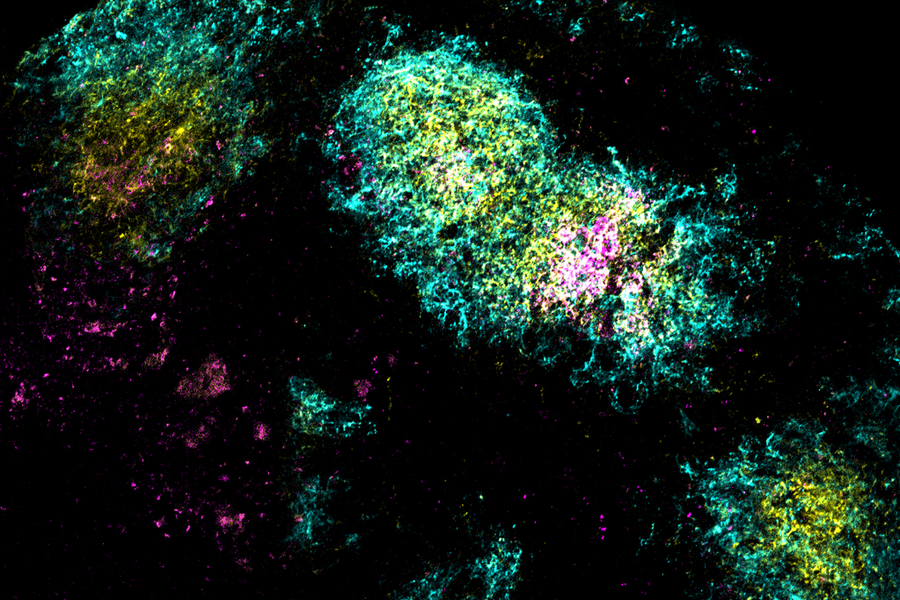
Image shows the vaccine antigen (pink) being concentrated in a germinal center (yellow) within B cell follicles (cyan), triggered by the researchers’ combination adjuvant vaccine. Credits: Image: Courtesy of the researchers

Researchers at MIT and the Scripps Research Institute have shown that they can generate a strong immune response to HIV with just one vaccine dose, by adding two powerful adjuvants — materials that help stimulate the immune system.

In a study of mice, the researchers showed that this approach produced a much wider diversity of antibodies against an HIV antigen, compared to the vaccine given on its own or with just one of the adjuvants. The dual-adjuvant vaccine accumulated in the lymph nodes and remained there for up to a month, allowing the immune system to build up a much greater number of antibodies against the HIV protein.

This strategy could lead to the development of vaccines that only need to be given once, for infectious diseases including HIV or SARS-CoV-2, the researchers say.

“This approach is compatible with many protein-based vaccines, so it offers the opportunity to engineer new formulations for these types of vaccines across a wide range of different diseases, such as influenza, SARS-CoV-2, or other pandemic outbreaks,” says J. Christopher Love, the Raymond A. and Helen E. St. Laurent Professor of Chemical Engineering at MIT, and a member of the Koch Institute for Integrative Cancer Research and the Ragon Institute of MGH, MIT, and Harvard.

Love and Darrell Irvine, a professor of immunology and microbiology at the Scripps Research Institute, are the senior authors of the study, which appears today in Science Translational Medicine. Kristen Rodrigues PhD ’23 and Yiming Zhang PhD ’25 are the lead authors of the paper.

More powerful vaccines

Most vaccines are delivered along with adjuvants, which help to stimulate a stronger immune response to the antigen. One adjuvant commonly used with protein-based vaccines, including those for hepatitis A and B, is aluminum hydroxide, also known as alum. This adjuvant works by activating the innate immune response, helping the body to form a stronger memory of the vaccine antigen.

Several years ago, Irvine developed another adjuvant based on saponin, an FDA-approved adjuvant derived from the bark of the Chilean soapbark tree. His work showed that nanoparticles containing both saponin and a molecule called MPLA, which promotes inflammation, worked better than saponin on its own. That nanoparticle, known as SMNP, is now being used as an adjuvant for an HIV vaccine that is currently in clinical trials.

Irvine and Love then tried combining alum and SMNP and showed that vaccines containing both of those adjuvants could generate even more powerful immune responses against either HIV or SARS-CoV-2.

In the new paper, the researchers wanted to explore why these two adjuvants work so well together to boost the immune response, specifically the B cell response. B cells produce antibodies that can circulate in the bloodstream and recognise a pathogen if the body is exposed to it again.

For this study, the researchers used an HIV protein called MD39 as their vaccine antigen, and anchored dozens of these proteins to each alum particle, along with SMNP.

After vaccinating mice with these particles, the researchers found that the vaccine accumulated in the lymph nodes — structures where B cells encounter antigens and undergo rapid mutations that generate antibodies with high affinity for a particular antigen. This process takes place within clusters of cells known as germinal centers.

The researchers showed that SMNP and alum helped the HIV antigen to penetrate through the protective layer of cells surrounding the lymph nodes without being broken down into fragments. The adjuvants also helped the antigens to remain intact in the lymph nodes for up to 28 days.

“As a result, the B cells that are cycling in the lymph nodes are constantly being exposed to the antigen over that time period, and they get the chance to refine their solution to the antigen,” Love says.

This approach may mimic what occurs during a natural infection, when antigens can remain in the lymph nodes for weeks, giving the body time to build up an immune response.

Antibody diversity

Single-cell RNA sequencing of B cells from the vaccinated mice revealed that the vaccine containing both adjuvants generated a much more diverse repertoire of B cells and antibodies. Mice that received the dual-adjuvant vaccine produced two to three times more unique B cells than mice that received just one of the adjuvants.

That increase in B cell number and diversity boosts the chances that the vaccine could generate broadly neutralizing antibodies — antibodies that can recognize a variety of strains of a given virus, such as HIV.

“When you think about the immune system sampling all of the possible solutions, the more chances we give it to identify an effective solution, the better,” Love says. “Generating broadly neutralizing antibodies is something that likely requires both the kind of approach that we showed here, to get that strong and diversified response, as well as antigen design to get the right part of the immunogen shown.”

Using these two adjuvants together could also contribute to the development of more potent vaccines against other infectious diseases, with just a single dose.

“What’s potentially powerful about this approach is that you can achieve long-term exposures based on a combination of adjuvants that are already reasonably well-understood, so it doesn’t require a different technology. It’s just combining features of these adjuvants to enable low-dose or potentially even single-dose treatments,” Love says.

The research was funded by the National Institutes of Health; the Koch Institute Support (core) Grant from the National Cancer Institute; the Ragon Institute of MGH, MIT, and Harvard; and the Howard Hughes Medical Institute.

This story is republished courtesy of MIT News (web.mit.edu/newsoffice/), a popular site that covers news about MIT research, innovation and teaching.

Read the original article.