Findings published by The BMJ reinforce previous research linking use of the antiseizure drug valproate during pregnancy to neurodevelopmental disorders such as ADHD and autism in children, and indicate no substantial risk for several other antiseizure drugs including levetiracetam and lamotrigine.
However, the researchers say continued monitoring of the few signals – possible associations between a medicine and an unintended side effect – that emerged (eg, for zonisamide) will be important.
Antiseizure drugs are commonly and increasingly used by women of childbearing age for conditions like epilepsy, bipolar disorders, and migraine prevention. Women with epilepsy are advised to continue taking these during pregnancy, as uncontrolled seizures pose risks to both mother and child.
Yet, while valproate use during pregnancy has been linked to impaired neurodevelopment in children, information on other antiseizure drugs is limited.
To address this gap, researchers analysed claims data for pregnancies with diagnosed epilepsy from two large US public and commercial insurance databases, spanning the period from 2000 to 2021.
They compared 14,993 children exposed to at least one antiseizure medication during the second half of pregnancy with 8,887 unexposed children. Of these, 5,505 were followed for at least 5 years and 2,516 for at least 8 years after birth.
Potentially influential factors including mother’s age, ethnicity, mental health, substance use, other medication use and underlying conditions were also taken into account.
Valproate and zonisamide showed associations with several neurodevelopmental disorders, whereas levetiracetam and phenytoin were not associated with an increased risk of any of the studied outcomes.
Although no meaningful associations were found for topiramate and lamotrigine across most outcomes, there was a potential signal for intellectual disability (both drugs) and learning difficulty (topiramate only). However, the authors note that these findings are based on small numbers and require confirmation in follow-up studies.
Several other drugs were also associated with a risk increase for intellectual disability. However, the authors note that these estimates are based on small numbers and therefore should be interpreted with caution.
Carbamazepine and oxcarbazepine also showed a modest risk increase for ADHD and behavioral disorders.
This is an observational study, so no definitive conclusions can be drawn about cause and effect, and the authors point to several limitations including relying on insurance claims data and the potential influence of other unmeasured factors such as underlying epilepsy type and severity.
However, the use of two large nationwide databases of insured pregnant women linked to their children enhanced the generalisability of their findings and enabled them to assess the risk of specific neurodevelopmental disorders associated with individual antiseizure medications. Results were also consistent after additional analyses, suggesting that they are robust.
As such, they conclude: “Our study reinforces the substantial risks of neurodevelopmental disorders associated with prenatal valproate exposure and suggests the need to further evaluate the safety of zonisamide during pregnancy.”
“Continued monitoring of newer antiseizure drugs and the few potential signals that emerged (ie, the moderate increased risk of ADHD and behavioural disorder after carbamazepine and oxcarbazepine exposure, and the association of several antiseizure drugs with intellectual disability) will be important,” they add.
Researchers at King’s College London have shown that a widely used cardiac arrest risk score can be applied before patients reach hospital, enabling paramedics to assess the risk of brain injury at an earlier stage of care.
Results from the RAPID-MIRACLE trial have found, for the first time, that the widely used MIRACLE2 risk score can be applied outside a hospital setting to accurately predict brain injury following a cardiac arrest. This could inform the type of immediate care patients receive, helping to ensure they have the best treatment available while saving crucial resources.
An out of hospital cardiac arrest (OHCA) carries a high risk of death, with fewer than 10% of patients surviving. Even when a patient’s heart is successfully restarted through CPR and circulation is restored, known as return of spontaneous circulation (ROSC), clinicians often face uncertainty about the extent of brain injury.
Despite current UK and European guidelines recommending that patients who experience an out of hospital cardiac arrest are sent to a specialist cardiac centre, the majority of patients are still conveyed to local emergency departments. The MIRACLE2 score, when applied in the pre-hospital setting, may now open up the possibility of identifying patients earlier and enabling direct transfer to specialist centres, allowing faster access to expert care and advanced treatments for patients who might otherwise have been conveyed to a local hospital.
Created by Dr Nilesh Pareek, Adjunct Senior Lecturer and Consultant Interventional Cardiologist, the MIRACLE2 score accurately predicts the extent of brain damage after 30 days following an OHCA. Until now, it has only been applied once a patient reaches hospital.
Dr Pareek and his team worked with the London Ambulance Service and Heart Research UK to evaluate whether the score could be calculated immediately after ROSC in the community.
The study followed patients from paramedic care through to hospital treatment across multiple London sites, providing real-world evidence of how the score performs outside a hospital environment.
The researchers tested two new versions of the score – one which included a blood test and one which didn’t. While the version with the blood test was highly accurate, paramedics frequently found it impractical due to technical failures and time pressure. The version without the blood test, known as Pre-MIRACLE2, was almost identical in terms of accuracy.
While MIRACLE² has supported early in-hospital risk stratification following out-of-hospital cardiac arrest, RAPID-MIRACLE extends this work into the pre-hospital setting, enabling paramedics to assess risk earlier in a patient’s care pathway. By validating the model in the field, we have taken an important step towards integrating earlier risk assessment into routine emergency care.”Dr Nilesh Pareek, senior author of the study and Adjunct Senior Lecturer, King’s College London and Consultant Interventional Cardiologist, King’s College Hospital
Alongside the study, the MIRACLE² app, led by Dr Pareek, has been updated to incorporate the newly validated pre-hospital model. The app, developed by Ensono Digital, uses the MIRACLE2 algorithm and is designed as a practical tool to help clinicians calculate the score quickly and accurately, without needing to recall each variable from memory.
By entering patient information such as age, initial heart rhythm and other markers, paramedics and hospital clinicians can generate an immediate estimate of a patient’s risk of poor neurological outcome following out-of-hospital cardiac arrest.
The research team is now in discussion with emergency medical services regarding a potential service evaluation to explore how the updated tool could be implemented in routine practice.
Heart Research UK were delighted to fund the RAPID-MIRACLE trial with the aim of improving outcomes for this poorly served patient group. The promising results from the trial suggest that better outcomes can be delivered, and we hope the risk score can be adopted nationally for all patients.”Dr Kate Langton, Director of Research at Heart Research UK
The research findings were presented in Washington at the CRT 2026 conference and the full study was published in European Heart Journal – Acute Cardiovascular Care.
Even with highly extensive training, the human brain is not really capable of performing two tasks simultaneously. Moreover, even the smallest deviations from trained routines can have a significant impact on how quickly and successfully people complete tasks simultaneously. This is shown by a new study conducted by Martin Luther University Halle-Wittenberg (MLU), the FernUniversität in Hagen and the Medical School Hamburg. It was recently published in the Quarterly Journal of Experimental Psychology.
In three experiments, the researchers investigated how people perform two tasks simultaneously that involve different senses: participants were asked to indicate the size of a circle that was briefly displayed with their right hand and simultaneously to say whether a sound played at the same time was high, medium or low. The speed at which the participants completed the tasks and the number of mistakes they made were measured. The tasks were repeated over a period of up to twelve days. The results showed that the more often the test subjects completed the test, the faster they solved both tasks without errors.
Earlier studies with similar findings had therefore suggested that so-called dual-task costs, ie, performance losses when working on two tasks simultaneously, could almost completely disappear after extensive practice. “This phenomenon, known as virtually perfect time sharing, has long been considered evidence of true parallel processing in the brain and proof that our brain is capable of unlimited multitasking. The results of our study clearly contradict this assumption,” says psychologist Professor Torsten Schubert from MLU.
The new study shows that the underlying cognitive processes still do not run completely in parallel. What’s more, even the smallest changes to the tasks caused the error rate to rise and the participants to take longer to complete the tasks. “Our brain is very adept at sequencing processes so that they no longer interfere with each other. However, this optimisation has its limits. In particularly challenging situations, our cognitive apparatus therefore tires very quickly and becomes error prone,” Schubert continues.
The study also provides new impetus for safety research. “Our results show why multitasking can often be risky in everyday life, despite routine, for example when driving and talking on the phone at the same time. This is also relevant for professions with complex activities where several tasks have to be performed in parallel, such as air traffic controllers or simultaneous translators,” says Professor Tilo Strobach from the Medical School Hamburg. Professor Roman Liepelt from the FernUniversität in Hagen adds: “Our study sheds new light on the limits of human information processing. Understanding such cognitive bottlenecks is crucial for improving work processes, learning environments and safety measures in everyday life.”
First-ever molecular snapshots show the body’s “cold sensor” in action, with implications for treating pain, migraines, and dry eye
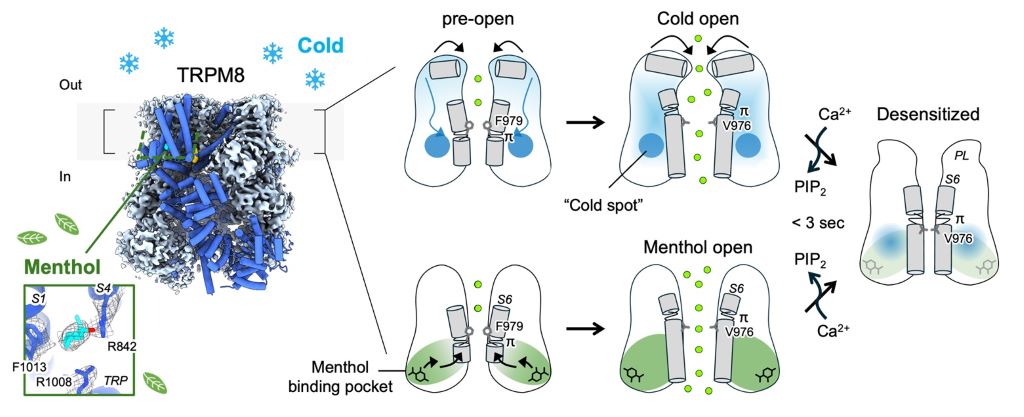
Using cryo-electron microscopy, researchers captured multiple conformational snapshots of the cold sensing channel, TRPM8, as it transitions from closed to open.
When you step outside on a winter morning or pop a mint into your mouth, a tiny molecular sensor in your body springs into action, alerting your brain to the sensation of cold. Scientists have now captured the first detailed images of this sensor at work, revealing exactly how it detects both actual cold and the perceived cool of menthol, a compound derived from mint plants. The research was presented at the 70th Biophysical Society Annual Meeting in San Francisco from February 21–25, 2026.
The study focused on a protein channel called TRPM8. “Imagine TRPM8 as a microscopic thermometer inside your body,” said Hyuk-Joon Lee, a postdoctoral fellow from Seok-Yong Lee’s laboratory at Duke University. “It’s the primary sensor that tells your brain when it’s cold. We’ve known for a long time that this happens, but we didn’t know how. Now we can see it.”
TRPM8 sits in the membranes of sensory neurons innervating the skin, oral cavity, and eyes. It responds to cold temperatures – roughly between 8°C and 28°C – by opening up and allowing ions to flow into the cell, which triggers a nerve signal to the brain. It’s also the reason menthol, eucalyptus, and certain other compounds produce that characteristic cooling sensation.
“Menthol is like a trick,” Lee explained. “It attaches to a specific part of the channel and triggers it to open, just like cold temperature would. So even though menthol isn’t actually freezing anything, your body gets the same signal as if it were touching ice.”
Using cryo-electron microscopy – a technique that images flash-frozen proteins with an electron beam – Lee and colleagues captured multiple conformational snapshots of TRPM8 as it transitions from closed to open. They discovered that cold and menthol activate the channel through shared yet distinct allosteric networks: cold primarily triggers changes in the pore region (the part that actually opens to let ions through), while menthol binds a different part of the protein and induces shape changes that propagate to the pore.
“When cold is combined with menthol, the response is enhanced synergistically,” Lee said. “We used this combination to capture the channel in its open state – something that hadn’t been achieved with cold by itself.”
The findings have medical implications. When TRPM8 doesn’t function properly, it has been linked to conditions including chronic pain, migraines, dry eye and certain cancers. Acoltremon, a drug that activates TRPM8, is an FDA-approved eye drop for dry eye disease. As a menthol analogue, it works by activating the cooling pathway to stimulate tear production and soothe irritated eyes.
The researchers also identified what they call a “cold spot” – a specific region of the protein that is uniquely important for sensing temperature and helps prevent the channel from becoming desensitised during prolonged cold exposure.
“Previously, it was unclear how cold activates this channel at the structural level,” Lee said. “Now we can see that cold triggers specific structural changes in the pore region. This gives us a foundation for developing new treatments that target this pathway.”
The work offers the first molecular definition of how cold and chemical stimuli are integrated to create the sensation of coolness – answering a fundamental question in sensory biology that has puzzled scientists for decades.
Stimulating two brain areas, nudging them to collectively fire in the same way, increased a person’s ability to behave altruistically, according to a study published February 10th in the open-access journal PLOS Biology by Jie Hu from East China Normal University in China and colleagues from University of Zurich in Switzerland.
As parents raise their kids, they often work to teach them to be kind and to share, to think about other people and their needs – to be altruistic. This unselfish attitude is critical if a society is going to function. And yet, while some people grow up to devote themselves to others, other people still manage to grow up selfish.
To understand what brain areas and connections might underlie individual differences in altruism, the researchers asked 44 participants to complete 540 decisions in a Dictator Game – offering to split an amount of money with someone else, which they then got to keep. Each time, the participant could make more or less money than their partner, but the amounts varied. As the participants played the game, the researchers stimulated their brains with transcranial alternating current stimulation over the frontal and parietal lobes of the brain. The stimulation was set up to make the brain cells in those areas fire together in repetitive patterns, training them all to either gamma or alpha oscillation rhythms.
The authors found that during the alternating current stimulation designed to enhance the synchrony of gamma oscillations in the frontal and parietal lobes, the participants were slightly more likely to make an altruistic choice and offer more money to someone else – even when they stood to make less money than their partner. Using a computational model, the researchers showed that the stimulation nudged the participants’ unselfish preferences, making them consider their partner more when they weighed each monetary offer. The authors note that they did not directly record brain activity during the trials, and so future studies should combine brain stimulation with electroencephalography to show the direct effect of the stimulation on neural activity. But the results suggest that altruistic choices could have a basis in the synchronized activity of the frontal and parietal lobes of the brain.
Coauthor Christian Ruff states, “We identified a pattern of communication between brain regions that is tied to altruistic choices. This improves our basic understanding of how the brain supports social decisions, and it sets the stage for future research on cooperation – especially in situations where success depends on people working together.”
Coauthor Jie Hu notes, “What’s new here is evidence of cause and effect: when we altered communication in a specific brain network using targeted, non-invasive stimulation, people’s sharing decisions changed in a consistent way – shifting how they balanced their own interests against others’.”
Coauthor Marius Moisa concludes, “We were struck by how boosting coordination between two brain areas led to more altruistic choices. When we increased synchrony between frontal and parietal regions, participants were more likely to help others, even when it came at a personal cost.”
Researchers at the University of Missouri may have uncovered a clue explaining why young adults with autism are roughly six times more likely to develop Parkinson’s disease later in life.
In a recent study, the researchers found that some young adults with autism show abnormalities in dopamine transporters, tiny molecules in the brain that recycle unused dopamine, on brain scans that are typically used to diagnose older adults with Parkinson’s disease.
Future research could help determine whether the health of dopamine transporters could be an early warning sign of Parkinson’s disease developing later in life.
“While the loss of these dopamine transporters can be biomarkers for Parkinson’s disease, no one had ever thought to look at them in the context of young adults with autism, so hopefully this work can help us explore if there is a potential link going forward,” David Beversdorf, a professor in the School of Medicine and College of Arts and Science, said. “There has been previous work looking into the total amount of dopamine in the brains of people with autism, but we took a new approach by looking at abnormalities in terms of how dopamine is processed in a specific part of the brain called the basal ganglia via these dopamine transporters.”
Dopamine under the spotlight
Dopamine is a neurotransmitter involved in numerous body functions, such as memory, pleasure, motivation, behaviour and attention. Of particular interest to Beversdorf, a clinician at the Thompson Center for Autism and Neurodevelopment, is that dopamine also helps control muscle movement as well as cognition.
Beversdorf, who collaborated with lead author Nanan Nuraini on the study, originally wanted to know whether certain repetitive behaviors common in some young adults with autism, such as hand-flapping or rocking back and forth, were linked with abnormalities in dopamine transporters.
While he did not notice patterns in that regard, what he found surprised him.
Beversdorf looked at Dopamine Transporter (DaT) brain scans of 12 young adults with autism.
Four different nuclear medicine specialists examined the scans. All of them agreed that two of the 12 young adults had abnormal dopamine transporters and that eight appeared normal. They disagreed on the remaining two.
“Since these DaT scans are typically used to diagnose or evaluate older adults with Parkinson’s disease, the appearance of abnormalities in some young adults with autism was very surprising, so we should look into this topic more going forward,” Beversdorf said. “While it’s too early to jump to conclusions, hopefully our work raises awareness about the importance of monitoring the brain health of young adults with autism as they age.”
Next, Beversdorf hopes to study a broader range of people with autism by conducting more DaT scans across different age groups.
“The earlier we can identify those who might be at greater risk for getting Parkinson’s disease down the road, the sooner we can discuss preventative measures, including whether certain medications could potentially slow down the progression of disease,” Beversdorf said.
If someone living with HIV is not on antiretroviral therapy, the virus can cause inflammation in, among other places, the brain. Photo by Anna Shvets
By Biénne Huisman
Antiretroviral therapy has shifted HIV from a fatal to a chronic condition. But neuropsychiatrists say it is imperative for people living with the virus to start treatment immediately as the “duration of untreated exposure” may cause irreversible brain damage and impact long-term cognitive health.
It has been recognised for decades that cognitive impairment is a potential complication of HIV infection. Questions over how likely and how serious this potential complication is have become more urgent over time as the population of people living with HIV ages – ageing after all also increases the risk of cognitive decline.
There were around 1.75 million people over the age of 50 living with HIV in South Africa in 2024, according to Thembisa, the leading mathematical model of HIV in the country. This is just over 20% of the estimated eight million HIV positive people in the country. A study published in the Lancet medical journal also has the number at around 20% in sub-Saharan Africa.
This is a delicate field of enquiry as researchers walk a tightrope to avoid “the burden of double stigma”, while conceptualising the necessary tools to best diagnose brain problems and suitable interventions.
Within as little as two weeks
At Groote Schuur Hospital’s Neuroscience Institute, Professor John Joska, director of the University of Cape Town’s (UCT’s) HIV Mental Health Research Unit, explains that HIV can enter the brain within as little as two weeks after the initial infection – primarily through infected white blood cells, such as lymphocytes. If a person is not on antiretroviral therapy, the virus can cause inflammation in the brain and possibly also tissue damage.
“The brain is a protected compartment,” says Joska. “A theory as to how the virus, which is a protein particle, gets into the brain is through infected lymphocytes. This doesn’t directly infect nerve cells, what we call neurons. It infects other supporting tissues and cells in the brain, causing an inflammation which damages typically the white matter of the brain. Over time, that inflammation can cause loss of neurons, but indirectly.”
While antiretroviral therapy is crucial for clearing and suppressing HIV in all body compartments, including in the brain, he says that it does not reverse damage that occurred before the treatment was started.
“Today, people with HIV are living near normal lifespans,” he says. “The question is, will the fact that they’ve had HIV, with some duration of untreated exposure and potential loss of brain tissue, cause them to be at higher risk than the average person for developing dementias of old age – which really are mainly Alzheimer’s disease or vascular dementia.” It is these longer-term effects that are the main concern when it comes to the impact of HIV on the brain.
Part of the problem is that South Africa not only has an ageing population of people living with HIV, but many of these people would only have started treatment quite long after they contracted the virus. One key reason for this is the South African government’s reluctance to make antiretroviral treatment available in the early 2000s. It has been estimated that those delays resulted in over 300 000 avoidable deaths – they may also be contributing to brain health issues now and in the future.
From efavirenz to dolutegravir
Apart from HIV itself, some of the medicines used to treat the infection have also had an impact on the brain.
In 2019, the standard HIV treatment in South Africa changed from a three-drug combination containing an antiretroviral drug called efavirenz, to a combination containing the drug dolutegravir. This shift had mental health benefits, as evidenced in research lead by Joska’s fellow UCT Neuro-HIV researcher, Associate Professor Sam Nightingale.
Joska says: “The study looked at the period from 2017 to 2020 and the switch from efavirenz to dolutegravir based treatment. It was well known that efavirenz caused, certainly for the first two months, a bunch of psychotropic or psychological issues like nightmares or anxiety, even psychosis for some people. But our findings showed people who switched to dolutegravir actually do very well. They look more like people without HIV after eight months. So dolutegravir has been a huge advantage, not only because it’s robust, but because it’s neuro-protective.”
New models for HIV and cognitive impairment
A shift is underway in how experts are thinking about cognitive impairment in people with HIV. Some neuropsychiatrists, including Joska, are recommending a shift away from the 2007 HIV-Associated Neurocognitive Disorders model, arguing that its cognitive test scores do not adequately account for variables such as education and socioeconomic background, and that it can overdiagnose impairment. The argument is set out in an article, lead-authored by Nightingale, that was published in the journal Nature Reviews Neurology in 2023.
The authors argue that a label of cognitive impairment might cause a “double burden of stigma” for people living with HIV – affecting self-esteem, inciting fear and prompting further discrimination against persons already subject to stigma as it stands. To illustrate the point, they point out how, up until recently, people with HIV in the United Kingdom could not become airline pilots due to concerns over cognitive impairment. However, following a campaign by a pilot living with HIV, the United Kingdom’s Civil Aviation Authority removed the ban in 2022.
Nightingale and his colleagues argue that traditional test scores be used in conjunction with real-life symptoms and medical evidence of brain problems. It introduces the conceptual model of HIV-Associated Brain Injury, which refers specifically to damage caused by the virus. This distinguishes it from other causes of cognitive impairment such as depression, substance abuse, diabetes and cardiovascular disease. As Spotlight previously reported, HIV is also associated with an increased risk of depression, though this is at least partially driven by social factors.
Lower cognitive function associated with late diagnosis
At the 2026 Conference on Retroviruses and Opportunistic Infections hosted in Denver in the United States in late February, these issues were tabled at a discussion titled “When I’m 64: Neurodegeneration, Epigenetic Aging, and Cognition in Older People With HIV.”
Professor John Joska is the director of the University of Cape Town’s HIV Mental Health Research Unit. (Photo: Biénne Huisman/Spotlight)
In his presentation, Professor Alan Winston of Imperial College London, also a member of the International HIV-Cognition Working Group, and a frequent co-author alongside Joska and Nightingale, relayed existing research findings that on average, people living with HIV have lower cognitive function – including memory, attention span and executive function like planning – compared to people who don’t have HIV of the same age. He said that this manifests as an increased risk of lower grade early dementia.
Like Joska, Winston stressed that the most deteriorated cognitive function in people living with HIV is associated with untreated HIV and late HIV diagnosis. He reiterated that starting HIV treatment soon after diagnosis is protective, and that viral suppression is associated with better cognition. In groups of patients with HIV well controlled on dolutegravir-based HIV treatment, cognition appears similar to HIV negative groups, he said.
HIV clinicians need to pay better attention to the brain
In an impassioned presentation, Dr Shibani Mukerji, Associate Professor of Neurology at Harvard Medical School, argued that protecting the brain is an overlooked frontier in effective HIV treatment, and that clinicians need to pay more attention to it.
“By the time patients and clinicians notice cognitive decline – generally and in HIV – the damage to the brain is done and lives are affected negatively. People don’t raise cognitive concerns early enough due to stigma, fear, [and] lack of recognition of the issues. It is seen as ‘just getting old’,” she said.
Mukerji emphasised the need to prioritise brain health. “HIV doctors and treatment programmes are focused, almost exclusively, on viral load as the marker of successful treatment. They may be thinking laterally and consider TB and other infections, maybe cardiovascular disease – but they are definitely not paying enough attention to brain health. HIV doctors aren’t aware enough of brain health issues in people living with HIV, and even when they are, they often don’t feel comfortable diagnosing or managing it, so it is under recognised and under diagnosed.”
The perception that there is no way to manage or treat cognitive decline –generally and in people living with HIV – is wrong, she said, adding that optimising physical, mental and social health is critical for brain health.
“Almost half of dementia risk [in people in general] is linked to preventable causes,” she told conference delegates, along with a slide listing preventable causes including loss of hearing, social isolation, cardiovascular disease and depression.
She explained: “If someone has cognitive decline and for example you improve their hearing – if they have hearing issues – and you work on their social isolation, and treat their vascular disease, and treat their depression, you can see a marked improvement in their cognition.”
Ending her presentation with a twist of humour, Mukerji’s last slide referred to the session’s title, a reference to the Beatles song on aging “When I am 64”. She printed the song’s lyrics: “When I get older, losing my hair, many years from now…”, closing her talk by saying: “It’s okay to stand up and sing, in fact your doctor might prescribe it.”
Houston Methodist researchers find antibiotics aid recovery from traumatic brain injury
Source: CC0
What if healing the brain after traumatic injury starts in the gut? In a new study published in Nature Communications Biology, Houston Methodist researchers led by Sonia Villapol, PhD, found that short-term antibiotic treatment significantly reduced neuroinflammation and neurodegeneration following traumatic brain injury (TBI) by altering the gut microbiome in animal models.
“We found that antibiotic treatment following TBI can reduce harmful gut bacteria, decrease lesion size and limit cell death,” said Villapol, an associate professor in the Department of Neurosurgery at Houston Methodist. “Our results support a gut–brain mechanism in which microbiome changes influence peripheral immunity and, in turn, neuroinflammation after TBI.¨
Administering antibiotics cleans the gut of harmful bacteria, allowing beneficial bacteria to flourish. The study found that two helpful bacteria, Parasutterella excrementihominis and Lactobacillus johnsonii, are key to driving cell repair. According to Villapol, they could also be major regulators for peripheral inflammation in the body.
Notably, 70% of immune system regulation is generated by the gut microbiome. During gut imbalance, the bidirectional nature of the brain-gut axis can wreak havoc throughout the entire body.
“Our brains are constantly sending signals to the rest of our bodies. Following a traumatic brain event, those signals can get scrambled and disrupt other organs, including our digestive system,” Villapol said. “If the gut stays out of balance, the brain may have a harder time healing.”
Recent studies indicate that TBI-induced gut microbiome imbalance may even contribute to the development of neurodegenerative diseases like Parkinson’s, Alzheimer’s and dementia.
Villapol’s lab is focused on investigating and developing new neuroprotective treatments to fight inflammation linked with neurodegenerative disease. “If we can break neuroinflammation in the acute or chronic stage, we can reduce the risk of developing Alzheimer’s or dementia,” said Villapol.
The next phase of the research will focus on bioengineering P. excrementihominis and L. johnsonii to further develop precision therapies to reduce neuroinflammation.
In a leap for personalised medicine, scientists have discovered a simple and valuable way to improve brain cancer surgeries.
Taylor Furst, MD, observes a brain mapping procedure in progress at the University of Rochester’s Strong Memorial Hospital. Credit: Matt Wittmeyer
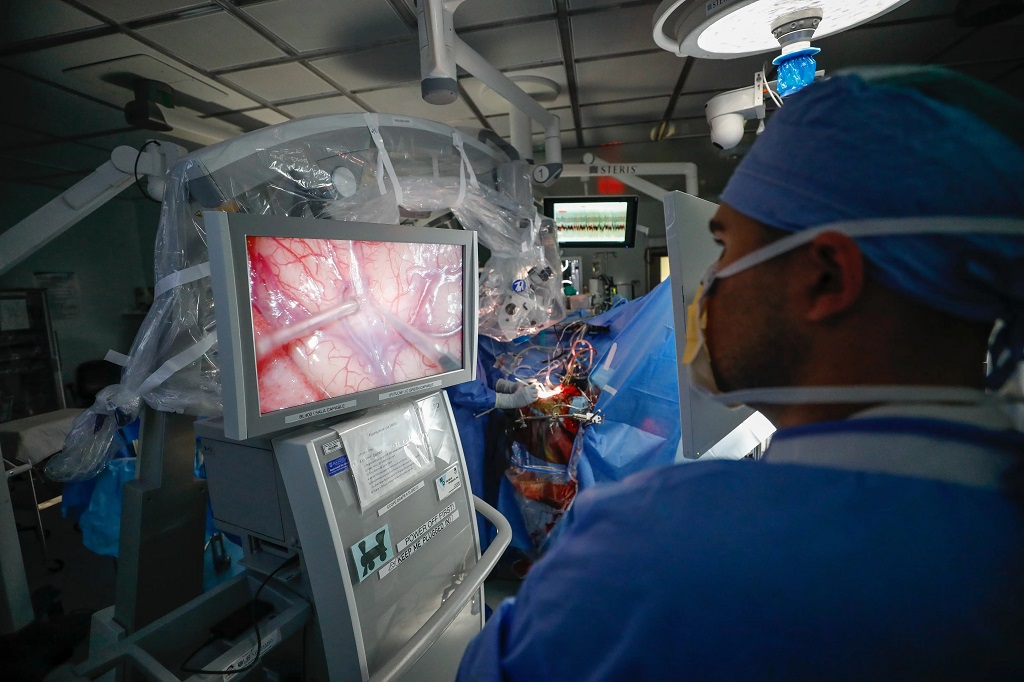
When removing cancerous tissue in the brain, neurosurgeons often use “awake brain mapping” to minimise the risk of causing unintended disruptions to a patient’s quality of life while removing as much tumour as possible. This practice, which has been used for decades, involves waking a patient up mid-surgery to test their neurocognitive functions in real time by stimulating the brain surface and assessing for functional changes.
A new study published in the journal Science Advances details a promising new avenue toward improving awake brain mapping results by investigating the tiny, nearly imperceptible variabilities in patient behaviour that occur during the procedure. This work, led by Carnegie Mellon University researchers, points to a future where brain surgeries are not just safer, but more precisely tailored to protect each patient’s speech, movement and quality of life.
How awake brain mapping works
As cancer grows in the brain, it rarely keeps to itself. Cancerous cells can be found in the seemingly healthy brain tissue surrounding a tumour, presenting neurosurgeons with a dilemma. They need to remove as much tissue infiltrated by cancer as possible, but they also need to avoid the removal of too much tissue since it can cause permanent harm to a patient’s ability to hold a fork or a conversation.
During awake brain mapping, surgeons gently stimulate the brain with small electrical impulses while the patient completes planned tasks. One of the most common applications of awake brain mapping is to identify where language is represented in a patient’s brain, which is done by having the patient name pictures or read words while their brain is being stimulated. If the patient can respond quickly and correctly, the clinicians know the part of the brain they stimulated can be safely removed. If the patient slurs or becomes unable to speak, then that part of the brain may be essential for language. Surgeons require a significant amount of experience to understand the nuances of this complex technique.
While the method may sound extreme, the brain has no sensory nerves, so patients do not feel their brain surgery as it is happening. Recent research also shows that for some types of brain cancer, improving a patient’s quality of life after surgery extends their expected survival into the future. This means that anything that can make awake brain mapping even more effective will translate into improved outcomes for brain cancer patients.
New measures show how slight changes in procedure affect patient behaviour
Based on a decade of research, the study authors uncovered new insights from examining the answers patients get wrong – and right – while undergoing awake brain mapping.
“We found that if you measure both the types of errors that patients make, as well as how fast they respond even when they do not make errors, more granular inferences can be drawn about language organization from an awake brain mapping procedure,” said Bradford Mahon, a cognitive neuroscientist at CMU’s Neuroscience Institute and Department of Psychology and senior author of the study. “We also found that physical parameters of the direct electrical stimulation delivered to the patient’s brain – such as its duration, and when it started and stopped relative to the task the patient is performing – were tightly related to small changes in patient behaviour that we could measure.”
Mahon and his team don’t yet know exactly what combination of parameters should be used to maximise the effect of direct electrical stimulation mapping. But they have discovered an intriguing signal hidden inside of the data that, until now, has gone unnoticed.
“What we have measured and formalised in our study is how slight changes in the awake mapping procedure can cause slight changes in patient behaviour. This is exciting because it is a new and meaningful signal that can be extracted from the data already being generated during awake brain mapping procedures,” said Mahon.
A new level of personalised medicine
The new study suggests that awake brain mapping may offer more informative and more personalized guidance for surgery than has been possible in the past.
For example, stimulating a particular area of the brain might reliably cause an error, never affect behaviour at all, or – more subtly – slow a patient’s response without causing an obvious mistake. In some cases, stimulation may affect behaviour at one moment, but not when tested again just seconds later.
“In other words, brain mapping isn’t always black or white,” said Belkhir. “Sometimes the most important information lives in the grey area.”
The nuance matters because every brain is different, which means every surgery is different, too. Understanding why stimulation has variable effects across different patients, and even within the same patient from one part of the surgery to another part of the surgery, may be key to protecting outcomes for future patients.
“Surgeons are seeking to optimise the balance between removing all of the cancerous tissue while preserving critical functions that may be represented by nearby brain regions,” said Mahon. “This research shows that by measuring aspects of patient performance that were previously not considered relevant for awake brain mapping, even better predictive models of brain organisation can be developed.”
If clinical teams have better predictive models personalised to each patient, then the consequences of different surgical approaches on postoperative neurocognitive function can be simulated. This allows for patients and their caregivers to personalise decisions to what is most important to the patient.
In other words, Mahon said, a business manager may consent to a surgery that may diminish their motor skills, but not their speech, whereas a concert violinist may prefer the opposite.
Bringing standardisation to awake brain mapping surgery
Another important development from this research is the startup company MindTrace, which has built an integrated software platform that supports neurocognitive testing before, during and after surgery. It is working to build a longitudinal dataset of patient outcomes that will be used to train forecasting models.
Tyler Schmidt, MD, study co-author and neurosurgeon at the University of Rochester, has used MindTrace in over a dozen awake surgeries since its release this year.
“In the beginning of brain tumour surgery, it used to be, ‘Can we remove any of this tumour safely?’” said Schmidt. ”But now in some brain tumour cases it’s, ‘Can we get you back to work potentially? Can we keep your quality of life close to what it was prior to your diagnosis? Can we hone in on the things that are most important to you and then try and protect them while getting the same oncological outcome?’” said Schmidt. “I think it’s a positive paradigm shift in how we take care of this patient population.”
The options today are measurably better than they were even 20 years ago. Clinicians now understand how to maximise the likelihood that patients have the best possible outcomes from brain cancer surgery.
“Ultimately, we are contributing toward the set of tools that clinicians will have that will enable them to map the brain with even greater confidence and precision, and personalised to each patient,” said Mahon. “The big goal is to translate scientific insights into solutions that improve people’s lives. We will meet that goal by building tools that enable the best possible outcomes in neurosurgery patients, both in terms of neurocognitive function and quality of life, and ultimately, in terms of survival.”
A second pregnancy changes women’s brains in the same way as a first pregnancy, but in a different way than the first time. This is according to researchers from Amsterdam UMC, published in the scientific journal Nature Communications. The findings of Elseline Hoekzema and her colleagues show that a second pregnancy uniquely changes a woman’s brain, entailing both convergent and distinct neural transformations.
An earlier study by Elseline Hoekzema was the first to demonstrate that pregnancy changes the structure of the human brain. The research group also demonstrated that pregnancy changes the functioning of the brain. For the follow-up study, the results of which have now been published, 110 women were monitored: some were becoming mothers for the first time, others were having their second child, and a third group remained childless. Brain scans before and after pregnancy showed what changes occurred in the brain. “We have shown for the first time that the brain not only adapts during the first pregnancy, but also during the second,” says Hoekzema, head of the Pregnancy Brain Lab at Amsterdam UMC.
Different brain networks
The biggest changes during a first pregnancy occurred in the structure and activity of the so-called Default Mode Network. This part of the brain is important for many functions, including self-reflection and social processes. During a second pregnancy, this network changed again, but less dramatically. However, during a second pregnancy, there were more changes in brain networks related to paying attention and responding to stimuli. “It seems that during a second pregnancy, the brain changes more significantly in networks involved in responding to sensory stimuli and directing your attention,” explains researcher Milou Straathof, who analyzed the data. “These processes can be beneficial when caring for multiple children.”
Mental health of mothers
The researchers also found a connection between the changes in the brain and the bond between mother and child. This link was more prominent in the first pregnancy than during the second pregnancy. In addition, the researchers observed links between structural brain changes and peripartum depression, both during a first and a second pregnancy. This provides the first evidence that the changes that occur in a woman’s cerebral cortex during pregnancy are related to depression. In women who became mothers for the first time, this was particularly noticeable after giving birth. In women who had their second child, this was the case during pregnancy. “This knowledge can help us to better recognize and understand mental health issues in mothers. We must understand how the brain adapts to motherhood.”
The importance of research into the maternal brain
This study provides new insights into how the female brain adapts to motherhood and contributes to closing this important knowledge gap about female biology. Hoekzema: “The majority of women become pregnant one or more times in their lives, but only now are researchers beginning to unravel how this affects the female brain.” The results may also contribute to better care for mothers, for example, in the prevention and treatment of postpartum depression. The study also shows that the brain is flexible and can continually adapt to major changes in life.