Children with epilepsy have a higher risk of also having autism spectrum disorder (ASD). A new study in Developmental Medicine & Child Neurology examined factors associated with the co-occurrence of autism and epilepsy in a large population-based group.
For the study, investigators at the Mayo Clinic compared the prevalence of autism spectrum disorder in children with and without epilepsy based on medical records, and they evaluated associated factors including sex, age at autism identification, and intellectual disability. The study included 30 490 children in the Olmsted County, Minnesota birth cohort, of whom 257 (0.84%) had epilepsy diagnosed before 19 years of age.
Autism prevalence was significantly higher among children with epilepsy as compared with children without across all three research and clinical definitions assessed (21.4% versus 3.2% using broad research criteria, 14.0% versus 1.6% using stricter research criteria, and 7.9% versus 0.7% for clinical diagnosis).
Children with epilepsy and autism were more likely to have intellectual disability (56.5% versus 15.4%), were more often female (38.2% versus 25.8%), and were identified with autism at a younger age (7.4 versus 8.7 years) compared with those without autism.
“These observations highlight clinically relevant differences within this group and underscore the importance of early recognition of developmental concerns,” said lead author Mariya Saify. MBBS.
Senior author Elaine C. Wirrell, MD added that although children with epilepsy are at an elevated risk of autism, recognition can be delayed. “Our findings emphasise the importance of screening for autism in this population to support earlier diagnosis and timely intervention, both of which are key to improving long-term outcomes.”
MS (multiple sclerosis) is the most common chronic neurological disease among young adults globally, with no drugs capable of repairing nerve damage caused by the destruction of the myelin sheath. A doctoral thesis opens up a new avenue by demonstrating the effectiveness of two different drug molecules in initiating the regrowth of a protective layer surrounding neurons.
Researchers have long sought ways to initiate remyelination, a process where the destroyed myelin sheath grows back and the neurons recover. However, all drug candidates trialled so far have failed. The problem is that, particularly in the later stages of MS, the disease creates in the central nervous system local tissue conditions that inhibit remyelination.
In the first approach, a drug molecule targets a stress mechanism intrinsic to brain cells. In areas damaged by MS, this stress response is constantly in overdrive, effectively preventing tissue-repairing cells from doing their job. When the mechanism was blocked using the new drug molecule, remyelination was significantly enhanced and accelerated in brain tissue with MS-like damage. The study was published in the Molecular Therapy journal in February.
The second approach focuses on scar tissue formed around affected areas, which serves as a physical barrier to neural regeneration. By affecting the composition of this scar tissue with the second drug molecule, this approach also succeeded in promoting neuronal recovery. An article focusing on this approach was published in the Neuropharmacology journal.
Surprisingly, these two drugs based on entirely different mechanisms led to very similar results: significant remyelination and reduced neuroinflammation in disease models, that is, animal and cell tests modelling the tissue pathology of MS.
First drug that boosts remyelination requires further research
For the time being, the results were achieved in laboratory animals and cell models. The more complex tissue conditions of human MS make it necessary to investigate the efficacy of the drug molecules in humans. One challenge for drugs targeting the brain is the blood-brain barrier, which blocks many substances from entering the brain. The researchers nevertheless demonstrated that both molecules effectively reach the central nervous system in laboratory animals.
“The goal is to enable the molecules we have developed to reach clinical trials, which could one day produce the first drugs that enhance remyelination in MS. In the meantime, our findings can help in investigating the pathogenic mechanisms of MS that inhibit remyelination,” Koppinen says.
The thesis is also available in electronic form through the Helda repository.
Non-concussive head impacts correlated with changes to the gut microbiome on following days, in pilot study tracking six US collegiate football players over one season
Non-concussive head impacts – hits to the head that don’t cause clinically detectable symptoms – are correlated with subsequent changes to the gut microbiome in a small sample of US collegiate football players, according to a new study published May 6, 2026, in the open-access journal PLOS One by Ahmet Ay and Kenneth Douglas Belanger of Colgate University, USA, and colleagues.
Non-concussive head impacts are common in American football, with players experiencing between 100 and 1000 across a season. While research has shown that full concussions can disrupt the gut microbiome – which regulates inflammation and the neuroimmune system – whether sub-concussive hits might produce similar effects had not been investigated.
In the new study, researchers tracked six NCAA Division I American football players across a competition season, beginning during preseason training. Their on-field activity profiles were monitored using GPS units and head impacts were tracked using a helmet-based sensor system; 226 faecal samples were analysed for their microbiome composition; and participants completed lifestyle questionnaires after each sample collection.
The researchers found that microbial diversity changed within two to three days after a substantial head impact. Specifically, certain bacteria – including the order Coriobacteriales, the family Prevotellaceae, and the genus Prevotella – tended to decrease in abundance while the genus Ruminococcus increased. In previous studies, these changes have correlated with brain injury and inflammation.
The athletes’ gut microbiomes also changed significantly over the course of the season, with mathematical modelling suggesting that the cumulative effects of non-concussive head impacts was likely associated with this shift, even after accounting for 15 potentially confounding factors including diet changes, exercise intensity, sleep, and stress.
The study is limited by its small sample size and lack of a control group, with its design meaning findings could only establish correlation but not causation. However, the authors conclude that even sub-symptomatic head impacts might affect the gut microbiome, both in the immediate aftermath of injury and over a longer time course in athletes who experience multiple impacts.
Ken Belanger adds: “As far as we are aware, this is the first study to examine connections between head impacts and the composition of the gut microbiome – the complex community of bacteria and other organisms within the digestive system.”
“Our results provide evidence that even head impacts that do not result in a concussion or other reported symptoms may influence the microbes present within the gut, both in the short- and longer-term. Determining what causes these changes and whether they have a positive or negative influence on recovery from head injury will require further investigation.”
“Our research highlights the importance of thinking integratively about the interactions between the gut and the brain. We are only beginning to scratch the surface in our understanding of how these complex organs and organ systems communicate with and affect each other.”
Aziz Zafar adds: “After having only heard of the complicated interplay between neuronal inflammation and the gut microbiome, I found it to be such an exciting scientific experience to explore that interplay in the context of head impacts.”
Zachary Pelland adds: “It has been an amazing privilege to work so deeply on a personally and scientifically meaningful project which could not have happened without immeasurable support across academic departments, athletics, administration, and alumni at Colgate University.”
Accelerated continuous theta burst stimulation (a-cTBS) may be a “viable and scalable therapeutic option” say researchers
Photo by Emily Wade on Unsplash
A new non-invasive brain stimulation technique known as accelerated continuous theta burst stimulation (a-cTBS) improves social communication at one month follow up and has a favourable safety profile in children with autism, finds a trial from China published by The BMJ today.
The researchers say the findings suggest that a-cTBS may be “a viable and scalable therapeutic option for children with autism spectrum disorder.”
Preliminary results from a recent pilot study suggest that a-cTBS is safe and effective for enhancing social communication in children with autism. A key advantage of a-cTBS is its shorter sessions compared with conventional brain stimulation, making it more suitable for children.
To build on this work, the researchers investigated the effectiveness and safety of a five day a-cTBS protocol in improving social communication among children with autism, including younger children and those with intellectual disability.
The trial involved 200 children (167 boys and 33 girls) aged 4-10 years with autism recruited from three academic hospitals in China from July 2023 to October 2024, half of whom also had intellectual disability.
The children were randomised to receive either active a-cTBS (intervention) or sham (control) treatment for five consecutive days (10 sessions each day). The stimulation targeted the brain’s left primary motor cortex, which is linked to movement, language, and social cognition.
The researchers used the Social Responsiveness Scale (SRS-2) to measure changes in social communication impairment from baseline to post-intervention and from baseline to one month follow-up. Language improvements were also assessed using three recognised measures.
A total of 193 participants completed the full five day intervention course. Compared with the sham group, the a-cTBS group showed significantly greater improvements in social communication from baseline to post-intervention and from baseline to one month follow-up, with mean difference impairment score reductions of -6.25 and -6.17, respectively.
The a-cTBS group also showed greater improvements in language abilities. This finding was supported by a small effect size (Cohen’s d) ranging from 0.12 to 0.47, representing the difference between the two group means.
Adverse events were more frequent in the a-cTBS group than in the sham group (54.5% v 29.3%), with restlessness and scalp discomfort being the most common. All adverse events were mild to moderate and resolved spontaneously.
The researchers acknowledge some limitations with the SRS-2 measure and potential bias from greater treatment expectancy in the intervention group. The trial also had a short one-month follow-up and more than 80% of participants were boys.
However, they point out that the inclusion of young children and those with intellectual disability supports the protocol’s broad applicability, and consistent effects across sensitivity analyses provides greater confidence in their conclusions.
As such, they say their results suggest that a-cTBS may be “a feasible, effective, and scalable therapeutic option for children with autism spectrum disorder, including those with intellectual disability” and their protocol “represents a major advancement towards equitable autism care worldwide.”
In a linked editorial, researchers in Hong Kong agree that the findings show promise, but advocate for cautious optimism.
They note that while “a-cTBS should not replace psychosocial support or educational adaptation,” it “may become an important component of a multimodal pathway for children with autism with significant social communication difficulties,” provided it is “further replicated and integrated thoughtfully with behavioural care.”
Abdominal contractions are tightly linked to gentle brain movements that help circulate CSF
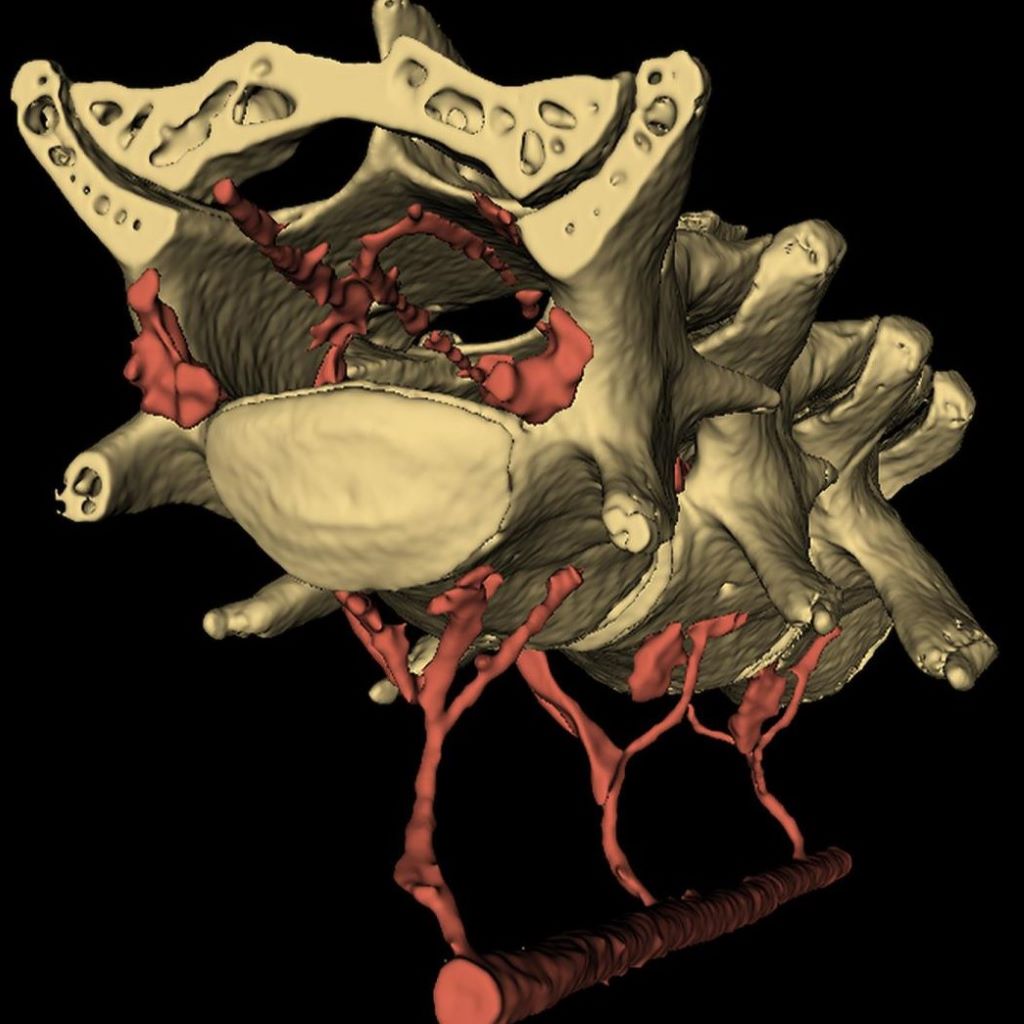
Using microCT scanning, which allows for high-resolution imaging of an organism’s internal structures, and other imaging techniques, researchers found that a network of veins serve as a mechanical connection between the abdominal cavity and the brain. Here, the veins in red run through the interior of a vertebrae and around the spine. Credit: Provided by Patrick Drew and team/Penn State. All Rights Reserved.
The brain is more mechanically connected to the body than previously appreciated, scientists reported in Nature Neuroscience. Through a study using mice and simulations, the team found a potential biological mechanism underlying why exercise is thought to benefit brain health: abdominal contractions compress blood vessels connected to the spinal cord and the brain, enabling the organ to gently move within the skull. This swaying facilitates the surrounding cerebrospinal fluid to flow over the brain, potentially washing away neural waste that could cause problems for brain function.
According to Patrick Drew, professor of engineering science and mechanics, of neurosurgery, of biology and of biomedical engineering at Penn State, the work builds on previous studies detailing how sleep and neuron loss can influence how and when cerebrospinal fluid flushes through the brain.
“Our research explains how just moving around might serve as an important physiological mechanism promoting brain health,” said Drew, corresponding author on the paper. “In this study, we found that when the abdominal muscles contract, they push blood from the abdomen into the spinal cord, just like in a hydraulic system, applying pressure to the brain and making it move. Simulations show that this gentle brain movement will drive fluid flow in and around the brain. It is thought the movement of fluid in the brain is important for removing waste and preventing neurodegenerative disorders. Our research shows that a little bit of motion is good, and it could be another reason why exercise is good for our brain health.”
Drew, who also holds the title of associate director of the Huck Institutes of the Life Sciences, explained how in a hydraulic system, a pump creates pressure that drives fluid flow. In this case, the pump is the abdominal contraction – which can be as light as the tensing prior to sitting up or taking a step. The contraction puts pressure on the vertebral venous plexus, a network of veins that connect the abdominal cavity to the spinal cavity, causing the brain to move.
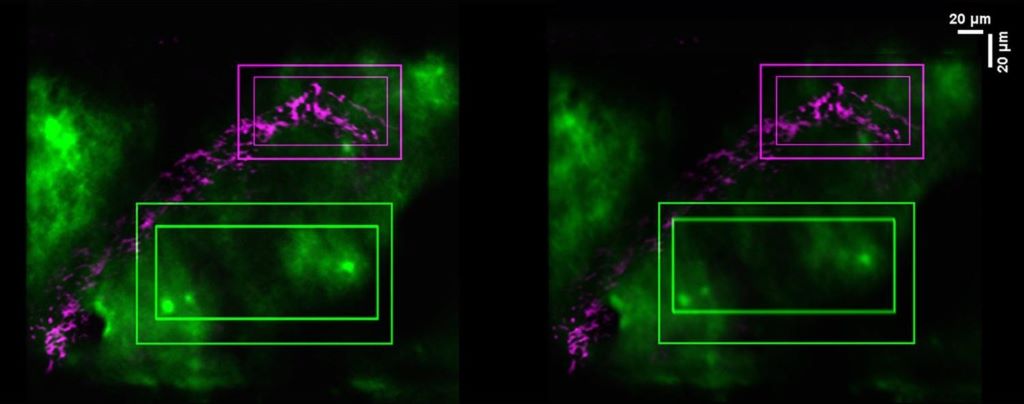
The researchers used two-photon microscopy — which allows for high-definition imaging of living tissue — to observe the brain shifting in the moments before the mouse moved, but right after the tightening of the abdominal muscles needed to spur the body into further movement. On the left, the brain, in green, sits during a stationary moment, while the image on the right shows the brain during movement. Credit: Provided by Patrick Drew and team/Penn State. All Rights Reserved.
The researchers visualised the process in moving mice with two advanced imaging technologies: two-photon microscopy, which allows for high-definition imaging of living tissue, and microcomputed tomography, which enables high-resolution 3D examination of whole organs. They observed the brain shifting in the moments before the mouse moved, but right after the tightening of the abdominal muscles needed to spur the body into further movement.
To confirm that it was abdominal contractions rather than other movement that acted as the pump, the researchers applied gentle and controlled pressure to the abdomens of lightly anaesthetised mice. With no other movement other than a localised mechanical pressure less than a human would experience with a blood pressure cuff, the mice’s brains shifted.
“Importantly, the brain began moving back to its baseline position immediately upon relief of the abdominal pressure,” Drew said. “This suggests that abdominal pressure can rapidly and significantly alter the position of the brain within the skull.”
With the abdominal contraction-brain movement link confirmed, Drew said the next step was to understand the fluid’s movement in the brain and if the brain’s movement could induce fluid flow. However, there previously were no existing imaging techniques to visualize the rapid, nuanced dynamics of such fluid flows.
“Luckily, our interdisciplinary team at Penn State was able to develop these techniques, including conducting the imaging experiments of living mice and creating computer simulations of fluid motion,” Drew said. “That combination of expertise is so important for understanding these types of complicated systems and how they impact health.”
Francesco Costanzo, professor of engineering science and mechanics, of biomedical engineering, of mechanical engineering and of mathematics, led the computational modelling.
“Modelling fluid flow in and around the brain offers unique challenges because there are simultaneous, independent movements, as well as time-dependent, coupled movements. Accounting for all of them requires accounting for the special physics that happens every time a fluid particle crosses one of the many membranes in the brain,” Costanzo said. “So, we simplified it. The brain has a structure similar to a sponge, in the sense that you have a soft skeleton and fluid can move through it.”
By simplifying the geometry of the brain to that of a sponge, Costanzo explained that the team could model how fluid flows through a structure with varied spaces, like wrinkles in the brain, or pores in the sponge.
“Keeping with the idea of the brain as a sponge, we also thought of it as a dirty sponge – how do you clean a dirty sponge?” Costanzo asked. “You run it under a tap and squeeze it out. In our simulations, we were able to get a sense of how the brain moving from an abdominal contraction can help induce fluid flow over the brain to help clear waste products.”
Drew emphasised that while more work is needed to understand the full implications in humans, this study suggests that body movement may help to cycle cerebrospinal fluid around and in the brain, removing waste and helping to protect against neurodegenerative disorders associated with waste buildup.
“This kind of motion is so small. It’s what’s generated when you walk or just contract your abdominal muscles, which you do when you engage in any physical behaviour. It could make such a difference for your brain health,” Drew said.
Treatment with GMRx2, a single pill combination of three low-dose blood pressure medicines, significantly reduced the risk of another stroke in patients with intracerebral haemorrhage and high blood pressure. Results from the TRIDENT randomised controlled trial, led by The George Institute for Global Health, are published in The New England Journal of Medicine.
Professor Craig Anderson, Principal Investigator and Senior Professorial Fellow at The George Institute, said, “Lowering blood pressure is the only proven method to prevent another stroke, yet achieving good blood pressure control is a real challenge. One big issue is that the number and doses of antihypertensive medications are not increased when needed and doctors and patients struggle with complex pill regimens.
“Our study showed that GMRx2, a once-daily triple combination pill, cut the risk of another stroke by 39%. These findings could translate to important treatment benefits for the millions of people affected by intracerebral haemorrhage worldwide who face a high risk of having another one.”
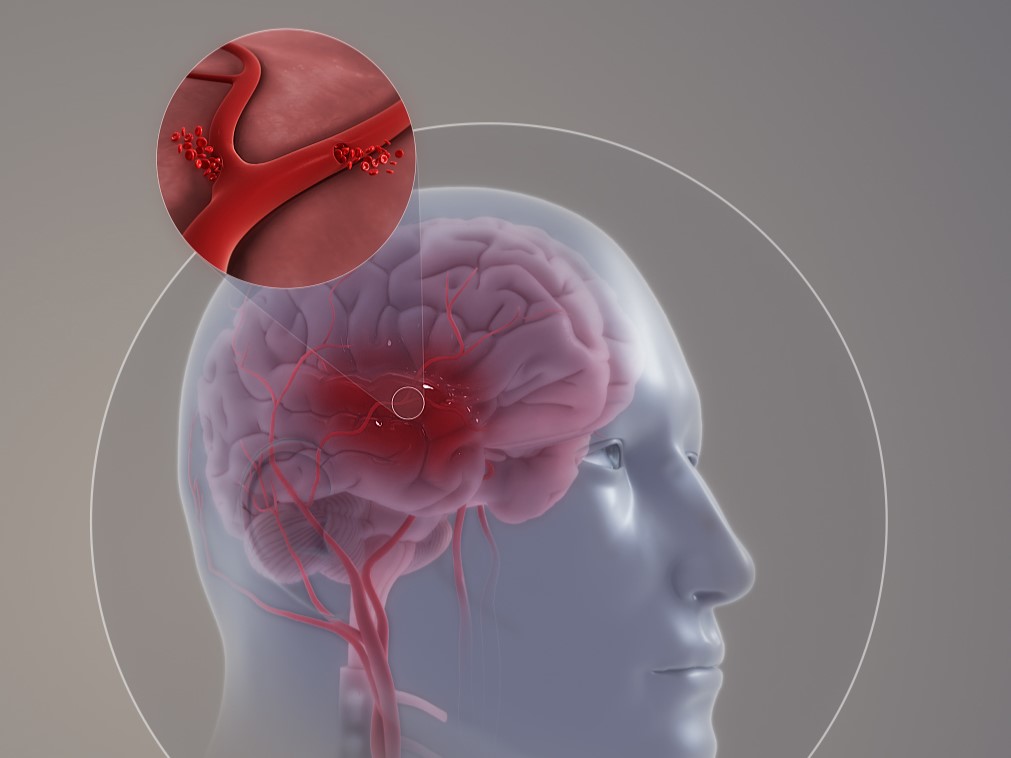
The international study involved 1670 patients who had experienced intracerebral haemorrhage and had systolic blood pressure (SBP) of 130–160 mmHg. They received GMRx2, a single pill combination containing telmisartan 20mg, amlodipine 2.5mg, and indapamide 1.25mg, or a placebo, alongside standard care.
During an average period of follow-up of three years, stroke occurred in 4.6% of patients receiving GMRx2 compared to 7.4% in the placebo group. This equated to a 39% lower risk of recurrent stroke. Overall, the results showed one stroke was prevented for every 35 patients treated with GMRx2.
The GMRx2 group achieved better blood pressure control, with mean SBP levels 9mmHg lower than the placebo group. Patients treated with GMRx2 also experienced reduced rates of major cardiovascular events (non-fatal stroke, non-fatal heart attack and cardiovascular death) by 33% versus placebo. Serious adverse events were comparable between the treatment and placebo groups, affecting 23.8% and 26.8% of patients, respectively. Concerns of fatigue, dizziness and falls were infrequent and occurred similarly between the GMRx2 and placebo groups.
Almost 17 million people worldwide have experienced intracerebral haemorrhage, and there are over three million new cases each year. Among patients who survive this type of stroke, approximately one quarter will later die from recurrent stroke or cardiovascular disease. The condition disproportionately affects people in low- and middle-income countries (LMICs), where there is often poorer control of high blood pressure. Intracerebral haemorrhage is one of the most dangerous types of strokes, occurring at almost twice the rate in LMICs compared to high-income countries.
Professor Jeyaraj Pandian, President of the World Stroke Organization, said, “TRIDENT is a major advance in showing the enormous benefits of effective blood pressure control after an intracerebral haemorrhage, and a simple and effective strategy in which this can be achieved, with relevance to patients all over the world.”
Professor Anderson added, “These study results have the potential to mark a real shift in how we manage blood pressure following a stroke. This single-pill triple combination helped patients reach target blood pressure levels.
“We hope GMRx2 is approved for this indication by regulatory authorities throughout the world, and if so that it is widely used as an effective approach with the potential to improve the outcome for patients affected by intracerebral haemorrhage, and also ischaemic stroke, across the globe.”
New findings identify keratinocytes as replication hubs and immune responders, contributing to the risk of rabies infection from superficial scratches or minor bites
Skin cell (keratinocyte) This normal human skin cell was treated with a growth factor that triggered the formation of specialised protein structures that enable the cell to move. We depend on cell movement for such basic functions as wound healing and launching an immune response. Credit: Torsten Wittmann, University of California, San Francisco
While it was previously thought that keratinocytes (skin cells) were only passive conductors that allow the rabies virus to pass through, novel research reveals that these cells play a much more active role. The findings of a new study in the Journal of Investigative Dermatology (JID), published by Elsevier, provide direct evidence that keratinocytes can support viral replication and transmit the rabies virus to neurons. The investigators offer a mechanistic explanation for how superficial skin exposures from scratches or minor bites by dogs and bats can lead to neuroinvasion, contributing to the risk of infection.
Rabies is a fatal zoonotic infection caused by rabies virus (RABV), responsible for at least 59 000 human deaths per year. The virus is transmitted through the saliva of infected animals. While most cases are caused by dog bites, superficial exposures such as bat bites or scratches can also lead to infection, although the underlying mechanisms remain poorly understood.
“In our previous work, we discovered that keratinocytes – cells that form the epidermis, the outermost layer of the skin – were infected at the site of entry of the rabies virus, both in natural and experimental infections. This was unexpected, as rabies pathogenesis has traditionally focused on muscle cells and motor neurons,” explains lead investigator Corine H. Geurts van Kessel, MD, PhD, Department of Viroscience, Erasmus Medical Centre, Rotterdam, The Netherlands. “Given the strategic position of keratinocytes at the skin barrier and their close proximity to sensory nerve endings, we wanted to understand whether these cells are simply bystanders or active participants in early rabies infection and neuroinvasion.”
The investigators used primary human keratinocyte cultures to investigate susceptibility to rabies virus infection and characterise the resulting antiviral immune responses. Three viral strains were tested: a vaccine strain and two wild-type (“street”) strains derived from fatal human cases associated with bat and dog exposures. The dog-associated strain caused only minimal infection and limited keratinocyte immune activation, whereas the other two strains infected keratinocytes more readily and triggered a pronounced antiviral response.
To simulate the close contact between keratinocytes and intra-epidermal nerve endings, a co-culture model of keratinocytes and neurons was developed. In this model, virus produced in infected keratinocytes was successfully transmitted to adjacent neurons, giving the virus a direct route into the nervous system. Once the virus has established infection in the central nervous system, it is almost inevitably fatal.
“Our study demonstrates that the skin might play a more important role in rabies infection than previously recognised. We were particularly surprised by the strong antiviral response mounted by keratinocytes to the bat-related rabies virus strain,“ notes co-investigator Keshia Kroh, PhD candidate, Department of Viroscience, Erasmus Medical Centre, Rotterdam, The Netherlands. “Wild-type rabies viruses are known for their immunosuppressive capacities, and we expected an immune evasive effect in keratinocytes. Instead, we observed the opposite. This raises new questions about how keratinocyte-derived immune responses influence overall disease progression in rabies and other viral infections of the skin.”
This in vitro co-culture model is the first to study rabies virus entry to the nervous system across a cell barrier. Future in-depth studies should be performed to provide mechanistic insight into the differential strain tropism, the interactions of infected keratinocytes with immune cells, and the mechanisms of neuroinvasion from superficial skin contact.
According to the World Health Organization (WHO), any transdermal exposure (including small scratches or abrasions) should be assessed as a potential rabies risk and managed appropriately based on exposure category and clinical context.
“Our study provides a biological rationale for these recommendations,” says co-investigator Carmen W.E. Embregts, PhD, Department of Viroscience, Erasmus Medical Centre, Rotterdam, The Netherlands. “At the same time, it is important to emphasise that the risk of rabies virus infection via superficial exposures depends on multiple factors, including the nature of the exposure and the epidemiological setting. Rather than causing alarm, our findings support informed decision-making. Awareness that superficial skin exposures can represent a route of neuroinvasion helps ensure that potential risks are recognised and evaluated appropriately, while treatment decisions remain guided by established public health criteria.”
“The data in this study support the increasingly recognised concept that cells in the skin are in snug communication with the nervous system. That a scratch or bite is needed for the transmission of rabies is further evidence of the importance of an intact skin barrier in health,” observes JID Associate Editor Ethan Lerner, MD, PhD, Associate Professor of Dermatology, Harvard Medical School, and Massachusetts General Hospital, Boston, MA, USA.
Despite new diagnostic methods and expanded vaccination programmes, many children in Uganda continue to suffer from severe brain infections. This is shown in a new study from Karolinska Institutet, published in The Lancet Regional Health – Africa. The researchers’ analysis highlights simple clinical signs that can help healthcare providers more quickly identify children at high risk of death.
The study followed 212 children aged 0 to 12 who were treated for suspected central nervous system infections at two hospitals in southwestern Uganda. Fifteen per cent of the children died during hospitalisation, and 18 per cent were discharged with neurological disabilities such as seizures or muscle weakness. Malaria and the bacterium Streptococcus pneumoniae were the most commonly identified causes.
Simple observations can provide crucial information
“Our results show that even in settings where advanced diagnostics are not always available, simple clinical observations can provide crucial information about which children are in greatest need of rapid care,” says Phuthumani Mlotshwa, doctoral student at the Department of Global Public Health and the study’s first author.
The infections were caused by several different microorganisms. Malaria was detected in 20 per cent of the children, and bacteria in the cerebrospinal fluid in 11 per cent. For nearly half of the cases, no specific pathogen could be identified, which the researchers say underscores the need for improved diagnostic tools.
“The combination of high mortality and significant disabilities among survivors shows that we need to strengthen prevention, diagnostics, and follow-up,” says Giulia Gaudenzi, researcher at the same department and the study’s senior author.
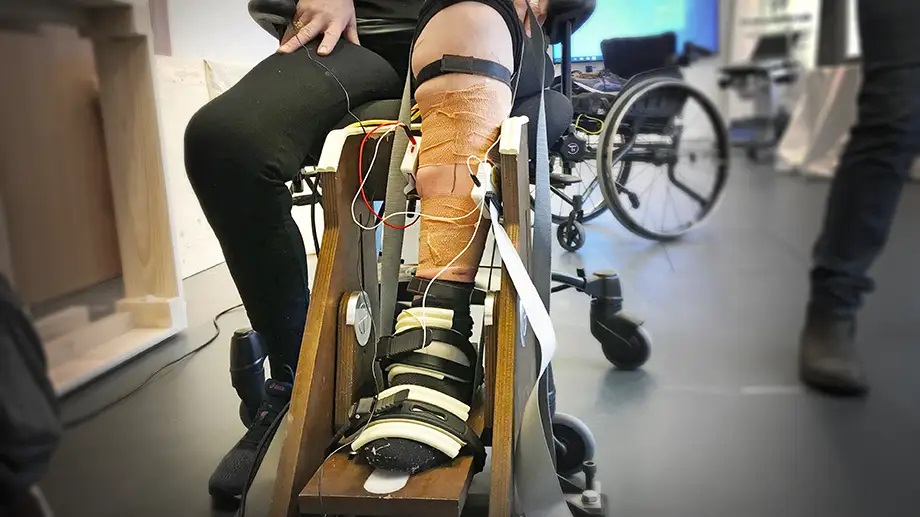
One of the study participants exerts force with their calf muscles while sensors measure electrical activity. (Photo: Ruoli Wang)
Even when people with incomplete spinal cord injuries can walk, everyday functions like standing, balancing or producing steady force may remain difficult. A new study shows why.
Using surface skin electrical sensors, a research team in Sweden identified previously unseen changes in motor coordination that result from incomplete spinal cord injuries (SCI). The study is the first to examine how individual motor units (nerve to muscle connections that create movement) work together in people with SCI.
“Our study reveals, at the cellular level, how the central nervous system adapts to the injury to control movement,” says Ruoli Wang, associate professor in biomechanics at Promobilia MoveAbility Lab, KTH Royal Institute of Technology. She says the researchers’ approach was completely non-invasive.
The study’s lead author, PhD student Zhihao Duan, says the researchers found the nervous system struggles to spread signals smoothly across muscles at low levels of exertion after the injury. And it appears to overcompensate at higher levels of exertion, sending “louder”, less refined signals.
Effect on motor units
Muscles move through hundreds or thousands of motor units, each turning on and off precisely to create smooth force. Composed of a single motor neuron and its connecting muscle fibres, these motor units respond to shared signals from the nervous system, much like different sections of musicians led by an orchestra conductor. That shared input is what allows them to act in coordinated patterns.
To explore how well these units coordinate under the control of the central nervous system, the team examined 25 people (including 10 control participants). They used high-density electromyography (HD-EMG) to measure electrical activity in the functionally similar calf muscles – soleus and gastrocnemius – while volunteers pushed lightly or moderately against a device.
Duan says that at 20% effort, fewer of the motor units in the two calf muscles were working in a shared, coordinated way compared with people without injury. As a result, their movements were shaky and unstable. “They were much less being driven by the same coordinated signal from the nervous system.” he says.
At a higher level of effort (50%) the SCI group showed stronger lowfrequency synchronization between the two muscles. The body loses flexibility and precision in control of the movement. “This could be a sign of the nervous system compensating by sending louder, less refined signals,” Duan says.
Unique insights
“One interesting finding is that after spinal cord injury the nervous system becomes more rigid and less able to change its approach as the muscles work harder. A healthy nervous system on the other hand is able to adapt its strategy as force demands, to adjust the shared neural drive level,” Wang says.
Although the study was limited by a small sample size and challenges in identifying enough motor units per muscle from the skin surface, Wang says the results offer unique insight into how SCI reshapes motor control.
“This finding may open the door to a new rehabilitation biomarker, helping clinicians and researchers design new neurorehabilitation strategies to re-tune the spinal cord control and to restore coordinated neural input,” she says.
New research reveals how oestrogen levels in the brain influence vulnerability to stress-related memory problems, helping explain sex differences in PTSD risk.
For some people, a single traumatic event like a shooting, a natural disaster or a violent assault, can leave an imprint that lingers long after the immediate danger has passed. Memories of that event may return with unusual intensity, shaping mood, behaviour, and mental health in ways that are difficult to predict. Others exposed to similar trauma recover without developing lasting memory problems or trauma-related symptoms.
Why those outcomes diverge is a central question in stress and trauma research. Clinicians have long observed that severe acute stress can permanently alter memory for some people but not others, and that women face roughly twice the lifetime risk of posttraumatic stress disorder (PTSD). Recent research from the University of Pennsylvania in collaboration with the University of California-Irvine suggests that part of the answer may lie in the brain’s biological state at the precise moment trauma occurs.
Elizabeth Heller, PhD, an associate professor of Pharmacology in the Perelman School of Medicine at the University of Pennsylvania, and her team in the Heller Lab, have now shed light on how the brain’s biological state at the time of stress, particularly its oestrogen levels, can shape vulnerability long after the acute stress has lifted. Heller helped uncover that oestrogen levels in the brain may play a surprising role in this vulnerability, and for both sexes. The study, published in Neuron, also provides new insight into why women are more likely than men to develop post-traumatic stress disorder (PTSD) and to face higher dementia risk later in life.
Unpacking oestrogen’s role in memory vulnerability
Oestrogen is widely known to support learning and memory. This study found that high levels of oestrogen in the hippocampus, a brain region critical for memory, help the brain’s cells change and adjust more easily. However, in the context of severe acute stress, this flexibility can increase vulnerability to stress-related memory problems.
Heller and the Penn team mapped how high levels of oestrogen interact with chromatin structure (the storage packaging up DNA inside cells) in the hippocampus to make some brains more susceptible to PTSD‑like memory changes.
The findings help explain why traumatic events such as natural disasters, mass violence, and assaults can cause long-term memory problems, and why women are roughly twice as likely as men to develop PTSD.
“A lot of what determines vulnerability is the state your brain is already in,” Heller explained. “If a traumatic event hits during a period when oestrogen is already unusually high, the resulting plasticity can amplify the impact in lasting ways, promoting vulnerability to stress. Even with these findings in hand, the word oestrogen can mislead readers into assuming the biology applies only to women. That assumption shaped public understanding for decades, but it doesn’t hold up against what this research, and years of foundational neuroscience, actually shows.
As Heller notes, oestrogen is a critical brain hormone in both sexes. It is produced locally in regions like the hippocampus where it helps regulate learning, mood, and responses to stress. Recognising that universality is essential to understanding what this study truly reveals.
“The striking thing is that oestrogen levels are actually high in both males and in females in some parts of the hormonal cycle. Thus, the effects of high oestrogen levels happen in both males and females,” Heller said. “We tend to treat oestrogen as a women’s health hormone, but the brain makes its own oestrogen, and it plays powerful roles in stress, memory, mood, and emotion across sexes.”