New clinical trial results show supplements with omega-3s have no effect on memory or cognitive function in older adults at risk for Alzheimer’s disease
Fish oil supplements are purported to have cognitive benefits from the omega-3 fatty acids they contain, essential nutrients that help form neuron connections. But a new Keck Medicine of USCstudy published in eBioMedicine suggests that increasing omega-3 levels via supplements has little effect on brain health despite showing evidence that the nutrients directly reach the brain.
The two-year, placebo-controlled, double-blinded study of older adults with an elevated risk of developing Alzheimer’s showed that high doses of omega-3s did not improve memory, cognitive function or brain cell loss in areas of the brain related to Alzheimer’s.
“We all wish there was a silver bullet for preventing Alzheimer’s, but our findings showed that fish oil supplements do not appear to protect brain health,” said Hussein Naji Yassine, MD, director of the USC Center for Personalized Brain Health and lead investigator of the study. “While omega-3s play an important role in forming brain cell connections needed for cognition, our results do not support fish oil supplements as a preventive measure against Alzheimer’s.”
How the study was conducted
Researchers recruited 365 adults, ages 55 to 80 who rarely ate fish, which is rich in omega-3s, and who study authors considered at risk for Alzheimer’s. About half (47%) carried an APOE4 gene, the strongest genetic risk factor for late-onset Alzheimer’s. Participants were randomly chosen to receive either daily fish oil supplements or a placebo. The supplements contained 2000mg of docosahexaenoic acid (DHA), a key omega-3 involved in brain function.
Researchers were first interested to learn whether the omega-3 in the supplement was able to reach the brain.
They measured DHA levels in cerebrospinal fluid, which surrounds the brain, and found an average 17% increase of DHA levels in patients’ brains after six months, confirming the omega-3 reached its intended target.
Next, researchers tested participants’ memory and cognitive abilities at the beginning of the study and again two years later. Study participants who took DHA supplements did no better on the tests than those who took a placebo. Brain scans also showed that supplements did not prevent shrinkage of the hippocampus, a brain region important for memory that is often used as a marker of brain aging and Alzheimer’s risk.
Looking beyond supplements
Now, Yassine and his team are focused on solving why omega-3 supplements can reach the brain but not affect brain health. Based on their previous research, they believe omega-3s may work better as a part of a Mediterranean-style diet, which is naturally rich in omega-3s and linked with lower Alzheimer’s risk, than in a standalone supplement.
“We’re focused on better understanding how the brain processes omega-3s and whether factors, such as poor health, dietary pattern, genetic risk and age, may change the brain’s ability to effectively absorb and use omega-3s,” said Yassine. “We are working to develop medications that may help the brain better utilise these nutrients to preserve cognitive function.”
Holistic lifestyle remains the best prevention
While out of scope of the study, the researchers stress that overall healthy living – rather than relying on fish oil supplements alone – is the best way to protect brain health.
“Staying healthy throughout life remains the most powerful tool we have for reducing Alzheimer’s risk, including regular exercise, quality sleep and a balanced diet,” said Yassine. “Living a healthy lifestyle is the brain’s equivalent of getting regular car maintenance and high-quality oil changes. The brain is more likely to lose greater function if health issues in other parts of the body go unaddressed, in the same way that car engines stop working if regular maintenance is skipped.”
Brown University researchers say an analytic method can exaggerate the causal link between amyloid reduction and cognitive benefits of new Alzheimer’s drugs.
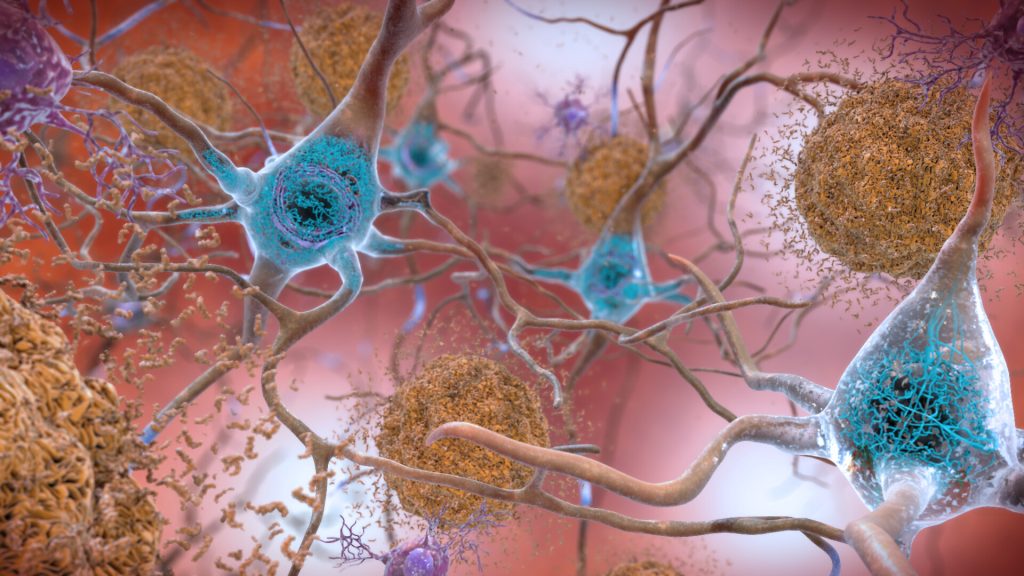
Neurons in the brain of an Alzheimer’s patient, with plaques caused by tau proteins. Credit: NIH
By Juan Siliezar
A statistical approach being used to support a new class of Alzheimer’s drugs may lead to overstated claims about how the drugs work, according to a new study led by researchers at the Brown University School of Public Health.
Published in JAMA Neurology, the research letter focused on quantile aggregation, a new statistical technique that divides people into groups, averages their results together and then looks for patterns across those groupings.
The letter examined how the approach works when applied to cognition and amyloid, a protein that builds up in the brains of people with Alzheimer’s disease. The approach was originally published in an analysis of Eli Lilly and Company’s Alzheimer’s drug donanemab.
“Many researchers believe reducing amyloid buildup could slow memory loss and cognitive decline associated with the disease, making it a major target for newer Alzheimer’s drugs,” said the study’s senior author Sarah Ackley, who is an assistant professor of epidemiology in the Brown University School of Public Health and runs the Computational Epidemiology Lab. “The problem is that using this method to assess the effect of amyloid removal on cognition can produce misleading results.”
The researcher’s concern is that the approach can make the link between amyloid reduction and cognitive improvement appear much stronger than it is, according to the analysis. The study the researchers looked at was a reanalysis of the original data from the randomised control trial on donanemab. It was led by scientists affiliated with the drug maker.
“When we did simulations, we found that you could basically take a very weak relationship between amyloid and cognition and make it appear as something that looked really strong and important,” Ackley said.
The team expected there might be problems with the method but were struck by how large the effects were.
In simulations that were designed to reflect the conditions from recent trials, the team found the method showed the relationship between amyloid and cognition to be 29 times higher than its actual magnitude.
The researchers said this happens because by combining large groups of patients and averaging their results together, the process hides variability in cognitive change between patients. That can make it look like reducing amyloid is more predictive of cognitive benefit than it is.
The method also combines patients who received the drug with those who received a placebo. Without that randomization, the analysis cannot reliably determine whether amyloid reduction is actually causing cognitive benefit or whether other factors are at play, according to the study.
To illustrate this, the team also tested quantile aggregation using data from the Anti-Amyloid Treatment in Asymptomatic Alzheimer’s Disease Study that ran from 2014 to 2023. That trial tested if the drug solanezumab could slow cognitive decline in older adults with elevated amyloid levels in their brains, an early sign associated with Alzheimer’s disease.
The trial showed solanezumab did not slow cognitive decline, yet when the team ran the data from that trial through the analysis of donanemab using the quantile aggregation method, it came back showing a strong link between lower amyloid and better cognitive outcomes.
“We basically built a case that this method is going to give you misleading results,” Ackley said. “It made a failed trial look like it had successfully removed amyloid and that the removal of amyloid had reduced cognitive decline. In reality, the drug did neither of these things.”
Ackley emphasized that the findings do not settle the broader question of how the new Alzheimer’s disease drugs work. Instead, she says, the work highlights a need for more rigorous statistical methods. She also emphasized the need for more data sharing in Alzheimer’s research, especially as new treatments become more widely used and covered by public programs like Medicare.
“Our study was simple, but a great demonstration of the value of academic research,” she said. “Working outside of industry incentives gave us the freedom to closely examine a methodological issue affecting how some of the most consequential new drugs are understood.”
MS (multiple sclerosis) is the most common chronic neurological disease among young adults globally, with no drugs capable of repairing nerve damage caused by the destruction of the myelin sheath. A doctoral thesis opens up a new avenue by demonstrating the effectiveness of two different drug molecules in initiating the regrowth of a protective layer surrounding neurons.
Researchers have long sought ways to initiate remyelination, a process where the destroyed myelin sheath grows back and the neurons recover. However, all drug candidates trialled so far have failed. The problem is that, particularly in the later stages of MS, the disease creates in the central nervous system local tissue conditions that inhibit remyelination.
In the first approach, a drug molecule targets a stress mechanism intrinsic to brain cells. In areas damaged by MS, this stress response is constantly in overdrive, effectively preventing tissue-repairing cells from doing their job. When the mechanism was blocked using the new drug molecule, remyelination was significantly enhanced and accelerated in brain tissue with MS-like damage. The study was published in the Molecular Therapy journal in February.
The second approach focuses on scar tissue formed around affected areas, which serves as a physical barrier to neural regeneration. By affecting the composition of this scar tissue with the second drug molecule, this approach also succeeded in promoting neuronal recovery. An article focusing on this approach was published in the Neuropharmacology journal.
Surprisingly, these two drugs based on entirely different mechanisms led to very similar results: significant remyelination and reduced neuroinflammation in disease models, that is, animal and cell tests modelling the tissue pathology of MS.
First drug that boosts remyelination requires further research
For the time being, the results were achieved in laboratory animals and cell models. The more complex tissue conditions of human MS make it necessary to investigate the efficacy of the drug molecules in humans. One challenge for drugs targeting the brain is the blood-brain barrier, which blocks many substances from entering the brain. The researchers nevertheless demonstrated that both molecules effectively reach the central nervous system in laboratory animals.
“The goal is to enable the molecules we have developed to reach clinical trials, which could one day produce the first drugs that enhance remyelination in MS. In the meantime, our findings can help in investigating the pathogenic mechanisms of MS that inhibit remyelination,” Koppinen says.
The thesis is also available in electronic form through the Helda repository.
Researchers have found that the absolute effects of anti-amyloid drugs on cognitive decline and dementia severity were absent or trivial
Neurons in the brain of an Alzheimer’s patient, with plaques caused by tau proteins. Credit: NIH
Drugs that target amyloid beta proteins in the brain likely have no clinically meaningful positive effects, while increasing the risk of bleeding and swelling in the brain, a new Cochrane review has found.
People with Alzheimer’s disease have high levels of a protein known as amyloid beta in their brains, detectable before symptoms begin, but its role in disease progression is uncertain. Drugs have been developed to remove these proteins from the brain, under the theory that this would prevent or slow disease progression.
The new review examined data from 17 clinical trials with a total of 20 342 participants, all looking at the impact of anti-amyloid drugs on people with mild cognitive impairment or mild dementia due to Alzheimer’s disease. Proponents of these drugs have theorised that they would be more effective at these earlier stages before the disease has progressed.
Absolute effects “well below clinical threshold”
The research found that the absolute effects of anti-amyloid drugs on cognitive decline and dementia severity were absent or trivial, falling well below established thresholds for the minimum clinically important difference.
“Unfortunately, the evidence suggests that these drugs make no meaningful difference to patients,” said lead author Francesco Nonino, neurologist and epidemiologist at the IRCCS Institute of Neurological Sciences of Bologna, Italy. “There is now a convincing body of evidence converging on the conclusion that there is no clinically meaningful effect. While early trials showed results that were statistically significant, it is important to distinguish between this and clinical relevance. It is common for trials to find statistically significant results that do not translate into a meaningful clinical difference for patients.”
In addition to the absence of clinically meaningful effects, the review found that anti-amyloid drugs likely increase the risk of swelling and bleeding in the brain. This was observed in brain scans without any apparent symptoms for most patients, although any long-term effects remain unclear since reporting of symptoms was inconsistent across trials.
Future research should focus on other pathways
On the basis of the evidence, the authors conclude that future trials targeting amyloid beta removal are unlikely to provide clear benefit to patients. They found that these drugs do successfully remove amyloid proteins from the brain, but this does not translate into meaningful clinical benefit. They recommend that future research on Alzheimer’s treatment should focus on other mechanisms, with numerous studies ongoing in other directions.
“I see Alzheimer’s patients in my clinic every week and I wish I had an effective treatment to offer them,” said senior author Edo Richard, Professor of Neurology at Radboud University Medical Centre. “Existing approved drugs offer some benefit for some patients, but there remains a high unmet need for more effective treatments. Sadly, anti-amyloid drugs do not offer this and bring additional risks. Given the absence of correlation between amyloid removal and clinical benefit, we need to explore other pathways to help address this devastating disease.”
Older people with a genetic risk of Alzheimer’s disease did not experience the expected increase in cognitive decline and dementia risk if they consumed relatively large amounts of meat. This is shown in a new study from Karolinska Institutet published in JAMA Network Open. The results may contribute to the development of more individually tailored dietary advice.
APOE is a gene that affects the risk of Alzheimer’s disease. In Sweden, approximately 30 per cent of the population are carriers of the gene combinations APOE 3/4 or APOE 4/4. Among people with Alzheimer’s disease, those with these genotypes account for nearly 70 per cent.
When the Swedish Food Agency presented an overview of research on the link between diet and dementia last year, more research was requested to assess a possible link between meat consumption and the development of dementia.
‘This study tested the hypothesis that people with APOE 3/4 and 4/4 would have a reduced risk of cognitive decline and dementia with higher meat intake, based on the fact that APOE4 is the evolutionarily oldest variant of the APOE gene and may have arisen during a period when our evolutionary ancestors ate a more animal-based diet,’ says first author Jakob Norgren, researcher at the Department of Neurobiology, Care Sciences and Society, Karolinska Institutet.
The study followed more than 2100 participants in the Swedish National Study on Aging and Care, Kungsholmen (SNAC-K) for up to 15 years. All were aged 60 or older and had no diagnosis of dementia at the start of the study. The association between self-reported diet and cognitive health measures was analysed, adjusting for age, sex, education and lifestyle factors.
Twice the risk of dementia
At lower meat intake, the group with APOE 3/4 and 4/4 had more than twice the risk of dementia than people without these gene variants. However, the increased risk of cognitive decline and dementia in the risk groups was not seen in the fifth of participants who consumed the most meat. Their median consumption is estimated at approximately 870 grams of meat per week, standardised to a daily energy intake of 2,000 calories.
‘Those who ate more meat overall had significantly slower cognitive decline and a lower risk of dementia, but only if they had the APOE 3/4 or 4/4 gene variants,’ says Jakob Norgren. He continues:
‘There is a lack of dietary research into brain health, and our findings suggest that conventional dietary advice may be unfavourable to a genetically defined subgroup of the population. For those who are aware that they belong to this genetic risk group, the findings offer hope; the risk may be modifiable through lifestyle changes. ‘
The study also shows that the type of meat is important.
‘A lower proportion of processed meat in total meat consumption was associated with a lower risk of dementia regardless of APOE genotype,’ says Sara Garcia-Ptacek, assistant professor at the same department, who together with senior lecturer Erika J Laukka is the study’s last author.
The findings also extend beyond brain health. In a follow-up analysis, the researchers observed a significant reduction in all-cause-mortality in carriers of APOE 3/4 and 4/4 with higher consumption of unprocessed meat.
However, the study is observational and needs to be followed up with intervention studies that can better demonstrate causal relationships.
‘Clinical trials are now needed to develop dietary recommendations tailored to APOE genotype,’ says Jakob Norgren. He continues:
‘Since the prevalence of APOE4 is about twice as high in the Nordic countries as in the Mediterranean countries, we are particularly well suited to conduct research on tailored dietary recommendations for this risk group.’
The research was funded by, among others, the Swedish Alzheimer’s Foundation, the Swedish Dementia Foundation, the Emil and Wera Cornell Foundation, the Leif Lundblad family and other philanthropists, the Swedish Research Council and FORTE. The researchers state that they have no related conflicts of interest.
APOE Gene Facts:
Apolipoprotein E plays a central role in the transport of cholesterol and fats in the brain and blood. The protein is encoded by the APOE gene, which exists in three main variants: epsilon 2, 3 and 4. These variants affect the risk of developing Alzheimer’s disease and cardiovascular disease. Each person inherits two APOE genes, one from each parent, giving six possible combinations (genotypes): 2/2, 2/3, 2/4, 3/3, 3/4 and 4/4.
Compared to the most common genotype 3/3, one 4 variant increases the risk of Alzheimer’s disease by about three to four times and two 4 variants by about ten to fifteen times, while the 2 variant is associated with a lower risk. However, the increase in risk varies between different ethnic groups.
Researchers have discovered new diagnostic and prognostic markers for multiple sclerosis.
This is a pseudo-colored image of high-resolution gradient-echo MRI scan of a fixed cerebral hemisphere from a person with multiple sclerosis.
Credit: Govind Bhagavatheeshwaran, Daniel Reich, National Institute of Neurological Disorders and Stroke, National Institutes of Health
Researchers from the Max Planck Institute of Biochemistry and the Technical University of Munich (TUM) have discovered new diagnostic markers for multiple sclerosis (MS), a disease which affects 3 million people worldwide.
Using mass spectrometry, about 1500 proteins were analysed simultaneously per sample in the cerebrospinal fluid (CSF) of 5000 patients. The study uncovered a set of marker proteins that improve differentiation of MS from other inflammatory brain diseases where classical MS markers are negative. Additionally, the study identified changes in the CSF proteome that may potentially predict disease progression. This approach could also open up new avenues for the diagnosis of other diseases. The study was published in Cell.
Unspecific neurological symptoms can lead to lengthy or even inaccurate diagnoses of diseases, which is why improved protein markers are needed for swift and clear diagnosis
Using a new mass spectrometry method, approximately 1500 proteins were analyzed per cerebrospinal fluid sample across 5000 patients, and up to 2000 proteins in a further improved method
A new set of disease markers enable improved differentiation of multiple sclerosis (MS) from other inflammatory brain diseases, in particular for patients lacking the classical markers
The proteome of the cerebrospinal fluid (CSF) at diagnosis is informative for various aspects of disease evolution in a patient, such as long-term disability, risk of conversion from relapsing to progressive disease course and time to conversion
The method also has the potential to discover other proteins that could be used as markers for the diagnosis of other neurological diseases
Biomarker needs for multiple sclerosis
Imagine living with unexplained neurological symptoms: numbness, visual disturbances, fatigue, but not receiving a clear diagnosis for months or years. Non-specific neurological symptoms can make diagnosis difficult because, despite modern imaging techniques, there are no reliable molecular biomarkers for many neurological diseases.
Professor Bernhard Hemmer, head of the Department of Neurology at TUM University Hospital, explains: “The diagnosis of neurological diseases such as multiple sclerosis is based on a combination of imaging techniques using magnetic resonance imaging (MRI) and cerebrospinal fluid (CSF) analysis. While MRI reveals inflammatory changes in the brain and spinal cord, CSF shows chronic immune activity in the nervous system. In most cases, this combination enables a reliable diagnosis. In individual cases, however, differentiation can be challenging. This can lead to lengthy and less reliable diagnoses and is associated with uncertain and delayed treatment decisions. For this reason, we need new biomarkers to better diagnose the various diseases. In addition to diagnostic challenges, predicting disease progression, particularly disability accumulation, to guide optimal treatment, remains a major unmet need in MS”.
Proteomic study of cerebrospinal fluid across neurological diseases
In order to find new biomarkers, neurologists Bernhard Hemmer and Christiane Gasperi, both experts in MS research at TUM, have joined forces with Professor Matthias Mann, a world-leading expert in proteomics research. Matthias Mann, director at the MPI of Biochemistry, explains: “We have been developing the technology for measuring proteins using mass spectrometry in our laboratory together with colleagues for decades. Now we can reliably and accurately measure proteins in body fluids. However, for a long time researchers could only measure tens to hundreds of samples and only those proteins with the highest concentration in a body fluid. These proteins often turned out not to be the best markers for diseases. To go one step further, we combined the latest advances in mass spectrometry hardware, software, and sample preparation and adapted the workflow to cerebrospinal fluid.”
In this study, CSF samples from more than 5000 people with a wide range of neurological diseases were analysed. Jakob Bader, first author of the study and postdoctoral researcher in the field of proteomics research, explains: “Proteomics is a scientific discipline that aims to characterise a biological system by measuring all proteins, or at least as many as possible. For our study, it is essential to cover as many proteins as possible in order to increase the likelihood of measuring and later finding real disease markers in our analyses. The great advantage of this proteomic approach is that the identity of the markers does not have to be known beforehand. This saves years of research work in which individual candidates are examined one after the other.”
To avoid misinterpreting random differences between people as disease markers, it is essential to have a sufficient number of patients. Similarly, it is only possible to determine whether a marker is specific to a particular disease by considering the many other relevant diseases in parallel. “The breakthrough was achieving both objectives simultaneously: Analysing thousands of proteins while studying thousands of patients across many neurological diseases.” Jakob Bader adds.
A systematic analysis of disease effects and possible confounders
The 5,000 CSF samples came from a wide range of neurological disorders, including stroke, brain cancer, infections, autoimmune diseases such as MS, and others. Additionally, patient samples were analysed from individuals who had provided CSF samples for the diagnosis of severe headache disorders but in whom no neurological disease was found. This allowed the researchers to use these samples as controls. Systematic comparison of these disorders revealed shared and specific protein deviations from the controls.
For diagnostic use, an elevated protein concentration rarely points unambiguously to a single disorder. The study further revealed that disease-unspecific other effects like a person’s age, sex, and in particular degradation of the barriers insulating the brain from the CSF have a very large impact on the composition of this fluid, which complicates the quest for disease markers.
Biomarkers for a hard-to-identify form of multiple sclerosis
To showcase the potential of proteomic analysis for biomarker discovery, the researchers focused on the search for diagnostic markers for MS, a challenging task but with a direct medical need. Physician Christiane Gasperi says: “In approximately 10% of MS patients, diagnosis of the disease is particularly difficult because they lack the typical MS marker of so-called oligoclonal bands of antibodies that are specific to the CSF and not found in the blood. This complicates and potentially delays the diagnosis.”
She continues: “However, for our patients, a quick and clear diagnosis of the disease is of enormous importance. While current therapies cannot cure MS, they can slow its progression and reduce the long-term disability. That makes it crucial to start treatment early. At the same time, these therapies can have significant side effects, so treatment decisions require a high level of diagnostic certainty. When this confidence is not reached yet, therapy is often delayed. Thus, MS patients really benefit from an early intervention that depends on a clear and early diagnosis.”
To find better markers, the researchers applied an enhanced version of the proteomic method to measure about 2000 proteins in samples of MS and other inflammatory diseases of the CNS, which can mimic MS, and thus pose the greatest diagnostic challenges. This let them identify a set of 22 proteins that distinguishes MS from these inflammatory diseases with better accuracy than other parameters in the CSF that are currently measured in clinical practice. Christiane Gasperi comments: “It is particularly encouraging that we have found a combination of marker proteins that help in the diagnosis of this particularly difficult-to-identify form of MS.”
Predicting disease progression at diagnosis
Beyond improving diagnosis, the study also addressed a second major challenge: Some patients remain relatively stable for many years, while others accumulate disability more rapidly or transition from the relapsing disease course that is typical early on to a progressive course where disability accumulates persistently. At the time of diagnosis, it is very difficult to predict which trajectory a patient will follow. This uncertainty complicates treatment decisions and can be deeply unsettling for those newly diagnosed.
By analyzing hundreds of MS patient samples, the researchers showed that the CSF proteome at the time of diagnosis was associated with the level of disability years later. In addition, these patterns reflected a higher risk for patients to convert from the relapsing to the progressive disease course, as well as shorter times until such conversion occurred. Bernhard Hemmer explains: “Our findings suggest that important aspects of future disability and disease course are reflected in the proteome from the very beginning. This demonstrates that the biological information required for a prognostic test is already present at diagnosis.”
He summaries the study: “For diagnosis, we were able to define and validate a focused protein panel that improves differentiation in difficult cases. Additionally, we found that the overall protein pattern in the CSF at the time of diagnosis is linked to how the disease develops years later. Together, these findings bring us closer to more precise diagnosis and a more individualized treatment strategy from the very beginning.
An avenue for efficient biomarker discovery in neurology
Matthias Mann sees broader potential: “Proteins control almost all biological processes in the body and have long been the most important group of diagnostic markers. Nevertheless, we are probably only at the beginning here. With the methodology established here, we can now analyse the proteome in the CSF of many patients with an unprecedented number of proteins. This technological progress changes how we should search for biomarkers. Comprehensive proteome analysis of large patient collectives promise to be the most efficient path to new and better biomarkers. Beyond MS, this approach opens up prospects for many other diseases of the central nervous system – from Alzheimer’s and Parkinson’s to brain tumours and other neurological disorders.”
Cohort study finds people with stroke may be extra susceptible to air pollution’s impact on the brain
Photo by Kouji Tsuru on Pexels
People with greater exposure to air pollution face a higher risk of developing Alzheimer’s disease, according to a new study by Yanling Deng of Emory University, U.S.A., and colleagues, published February 17th in the open-access journal PLOS Medicine.
Alzheimer’s disease is the most common form of dementia, affecting about 57 million people worldwide. Exposure to air pollution is a known risk factor for Alzheimer’s disease, and for several common chronic health conditions, such as hypertension, stroke and depression. These chronic conditions are also linked to Alzheimer’s disease, but previously it was unclear whether air pollution causes these chronic conditions, which then lead to dementia, or if these conditions might amplify the effects of air pollution on brain health.
A team at Emory University studied more than 27.8 million U.S. Medicare recipients aged 65 years and older from 2000 to 2018. The researchers looked at individuals’ air pollution exposure level and whether they developed Alzheimer’s disease, while emphasizing the role of other chronic conditions. They found that greater exposure to air pollution was associated with an increased risk of Alzheimer’s disease, and that association was slightly stronger in individuals who had experienced a stroke. Hypertension and depression, however, had little additional impact.
Overall, the findings suggest that air pollution contributes to Alzheimer’s disease mostly through direct pathways rather than through other chronic health conditions. However, people with a history of stroke may be especially susceptible to the harmful effects of air pollution on brain health. The study indicates that improving air quality could be an important way to prevent dementia and protect older adults.
The authors add, “In this large national study of older adults, we found that long-term exposure to fine particulate air pollution was associated with a higher risk of Alzheimer’s disease, largely through direct effects on the brain rather than through common chronic conditions such as hypertension, stroke, or depression.”
“Our findings suggest that individuals with a history of stroke may be particularly vulnerable to the harmful effects of air pollution on brain health, highlighting an important intersection between environmental and vascular risk factors.”
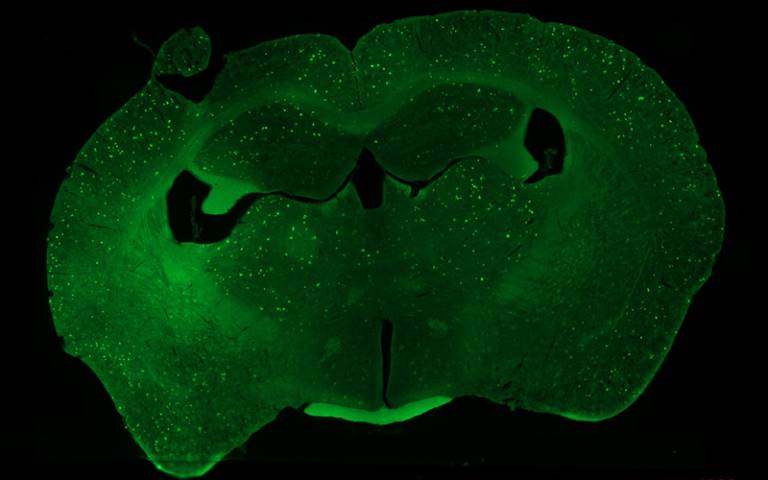
Mouse brain section highlights amyloid plaques, seen as bright green flecks (due to staining). Credit: Shipley et al.
Memory dysfunction in Alzheimer’s disease may be linked to impairment in how the brain replays our recent experiences while we are resting, according to a new study in mice by UCL scientists. The researchers say their findings, published in Current Biology, could help scientists develop drug treatments targeting this impaired brain function, or help design new tests for early diagnosis.
Co-lead author Dr Sarah Shipley (UCL Cell & Developmental Biology) said: “Alzheimer’s disease is caused by the build-up of harmful proteins and plaques in the brain, leading to symptoms such as memory loss and impaired navigation – but it’s not well understood exactly how these plaques disrupt normal brain processes.
“We wanted to understand how the function of brain cells changes as the disease develops, to identify what’s driving these symptoms.
“When we rest, our brains normally replay recent experiences – this is thought to be key to how memories are formed and maintained. We found this replay process is disrupted in mice engineered to develop the amyloid plaques characteristic of Alzheimer’s, and this disruption is associated with how badly animals perform on memory tasks.”
The replay process, which occurs in the brain’s hippocampus, involves place cells firing in rapid sequences during rest. Place cells – discovered by Nobel prize-winning UCL neuroscientist Professor John O’Keefe – are neurons (brain cells) that represent specific locations. When we visit somewhere, particular place cells fire, and as we move the cells fire in a sequence. Later, when we rest, these cells reactivate in the same sequence, helping memories become ingrained.
For the study, the researchers were testing how well mice performed in a simple maze task, while monitoring their brain activity with sets of electrodes that could simultaneously track roughly 100 individual place cells.
In mice with amyloid pathology, the replay process was fundamentally altered. Surprisingly, replay events occurred just as frequently as in healthy mice, but their structure was disorganised. The normal, coordinated patterns of place cell activity that should reinforce memories were scrambled. The researchers also found that place cells in affected mice became less stable over time, with individual neurons no longer reliably coding the same locations, particularly after rest periods – precisely when replay should be strengthening these representations.
This disruption had consequences on memory tasks: affected mice performed worse in the maze, appearing to forget where they had already been and revisiting corridors that led nowhere.
Co-lead author Professor Caswell Barry (UCL Cell & Developmental Biology) said: “We’ve uncovered a breakdown in how the brain consolidates memories, visible at the level of individual neurons. What’s striking is that replay events still occur – but they’ve lost their normal structure. It’s not that the brain stops trying to consolidate memories; the process itself has gone wrong.
“We hope our findings could help develop tests to detect Alzheimer’s early, before extensive damage has occurred, or lead to new treatments targeting this replay process. We’re now investigating whether we can manipulate replay through the neurotransmitter acetylcholine, which is already targeted by drugs used to treat Alzheimer’s symptoms. By understanding the mechanism better, we hope to make such treatments more effective.”
In research published in Developmental Medicine & Child Neurology, investigators developed a brief, reliable, and valid screening tool to help identify individuals with Duchenne muscular dystrophy (a neuromuscular disorder) who are at increased risk of brain-related comorbidities, such as language disorders, attention-deficit/hyperactivity disorder, and anxiety.
The research team developed the questionnaire-based screening tool, called the BIND (Brain Involvement iN Dystrophinopathies) screener, by reviewing the medical literature and incorporating expert consensus, and translated it into 11 languages. The questionnaire asks parents, caregivers, or patients to rate the impact of 18 cognitive, behavioural, and emotional items.
The BIND screener demonstrated strong accuracy in identifying individuals with Duchenne muscular dystrophy who had previously been diagnosed with neurodevelopmental or psychiatric conditions in an international sample of 835 participants. Additional validation was conducted in a subsample of 90 children and adolescents who underwent in-depth cognitive and clinical assessments.
“Families often tell us that cognitive and behavioural difficulties can be as challenging as the physical symptoms of Duchenne. This screener is designed to help identify those concerns earlier, so that children and adults can be referred for appropriate support,” said corresponding author Rubén Miranda, PhD, of Universidad Complutense de Madrid, Spain.
This is a pseudo-colored image of high-resolution gradient-echo MRI scan of a fixed cerebral hemisphere from a person with multiple sclerosis.
Credit: Govind Bhagavatheeshwaran, Daniel Reich, National Institute of Neurological Disorders and Stroke, National Institutes of Health
The immune system’s reaction to the common Epstein-Barr virus can ultimately damage the brain and contribute to multiple sclerosis (MS). This is shown by new research from Karolinska Institutet, published in Cell. The study provides new insight into the long-suspected link between Epstein-Barr virus (EBV) and MS.
Multiple sclerosis is a chronic inflammatory disease in which the immune system attacks the central nervous system and causes nerve damage. It has long been known that everyone who develops MS has had an infection with the Epstein-Barr virus (EBV) – a common virus that often infects young people, sometimes causing glandular fever but often without any obvious symptoms.. Exactly how this virus contributes to MS has long been unclear.
The new study shows that when the immune system fights EBV, certain T cells – which normally attack the virus – can also react to a protein in the brain called Anoctamin-2 (ANO2). This phenomenon is called molecular mimicry – immune cells mistaking the body’s own proteins for those of the virus.
The researchers found that these cross-reactive T cells are significantly more common in people with MS than in healthy controls. The study builds on previous research showing that misdirected antibodies after EBV infection may play a role.
“Our results provide mechanistic evidence that immune responses to EBV can directly damage the brain in MS. It is a complex neurological disease, and it may be that the molecular mechanisms vary between patients,” says the study’s first author, Olivia Thomas, assistant professor at the Department of Clinical Neuroscience at Karolinska Institutet.
The study is based on analyses of blood samples from people with MS and compared with healthy controls. The researchers were able to isolate T cells that react to both the EBV protein EBNA1 and ANO2 from people with MS. In addition, experiments in a mouse model showed that these cells can exacerbate MS-like symptoms and cause damage to the brain.
According to the researchers, the results may help explain why some people develop MS after an EBV infection while others do not.
“The discovery opens up new treatments that target these cross-reactive immune cells. Since several EBV vaccines and antiviral drugs are now being tested in clinical trials, the results may be of great importance for future preventive and therapeutic efforts,” says Professor Tomas Olsson, who led the study together with Associate Professor Andre Ortlieb Guerreiro-Cacais at the same institution.