Fluoride is a naturally occurring mineral that has been shown to strengthen teeth and reduce cavities. Many municipalities add fluoride to their drinking water – called community water fluoridation – as a public health measure to support dental health. In recent years, however, some have claimed that ingesting fluoride can harm children’s IQ.
Researchers at the University of Minnesota led a team that investigated the connection between fluoride in drinking water and children’s IQ to see if these claims had merit. The study, published in PNAS, examined Wisconsin state testing records, archival information about when Wisconsin cities began to fluoridate their water, and data from the Wisconsin Longitudinal Study, which has followed a random sample of 10,317 high school seniors from 1957 through 2026. Key findings include:
There is no evidence supporting a connection between community water fluoridation and children’s IQ.
There is also no evidence supporting a connection between community water fluoridation and cognitive functioning at various points later in life.
Findings confirm evidence published in previous research which also used a national sample, but considered school achievement test scores instead of actual IQ scores.
“Utah, Florida and many municipalities have chosen to remove fluoride from drinking water based on flawed studies that considered the IQ effects of exposure to massive doses of fluoride,” said lead researcher John Robert Warren, a professor in the College of Liberal Arts. “Because levels of fluoride added to municipal drinking water in the U.S. are so much lower, almost all prior evidence from those international studies is not relevant to U.S. public policy debates.”
Future research will continue examining the benefits and harms of adding fluoride to community drinking water.
Study co-author Gina Rumore, co-director of the Demography and Economics of Aging Coordinating Center at the University of Minnesota, noted that these findings “provide no support for the claim that community water fluoridation has any harmful effect on children’s IQ or on adult cognition.”
Thigh muscle fat identified as a potential modifiable risk factor for knee osteoarthritis
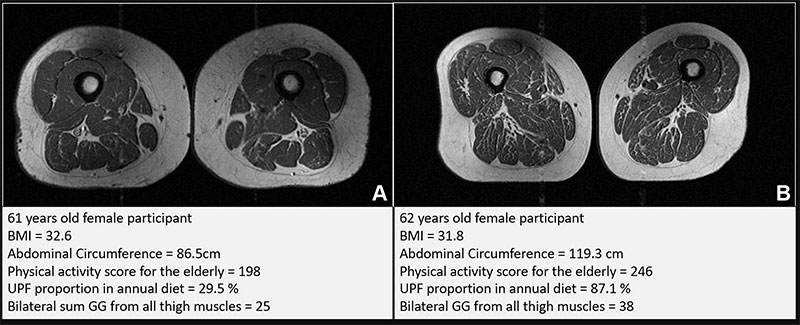
Representative axial T1-weighted spin-echo thigh MRI scans in (A) a 61-year-old female participant and (B) a 62-year-old female participant. Both participants were of similar age and body mass index (BMI, calculated as weight in kilograms divided by height in meters squared). Both had Physical Activity Scale for the Elderly scores above the mean score in the study. According to the World Health Organization definition, the participant in B qualified as having abdominal obesity (abdominal circumference ≥ 88 cm). Abdominal circumference is a measure of central obesity that captures fat distribution and serves as an indicator of cardiometabolic health. Compared with the participant in A, the participant in B had a higher proportion of ultra-processed food (UPF) in their diet (87.1% vs 29.5%) and exhibited fattier thigh muscles bilaterally, with Goutallier grade (GG) for all thigh muscles summing to 25 for the participant in A and 38 for the participant in B.
Researchers found that a diet high in ultra-processed foods is associated with higher amounts of fat stored inside thigh muscles, regardless of calorie or fat intake, physical activity or sociodemographic factors in a population at risk for knee osteoarthritis. Results of the study were published in Radiology.
Ultra-processed foods usually have longer shelf lives and can be highly appealing and convenient. They contain a combination of sugar, fat, salt and carbohydrates which affect the brain’s reward system, making it hard to stop eating.
“Over the past decades, in parallel to the rising prevalences of obesity and knee osteoarthritis, the use of natural ingredients in our diets has steadily diminished and been replaced by industrially-processed, artificially flavored, colored and chemically altered food and beverages, which are classified as ultra-processed foods,” said the study’s lead author, Zehra Akkaya, MD, researcher and consultant for the Clinical & Translational Musculoskeletal Imaging group at University of California, San Francisco, Department of Radiology and Biomedical Imaging.
Dr. Akkaya and the research team set out to assess the relationship of ultra-processed food intake and intramuscular fat in the thigh.
For the study, researchers analyzed data from 615 individuals who participated in the Osteoarthritis Initiative who were not yet affected by osteoarthritis, based on imaging. The Osteoarthritis Initiative is a nationwide research study, sponsored by the National Institutes of Health, that helps researchers better understand how to prevent and treat knee osteoarthritis.
“Osteoarthritis is an increasingly prevalent and costly global health issue,” Dr. Akkaya said. “It constitutes one of the largest non-cancer-related health care costs in the United States and around the world. It is highly linked to obesity and unhealthy lifestyle choice.”
Of the 615 individuals, (275 men, 340 women) the average age was 60 years. On average, participants were overweight with a body mass index (BMI) of 27. Approximately 41% of the foods they consumed over the prior year were ultra-processed.
The researchers found that the more ultra-processed foods people consumed, the more intramuscular fat they had in their thigh muscles, regardless of caloric intake.
“In addition to investigating the quality of our modern diet in relationship to thigh muscle composition, in this study, we used widely available, non-enhanced MRI, making our approach accessible and practical for routine clinical use and future studies,” Dr. Akkaya said. “These MRIs do not require advanced or costly technology, which means they can be easily incorporated into standard diagnostic practices.”
Patient’s own bone treated and reimplanted in breakthrough procedure
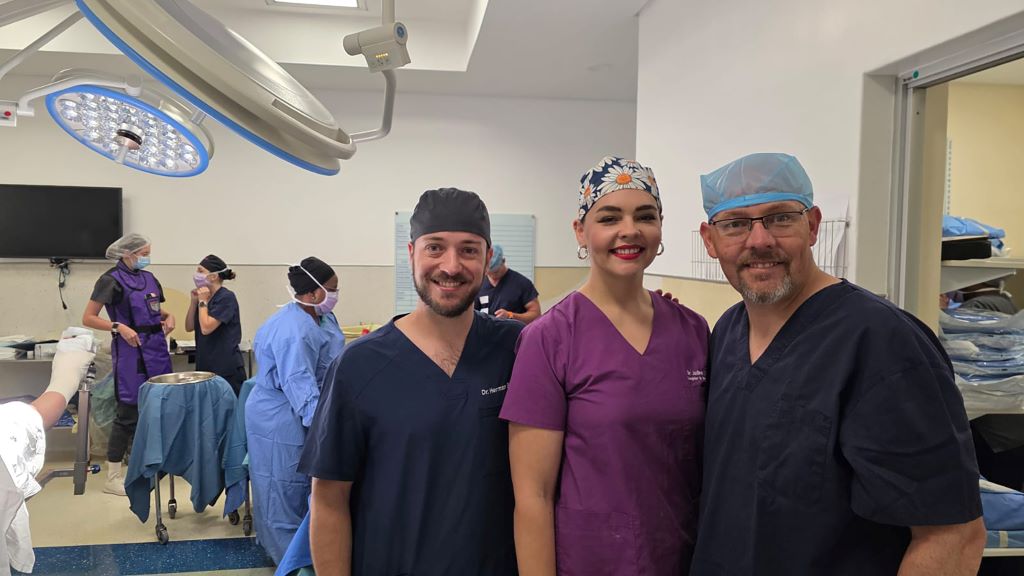
Medical first: Dr Herman Breet, Dr Jadine Du Plessis, and Dr Jaco Viljoen (left to right) performed South Africa’s first liquid nitrogen limb salvage surgery at Netcare Unitas Hospital this week.
Thursday, 16 April 2026: In a South African first, a Centurion-based surgeon has successfully performed a hip and limb salvage procedure using a liquid nitrogen dipping technique.
This pioneering approach, performed at Netcare Unitas Hospital in Tshwane this week, could significantly expand treatment options for certain patients with orthopaedic cancers, particularly those who would typically require removal of the affected bone and its replacement with a large prosthesis.
The operation saved the leg of a 15-year-old boy with Ewing’s sarcoma, an aggressive bone cancer. Standard treatment usually involves removing the cancerous section of bone and replacing it with either a large metal prosthesis or the patient’s own bone after irradiation to destroy cancer cells.
“When I explained that conventional surgery meant no more contact sports, I saw the devastation in his eyes – and in his father’s. That’s when I knew we had to try something different,” recalls Dr Jaco Viljoen, an orthopaedic surgeon with a special interest in orthopaedic oncology.
“I’d been prepared for this exact scenario for ten years. When I mentioned there might be another way – a chance he could play sport again – their faces lit up,” says Dr Viljoen.
During the four-and-a-half-hour procedure, Dr Viljoen led a skilled team in removing a 24-centimetre section of the teenager’s femur (thigh bone) where the cancer had developed. Working alongside Dr Viljoen were assistants Dr Jadine Du Plessis and Dr Herman Breet, anaesthetist Dr Bianca Brits, and scrub nurses Registered Nurse Gloria Kgwete and Enrolled Nursing Assistants Leah Lekoane and Mahlatse Motheta.
The team treated the removed segment by immersing it in liquid nitrogen at -179°C to destroy cancer cells. The bone was then reimplanted, marking the first time this technique had been performed in South Africa.
“This kind of complex surgery is only possible with an exceptional team. Every person in that operating theatre played a crucial role in giving this young man his future back,” Dr Viljoen said.
Ewing’s sarcoma is the second most common bone tumour in children and adolescents, according to a recent study in The Lancet Oncology. This aggressive cancer primarily affects individuals aged 10 to 20, with about 80% of cases diagnosed before the age of 20. It most commonly arises in the long bones of the legs and arms, as well as in the pelvis and chest wall, accounting for 10 to 15% of all bone cancers. Without treatment, the disease progresses rapidly, making early intervention critical.
“A day after surgery, the patient was alert and showed good neurovascular function in the affected leg – promising early signs. He even managed a few assisted steps with his physiotherapist, Leonie De Lange. Follow-up tests will monitor how well the treated bone integrates, and we’re cautiously optimistic about his progress,” comments Dr Viljoen.
“This technique marks a significant departure from standard treatment. The traditional approach would have involved the complete removal of the affected bone, followed by a complex prosthetic reconstruction of the hip, which often limits long-term mobility and rules out a return to contact sports. A second alternative – irradiating the patient’s bone before reimplantation – can compromise bone integrity and increase the risk of non-union, often requiring further surgery. For this keen young rugby and cricket player, preserving his natural bone and joint function was a critical consideration,” he adds.
The ideal solution stemmed from a Japanese technique Dr Viljoen had been holding in reserve. The sophisticated procedure, though developed by specialists in Japan more than a decade ago, is rarely performed worldwide – particularly not in patients with Ewing’s sarcoma – and requires exceptional precision. The extreme cold destroys cancerous tumours while preserving the bone’s architecture, allowing it to heal naturally once reimplanted and secured with surgical pins.
“We’ve effectively preserved his bone and hip joint. His own bone will regenerate and integrate with the surrounding tissue. For a young person, that’s game-changing, as his leg can continue to develop normally.
By preserving his natural anatomy, this procedure offers him the possibility of returning to full activity once healed. This technique offers hope of avoiding amputation in other clinically appropriate patients,” explains Dr Viljoen.
Dr Viljoen previously headed the Tumour, Sepsis and Limb Reconstruction Unit at Steve Biko Academic Hospital. A graduate of the University of Pretoria, he completed his orthopaedic specialisation in 2015 and now practises privately at Netcare Unitas Hospital and Netcare Montana Hospital.
“Dr Viljoen and his colleagues have added another chapter to South Africa’s legacy of medical excellence. But, this is about more than innovation – it’s proof that worldclass orthopaedic care happens right here at home, offering hope to patients facing life-altering conditions such as Ewing’s sarcoma,” adds Dr Erich Bock, managing director of Netcare’s hospital division.
“This is what sets exceptional healthcare apart – seeing the whole person, not just the disease. Dr Viljoen and his team haven’t just treated cancer – they’ve preserved a young man’s dreams. That is the true essence of person centred healthcare,” concludes Dr Bock.
Researchers have found that the absolute effects of anti-amyloid drugs on cognitive decline and dementia severity were absent or trivial
Neurons in the brain of an Alzheimer’s patient, with plaques caused by tau proteins. Credit: NIH
Drugs that target amyloid beta proteins in the brain likely have no clinically meaningful positive effects, while increasing the risk of bleeding and swelling in the brain, a new Cochrane review has found.
People with Alzheimer’s disease have high levels of a protein known as amyloid beta in their brains, detectable before symptoms begin, but its role in disease progression is uncertain. Drugs have been developed to remove these proteins from the brain, under the theory that this would prevent or slow disease progression.
The new review examined data from 17 clinical trials with a total of 20 342 participants, all looking at the impact of anti-amyloid drugs on people with mild cognitive impairment or mild dementia due to Alzheimer’s disease. Proponents of these drugs have theorised that they would be more effective at these earlier stages before the disease has progressed.
Absolute effects “well below clinical threshold”
The research found that the absolute effects of anti-amyloid drugs on cognitive decline and dementia severity were absent or trivial, falling well below established thresholds for the minimum clinically important difference.
“Unfortunately, the evidence suggests that these drugs make no meaningful difference to patients,” said lead author Francesco Nonino, neurologist and epidemiologist at the IRCCS Institute of Neurological Sciences of Bologna, Italy. “There is now a convincing body of evidence converging on the conclusion that there is no clinically meaningful effect. While early trials showed results that were statistically significant, it is important to distinguish between this and clinical relevance. It is common for trials to find statistically significant results that do not translate into a meaningful clinical difference for patients.”
In addition to the absence of clinically meaningful effects, the review found that anti-amyloid drugs likely increase the risk of swelling and bleeding in the brain. This was observed in brain scans without any apparent symptoms for most patients, although any long-term effects remain unclear since reporting of symptoms was inconsistent across trials.
Future research should focus on other pathways
On the basis of the evidence, the authors conclude that future trials targeting amyloid beta removal are unlikely to provide clear benefit to patients. They found that these drugs do successfully remove amyloid proteins from the brain, but this does not translate into meaningful clinical benefit. They recommend that future research on Alzheimer’s treatment should focus on other mechanisms, with numerous studies ongoing in other directions.
“I see Alzheimer’s patients in my clinic every week and I wish I had an effective treatment to offer them,” said senior author Edo Richard, Professor of Neurology at Radboud University Medical Centre. “Existing approved drugs offer some benefit for some patients, but there remains a high unmet need for more effective treatments. Sadly, anti-amyloid drugs do not offer this and bring additional risks. Given the absence of correlation between amyloid removal and clinical benefit, we need to explore other pathways to help address this devastating disease.”