Category: Lab Tests and Imaging

Researchers Pioneer New Breathing Test to Detect Lung Disease Earlier
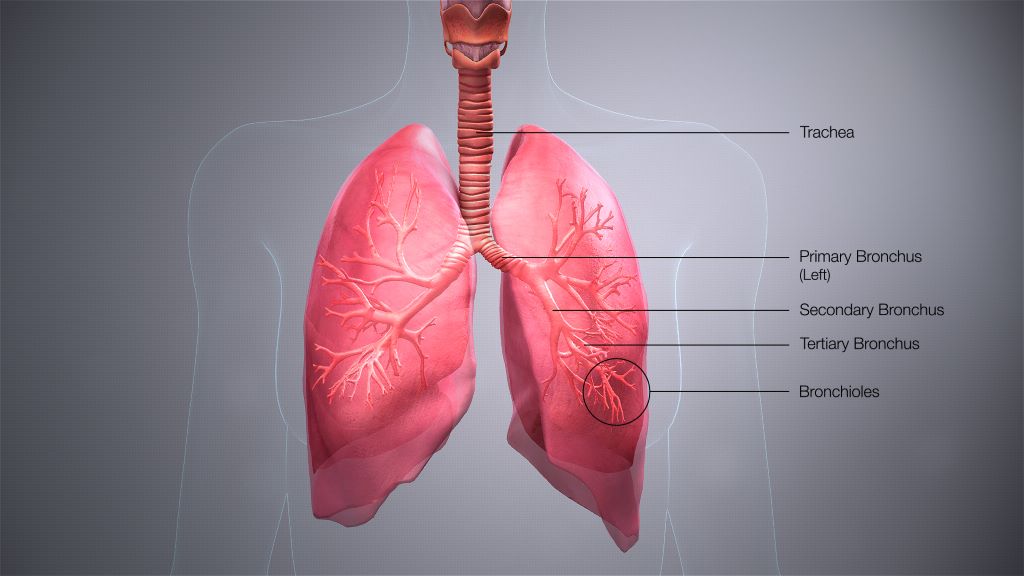
Credit: Scientific Animations CC4.0

A new project led by Oxford University aims to develop a novel breathing test that could detect asthma and COPD earlier, more accurately, and closer to home – reducing pressure on the NHS and improving outcomes for patients.

This work is included in a portfolio of research funded by the Engineering and Physical Sciences Research Council (EPSRC), part of UK Research and Innovation, to make diagnostic testing more accessible by designing simple, affordable tools that can be used in everyday settings. The project, called ACCESS (A Community-based diagnostiC for early airwayS disease), focuses on airway diseases, and will receive £1.3 million over three years.

Chronic respiratory diseases such as asthma and chronic obstructive pulmonary disease (COPD) affect more than half a billion people worldwide and cause over four million deaths every year. In the UK, these conditions hit disadvantaged communities hardest, with people in areas of socioeconomic deprivation facing particular challenges in accessing hospital-based diagnostic care.
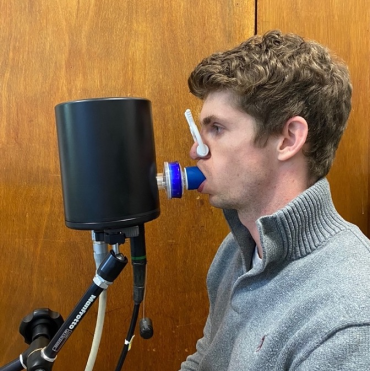
A volunteer undertaking a computed cardiopulmonography based breath test. (The volunteer is Dr Nick Smith, a member of the research team developing the CCP technology). Credit: Department of Chemistry, University of Oxford.

Currently, asthma and COPD diagnosis relies on a test called spirometry. This measures how much air a person can forcefully breathe out, but it is difficult for many patients to perform and often fails to detect disease in its earliest stages. By the time spirometry picks up abnormalities, damage to the lungs is usually irreversible, resulting in late diagnoses, missed chances for early treatment, and poorer outcomes.

The project is enabled by the strong ethos for collaborative and innovative research in this University and will be delivered by a multi-disciplinary team, working across university departments and the NHS.

Project lead Professor Grant Ritchie

To address these issues, Oxford researchers have developed a new test, known as computed cardiopulmonography (CCP), that could transform the way lung diseases are diagnosed. CCP is performed while a patient breathes normally for 12 minutes through a mouthpiece linked to a highly accurate gas analyser. Using cutting-edge laser technology and advanced mathematical modelling, the test captures a detailed picture of how evenly air flows through the lungs. This “fingerprint” of lung function changes early in the course of disease, making CCP a powerful tool for spotting subtle problems that spirometry can miss.

Early studies in people with asthma, COPD, and even in otherwise healthy smokers suggest CCP is a highly sensitive marker of small airways damage. But while the results are promising, the test currently takes too long and requires specialist gas supplies, restricting its use to hospitals and research labs.

The goal of the ACCESS project is to adapt CCP for community use, for instance in GP surgeries, pharmacies, and community diagnostic hubs. Specifically, the research team will work to reduce the time duration and volume of gas needed for each test, and speed up the data analysis so that results can be shared with the patient during the same appointment. Towards the end of the project, CCP will be trialled in a community diagnostic centre to gather feedback from patients and healthcare professionals.

The long-term goal is to support earlier diagnosis and treatment, helping reduce hospital visits and tackle health inequalities. By enabling earlier intervention and delivering care closer to home, CCP has the potential to improve outcomes for millions of people living with lung disease.

Source: Oxford University
Simple Blood Test Can Predict Risk of Severe Liver Disease

Photo by National Cancer Institute on Unsplash

A new study from Karolinska Institutet, published in The BMJ, shows how a simple blood analysis can predict the risk of developing severe liver disease. The method may already start to be applied in primary care to enable the earlier detection of cirrhosis and cancer of the liver.

“These are diseases that are growing increasingly common and that have a poor prognosis if detected late,” says Rickard Strandberg, affiliated researcher at Karolinska Institutet’s Department of Medicine, Huddinge, who has developed the test with his departmental colleague Hannes Hagström. “Our method can predict the risk of severe liver disease within 10 years and is based on three simple routine blood tests.” 

For the study, the researchers at Karolinska Institutet and their colleagues in Finland evaluated how well the method can estimate the risk of severe liver disease. The model, which is called CORE, was produced with advanced statistical methods and is based on five factors: age, sex and levels of three common liver enzymes (AST, ALT and GGT), which are commonly measured during regular health checks. 

A web-based calculator 

Their aim has been to produce a tool that is easy to use in primary care, where most patients first seek medical attention. A web-based calculator is already available for doctors and nurses at www.core-model.com

“This is an important step towards being able to offer early screening for liver disease in primary care,” says principal investigator Hannes Hagström, adjunct professor at the Department of Medicine, Huddinge, and senior consultant at Karolinska University Hospital. “Drug treatment is now available, soon hopefully also in Sweden, for treating people at a high risk of developing liver diseases such as cirrhosis or liver cancer.” 

The study is based on data from over 480 000 people in Stockholm who underwent health checks between 1985 and 1996. On following the participants for up to 30 years, the researchers could see that some 1.5% developed severe liver disease, such as liver cirrhosis and liver cancer, or required a liver transplant. 

Highly accurate risk prediction 

The CORE model proved highly accurate and was able to differentiate between people who either did or did not develop the disease in 88 per cent of cases, which is an improvement on the currently recommended FIB-4 method. 

“Primary care hasn’t had the tools to detect the risk of severe liver disease in time,” says Professor Hagström. “FIB-4 is not suited for the general population and is less effective at predicting the future risk of severe liver disease.” 

The model was also tested on two other population groups in Finland and the UK, where it again demonstrated a high accuracy in predicting this risk. The researchers make the point, however, that it needs to be further tested on groups at especially high risk, such as people with type 2 diabetes or obesity. They also recognise a need to integrate the model into medical records systems to facilitate its clinical use. 

Source: Karolinska Institutet

Pocket Ultrasound Reduces Hospital Stays for Patients with Shortness of Breath

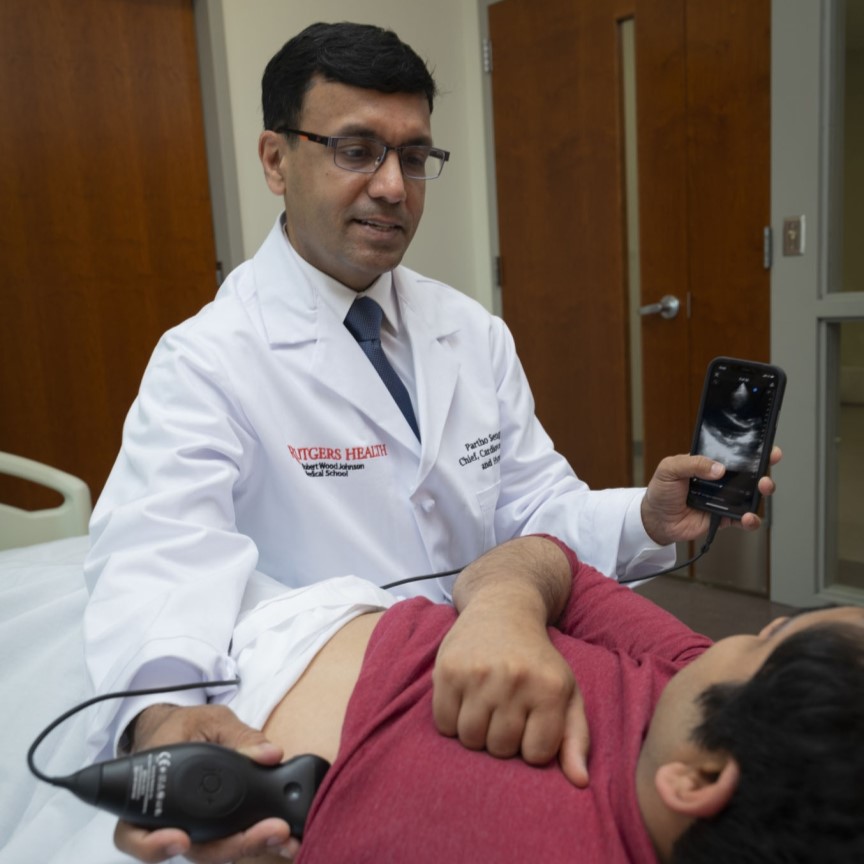
Credit: Rutgers Health/RWJBarnabas Health

When hospitalised patients struggle to breathe, doctors typically reach for their stethoscopes, but results from a clinical study in JAMA Network Open suggest they should diagnose the problem with portable ultrasounds instead.

The study, by Rutgers Universitty and RWJBarnabas Health, found initial exams with portable ultrasounds led to better diagnoses, shorter hospital stays and big cost savings. However, the findings revealed a need for additional training and workflow integration to help clinicians transition from traditional tools to this promising new technology.

“The study clearly shows that ultrasound is the superior diagnostic technology, even for long-time stethoscope users who get a few hours of ultrasound training,” said senior study author Partho Sengupta, Henry Rutgers professor and chief of cardiology at Rutgers Robert Wood Johnson Medical School (RWJMS), chief of cardiology at Robert Wood Johnson University Hospital (RWJUH) and member of the RWJBarnabas Health Medical Group.

The explanation here is simple. Ultrasound gives you more information, and more concrete information, about what’s going on

Partho Sengupta, Henry Rutgers professor

The study enrolled 208 patients admitted with shortness of breath to Robert Wood Johnson University Hospital in New Brunswick. About half of them underwent diagnosis via point-of-care ultrasound devices that attach to smartphones. The rest underwent diagnosis via existing standards of care. 

Initial diagnosis with ultrasound trimmed a patient’s average length of hospital stay from 11.9 days to 8.3 days. In all, initial diagnosis with ultrasound saved 246 bed-days and about $751 000 in direct costs across the cohort, while 30-day readmissions were similar between groups.

“The explanation here is simple. Ultrasound gives you more information, and more concrete information, about what’s going on,” Sengupta said.  “When clinicians can see fluid in the lungs, a failing heart or a stiff inferior vena cava in minutes, they can target therapy sooner or rule out a cardiopulmonary cause and look elsewhere.”

To keep things simple and encourage buy-in, scans focused on a handful of cardiac views and a six-zone lung sweep. The exam was designed to be quick and binary: signs of congestion or not, systolic function reduced or not.

The study provided several hours of ultrasound training to participating hospitalists (doctors who oversee and coordinate hospital patient care) so that each could perform and interpret the ultrasound exam in 10 to 15 minutes. 

Nevertheless, most hospitalists who underwent the training let sonographers perform the exams and cardiologists interpret them. Only 20% of patients received an ultrasound diagnosis from one of the hospitalists.

Sengupta said time pressure on rounds and a lack of incentives make it hard to add a 10-minute procedure, even if it changes care.

“This is consistent with what we observe in day-to-day clinical practice,” Sengupta said. “Although the ultrasound probe fits in your pocket and attaches to the back of a smartphone, its use in clinical settings remains inconsistent. This study overcame those barriers by leveraging a multidisciplinary framework.”

Kameswari Maganti, professor of cardiology at RWJMS and section chief for non-invasive cardiology at RWJUH, led the image interpretation with the sonography team that worked closely with the RWJUH hospitalist team, led by RWJMS faculty Catherine Chen and Payal Parikh, as well as the engineering and data science team, headed by Naveena Yanamala. 

“This coordinated team effort was key to developing and delivering a streamlined protocol that significantly reduced hospital stays and healthcare costs,” Sengupta said.

The researchers reported that ultrasound findings altered medical decisions in roughly a third of cases, including new diagnoses and changes in therapy. They also noted that longer-stay patients appeared to benefit the most, a hint that ultrasound-guided triage and treatment may pay particular dividends when cases are complex.

As with most single-center implementations, caveats apply. The model relied on trained sonographers and cardiology reads, which may not be available everywhere. Broader studies across multiple hospitals will be needed to confirm the cost and length-of-stay benefits, and to test strategies that make adoption stick.

Still, the argument for seeing more and guessing less is gaining ground. A bedside view of the heart and lungs, delivered early in admission, may help the right treatments arrive sooner.

Source: Rutgers University

From Symptoms to Solutions: Professional Testing Can Reveal Hidden Allergens

As spring arrives in South Africa, many people experience their most challenging allergy season. However, while pollen-filled air triggers obvious seasonal symptoms, allergies extend far beyond springtime discomfort, affecting millions year-round through food sensitivities, skin reactions, and environmental triggers.

“Spring allergies are usually just the tip of the iceberg,” says Tyron Hansen, Business Development Manager at BioSmart Lab. “You wake to spring sunshine and nature in full bloom, but instead of enjoying it, you’re shut inside with tissues and antihistamines. Meanwhile, your stomach acts up after breakfast, and that mysterious rash on your arms is back. Sound familiar?”

Hansen explains that many people assume that their symptoms stem from a single source, like pollen or food preservatives. However, BioSmart Lab’s test results often reveal they’ve actually been living with multiple triggers they never connected to their symptoms.

Why It’s Worth Looking Deeper

Professional allergen tests measure specific antibodies in your blood to identify how your body reacts to different substances. This matters because what looks like “seasonal” hay fever might actually be a mix of environmental, food, and even skin-related triggers.

“Our immune systems are like complicated alarm systems,” explains Hansen. “They go off loudly, but without proper testing, you only hear the siren – you don’t see what’s actually setting it off.”

A major source of confusion is the difference between allergies and intolerances. Both of which can make you feel unwell, but function very differently:

  • Allergies: They set off the immune system through immunoglobulin E (IgE) antibodies, causing anything from a runny nose or itchy eyes to potentially life-threatening anaphylaxis, often within minutes of exposure.
  • Intolerances: These don’t set off your immune system, but they can still cause digestive discomfort like bloating or nausea, and while not dangerous, they can nevertheless affect daily life.

“Knowing which is which can be the key to finally feeling better,” he adds.

Everyday Triggers You Might Be Missing

Allergies aren’t always obvious or seasonal. Many people live with daily discomfort without realising what’s behind it. Hansen provides some of the most common sources of ongoing allergic reactions.

  • Environmental triggers: Dust mites, mould spores, pet dander, and certain plants can cause year-round congestion, itchy eyes, or skin flare-ups.
  • Food sensitivities: That heavy, bloated feeling after meals could point to, for example, wheat, rice and corn sensitivity, or even certain food combinations.
  • Skin reactions: Chronic eczema or rashes are sometimes triggered by hidden allergens, not simply “sensitive skin.”
  • Allergic clues in children: Kids often can’t articulate their symptoms. What might appear to be frequent colds, skin rashes, or trouble concentrating could be subtle signs of allergies.

“Trying to figure out if your symptoms are caused by allergens through elimination diets, behavioural adjustments, or symptom tracking can take months and still leave you without answers, notes Hansen. “Blood-based testing provides a faster alternative by measuring IgE antibodies – the proteins your immune system releases when it detects threats.”

Taking Back Control

BioSmart Lab’s advanced blood panels analyse these IgE proteins across multiple allergens simultaneously. These tests can be purchased online and provide accurate, quantitative results without the risk of sparking reactions or being influenced by medication use.

Some people discover that they need to remove wheat to manage food allergies. Others learn that their “pet allergy” is actually a dust mite sensitivity. Parents often find their child’s mid-afternoon meltdowns are directly linked to specific food triggers at lunch.

“The goal isn’t just to manage symptoms – it’s to restore people’s quality of life,” emphasises Hansen. “Once you understand what your body is reacting to, you can move from frustrating guesswork to making informed choices, giving you control of your health back,” he concludes.

For more information about BioSmart’s allergy testing options, visit https://biosmart.com/allergy-tests/.

Test Detects Brain Cancers in Cerebrospinal Fluid with High Accuracy

Photo by Cottonbro on Pexels

A novel, multi-analyte test developed by researchers at Johns Hopkins Medicine can accurately identify brain cancers using small samples of cerebrospinal fluid (CSF), offering a promising new tool to guide clinical decision-making.

The findings, supported by funding from the National Institutes of Health, were published in Cancer Discovery and demonstrate that combining multiple biological markers, including tumour-derived DNA and immune cell signatures, is more effective for diagnosing central nervous system cancers than using any one marker alone.

“This study highlights how much more information we can gain when we evaluate several analytes together,” says senior study author Chetan Bettegowda, MD, PhD, Professor and Director of the Department of Neurosurgery at the Johns Hopkins University School of Medicine. “The ability to detect cancers with high specificity and also gain insight into the immune environment of the brain could be an important advance in the care of patients with brain tumours.”

To evaluate the potential of a multi-analyte approach, investigators analysed 206 CSF samples, including samples from patients with high-grade gliomas, medulloblastomas, metastases and central nervous system lymphomas. Their test, called CSF-BAM (cerebrospinal fluid–B/T cell receptor, aneuploidy and mutation), measured chromosomal abnormalities, tumour-specific mutations, and T and B cell receptor sequences. In combination, these markers identified brain cancers with more than 80% sensitivity (ability to detect cancer) and 100% specificity (correctly identified those who were cancer-free) in the validation cohort. The 100% specificity means no false positives were recorded among individuals with noncancerous conditions.

The study also showed that the assay could distinguish between the immune cell populations present in cancer and noncancer cases, offering additional biological context that could be helpful in more-challenging clinical scenarios. Investigators say this ability to categorize T and B cell populations in the CSF provides insights into both disease presence and immune response.

“Many patients with brain lesions face invasive diagnostic procedures to confirm a cancer diagnosis,” says Christopher Douville, MD, assistant professor of oncology and a senior study author. “A tool like this could help us make better-informed decisions about who really needs a biopsy and who doesn’t.”

Researchers say the test could be particularly useful for cases in which conventional imaging or cytology is inconclusive, or in situations when obtaining tissue for diagnosis is risky or not possible. The multi-analyte approach, they say, enables clinicians to better detect cancer and better understand the disease status, supporting a more tailored approach to patient care.

Source: Johns Hopkins Medicine

SAHPRA Approves Mpox Test Using African Medicines Regulatory Harmonisation (AMRH) Continental EUL Procedure

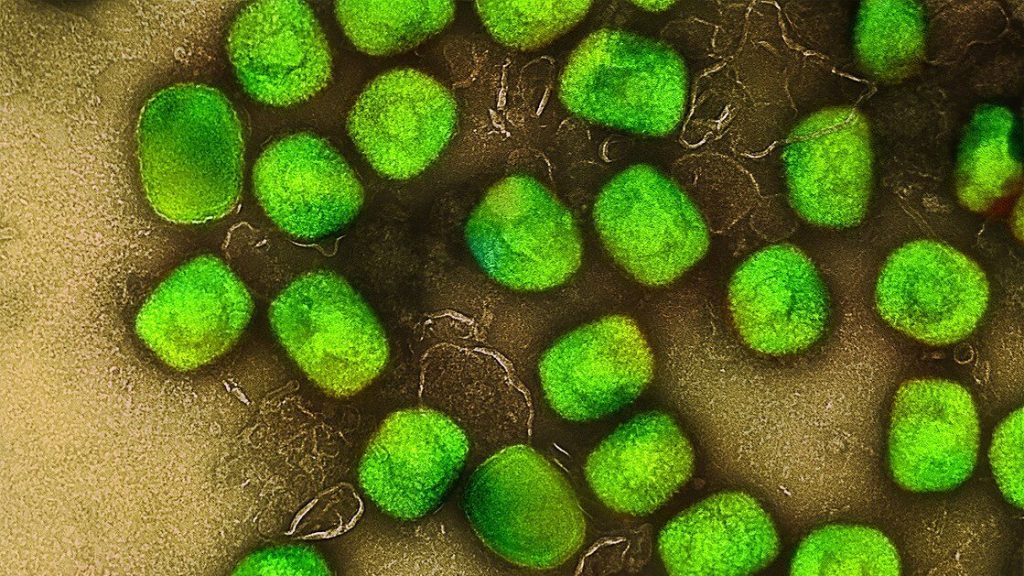
Mpox (monkeypox) virus. Source: NIH

Pretoria, 27 August 2025 – The South African Health Products Regulatory Authority (SAHPRA) has approved a molecular test kit for Mpox , Cobas MPXV, for use on the Cobas 6800/8800 Systems, within nine working days through a collaborative and harmonised review process under the African Medicines Regulatory Harmonisation (AMRH). Rapid and accurate testing is essential for early detection and to enable timely treatment, and effective containment of the virus.

SAHPRA’s Medical Device Unit, utilising both the World Health Organization (WHO) Emergency Use Listing (EUL) report and the African Medicines Regulatory Harmonisation (AMRH) Continental EUL Procedure, has successfully leveraged reliance mechanisms to facilitate the review and approval of Mpox diagnostic tools. This approach has proven instrumental in accelerating access to critical health technologies, particularly in public health emergencies.

The emergency use approval of the Cobas MPXV for use on the Cobas 6800/8800 Systems, developed by Roche Molecular Systems, Inc. and licensed to Roche Diagnostics South Africa (Pty) Ltd, represents a critical advancement in expanding diagnostic capacity amid Mpox outbreaks. Rapid and accurate testing is essential for early detection, timely treatment, and effective containment of the virus.

 “As part of our efforts to promote regulatory efficiency and responsiveness, SAHPRA has successfully leveraged reliance mechanisms to facilitate the review and approval of Mpox diagnostic tools. This marks a significant milestone in supporting regional and continental harmonisation of the regulatory processes for medical devices, including In-Vitro Diagnostics (IVDs),” says Dr Boitumelo Semete-Makokotlela, SAHPRA’s Chief Executive Officer.

For more information on the AMRH continental EUL listing publication, see here: https://www.nepad.org/news/public-notice-amrh-steering-committee-approves-emergency-use-listing-of-two-mpox

Source: SAHPRA

Researchers Discover a Significant Problem in Brain Imaging, Identify Fix

Photo by Mart Production on Pexels

In a new study, investigators from McLean Hospital (a member of Mass General Brigham), Harvard Medical School, and the National Institute on Drug Abuse Intramural Research Program (NIDA-IRP) discovered that the tendency of people’s arousal to wane over the course of brain scans has been distorting the brain connection maps produced by functional magnetic resonance imaging (fMRI).

The study is out now in Nature Human Behaviour.

The team found that as people’s arousal levels dwindle during an fMRI, such as if they become more relaxed and sleepy, changes in breathing and heart rates alter blood oxygen levels in the brain—which are then falsely detected on the scan as neuronal activity.

“You’re laying down in a snug scanner for quite some time, often with only a low-engagement button press task to attend to or nothing to do at all, as the scanner monotonously hums and vibrates around you,” said first author Cole Korponay, PhD, MPA, a research fellow at the McLean Hospital Imaging Center. “These arousal-dampening conditions create the illusion that people’s brain connection strengths continuously inflate throughout the scan.”

fMRI scans are commonly used to non-invasively map brain connectivity, but the technique relies on changes in brain blood oxygen to indirectly measure neuronal activity. It is therefore vulnerable to “noise” from other processes that can affect blood oxygen – such as changes in breathing and heart rates.

And because breathing and heart rate patterns are closely tied to arousal levels, changes in arousal can introduce significant noise into fMRI data. Problematically, the conditions of an fMRI scan tend to progressively lull people into lower arousal states.

In the present study, the research team identified a specific blood flow signal that seemed to track both the decline in subject arousal levels and the illusory inflation of functional brain connection strengths.

This non-neuronal, physiological noise signal, termed the “systemic low frequency oscillation” (sLFO) signal, grew over time during scanning, in a spatial and temporal pattern that closely followed the pattern of the connection strength increases.

The researchers then demonstrated that a method called RIPTiDe, developed by co-senior author Blaise Frederick, PhD, an associate biophysicist at the McLean Imaging Center, to remove the sLFO signal from fMRI data, was able to eliminate the illusory connection strength increases.

“By adopting this sLFO denoising procedure, future studies can mitigate the distortive effects of arousal changes during brain scans and enhance the validity and reliability of fMRI findings,” said Korponay.

This research was supported by the National Institute on Drug Abuse, the National Institute of Mental Health, and the National Institute on Aging, all part of the National Institutes of Health.

Source: Mass General Brigham McLean Hospital

New AI–based Test Detects Early Signs of Osteoporosis from X-ray Images

Photo by Cottonbro on Pexels

Investigators have developed an artificial intelligence-assisted diagnostic system that can estimate bone mineral density in both the lumbar spine and the femur of the upper leg, based on X-ray images. The advance is described in a study published in the Journal of Orthopaedic Research.

A total of 1454 X-ray images were analysed using the scientists’ system. Performance rates for the lumbar and femur of patients with bone density loss, or osteopenia, were 86.4% and 84.1%, respectively, in terms of sensitivity. The respective specificities were 80.4% and 76.3%. (Sensitivity reflected the ability of the test to correctly identify people with osteopenia, whereas specificity reflected its ability to correctly identify those without osteopenia). The test also had high sensitivity and specificity for categorising patients with and without osteoporosis.

“Bone mineral density measurement is essential for screening and diagnosing osteoporosis, but limited access to diagnostic equipment means that millions of people worldwide may remain undiagnosed,” said corresponding author Toru Moro, MD, PhD, of the University of Tokyo. “This AI system has the potential to transform routine clinical X-rays into a powerful tool for opportunistic screening, enabling earlier, broader, and more efficient detection of osteoporosis.”

Source: Wiley

Student Designs a Prostate Checking Device to Replace the Digital Exam

Pro check, designed by Loughborough University student Devon Tyso.

A Loughborough University student has developed a new medical device that could transform how prostate health is assessed and monitored.

Devon Tyso, a Product Design and Technology student, has designed ‘PRO check’, an innovative tool designed to replace the traditional digital rectal examination (DRE), which involves a doctor manually assessing the prostate with a finger.

According to Devon, the current approach is heavily reliant on a clinician’s subjective judgement and experience, and many see the method as ‘intrusive’.

“As one in seven men will get prostate cancer, it’s vital to detect abnormalities early and track changes over time,” said Devon, “The current examination method involves a lot of guesswork.

“PRO check provides objective, measurable data and allows prostate health to be visualised – enabling more accurate diagnosis, and improved long-term monitoring.

“Having a device conduct the exam may also feel less invasive, which may encourage more men to get checked, potentially catching issues earlier.”

How the device works

Designed for use by GPs during routine prostate assessments, PRO check allows doctors to evaluate the size and texture of the prostate — two key indicators of potential health issues — in a more objective and consistent way than the traditional digital rectal examination.

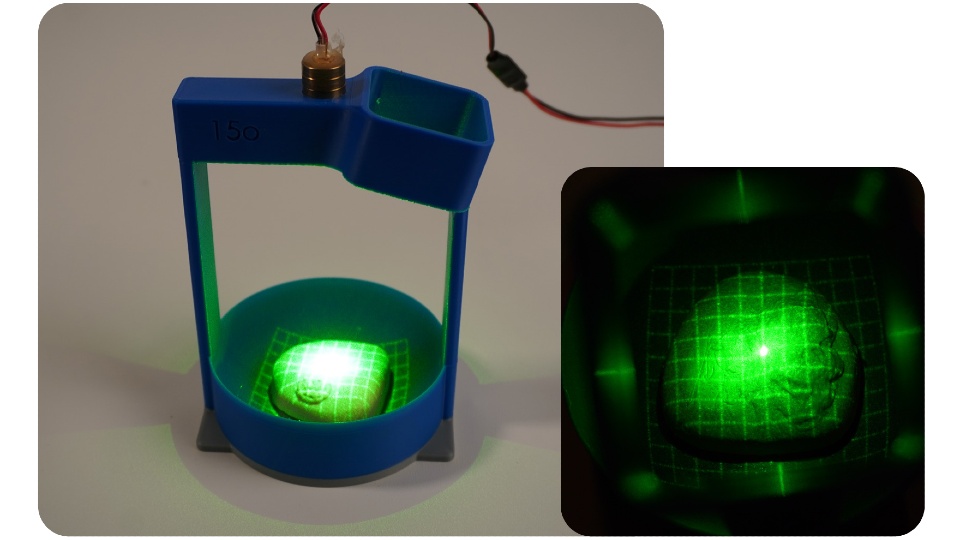
The device is a handheld probe, and it is covered with a condom before being inserted into the body. Once in position, the condom inflates to different pressures, pressing against the surface of the prostate, causing it to compress. A laser grid is projected onto the inner surface of the condom so the shape of the underlying prostate can be captured.

Stereoscopic cameras capture images of the laser grid, tracking where the gridlines intersect and how these intersections shift as pressure changes. This information is then fed into mathematical equations to create 3D images — or ‘topographical representations’ — that reveal the prostate’s shape and surface structure under different pressures.

Studying the prostate’s surface details could help clinicians identify areas requiring further investigation. Healthy prostate tissue is typically soft and compressible, so regions that appear stiff or resist pressure could indicate potential abnormalities and warrant further investigation.

The device can also produce data on prostate volume – one of the measurements used to calculate prostate-specific antigen (PSA) density, which helps assess prostate cancer risk. Devon says currently volume estimates are often based on a clinician’s best judgement.

In addition, data from PRO check can be used to generate a compressibility-versus-pressure graph – a novel data type not currently available in clinical practice. This graph shows how the prostate compresses at different pressure levels, which Devon hopes could offer new insights into prostate health and complement existing diagnostic tools.

PRO check is designed to integrate with artificial intelligence, enabling automatic extraction of video data, real-time calculations, and the generation of 3D images for live display on a laptop or tablet during the examination.

The idea is that all examination data from PRO check would be stored on the patient’s records, helping to build a personalised prostate health profile that can be tracked and monitored over time.

Inspiration

Devon’s inspiration for PRO check came from a mix of personal experience – after his grandfather’s prostate cancer diagnosis – and unexpected technical research.

“It really hit home how common prostate issues are after my family member was found to have an enlarged prostate,” said the 22-year-old from Cardiff, “I realised nearly everyone I spoke to about it knew someone affected by it.

“When I started looking into prostate examinations, I kept thinking ‘how can a doctor remember what your prostate felt like four months ago?’ and how horrible it must be just be told whether you’re fine or not without seeing any data or anything visual.”

While researching non-invasive ways to assess tissue structure inside the body, Devon came across a technique used by NASA to map the surface of asteroids — projecting laser grids onto them, capturing images with satellite-mounted cameras, and analysing the gridline intersections to reveal the contours of the surface.

“I saw that NASA were mapping surface heights on a massive scale, and I thought – if they can do that in space, why can’t we use similar principles to examine something here on Earth?” said Devon, “I’ve basically used the exact same technique and scaled it down for PRO check.”

Prototypes

Devon designed PRO check as part of his final year project – which was exhibited at the School of Design and Creative Arts’ 2025 Degree Show – and has prototyped several of its key components.

He has built and tested two working prototypes. The first demonstrates how a laser grid and camera can be setup to map the surface of the prostate.

Devon designed a custom rig that enabled him to capture images of a laser grid projected onto different silicone prostate models — representing a healthy gland, a small tumour, a large tumour, and an enlarged prostate — from an optimal angle using a smartphone camera.

First prototype of pro checkPRO check prototype one demonstrated how laser gridlines and a camera can be used to image the surface of the prostate.

The second prototype features electronics that inflate a small balloon at controlled pressures, regulated by a pressure-sensing chip. Devon consulted three healthcare professionals to measure the pressure typically applied during prostate exams and replicated those levels in his design.

Devon tested the prototype using the silicone prostate models but encased them in a sponge disc to simulate surrounding tissue.

Devon manually extracted data on the gridline intersections from the camera footage and applied mathematical equations to generate 3D images of the prostate surfaces and surrounding tissue under different pressures.

Next steps

Devon hopes to collaborate with medical professionals and product developers to turn PRO check into a fully realised medical device.

When speaking about his ultimate goal, Devon said: “I’d love to see this used in GP surgeries across the UK one day.

“With early detection being so critical, anything that helps men get checked sooner and more comfortably – and provides reliable data and visualisations – has huge potential. I really believe this could make a difference.”

Further information on PRO check can be found on the Degree Show website.

Source: Loughborough University

Handheld TB Test for Low-cost Diagnosis in HIV Hotspots

A new handheld tuberculosis testing device by Tulane University is the size of a credit card, requires no electricity and significantly improves detection of the disease in those with HIV. (Vincent Postle/Tulane University)

Current tuberculosis infection tests struggle to detect the disease in those with HIV. A common co-infection, HIV can hide TB from traditional tests by eliminating the immune cells relied upon to sound the alarm.

While more than 90% of the 2 billion TB cases worldwide are latent – symptom-free and not contagious – the weakening of the immune system in those with HIV can allow latent TB to turn active, increasing the potential for new infections to spread and often resulting in fatal outcomes. Tuberculosis is the leading cause of death among those with HIV worldwide.

Now, Tulane University researchers have developed a new handheld TB test that significantly improves detection in people with HIV, according to a new study in Nature Biomedical Engineering. Powered by a beetle-inspired chemical reaction, the device requires no electricity and addresses a critical gap in TB infection detection that has long hobbled efforts to eliminate the world’s deadliest infectious disease. 

“The goal was to develop a TB test that could be taken anywhere and provide quicker, more accurate results for anybody.”

Tony Hu, PhD

Dubbed the ASTRA (Antigen-Specific T-cell Response Assay), the credit card-sized device requires only a drop of blood to provide same day diagnoses without need for a laboratory or trained staff. When tested against the traditional IGRA blood test (Interferon-Gamma Release Assay), the ASTRA detected TB in HIV-infected individuals with 87% specificity compared to IGRA’s 60%, while also outperforming in detection of TB without HIV co-infection. 

“The goal was to develop a TB test that could be taken anywhere and provide quicker, more accurate results for anybody,” said senior author Tony Hu, PhD, Chair in Biotechnology Innovation at Tulane University and director of the Tulane Center for Cellular & Molecular Diagnostics. “Current tests such as the IGRA are cost-prohibitive or require access to facilities that resource-limited communities don’t have. If we are going to eliminate TB, we have to diagnose and treat as many infection cases as possible.”

Added Bo Ning, lead author and assistant professor of biochemistry at Tulane University School of Medicine: “If your community has an immunocompromised population, someone may have latent TB.  This can help block the spread of TB and ensure that no one slips through the cracks.” 

To create a test that would not be stymied by HIV, the researchers identified two new biomarkers that could detect TB without relying on the immune cells susceptible to the virus. 

After adding a drop of blood to the device, it must incubate for 4 hours to allow a preloaded reagent to stimulate a response from the immune cells. The reagent acts as a “wanted poster” asking if they’ve seen tuberculosis bacteria before. 

To avoid the use of electricity, the researchers looked to an unlikely source for inspiration: the bombardier beetle. When threatened, these large insects combine two chemicals, and the resulting reaction produces a forceful spray. Similarly, two chemicals in the ASTRA are combined to propel the sample across a chip for final analysis and diagnosis. 

The new device delivers results in about 4 hours, compared to the IGRA, which takes 24 hours, and a common TB skin test, which can take between two and three days for a diagnosis. 

The ASTRA’s performance was validated using samples collected from a cohort in Eswatini, a country with high TB incidence and the highest reported HIV prevalence (27.3%) worldwide.

Increasing testing accuracy, access and speed is even more vital as TB resistance to drugs grows more robust, Hu said. 

“The sooner you have a diagnosis, the sooner you can begin the process of determining proper treatment,” Hu said. “TB is the No. 1 pathogen HIV patients worry about globally. If treatment is available, we should be working to kill these bacteria, latent or not.”

Source: Tulane University