Category: Injury & Trauma

“Skin in a Syringe” a Step Towards a New Way to Heal Burns

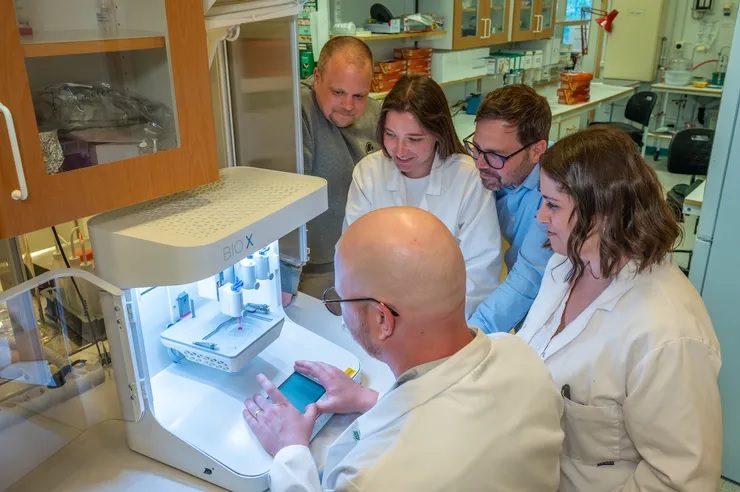
Researchers in fields such as regenerative medicine and materials science have collaborated to develop a gel containing living cells that can be 3D-printed into a transplant. Photographer: Magnus Johansson

Finding a way to replicate the skin’s complicated dermis layer has long been a goal of healing burn wounds, as it would greatly reduce scarring and restore functionality. Researchers at Linköping University have developed a gel containing living cells that can be 3D-printed onto a transplant, which then sticks to the wound and creates a scaffold for the dermis to grow.

Large burns are often treated by transplanting a thin layer of the top part of the skin, the epidermis, which is basically composed of a single cell type. Transplanting only this part of the skin leads to severe scarring.

“Skin in a syringe”

Beneath the epidermis is the dermis, which has the blood vessels, nerves, hair follicles and other structures necessary for skin function and elasticity. However, transplanting also the dermis is rarely an option, as the procedure leaves a wound as large as the wound to be healed. The trick is to create new skin that does not become scar tissue but a functioning dermis.

“The dermis is so complicated that we can’t grow it in a lab. We don’t even know what all its components are. That’s why we, and many others, think that we could possibly transplant the building blocks and then let the body make the dermis itself,” says Johan Junker, researcher at the Swedish Center for Disaster Medicine and Traumatology and docent in plastic surgery at Linköping University, who led the study published in Advanced Healthcare Materials.

The most common cell type in the dermis, the connective tissue cell or fibroblast, is easy to remove from the body and grow in a lab. The connective tissue cell also has the advantage of being able to develop into more specialised cell types depending on what is needed. The researchers behind the study provide a scaffold by having the cells grow on tiny, porous beads of gelatine, a substance similar to skin collagen. But a liquid containing these beads poured on a wound will not stay there.

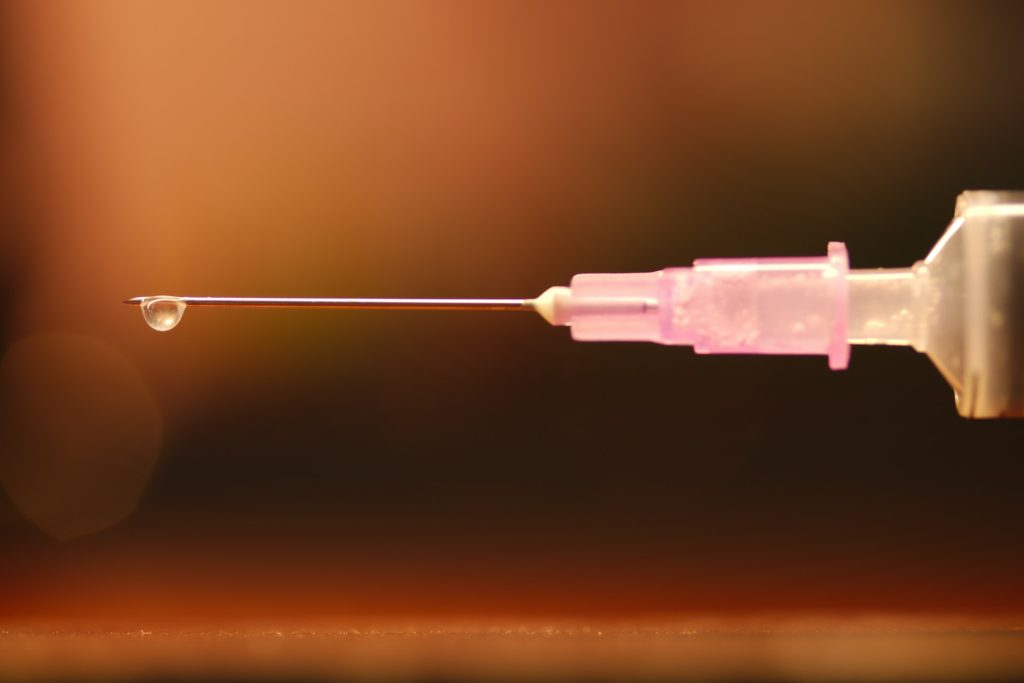
The researchers’ solution to the problem is mixing the gelatine beads with a gel consisting of another body-specific substance, hyaluronic acid. When the beads and gel are mixed, they are connected using what is known as click chemistry. The result is a gel that, somewhat simplified, can be called skin in a syringe.

“The gel has a special feature that means that it becomes liquid when exposed to light pressure. You can use a syringe to apply it to a wound, for example, and once applied it becomes gel-like again. This also makes it possible to 3D print the gel with the cells in it,” says Daniel Aili, professor of molecular physics at Linköping University, who led the study together with Johan Junker.

3D-printed transplant

In the current study, the researchers 3D-printed small pucks that were placed under the skin of mice. The results point to the potential of this technology to be used to grow the patient’s own cells from a minimal skin biopsy, which are then 3D-printed into a graft and applied to the wound.

“We see that the cells survive and it’s clear that they produce different substances that are needed to create new dermis. In addition, blood vessels are formed in the grafts, which is important for the tissue to survive in the body. We find this material very promising,” says Johan Junker.

Blood vessels are key to a variety of applications for engineered tissue-like materials. Scientists can grow cells in three-dimensional materials that can be used to build organoids. But there is a bottleneck as concerns these tissue models; they lack blood vessels to transport oxygen and nutrients to the cells. This means that there is a limit to how large the structures can get before the cells at the centre die from oxygen and nutrient deficiency.

Step towards labgrown blood vessels

The LiU researchers may be one step closer to solving the problem of blood vessel supply. In another article, also published in Advanced Healthcare Materials, the researchers describe a method for making threads from materials consisting of 98 per cent water, known as hydrogels.

“The hydrogel threads become quite elastic, so we can tie knots on them. We also show that they can be formed into mini-tubes, which we can pump fluid through or have blood vessel cells grow in,” says Daniel Aili.

The mini-tubes, or the perfusable channels as the researchers also call them, open up new possibilities for the development of blood vessels for eg, organoids.

Source: Linköping University

Unlocking Fast, Targeted Treatment for Trauma Injuries

Photo by Mat Napo on Unsplash

A groundbreaking study by researchers at Rutgers Health has uncovered a way to precisely identify and target trauma sites in the body within minutes of injury. The findings, published in the journal Med (Cell Press), could revolutionise emergency care by enabling real-time diagnostics and site-specific treatments delivered within minutes of injury.

A team of scientists, led by Renata Pasqualini and Wadih Arap at the Rutgers Cancer Institute discovered something new about how the body reacts to injury. When cells are damaged, like in a major bone break, calcium levels shift, which causes certain proteins to change shape. These changed proteins, called the “traumome,” are only found in injured tissues and show up right after an injury happens. This discovery opens up a new way to treat injuries directly, without affecting healthy parts of the body.

“The moment trauma occurs, specific proteins undergo structural changes, creating a molecular footprint of injury,” said Arap. “This opens the door to delivering diagnostics or therapies directly to the site – without affecting healthy tissues.”

This discovery has relevance in emergency treatment because many medicines can affect healthy organs when they’re given too soon. With this new approach, doctors could deliver treatments like imaging agents, clotting factors or antibiotics directly to the injured area, which would help the body heal faster with fewer side effects.    

“Our long-term vision is a simple injection that autonomously finds and treats injury sites,” said Pasqualini. “This could be transformative for battlefield medicine and emergency trauma care, where every second matters.”

The team used advanced testing on a pig model with major injuries to find tiny protein pieces called peptides. These peptides are like guides that can find and stick to the specific proteins altered by injury. One of these peptides stands out because it can attach to a protein that changes shape when calcium levels rise after an injury. This makes it possible to use special scans, like PET or MRI, to see exactly where the injury is in the body.

The trauma-targeting peptide worked the same way in rats, which shows that this injury “signature” is similar in all mammals, including humans.

The work was supported by the Defense Advanced Research Projects Agency (DARPA), an agency of the U.S. Department of Defense, underscoring its strategic value in both civilian and military medical applications. “Non-compressible bleeding remains a leading cause of death among soldiers before they reach a hospital, and localised treatment could dramatically improve survival rates, which was the original impetus of this research,” said Jon Mogford, a study co-author and former DARPA official.

The next phase of research will involve linking therapeutic agents to the trauma site-homing peptides and testing them in animal models before moving to early human clinical trials. The team envisions translational applications ranging from battlefield medicine to civilian trauma response and possibly even sports injuries or surgical recovery.

“We are actively developing peptide-linked drugs and imaging agents based on this discovery,” said Arap. “The traumome concept may also have applications beyond trauma, including in surgery, inflammation and tissue regeneration.”

Source: Rutgers University

Adaptive Spine Board Could Revolutionise ER Transport

ASB overlay is divided into five distinct sections—head and neck, upper trunk, buttocks and pelvis, thighs, and feet and heels

In combat zones and emergency rescues, rapid evacuation and treatment can mean the difference between life and death. But prolonged immobilisation during transport poses another life-threatening risk: pressure injuries.

A newly developed adaptive spine board (ASB) overlay aims to change that, offering an innovative solution to prevent pressure injuries and dramatically improve patient outcomes. Developed by researchers at The University of Texas at Arlington and UT Southwestern Medical School, the adaptive spine board sits atop a standard stretcher or spine board, using air-cell technology to redistribute pressure more effectively than traditional evacuation surfaces. The team’s newly published study in the Journal of Rehabilitation and Assistive Technologies Engineering shows the ASB outperforms other immobilisation options.

“The ability to dynamically adjust pressure so that no vulnerable body regions experience excessive weight is a breakthrough for medical evacuation,” said Muthu B.J. Wijesundara, principal research scientist at the University of Texas at Arlington Research Institute. “This innovation could set a new standard in casualty transport protocols.”

Also called bedsores or ulcers, pressure injuries result from prolonged pressure on the skin and underlying soft tissue, leading to cell death, tissue breakdown and open wounds. They are a constant risk for trauma patients during long-range transport, which sometimes lasts more than 16 hours. Research shows that more than 50% of casualties transported during the Iraq War developed pressure injuries before reaching a hospital.

While some existing technologies, such as vacuum spine boards, can help redistribute pressure, their effectiveness is limited. Many conventional supports fail to keep pressure below the thresholds recommended to prevent injury. Military stretchers and pads have shown to create high-pressure points on vulnerable areas of the body, including the back of the head, base of the spine, buttocks and heels.

“Beyond military use, the ASB overlay could prove valuable in civilian medical transport, particularly for spinal injury patients who are at high risk for pressure ulcers,” Dr Wijesundara said. “The research also highlights potential applications in other environments where prolonged immobilisation is necessary, such as disaster relief and space exploration.”

The ASB overlay features a multi-segmented air-cell design that target pressure-prone areas more effectively than previous solutions. It is divided into five distinct sections—head and neck, upper trunk, buttocks and pelvis, thighs, and feet and heels—each equipped with sensor-driven pressure modulation for responsive, localised support.

“One key innovation is the system’s ability to autonomously adjust the air-cell pressure to maintain optimal distribution for each patient,” Wijesundara said. “We developed an algorithm that compensates for environmental variables, such as temperature and barometric pressure changes, ensuring consistent performance across varying conditions. Testing showed that the ASB overlay outperformed typical equipment used in casualty transport.”

For critically injured patients, pressure injuries can significantly complicate treatment and recovery, leading to longer hospital stays, higher infection risks and additional surgeries. They’re also costly. The Agency for Healthcare Research and Quality (AHRQ) estimates that pressure injuries in the US can cost up to $151 700 per case, adding $11.6 billion in additional health care expenses annually. Alarmingly, the AHRQ also reports that approximately 60 000 patients die each year because of pressure injuries. The ASB overlay’s advanced pressure modulation could help mitigate these risks—especially for patients who cannot be repositioned during extended transport.

The research team is now planning additional studies to improve the device’s usability in real-world conditions. As the military increasingly relies on prolonged aeromedical evacuation, such advancements are critical for enhancing patient care in conflict zones.

Everything We Thought About Running Injury Development Was Wrong, Study Shows

Photo by Barbara Olsen on Pexels

A new study from Aarhus University turns our understanding of how running injuries occur upside down. The research project, published in The BMJ, is the largest of its kind ever conducted and involves over 5000 participants. It shows that running-related overuse injuries do not develop gradually over time, as previously assumed, but rather suddenly – often during a single training session.

“Our study marks a paradigm shift in understanding the causes of running-related overuse injuries. We previously believed that injuries develop gradually over time, but it turns out that many injuries occur because runners make training errors in a single training session,” explains Associate Professor Rasmus Ø. Nielsen from the Department of Public Health at Aarhus University, who is the lead author of the study.

The study followed 5205 runners from 87 countries over 18 months and shows that injury risk increases exponentially when runners increase their distance in a single training session compared to their longest run in the past 30 days. The longer the run becomes, the higher the injury risk.

Incorrect guidance for millions of runners

According to Rasmus Ø. Nielsen, the results cast critical light on how the tech industry has implemented so-called “evidence.” Millions of sports watches worldwide are equipped with software that guides runners about their training – both for training optimisation and injury prevention.

However, the algorithm used for injury prevention is built on very thin scientific grounds, according to Rasmus Ø. Nielsen.

“This concretely means that millions of runners receive incorrect guidance from their sports watches every day. They think they are following a scientific method to avoid injuries, but in reality they are using an algorithm that cannot predict injury risk at all,” he says.

Non-existing evidence behind guidance

The current algorithm, called “Acute:Chronic Workload Ratio” (ACWR), was introduced in 2016 and is now implemented in equipment from companies that produce sports watches, while organisations and clinicians, such as physiotherapists, also use the algorithm.

The ACWR algorithm calculates the ratio between acute load (last week’s training) and chronic load (average of the past 3 weeks). The algorithm recommends a maximum 20% increase in training load to minimise injury risk.

According to Rasmus Ø. Nielsen, the algorithm was originally developed for team sports and was based on a study with 28 participants. Due to the few participants in the study combined with data manipulation, the evidence base for using the algorithm to prevent running injuries is therefore “non-existent.”

Realtime guidance

The research team has therefore worked for the past eight years to develop a new algorithm that will be much better at preventing injuries for runners.

Rasmus Ø. Nielsen emphasises that he and the other researchers behind the study have no commercial interests in launching a new algorithm as a potential replacement for a method he himself criticises.

The algorithm will be made freely available to runners, companies, clinicians and organisations who can use it actively to guide training and injury prevention.

Rasmus Ø. Nielsen hopes that the new insights will be implemented in existing technology.

“I imagine, for example, that sports watches with our algorithm will be able to guide runners in real-time during a run and give an alarm if they run a distance where injury risk is high. Like a traffic light that gives green light if injury risk is low; yellow light if injury risk increases and red light when injury risk becomes high,” explains Rasmus Ø. Nielsen.

Source: Aarhus University

Slower Arm Movements Linked to Greater Fall Risk for Older Adults

Photo by Mikhail Nilov

When a person starts to lose their balance on a slippery surface, the natural reaction is to raise the arms to restore balance. Adults age 65 and older may move their arms more slowly when slipping, which could increase their risk of falling, according to a University of Arizona Health Sciences-led study.

The paper, published in Scientific Reports, marked the first analysis of balance-correcting arm movements that may assist in reducing the incidence of hip fractures, said senior author Jonathan Lee-Confer, PhD, an assistant professor of physical therapy at the U of A Mel and Enid Zuckerman College of Public Health. He and his collaborators studied older adults walking in everyday conditions. 

“We know older adults lose mass in the shoulder muscles used for these types of arm movements,” Lee-Confer said. “This research fills a gap by looking at how older adults move and revealing those detriments to functional performance during a slip.” 

The research team gathered data from two groups of people, the first with an average age of 26 and the second with an average age of 72. They found that all participants achieved comparable peak arm abduction during slips of similar severity; however, the older group were on average 58% slower than the younger group.

Additionally, they found that faster, more explosive arm corrections helped limit whole-body movement during a slip, quantifying the difference just 1/25 of a second made in how much participants’ bodies shifted sideways.

“It’s actually quite a bit – about an inch [2.5cm] to the side. So if someone is delayed with their arm movement, they are going to fall more toward the side than if they were able to react quickly,” said Lee-Confer, adding that until about seven years ago, the physical therapy community’s prevailing belief was that slips caused people to fall backward. 

Lee-Confer’s prior research found that many people instead fall to the side. The distinction is important in preventing injury, as slip-induced falls are strongly associated with hip fractures. 

“When an older adult fractures their hip, it can only be from a sideways fall, not purely backward,” he said.

Lee-Confer’s new study establishes a foundation for further research into interventions that could strengthen arms to improve balance reactions to slips. He plans to investigate whether strengthening targeted muscles by employing quick dumbbell raises to the side makes subjects’ arms move more rapidly when a slip occurs.

The balance-correcting arm movements happen almost as quickly as an automatic reflex and having existing strength to draw on may speed the process, he said.

If future findings support the approach, adding arm exercises to existing fall prevention programs that condition legs could make physical therapy protocols more effective, thus saving lives and prolonging healthspans. 

“This is about using physical therapy to extend someone’s quality of life,” he said. “I like the idea of being able to give somebody more years of protection from these debilitating injuries.”

According to the Centers for Disease Control and Prevention, falls are the leading cause of nonfatal and fatal injury for Americans age 65 and older. 

Source: University of Arizona

Healing Spinal Cord Injuries with the Help of Electricity

Heals spinal cord injuries with the help of electricity. Researchers have developed an ultra-thin implant that can be placed directly on the spinal cord. The implant delivers a carefully controlled electrical current across the injured area. In a recent study, researchers were able to observe how the electrical field treatment led to improved recovery in rats with spinal cord injuries, and that the animals regained movement and sensation. Please note that the image shows a newer model of the implant used in the study. Photo and illustration: University of Auckland

Researchers at Chalmers University of Technology in Sweden and the University of Auckland in New Zealand have developed a groundbreaking bioelectric implant that restores movement in rats after injuries to the spinal cord.

This breakthrough, published in Nature Communications, offers new hope for an effective treatment for humans suffering from loss of sensation and function due to spinal cord injury.

Electricity stimulated nerve fibres to reconnect

Before birth, and to a lesser extent afterwards, naturally occurring electric fields play a vital role in early nervous system development, encouraging and guiding the growth of nerve fibres along the spinal cord. Scientists are now harnessing this same electrical guidance system in the lab.

“We developed an ultra-thin implant designed to sit directly on the spinal cord, precisely positioned over the injury site in rats,” says Bruce Harland, senior research fellow, University of Auckland, and one of the lead researchers of the study.

The device delivers a carefully controlled electrical current across the injury site.

“The aim is to stimulate healing so people can recover functions lost through spinal cord injury,” says Professor Darren Svirskis, University of Auckland, Maria Asplund, Professor of bioelectronics at Chalmers University of Technology.

She is, together with Darren Svirskis, University of Auckland,

In the study, researchers observed how electrical field treatment improved the recovery of locomotion and sensation in rats with spinal cord injury. The findings offer renewed hope for individuals experiencing loss of function and sensation due to spinal cord injuries.

“Long-term, the goal is to transform this technology into a medical device that could benefit people living with life-changing spinal-cord injuries,” says Maria Asplund.

The study presents the first use of a thin implant that delivers stimulation in direct contact with the spinal cord, marking a groundbreaking advancement in the precision of spinal cord stimulation.

“This study offers an exciting proof of concept showing that electric field treatment can support recovery after spinal cord injury,” says doctoral student Lukas Matter, Chalmers University of Technology, the other lead researcher alongside Harland.

Improved mobility after four weeks

Unlike humans, rats have a greater capacity for spontaneous recovery after spinal cord injury, which allowed researchers to compare natural healing with healing supported by electrical stimulation.

After four weeks, animals that received daily electric field treatment showed improved movement compared with those who did not. Throughout the 12-week study, they responded more quickly to gentle touch.

“This indicates that the treatment supported recovery of both movement and sensation,” Harland says.

“Just as importantly, our analysis confirmed that the treatment did not cause inflammation or other damage to the spinal cord, demonstrating that it was not only effective but also safe,” Svirskis says.

The next step is to explore how different doses, including the strength, frequency, and duration of the treatment, affect recovery, to discover the most effective recipe for spinal-cord repair.

Source: Chalmers University of Technology

Glasgow Coma Scale Joined by New Measures to Assess TBI

Photo by Anna Shvets on Pexels

Trauma centres in the United States will begin to test a new approach for assessing traumatic brain injury (TBI) that is expected to lead to more accurate diagnoses and more appropriate treatment and follow-up for patients.

The new framework, which was developed by a coalition of experts and patients from 14 countries and spearheaded by the National Institutes of Health (NIH), expands the assessment beyond immediate clinical symptoms. Added criteria would include biomarkers, CT and MRI scans, and factors such as other medical conditions and how the trauma occurred.

The framework appears in the May 20 issue of Lancet Neurology.

For 51 years, trauma centres have used the Glasgow Coma Scale to assess patients with TBI, roughly dividing them into mild, moderate, and severe categories, based solely on their level of consciousness and a handful of other clinical symptoms.

That diagnosis determined the level of care patients received in the emergency department and afterward. For severe cases, it also influenced the guidance doctors gave the patients’ families, including recommendations around the removal of life support. Yet, doctors have long understood that those tests did not tell the whole story.

“There are patients diagnosed with concussion whose symptoms are dismissed and receive no follow-up because it’s ‘only’ concussion, and they go on to live with debilitating symptoms that destroy their quality of life,” said corresponding author Geoffrey Manley, MD, PhD, professor of neurosurgery at UC San Francisco and a member of the UCSF Weill Institute for Neurosciences. “On the other hand, there are patients diagnosed with ‘severe TBI’ who were eventually able to live full lives after their families were asked to consider removing life-sustaining treatment.”

In the US, TBI resulted in approximately 70 000 deaths in 2021 and accounts for about half-a-million permanent disabilities each year. Motor vehicle accidents, falls, and assault are the most common causes.

New system will better match patients to treatments

Known as CBI-M, the framework comprises four pillars – clinical, biomarker, imaging, and modifiers – that were developed by working groups of federal partners, TBI experts, scientists, and patients.

“The proposed framework marks a major step forward,” said co-senior author Michael McCrea, PhD, professor of neurosurgery and co-director of the Center for Neurotrauma Research at the Medical College of Wisconsin in Milwaukee. “We will be much better equipped to match patients to treatments that give them the best chance of survival, recovery, and return to normal life function.”

The framework was led by the NIH National Institute of Neurological Disorders and Stroke (NIH-NINDS), for which Manley, McCrea, and their co-first and co-senior authors are members of the steering committee on improving TBI characterisation.

The clinical pillar retains the Glasgow Coma Scale’s total score as a central element of the assessment, measuring consciousness and pupil reactivity as an indication of brain function. The framework recommends including the scale’s responses to eye, verbal, and motor commands or stimuli, presence of amnesia, and symptoms like headache, dizziness, and noise sensitivity.

“This pillar should be assessed as first priority in all patients,” said co-senior author Andrew Maas, MD, PhD, emeritus professor of neurosurgery at the Antwerp University Hospital and University of Antwerp, Belgium. “Research has shown that the elements of this pillar are highly predictive of injury severity and patient outcome.”

Biomarkers, imaging, modifiers offer critical clues to recovery

The second pillar uses biomarkers identified in blood tests to provide objective indicators of tissue damage, overcoming the limitations of clinical assessment that may inadvertently include symptoms unrelated to TBI.

Significantly, low levels of these biomarkers determine which patients do not require CT scans, reducing unnecessary radiation exposure and health care costs. These patients can then be discharged. In those with more severe injuries, CT and MRI imaging – the framework’s third pillar – are important in identifying blood clots, bleeding, and lesions that point to present and future symptoms.

Source: University of California – San Francisco

Hope for Severe Burns Patients with New Skin Substitutes

A dermal matrix – one of the latest advancements to regenerate skin after severe burns.

Severe burns remain one of the most challenging injuries to treat, causing high disease and death rates worldwide, but Australian researchers have flagged some promising new approaches that could save lives and dramatically improve patient recovery.

In a comprehensive review published in Advanced Therapeuticsresearchers from the University of South Australia (UniSA), University of Adelaide and Royal Adelaide Hospital (RAH) explore the latest advancements in dermal substitutes – biochemicals used to replace damaged skin – with a particular focus on combating infection and enhancing tissue regeneration following catastrophic burns.

The researchers say that despite decades of progress, traditional treatments such as skin grafting often fail to provide adequate healing and infection control, leading to prolonged hospital stays and soaring healthcare costs.

According to the lead authors Dr Zlatko Kopecki and Dr Bronwyn Dearman, the urgency to develop safer, more effective solutions has never been greater.

“Infections are a major cause of complications and mortality in burn patients,” says Dr Kopecki, a Research Fellow at UniSA’s Future Industries Institute.

“We must innovate beyond conventional methods and develop therapies that regenerate tissue while actively preventing infections.”

Each year, approximately 2423 Australians are admitted to hospital with burn-related injuries, 74% of whom require surgery, including a skin graft. Globally, 180 000 people die from burns each year, and approximately 10 million are hospitalised, costing healthcare systems $112 billion worldwide.

The review highlights that while many commercial skin substitutes exist, very few offer integrated antimicrobial protection – a critical factor given the vulnerability of burn wounds to bacterial invasion and sepsis.

The paper discusses emerging technologies such as Kerecis, a novel fish skin graft with inherent antimicrobial properties, and NovoSorb BTM, a synthetic biodegradable matrix that resists bacterial colonisation without relying on antibiotics.

Both products represent a new generation of dermal substitutes with enhanced potential to protect and heal complex burns.

Kerecis comes from wild Atlantic cod, caught from a sustainable fish stock in pristine Icelandic waters and processed using renewable energy. It stands out for retaining natural omega-3 fatty acids, which have strong antimicrobial effects and promote wound healing.

Meanwhile, NovoSorb BTM’s unique polyurethane matrix offers structural resilience even in infected wounds, providing a vital scaffold for tissue regeneration.

“These materials demonstrate a shift towards multifunctional therapies that combine structural support with infection resistance,” says Dr Dearman, Principal Medical Scientist for the Skin Engineering Laboratory at the RAH and an Adjunct Lecturer at the University of Adelaide.

“Such innovations are crucial, particularly as antibiotic-resistant infections continue to rise globally,” she says.

The review calls for the next wave of research to integrate active antimicrobial agents directly into 3D dermal scaffolds that support cell growth, reducing the reliance on antibiotics and temporary dressings.

Beyond infection control, the research points to scarless healing as the future frontier of burn care.

By combining smart biomaterials with cell-based therapies, scientists aim to regenerate skin that restores its full function – an outcome that could revolutionise the recovery for millions of burn survivors worldwide.

Source: University of South Australia

Roman-era Skeleton from Britain is Rare Evidence of Human–animal Gladiator Combat

The bones show evidence of bite marks from a large cat such as a lion, used in some gladiator shows

Although most Roman-era gladiators are believed to have mostly fought animal as well as human opponents, to date there has been little archaelogical evidence of this. Photo by David Cruz asenjo

A skeleton from Roman-era England has bite marks consistent with those of a large cat like a lion, suggesting that this individual may have died as part of a gladiator show or execution, according to a study published April 23, 2025 in the open-access journal PLOS One by Tim Thompson from Maynooth University, Ireland, and colleagues.

Records of gladiator combat in the Roman Empire have been well-documented, with evidence of both human-human conflicts and fights between humans and animals such as lions and bears. But actual gladiator remains are relatively scarce in the archaeological record – and in Britain specifically, which was occupied by the Romans from the first through fifth centuries, there has so far been no confirmed evidence of human-animal combat.

Puncture injuries by large felid scavenging on both sides of bone. Credit: Thompson et al., 2025, PLOS One, CC-BY 4.0

The skeleton described in the new paper was likely buried sometime between 200-300 CE, near the Roman city of Eboracum, which is now York. This site contains the remains of mostly younger men, often with evidence of trauma, which has led to speculation that it could be a gladiator burial site. This specific skeleton has a series of depressions on the pelvis, which had previously been suggested as possible evidence of carnivore bites. By creating a three-dimensional scan of these marks, the researchers on this new study could compare these marks to bites from a variety of different animals.

They determined that these marks were likely bite marks from a large cat, possibly a lion. Since they were on the pelvis, they note it’s possible that these bites came as a result of the lion scavenging on the body around the time of death.

This skeleton is the first direct, physical evidence of human-animal combat from Europe during the Roman Empire. By demonstrating the possibility of gladiatorial combat or similar spectacles in modern York, this finding also gives archaeologists and historians new insight into the life and history of Roman-era England.

Lead author Prof Tim Thompson, of Maynooth University, adds: “The implications of our multidisciplinary study are huge. Here we have physical evidence for the spectacle of the Roman Empire and the dangerous gladiatorial combat on show. This provides new evidence to support our understanding of the past.”

Co-author Dr John Pearce, of King’s College London, adds: “As tangible witnesses to spectacles in Britain’s Roman amphitheatres, the bitemarks help us appreciate these spaces as settings for brutal demonstrations of power. They make an important contribution to desanitising our Roman past.”   

David Jennings, CEO of York Archaeology, adds: “One of the wonderful things about archaeology is that we continue to make discoveries even years after a dig has concluded, as research methods and technology enable us to explore the past in more detail; it is now 20 years since we unearthed 80 burials at Driffield Terrace. This latest research gives us a remarkable insight into the life – and death – of this particular individual, and adds to both previous and ongoing genome research into the origins of some of the men buried in this particular Roman cemetery. We may never know what brought this man to the arena where we believe he may have been fighting for the entertainment of others, but it is remarkable that the first osteo-archaeological evidence for this kind of gladiatorial combat has been found so far from the Colosseum of Rome, which would have been the classical world’s Wembley Stadium of combat.”

Provided by PLOS

Shouldering the Burden of How to Treat Shoulder Pain

Photo by Kampus Production

Shoulders are, in many ways, a marvel. One shoulder has four separate joints, packed with muscles, that allow us to move our arm in eight different major ways, giving us the most degrees of freedom of any joint in the body. We can swim, toss, hug, and even punch because of the movement our shoulders enable.

But the same complexity that allows us such motion also presents opportunities for pain when something goes wrong. Another complication: shoulders change as we age, and new types of injuries come with it. Clinical practitioners face the daunting task of keeping up on the latest developments to treat a range of injuries as wide as Michael Phelps’ wingspan.

“It’s not that shoulder problems are unique to one particular age or for one particular group of individuals, but rather that they can arise throughout our lifetime,” said Paul Salamh, visiting associate professor of rehabilitation sciences at Tufts University School of Medicine. “Because we ask our shoulders to do so much, they’re vulnerable to a wide range of issues.”   

It can also be a challenge for health care providers to keep up with all of the latest evidence-based research on treating shoulder injuries. That’s why Salamh served as the lead author on two recently published papers, the research for which was conducted while he worked at the University of Indianapolis, about efforts to help coalesce this information and make it easier for everyone to understand.

In a paper published recently in the International Journal of Sports Physical Therapy, Salamh and other researchers conducted a systematic review of 19 papers on shoulder injuries. That review included four studies encompassing 7802 athletes in baseball, handball, swimming, tennis, cricket, American football, and also multi-sport athletes and people in the military. The reason to focus on athletes, Salamh said, was because the rate of shoulder and elbow pain in athletes in these “overhead” sports is increasing. A 2022 study estimated that nearly 11% of athletes between the ages of 5 to 18 years old experience a shoulder injury. 

Overall, the research team found five risk factors for athletes developing shoulder pain, two that can’t be changed (local and regional musculoskeletal pain) and three that can (range of motion, strength, and training load).  

These findings are supportive of a drilling-down approach to risk factors specific to body region, sport, and where applicable, position played in that sport, said Salamh. “There is a lot that can be looked at specifically in each sport. For example, the range of motion that would predispose a swimmer to a shoulder injury is different than that for someone playing lacrosse,” he said, adding that the same is true with strength of muscle or muscle groups within a particular sport. 

In a paper published recently in the Journal of Manual and Manipulative Therapy, Salamh and a team of researchers addressed a decade’s worth of research on the risk factors, aetiology, diagnosis, and management of frozen shoulder, an inflammatory condition that causes unrelenting stiffness and pain in the shoulder that can last for years.

For this paper, 14 international experts discussed and identified possible risk factors for the condition and symptoms that most often lead to a diagnosis. They also examined 33 different treatment options and categorised them into effectiveness for treating frozen shoulder in its earlier stages when pain is more prominent than stiffness, and later stages, when stiffness is a bigger problem than pain. 

“The treatment we would intervene with varies significantly depending on the stage of the condition,” Salamh said. “Depending on where they are in this process, we could be doing something that could be more painful and create more problems for individuals than be helpful.”

Overall, Salamh hopes that these types of papers and future research can lead to better understanding of what this unique joint requires to stay healthy along the course of our lives. “We want to take the complexity of the shoulder and not simplify it but make it more manageable and digestible for patients, clinicians, and researchers,” he said.

Source: Tufts University