Tag: Achilles tendon

Scientists Find Hidden Trigger Behind Achilles Pain and Tennis Elbow

Achilles tendon injury. Credit: Scientific Animations CC0

Complaints such as pain in the Achilles tendon, tennis elbow, swimmer’s shoulder and jumper’s knee are familiar to many young sportspeople, as well as to older individuals. These conditions are all caused by overloading of tendons and are generally very painful.

“Tendons are fundamentally susceptible to overuse,” explains Jess Snedeker, a professor of orthopaedic biomechanics at ETH Zurich and Balgrist University Hospital in Zurich. “They must withstand powerful loads, with all the forces of our muscles being concentrated to the relatively thin tendons that transmit these forces into movement of our skeleton.”

In medical terms, the aforementioned conditions are known as tendinopathies. They are some of the most frequent conditions seen by orthopaedic specialists, but treatment options are extremely limited. Although physiotherapy can help, there are many serious cases for which this treatment does not achieve much. Scientists are therefore keen to research these tendon problems in greater depth with a view to developing effective treatments.

Not just correlation – causation

Now, a team of researchers led by Snedeker and by Katrien De Bock, professor of exercise and health at ETH Zurich, has reached a new milestone. In the HIF1 protein, they have identified a central molecular driver of tendon problems of this kind. A part of HIF1 acts as a transcription factor, which controls the activity of genes in cells.

This protein was already known to be present at elevated levels in diseased tendons. However, it was unclear whether the increase was simply a concomitant phenomenon or whether the conditions are actually triggered by the protein. In experiments in mice and with tendon tissue from humans, the team of researchers has now shown the latter to be the case.

Treatment before it is too late

In mouse experiments, the researchers either activated the HIF1 protein permanently or switched it off completely. Whereas they observed tendon disease even without overloading in the mice with permanently activated HIF1, no tendon disease occurred in the mice if HIF1 was deactivated in tendons, even in the case of overloading.

Both in the mice and in the experiments with human tendon cells, which the researchers obtained from tendon surgeries at the hospital, they were able to show that elevated HIF1 levels in the tissue leads to a pathogenic remodelling of the tendons: More crosslinks form within the collagen fibres that make up the basic structure of the tendons.

“This makes the tendons more brittle and impairs their mechanical function,” explains Greta Moschini, a doctoral student in De Bock and Snedeker’s groups and lead author of the study. In addition, blood vessels and nerves growth into the tendon tissue. “This could be the explanation for the pain commonly observed in tendinopathy,” says Moschini.

“Our study not only provides new insight into how the disease develops. It also shows that it’s important to treat tendon problems early,” says Snedeker. He is thinking particularly of young athletes, who frequently struggle with tendinopathies. In these cases, it is often still possible to treat the problems. “However, the damage caused by HIF1 in tendon tissue can accumulate and become irreversible over time. Physiotherapy then no longer helps, and the only treatment at this moment is to surgically remove the diseased tendon.”

A starting point to search for treatments

The fact that HIF1 has now been identified as a molecular driver raises the question whether it is possible to develop medicines that deactivate HIF1 and therefore can prevent or cure tendon disease. It is not quite that easy, explains ETH Professor De Bock. In many organs of the body, HIF1 is responsible for detecting hypoxia and activating a physiological adaptation. “Switching HIF1 off throughout the body would likely lead to side effects,” she says.

It may be possible to look for methods that specifically deactivate HIF1 only in the tendon tissue. In De Bock’s view, however, the more promising approach would be to explore the biochemical processes around HIF1 in the cells in greater detail. This could help to identify other molecules that are influenced or controlled by HIF1 and that could be more suitable targets for the treatment of tendinopathy. The researchers will now embark on precisely that search.

Source: ETH Zurich
New Method Noninvasively Assesses Achilles Tendon in Dancers

Photo by Nihal Demirci on Unsplash

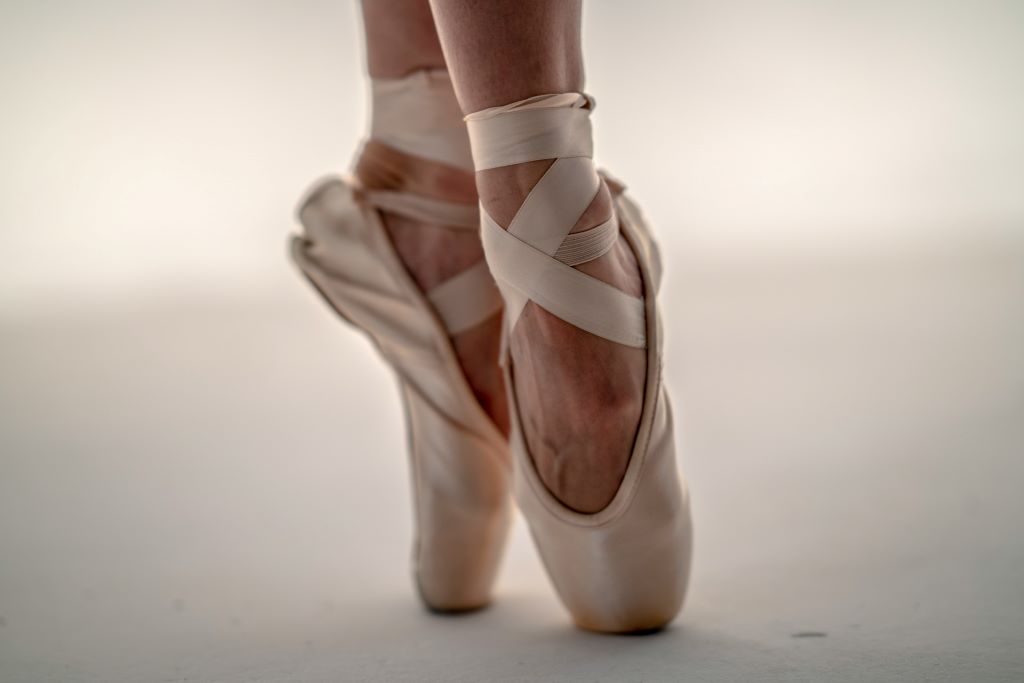
A study in the Journal of Orthopaedic Research uses a noninvasive, nonradioactive imaging-based method to measure the structure and function of the Achilles tendon in professional ballet dancers. The method could potentially be developed to help prevent injuries and improve rehabilitation efforts in athletes, as well as in the general public.

The study involved what is called multi-echo ultrashort echo time (UTE) magnetic resonance imaging (MRI) to assess collagen and other components of the Achilles tendon. These structural UTE MRI assessments were combined with functional assessments of the Achilles tendon based on sheer wave elastography (SWE) ultrasound, which measures tendon stiffness.

Professional dancers tended to have more tendon stiffness compared with non-dancers, consistent with prior observations of a training effect from repeated loading with exercise. UTE MRI measures corresponded with the degree of stiffness from SWE ultrasound.

“These findings highlight the potential of integrating UTE and SWE imaging to investigate tendon structure‐function relationships and adaptations to mechanical loading,” the authors write. “Enhanced structure‐function assessment of tendon health and injury status could improve rehabilitation protocols or injury prevention strategies for athletes, including professional dancers.”

Source: Wiley

Researchers Test Plasma Energy to Accelerate Healing of Achilles Tendon

Achilles tendon injury. Credit: Scientific Animations CC0

The Achilles tendon, although considered the toughest in the body, can rupture, with many such injuries involving sports enthusiasts in their 30s or 40s. Surgery might be required, and a prolonged period of rest, immobilisation, and treatment can be difficult to endure. Researchers in Japan have developed an approach using irradiation with plasma to accelerate healing.

A research team led by Osaka Metropolitan University Graduate School of Medicine’s Katsumasa Nakazawa, a graduate student in the Department of Orthopedic Surgery, Associate Professor Hiromitsu Toyoda, and Professor Hiroaki Nakamura, and Graduate School of Engineering Professor Jun-Seok Oh has focused on non-thermal atmospheric-pressure plasma (the electrically-charged gas such as found in a neon lamp – not blood plasma!) as a treatment method for tendon repair.

Their study, published in PLOS ONE, is the first to show that such plasma irradiation can accelerate tendon repair.

The team ruptured then sutured the Achilles tendon of lab rats. For one group of rats, the sutured area was irradiated with a helium plasma jet.

The plasma-irradiated group exhibited faster tendon regeneration and increased strength at two, four, and six weeks after surgery compared to the untreated group.

“We have previously discovered that irradiation of non-thermal atmospheric-pressure plasma has the effect of promoting bone regeneration. In this study, we discovered that the technology also promotes tendon regeneration and healing, showing that it has applications for a wide range of fields,” Professor Toyoda declared. “Combined with current tendon treatments, it is expected to contribute to more reliable tendon regeneration and shorter treatment time.”

Source: Osaka Metropolitan University

A New Treatment for Chronic Tendon Disease

Photo by Nino Liverani on Unsplash

The Achilles tendon can endure a load nearly 8 times body weight during exercise, rendering it vulnerable to injury despite its strength, which can be worsened by a failure to properly heal, forming bone instead of new tendon. A new study found that by inhibiting blood vessel formation, the anomalous bone growth can be prevented.

Due to the unique nature of tendons, failing to consult a doctor soon after an injury can lead to chronic tendon disease, which is characterised by pain, swelling, and movement problems. Tendon heterotopic ossification (HO) is a rare type of chronic tendon disease where new bone grows the tendon, causing even more damage. Famous athletes have had to retire early from sports due to a lack of a radical solution for Achilles tendon injuries.

Using single-cell sequencing technology, a team led by Professor Ouyang Hongwei found that changes in the tissue microenvironment of tendon HO alterations in gene expression and in tendon stem progenitor cells. These findings were published in Bone Research, providing a novel treatment for tendon heterotopic ossification.

The researchers firstly found that the tendon specific transcription factor MKX decreased significantly in heterotopic ossified human tendon, and deletion of MKX led to spontaneous ossification of mouse tendon, suggesting that MKX plays a critical role in tendon HO.

Further studies revealed that MKX knockout mouse tendon cells expressed high levels of genes related to blood vessel formation, resulting in vascular invasion and remodelling of the tendon extracellular matrix. This also resulted in abnormal activation of genes related to bone and cartilage in tendon stem cells. These data indicated that inhibition of blood vessel formation may improve the tendon tissue microenvironment and prevent HO progression.

Armed with this knowledge, Prof Ouyang and his colleagues searched for drugs that can inhibit the angiogenesis process. They found that local injection of a small molecule inhibitor known as BIBF1120 significantly inhibited the neovascularisation of tendon after injury, thus alleviating the progression of tendon HO.

Source: MedicalXpress