Tag: prosthetics

Prosthetic Designers Take Top Awards at the Entrepreneurship Intervarsity 2025

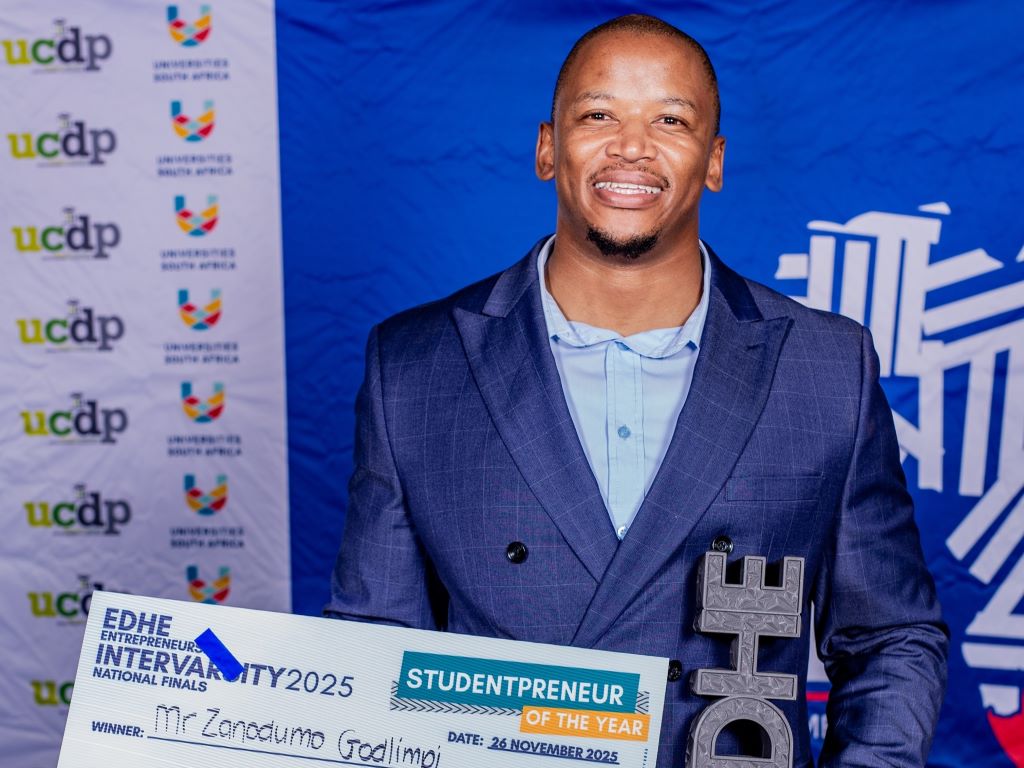
A young man’s determination to help the thousands of South Africans who cannot afford a quality prosthetic spurred him into action. It led him to design a pneumatic-actuated prosthetic foot, winning him the title of 2025 EDHE Studentpreneur of the Year at the seventh annual EDHE Entrepreneurship Intervarsity.

Mr Zanodumo Godlimpi, a postgraduate student at Walter Sisulu University, won R120 000 in overall prize money and a further R25 000 for another win in the Academic Research Commercialisation category.

A fellow prosthetic designer and innovator – Ms Amohetsoe Shale from Stellenbosch University – was named Top Student Womanpreneur, winning R25 000. Her company, Navu, designs and produces cost-effective, high-performance assistive technologies, beginning with a passive polycentric prosthetic knee. Ms Shale emerged a runner-up in the Academic Research Commercialisation category.

Below is the breakdown of the 2025 EDHE Entrepreneurship Intervarsity Award winners:

The EDHE Studentpreneur of the Year

·     Zanodumo Godlimpi (Walter Sisulu University), founder of a pneumatic-actuated and affordable prosthetic foot. (R120 000).

Top Student Womanpreneur

·     Ms Amohetsoe Shale (Stellenbosch University) founder of the NAVU Group, who design affordable, high-performing prosthetic knees for amputees. (R25 000).

Existing Business – Tech

·     Winner: Ms Kholofelo Makhubupetsi (University of Mpumalanga), co-founder of CSK Environmental Consulting which guides businesses towards sustainable practices while leveraging government grants. It helps organisations reduce greenhouse gas emissions and conserve biodiversity (R25 000).

·     Runners-up: Ms Khanyisa Mokgolobotho and Ms Rosemary Erawemen (Stellenbosch University), co-founders of Techmed Connect, a company revolutionising South African healthcare with technology through innovative AI solutions and helping bridge language gaps (R10 000).

Existing Business – Social Impact

·     Winner: Ms Malehu Mohale (University of Cape Town), founder of the Early Bird Testimony Academy, an online tutoring and mentorship platform. (R25 000).

·     Runner-up: Mr Kabelo Makhetha (Central University of Technology), founder of OWA Jewellers which creates jewellery that blends African design with safety technology, making it a potential life-saving tool for individuals with conditions like epilepsy or dementia. (R10 000).

·     2nd runner-up: Mr Katleho Mphutlane (University of Fort Hare), co-founder of Incremental Education which seeks to bridge the gap between education and employability and empowers students with practical skills and global opportunities, focusing on supporting TVET college and university of technology students in tourism, hospitality and agriculture. (R10 000)

Existing Business – General

·     Winner: Mr Tumelo Ratala (University of South Africa), founder of Drink & Print which offers purified water and printing services (R25 000).

·     Runner-up: Mr Thando Mzimela (University of Cape Town), co-founder of uniMark by TM Agrichem that connects university students with essential services through an online platform that streamlines access to local businesses (R10 000).

Academic Research Commercialisation

·     Winner: Zanodumo Godlimpi (Walter Sisulu University), founder of a pneumatic-actuated and affordable prosthetic foot. (R25 000).

·     Runner-up: Ms Amohetsoe Shale (Stellenbosch University) founder of the NAVU Group who designs affordable, high-performing prosthetic knees for amputees. (R10 000).

The Entrepreneurship Development in Higher Education (EDHE), a programme of the Department of Higher Education and Training (DHET) administered and implemented by Universities South Africa (USAf), is the custodian of the annual EDHE Entrepreneurship Intervarsity. EDHE is predominantly funded through the University Capacity Development Programme (UCDP) of the DHET.  

The Intervarsity is a platform designed to identify, recognise and celebrate top student entrepreneurs at South Africa’s 26 public universities. The event has, over the years, enjoyed the support of numerous private sector entities, including the Allan Gray Foundation, the Entrepreneurs’ Organisation and the SAB Foundation, which, in 2025, supports the initiative for the sixth year in a row.

Mr Phillip Tshabalala, Chief Director: Teaching, Learning and Research Development in the Department of Higher Education and Training, delivered the keynote address during the award ceremony.  Labelling the event both timely and significant, he said it represented an important step forward in collective efforts to advance entrepreneurial universities.

Referencing the recent G20 Summit and its commitment to boost inclusive growth — with a strong focus on Africa and the broader Global South – he said: “Universities play a vital role in preparing students, not only to participate in the labour market as employees, but also to serve as future employers, industrialists, innovators and leaders. DHET works closely with universities, USAf and other key partners to transform the academic landscape. A major component of this transformation is the integration of entrepreneurship within our universities and in the curriculum nationally.

“I congratulate the winners who are part of a movement to turn the tide for economic growth in our country. May they continue with their businesses and mentor those who are still finding their way.”

Said Dr Kirston Greenop, Head of Corporate Citizenship, Standard Bank South Africa: “For us at Standard Bank, there are only two ways to achieve growth in this country –  through education and with entrepreneurship. With these awards, and with the work done by EDHE, you combine the two and so, for us, it is an absolute win/win.

“Without a small and medium enterprise and entrepreneur base, this country is lost. We need to get the EDHE message out there to a wider community while celebrating its work. It is an absolute truth that when we invest in entrepreneurs, we invest in hope, in self-determination and in community upliftment.”

Mr Mahlubi “Chief” Mabizela, Director: Operations and Sector Support at USAf, emphasised the importance of entrepreneurship for higher education.

“Every graduate of higher education must come out equipped with entrepreneurial skills, whether or not they intend to use them thereafter. Universities cannot simply produce graduates who wait for jobs that may never come. Universities that embrace entrepreneurship remain relevant by aligning curriculum with societal and economic needs while producing well rounded graduates. Entrepreneurship fosters creativity, problem solving and adaptability; skills which are critical to compete, to participate in society, and for social development. In other words, entrepreneurship is not just about profit but about social innovation.

“Our ultimate aim is to have entrepreneurship embedded in the DNA of higher education, not as an elective, but as a pillar of the sector’s transformation,” he concluded.

Participating in the panel of judges for the 2025 EDHE Entrepreneurship Intervarsity Awards were Mrs Pabalelo Banks, representing Analytics X, Mr Billy Bokako from the Small Enterprises Development Agency, Ms Khwezi Cenenda, representing Avocado Vision,  Ms Onthatile Ditshego from the SAB Foundation, Ms Uve Nathi Gcilishe from The Innovation Hub) and Mr Marshall Grant, representing the Garden Route Innovation Hub.

Peri-neuronal Injection of Botulinum Eases Pain in Ukrainian Amputees

Botulinum injection around neuromas may also be effective for other forms of pain

Photo by Raghavendra V Konkathi on Unsplash

Botulinum toxin injections provided greater short-term relief for phantom limb pain than standard medical and surgical care among Ukrainian war amputees, reports a new study led by Northwestern Medicine and Ukrainian physicians.

The study, which involved 160 amputees treated at two hospitals in western Ukraine between 2022 and 2024, could ultimately benefit millions worldwide, according to the research team.

Post-amputation pain affects most amputees. The condition limits prosthetic use, mobility and quality of life. In the US, more than 2 million people live with limb loss. In Ukraine, it is estimated that over 100 000 soldiers and civilians have lost limbs since Russia’s full-scale invasion, which began in 2022.

“Botulinum toxin injected into painful stumps of residual limbs and around neuromas was on some outcome measures more effective than comprehensive medical and surgical treatment at one month post-treatment,” said senior study author Dr Steven P. Cohen, a professor of anaesthesiology and the vice chair of research and pain medicine at Northwestern University Feinberg School of Medicine.

Dr. Steven Cohen is a retired U.S. Army colonel who traveled to Ukraine to collaborate with local doctors.

“Our results show that botulinum toxin potentially could be a powerful short-term tool for treating post-amputation pain when used alongside comprehensive medical and surgical care,” said co-author Dr. Roman Smolynets, an anesthesiologist and intensive care specialist at Multidisciplinary Clinical Hospital of Emergency and Intensive Care in Lviv, Ukraine.

“It could be another step toward helping amputees live with less pain and more dignity. But always as an additional point to comprehensive medical and surgical care, not as a monotherapy.”

The study was published in the journal Archives of Physical Medicine and Rehabilitation.

Assessing pain before and after treatments

All study participants were amputees treated at the First Medical Union of Lviv or Ivano-Frankivsk Regional Hospital. About one-fifth received botulinum toxin injections around painful nerve endings, called neuromas, in addition to standard medical and physical therapy. The other participants received comprehensive medical and surgical treatment, which included surgical revision, nerve blocks, physical and psychological therapy, medications and other interventional procedures.

The research team assessed pain levels at the start of treatment and after one and three months, focusing separately on phantom limb pain (pain in the missing limb) and residual limb pain (pain at the stump site).

At one month, the botulinum toxin group experienced an average reduction of four points in phantom limb pain on a 10-point scale, compared with just one point among patients in the comparison group. Also at one month, 69% of patients who received botulinum toxin achieved a meaningful improvement (defined as at least a 30% drop in pain) in phantom limb pain, versus only 43% in the other patient group.

However, the results shifted at three months: Patients who received comprehensive care showed more durable pain relief than the botulinum toxin group, consistent with previous research showing that botulinum toxin’s pain-relieving effects typically last about three months.

A novel way to inject botulinum toxin

While botulinum toxin injections, a non-surgical treatment that alleviates pain by blocking nerve signals, are most commonly known for their use in cosmetic procedures, they are also an established tool to treat chronic pain.

In the study, the substance was injected in a novel way. The research team used ultrasound guidance to inject botulinum toxin directly around painful nerve endings and surrounding soft tissues, rather than into muscle or skin. This targeted “peri-neuromal” approach, the scientists believe, may explain the strong short-term reduction in pain by quieting nerve activity and local inflammation. Previous studies have shown botulinum toxin to be effective for neuropathic pain, but none injected it around painful nerves.

The new findings suggest that botulinum toxin injections near nerves may also help relieve other types of nerve pain, such as shingles-related pain, carpal tunnel syndrome and pain following surgeries like mastectomy or thoracotomy.

Friendship with a Ukrainian anaesthesiologist

Cohen, who traveled to Ukraine in 2024 to help launch the study, is a retired U.S. Army colonel who served four overseas tours in support of military operations; his son currently serves with the infantry.

In Ukraine, he partnered with Smolynets, who has treated thousands of soldiers and civilians injured in the war by working in the country’s largest trauma and emergency center, and Dr. Nadiya Segin, who is pioneering the use of Botulinum toxin and nerve stimulation to treat war injuries.

Smolynets will visit Chicago the week of Oct. 19 with a Ukrainian delegation for an observership program, spending time with Cohen at his pain medicine clinic and at a Shirley Ryan AbilityLab in downtown Chicago. The two physicians, now close friends, are available for interviews during that week.

More research in Ukraine

Cohen and his colleagues stress the need for larger, randomized trials to confirm their findings, refine patient selection and optimize botulinum toxin dosing. Future research should also explore whether repeat botulinum toxin injections over time could produce sustained benefits for post-amputation pain, as they appear to do for migraine treatment.

Cohen and Smolynets, who published another study in February about using hydrodissection for post-amputation pain in Ukraine, are also researching more novel war treatments in Ukraine, at Walter Reed, and Northwestern, for traumatic brain injury and PTSD. These studies are underway. 

“As a retired colonel and the father of an infantry soldier who could be deployed in future conflicts and suffered from traumatic brain injury while at the U.S. Military Academy, this research carries special personal meaning for me,” Cohen said.

Source: Northwestern University

Prosthetic Hand ‘Knows’ What it’s Touching, Grasps Like a Human

Sriramana Sankar/Johns Hopkins University.

Johns Hopkins University engineers have developed a pioneering prosthetic hand that can grip plush toys, water bottles, and other everyday objects like a human, carefully conforming and adjusting its grasp to avoid damaging or mishandling whatever it holds.

The system’s hybrid design is a first for robotic hands, which have typically been too rigid or too soft to replicate a human’s touch when handling objects of varying textures and materials. The innovation offers a promising solution for people with hand loss and could improve how robotic arms interact with their environment.

Details about the device appear in Science Advances.

“The goal from the beginning has been to create a prosthetic hand that we model based on the human hand’s physical and sensing capabilities—a more natural prosthetic that functions and feels like a lost limb,” said Sriramana Sankar, a Johns Hopkins PhD student in biomedical engineering who led the work. “We want to give people with upper-limb loss the ability to safely and freely interact with their environment, to feel and hold their loved ones without concern of hurting them.”

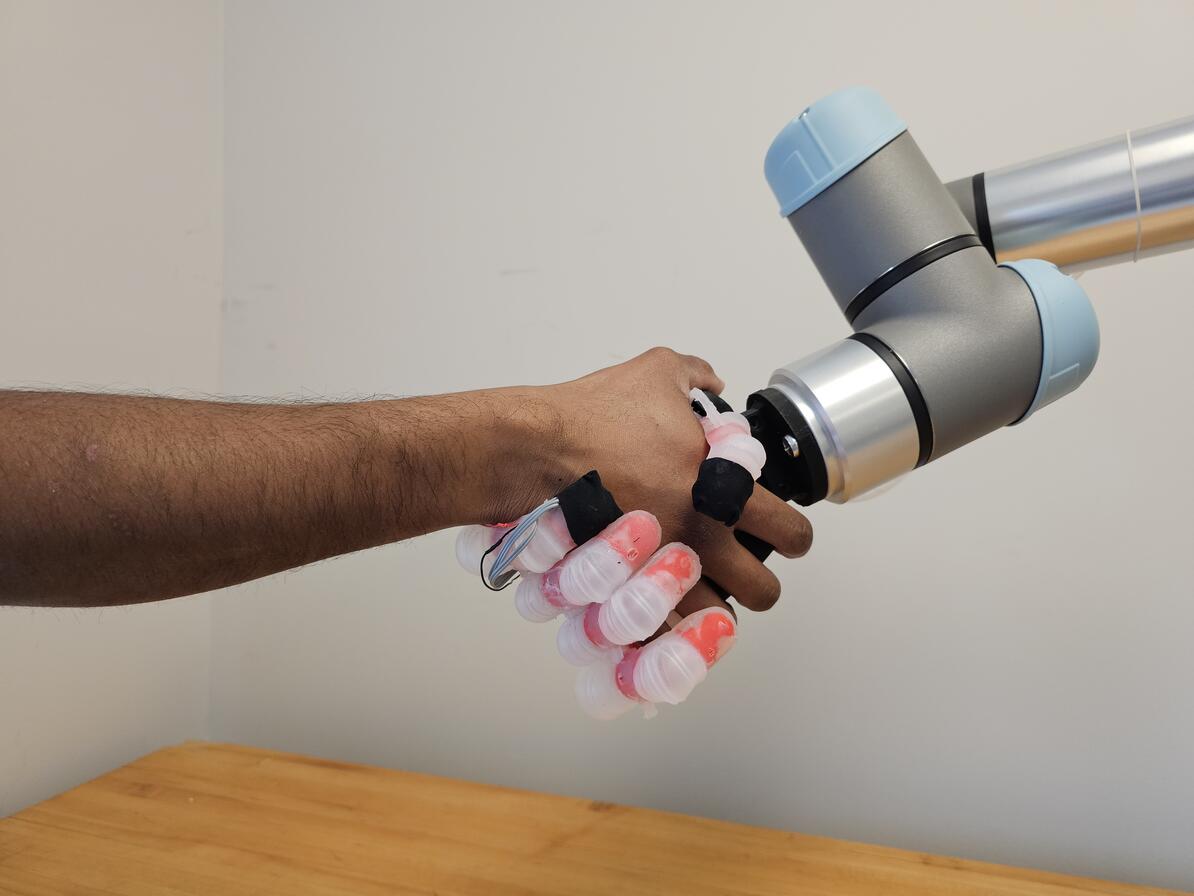
The device, developed by the same Neuroengineering and Biomedical Instrumentations Lab that in 2018 created the world’s first electronic “skin” with a humanlike sense of pain, features a multifinger system with rubberlike polymers and a rigid 3D-printed internal skeleton. Its three layers of tactile sensors, inspired by the layers of human skin, allow it to grasp and distinguish objects of various shapes and surface textures, rather than just detect touch. Each of its soft air-filled finger joints can be controlled with the forearm’s muscles, and machine learning algorithms focus the signals from the artificial touch receptors to create a realistic sense of touch, Sankar said.

“The sensory information from its fingers is translated into the language of nerves to provide naturalistic sensory feedback through electrical nerve stimulation,” Sankar said.

In the lab, the hand identified and manipulated 15 everyday objects, including delicate stuffed toys, dish sponges, and cardboard boxes, as well as pineapples, metal water bottles, and other sturdier items. In the experiments, the device achieved the best performance compared with the alternatives, successfully handling objects with 99.69% accuracy and adjusting its grip as needed to prevent mishaps. The best example was when it nimbly picked up a thin, fragile plastic cup filled with water, using only three fingers without denting it.

“We’re combining the strengths of both rigid and soft robotics to mimic the human hand,” Sankar said. “The human hand isn’t completely rigid or purely soft—it’s a hybrid system, with bones, soft joints, and tissue working together. That’s what we want our prosthetic hand to achieve. This is new territory for robotics and prosthetics, which haven’t fully embraced this hybrid technology before. It’s being able to give a firm handshake or pick up a soft object without fear of crushing it.”

To help amputees regain the ability to feel objects while grasping, prostheses will need three key components: sensors to detect the environment, a system to translate that data into nerve-like signals, and a way to stimulate nerves so the person can feel the sensation, said Nitish Thakor, a Johns Hopkins biomedical engineering professor who directed the work.

“The goal from the beginning has been to create a prosthetic hand that we model based on the human hand’s physical and sensing capabilities—a more natural prosthetic that functions and feels like a lost limb.”

Sriramana Sankar

PhD student, Biomedial engineering

The bioinspired technology allows the hand to function this way, using muscle signals from the forearm, like most hand prostheses. These signals bridge the brain and nerves, allowing the hand to flex, release, or react based on its sense of touch. The result is a robotic hand that intuitively “knows” what it’s touching, much like the nervous system does, Thakor said.

“If you’re holding a cup of coffee, how do you know you’re about to drop it? Your palm and fingertips send signals to your brain that the cup is slipping,” Thakor said. “Our system is neurally inspired—it models the hand’s touch receptors to produce nervelike messages so the prosthetics’ ‘brain,’ or its computer, understands if something is hot or cold, soft or hard, or slipping from the grip.”

While the research is an early breakthrough for hybrid robotic technology that could transform both prosthetics and robotics, more work is needed to refine the system, Thakor said. Future improvements could include stronger grip forces, additional sensors, and industrial-grade materials.

“This hybrid dexterity isn’t just essential for next-generation prostheses,” Thakor said. “It’s what the robotic hands of the future need because they won’t just be handling large, heavy objects. They’ll need to work with delicate materials such as glass, fabric, or soft toys. That’s why a hybrid robot, designed like the human hand, is so valuable—it combines soft and rigid structures, just like our skin, tissue, and bones.”

Össur South Africa Launches ‘What’s Your Epic?’ to Further Empower Those Living with Limb Loss

Transform Lives, Break Barriers, Redefine Possibilities

Dane Wilson, Michael Stevens and Reuben van Niekerk of Jumping Kids, a nonprofit that supports young amputees.

Ahead of this year’s Cape Epic, Össur South Africa has announced the launch of its ‘What’s Your Epic?’ initiative. In partnership with Aramex, this campaign supports three nonprofit organisations (NPOs) – all of which provide hope, mobility, and independence to individuals with limited movement. ‘What’s Your Epic?’ aims to further empower amputees to overcome barriers, move freely, and live life to the fullest.

“Movement is a fundamental right. While not everyone may be an elite athlete, everyone deserves the freedom to move,” says Blignaut Knoetze, MD of Össur South Africa, a global provider of non-invasive orthopaedics. “We are committed to improving people’s mobility so that they can live their life without limitations. Our efforts and expertise are focused on helping those living with limb loss to be confident, safe and mobile, regardless of injuries or conditions that could compromise their quality of life.”

To help drive awareness for these NPOs and the valuable work that they do, so closely aligned with its own mission, Össur South Africa has entered three teams into the prestigious Cape Epic mountain bike race, with each team representing and raising funds for one of the selected NPOs. These teams not only showcase the resilience of their riders but also shine a light on the important and essential work carried out by these organisations.

The NPOs and Riders Making a Difference

Rejuvenate SA
After an elective amputation in 2020, Travis Warwick-Oliver turned to adaptive sports and co-founded Rejuvenate SA with prosthetist Luvan Cass. Their nonprofit provides mobility aids and vocational training to underprivileged individuals, particularly in rural KwaZulu-Natal. As they gear up for another Cape Epic, they see it as more than just a race – it’s an opportunity to raise awareness and inspire involvement. “We’re not just trying to get people moving; we’re trying to create a better future and give them the opportunity to fend for themselves,” explains Cass. Their journey embodies resilience, community, and the belief that movement is the key to opportunity and dignity.

Jumping Kids
Led by director Michael Stevens, Jumping Kids supports young amputees by providing prosthetics, education, and sporting opportunities – equipping children with limb loss with the prosthetic technology they need to run, play, and chase their dreams. Ambassadors Reuben van Niekerk and Dane Wilson (both amputees) advocate for mobility solutions, emphasising that the ‘What’s Your Epic?’ campaign is about more than just sports—it’s about redefining possibilities. “Whether through donations, raising awareness, or inspiring others, every action helps build a future where children with disabilities can thrive,” says Stevens.

Zimele NPC
Rentia Retief lost her leg in a 2023 cycling accident. Just a year later, she is set to compete in the Cape Epic alongside teammate Jackie Church. Supporting Zimele NPC (‘independence’ in Xhosa), a nonprofit dedicated to empowering adult amputees to lead independent lives, Rentia is proving that disability does not define potential. “Being part of this experience is truly inspiring,” says Church, an Össur South Africa employee. “Rentia is showing others what’s possible and breaking barriers for amputees everywhere.”

“These three NPOs are lifelines for those who often lack essential resources or healthcare,” says Knoetze, Össur South Africa aims to support them by raising vital funds, thereby helping them to expand their impact and, in turn, help ensure that more amputees have the freedom to move, dream, and live fully.

“’What’s Your Epic?’ is more than a fundraising initiative—it’s a movement to shift perceptions, raise awareness, and advocate for individuals with limb loss,” adds Knoetze. “Movement changes lives. Together, we can empower amputees to overcome challenges, dream boldly, and achieve the extraordinary.”

What’s your Epic?

To support these heroes taking part in the upcoming Cape Epic, and help to extend the impact of these three NPOs (Rejuvenate SA, Jumping Kids and Zimele), please visit GivenGain:  https://www.givengain.com/event/ossur-sa-giving-back.

Prosthetics Technology – Restoring a Life of Mobility, Without Limitations

A new generation of prosthetic digits is transforming the lives of finger amputees.

Whilst small in size, the role of fingers in our overall body mobility is huge. Our fingers play a critical role in the accomplishment of everyday activities, allowing for tactile sensations and multiple fine movements from the grasping and manipulation of objects through to performing complex tasks.

Unfortunately, a significant number of finger amputations occurs each year. In fact, finger amputations account for well over 90% of all upper limb loss. The impact of this often extends far beyond the immediate area of amputation, having a much greater effect on the individual’s entire mobility.  According to the American Medical Association, losing the index and middle fingers mid-metacarpal creates a 40% impairment of the hand, 36% impairment of the upper extremity and 22% impairment of the whole body. The loss of four fingers is equivalent to a leg amputation or the loss of an eye in total impairment. [1]

The role of prosthetics in assisting these amputees to lead a far more mobile and functional life has come a long way. Traditionally, prosthetic fingers were only cosmetic and not functional. However, innovations in prosthetics technology have revolutionised this, enabling partial hand and/ or finger amputees to not only return to work but, as importantly, to a life without limitations. A recent report by the National Library of Medicine, stated that, “Over the past decade, significant advances have been made in 3D-printed prosthetics owing to their light weight, on-site fabrication, and easy customisation.” [2]

“Technology has struggled to provide relevant and fit-for-purpose solutions, leaving a void in the market,” says Ernst van Dyk (Managing Director, Össur South Africa). Össur, a global provider of non-invasive orthopaedics, recently announced its ownership of Naked Prosthetics – a provider of functional devices for partial hand and finger amputees. Making use of traditional machining, injection moulding and 3D printing, Naked Prosthetics develops and makes customised, robust and functional prostheses.

“We offer a fully customisable prosthetic finger design that allows the amputee full finger functionality,” continues van Dyk. These biomechanical prosthetic fingers are designed to replace partial or total loss of the fingers and functions exactly as a finger would. Further, the prosthetic, a non-motorised device, uses the remainder of an amputee’s finger to power the device.

Using sizing rings and photos specific to each amputee, the devices make use of a very high-end 3D printer to create the simple, elegant and fully functional device. Working with physicians, surgeons and prosthetists, each prosthetic finger is customised to the exact needs of each individual patient. Each affected finger receives a custom design to restore digit length, joint spacing and range of motion, accounting for a user’s unique amputation level and joint capability. Beyond the functional design, each has been tested for structural integrity and fatigue life.

Using mass-customisation and novel design, Naked Prosthetics’ fingers restore natural motion, dexterity and strength and are the result of strong collaboration between experienced engineers from aerospace, robotics, prosthetics and product development together with clinicians and patients. A strong focus on engineering design means that the devices are kinematically and structurally optimised to account for both the capabilities of the patient’s driving joints and the conditions under which the devices are used. Each device is designed with a safety factor above and beyond any forces the user will experience and can be used in virtually any environment.

Operated by the user through intuitive movement and driven by remaining intact joints, these prostheses require little acclimation and restore digit dexterity and hand strength without specialised training. Users report that with time these prostheses feel like a part of their bodies.

“Once a customer is fitted with their prosthetic finger, it is only a matter of weeks or months before they are fully functioning,” continues van Dyk. “Although the finger, or a portion of the finger is gone, the vibration of what is left sends a message to the brain allowing it to re-map and bring back function.” These functional, high-quality finger devices aim to restore the user’s ability to perform daily tasks, support job retention and encourage an active lifestyle.

Products such as these were not possible until only a few years ago. Says van Dyk, “Detailed CAD technology and 3-D printing makes it possible to mass-produce mechanical prostheses. It includes our custom body-driven devices (PIPDriver, MCPDriver, and ThumbDriver) that are designed for the unique shape of each patient’s hand and fingers after their amputation as well as the GripLock Finger (a passive, positionable device for those who suffered complete finger amputations or were born with congenital anomalies).” The GripLock Finger weighs in at an industry best of 25 grams and can hold up to 90 kilograms. These prostheses, made from aluminium, stainless steel, and medical-grade nylon (with a conductive tip that works on smart touch screens), are strong and rugged.

“The prevalence of finger and thumb amputations and the impact of this on the lives of these amputees deserves a high level of care,” says van Dyk. “Whilst development of prostheses has been impeded by technical and anatomical challenges, a new generation of practical, durable and body-driven prosthetic digits can enable care teams to address an unmet need and transform the lives of people who have undergone finger amputation.”

[1] April 2021 O&P Almanac by AOPA – Issuu

[1] Functional improvement by body-powered 3D-printed prosthesis in patients with finger amputation – PMC (nih.gov)

Össur South Africa Extends its Range of Non-invasive Prosthetics with Naked Prosthetics for Finger and Partial-hand Amputations

Össur South Africa has announced the availability of Naked Prosthetics to the local market. This range of custom-made prostheses, precisely tailored to the user’s amputation and individual hand structure, positively impacts those with finger and partial-hand amputations by providing functional finger prostheses of high quality.

“Partial hand limb loss is the most prevalent of upper limb loss, with over 90% of upper limb amputations involving the fingers. Finger and partial-hand amputations also accounts for a significant number of amputations each year,” says Ernst van Dyk, Managing Director, Össur South Africa.

Whilst more common amongst working age men, finger and partial-hand amputations occurs regardless of gender or age. “The lack of mobility resulting from a finger and partial-hand amputation is not limited to the area of amputation only. Many amputees experience loss of mobility beyond the area of amputation,” stresses van Dyk. No fewer than 5% experience a resultant impairment of the entire body and as many as 75% of heavy manual labourers are unable to return to work.

“With Naked Prosthetics we are dedicated to positively impacting the lives of finger and partial-hand amputees. We aim to provide them with functional, high-quality solutions that seamlessly integrate into their lives and empower them to not only resume employment but, as importantly, to engage in the activities they love, thereby assisting them to live a life without limitations,” says van Dyk.

Naked Prosthetics’ innovative solutions, the result of strong research and development (R&D) efforts and manufacturing capabilities, has been recognised by Business Insider as one of the medical technologies that are changing people’s lives[1]. It currently offers four custom-designed devices that are fabricated to within millimetres of a patient’s unique anatomy to mimic the complex motion of a finger.

  • The PIPDriver is a body-controlled prosthesis designed for a finger amputation or limb difference on the proximal or distal phalanx. Its design is anatomically adapted to the proximal and distal interphalangeal joints for intuitive and natural movements. Benefits include improved functionality for everyday activities. It is easy to clean and care for, easy to put on and take off and has a cage-like structure that protects the residual finger. Its slim and smooth design allows the prosthesis to be worn on two or more adjacent fingers. It also includes a conductive tip option for touchscreen operation.
  • The MCPDriver is a body-driven prosthesis designed for a finger amputation or limb difference on the MCP joint (also known as the knuckle) of the index, middle, ring, and/or the little finger. It restores the original finger length, thereby helping to imitate natural gripping patterns and excels at restoring pinch, key, cylindrical and power grasps as well as grip stability. Its durable stainless-steel linkages and robust components allow the user to return to a highly demanding lifestyle. Benefits include a silicone pad that cushions the backplate for improved comfort, interchangeable silicone adjustment inserts that can be used to vary the volume and adjusting discs to obtain the best possible fit. Its natural abduction and adduction allow for intuitive use. As a result, the acclimatisation time after the initial fitting can be considerably reduced. It also includes the conductive tip option for touchscreen operation.
  • The ThumbDriver is a body-controlled prosthesis designed for an amputation or limb difference on the MCP joint of the thumb. It can restore two and three-point grips, enable secure gripping patterns with medium to large diameters and improve fine motor functions and skills. It features an adjustable preflex option that allows you to adapt the prosthesis according to the requirements of the task at hand. As a result, functional gripping patterns can be more easily attained.
  • The GripLock Finger is a passive and positionable prosthetic finger designed for a finger amputation or limb difference on the MCP joint of the index, middle, ring, and/or little finger. It is intended for use in conjunction with a custom-made socket adapted by a certified prosthetist. You can flex the finger to various degrees with your other hand or on a hard surface. Subsequently, you can release and fully extend the GripLock Finger by pressing the latch (lever arm) on the back or flexing the finger beyond the last locking position. It restores the original length, supports the use of both hands, prevents a misalignment of the metacarpal bone and provides a valuable tool to master everyday activities.  GripLock Fingers can be combined with our MCPDriver, PIPDriver, and/or ThumbDriver.

Says Kai, a trained plant and machine operator who suffered the loss of his forefinger, middle and ring finger after a work-related accident. “Thanks to the precise adaptation to my individual anatomical conditions, the prosthesis is an irreplaceable everyday companion for me. When I come home at night, I take off the prosthesis in seconds – just like you kick off your shoes after a long day at work. I think it’s important to convey to other people in similar situations that a work accident like mine doesn’t have to mean the end of the world. You can come to terms with many situations and end up living a normal life.”

Similarly, Cara (an active member of the Finger and Partial Hand Amputee Peer & Support Group), lost two and a half fingers on her left hand due to an unforeseen accident. Prior to her accident, Cara was an avid yogi and enjoyed practicing inversions (yoga poses where the heart is higher from the ground than the head) and handstands. “I spent a year doing physical therapy to regain strength in my left hand, but I still felt as though I was struggling to hold and grip my mat as I practiced yoga,” she recalls. Every time she tried to balance her weight, she would fall backwards due to the lack of grip and support. Within one week of receiving her Naked Prosthetics PIPDrivers, Cara was able to hold a side plank during yoga. “You may feel hopeless in the moment, but it does get better. And you will be surprised at what you could learn. I am a different person now and I grew from the experience.”

“We are committed to helping digit amputees discover innovative and life-changing solutions. It’s all about function and getting people back to living full lives, without limitations,” continues van Dyk. “We believe our range of technologically advanced and custom-made prostheses helps to achieve exactly this and we are excited to be able to offer it to local amputees.”

To find out more, please visit: https://www.ossur.com/en-za/prosthetics/np-devices

[1] Naked Prosthetics’ Technology Recognized – The O&P EDGE Magazine (opedge.com)

‘Cyberpunk’ Inspired Finger Prostheses will be Available to All via 3D Printing

A groundbreaking, easy-to-use 3D printable finger prosthesis created by a recent University of Houston graduate could offer amputees a low-cost solution to restore finger functionality. David Edquilang first designed Lunet, which doesn’t need metal fasteners, adhesives or special tools to assemble, as an undergraduate student at the Gerald D. Hines College of Architecture and Design. While standard prostheses can cost thousands of dollars, Edquilang aims to make his design open access on the internet, instead of selling it.

Edquilang explains: “Lunet began when I decided to design and 3D print prototype finger mechanisms for a prosthetic hand for fun in my free time. 2 weeks and 18 prototypes later, I created a mechanism and finger structure that closely replicated the range of motion of real fingers.”

Edquilang’s mentor at UH was Associate Professor Jeff Feng, co-director of UH’s Industrial Design program. Through a partnership with Harris Health System, Feng learned of a patient who had her fingers amputated due to frostbite. Inspired by working on an upper limb prosthesis Edquilang previously developed with student Niell Gorman, working closely with Professor Feng, Edquilang created prosthetic fingers that returned mobility to the patient, allowing her to pick up objects again.

Edquilang continues: “My professor and I were then referred to a finger amputee who lost 3 of her fingers. I applied the mechanism I created to design a finger prosthesis for her. Nearly 40 design iterations and multiple rounds of patient testing were performed to ultimately create a functional prosthesis that fit her.

His “breakthrough” came from a literal break in his design.

“After we finished working with this amputee patient, I continued to tinker with my finger designs. I intentionally broke one of my finger prototypes to see where its structural weakpoint is. It broke at the distal knuckle. This led to me having a breakthrough in the design. I added a linkage that replaces the previously rigid distal knuckle, and I stumbled upon inventing a novel finger mechanism that was more flexible and nearly unbreakable. I then set on refining the design to be more functional, easily 3D printable, and more visually appealing. Inspiration from cyberpunk art and fighter jets influenced the design. 28 design iterations and a myriad of prototypes later resulted in Lunet.”

“It feels great knowing you have the capability to positively impact people’s lives and give them help they otherwise wouldn’t be able to get,” said Edquilang.

“Not every good idea needs to be turned into a business. Sometimes, the best ideas just need to be put out there ,” said Edquilang, who graduated with a Bachelor of Science in Industrial Design last year. “Medical insurance will often not cover the cost of a finger prosthesis, since it is not considered vital enough compared to an arm or leg. Making Lunet available online for free will allow it to help the greatest number of people.”

Lunet wins awards

The prosthetic design garnered Edquilang a 2023 Red Dot: Luminary award, the highest level of recognition accorded at the Red Dot Award: Design Concept. He and Feng took home the coveted accolade at Red Dot’s ceremony last month in Singapore.

“Good results come from dedication. Extraordinary results come from experimentation. Incredible results come from a combination of both,” he said upon winning the award. He has also received a number of other accolades, including iFDesign, and national runner up for the James Dyson Award.

“David’s recent success in winning the most prestigious design awards across the world is the best manifestation of the unparalleled education and training students experience in our Industrial Design program,” Feng said. “Built upon a belief that every student is a creative individual, the program pedagogy focuses on methods of cultivating innovative minds, which is enforced with rigorous professional training.”

Lunet’s geometry inspired its name

Lunet is made up of two common types of 3D printed plastics: polylactic acid and thermoplastic polyurethane. Each finger is made up of four parts held together by plastic pins. Edquilang describes arcs and circular orbits as the foundation for the motion of the finger mechanism. The geometric basis of the design evoked the idea that the prosthesis orbits around the user’s joints like a moon, or lunet, hence the name.

Another element of Lunet’s uniqueness is that it is nearly impossible to break; other finger prosthetics can be complicated and require many parts.

“The problem with higher mechanical complexity is that these designs are less durable,” Edquilang said. “The more parts you have, the more points of failure. You need to make prosthetic fingers robust and as strong as possible, so it doesn’t break under normal use, yet you want the design to be simple. This was one of the greatest challenges in making Lunet.”

He encourages other design students not to be afraid to experiment and fail because that is often how one can learn to improve the most.

“Where the world has an abundance of problems, designers have an abundance of talent, and we should not be selfish with it,” Edquilang said.

Source: University of Houston

Mastering a Third Robotic Arm is Surprisingly Quick

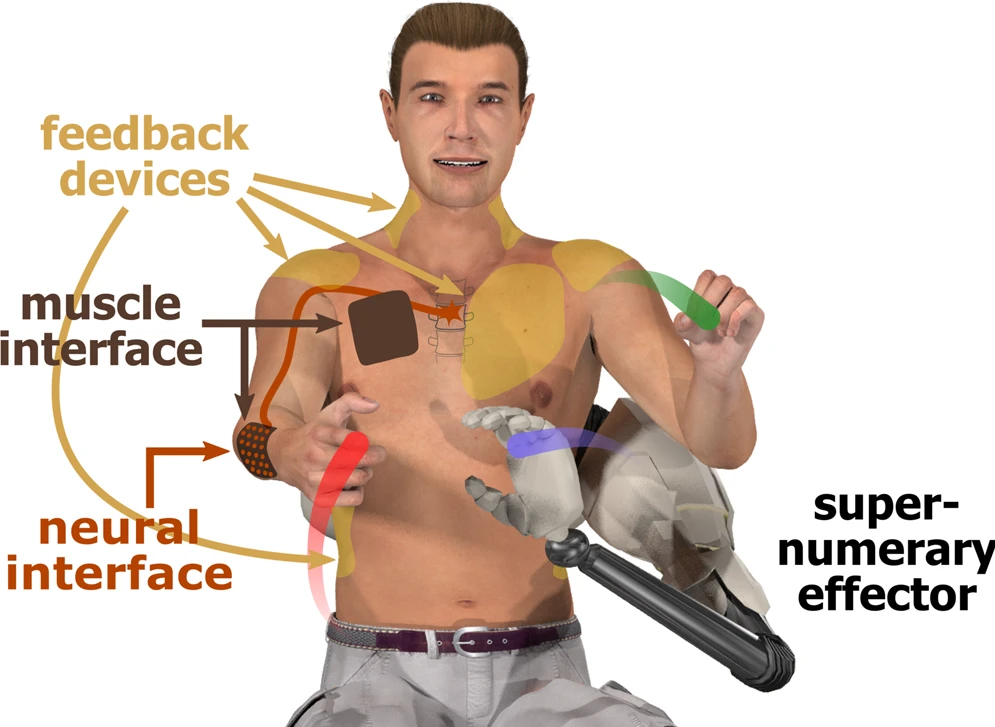
Interfaces for DoF augmentation (figure by Tobias Pistohl). From Eden at al., Nature Communications. 2022

Busy doctors and nurses may have often found themselves wishing they had an extra arm to help with a patient or help with a difficult suture. Researchers around the world are developing supernumerary robotic arms to help workers achieve certain tasks unaided, or with less strain – but how long would it take to master learning an additional limb? The answer is: not long at all. One hour’s worth of training is enough for people to carry out a task with their ‘third arm’ as effectively as with a partner, according to the results of a new study published in IEEE Open Journal of Engineering in Medicine and Biology.

A new study by researchers at Queen Mary University of London, Imperial College London and The University of Melbourne has found that people can learn to use supernumerary robotic arms as effectively as working with a partner in just one hour of training.

The study investigated the potential of supernumerary robotic arms to help people perform tasks that require more than two hands. The idea of human augmentation with additional artificial limbs has long been a staple of science fiction.

Demonstrating performing a suture with an assistant robotic arm.

“Many tasks in daily life, such as opening a door while carrying a big package, require more than two hands,” said Dr Ekaterina Ivanova, lead author of the study from Queen Mary University of London. “Supernumerary robotic arms have been proposed as a way to allow people to do these tasks more easily, but until now, it was not clear how easy they would be to use.”

The study involved 24 participants who were asked to perform a variety of tasks with a supernumerary robotic arm. The participants were either given one hour of training in how to use the arm, or they were asked to work with a partner.

The results showed that the participants who had received training on the supernumerary arm performed the tasks just as well as the participants who were working with a partner. This suggests that supernumerary robotic arms can be a viable alternative to working with a partner, and that they can be learned to use effectively in a relatively short amount of time.

“Our findings are promising for the development of supernumerary robotic arms,” said Dr Ivanova. “They suggest that these arms could be used to help people with a variety of tasks, such as surgery, industrial work, or rehabilitation.”

Source: Queen Mary University of London

Researchers Recreate Temperature Sense in Prosthetic Arms

Photo by Thisisengineering on Unsplash

Researchers report recreating a sense of temperature for amputees, by heating or cooling a part of their residual limb. The results of their tests are published in Science.

Researchers Silvestro Micera and Solaiman Shokur have been keen on incorporating new sensory feedback into prosthetic limbs for providing more realistic touch to amputees, and their latest study focuses on temperature. They stumbled upon a discovery about temperature feedback that far exceeds their expectations.

“When I touch the stump with my hand, I feel tingling in my missing hand, my phantom hand. But feeling the temperature variation is a different thing, something important… something beautiful,” says Francesca Rossi.

Rossi is an amputee from Bologna, Italy. She recently participated in a study to test the effects of temperature feedback directly to the skin on her residual arm. She is one of 17 patients to have felt her phantom, missing hand, change in temperature thanks to new EPFL technology. More importantly, she reports feeling reconnected to her missing hand.

“Temperature feedback is a nice sensation because you feel the limb, the phantom limb, entirely. It does not feel phantom anymore because your limb is back,” Rossi continues.

Placing a hot or cold object on the forearm of an intact individual, will result in that person feeling the temperature where it was placed. But in amputees, that temperature sensation on the residual arm may be felt­ in the phantom, missing hand.

By providing temperature feedback non-invasively, via thermal electrodes (aka thermodes) placed against the skin on the residual arm, amputees like Rossi report feeling temperature in their phantom limb. They can feel if an object is hot or cold, and can tell if they are touching copper, plastic or glass. In a collaboration between EPFL, Sant’Anna School of Advanced Studies (SSSA) and Centro Protesi Inail, the technology was successfully tested in 17 out of 27 patients.

“Of particular importance is that phantom thermal sensations are perceived by the patient as similar to the thermal sensations experienced by their intact hand,” explains Shokur, EPFL senior scientist neuroengineer who co-led the study.

Towards realistic bionic touch

The projection of temperature sensations into the phantom limb has led to the development of new bionic technology, one that equips prosthetics with non-invasive temperature feedback that allows amputees to discern what they’re touching.

“Temperature feedback is essential for relaying information that goes beyond touch, it leads to feelings of affection. We are social beings and warmth is an important part of that,” says Micera, Bertarelli Foundation Chair in Translational Neuroengineering, professor at EPFL and SSSA who also co-led the study. “For the first time, after many years of research in my laboratory showing that touch and position information can be successfully delivered, we envisage the possibility of restoring all of the rich sensations that one’s natural hand can provide.”

Temperature feedback, from well-being to prosthetics

A few years ago, Micera and Shokur got wind of a system that could provide temperature feedback through the skin of healthy subjects, also developed at EPFL and spun-off by Metaphysiks.

Metaphysiks has been developing neuro-haptic technology, MetaTouch, which connects the body with digital worlds. MetaTouch combines touch and temperature feedback to augment physical products for well-being.

“This breakthrough highlights the power of haptics to improve medical conditions and enhance the quality of life for people with disabilities,” says Simon Gallo, Co-founder and Head of Technology at Metaphysiks.

The EPFL neuroengineers borrowed MetaTouch that provides thermal feedback directly to a user’s skin. With this device, they discovered the thermal phantom sensations and subsequently tested it in 27 amputees.

The Minitouch prototype and tests

For the study, Shokur and Micera developed the MiniTouch, a device that provides thermal feedback and specifically built for integration into wearable devices like prosthetics. The MiniTouch consists of a thin, wearable sensor that can be placed over an amputee’s prosthetic finger. The finger sensor detects thermal information about the object being touched, more specifically, the object’s heat conductivity. If the object is metallic, it will naturally conduct more heat or cold than, for instance, a plastic one. A thermode, one that is in contact with the skin on the amputee’s residual arm, heats up or cools down, relaying the temperature profile of the object being touched by the finger sensor.

“When we presented the possibility to get back temperature sensation on the phantom limb or the possibility to feel the contact with different materials, we obtained a lot of positive feedback. And eventually, we were able to recruit more than 25 volunteers in less than two years,” says Federico Morosato who was responsible for organizing the clinical aspect of the trials at Centro Protesi Inail.

The scientists found that small areas of skin on the residual arm project to specific parts of the phantom hand, like the thumb, or the tip of an index finger. As expected, they discovered that the mapping of temperature sensations between the residual arm and the entire projected phantom one is unique to each patient.

Bionic prosthetics for repairing the human body

Almost a decade ago, Micera and colleagues provided real-time sensory feedback about objects being grasped. They went on to improve touch resolution by providing feedback about an object’s texture and position information in a reliable way. Moreover, they discovered that amputees begin to embody their prosthetic hand if provided with sensory feedback directly into their intact nervous system. The added sensation of temperature feedback is yet another step towards building bionic prosthetics for repairing the human body. Fine-tuning temperature sensations and integrating these into a wearable device that can be mapped out to each patient are part of the next steps.

Source: Ecole Polytechnique Federale de Lausanne

UK Man to Receive World’s First 3D-printed Eye

Photo by Victor Freita on Pexels

Moorfields Eye Hospital patient in the UK will be the first to benefit solely from a fully digital 3D printed prosthetic eye. Steve Verze, an engineer, will go home from the Old Street hospital with only a printed eye fitted that day. He first tried his eye on November 11 alongside a traditional acrylic prosthetic.

This new 3D printing process avoids the invasive process of making a mould of the eye socket: a procedure so difficult that in children it can require putting them under general anaesthetic.

Steve said: “I’ve needed a prosthetic since I was 20, and I’ve always felt self-conscious about it. When I leave my home I often take a second glance in the mirror, and I’ve not liked what I’ve seen. This new eye looks fantastic and, being based on 3D digital printing technology, it’s only going to be better and better.”

Professor Mandeep Sagoo, consultant ophthalmologist at Moorfields and professor of ophthalmology at the NIHR Biomedical Research Centre at Moorfields Eye Hospital UCL and Institute of Ophthalmology, said: “We are excited about the potential for this fully digital prosthetic eye.

“We hope the forthcoming clinical trial will provide us with robust evidence about the value of this new technology, showing what a difference it makes for patients. It clearly has the potential to reduce waiting lists.”

The printed eye is more realistic, with clearer definition and giving real depth to the pupil. The way light travels through the full depth of the printed eye is more natural than current prosthetics, which simply have the iris hand-painted onto a black disc embedded in the eye, with no light passage through the eye.

The current process can take six weeks but 3D printing halves that time, and the scanning ensures a precise fit. 

Source: Islington Gazette