Paediatric critical care (PCC) staff are known to experience high levels of moral distress, symptoms of post-traumatic stress disorder (PTSD) and burnout, but often feel little is offered to help them with their mental health. The SWell team at Aston University, led by Professor Rachel Shaw from the Institute of Health and Neurodevelopment, realised following a literature review that there are no existing, evidence-based interventions specifically designed to improve PCC staff wellbeing. Initial work by SWell identified the ‘active ingredients’ likely to create successful intervention designs.
Together with a team from NHS England, the Aston University researchers set up the SWell Collaborative Project: Interventions for Staff Wellbeing in Paediatric Critical Care, in PCC units across England and Scotland. The aim of the project was to determine the feasibility and acceptability of implementing wellbeing interventions for staff working in PCC in UK hospitals. In total, 14 of the 28 UK PCC units were involved. One hundred and four intervention sessions were run, attended by 573 individuals.
Professor Shaw said: “The significance of healthcare staff wellbeing was brought to the surface during the COVID-19 pandemic, but it’s a problem that has existed far longer than that. As far as we could see researchers had focused on measuring the extent of the problem rather than coming up with possible solutions. The SWell project was initiated to understand the challenges to wellbeing when working in paediatric critical care, to determine what staff in that high-pressure environment need, and what could actually work day-to-day to make a difference. Seeing PCC staff across half the paediatric critical care units in the UK show such enthusiasm and commitment to make the SWell interventions a success has been one of the proudest experiences in my academic career to date.”
The two wellbeing sessions tested are low-resource and low-intensity, and can be delivered by staff for staff without any specialist qualifications.
In the session ‘Wellbeing Images’, a small group of staff is shown images representing wellbeing, with a facilitated discussion using appreciative inquiry – a way of structuring discussions to create positive change in a system or situation by focusing on what works well, rather than what is wrong.
In the ‘Mad-Sad-Glad’ session, another small group reflective session, participants explore what makes them feel mad, sad and glad, and identify positive actions to resolve any issues raised.
The key ingredients in both sessions are social support – providing a psychologically safe space where staff can share their sensitive experiences and emotions without judgement, providing support for each other; self-belief – boosting staff’s self-confidence and ability to identify and express their emotions in response to work; and feedback and monitoring – encouraging staff to monitor what increases their stress, when they experience challenging emotions, and what might help boost their wellbeing in those scenarios.
Feedback from staff both running and participating in the SWell interventions was very positive, with high satisfaction and feasibility ratings. Participants like that the session facilitated open and honest discussions, provided opportunities to connect with colleagues and offered opportunities for generating solutions and support.
One hospital staff member responsible for delivering the sessions said:
“Our staff engaged really well, and it created a buzz around the unit with members of the team asking if they could be ‘swelled’ on shift. A really positive experience and we are keeping it as part of our staff wellbeing package.”
The team concluded that even on busy PCC units, it is feasible to deliver SWell sessions. In addition, following the sessions, staff wellbeing and depression scores improved, indicating their likely positive impact on staff. Further evaluations are needed to determine whether positive changes can be sustained over time following the SWell sessions.
Donna Austin, an advanced critical care practitioner at University Hospital Southampton paediatric intensive care unit, said: “We were relatively new to implementing wellbeing initiatives, but we recognised the need for measures to be put in place for an improvement in staff wellbeing, as staff had described burnout, stress and poor mood. SWell has enabled our unit to become more acutely aware of the needs of the workforce and adapt what we deliver to suit the needs of the staff where possible. Staff morale and retention has been the greatest outcomes from us participating in the SWell study and ongoing SWell related interventions.”
Targets for universal access, national roadmaps and more affordable and accessible care are vital to help fill the medical oxygen gap affecting more than half of the world’s population, according to a new global report.
The Lancet Global Health Commission report details for the first time how future investment in strengthening medical oxygen systems could have a huge impact by saving millions of lives and improving pandemic preparedness.
Almost 400 million children and adults require medical oxygen every year. More than five billion people, 60 per cent of the world’s population, don’t have access to safe and affordable medical oxygen services.
MCRI Dr Hamish Graham said the COVID-19 pandemic had put a spotlight on the longstanding global inequities in accessing medical oxygen.
“Oxygen is required at every level of the healthcare system for children and adults with a wide range of acute and chronic conditions,” he said. Previous efforts, including the major investments in response to the COVID-19 pandemic, largely focused on the delivery of equipment to produce more oxygen, neglecting the supporting systems and people required to ensure it was distributed, maintained, and used safely and effectively.”
Dr Graham said channelling investments into national oxygen plans and bolstering health systems, including wider use of pulse oximeters (a small device that measures how much oxygen is in the blood), would help solve the medical oxygen crisis.
“We urgently need to make high-quality, pulse oximeters more affordable and widely accessible,” he said. Pulse oximeters are available in 54 per cent of general and 83 per cent of tertiary hospitals in low- and middle-income countries, with frequent shortages and equipment breakdowns.
“Concerningly, in these countries the devices are performed for only 20 per cent of patients presenting to general hospitals and almost never for those at primary healthcare facilities. We see the greatest inequities in small and rural government health facilities and across Sub-Saharan Africa.”
Dr Graham said the importance of medical oxygen must also be recognised and integrated into broader national strategies and pandemic preparedness and response planning.
“Governments should bring together public and private sector partners with a stake in medical oxygen delivery, including health, education, industry, energy and transport to design a system and set up a governance structure that supports the new Global Oxygen Alliance (GO₂AL) and replenishing The Global Fund with a strong oxygen access mandate,” he said.
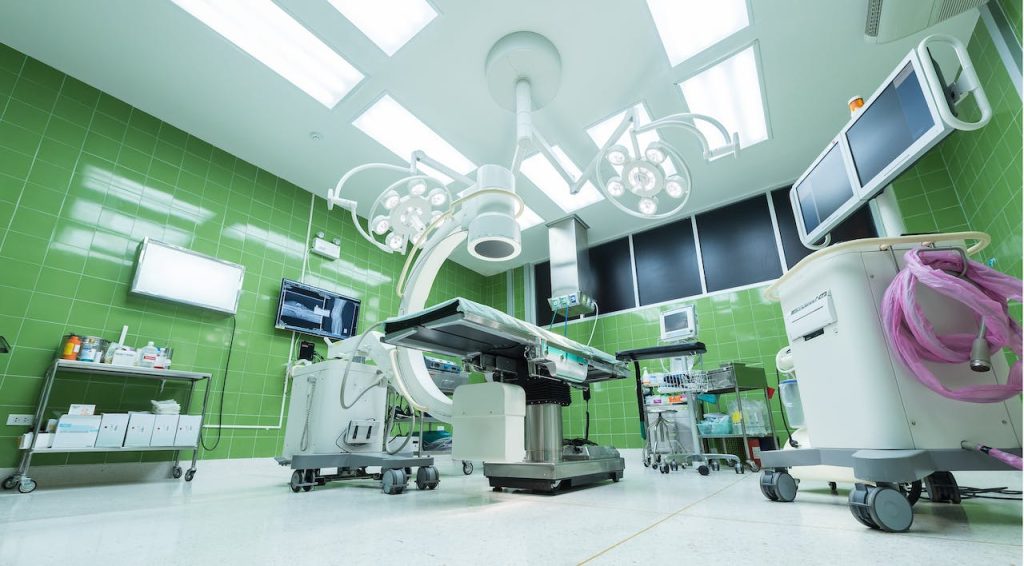
Photo by Pixabay: https://www.pexels.com/photo/view-of-operating-room-247786/
Increased use of ventilation and air cleaners, designed to mitigate the spread of viral infections in hospitals, is likely to have unpredictable effects and may cause viral particles to move around more, according to a new study from researchers at UCL and UCLH.
In the study, published in Aerosol Science & Technology, researchers investigated the effect of using built-in mechanical ventilation and portable air cleaners (PACs)1 upon the spread of airborne particles, which are similar to those breathed out by a person with a viral respiratory infection such as SARS-CoV-2 or influenza.
The team tracked the movement of airborne particles around a typical hospital outpatients’ clinic at UCLH in central London using an aerosol generator and particle counters2. A variety of scenarios were simulated, including particle movement to a neighbouring room, throughout the whole clinic, and from one room to another room at the far side of the clinic.
They also tested whether factors such as closing doors, or the position of ventilation and PACs within a room, had an effect on the spread of particles.
The researchers found that while use of built-in ventilation and PACs can reduce particle spread in some scenarios, in some experiments the use of PACs increased aerosol spread by up to 29% between neighbouring rooms. Built-in ventilation potentially increased aerosol migration across the clinic by up to 5.5 times more than if no ventilation was used.
Professor Laurence Lovat, senior author of the study from UCL Surgery & Interventional Science and UCLH, said: “The COVID-19 pandemic really highlighted the risk of picking up airborne viral infections in hospitals, which naturally led to efforts to reduce this risk. In many hospitals, the use of ventilation systems and portable air cleaners has increased.
“While the urgency of the situation demanded a rapid response, since then we’ve been studying precisely how viral particles move around in real spaces and have been surprised by what we’ve found.
“Putting air cleaners in rooms led to unexpected increases in the circulation of aerosols in some cases, but it took months to understand what we were seeing. Each scenario produced different, unexpected results, depending on the spaces and airflow sources involved.
“Even at UCLH, a modern hospital built less than 20 years ago, airflow patterns were not predictable. In older hospitals, which often have natural draughts, the situation would likely be even more complex.”
The study concluded that using airflow devices in hospitals to try to limit the movement of airborne pathogens requires careful consideration of airflow dynamics and device placement to reduce the risk of exacerbating the problem.
The clinic where the experiments took place consisted of a large central waiting room (154 m3,split into A and B for the purpose of the study), eight surrounding consulting rooms and a nurses’ station (all approximately 35 m3). The clinic was connected via a permanently open passageway to a corridor leading to the rest of the hospital. Experiments took place at night and weekends when no staff or patients were present.
A number of experiments were conducted by placing aerosol generators dispersing saline solution in certain rooms, with particle detectors sited in other rooms to track the movement of particles around the clinic.
In one experiment, the researchers simulated particle spread from a medical professional or patient in one consulting room to a neighbouring room. A baseline measurement was taken in the consulting room with the aerosol source when all doors were open and no ventilation or PACs were in use.
Closing the room door that contained the source was found to reduce particle spread significantly and closing both room doors reduced it by 97%.
But when doors were opened and large PACs in the adjacent waiting room were turned on, the spread to the neighbouring consulting room increased by 29%. When small desktop PACs were added to both consulting rooms and the nurses’ station, the spread was lower than the baseline, but only slightly.
Dr Jacob Salmonsmith, first author of the study and an Honorary Research Fellow from UCL Mechanical Engineering, said: “The results of this experiment might seem counterintuitive if you take the view that changing the air in a room more often reduces the spread of viral particles.
“While it’s true that air cleaners do remove viral particles from the air and can reduce overall spread, they can also have unintended consequences. In particular, this experiment suggests that larger air cleaners, which have larger exhaust vents that introduce their own air currents, can cause particles that haven’t been filtered out to spread further than they would have if the cleaner wasn’t there.
“In any given space you have complex interactions between many different air currents, such as ventilation, doors closing and people’s movement. Our findings indicate that the whole picture needs to be considered when choosing when and where to introduce air cleaners.”
In another experiment, the team observed highly complex patterns of particle spread when all consulting room doors were open.
This included one scenario where the highest concentrations of particles were detected in rooms furthest away from an aerosol source situated in a consulting room where a PAC was in operation. Particle levels in the room furthest from this aerosol source were 184% higher than average, while in the room directly opposite the source they were 68% below average.
There were also 247% more particles in the waiting room furthest away from the consulting room, where a PAC was in operation, than in the waiting room right next door to it. The nurses’ station had a higher concentration of particles than any room on the same side of the clinic as the room where the aerosol generator was situated.
Professor Andrea Ducci, an author of the study from UCL Mechanical Engineering, said: “Our experiments demonstrated that high volume of particles can be corralled into particular areas as a result of airflow dynamics. This obviously isn’t ideal, particularly if that place is a key location, such as the nurses’ station that staff members who’re treating patients will likely visit often during their shift.
“The good news is that we’re rapidly expanding our knowledge of this phenomenon. The project that we are currently working on aims to simulate the entire airflow within a clinic and assess the efficacy of different devices positioned in different locations. This will allow us to identify relatively simple interventions, such as better positioning of ventilation devices to reduce the spread of particles, thus decreasing the risk of picking up an infection in hospital.”
Given the unpredictability of how aerosol particles move around spaces and the difficulty in measuring them, the team are currently building an AI system to help to do this and hope to start testing within the next 18 months.
The authors say the study holds great promise to inform governmental action on ensuring that NHS standards for ventilation and infection are fit for purpose, in line with efforts to prevent future pandemics.
1 Portable air cleaners, or purifiers, are devices that filter dust and fine particles out of the air. The devices used in this study all conformed to the HEPA standard, meaning they are designed to filter out almost all (99.7%) of the fine particles that pass through them. The PACs placed in the waiting room were large (around the size of a kitchen bin) and the ones used in smaller room were around the size of a desktop lamp.
2 The aerosol particles were created from a harmless saline solution and disbursed at a constant rate by an aerosol generator at roughly the face height of a seated person (1.2 metres). The particles were designed to mimic those breathed out by a person with an airborne respiratory infection, such as influenza.
The Hospital Association of South Africa (HASA) remains unequivocally committed to working with all stakeholders to build a healthcare system that sustainably benefits all citizens of South Africa and urges all involved parties to engage in a solution-oriented approach.
HASA believes the National Health Insurance is neither sustainable nor affordable and that dialogue and collaboration between all stakeholders is critical to finding and developing solutions to achieve universal health coverage.
HASA has thus far deferred filing a legal challenge to the NHI Act as it firmly believes that sustainable and affordable solutions, to achieve universal health coverage for all South Africans, are within reach. However, the government’s lack of response to several constructive and practical proposals, including those of Business Unity South Africa (BUSA), and the Minister of Health’s recent public statements concerning the NHI, including regarding the imminent publication of NHI regulations, have necessitated that HASA move forward with its legal challenge to the NHI legislation.
Even though HASA has decided to proceed with legal action, it remains hopeful that the Presidency will respond positively to the constructive proposals that have been made.
HASA remains open to engaging with the Government on the way forward in parallel to the legal process. Reiterating the time-critical nature of the matter, Melanie Da Costa, Chairperson of HASA, today said, “We remain firmly committed to participating constructively while the legal process unfolds. As an organisation, we have always preferred to resolve matters through dialogue, and we believe that effective healthcare solutions are urgently needed and achievable through a reasonable and collaborative approach.”
Delirium is a condition common in the post-surgical intensive care unit (ICU) setting, affecting up to 50-70% of those admitted, depending on individual risk profiles. ICU delirium can be associated with a multitude of factors including underlying and acute medical conditions, pharmacologic agents or treatment regimens like surgery. Currently there is no definitive consensus on drug interventions that aid in the prevention of delirium or its treatment.
While there has been some evidence that the ICU environment plays a role in delirium, more research is needed to understand this association. In a new study appearing in Critical Care Medicine, researchers found windowed patient rooms were associated with an increase in the odds of developing delirium, when compared to patient rooms without windows.
Using electronic medical records, researchers from Mass General Brigham and collaborators at Boston University Chobanian & Avedisian School of Medicine reviewed the association between patients being admitted to an ICU room with or without windows and the presence of delirium. Delirium was observed in 21% (460/2235) of patients in windowed rooms and 16% (206/1292) of patients in non-windowed rooms.
“While the findings of the study were ultimately unexpected due to prior research suggesting the importance of circadian rhythm while in the hospital, our results contribute to a growing body of evidence-based design literature around the importance of healthcare design to patient experience and outcomes,” explained corresponding author Diana Anderson, MD, FACHA, assistant professor of neurology at the school. She notes that because of the study design, these unexpected findings are not causative and may represent different patterns in which some patients – who are potentially at an increased risk of delirium – may be assigned to different room layouts by the clinical teams.
According to the authors, further research into the specific qualities of windows that may impact health is needed to better understand these results. “Although this study adds to our understanding of the relationship between delirium and characteristics of the built environment, it is clear that additional studies may provide further insight to understand these results. For example, it is possible that the window view toward adjacent landscapes or buildings may be important context to interpret these findings, or perhaps another feature of the room such as light or sound that we could consider in our next investigation,” Anderson says.
A fire broke out yesterday, Thursday 5th December, at Netcare Pretoria East Hospital in Moreleta Park, prompting the evacuation of hundreds of patients. City of Tshwane firefighters promptly arrived on the scene, quickly getting the blaze under control. No injuries were reported.
Speaking to Newzroom Afrika, Netcare spokesperson Lynne O’Connor said that the fire was under control and with the Fire Marshal declaring that parts of the hospital to be safe, patients were being returned to their wards. As to the extent of damage and the cause, she said that “We know that the fire broke out somewhere near the theatre complex.”
As per the disaster management protocols, Netcare evacuated every single one of the approximately 200 patients in the hospital as soon as the alarm went off. The procedure was precautionary and none of the patients were harmed. O’Connor praised the swift response of the Tshwane emergency services. She said the cause of the fire was being investigated, and the extent of the damage would still need to be evaluated, News24 reports.
“We are grateful that everyone was brought to safety and sincerely apologise to the affected patients and their families for the inconvenience.”
JOHANNESBURG, 26 November 2024 – Life Healthcare Group has delivered a robust operating performance for the year ended 30 September 2024, marked by a strong second-half (H2-2024) performance in its southern Africa operations and exceptional growth in its international Life Molecular Imaging (LMI) business. Group revenue grew by 12.7% year-on-year.
In southern Africa, Life Healthcare experienced a strong second half performance, particularly within its acute and complementary business. Acute-hospitals paid patient days (PPDs) grew 1.6% and occupancies reached 68.7% for the year with the second half delivering occupancies of 70.7%. This positive momentum resulted in a 7.7% increase in revenue, with H2-2024 revenue growth of 9.3%. Strategic partnerships with funder networks further cemented Life Healthcare’s position as the preferred hospital network for leading medical schemes.
Peter Wharton-Hood, Chief Executive of Life Healthcare Group, commented, “Our Group maintains a solid financial foundation, characterised by a fortress balance sheet and minimal gearing, which allows us to strategically invest in expansion opportunities across our diversified portfolio. We are particularly encouraged by our second-half results in southern Africa and the ongoing success of LMI as well as the extraordinary distribution to shareholders over the year. Our focus remains on delivering superior patient care and broadening access to essential and complementary healthcare services.”
Group revenue from continuing operations reached R25.5 billion (2023: R22.6 billion), with southern African revenue contributing R23.7 billion (2023: R22.0 billion), and international operations R1.8 billion (2023: R656 million).
Life Healthcare’s net debt to normalised EBITDA is at a healthy 0.45 times. Cash generated from continuing operations was R4.3 billion and available undrawn bank facilities amounted to R2.3 billion.
The Group’s total EPS increased by more than 1000% to 328.8 cents per share but this does include the profit on the disposal of Alliance Medical Group (AMG) (a profit of R2.8 billion). Excluding this profit and some small impairments the HEPS increased by 73.4% to 152.9 cents (2023: 88.2 cents). The best measure to reflect the Group’s strong financial performance for the year is normalised EPS excluding the benefit from the RM2 transaction, this reflected an increase of 14.5% to 132.3 cents per share.
The Group received R10.2 billion in net cash proceeds from the disposal of AMG, after the settlement of all offshore debt and transaction costs. A special dividend of R6 per share (R8.8 billion) was paid on 8 April 2024 from these proceeds.
The Life Healthcare Group board declared a final cash dividend of 31 cents per share, an increase of 14.8% over the prior year, and a special dividend of 70 cents per share. Total distributions for the year, including special dividends, amount to R10.6 billion.
“We are delighted with our progress in the acute, complementary, and pharmaceutical sectors,” remarked Wharton-Hood. “Our strategic funder network partnerships position us as the preferred choice among leading medical schemes. Our robust financial assets and prudent cost management will continue to support our capital expansion initiatives across all business areas. Exciting times lie ahead for Life Healthcare Group, and these results reflect that promise.”
A study led by researchers at the University of Colorado Anschutz Medical Campus reveals that both patients and providers have more positive overall care experiences when the entire healthcare team is a part of bedside interdisciplinary rounds (BIDR).
The findings showed that BIDR, when the team meets at a patients’ bedside in the hospital to discuss care plans, helps build trust between patients and their healthcare providers and within healthcare teams by allowing everyone to observe and work together more closely. The study is out now in the Journal of General Internal Medicine.
“Traditional interdisciplinary rounds (IDR) consist of a clinical care team that coordinates a patient’s care together to help promote collaboration in hospitals. BIDR takes this process a step further by taking the team to the bedside and involving patients and their families,” said lead author Katarzyna Mastalerz, MD, associate professor of hospital medicine at University of Colorado School of Medicine. “BIDR transforms this traditional healthcare model by fostering trust through transparent communication, team collaboration and patient-centred care where every voice is heard, and every goal can be shared.”
The study interviewed 14 patients and 18 members of a interdisciplinary teams that included nurses, pharmacists and care coordinators.
Patients who participated in BIDR expressed positive feelings about being involved in their healthcare plans, which enhanced their trust in providers. Healthcare professionals reported improved respect and trust among colleagues, which contributed to better patient care.
While results were mostly promising, patients and providers said there is room for improvement to make the process more streamlined.
For example, some patients reported being uncomfortable due to the use of technical jargon and unclear communication regarding their treatment plans. Meanwhile, the providers said they faced challenges related to lack of supportive structures for interprofessional collaboration and lengthy presentations by physicians.
“To build effective BIDR, we suggest healthcare teams use transparency by sharing goals with patients, employing accessible patient-centred language, clearly delineating team roles for each team member, and actively addressing team input in real time” said Mastalerz. “With the professional siloes and hectic workflow that often characterise hospitals, it’s especially important for hospital leadership to recognise, support, and create opportunities for collaborative work by interprofessional teams.”
Johannesburg’s first general hospital was built on the “brow of the hill” in 1890. The building is now abandoned and derelict. (Photo: Courtesy of WRHI)
Hillbrow started out as Johannesburg’s first health hub in the late 1880s. It’s also been a suburb associated with pimps and prostitution, a middle finger to the Nationalist Party, and a key site of the HIV crisis. Today, it’s the forgotten flatlands of inner city decay … but in small pockets it stays true to its heritage of bringing healthcare to the city’s most overlooked.
Putting some distance between people and disease can sometimes be a smart idea. It’s what early Johannesburg town planners had in mind when they decided that the city’s first hospital should rise on the “brow of the hill”, looking north away from the gold-flushed, but malady-stricken, mining centre.
Johannesburg’s first general hospital opened in 1890. It was four years after Johannesburg was proclaimed a city under the Transvaal government with Paul Kruger at its head. With the hospital as an anchor in the suburb, Hillbrow would grow to become the health node of the city as it rushed into the new century with heady intentions to become a modern metropolis.
The Johannesburg General Hospital would treat miners arriving with crushed limbs and broken bodies from mining accidents, which were frequent. Other patients were admitted with respiratory illnesses and ruined lungs from breathing in silica dust as the angled reef under the Witwatersrand was drilled and crudely blasted for its yellow treasure.
From the shanties and old mining camps came those burdened with diseases of absent hygiene and sanitation and overcrowding. Typhoid, tuberculosis (TB) and dysentery were common. There would be malaria and smallpox. In 1905, the Rand Plague Committee published a report detailing outbreaks of pneumonic plague and bubonic plague in those first years of the new century. There would be waves of influenza as the “Spanish Flu” of 1918 swept through the country.
Author of Johannesburg Then and Now Marc Latilla writes that the first Johannesburg hospital located in Hillbrow was described as “lofty with handsome fireplaces”. He writes that the hospital had 130 beds for black and white patients. More wards would come with expansion plans, but so would racially segregated healthcare. By 1895, a separate wing would be built for black patients.
Tumult and gold fever
The new city was being constructed against a backdrop of tumult and gold fever. Social tensions, divisions, and politics were also always in play. In 1896, there would be the abortive Jameson Raid, an insurgency meant to usurp Kruger’s government. The raid failed but it would ratchet up tensions between the Afrikaners and the British till the outbreak of the South African War in 1899. The war continued till 1902. By the end of the decade, in 1910, the country would become a union, uniting the four old colonies of South Africa. In another four years, World War I would break out.
Medical and health historian Professor Catherine Burns, of the University of Johannesburg’s Department of Historical Studies, says a more textured history reveals a story of whose health priorities ranked higher in the young city.
Joburg’s first medical officer of health, Dr Charles Porter, arrived from Scotland and he would have looked at Johannesburg framed against his Glaswegian childhood. “He would have encountered Johannesburg mining slums with Glasgow on his mind – seeing the conditions of crippled children and terrible miasmas; and an atmosphere of steam and filth as people staggered from the mines,” says Burn.
But importing a system of healthcare would have its limitations. Burns points out that even as the Johannesburg General Hospital would count as modern advancement for medicine, the melting pot of people drawn to early Joburg brought with them vastly different beliefs on healing, on warding off sickness, and the meaning of wellness.
“Throughout the city – even today – we see the venerable men and women who seek out hilltops and high places to perform the rituals and prayers of healing and wellbeing. And of course many of these spots are in Hillbrow or Yeoville. It means we can’t flatten everything, ignoring the layers upon layers of health history in the city,” she says.
The melting pot was growing and “Hospital Hill” with it. The early part of the new century would see the establishment of facilities for nurses’ accommodation, a fever hospital, a children’s hospital, a mortuary, an operating theatre, nursing homes, maternity hospitals, medical research facility and a medical school. Most ominous was the establishment of the “non-European” hospital built to further entrench racially segregated healthcare.
Kathy Munro, emeritus professor and heritage expert with the Johannesburg Heritage Foundation, says of particular significance was that the first Johannesburg hospital was built on state owned land and with the intention of service. These were the nascent ideals of a public health service for the city. The hospital was run by the Catholic Church’s Holy Family Sisters until 1915.
The front and back view of Johannesburg’s first general hospital, featuring the prominent laundry chutes that spiralled down the building. (Photo: Ufrieda Ho/Spotlight)
Munro says: “You then had a clustering of private hospitals like the Florence Nightingale, the Colin Gordon and the Lady Dudley Gordon around the state hospital complex that ran from the top of the hill to the bottom. The South African Medical Research Institute, founded in 1912 and housed in a fine Herbert Baker building, also came up along Hospital Road.
“The health authorities would have had to deal with the fragmentation in society and the separated services for the Non-European hospital and a whites-only hospital,” she says.
By the time apartheid was written into the statute book with the Nationalist Party coming to power in 1948, Munro says segregation would further shape the distribution of medical services in the city in the way Wits University had to deploy its medical students across the city.
“One of the inadvertent consequences of the apartheid system was that the university’s medical faculty had to service many hospitals that were fragmented on the basis of race. But it also meant that more specialist professors in each discipline came to be stationed at these hospitals,” she says.
By the mid-1960s and the 1970s, Hillbrow as a health hub shifted. The new Johannesburg General Hospital – now Charlotte Maxeke Academic Hospital – would rise as a concrete hulk in Parktown in 1978 and the original Johannesburg Hospital was renamed the Hillbrow Hospital.
In these decades, Hillbrow also became the flatlands made up of residential highrises, distinct from the rest of suburbia. Its residents were mostly young European expat professionals, recruited to work in a South Africa that was in an era of economic boom. According to The Joburg Book, edited by Dr Nechama Brodie, the new arrivals from Europe boosted the white population in the country by 50% between 1963 and 1972.
Hillbrow was now a high density suburb with different pressures on health services. It was also a suburb, Brodie writes, that “acquired a cosmopolitan Bohemian character … and nurtured a subculture that incorporated elements of ‘swinging London’ and America’s hippie culture”.
Under the two iconic city landmarks of Ponte Towers and the Hillbrow Tower (Telkom Tower), Hillbrow was an unbounded playground, freer from the hang-ups of racial segregation and largely managing to evade the heavy hand of apartheid-era law enforcers and morality policing.
But by the mid-1980s, South Africa was in various States of Emergency and Hillbrow changed once again. White flight came on fast as more black people moved from the townships to Hillbrow, which was central, affordable and also anonymous. Hillbrow’s slide to urban decline came at the same time as the anxious steps towards democracy. Landlords absconded; the city council failed on upkeep, maintenance, and bylaw enforcement. Banks redlined the area, leaving Hillbrow to become an urban slum.
Professor Helen Rees, founder and executive director of the Wits Reproductive Health and HIV Institute (WRHI), picks up the story from the mid-1990s. She says: “I had set up the Institute in 1994 and it was at the same time when HIV was just exploding. We started out in Soweto but worked with a public clinic dedicated to treating sexually transmitted infections (STIs) on Esselen Street in Hillbrow.
“I remember one morning when I got to the clinic the queue stretched around the corner, with about 100 people waiting. Of course, what we hadn’t appreciated fully was that HIV was driving up the level of STIs hugely,” she says.
Hillbrow’s population included groups not easy to link to and retain on care. They were young people, migrants and sex workers. It was enlarging the HIV challenge, Rees says.
Rees didn’t baulk. She doubled down and decided that the WRHI should be located in Hillbrow, right next to the Esselen Street Clinic, one of the first clinics in the country to offer HIV testing.
Staying in Hillbrow means the WRHI has to invest in infrastructure, to have back-up for basics like water supply, generators, and security. These things are needed if the institute is to function as a global leader of science, innovation and research in fields like infectious and vaccine preventable diseases, sexual and reproductive health, antimicrobial resistance, and health in a time of climate change.
The Institute was involved in COVID-19 vaccine trials, studies of the CAB-LA HIV prevention injection, and now they are involved in research on Mpox vaccines and on trials of the experimental M72 tuberculosis vaccine.
WRHI sits at the heart of that which survives of the Hillbrow health precinct. The Shandukani Centre for Maternal and Child Health that opened to the public in 2012 is also here. Other WRHI facilities include a clinic for sex workers as well as a clinic for transgender people. Their neighbours are the Esselen Street Clinic, that endures in the distinctive Wilhelm B Pabst designed building from 1941, and the Hillbrow Clinic, that runs a 24-hour service. Along Hospital Street, the forensic pathology and national laboratory services still function.
Throbbing to a different pulse
But beyond the WRHI’s electric fencing and street corners monitored by private security, much of Hillbrow life throbs to a different pulse. Most noticeable is that one of the WRHI’s immediate neighbours is the condemned building of the one-time Florence Nightingale Maternity Hospital. The building is now a so-called dark building, simply not considered fit for life. The first Johannesburg Hospital stands derelict and abandoned, as does the chapel and the house the Catholic nursing sisters lived in when they tended to patients in the hospital.
And the Hillbrow streets live up to much of its bad reputation. It’s overcrowded with people and garbage. Drug users curl up slumped against urine-soaked concrete benches as hawkers are forced to retrieve water from the city’s smashed water pipes and it seems every bylaw is ignored.
Rees is clear though that WRHI, which marks its 30-year anniversary this year, is exactly where it needs to be. She says the coming needs for healthcare globally will focus on healthcare in slums and healthcare on society’s periphery because more people’s lives are precarious and more people will call slums home.
“The work we do is defined by the context and the needs of the population. But we have created a hugely professional context and run a state of the art institute,” she says. “You cannot do clinical research for the things that affect the majority of communities unless you’re actually working in those communities.”
It means some of WHRI’s budget does go into fixing things in their neighbours’ buildings – repairing pipes or cleaning up backyards turned to garbage dumps. It’s not technically their responsibility but it is a response that helps them remain a relevant and durable pillar. And in a place like Hillbrow, where so many people survive by transience and invisibility, something that holds firm a little longer can make a big difference.
A new study reveals widespread resistance of a major bacterial pathogen to the active ingredients in cleaning agents commonly used in hospitals and homes. The American Chemical Society Infectious Diseases published the research led by chemists at Emory University. It demonstrates the surprising level of resistance to cleaning agents of multidrug-resistant Pseudomonas aeruginosa, a pathogen of particular concern in hospital settings.
The study also identifies biocides that are highly effective against P. aeruginosa, including a novel compound developed at Emory in collaboration with Villanova University. The researchers describe how these biocides work differently than most disinfectants currently in use.
“We hope our findings can help guide hospitals to reconsider protocols for the sanitation of patient rooms and other facilities,” says William Wuest, Emory professor of chemistry and a senior author of the study. “We also hope that our findings of a new mechanism of action against these bacterial strains may help in the design of future disinfectant products.”
First authors of the study are Christian Sanchez (who did the work as an Emory PhD student in chemistry and, following graduation, joined the faculty at Samford University) and German Vargas-Cuebas, an Emory PhD candidate in microbiology through Laney Graduate School.
“Resistance of pathogens to cleaning agents is an area that’s often overlooked,” Vargas-Cuebas says, “but it’s an important area of study, especially with the rise in antibiotic-resistant pathogens worldwide.”
Kevin Minbiole, professor of chemistry at Villanova, is co-senior author of the paper.
Workhorse disinfectants losing steam
Quaternary ammonium compounds, or QACs, are active ingredients commonly seen in household and hospital cleaners, including some disinfectant sprays and liquids, antibacterial sanitizing wipes and soaps.
“There are a handful of QACs that have been the workhorse disinfectants for around 100 years, on the frontline of most homes and hospitals,” Wuest says. “Very little has been done to modify their structures because they have long worked so well against many common bacteria, viruses, molds and fungi and they’re so simple and cheap to make.”
The Wuest lab is a leader in studies of QACs and other disinfecting agents. One issue Wuest and his colleagues have identified is that some bacterial strains are developing resistance to QACs. That trend could cause serious problems for sanitation in hospitals.
A pathogen of critical priority
More than 2.8 million antimicrobial-resistant infections occur in the United States each year, leading to more than 35,000 deaths, according to the Centers for Disease Control and Prevention (CDC).
The CDC names multidrug-resistant P. aeruginosa as one of seven pathogens causing infections that increased in the United States during the COVID-19 pandemic and remain above prepandemic levels.
Worldwide, P. aeruginosa causes more than 500,000 deaths annually and has been named a pathogen of critical priority by the World Health Organization.
P. aeruginosa is commonly found in the environment, including in soil and freshwater. Reservoirs in hospital settings can include drains, taps, sinks and equipment washers.
While the bacterium generally does not affect healthy people it can cause infections in individuals with cystic fibrosis and those who are immunocompromised, such as patients with burns, cancer and many other serious conditions. Patients with invasive devices such as catheters are also at risk due to the ability of P. aeruginosa to form biofilms on the surfaces of these devices.
P. aeruginosa, like other gram-negative bacteria, is enclosed in a second, fatty outer membrane that acts as a protective capsule, making it more difficult to kill.
How QACs kill
QACs have a nitrogen atom at the center of four carbon chains. In simplest terms, the positively charged head of the nitrogen center is drawn to the negatively charged phosphates of the fatty acids encasing P. aeruginosa and many other bacteria and viruses. The heads of the carbon chains act like spearpoints, stabbing into both protective fatty membranes and inner cellular membranes and causing pathogens to disintegrate.
The researchers tested 20 different drug-resistant strains of P. aeruginosa collected from hospitals around the world by the Walter Reed National Military Medical Center as part of the Multidrug-Resistant Organism Repository and Surveillance Network.
The results showed that all 20 strains were at least partially resistant to QACs — the common active ingredient in most front-line cleaning agents — and 80% of the strains were fully resistant to QACs.
“This mechanism has worked for 100 years essentially by slicing into the outer and inner membranes of a pathogen and destroying them,” Wuest says. “We were surprised to see the level at which that appears to no longer be the case.”
Improper use of cleaning agents may be one factor leading to resistance, Wuest theorizes.
“QACs don’t immediately kill,” he explains. “After application, it’s important to wait four or five minutes before wiping these cleaning agents away. It’s also important to use the right concentration. If used inappropriately, some bacteria can survive, which can lead to them developing resistance.”
Greater use of cleaning agents during the COVID-19 pandemic may have given P. aeruginosa and some other hard-to-kill pathogens more opportunities to develop resistance, he adds.
A new method that ‘works surprisingly well’
For the current paper, the researchers also tested the resistance of the panel of multidrug-resistant P. aeruginosa strains against a new quaternary phosphonium compound, or QPC, developed in the Wuest and Minbiole labs. The results showed that the compound was highly effective at killing all 20 of the resistant P. aeruginosa strains.
“It works surprisingly well even at a low concentration,” Vargas-Cuebas says.
The researchers demonstrated that their novel QPC works not by piercing the protective outer capsule of a P. aeruginosa bacterium but by diffusing through this outer membrane and then selectively attacking the inner cellular membrane.
“It’s counterintuitive,” Wuest remarks. “You would think that the approach of conventional biocides, to take out both membranes, would be a more effective way to kill P. aeruginosa. Why does passively diffusing through the outer membrane and focusing on attacking the inner membrane make our QPC compound more effective? We don’t know yet. It’s like a magic trick.”
They showed that this same mechanism underlies the effectiveness of two commercial antiseptics: octenidine, more commonly used in Europe as a hospital antiseptic, and chlorhexidine, a common ingredient in mouthwashes.
Wuest and colleagues plan to continue research into how this newly identified mechanism may work against an array of pathogens and how that might translate into new biocides and more effective cleaning protocols in hospitals and other settings.
“Our work is paving the way for much-needed innovations in disinfectant research,” Wuest says.