Damage has been sustained to the roofs, floors and fencing of healthcare facilties, the KwaZulu-Natal health department said. Water shortages from infrastructure damage had forced some hospitals to divert patients elsewhere. Environmental health practitioners are monitoring clinical data for early identification of any waterborne diseases.
Health MEC Nomagugu Simelane said there had been an influx of patients due to the torrential rains.
“We can confirm that our hospitals and clinics have been seeing a higher number of trauma and emergency patients than usual, particularly in the densely populated districts,” she said.
Simelane thanked the courage and dedication of the province’s healthcare workers, noting that many had simply put in extra hours to compensate. Damage to infrastructure such as roads meant that some healthcare workers have had to sleep at the facilities, she noted. Other facilities will try and provide accommodation for them.
To cope with the strain on morgues, KZN Premier Sihle Zikalala said: “We have mobilised additional resources, including seven doctors, to ensure that post mortems are completed speedily, in order to avoid congestion and to enable those who are grieving to bury their loved ones. Our officials are constantly monitoring the situation and sending bodies to those facilities that do have space.”
“All the resources allocated for flood relief and the recovery and rebuilding process will be utilised in line with fiscal rectitude, accountability, transparency and openness. We want to emphasise the fact that, having learnt lessons of Covid-19, no amount of corruption, maladministration and fraud will be tolerated or associated with this province,” Premier Zikalala said.
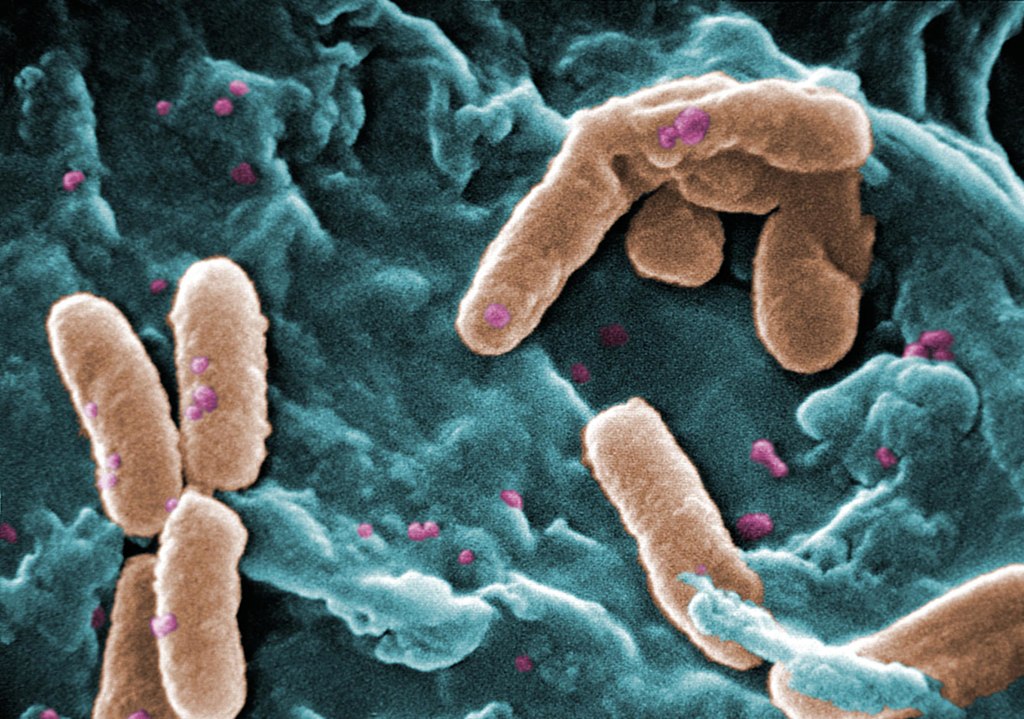
Scanning Electron Micrograph of Pseudomonas aeruginosa. Credit: CDC/Janice Carr.
A study from Australia’s scientific organisation CSIRO has revealed that antimicrobial resistant (AMR) bacteria in urinary tract infections are more lethal, especially Enterobacteriaceae. The findings are published online in Open Forum Infectious Diseases.
Antimicrobial resistance (AMR) bacteria can be passed between humans: through hospital transmission and community transmission. While hospital acquired resistance is well researched, there are few studies focusing on the burden of community transmission.
To address this, the study analysed data from 21 268 patients across 134 Queensland hospitals who acquired their infections in the community. The researchers found that patients were almost two and a half (2.43) times more likely to die from community acquired drug-resistant UTIs caused by Pseudomonas aeruginosa and more than three (3.28) times more likely to die from community acquired drug-resistant blood stream infections caused by Enterobacteriaceae than those with drug-sensitive infections. The high prevalence of UTIs make them a major contributor to antibiotic use, said CSIRO research scientist, Dr Teresa Wozniak.
“Our study found patients who contracted drug-resistant UTIs in the community were more than twice as likely to die from the infection in hospital than those without resistant bacteria,” Dr Wozniak said. “Without effective antibiotics, many standard medical procedures and life-saving surgeries will becoming increasingly life-threatening. “Tracking the burden of drug-resistant infections in the community is critical to understanding how far antimicrobial resistance is spreading and how best to mitigate it.”
The study’s findings will provide further guidance for managing AMR in the community, such as developing AMR stewardship programs that draw on data from the population being treated.
CEO of CSIRO’s Australian e-Health Research Centre, Dr David Hansen, said the magnitude of the AMR problem needs to be understood to mitigate it. “Tracking community resistance is difficult because it involves not just one pathogen or disease but multiple strains of bacteria,” Dr Hansen said. “Until now we haven’t been using the best data to support decision making in our fight against AMR. Data on community acquired resistance is an important contribution to solving the puzzle. “Digital health has an important role in using big data sets to describe patterns of disease and drive important population health outcomes.”
When patients kept at a body temperature of 37C with aggressive warming during surgery, there was no reduction cardiac complications compared to patients kept at 35.5C, finds a large new study reported in The Lancet. No differences was seen in number of infections or required blood transfusions in patients kept at cooler body temperatures.
An unintentional drop in body temperature is a normal side effect during surgery, due mostly to anaesthetic medications’ interference with the body’s temperature regulation processes. In Western countries, nursing staff typically use forced-air heaters to keep patients warm during surgery, with a target temperature of 36C. This trial, one of the largest to date, sought to determine whether even greater warming, to 37C, would reduce the risk of cardiac complications, a major cause of mortality in the first 30 days after surgery.
Results showed no significant differences between groups for the trial’s primary endpoint, a composite of troponin elevation due to ischemia (an indicator of heart injury), non-fatal cardiac arrest or death from any cause within 30 days after surgery. Researchers also reported no differences for any of the trial’s secondary endpoints.
“This trial tells us that there is no benefit to aggressively warming patients to 37 C during surgery. It is simply unnecessary, and it doesn’t improve any substantive outcomes,” said Daniel I. Sessler, MD, Michael Cudahy professor and chair of the Department of Outcomes Research at Cleveland Clinic and the trial’s lead author. “Also, the results show that 36C should not be considered the threshold for defining mild hypothermia since there was no harm at 35.5C.”
The researchers enrolled 5050 patients, mostly in Chinese centres. Participants had various major noncardiac surgical procedures, with a minimum duration of two hours and an average duration of four hours. Half of the patients were randomised to routine care, with a target body temperature of 35.5C, and the other half randomised to aggressive warming, with a target body temperature of 37C.
For patients assigned to routine care, nursing staff put a warming cover in position but did not activate it until the patient’s body temperature decreased to less than 35.5C, resulting in an average group body temperature of 35.6C. With the more aggressive warming protocol, nurses covered patients with a heated blanket for 30 minutes before surgery and then used two forced-air heaters to keep patients warmed to a mean of 37.1 C during surgery.
In addition to seeing no benefit in terms of the composite primary endpoint, the trial reported no significant differences between groups in terms of serious wound infections, length of hospitalization, hospital re-admissions or the need for blood transfusions. The investigators were surprised that rates of wound infections and transfusions were similar to previous studies, which suggested that both were more common in patients maintained at lower body temperatures.
While most patients were enrolled in China, Dr Sessler said, the results should still be generalisable to patients and health care settings in other countries.
“This study shows that it is reasonable to keep patients warm, but we saw no evidence whatsoever that it makes a difference if they’re just above or just below 36C,” Dr Sessler said. “Surgical patients should still be warmed, but there’s no need to be super-aggressive about the warming.”
Less serious or non-medical outcomes, such as patient comfort or shivering was not assessed. Dr Sessler said that patients maintained at a lower body temperature may shiver or feel cold after surgery, but both are temporary and unlikely to have a meaningful health impact.
Factors such as anaemia and anticoagulants have more impact on hospitalisation time after breast reconstruction than “common” risk factors according to a new study published in the Journal of Clinical Medicine.
The study investigated the impact of different factors on postoperative blood loss and drainage fluid volume, two factors which can lengthen hospitalisation time of patients after breast reconstruction after breast cancer surgery. The findings of the study allow for an improved risk assessment and planning of reconstructive breast surgery to offer patients personalised and improved treatment.
Partial or total mastectomy is often necessary in breast cancer surgery, and reconstructive breast surgery lessens the psychological stress on the patient. Fast wound healing after surgical breast reconstruction is crucial to not delay subsequent cancer treatments. Factors influencing the length of hospital stay (LOS) or wound healing are therefore particularly significant in cancer treatment. This study identified previously unrecognised risk factors.
Blood loss and drainage fluid volumes after breast reconstruction due to breast cancer were recorded, parameters which are closely linked to the healing process and LOS .Lower loss equals earlier patient discharge and early start of subsequent treatment. “We analysed factors that might affect blood loss and drainage fluid volumes after surgery – but can be identified before the surgery,” explained lead author Dr Tonatiuh Flores, plastic surgeon. “These factors included age, body mass index and smoking status – factors that are known to have a strong impact on the course of disease.” Additionally, haemoglobin levels and possible antithrombotic prophylaxis were reviewed – two parameters that are particularly significant in oncological treatment.
Surprising results emerged from the evaluation of a total of 257 breast reconstructions in 195 patients. Professor Konstantin Bergmeister, senior author of the study explained that “the classic risk factors did not significantly influence postoperative blood loss and drainage fluid output. Haemoglobin levels and anticoagulant concentration, however, did.” The analysis revealed a close relation between low haemoglobin values or anaemia and fluid loss after reconstructive breast surgery. Co-author Prof. Klaus Schroegendorfer, elaborated on this: “Especially breast cancer patients often show perioperative anaemia, caused by the frequently required neoadjuvant chemotherapy which can affect blood values, in particular haemoglobin.”
There were similar findings regarding low molecular heparin used in cancer patients as antithrombotic prophylaxis. Patients receiving heparin tended to have increased drainage fluid output after surgery, though the effect was not as strong as with perioperative anaemia.
The study authors recommend that, to cut LOS and continue the necessary cancer treatment after reconstructive breast surgery in cancer patients as early as possible, patients should preoperatively be screened for anaemia and administration of low molecular heparin should be adapted to the patients’ risk. In correlation to the results, follow-up treatment can be improved, patients can be discharged earlier and cancer treatment can be continued.
The prospect of an exodus of doctors and other key healthcare personnel from South Africa ahead of the planned introduction of the National Health Insurance (NHI) scheme has prompted concern among healthcare stakeholders.
In addition to the loss of skilled healthcare professionals, there is also a growing concern that the country could lose valuable training skills as professionals look to leave.
Thirteen years on from its inception, the NHI continues to suffer from the same criticisms. A May 2021 research paper [PDF} found that South Africa’s per capita spending on public healthcare was higher than even wealthier developing countries, yet it ranked near the bottom for measures of healthcare outcomes.
An informal poll on the QuickNews website in March showed that 81% of respondents had at least considered emigrating due to the planned introduction of NHI.
Professional associations are also warning of an exodus with the start of NHI. The South African Medical Association (SAMA) has said that its members cannot support the NHI in its current form.
This stems from a deep-rooted lack of confidence in the capacity of government and its financial ability to ensure the service is successful, the association said. Other concerns that members have raised include only providing emergency treatment to refugees and illegal immigrants, as well as their children.
SAMA conducted a survey which showed that up to 38% of its members plan to emigrate from South Africa due to the planned introduction of the NHI.
6% of members said that they plan to emigrate for other reasons, while 17% of doctors said that they were unsure about leaving the country. Many doctors have said that the aim should rather be to get the public sector to a state where it can appeal to private sector patients.
They added that there should be engagement with private doctors to provide additional services funded by the state. The group also called for a proper pilot of the proposed systems and payment mechanisms.
The Department of Health noted these concerns in a parliamentary briefing this week, noting that skilled personnel will be needed for the NHI to work. It added that this was not limited to healthcare professionals, but that general skilled human resources will be central to the health system going forward.
It added that the complex interactions between training, registration compliance and employment can all be greatly improved.
“This is a big ship that will need to be turned, but the framework is in place,” said acting director-general of health Dr Nicholas Crisp. “We have heard the threats that there will be an exodus of personnel if the NHI is implemented and a brain drain.”
The department is actively responding to this, he said, with a framework in place to ensure the country retains the necessary skills. A ‘Human Resources for Health strategy’ before was already under development before the start of the COVID pandemic, he added.
This framework sets out a multi-work implementation plan, but it requires money and investment in the health workforce to ensure the country is ready for universal health coverage, Dr Crisp said.
“Every health professional has a place in the National Health Insurance – whether you choose to work in the public portion of the delivery system or the private portion of that delivery system.
“We do not think there needs to be a threat on anybody, or their viability, or their role to be played.”
The study supports the use of widely available CEAA supplements to promote recovery and preserve function in patients undergoing surgery for repair of major fractures. “Our results suggest that this inexpensive, low-risk intervention has considerable potential to improve outcomes after fracture fixation,” according to the report by Michael Willey, MD, and colleagues of University of Iowa Hospital and Clinics, Iowa City.
The study included 400 patients undergoing operative fixation of fractures in the limbs and/or pelvis at the researchers’ trauma centre. In equal numbers and stratified by fracture severity, patients were randomises to either standard postoperative nutrition or standard nutrition plus CEAA supplementation.
CEAAs are termed “conditionally essential” because the body doesn’t usually require them. However, during times of illness or stress, the need for these conditional amino acids increases dramatically. Previous studies have reported that CEAA supplementation can improve wound-healing and other outcomes in patients with a variety of conditions, including postoperative recovery. In the new trial, patients assigned to the CEAA group received a standard supplement that included arginine, leucine, and glutamine.
At follow-up, the overall complication rate was significantly lower for patients who received CEAA supplementation (30.5%) compared with those who did not receive CEAA (43.8%). The CEAA group also had a lower rate of nonunion (5.1 vs 13.2%, respectively). Some other types of complications, including surgical-site infections, were similar between groups.
Patients who undergo operative fracture fixation are at risk of skeletal muscle wasting, which often results in weight loss as a result of reduced muscle mass. In the new study, patients receiving CEAA supplements had little or no change in fat-free body mass. In contrast, patients receiving standard nutrition had a 1kg reduction in fat-free mass at 6 weeks postoperatively, which took until 12 weeks to return to normal.
An unexpected finding was a sharply reduced mortality rate in the CEAA group (0.5% compared to 4.1 % for the control). Although the authors could not explain the lower risk of death in patients receiving CEAA, they suggest it might result from “unidentified confounding factors.”
Despite advances in surgical techniques, trauma patients undergoing operative fixation of extremity and pelvic fractures remain at risk of complications and prolonged loss of function. “Malnutrition is a potentially modifiable risk factor for mortality, fracture nonunion, wound complications, and increased length of stay,” the authors wrote.
CEAA supplementation therefore appears to be a simple, risk-free, and inexpensive means of promoting good nutrition after fracture fixation surgery. Controlling for other factors, the relative risk of complications is about 40% lower in patients receiving CEAA, with no reduction in fat-free mass during the early weeks of recovery. The researchers concluded: “This study will serve as the foundation for multicentre [randomised controlled trials] that are designed to assess the impact of CEAA nutrition supplementation in reducing complications and loss of functional muscle mass in high-risk populations.”
10 March 2022: Shabir Madhi addresses the crowd outside Baragwanath hospital. Credit: Nation Nyoka
Despite falling struggling staff and falling patient care at Baragwanath Hospital, the contracts of 800 support staff will not be renewed, writes Nation Nyoka for New Frame.
Budget cuts at the Gauteng Department of Health mean that it will not renew the contracts of more than 800 COVID support staff at Chris Hani Baragwanath Academic Hospital, south of Johannesburg, on 31 March.
A picket was held outside the hospital on Thursday 10 March after it emerged that suppliers hadn’t been paid for services such as bread delivery and biohazardous waste removal.
Chief executive Nkele Lesia said on 11 March that the picket was less about the COVID staff and more about staff shortages. But she offered no plan to address the inadequate number of hospital personnel. Lesia said the COVID staff knew their contracts were not going to be renewed.
“Those 800 posts may have been created for COVID-19, but it provides us an opportunity to redress this imbalance that exists with this hospital having been chronically understaffed,” said Shabir Madhi, a vaccinology professor and the dean of health sciences at the University of the Witwatersrand (Wits). “We can’t just remove the staff – we need to incorporate them into the system so that we can have this hospital better staffed to ensure better quality of patient care.”
He said the issue goes beyond staff shortages. “If we remove them, we will find that the permanent staff come under greater pressure and burn out. They are going to resign, creating a greater disaster. Poor planning on the part of the government is not an excuse to punish patients and healthcare workers.”
Gauteng member of the executive council for health Nomathemba Mokgethi said the department is unable to absorb the temporary staff because of budget constraints. But she extended her appreciation for their help and support during the waves of COVID.
A chronic situation
Madhi said neglect and the inadequate management and training of healthcare workers over the past two years will materialise as a heavier burden from chronic diseases, which have been on the back-burner as the healthcare industry prioritised COVID.
“For the next two to three years, we need to expect high levels of people ending up in hospital dying not because of COVID. With COVID, there has unquestionably been a disruption in the care of patients with other conditions because people haven’t been able to access facilities. People have been delayed in the diagnosis, and for some time they probably delayed with the treatment,” he said.
Mokgethi and her team did not offer a plan to handle diseases that have been neglected either.
Madhi said training has been hampered and Baragwanath – one of the biggest academic teaching hospitals on the Wits circuit – needs to function properly for students to learn comprehensively. “It is going to impact patient care in the years to come, so the disaster we sit upon today is just the beginning of a further rot of the system if we don’t reverse it immediately.”
Mmampapatla Ramokgopa, chairperson of the hospital’s medical advisory committee, said resilient and hard-working staff who have gone the extra mile are what has kept Baragwanath going.
“We have doctors and nurses pushing patients because there are no porters. The same with cleaning. You find nurses and doctors scrubbing the floors because there are not enough cleaners. Sometimes patients delay to get into theatres because the cleaners are not there. They dig into their pockets and make contributions to buy either bread or flour to make bread,” said Ramokgopa.
Patient care at risk
The department denied that Gauteng hospitals have run out of food, saying other types of food are being served at Baragwanath. It did admit that the hospital, along with other facilities, experienced “a short supply of bread in the recent past” and that the issue had been resolved.
Madhi said the hospital and surrounding area were compromised when the department failed to pay the service provider who removes biohazardous waste. The department said on 11 March that it had paid the relevant service providers to collect the waste and supply bread.
“The fact that we are in a province where patients are not provided something as basic as bread for two weeks speaks volumes about the incompetence and uncaringness of those responsible for the management of this facility … at the level of the province,” said Madhi.
Ramokgopa said the committee has raised these matters over time. People who have worked at the hospital for years have a collective memory of its legacy and they are eager to engage and find solutions.
National Union of Public Service and Allied Workers branch secretary Monwabisi Somi said employees are providing much-needed staff for an institution that is under strain, and the COVID workers need to be absorbed. “We’ve also got the issue of telephone lines that have not been working for some time in some units, which compromises communication. This is to the detriment of patient care,” he said.
Lerato Madyo, the provincial department’s acting chief financial officer, said its finances are healthy but it is dealing with a backlog of unprocessed invoices from previous years. The department owed service providers R4.2 billion at the end of January.
Madhi said what is happening in state healthcare facilities is compromising the future care of people in South Africa. “It is undermining our ability to provide adequate training to healthcare workers.”
During the extenuating circumstances of an emerging pandemic, grouping patients together in one area or facility, a practice known as cohorting, was successful in providing high-quality care and containing infectious patients, according to a new study published in JAMA Open.
The University of Minnesota Medical School researchers reported that cohorting was implemented by M Health Fairview early in the pandemic when there was little known about how to effectively treat patients with COVID.
“This study highlights the academic and clinical expertise of the M Health Fairview system to deliver outstanding medical care to the people of Minnesota,” said Dr Greg Beilman, a critical care surgeon at the U of M Medical School and was a co-lead of the M Health Fairview COVID response team. “In this study we demonstrated our ability to rapidly bring new developments in science to the patient’s bedside and improve outcomes for patients affected by this frequently dire disease.”
Because every person being treated in the cohorts had COVID, frontline healthcare workers quickly gained experience in COVID care. These experienced specialists worked side by side with academic physicians who were translating the latest medical research into new solutions they could apply in real time to patient care. COVID patients had access to leading-edge clinical trials, internal COVID testing capabilities, and innovative technology.
The study found that dedicated COVID units in Minnesota were associated with a 2% overall improvement in in-hospital survival rates when patients were properly matched for severity of illness. Complications associated with COVID were significantly better in this group as was the swift implementation of new care processes by health care providers.
“The opportunity to care for patients at our COVID cohort hospitals was a shining light in a dark time for many of us,” said Dr Andrew Olson, medical intensivist at the U of M Medical School and medical director of COVID hospital medicine at M Health Fairview. “We watched our colleagues develop expertise, conduct research and care for one another while staying healthy in a challenging time.”
The research team hopes the cohorting method could be implemented during other infectious disease outbreaks, like viral pneumonia. The framework helps provide infectious patients the best care during times of rapid learning in scientific research.
“As the pandemic progressed, we had broad availability of personal protective equipment, vaccinations, and more health care workers developed familiarity with treatment of COVID,” said Dr Beilman. “These developments combined with the fact that the incidence of COVID decreased last year – this care model was no longer necessary.”
Researchers plan to further investigate which patients benefit most from care at such facilities, as well as evaluate the experience for those healthcare professionals who work in them.
Supplies of medical oxygen in Ukraine are dangerously low due to disruption caused by the Russian invasion, the World Health Organization has warned.
Due to the crisis, the WHO estimates that the country needs an additional 20–25% increase in oxygen supplies over and above its normal needs. As it currently stands, the transport of oxygen cylinders across the country is being disrupted, especially into the capital Kyiv. As of 27 February, many hospitals across the country, including in Kyiv, had less than 24 hours’ supply remaining.
Furthermore, oxygen production facilities are experiencing shortages of zeolite, which is needed for the safe production of oxygen in the pressure swing absorption process.
Prior to the conflict, the WHO had worked with Ukraine to improve its oxygen supply infrastructure, especially during the COVID pandemic. “Of the over 600 health facilities nationwide assessed by WHO during the pandemic, close to half were directly supported with supplies, technical know-how and infrastructure investments, enabling health authorities to save tens of thousands of lives,” the WHO said. This progress is threatening to be undone.
“Compounding the risk to patients, critical hospital services are also being jeopardised by electricity and power shortages, and ambulances transporting patients are in danger of getting caught in the crossfire,” the WHO said in its press release.
To offset this, the WHO is working through regional networks to bring in oxygen, as well as providing trauma treatment supplies. These would be brought in through a safe logistics corridor in Poland.
Médecins Sans Frontières (MSF) has announced that it is suspending activities in Ukraine. “These included care for people living with HIV in Severodonetsk; care for patients with tuberculosis in Zhytomyr; and improving access to healthcare access in Donetsk, in eastern Ukraine, where we have been providing much-needed healthcare, including for mental health, to conflict-affected communities,” the organisation said in an announcement.
However, it is working to ensure some continuity of its operations, and are working to provide trauma training to certain hospitals and have provided some trauma supplies.
The Ukrainian capital of Kyiv has also put out a call for donations of medicines, such as the antiviral amixin, the antibiotic nifuroxazide and the haemostatic agent aminocaproic acid.
It can be stressful and time-consuming for patients and visitors to become accustomed to navigating large, unfamiliar hospitals, and so an architecture researcher tested a simple remedy: to let nature in with the use of indoor greenspaces and large windows.
Research conducted by West Virginia University’s associate professor Shan Jiang showed that introducing nature into large hospitals can humanise the institutional environment and reduce the stress of patients, visitors and healthcare providers.
Prof Jiang made use of immersive virtual environments for a controlled experiment that asked participants to complete various wayfinding tasks in a simulated hospital.
Though participants saw the same layout, one group encountered large windows and nature views among the corridor walls. The control group meanwhile saw solid walls without any daylight or views of nature, more like a typical modern hospital. Participants in the greenspace group used shorter time and walked less distance to complete wayfinding tasks.
“In terms of spatial orientation and wayfinding, window views of nature and small gardens can effectively break down the tedious interiors of large hospital blocks,” Prof Jiang said, “and serve as landmarks to aid people’s wayfinding and improve their spatial experience.”
In the greenspace group, participants’ mood states, particularly anger and confusion, were also found to be “significantly relieved”.
Based on prior research, it’s estimated that a patient or hospital visitor must go through at least seven steps in the wayfinding process to arrive at the final destination. WVU’s Center for Health Design cites wayfinding issues as an environmental stressor and a concerning topic in healthcare design.
Prof Jiang said that she was prompted to do the study by those factors, coupled with her own personal experiences (her family members have worked in healthcare) and others’ accounts of feeling lost in hospitals.
“Large hospitals can be visually welcoming but the functionality and internal circulation are indeed complex and confusing,” she said.
Greenspaces positioned at key decision points, such as main corridors or junctions, can help improve navigation.
With a background in landscape architecture, Jiang has been interested in the immediate surroundings of people in a smaller scope, particularly the indoor-outdoor relationship and the boundaries between architecture and landscapes.
Gardens and plants also tend to have strong therapeutic effects on people, she found.
“You may explain such therapeutic effects from multiple perspectives: people’s colour/hue preferences tend to range from blue to green, nature and plants are positive distractions that could restore people’s attentional fatigue, and human beings could have developed genetic preference of greenery from evolutionary perspectives,” Prof Jiang said. “All mechanisms together contribute to the positive experience when looking at gardens and nature views.”
Prof Jiang noted that many European hospitals have successfully integrated “hospital in a park” concepts. In the United States, the Lucile Packard Children’s Hospital Stanford in California has patios and window nooks in every patient room, and most rooms have direct views of a large healing garden, she said. The Alder Hey Children’s Hospital in the UK was literally built in a park.