More than 1,200 doctors, nurses and other health workers in the Western Cape have signed an open letter to Finance Minister Enoch Godongwana, Premier Alan Winde and Finance MEC Mireille Wenger, calling for an end to “catastrophic” budget cuts in the provincial department.
The National Treasury cut health budgets at the start of the 2023/24 financial year and introduced further cuts halfway through the year, recommending a hiring freeze on new posts. Provincial departments were also told to absorb the cost of an unfunded public sector wage increase.
On Monday, Deputy Minister of the National Department of Health Sibongiseni Dhlomo told protesting unemployed doctors in Pietermaritzburg that the department will be taking the issue of budget cuts to Parliament this week and ask that healthcare be exempted.
In January, GroundUp also reported how two of the Western Cape’s biggest hospitals, Groote Schuur and Red Cross Children’s Hospital, are facing significant staff shortages.
According to the open letter sent by Western Cape health workers, the provincial health system has been “destabilised by indiscriminate freezing of virtually all clinical and non-clinical posts and a freeze on nursing overtime and agency budgets”.
“A reduction in posts mean that today, and tomorrow into the foreseeable future, there are fewer nurses, doctors, general assistants, clerks, physiotherapists, radiographers, porters, occupational therapists, dentists and specialists to deliver desperately needed healthcare to the population.”
The hiring freeze has also meant that critical medical posts remain vacant due to resignations or doctors completing their training.
The health workers wrote that the cuts will cause a reduction of surgical theatre lists, causing a postponement or cancellation of operations; patients in need of specialist medical care to wait longer due to fewer available hospital beds; oncology (cancer treatment) services to be delayed, meaning that cancers are diagnosed at later stages with less chance of successful treatment; and gains in neonatal, infant and paediatric care to be “reversed”, among many other issues.
Currently employed health workers will be required to work harder and longer to fill the gaps, which may lead to “sleep deprivation, burnout and fatigue-induced errors”, according to the letter.
Premier Alan Winde and MEC Wenger responded to the open letter in a joint statement on 7 February.
In the statement, Wenger and Winde agreed that the “nationally imposed” budget cuts are “devastating” and that they go beyond health services and “have hit education and social development services”.
“This is exactly what the Western Cape Government warned of and which it is now fighting to stop and reverse,” the statement read.
Over the next three years, the Western Cape Government faces cuts amounting to R6.7-billion. According to Winde and Wenger, these cuts are more than the total combined budgets of the provincial departments of community safety, economic development, and cultural affairs and sport.
In November, the provincial government declared an intergovernmental dispute (IGD) with the national government over the cuts. Mediation in this matter remains ongoing.
Asked to respond to the open letter, the National Treasury told GroundUp that the budget for 2024/25, which will be tabled on 21 February, will provide some guidance.
They demand permanent jobs and no budget cuts to healthcare
Doctors marched to the Department of Health offices in Pietermaritzburg on Monday to demand jobs. Photo: Joseph Bracken.
Over 80 unemployed doctors marched from UNISA campus on Longmarket Road to the KwaZulu-Natal Department of Health’s offices in Langalibele Street, Pietermaritzburg, on Monday.
They went to hand over their CVs and a memorandum demanding that the healthcare budget be increased to accommodate over 700 qualifying medical practitioners. The department was given 14 days to respond.
Eighty-four unemployed doctors also signed a register handed to the department.
The doctors were met by Deputy Health Minister Sibongiseni Dhlomo who said health minister Joe Phaahla had another engagement. Dhlomo said the department was working to address the issue of unemployed doctors, and that the minister would raise it this week in Parliament and ask that healthcare be exempt from budget cuts.
Dr Siya Shozi, part of a “small committee” of unemployed doctors with no political affiliation mandated to liaise with the department, said the march was coordinated through a WhatsApp group. Shozi was happy with the turnout but said it did not represent the large number of unemployed doctors in KZN and its rural areas.
Busiziwe Mancotywa, a grade one medical officer who has been unemployed since completing her training at the end of last year, said, “You apply for some positions where you meet the minimum requirements but for whatever reason you are never contacted”.
Mancotywa was joined by her brother, Nqaba, who is finishing his internship at Greys Hospital. He said if action is not taken now, he won’t find a job in the future.
Nomfundo Mbanjwa, also a grade one medical officer, complained about the cost of applying for jobs, including printing applications and transport to interviews. Mbanjwa says she had to sell her car to cover these costs.
Representatives from the South African Medical Association Trade Union (SAMATU) and the Public Servants Association of South Africa (PSA) joined the march and pledged support for the doctors.
A patient-centred health system will remain an illusion under the NHI unless the public health system is ramped up to better serve users and a clear path is outlined for public-private partnerships, argue Bernard Mutsago and Haseena Majid.
By Bernard Mutsago and Haseena Majid
National Health Insurance (NHI) is South Africa’s chosen financing vehicle for Universal Health Coverage (UHC). The plan is a step closer to being a reality after the NHI bill was passed by Parliament’s National Council of Provinces on 6 December 2023. The legislation aims for a single NHI fund that will buy services from public and private providers, it will be free at the point of delivery, and will prevent medical schemes from covering services that the NHI provides. The bill is likely to soon be signed into law by President Cyril Ramaphosa, although it may take years before all sections of the bill will come into force.
However, achieving a universal, affordable, high-quality, comprehensive, and patient-focused health system under the NHI will remain an illusion unless shortcomings of the public health system is fixed to meet the needs of the public. This can be achieved through a structured system that enables efficient and equitable pooling and distribution of resources across the public, private, and civil society sectors to improve service delivery.
As it stands, the absence of a clear framework for public-private partnerships in health service delivery is a barrier to progressive planning.
South Africa, over the last decade, has seen a significant decline in the state of its health sector. Despite initiatives such as the primary healthcare (PHC) re-engineering programme, and outreach services to improve service access, the health system faces a myriad of challenges. Budget constraints have crippled our human resource capacity. Corruption, maladministration, and neglect have resulted in the decay of facilities and their inability to withstand the increasing demands for basic and complex health services.
Most importantly, the data management system, public administration processes, and the referral pathways require significant intervention to align with the digital age and the potential role of artificial intelligence to improve health service delivery. The result is a poorly representative and possibly outdated set of data indicators to inform health service delivery needs that are contextual to geographic and institutional needs.
Applying a blanket approach to health interventions, in the absence of a significantly strengthened data collection and assessment pathway has led to questionable methods to achieving universal healthcare via NHI. The implementation of NHI pilot sites in the build-up to delivering the NHI has failed to show how the health system will move from the current curative approach to a more patient-centred approach. Failing to establish the patient-centred pathway at the onset from the public administration and health service delivery system, will result in the ongoing reality of some people being unable to access the health services closest to them at the lowest cost. It also has an extended impact on preventive strategies for better health outcomes.
South Africa has a fragmented, two-tiered and inequitable health system in which about only 17% of the population in 2018 had medical aid coverage, while more than 80% of the population are largely dependent on the public health sector. This is according to the Competition Commission’s final Health Market Inquiry report, released in November 2019.
The pathway to universal healthcare should entail crucial actions like maintaining and strengthening healthcare infrastructure and implementing strategic initiatives to bolster the workforce through robust recruitment, retention drives, and public-private collaborations.
But attention to these vital steps have been diverted by the government’s emphasis on a specific funding model -the NHI – The plan has faced considerable pushback with criticism, , largely rooted in the government’s inability to deliver essential services, theft due to corruption and cadre deployment, to the detriment of health users. These concerns have been ignored. Instead, the determination to move ahead with the NHI amid outcries from the health sector, academics, and civil society is likely driven by politics.
Lessons from Ghana
Ghana’s failed NHI experiment is a luminous example for many countries attempting different financing models for delivering UHC. Ghana’s attempted NHI approach was taken off the national policy agenda due to public political opposition, weak civil society mobilisation, and low trust in the political leadership. This begs the question of whether due diligence was taken by the crafters of the NHI to establish the viability and sustainability of this model within the South African context.
Government needs fertile collaboration to materialise any policy goals. Whereas the NHI Bill has already been passed by the legislature, the successful implementation of the policy is dependent on people beyond the political realm. Engagements to structure and implement the operational plan for the NHI requires that government take on an approach that shows its willingness and commitment to take input from across all sectors, embrace the criticism, and find an approach that unifies all actors within the health sector and financing space.
Public-private partnership
A well-designed public-private partnership model, with strong monitoring and evaluation processes could offer an opportunity to create the foundation for a medium-term solution. This could improve resource capacity in the public health sector to address the current health service backlogs, improve health infrastructure and technology, and create a functional system between the public and private health sectors to harvest accurate health data. A strengthened data collection system that is inclusive and reflective of all users of the health system is after all essential to craft a responsive health system rather than a reactive one, thus placing the patient central to the health system.
Additionally, structures for community participation to inform healthcare service delivery, such as clinic committees and hospital boards, need to be bolstered as they are currently poorly functioning or non-existent. Including all voices, especially those of the public and clinicians, is critical for establishing a capable health system that offers equitable health access for all people. This is only achievable through amplified voices and a united call for government to urgently re-evaluate its current approach toward NHI implementation.
*Mutsago is a health policy analyst, health equity activist, and primary healthcare enthusiast and Majid is a Global Atlantic Fellow for Health Equity in South Africa and director of public health programmes at civil society organisation Usawa.
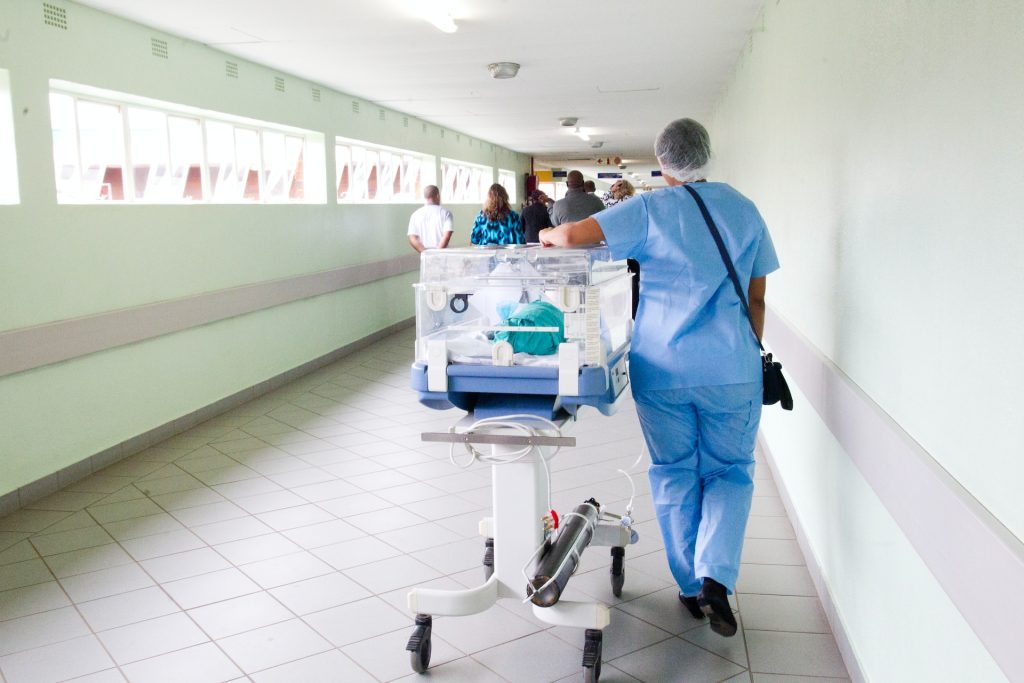
Health workers at Groote Schuur Hospital and Red Cross Children’s Hospital in Cape Town are starting to feel the effects of an ongoing freeze on the hiring of critical medical staff.
According to senior officials at these hospitals, speaking to GroundUp anonymously, the situation has reached a point where managers are struggling to fill shift rosters. An impact on patient care and waiting times is inevitable, the officials say.
A senior hospital manager at Groote Schuur told GroundUp that almost half of medical officer (doctor) posts in the medicine department are vacant, in addition to hundreds of other nursing and operational posts.
Another senior official at Red Cross Children’s Hospital told GroundUp that “critical medical posts” are being left vacant, including medical officer, registrar (doctors in training for a speciality), and specialist posts.
Groote Schuur Hospital is one of the largest government hospitals in the Western Cape and Red Cross Children’s Hospital is the largest children’s hospital in Sub-Saharan Africa. The Daily Maverick reported in November that the budget shortfall for these two hospitals amounts to more than R300-million for 2023/2024.
In addition to hiring freezes at Groote Schuur and Red Cross, the Western Cape Department of Health decided to de-escalate services at the hospitals for a period of four weeks over December and January. Hospital managers were also told to reduce spending on consumables by 50%, according to the Daily Maverick.
At the start of 2023, large cuts were made to the conditional grants that fund these hospitals. And then in the middle of the year, National Treasury announced significant austerity measures including a R21-billion reduction in national government spending for 2023/24.
In August last year, a letter by National Treasury to provincial governments recommended several “cost containment” measures for the 2023/24 financial year and suggested a freeze on hiring of new employees.
It appears that each province’s health department is dealing with the “cost containment” measures in different ways. In the Eastern Cape, for example, hiring freezes have been implemented but not for clinical staff, Sizwe Kupelo, spokesperson for that province’s health department, told GroundUp.
In the Western Cape, as of May 2022, the vacancy rate of medical posts was 5%, compared to 14% in the Eastern Cape, 20% in Gauteng and 28% in KwaZulu-Natal. Health experts are concerned that budget cuts and hiring freezes will have a devastating impact on these provinces.
Hospital officials at Groote Schuur and Red Cross told GroundUp that there has been a lack of clarity from the provincial department on how long hiring freezes will last and whether there will be a permanent reduction in medical posts.
Senior officials fear that the hiring freeze is undoing decades of investment by the government in the capacity of state hospitals. Newly graduated doctors looking to specialise need to take up a registrar post in a state facility, but with registrar posts frozen in the Western Cape, this is almost impossible for them to do.
Hospital managers told GroundUp that some medical officers have resigned from Western Cape hospitals to take up registrar posts in other provinces or even other countries.
Officials are also concerned that if hiring freezes are implemented in primary and secondary care facilities, referrals to hospitals will increase, putting further pressure on an already overburdened tertiary health system.
Dwayne Evans, spokesperson for the Western Cape Department of Health, told GroundUp that the department is unable to respond to specific questions on budget shortfalls or the number of posts frozen, as the 2024/25 budgets are being finalised.
Evans told GroundUp that as part of the hiring freeze, the filling of vacant posts now needs to be authorised by the provincial department to attain “provincial consensus”. 820 vacant nursing posts and 441 doctor positions have been “earmarked to be filled soon”, Evans said.
“We are doing everything we can to reduce the impact on our patients. No patients will be refused emergency and basic medical care and treatment,” he said.
The National Department of Health did not respond to GroundUp’s questions despite several follow-up attempts. National Treasury said that guidance will be given during the upcoming budget speech by Finance Minister Enoch Godongwana.
South Africa is barrelling towards its most consequential and most competitive national and provincial elections since 1994, expected to take place in May. That the ANC’s share of the vote, will be further eroded this year seems inevitable, given ongoing power cuts, failing railways, water management problems, high crime rates, and dysfunctional basic education and public health systems.
Covering elections is tricky at the best of times for media houses. At Spotlight, we plan to follow the advice of Jay Rosen, journalism professor at New York University, to focus on reporting “not the odds, but the stakes”. As far as the odds does go, however, it seems likely that the ANC – alone or in coalition – will govern nationally, but they could lose power in the country’s two most populous provinces, Gauteng and KwaZulu-Natal.
The stakes in these two provinces could not be higher when it comes to healthcare. The day-to-day running of our public healthcare system is after all the domain of provincial health departments.
Limping from crisis to crisis
Take Gauteng. From alleged health department corruption worth more than R1.2 billion in 2007/2008, to the Life Esidemini tragedy of 2016, to more recent issues such as the lacklustre response to alleged corruption at Tembisa Hospital, ongoing problems with food and security contracts, and the persecution of whistleblowers like Dr Tim de Maayer, the province’s health department has stumbled from crisis to crisis under the ANC for well over a decade now. New starts under new members of the executive council (MECs) and heads of department have been a dime a dozen, but if anything, the quality of governance has decayed over time. What is at stake is literally basics like whether there is sufficient food available for people in hospital.
There is, of course, no guarantee that this atrocious situation will be turned around if, for instance, a multi-party coalition of the DA, Action SA and others run the province – but the prospect of such a change certainly is intriguing. Just imagine the DA’s Jack Bloom having a go as Gauteng’s MEC for Health after decades of holding other MECs and heads of department to account from the sidelines.
The future of NHI
The year’s other headlining health story seems set to again be National Health Insurance (NHI), which promises healthcare for all – employed or unemployed – South Africans, permanent residents, refugees, inmates, and specific categories of foreign nationals. After making it through parliament at the end of last year, the NHI Bill is likely to be signed into law by President Cyril Ramaphosa any day now. Much of the bill won’t come into effect for quite some time, and we are sure to see several court cases challenging its constitutionality. There is also an outside chance that later this year the balance of power in parliament could shift against NHI, or at least certain elements of NHI. It is not too much of a stretch to say the future of NHI is one of several important things on the line at the ballot box.
Also at stake in the elections is government’s response to seemingly intractable problems like South Africa’s shortage of healthcare workers, budget shortfalls, and health sector corruption. It would be naïve to think a change in power will solve these problems overnight – much of the world is struggling with shortages of healthcare workers and South Africa’s budget restraints are all too real, but some will argue that a change in power may nevertheless be a necessary first step given the extent to which all three of these issues have been allowed to drift in recent years. There is certainly an argument to be made that the current lack of progress is rooted in a lack of state capacity and that the lack of state capacity, in turn, is a consequence of the ANC’s explicit policy of cadre deployment.
Whether or not voters again back the ANC, some specific questions should provide a good gauge of progress in 2024. Will we finally see convictions for the alleged corruption uncovered by public servant Babita Deokaran? Will government publish an implementation plan for addressing our healthcare worker crisis (we already have a good strategy) and, this is the key, put money and political capital behind its implementation? Will the new parliament pass a good State Liability Bill (which could help reduce the state’s liability for medico-legal claims) and finally get round to amending South Africa’s Patents Act to better balance medicine monopolies with the right to health (as set out in a policy adopted by cabinet back in 2018)? Will the establishment of the National Public Health Institute of South Africa remain stalled? Will government continue to ignore recommendations from the Competition Commission’s Health Market Inquiry on how to better regulate private healthcare in South Africa (the commission’s very impressive report was published in 2019)? Will the new health MECs and heads of provincial health departments appointed after the elections bring real change?
HIV, TB and NCDs
The National Department of Health has generally produced good HIV and tuberculosis (TB) policy over the last decade or so. In some respects, those policies have been well implemented – think the massive amount of HIV testing done in the country, in other respects they have been undermined by the general dysfunction in the public healthcare system – think long queues, staff shortages, and poor TB screening and infection control. Some innovations, like pills to prevent HIV or new TB treatments, could have been rolled out more quickly and better marketed to users.
At stake in the elections is thus not so much whether we produce good policies in areas such as HIV, TB and non-communicable diseases (NCDs), but whether we will get the leadership we need to ensure better and faster implementation of those policies.
On the HIV front, we will be keeping a close eye this year on the ongoing rollout of HIV prevention pills. While the rollout has gathered some momentum in recent years, the pills are generally still too hard to get hold of for those who could most benefit from it. Pilot projects should shed light on how to best make breakthrough new HIV prevention injections available in South Africa, but the high price of these injections is likely to mean the many young women who could most benefit from it won’t be able to get it.
New HIV figures from Thembisa, the leading mathematical model of HIV in South Africa, will be keenly watched this year since it will integrate recent findings from the Human Sciences Research Council (HSRC) survey (which contained some unexpectedly positive numbers). On the negative side, the HSRC survey also indicated that condom use was significantly down in 2022 compared to 2017 – this while a recent HIV investment case found that condoms are the only cost-saving HIV intervention for the health system. Either way, the extent to which condoms are made easily available will remain an important measure of government’s commitment to fighting HIV, both now and after the elections.
Last year, we saw significant changes in how TB is tested for and treated in South Africa. In short, many more people became eligible for TB tests and eligibility for TB preventive therapy was dramatically expanded. How impactful these new policies will be this year will depend on how well they are implemented, which again brings us back to the ongoing problems of healthcare worker shortages and a lack of management capacity in most of our provincial health departments. Maybe then, in a context of generally reasonable HIV and TB policy, what matters is not so much what different political parties have to offer on these diseases specifically, but what they can do to improve the functioning of our healthcare system more generally.
That said, one notable thing with TB is that, despite South Africa having often made good TB policy and having played an important role in raising the profile of TB at the United Nations, TB has never really become a political or elections issue here in the way one might expect from a disease that claims over 50 000 lives, of mostly poor people, in the country per year. So far, there is no indication that any political parties are set to change this in 2024.
Finally, while the long-term trends with HIV and TB are downward, the trend with non-communicable diseases (NCDs) like diabetes and hypertension in South Africa is in the opposite direction. Government has set HIV-style diabetes and hypertension targets and published a national plan, but again there are serious questions about whether these plans will be implemented and whether the public health system has the capacity to offer the levels of testing, treatment and care that is required. Meanwhile, breakthrough weight loss medicines that made headlines in 2023 are likely to remain out of reach for most people in South Africa and interventions like the sugar tax will remain highly contested before and after the elections.
Whatever happens at the ballot box, one thing is clear, given the rising NCD threat, healthcare worker shortages, budget shortfalls, and endemic corruption, whoever is in power nationally and provincially after this year’s elections will have their work cut out for them. While we will not endorse any political parties at Spotlight, we do urge voters to consider what is at stake in these elections when it comes to healthcare. Part of the picture will of course be painted by political party manifestos (which we will analyse in detail in the coming months), but as important as the policies, is the track record of what parties have done when they’ve held power. Whether in Gauteng, the Western Cape, or nationally, voters will hopefully send a clear message on whether or not they think those currently in power are on the right track.
*Low is editor of Spotlight.
NOTE: Spotlight is editorially independent and is not affiliated with, nor does it endorse any political parties. Spotlight is a member of the South African Press Council.
South Africa’s National Health Insurance (NHI) Bill would, if passed in its current form, completely disrupt the medical sector in the country and would inevitably reshape the role of medical schemes as well as gap cover.
However, the implementation of NHI does not necessarily mean that medical aid and gap cover will no longer have a role to play, because there are many possible scenarios in which they will continue to be an important part of the landscape. It is important to understand your current coverage from both a medical aid and gap cover perspective so that when the NHI does come into effect, you can make an informed decision that will be best for your needs.
A long road ahead
Given the potential for the current NHI Bill to face legal challenges, we are driven by a shared responsibility to safeguard the health and well-being of all citizens. The risk of lengthy court battles cannot be underestimated, as they may inadvertently prolong the uncertainty and affect the timely implementation of essential healthcare reforms. According to Andre Jacobs, Marketing Manager at The People Company and Vice Chair of the FIA Health Exco, these challenges include constitutional, funding, affordability, policy and supply-side demand issues.
“There are also conflicting points of information within the current Bill that need to be resolved. For example, in Section 33, the Bill states that once NHI is implemented, medical schemes can play a top up role, which could mean different things. It could imply that they may only provide cover for anything that is not primary care, or that they may only provide specialised dentistry cover or advanced oncology treatment,” says Jacobs.
“However, if one reads the definition of a health service and a health product with section 2(a) of the NHI Bill, it states that all health services will be provided by the NHI Fund and that they are the single purchaser and provider of health services. Therefore, whilst section 33 provides a role for medical schemes, it would be impossible to operate,” he adds.
A matter of speculation
The reality is that it is yet to be determined what benefits the NHI Fund will provide. This means that the role of medical schemes, and therefore the role of gap cover, is a matter of speculation at present. The structure of the current medical scheme and gap cover range may need to be adjusted to align with the NHI offering that is enacted.
This may lead to the design of products moving toward a defined benefit structure where a particular medical intervention, such as a broken leg, has a defined benefit that is paid out irrespective of the amount of cover provided by the NHI. This amount could then be utilised to pay for a private procedure. It is also likely that high-cost treatments such as specialised dentistry or advanced cancer treatment or biological medicine will not be provided by the NHI Fund. However, the regulations post-NHI will dictate what can be offered.
“If we use overseas experience by way of example, there will be a role for both National Health and private insurance products, where the private cover will provide additional benefits to complement the base offering of the NHI. For example, we often see this as providing a fast track for certain elective procedures that a person may need to address due to personal circumstances,” says Tony Singleton, CEO of Turnberry Management Risk Solutions.
Make sure you are covered in any eventuality
“The goal of expanding universal healthcare should be supported, but rather than abolishing private healthcare, South Africa should leverage the private sector to expand the level of universal health cover. We can develop a dualistic healthcare system with the same universal coverage elements based on social solidarity principles, with a healthcare system that is accountable to the communities it serves. Transitioning to a more equitable healthcare system demands not only sound policy decisions, but also a shared commitment to overcoming societal attitudes and cultural beliefs that might hinder progress,” says Jacobs.
Private medical schemes are an asset that should be leveraged to drive healthcare innovation and foster advancements for the broader healthcare sector, and the healthcare system needs to provide meaningful choices through an accessible, inclusive, and adaptable system that caters to the diverse needs and preferences of the population.
Gap products currently play an important role in protecting your financial wellbeing in the event that medical expenses exceed what medical schemes will reimburse. In the current landscape, where the future state of the NHI is uncertain, there is still a definite need for both medical aid and gap cover to ensure access to quality private healthcare. In addition, gap cover for the use of non-Designated Service Providers (DSPs) will continue to be important even after a National Health product comes into effect.
“Before making any decisions, it is important to understand the cover provided by your medical aid and to understand any limitations that your plan may have. To assist you with this, it is useful to have your financial advisor review your medical aid coverage. They will be able to identify the type of gap product that will be most complementary to your Medical Aid plan whilst at the same time understanding your family’s unique health and financial situation,” Singleton concludes.
About Turnberry Management Risk Solutions
Founded in 2001, Turnberry is a registered financial services provider (FSP no. 36571) that specialises in Accident and Health Insurance, Travel Insurance, and Funeral Cover. With extensive experience across healthcare and insurance industries in South Africa, Turnberry offers unsurpassed service to Brokers and clients. Turnberry’s gap cover products are available to clients on all medical aid schemes, as they are independently provided and are therefore transferable in the event of a change in the client’s medical aid scheme. Turnberry is well represented nationally, with its Head Office based in Bedfordview, Johannesburg with Business Development Managers in Cape Town and Durban. The Turnberry Team’s focus on outstanding client service comes from having extensive knowledge and experience in the financial services sector and is underwritten by Lombard Insurance Company Limited. Lombard Insurance Company Limited is an Authorised Financial Services Provider (FSP 1596) and Insurer conducting non-life insurance business.
The MoU between SAHPRA and MCAZ will allow the regulators to develop a cooperative partnership towards ensuring access to safe, quality, and effective health products in the respective countries.
Areas of cooperation SAHPRA and MCAZ will cooperate in joint products reviews and inspections to enable efficient access to health products. This partnership will also focus on detection and curbing of substandard and falsified health products moving between the two countries, which has off late been a major challenge that the two regulators have identified.
“The forging of partnerships such as this MoU with the Medicines Control Authority of Zimbabwe, a fellow African National Regulatory Authority, is key to further enhancing and building capacity on the continent”, indicates SAHPRA CEO, Dr Boitumelo Semete-Makokotlela.
“This landmark event marks a significant step towards strengthening the regulatory frameworks of both Zimbabwe and South Africa in the pharmaceutical sector. The MoU is designed to facilitate cooperation and collaboration between the two countries in the areas of medicines regulation, quality control, and pharmacovigilance”, shares MCAZ Director-General, Mr Richard Rukwata.
Like many countries, South Africa has a shortage of healthcare workers – particularly of doctors. One response to such shortages is task-shifting – in short, to let doctors focus on the things only they can do, and to shift some other less specialised tasks to other healthcare workers like nurses or pharmacists.
Task-shifting can take many forms. Earlier this year Spotlight reported on a court case that gave the green light to specially trained pharmacists to dispense antiretroviral treatment without a script (the judgement is being appealed). Similarly taking pressure off public sector clinics, the Department of Health has for several years now allowed some people to pick up their medicines at participating private sector pharmacies or other pickup points. Less well implemented, was the introduction of clinical associates in 2008 as a new type of mid-level healthcare worker that can take some of the pressure off of doctors and stand-in for them in some situations.
Probably the most impactful example of task-shifting in South Africa, however, was the introduction of Nurse Initiated and Managed Antiretroviral treatment (NIMART) in 2010.
What is NIMART?
Dr Silingene Ngcobo, a lecturer at the School of Nursing and Public Health at the University of KwaZulu-Natal and a Board Member of the Southern African HIV Clinicians Society, says NIMART is a clinical management program for people living with HIV which is driven by registered nurses. This means that registered nurses can independently manage a person living with HIV, starting from screening and diagnosis, all the way to treating, and monitoring throughout the HIV care continuum in the absence of a medical doctor.
As explained by Mmotsi Moloi, Training Programme Manager at the Aurum Institute (an NGO), prior to the introduction of NIMART in 2010 only doctors were authorised to prescribe antiretroviral therapy.
The rollout of antiretrovirals in South Africa technically started in 2004, but it only gathered momentum after the end of state-backed AIDS denialism in 2008. It soon after became clear that South Africa would not have enough doctors to handle the demand for HIV treatment and nurses would have to be roped in.
“The waiting lists became long, and the doctors could not meet the increasing demand of clients in need of antiretroviral treatment, this led to the death of clients while awaiting to be initiated,” says Moloi. “There was an urgent need to remedy the situation which was to decentralise management of HIV to Primary health care facilities and professional nurses to be trained and authorised to manage HIV infected clients.”
Ngcobo says nurses are often the only healthcare providers available to provide HIV prevention, care, and treatment services. She says the South African healthcare delivery system approach has changed from hospital-centred care to promotion of health and prevention of disease through primary healthcare and the introduction of NIMART fits this shift.
Hard to quantify
According to estimates from Thembisa, the leading mathematical model of HIV in the country, the number of people taking HIV treatment in South Africa increased from 1.2 million in 2010 to 5.7 million in 2022. How big a part NIMART played in this remarkable scale-up of treatment is hard to quantify, but that it played a pivotal role seems clear.
A review study published in 2021 that looked back at 10 years of NIMART in South Africa, found that adequate NIMART training “results in improved knowledge of HIV management, greater confidence and clinical competence, particularly if accompanied by mentoring”.
The review summarised results from several smaller studies conducted in different provinces on NIMART – which show, on a small scale at least, what potential impact NIMART has had. Among other things, the training of nurses to initiate and manage HIV treatment led to feelings of empowerment, and when coupled with appropriate training and support can “lead to increased quality of patient care, confidence and professional development”.
Studies conducted in Johannesburg cited by the review found that NIMART training increased access to HIV treatment, reduced workloads at referral facilities, and reduced referrals to tertiary hospitals. Nurses also saw an “improvement in the quality of life of their patients and the retention of patients in care, which they felt reflected the success of NIMART”.
When asked how many NIMART-qualified nurses we have in the country, Foster Mohale, spokesperson for the National Department of Health, says he can’t provide an exact number since they no longer collect data on NIMART since it has been incorporated in broader HIV training. He also says that provinces are the custodians of data for all trained healthcare workers and points out that the numbers change all the time due to attrition.
What NIMART nurses do
Ngcobo says NIMART nurses assess and screen people living with HIV for treatment eligibility, initiate antiretroviral therapy, provide adherence counselling and monitoring, screen for opportunistic infections, offer various preventative therapies, psychological support, as well as appropriate referrals to other members of the disciplinary team, and oversee repeat visits throughout the healthcare user’s life while managing any other health condition that the person might have.
Nurses also have to support people with tuberculosis and non-communicable diseases (such as diabetes and hypertension) to take treatment as prescribed.
“For effective management of other diseases, NIMART nurses should actually work with all other conditions because a person living with HIV still can gets various other conditions which still need to be managed. Therefore, the role of [the] NIMART nurse is to wholistically manage the patient and provide all the necessary healthcare services that the healthcare user in front of them will be requiring,” says Ngcobo.
Training requirements
The NIMART programme has changed somewhat since its launch back in 2010. Mohale says the programme now also covers the majority of healthcare professionals like medical doctors, pharmacists, registered or professional nurses, and other healthcare professionals who are authorised by their statutory bodies to assess, diagnose, prescribe, and dispense medications. He says in 2017 NIMART was changed to “Basic HIV for Health Care Professionals”, but the name NIMART is still in wide use.
The essence of the programme however remains that a professional nurse, or other qualifying healthcare professional, must complete special training (see this online course for example) before they are authorised to prescribe HIV treatment and manage the treatment and care of people living with HIV. Training typically requires both an exam and some practical work, ideally with the support of a mentor.
All prescribing by nurses in the public sector relies on section 56(6) of the Nursing Act, which allows an exception to the Medicines Act and other health-related laws, explains Andy Gray, Senior Lecturer in pharmaceutical sciences at the University of KwaZulu-Natal. “They therefore do not need section 22A(15) permits or section 22C(1)(a) dispensing licences in terms of the Medicines Act,” he says.
The legalities of how nurse prescribing works in South Africa is set out in a 2016 policy document issued by the National Department of Health. Amongst others, the document states that, “a nurse may only perform the functions authorised by Section 56(6) in public sector facilities in the district or municipality where the authorisation was granted to him/her”. In other words, nurses who move to jobs at other facilities or in other districts will often require new authorisation before they may prescribe medicines such as antiretrovirals.
Some concerns
But there are signs that training and mentorship is not functioning optimally across the board.
“There is non-standardised training and inadequate mentoring as the country doesn’t have enough trainers,” says Mohale. “There are human resource constraints for both trainers and nurses to be trained. Some districts rely on their district support partners to carry out trainings on their behalf.”
“Staff shortage from the facilities also leads to some nurses not being able to be trained due to demand for other health services at their service delivery points. Some challenges include failure to identify and manage drug-drug and drug-food interactions which are important in making sure that the patients are suppressing their viral loads,” he adds.
Mohale’s comments echo several barriers to the success of NIMART that were identified in the 2021 review study, including: “non-standardised training, inadequate mentoring, human resource constraints, health system challenges, lack of support and empowerment, and challenges with legislation, policy and guidelines”.
The South African Health Products Regulatory Authority (SAHPRA) is aware of the product Lubri-A (Sterile Lubricating Jelly) manufactured by Electro-Spyres, classified as Class B medical device and currently being distributed across the country.
SAHPRA has been informed of multiple complaints received from health institutions, both public and private across the country. The complaints are as a result of a number of patients who became ill due to developing a fungal infection, caused by exposure to the fungal species, Wickerhamomyces anomalus (previously Candida pelliculosa) associated with use of Lubri-A (Sterile Lubricating Jelly).
Lubri-A is available in two presentations, the 2.5 g sachets and 50 g tubes.
Considering the wide usage of the product for lubricating purposes in medical and surgical procedures, the Regulator has taken a decision to urgently recall this product from the market as there are multiple contaminated batches, with the potential to cause serious and widespread nosocomial infections. SAHPRA is alerting healthcare professionals and the public to discontinue the use of the product, remove it from their inventory and return it through their normal distribution channel(s) with immediate effect.
As the source of the contamination of the product is still under investigation and not confirmed, all batches of Lubri-A are being recalled. Future manufacture and distribution of the product will be subject to review and authorisation by SAHPRA.
Classification of the recalls
The recall is being classified as a Class 1, Type A recall, which is associated with a serious product quality concern that may have severe consequences. This is a countrywide recall. The product is being recalled from hospitals, retail outlets, health care professionals, authorised prescribers and individual customers or patients.
What the public should know
Healthcare professionals that have used this product should contact their patients to determine any symptoms of infection after use of product.
The recall is limited to the product called LUBRI-A (2.5g and 50g sachets) and does not affect other lubricating gel products authorised for sale in South Africa.
The contact telephone numbers for Electro-Spyres are:
Landline: 011-608-3998 or 011-402-7208
WhatApp: +27-82-355-8862
“As a national regulatory authority, the recalling of medical products is a crucial measure to address safety concerns or quality issues so that we protect the health of the public. SAHPRA is recalling this product from the market as there are multiple suspected contaminated batches with the potential to cause serious and widespread nosocomial infections, ” indicates SAHPRA CEO, Dr Boitumelo Semete-Makokotlela.
HFA outlines presidential petition to prevent decimation of the SA healthcare system
The NHI Bill presented to President Cyril Ramaphosa cannot be permitted, as in its current form, it will infringe the rights of all South Africans by destroying the South African healthcare system. The Health Funders Association (HFA) has petitioned the President to withhold assent of the Bill on constitutional and procedural grounds and intends to take the matter as far as necessary and to the Constitutional Court if need be.
“We have taken a strong stand by respectfully urging the President to withhold assent of the Bill, citing constitutional and procedural concerns that pose a significant threat to the integrity of the country’s healthcare system,” remarks HFA Chairperson Craig Comrie.
“Should the need arise, the HFA is prepared to escalate the matter to the courts. Our goal is to meticulously align the legislation with the authentic objectives of Universal Health Coverage and the principles enshrined in the South African Constitution.
“Our action in opposing the NHI Bill being signed into law protects the interests of ALL South Africans who will require healthcare in future, including the people we are duty-bound to safeguard through the medical schemes and healthcare administrators we represent,” Comrie says.
While expressing unwavering support for achieving Universal Health Coverage (UHC) in South Africa, the HFA questions Parliament’s endorsement of a bill that raises significant constitutional and procedural concerns and fundamentally cannot achieve a sustainable system of UHC.
Some of the primary concerns outlined in the letter include:
Constitutional concerns: The NHI Bill’s clear infringement on constitutional rights, particularly the right to access healthcare and freedom of choice for South Africans, and by implication, the right to life. The Bill is seriously flawed in that regard, undermining the rule of law.
Procedural concerns: Questioning the extent and effectiveness of public consultation during the drafting and review of the NHI Bill, where thousands of submissions resulted in no meaningful changes to the Bill, the HFA advocates for a more inclusive and consultative approach.
The letter implores President Ramaphosa to exercise the powers granted by the Constitution to refer the NHI Bill back to Parliament for review.
“In addition to petitioning the President directly as guardian of the Constitution, the HFA will oppose the NHI Bill in its current form through every possible avenue, including approaching the courts to set aside the Bill on constitutional and procedural grounds.
“The HFA will also seek a High Court interdict against implementation of the NHI Act until the merits of our case have been heard and ruled upon by the High Court.
Craig Comrie concludes, “It is with a heavy heart that we make this plea, urging the President to secure the rights and wellbeing of our people. We will persist to ensure that what is right triumphs in our nation. South Africa deserves leadership that prioritises the welfare of all of its citizens, above all.”