Category: Genetics

A Gene for ‘Explosive’ Cell Death Drives Runaway Inflammation

Australian researchers at Walter and Eliza Hall Institute have found that a genetic change that increases the risk of inflammation, through necroptosis, a process described as ‘explosive’ cell death, is carried by up to 3% of the global population.

The study, which is published in Nature Communications, may explain why some people have an increased chance of developing conditions like inflammatory bowel disease or suffer more severe reactions to infections with bacteria like Salmonella.

Immune power of ‘explosive’ cell death

Programmed cell death is a normal part of the body’s immune system and maintenance, removing unwanted, damaged or dangerous cells, and preventing the spread of viruses, bacteria, and even cancer.

First author WEHI’s Dr Sarah Garnish is first author on the paper and said that while there are various types of cell death, necroptosis is distinguished by its ferocity – the cells essentially explode, which sounds an alarm for other cells in the body to respond.

“This is a good thing in the case of a viral infection, where necroptosis not only kills the infected cells but instructs the immune system to respond, clean things up, and start a more specific, long lived immune response,” Dr Garnish said.

“But when necroptosis is uncontrolled or excessive, the inflammatory response can actually trigger disease.”

Genetic brakes

The gatekeeper of necroptosis is the gene MLKL. When the body needs to trigger a cell death response with plenty of firepower, the cellular brakes that normally keep MLKL in-check are released. However, some of us make a form of MLKL with flimsy brakes.

Dr Garnish and her co-authors have been able to quantify this at a population level for the first time.

“For most of us, MLKL will stop when the body tells it to stop, but 2-3% of people have a form of MLKL that is less responsive to stop signals,” Dr Garnish said.

“While 2-3% doesn’t seem like much, when you consider the global population, this adds up to many millions of people carrying a copy of this gene variant.”

Project leader Dr Joanne Hildebrand said the research proposes that a common genetic change like this can combine with a person’s lifestyle, infection history and broader genetic makeup to increase the risk of inflammatory diseases and severe reactions to infections.

This is known as polygenic risk, the combined influence of multiple genes on developing a certain trait or condition.

“Taking Type 2 diabetes as an example, it’s rare that just one gene change determines whether someone will develop the condition,” Dr Hildebrand said.

“Instead many different genes play a role, as do environmental factors, like diet and smoking.”

Dr Hildebrand said it’s not as simple as directly connecting this difference in the MLKL gene with the chance of someone developing a specific condition.

“We haven’t tagged this MLKL gene variant to any one particular disease yet, but we see real potential for it to combine with other gene variants, and other environmental cues, to influence the intensity of our inflammatory response.”

Towards personalised medicine

Our understanding of MLKL has come a long way since it surfaced by chance in a WEHI lab more than 20 years ago. Today’s research opens the door for future tests and screening to determine disease risks.

Genome sequencing is becoming cheaper and more readily accessible. As more genomic data becomes available to researchers, it increases the likelihood that they can link common genetic variants, like the one described for MLKL, with disease.

In the future researchers hope to pinpoint the genetic changes that might mean someone is more likely to have a severe case of COVID-19, or less likely to bounce back after chemotherapy.

“Every piece of information like this helps us make personalised medicine more of a reality,” said Dr Garnish.

The WEHI team is also investigating whether uncontrolled necroptosis could be beneficial in some circumstances. For example, could people with the MLKL gene variant have a stronger cellular defensive response to certain viruses?

“Gene changes like this don’t usually accumulate in the population over time unless there is a reason for it – they generally get passed on because they do something good,” said Dr Garnish.

“We’re looking at the downsides of having this gene change, but we’re looking for the upsides as well.”

Source: Walter and Eliza Hall Institute

Can We Predict the Severity of Food Allergies Using Genetics?

Photo by Sangharsh Lohakare on Unsplash

Researchers have discovered that a genetic biomarker may be able to help predict the severity of food allergy reactions. Currently there is no reliable or readily available clinical biomarker that accurately distinguishes patients with food allergies who are at risk for severe life-threatening reactions versus more mild symptoms. The researchers reported their findings in the Journal of Allergy and Clinical Immunology.

The researchers, led by Ann & Robert H. Lurie Children’s Hospital of Chicago, found that the presence of an enzyme isoform called α-tryptase, which is encoded by the TPSAB1 gene, correlates with increased prevalence of anaphylaxis or severe reaction to food as compared to subjects without any α-tryptase.

“Determining whether or not a patient with food allergies has α-tryptase can easily be done in clinical practice using a commercially available test to perform genetic sequencing from cheek swabs,” said lead author Abigail Lang, MD, MSc, attending physician and researcher at Lurie Children’s and Assistant Professor of Pediatrics at Northwestern University Feinberg School of Medicine. “If the biomarker is detected, this may help us understand that the child is at a higher risk for a severe reaction or anaphylaxis from their food allergy and should use their epinephrine auto-injector if exposed to the allergen. Our findings also open the door to developing an entirely new treatment strategy for food allergies that would target or block α-tryptase. This is an exciting first step and more research is needed.”

Tryptase is found mainly in mast cells, which become activated during allergic reactions. Increased TPSAB1 copy number which leads to increased α-tryptase is already known to be associated with severe reactions in adults with Hymenoptera venom allergy (or anaphylaxis following a bee sting).

Dr Lang’s study included 119 participants who underwent TPSAB1 genotyping, 82 from an observational food allergy cohort at the National Institute of Allergy and Infectious Diseases (NIAID) and 37 from a cohort of children who reacted to peanut oral food challenge at Lurie Children’s.

“We need to validate our preliminary findings in a much larger study, but these initial results are promising,” says Dr Lang. “We also still need a better understanding of why and how α-tryptase makes food allergy reactions more severe in order to pursue this avenue for potential treatment.”

Source: Ann & Robert H. Lurie Children’s Hospital of Chicago

Genetics can Make Paediatric Medicines Taste Sweeter

Photo by cottonbro studio

Paediatric medicines often come in a sweetened liquid form for compliance in ingesting it, but if it’s too palatable, a child may empty an entire bottle and poison themselves. But children can perceive taste in different ways. A new study published in the International Journal of Molecular Sciences uncovers genetic variations in how sweetness of medicine is perceived, with adult participants of African descent finding it than those of European descent.

A multidisciplinary research group specialising in paediatrics, genetics, and psychophysics, co-led by Julie A. Mennella, PhD, Principal Investigator at the Monell Chemical Senses Center, has identified wide variation in the sensory perception of a paediatric formulation of ibuprofen. Some were tied to genetic ancestry, and some were not. These findings indicate that a range of factors come into play in determining how a medicine tastes to an individual. Their work is the first in a series of studies funded by the National Institutes of Health to look at variation in the taste of medicines.

“Taste is personal and determining how individuals differ and why is critical to understanding medication adherence and personal risks,” said Mennella. Bitter taste and irritating sensations in the throat are the top reasons for non-compliance, as a child (or adult) is less likely to ingest a medicine that is unpleasant (or tastes bad). However, if a child finds the medicine bottle uncapped and finds it tastes sweet like candy, they may ingest too much. Discovering how individuals differ in sensory perception is especially key when it comes to liquid ibuprofen, which accounts for many unintentional poison exposures among children younger than six years old in the US, according to the US Poison Centers.

“Sweetening medicines like ibuprofen is a delicate balance between having it taste good enough that kids take it, but bitter enough that, should they get unguarded access to it, it’s irritating enough that they stop drinking it and don’t poison themselves,” said Mennella. “We found genetic markers, both ancestry-related and independent of it, that could predict if someone would find a medication irritating or pleasantly sweet. If we get to the point of tailor-making medications in the future, knowing these associations could help us design taste specifically for each child in the not-so-distant future.”

The study included 154 adult panellists from Philadelphia, who represented the diversity of their city. According to a genome-wide association study, 63 had African ancestry, 51 European, 13 South Asian, seven East Asian, and seven American. They underwent training in sensory methods and then rated the sweetness, irritation, bitterness, and palatability of a paediatric formulation of a berry-flavoured ibuprofen after swallowing, and also after just tasting it without swallowing.

Researchers found that panellists of African genetic ancestry had fewer chemaesthetic sensations such as tingling or an urge to cough, rated the medicine as tasting sweeter and more palatable than those of European genetic ancestry. Researchers also found a novel association between the TRPA1rs1198875 genetic variation and tingling sensations, independent of ancestry. This is significant as TRPA1 is a family of neuron receptors that are involved in sensory neural response to a variety of chemical irritants found in foodstuff and other medicines.

Discovering both an ancestry-related link and non-ancestry-related genetic variation to taste and irritation perception shows that who perceives a medicine as palatable or not is a complicated picture and must consider a variety of factors.

This first study was conducted with adults because the sensory measures were complex and included several hour-long test sessions. That does not mean future tests should not include children, Mennella said, adding that this is just the first in a line of studies on the taste of paediatric medicines and methods need to be developed to measure sensory irritation in children. “This is a small study, but it is the first step in showing how research on diverse populations is needed to be able to unravel the genetic, cultural, dietary, and developmental paths that underlie medicine adherence and also risk for poisoning,” said Mennella. “It’s looking at both sides of the same, very important coin.”

Findings from this research will affect how sensory tests can be designed in the future. Since participants did both swallow and sip-and-spit tests, the team was able to determine that just tasting medicine allowed predictions and perceptions after swallowing, which could simplify future studies in different age groups. Other studies as part of this National Institutes of Health grant are ongoing, including determining the variation and acceptance of medicines in children.

Source: Monell Chemical Senses Center

New Genes, Natural Toxins Offer Hope for Patients with Head and Neck Cancer – and Maybe Others

Photo by National Cancer Institute on Unsplash

Research led by Queen Mary University of London and published in Molecular Cancer has revealed two new genes that cause head and neck cancer patients to be resistant to chemotherapy. The study also shows that silencing either gene can make cancer cells that were previously unresponsive chemotherapy subsequently respond to it.

The two genes discovered actively ‘work’ in most human cancer types, meaning the findings could potentially extend to other cancers with elevated levels of the genes.

The researchers also looked through a chemical library, commonly used for drug discovery, and found two substances that could target the two genes specifically and make resistant cancer cells almost 30 times more sensitive to a common chemotherapy drug called cisplatin. They do this by reducing the levels of the two genes and could be given alongside existing chemotherapy treatment such as cisplatin. One of these substances is a fungal toxin – Sirodesmin A – and the other – Carfilzomib – comes from a bacterium. This shows that there may be existing drugs that can be repurposed to target new causes of disease, which can be cheaper than having to develop and produce new ones.

The research is the first evidence for the genes NEK2 and INHBA causing chemoresistance in head and neck squamous cell carcinoma (HNSCC) and gene silencing of either gene overturning chemoresistance to multiple drugs.

The scientists first used a method known as data mining to identify genes that may be affecting tumour responsiveness to drug therapy. They tested 28 genes on 12 strains of chemoresistant cancer cell lines, finding 4 ‘significant’ genes that were particularly responsive that they then investigated further and tested multidrug-resistance.

Senior study author Dr Muy-Teck Teh, from Queen Mary University of London, said: “These results are a promising step towards cancer patients in the future receiving personalised treatment based on their genes and tumour type that give them a better survival rate and treatment outcome.

“Unfortunately, there are lots of people out there who do not respond to chemotherapy or radiation. But our study has shown that in head and neck cancers at least it is these two particular genes that could be behind this, which can then be targeted to fight against chemoresistance.

“Treatment that doesn’t work is damaging both for the NHS and patients themselves. There can be costs associated with prolonged treatment and hospital stays, and it’s naturally extremely difficult for people with cancer when their treatment doesn’t have the results they are hoping for.”

90% of all head and neck cancers are caused by HNSCCs, with tobacco and alcohol use being key associations. In the UK, there are 12 422 new cases of head and neck cancer each year, and the overall 5-year survival rate of patients with advanced HNSCC is less than 25%. A major cause of poor survival rates of HNSCC is because of treatment failure that stems from resistance to chemotherapy and/or radiotherapy.

Unlike lung and breast cancer patients, all HNSCC patients are treated with almost the same combinations of treatment irrespective of the genetic makeup of their cancer.

Source: Queen Mary University of London

Fathers Who Smoked as Young Teens Pass Epigenetic Changes to Offspring

A new study suggests boys who smoke in their early teens risk damaging the genes of their future children, increasing their chances of developing asthma, obesity and low lung function.

This research, published in Clinical Epigenetics, is the first human study to reveal the biological mechanism behind the impact of fathers’ early teenage smoking on their children.

Researchers from the University of Southampton and the University of Bergen in Norway investigated the epigenetic profiles of 875 people, aged 7 to 50, and the smoking behaviours of their fathers.

They found epigenetic changes at 19 sites mapped to 14 genes in the children of fathers who smoked before the age of 15. These changes in the way DNA is packaged in cells (methylation) regulate gene expression (switching them on and off) and are associated with asthma, obesity and wheezing.

“Our studies in the large international RHINESSA, RHINE and ECRHS studies have shown that the health of future generations depends on the actions and decisions made by young people today – long before they are parents – in particular for boys in early puberty and mothers/grandmothers both pre-pregnancy and during pregnancy,” says Professor Cecilie Svanes from the University of Bergen and Research Director of the RHINESSA study. “It is really exciting that we have now been able to identify a mechanism that explains our observations in the cohorts.”

‘Unique markers’

“Changes in epigenetic markers were much more pronounced in children whose fathers started smoking during puberty than those whose fathers had started smoking at any time before conception,” says co-lead author of the paper Dr Negusse Kitaba, Research Fellow at the University of Southampton. “Early puberty may represent a critical window of physiological changes in boys. This is when the stem cells are being established which will make sperm for the rest of their lives.”

The team also compared the paternal preconception smoking profiles with people who smoked themselves and those whose mothers smoked before conception.

“Interestingly, we found that 16 of the 19 markers associated with fathers’ teenage smoking had not previously been linked to maternal or personal smoking,” says Dr Gerd Toril Mørkve Knudsen from the University of Bergen and co-lead author of the study. “This suggests these new methylation biomarkers may be unique to children whose fathers have been exposed to smoking in early puberty.”

Teenage vaping ‘deeply worrying’

The number of young people smoking has fallen in the UK in recent years. But co-author Professor John Holloway, from the University of Southampton and the NIHR Southampton Biomedical Research Centre, is concerned about children taking up vaping.

“Some animal studies suggest that nicotine may be the substance in cigarette smoke that is driving epigenetic changes in offspring,” says Professor Holloway. “So it’s deeply worrying that teenagers today, especially teenage boys, are now being exposed to very high levels of nicotine through vaping.

“The evidence from this study comes from people whose fathers smoked as teenagers in the 60s and 70s, when smoking tobacco was much more common. We can’t definitely be sure vaping will have similar effects across generations, but we shouldn’t wait a couple of generations to prove what impact teenage vaping might have. We need to act now.”

The new findings have significant implications for public health. They suggest a failure to address harmful exposures in young teenagers today could damage the respiratory health of future generations, further entrenching health inequalities for decades to come.

Source: University of Southampton

Scientists Snip Muscular Dystrophy Gene, Yielding Shorter but Now-functional Proteins

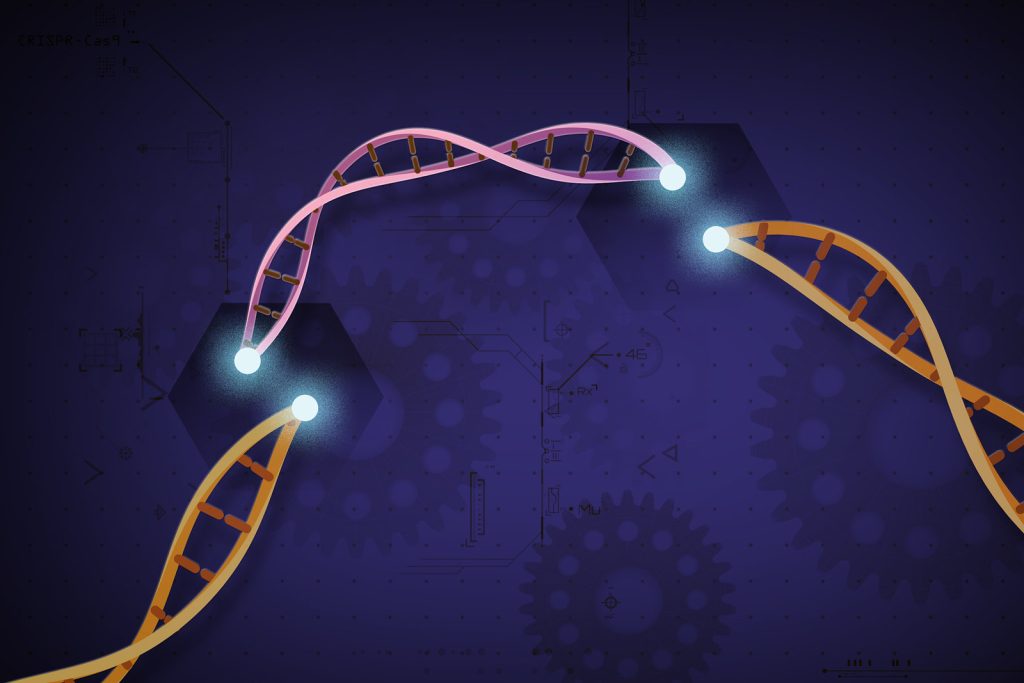
CRISPR-Cas9 is a customisable tool that lets scientists cut and insert small pieces of DNA at precise areas along a DNA strand. This lets scientists study our genes in a specific, targeted way. Credit: Ernesto del Aguila III, National Human Genome Research Institute, NIH

The most common inherited muscular disorder and one of the most severe, Duchenne muscular dystrophy (DMD) results from mutations of the dystrophin gene. In the journal Stem Cell Reports, researchers used a dual CRISPR RNA method to restore dystrophin protein function in stem cells derived from DMD patients. By removing large sections of the dystrophin gene, the cells were able skip faulty or misaligned sections of the genetic code, yielding shortened but still functional proteins for a wide variety of mutation patterns associated with DMD.

“Dual CRISPR-Cas3 is a promising tool to induce a gigantic genomic deletion and restore dystrophin protein via multi-exon skipping induction,” says senior author Akitsu Hotta of Kyoto University. “We expect this study to enlighten new ways to treat DMD patients and other genetic disorders that require extensive deletions.”

Due to significant variations in the mutation patterns affecting the dystrophin gene, deleting a small section of the gene can only be used for a limited number of DMD patients. For example, the most common mono-exon skipping of exons 51, 53, and 45 can be applied to 13%, 8%, and 8% of DMD patients, respectively.

Multi-exon skipping (MES) has broad applicability to various DMD mutation patterns. By targeting the mutation hotspots in the dystrophin gene, MES from exon 45 to 55 was estimated to benefit more than 60% of DMD patients. Unfortunately, few techniques are available to induce a large deletion to cover the target exons spread over several hundred kilobases.

To overcome this hurdle, Hotta and his team used CRISPR-Cas3 to induce a deletion of up to 340 kilobases at the dystrophin exon 45-55 region in various DMD mutation patterns. Because it was rare to observe a deletion of more than a hundred kilobases using a single CRISPR RNA – which helps to locate the correct segment of DNA – the researchers used a pair of CRISPR RNAs inwardly sandwiching the target genomic region.

Limitations of the dual CRISPR RNA system include is variation in the deletion pattern, and the precise start and end points of the deletion cannot be fully controlled. This could be a drawback when a large but precise deletion is required. The study also did not demonstrate the functionality of the recovered dystrophin protein. Future research should aim to improve the overall genome editing efficiency of the Cas3 system.

“Our dual-Cas3 system might apply to future gene therapies once we’re able to deliver the dual-Cas3 components in vivo to skeletal muscle tissues safely and efficiently,” says Hotta. “The ability to induce several hundred kilobases of DNA deletion itself also has broad applicability for basic research when a large deletion is needed.”

Source: Science Daily

Mice Live Longer when Given a Longevity Gene from Naked Mole Rats

CRISPR-Cas9 is a customisable tool that lets scientists cut and insert small pieces of DNA at precise areas along a DNA strand. This lets scientists study our genes in a specific, targeted way. Credit: Ernesto del Aguila III, National Human Genome Research Institute, NIH

In a ground-breaking advance in aging research, scientists have successfully transferred a longevity gene from naked mole rats to mice, resulting in improved health and an extension of the mouse’s lifespan.

Naked mole rats are known for their long lifespans and exceptional resistance to age-related diseases. By introducing a specific gene responsible for enhanced cellular repair and protection into mice, the researchers have opened exciting possibilities for unlocking the secrets of aging and extending human lifespan.

“Our study provides a proof of principle that unique longevity mechanisms that evolved in long-lived mammalian species can be exported to improve the lifespans of other mammals,” says Vera Gorbunova, professor at Rochester University. Gorbunova, along with Andrei Seluanov, a professor of biology, and their colleagues, report in a study published in Nature that they successfully transferred a gene responsible for making high molecular weight hyaluronic acid (HMW-HA) from a naked mole rat to mice. This led to improved health and an approximate 4.4 percent increase in median lifespan for the mice.

A unique mechanism for cancer resistance

Naked mole rats are mouse-sized rodents that have exceptional longevity for rodents of their size; they can live up to 41 years, nearly ten times as long as similar-size rodents. Unlike many other species, naked mole rats do not often contract age-related diseases such neurodegeneration, cardiovascular disease, arthritis, and cancer. Gorbunova and Seluanov have devoted decades of research to understanding the unique mechanisms that naked mole rats use to protect themselves against aging and diseases.

The researchers previously discovered that HMW-HA is one mechanism responsible for naked mole rats’ unusual resistance to cancer. Compared to mice and humans, naked mole rats have about ten times more HMW-HA in their bodies. When the researchers removed HMW-HA from naked mole rat cells, the cells were more likely to form tumours.

Gorbunova, Seluanov, and their colleagues wanted to see if the positive effects of HMW-HA could also be reproduced in other animals.

Transferring an HMW-HA-producing gene

The team genetically modified a mouse model to produce the naked mole rat version of the hyaluronan synthase 2 gene, which is the gene responsible for making a protein that produces HMW-HA. While all mammals have the hyaluronan synthase 2 gene, the naked mole rat version seems to be enhanced to drive stronger gene expression.

The researchers found that the mice that had the naked mole rat version of the gene had better protection against both spontaneous tumors and chemically induced skin cancer. The mice also had improved overall health and lived longer compared to regular mice. As the mice with the naked mole rat version of the gene aged, they had less inflammation in different parts of their bodies — inflammation being a hallmark of aging — and maintained a healthier gut.

While more research is needed on exactly why HMW-HA has such beneficial effects, the researchers believe it is due to HMW-HA’s ability to directly regulate the immune system.

A fountain of youth for humans?

“It took us 10 years from the discovery of HMW-HA in the naked mole rat to showing that HMW-HA improves health in mice,” Gorbunova says. “Our next goal is to transfer this benefit to humans.”

They believe they can accomplish this through two routes: either by slowing down degradation of HMW-HA or by enhancing HMW-HA synthesis.

“We already have identified molecules that slow down hyaluronan degradation and are testing them in pre-clinical trials,” Seluanov says. “We hope that our findings will provide the first, but not the last, example of how longevity adaptations from a long-lived species can be adapted to benefit human longevity and health.”

Source: University of Rochester

Scientists Finally Create an Accurate Map of the Y Chromosome

Photo by Sangharsh Lohakare on Unsplash

Long overlooked by genetics, the Y chromosome is surprisingly quite challenging to sequence, and so its contributions to health and disease remain largely unknown. For the first time, the complete sequences of 43 human Y chromosomes from lineages from around the globe provides an essential step forward in understanding the roles of the Y chromosome in human evolution and biology. The researchers behind the effort published their findings in two papers in Nature.

Even as the field of human genomics forged ahead at an astonishing pace, the Y chromosome has long remained overlooked. It has been postulated that the human sex chromosomes once originated from a pair of structurally similar chromosomes, but subsequently one of the sex chromosomes, the ancestral Y chromosome, underwent significant degradation, losing 97%of its former complement of genes over many millions of years. This peculiar evolutionary trajectory has given rise to speculation that the human Y chromosomes might eventually disappear completely, albeit millions of years from now, and we already observe that some biological males do lose them in dividing cells as they age, with unclear health consequences.

In practical terms, the Y chromosome contains a large proportion of repetitive and heterochromatic (highly condensed, gene-poor and not transcribed to messenger RNA) sequences, making it exceptionally difficult to fully sequence. Using sequencing methods that can cover long, continuous sequences, the Telomere-to-Telomere (T2T) consortium has now published the first complete Y chromosome assembly from a single individual of European descent in Nature. At the same time, a team led by Jackson Laboratory (JAX) Professor and The Robert Alvine Family Endowed Chair Charles Lee, PhD, FACMG, has published, also in Nature, the assembled Y chromosomes from 43 unrelated males, with nearly half coming from African lineages. These two papers provide intriguing insights into human Y chromosomes, reveal the highly variable nature of Y chromosomes across individuals, and provide an important foundation for future studies on how they may be contributing to certain disorders and diseases.

The need for long reads

Standard short-read genomic sequencing technologies require breaking genomic DNA into short (~250-base-long) fragments. These fragments are then reassembled into the full genome of more than 3 billion base pairs across 46 chromosomes in humans. The method is very accurate and works well for most, but not all, of the genome. Almost all “complete” human genome sequences, including the current reference genome sequence (known as GRCh38), are actually only about 90% complete, because it is difficult to assemble the highly repetitive and other complex sections accurately. GRCh38 falls particularly short for the Y chromosome, as it barely assembles half of that chromosome.

As a result, while the much larger and gene-rich X chromosome has been extensively studied, the Y chromosome has been often overlooked outside of male-based fertility studies. In a significant step forward for the genomics field, scientists from JAX, including first author and JAX Associate Research Scientist, Pille Hallast, PhD, with collaborators from Clemson University, Heinrich Heine University (Germany) and more, have now revealed a full picture of the Y chromosome’s key characteristics and differences between individuals for the first time. Of note is the striking variation in size and structure across the 43 Y chromosomes sequenced that covered 180 000 years of human evolution and range from 45.2 million to 84.9 million base pairs in length.

The inclusion of 43 different individuals representing diverse Y lineages allowed the researchers to redefine inter-chromosomal region boundaries and identify large-scale variations at an unprecedented resolution and clarity. The study also revealed an unexpected degree of structural variation across the Y chromosomes. For example, half of the euchromatin (gene-rich region) of the sequenced chromosomes carries large recurrent inversions (segments that contain the same nucleotide sequences but oriented in the opposite direction) at a rate much higher than anywhere else in the genome. The study further identified regions of the Y chromosome that demonstrate little single nucleotide variation but show high gene copy number variation for specific gene families. Other gene families tended to maintain their copy numbers, however, consistent with their roles in fertility and normal development.

Role in overall health

“Having fully resolved Y chromosome sequences from multiple individuals is essential in order for us to begin to understand how this variation can affect function” says Hallast. “The degree of structural variation between individuals came as a big surprise to me, even though the nucleotide sequences within the Y chromosome genes are comparatively conserved. The variable gene copy numbers in certain gene families and extremely high inversion rates are almost certain to hold significant biological and evolutionary roles.”

The Y chromosome’s contributions to male health are poorly understood. Some unexpected indications of its importance to human health have recently come into focus in two new research studies that collectively implicate the Y chromosome in aggressive features of colorectal and bladder cancers in men. Indeed, one of the studies showed that tumors that had lost the Y chromosomes can more effectively evade T cell immunity, are infiltrated with higher numbers of dysfunctional CD8+ T cells, and are more responsive to anti-PD1 treatments compared to similar tumors retaining the Y chromosome.

“Research is emerging that shows proper Y chromosome gene function is incredibly important for the overall health of men,” says Lee, senior author on the paper. “Our study enables the inclusion of the full Y chromosome in all future studies when sequencing male genomes to understand health and disease.”

Source: Jackson Laboratory

Scientists Abuzz over a Genetic Way to Deafen Mosquitoes

Photo by Ekamelev on Unsplash

Specific receptors in the ears of mosquitoes have been revealed to modulate their hearing, finds a new study led by researchers at UCL and University of Oldenburg. Since male mosquitoes need to hear female mosquitoes is a crucial factor in their reproduction, this discovery could help develop new insecticides and control the spread of harmful diseases, such as malaria, dengue, and yellow fever.

In the study, published in Nature Communications, the researchers focused on a signalling pathway involving a molecule called octopamine. They demonstrated that it is key for mosquito hearing and mating partner detection, and so is a potential new target for mosquito control.

Male mosquitoes acoustically detect the buzz generated by females within large swarms that form transiently at dusk.

As swarms are potentially noisy, mosquitoes have developed highly sophisticated ears to detect the faint flight tone of females amid hundreds of mosquitoes flying together.

However, the molecular mechanisms by which mosquito males ‘sharpen their ears’ to respond to female flight tones during swarm time have been largely unknown.

The researchers looked at the expression of genes in the mosquito ear and found that an octopamine receptor specifically peaks in the male mosquito ear when mosquitoes swarm.

The study found that octopamine affects mosquito hearing on multiple levels. It modulates the frequency tuning and stiffness of the sound receiver in the male ear, and also controls other mechanical changes to boost the detection of the female.

The researchers demonstrated that the octopaminergic system in the mosquito ear can be targeted by insecticides. Mosquito mating is a bottleneck for mosquito survival, so identifying new targets to disrupt it is key to controlling disease-transmitting mosquito populations.

Source: University College London

Pig-to-human Kidney Xenotransplant is the Longest Successful One Yet

Photo by Natanael Melchor on Unsplash

Surgeons at NYU Langone Health have transplanted a genetically engineered pig kidney that continues to function well after 32 days in a man declared dead by neurologic criteria and maintained with a beating heart on ventilator support. This represents the longest period that a gene-edited pig kidney has functioned in a human, and the latest step toward the advent of an alternate, sustainable supply of organs for transplant.

Led by Robert Montgomery, MD, DPhil, the procedure was performed on July 24, 2023 and marks the fifth xenotransplant performed at NYU Langone. Observation is ongoing and the study will continue through mid-September 2023.

“This work demonstrates a pig kidney – with only one genetic modification and without experimental medications or devices – can replace the function of a human kidney for at least 32 days without being rejected,” said Dr Montgomery, who had previously performed the world’s first genetically modified pig kidney transplant into a human decedent in 2021.

Removing single troublesome gene

The first hurdle to overcome in xenotransplants is preventing so-called hyperacute rejection, which typically occurs just minutes after an animal organ is connected to the human circulatory system. By “knocking out” the gene that encodes the biomolecule known as alpha-gal, responsible for a rapid antibody-mediated rejection of pig organs by humans, immediate rejection has been avoided in all five xenotransplants at NYU Langone. Additionally, the pig’s thymus gland, which is responsible for educating the immune system, was embedded underneath the outer layer of the kidney to stave off novel, delayed immune responses. The combination of modifications has been shown to prevent rejection of the organ while preserving kidney function.

To ensure the body’s kidney function was sustained solely by the pig kidney, both of the transplant recipient’s native kidneys were surgically removed. One pig kidney was then transplanted and started producing urine immediately without any signs of hyperacute rejection. During the observation phase, intensive care clinical staff maintained the decedent on support while the pig kidney’s performance was monitored and sampled with weekly biopsies. Levels of creatinine, a bodily waste product found in the blood and an indicator of kidney function, were in the optimal range during the length of the study, and there was no evidence on biopsy of rejection.

The surgery was the latest in a larger study approved by a specific research ethics oversight board at NYU Langone and was performed after consultation with the New York State Department of Health. This important research, which study leaders say could save many lives in the future, was made possible by the family of a 57-year-old male who elected to donate his body after a brain death declaration and a circumstance in which his organs or tissues were not suitable for transplant.

A big leap toward a new organ source

“There are simply not enough organs available for everyone who needs one,” said Dr Montgomery, who received a hepatitis C-positive heart transplant himself in 2018. “Too many people are dying because of the lack of available organs, and I strongly believe xenotransplantation is a viable way to change that.”

The kidney and thymus gland used in this procedure were procured from a GalSafeTM pig, an animal engineered by Revivicor, Inc., a subsidiary of United Therapeutics Corporation. In December 2020, the U.S. Food and Drug Administration (FDA) approved the GalSafe pig as a potential source for human therapeutics as well as a food source for people with alpha-gal syndrome, a meat allergy caused by a tick bite.

Less may be more

While previous genetically engineered pig organ transplants have incorporated up to 10 genetic modifications, this latest study shows that a single-gene knockout pig kidney can still perform optimally for at least 32 days without rejection.

“We’ve now gathered more evidence to show that, at least in kidneys, just eliminating the gene that triggers a hyperacute rejection may be enough along with clinically approved immunosuppressive drugs to successfully manage the transplant in a human for optimal performance – potentially in the long-term,” said Dr Montgomery.

The NYU Langone team used standard transplant immunosuppression medications combined with enhanced screening of porcine cytomegalovirus (pCMV) in the donor pig to ensure safety. Recent studies have shown pCMV may affect organ performance and potentially trigger organ failure. No pCMV was detected after 32 days, and close surveillance of porcine endogenous retrovirus (PERV), along with six other viruses of interest, was performed.

Next steps

Monitoring of the pig kidney recipient will continue for another month with permission from the family, ethics committee approval and continued support from United Therapeutics. The additional data from the next several weeks will be analyzed further to develop a deeper understanding of this unique medical advance.

“We think using a pig already deemed safe by the FDA in combination with what we have found in our xenotransplantation research so far, gets us closer to the clinical trial phase,” said Dr Montgomery. “We know this has the potential to save thousands of lives, but we want to ensure the utmost safety and care as we move forward.”

Source: NYU Langone Health