

Tag: vegetarian diet

Iodine Deficiency Is Creeping Back. Vegans, Vegetarians and Pregnant Women Are Most at Risk
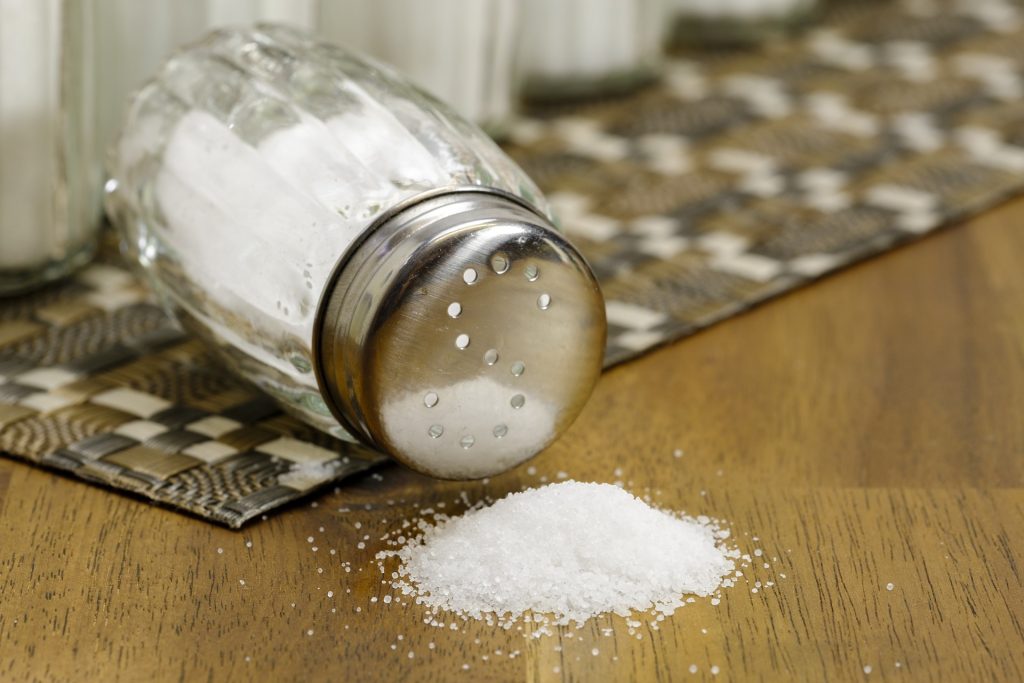
Credit: Pixabay CC0

José Miguel Soriano del Castillo, Universitat de València

Iodine deficiency is often seen as a problem of the past, but this isn’t entirely true. During the 20th century, the iodisation of salt became one of the most effective public health interventions for preventing conditions caused by a lack of this mineral, including goiter (enlargement of the thyroid gland) and preventable damage to neurological development.

The World Health Organization (WHO) still views iodised salt as a safe and effective strategy, while UNICEF notes that it is the most widely used way of improving iodine intake worldwide.

However, the success of this simple measure means iodine has all but disappeared from public debate. And today, in several countries, signs of insufficient intake are once again being detected in certain groups, particularly in pregnant or breastfeeding women and people on restrictive or poorly planned diets.

What we are witnessing is not a dramatic resurgence of the most severe symptoms everywhere, but rather a silent risk of deficiency in contexts where vigilance has waned.

Iodine’s role in the body

Iodine is an essential micronutrient for the synthesis of thyroxine (T4) and triiodothyronine (T3), hormones that regulate metabolism, growth, and many physiological processes. Adequate intake during pregnancy and early childhood is particularly important for the normal development of the central nervous system and for the early stages of brain maturation.

In addition, the body’s needs increase during pregnancy and breastfeeding due to increased maternal production of thyroid hormones, greater renal excretion of iodine, and the transfer of this mineral to the fetus and the infant.

Why deficiency is on the rise again

The issue is not that people have stopped consuming salt, but rather that the type of salt they consume has changed, as have the sources of sodium in their diet. In recent years, iodised salt has been replaced in many households by “gourmet” or “natural” salts. These include sea salt, pink Himalayan salt, flaked salt and kosher salt, which are often perceived as more sophisticated or healthier, even though they are not always iodised.

In a way, iodised salt has an image problem. Compared to the culinary prestige of its trendy rivals, it has come to be viewed as something ordinary, outdated even.

Today, lot of our salt intake also comes from processed and ultraprocessed foods, meaning the use of iodised salt cannot be guaranteed. For this reason, the World Health Organization has called for coordination between policies that aim to reduce sodium intake and those that promote iodised salt.

The makeup of our diets has also changed a lot. Iodine is naturally present in all seafood, some dairy products and in eggs, though the quantity may vary from one region or food system to another. When a person reduces or cuts out several of these sources at once while not also consuming iodised salt or fortified foods, the risk of deficiency increases.

The result is that a basic, inexpensive, and effective micronutrient has fallen out of the spotlight just as certain groups are once again at risk of not getting enough iodine.

Plant-based diets

Vegetarian and vegan diets can be healthy, but they must take iodine into consideration. A 2023 review in the British Journal of Nutrition concluded that people following a plant-based diet, especially vegans, may find it hard to get the recommended amount of iodine from these foods alone.

This does not mean a plant-based diet is inherently lacking – and the solution is straightforward. Just as vitamin B12 is is commonly recommended for those who reduce their consumption of fish or dairy – or when people replace animal products with unfortified plant-based alternatives – so too should iodine.

Pregnancy and breastfeeding

Iodine deserves special attention during pregnancy. There is strong evidence that a severe deficiency of this micronutrient can affect fetal development and thyroid function, which is why many organisations use specific thresholds to assess iodine status in pregnant women. The US National Institutes of Health states that a urinary concentration of 150–249 micrograms per liter (μg/L) in pregnant women is considered adequate for the general population.

But there is a caveat to this. Concerns about mild or moderate deficiency are legitimate, but there is no conclusive evidence as to the cognitive benefits of supplementing all pregnant women who show a mild deficiency. Reviews and trials have indicated that there is plausible biological concern, and some studies suggest an association with poorer outcomes, but controlled experiments have not unanimously shown clear improvements in infant neurodevelopment.

Nevertheless, several scientific societies have adopted a cautious stance. The American Thyroid Association, for instance, states that women who are planning to conceive, pregnant or breastfeeding should receive 150 μg of iodine daily in prenatal or multivitamin supplements, usually in the form of potassium iodide, to help meet increased requirements.

Why ‘more salt’ is not the answer

Another important clarification is needed here. Advocating for iodised salt does not mean recommending a higher salt intake. The WHO maintains its recommendation to reduce sodium intake due to its link with high blood pressure and cardiovascular disease. In terms of public health, the solution is not “more salt”, but less – though the salt we do eat should be iodised.

In fact, the WHO itself has emphasised that reducing salt intake and fortifying salt with iodine are compatible, provided the concentration of the mineral is properly adjusted and salt used by the food industry is also fortified.

This point is key because it avoids two common pitfalls: turning the issue into a nostalgic defence of table salt, or the other extreme of assuming that any reduction in sodium intake will automatically solve all health problems without any nutritional consequences. But it is possible to strike a balance between preventing cardiovascular disease and iodine deficiency.

José Miguel Soriano del Castillo, Catedrático de Nutrición y Bromatología del Departamento de Medicina Preventiva y Salud Pública, Universitat de València

This article is republished from The Conversation under a Creative Commons license. Read the original article.

Going Vegetarian may be Down to Genetics

Photo by Brad West on Unsplash

A person’s genetic makeup plays a role in determining whether they can stick to a strict vegetarian diet, a new study has found. The findings, published in PLOS ONE, open the door to further studies that could have important implications regarding dietary recommendations and the production of meat substitutes. It is the first fully peer-reviewed and indexed study to look at the association between genetics and strict vegetarianism.

“Are all humans capable of subsisting long term on a strict vegetarian diet? This is a question that has not been seriously studied,”said corresponding study author Dr. Nabeel Yaseen, professor emeritus of pathology at Northwestern University Feinberg School of Medicine.

A large proportion (about 48 to 64%) of self-identified “vegetarians” report eating fish, poultry and/or red meat, which Yaseen said suggests environmental or biological constraints override the desire to adhere to a vegetarian diet.

“It seems there are more people who would like to be vegetarian than actually are, and we think it’s because there is something hard-wired here that people may be missing.”

Several genes involved in lipid metabolism, brain function

To determine whether genetics contribute to one’s ability to adhere to a vegetarian diet, the scientists compared UK Biobank genetic data from 5 324 strict vegetarians (consuming no fish, poultry or red meat) to 329 455 controls. All study participants were white Caucasian to attain a homogeneous sample and avoid confounding by ethnicity.

The study identified three genes that are significantly associated with vegetarianism and another 31 genes that are potentially associated. Several of these genes, including two of the top three (NPC1 and RMC1), are involved in lipid (fat) metabolism and/or brain function, the study found.

“One area in which plant products differ from meat is complex lipids,” Yaseen said. “My speculation is there may be lipid component(s) present in meat that some people need. And maybe people whose genetics favor vegetarianism are able to synthesize these components endogenously. However, at this time, this is mere speculation and much more work needs to be done to understand the physiology of vegetarianism.”

Why do most people eat meat?

Religious and moral considerations have been major motivations behind adopting a vegetarian diet, and recent research has provided evidence for its health benefits. And although vegetarianism is increasing in popularity, vegetarians remain a small minority of people worldwide. For example, in the US, vegetarians comprise approximately 3 to 4% of the population. In the UK, 2.3% of adults and 1.9% of children are vegetarian.

This raises the question of why most people still prefer to eat meat products. The driving factor for food and drink preference is not just taste, but also how an individual’s body metabolises it, Yaseen said. For example, when trying alcohol or coffee for the first time, most people would not find them pleasurable, but over time, one develops a taste because of how alcohol or caffeine makes them feel.

“I think with meat, there’s something similar,” Yaseen said. “Perhaps you have a certain component – I’m speculating a lipid component – that makes you need it and crave it.”

If genetics influence whether someone chooses to be a vegetarian, what does that mean for those who don’t eat meat for religious or moral reasons?

“While religious and moral considerations certainly play a major role in the motivation to adopt a vegetarian diet, our data suggest that the ability to adhere to such a diet is constrained by genetics,” Yaseen said. “We hope that future studies will lead to a better understanding of the physiologic differences between vegetarians and non-vegetarians, thus enabling us to provide personalized dietary recommendations and to produce better meat substitutes.”

Source: Northwestern University

Increased Risk of Hip Fractures for Women on Vegetarian Diets

Source: Unsplash

Middle-aged women on vegetarian diets have a significantly higher risk of hip fractures than those on diets that include fish or meat, according to a long-term study publish in BMC Central. This risk remained even after accounting for the differences in available nutrient intake and body mass index.

Hip fractures greatly impact quality of life and and health outcomes, and carry a significant financial burden, with an average of $44 000 estimated to spent in the 12 months following a hip fracture. The growing trends of meat-free diets have prompted concern over their impact on hip fracture rates.

While increased intake of vegetable proteins has been associated with lower hip fracture risk, vegetarian diets have also been characterised by lower dietary intakes of nutrients that boost bone mineral density (BMD) and which are more abundant in animal products. Examples include total protein, calcium, vitamin D, vitamin B12, and ω-3 fatty acids, though the relationship with BMD is complex.

The researchers drew on data from the United Kingdom Women’s Cohort Study (UKWCS), and included 26 318 participants aged 35–69 who were classed into regular meat-eaters (> 5 servings/week), occasional meat-eaters (< 5 servings/week), pescatarians (eating fish but no meat) and vegetarians.

On average, vegetarians and pescetarians had a lower BMI (23.3 for both) than regular meat-eaters (25.2). At recruitment, regular meat-eaters had the highest prevalence of CVD, cancer, or diabetes (10.2%), and vegetarians the lowest (5.8%). A higher proportion of vegetarians reported never drinking alcohol. Regular meat-eaters reported the highest absolute dietary intakes of protein, vitamin D, and vitamin B12, whilst vegetarians reported the lowest. Calcium intakes were similar across the diet groups.

Before adjustments, compared with regular meat-eaters, vegetarians (hazard ratio 1.40) but not occasional meat-eaters (1.03) or pescatarians (1.04) had a greater hip fracture risk. Adjustment for confounders slightly attenuated these associations in the adjusted model, but the higher risk in vegetarians remained and was statistically significant: vegetarians 1.33; occasional meat-eaters 1.00; pescatarians 0.97.

However, even after adjustment for factors such as reported differences in nutrient intake and lower BMI, which is a known risk factor in hip fractures, the relative risk difference remained. This suggests that other, as yet unknown, factors related to the diets may be involved.