By Henry Adams, Country Manager, InterSystems South Africa
Across South Africa, nurses and doctors in public clinics make hundreds of important decisions every day, often under enormous pressure. They’re short on time, juggling long queues, and sometimes working with incomplete information. In those conditions, even the most experienced professionals can make mistakes. It’s human.
The truth is, our healthcare system is stretched thin, and people can only do so much. That’s why I see real potential for AI to step in as a kind of virtual pharmacist. Not to replace anyone, but to back them up by checking prescriptions, catching errors, and helping ensure patients get the right treatment quickly and safely.
From data to decision support
I’m often asked how AI can make a real difference in healthcare right now. One area where it can have an immediate impact is in prescriptions. AI-assisted systems help doctors and nurses make safer, faster decisions by analysing medical data in real time. They can check a patient’s history, allergies, and possible drug interactions in seconds, flagging risks before they become problems.
Of course, because we’re dealing with sensitive medical information, trust and data quality are crucial. These systems only work when they’re built on accurate, connected data that healthcare professionals can rely on.
That’s where the latest health technology partnerships come in. By linking proven data platforms with smart AI tools, we’re already seeing real improvements overseas. In Europe, for example, these systems are helping clinicians catch potential drug errors early and prescribe with greater confidence.
There’s no reason South Africa can’t benefit in the same way. With clinics under pressure and resources stretched, technology that connects clean, reliable data with practical AI support could help reduce errors, save time, and make care safer for everyone.
Addressing local challenges
Medication errors can happen anywhere, but in South Africa the stakes are often higher. Our public clinics are exceptionally busy, staff are stretched, and doctors and nurses are doing their best under tough conditions. When you’re working under that kind of pressure, even a small mistake in a prescription can have serious consequences for a patient.
This is where AI can really help. Imagine a system that double-checks every prescription in real time, flagging possible drug interactions, incorrect dosages, or missing information before the medicine ever reaches the patient. It’s like having an extra set of expert eyes that never get tired. Instead of slowing things down, it speeds them up and gives clinicians peace of mind knowing they’re making the safest call for each patient.
For that to work, though, the data behind the system must be reliable and up to date. As South Africa moves toward a unified digital health record, the ability for these systems to connect to existing patient information becomes crucial. When healthcare professionals can trust the data they see on screen, AI becomes a genuine partner in care, helping them work faster, smarter, and safer.
Building confidence in AI
For AI to really work in healthcare, it must be clear and trustworthy. Doctors and nurses need to know why the system is recommending a specific drug or warning about a potential issue. If it can’t explain itself, people won’t use it, and rightly so.
That’s why transparency matters. The best AI tools don’t make decisions behind closed doors; they show their reasoning and help clinicians understand what’s happening in the background. When that’s combined with reliable, well-managed data, you start to build real confidence in the system.
It’s that trust, knowing the technology supports rather than replaces clinical judgment, that will make AI-assisted prescriptions part of everyday care, not just an interesting experiment.
A collaborative path forward
Technology on its own won’t fix South Africa’s healthcare challenges, but it can make a big difference in helping people do their jobs better. AI-assisted prescriptions are a good example of how smart tools can take some of the pressure off clinicians, reduce paperwork, and help patients get safer, faster care.
What excites me most is how practical this can be. Picture a nurse in a rural clinic who needs to prescribe medication but doesn’t have easy access to a specialist. With AI support, she can get accurate, instant guidance and know her patient is getting the right treatment. Or think about a busy hospital pharmacy, where an AI system automatically checks for drug interactions across hundreds of files in seconds, preventing errors before they happen.
This isn’t some far-off idea. The technology already exists and is being used successfully elsewhere. The goal now is to make sure it’s used in a way that supports our healthcare professionals, not replaces them. They are, and always will be, at the centre of care. If we get this right, AI can become a real partner in healthcare.
As of this month, South African medical aid scheme contributions have increased by between 6–9% – nearly triple the Council for Medical Schemes’ recommended 3.3% guideline. While lower than last year’s double-digit surge, the underlying problem remains: premiums keep climbing while benefit coverage keeps shrinking, exposing cracks in private healthcare that are becoming impossible to ignore.
“We’re watching private healthcare price ordinary South Africans out of the market, one annual increase at a time,” says Lungile Kasapato, CEO of PPO Serve, a healthcare management company that has been implementing value-based care in South Africa for more than a decade. “Medical schemes are caught in an impossible position – unable to control what providers charge, they’re left managing what they cover. The result is diminishing benefits, rising co-payments, and mounting out-of-pocket costs for members.”
The root of the problem lies in how healthcare is paid for. Fee-for-service, the dominant reimbursement model, rewards volume over outcomes. More tests, more procedures, more bed days – each generates revenue regardless of whether they actually improve patient health. This narrow focus fragments care and drives costs up while keeping value low.
“No amount of funding can fix a payment model that drives the wrong incentives,” Kasapato explains. “Real change requires rethinking not just what we pay for, but how we pay for it.”
Value-based care offers a fundamentally different approach: putting patients at the centre, rewarding proactive care, and linking payment directly to health outcomes. PPO Serve’s The Value Care Team demonstrates what this looks like in practice. GP-led multidisciplinary teams receive monthly, risk-adjusted payments based on patient complexity, supporting holistic care and linking meaningful incentives to measurable results. Rather than maximising billable services, providers focus on optimising patients’ overall health.
For members, this means care is no longer limited by rigid benefit caps or pre-authorisation hurdles, but structured around what genuinely enhances the efficient delivery of their care. A dedicated care coordinator guides patients through decisions made collaboratively by their GP and allied health professionals, with each team member sharing accountability for better outcomes.
But scaling models like this requires medical schemes and public funders to step up. “The challenge isn’t proving value-based care works – it’s embedding it in an infrastructure built for an entirely different system,” says Kasapato. “Claims processing, scheme administration, provider networks – every layer of private healthcare is designed with fee-for-service in mind. Transitioning to outcome-based payment means rebuilding that system and accepting the upfront investment and friction that comes with structural change. The alternative is stark: a private healthcare market that collapses under its own cost pressures, pricing out members faster than schemes can adjust. South Africa is already on that trajectory.”
“If we’re serious about universal health coverage and the long-term sustainability of the private sector, we can’t keep treating symptoms while ignoring causes,” says Kasapato. “Value-based care models are already demonstrating what’s possible. The question isn’t whether transformation is worth the investment – it’s whether we can afford to delay it any longer. The more organisations that embrace a strategic purchasing role, the greater the potential for meaningful change, not just for medical schemes but for South Africa’s healthcare system and the millions who rely on it.”
President Cyril Ramaphosa addresses the nation in 2021 on developments in the country’s response to the COVID-19 pandemic. (Photo: GCIS)
By Janet Giddy
South Africa had several “family chats” in which President Cyril Ramaphosa addressed the nation during the height of the COVID-19 pandemic. He should do the same for tuberculosis, argues Dr Janet Giddy of the advocacy group TB Proof.
Recently, I was flying home and got chatting to the stylishly dressed woman in the window seat next to me. We asked each other the sort of questions that traveller’s often do. Suzie (name changed) was going to Cape Town to facilitate an artist’s workshop. I told her that I worked for an NGO that did tuberculosis (TB) research and advocacy. Suzie nodded pensively, then said: “My dad had TB”. I was just thinking how to respond, when she added: “he died from it”.
I have conversations about TB almost every day, and have previously written about high-altitude chats with fellow travellers. I get into these conversations not because TB work is my “day job” – which it is – but because I am a TB activist, and a survivor of childhood TB.
There are many remarkable things about TB that keep me engaged, enraged and activated. For example, that 29 934 people were diagnosed with TB in 2024 in the Cape Town metro, which was more than the combined number diagnosed with TB in the whole of the United States (10 347), the United Kingdom (5 480), France (4 217), and Canada (1 258). The population of these four countries combined is over 500 million, while Cape Town has a population of just under five million people. If you do the math, the risk of getting TB clearly depends massively on where you live. If these figures do not shock you, they should.
Why are so many people in South Africa unaware and seemingly unconcerned about the extraordinarily high numbers of people infected with TB in our country? Could we take TB more seriously as a country? My answer is yes.
If COVID-19, why not TB?
As expected, South Africa worked up a huge head of steam at every level of society about COVID-19. I think back on President Cyril Ramaphosa’s regular avuncular “family chats” to the nation. In the first COVID-19 “family chat”, our president told us:
“This is a decisive measure to save lives of South Africans from infection and save the lives of hundreds of thousands of our people. While this measure will have a considerable impact on people’s livelihoods, and on the life of our society and on our economy, the human cost of delaying this action would be far, far greater.”
Why has Ramaphosa not ever spoken in this intimate “family style” way to the nation about how important or urgent it is to tackle TB? A disease which continues to cause significantly more suffering and death than COVID-19 did.
In 2018, our president spoke to the international world about TB, when he addressed the President of the General Assembly of the United Nations (UN) and Director-General of the World Health Organization at the first ever UN High-Level Meeting on Tuberculosis. With great gravitas and in oratorial style, Ramaphosa said: “This … is a historic opportunity that we must embrace if we are to effectively respond to a disease that has killed more people than smallpox, malaria, the plague, influenza, HIV and AIDS, and Ebola combined. This meeting is taking place in the year of the centenary of the birth of South Africa’s founding President, Nelson Mandela. President Mandela was a survivor of tuberculosis, which he contracted while in prison, and was firmly committed to the campaign against the disease.”
Ramaphosa went on to highlight the social determinants of TB, including poverty, unemployment, poor nutrition, overcrowding and social stigma that fuel the spread of diseases. He also noted: “In South Africa, TB is the biggest cause of mortality in the general population, especially among men.”
This was an excellent message, but since 2018, our president has not had much to say about TB in public or to South Africans. It would be powerful and impactful if he were to talk about TB as a national emergency that requires a coordinated “family response” as a nation.
In considering the seriousness of TB as compared to COVID-19, let’s look at mortality.
By November 2022, the official number of deaths recorded as being due to COVID-19 in South Africa was around 102 000, approximately 34 000 per year when averaged out. Official numbers are however widely considered to be an underestimate. The Medical Research Council estimated in the region of 300 000 excess deaths relating to COVID-19 from 2020 to 2022, with around 85 000 in 2020, 200 000 in 2021, and around 15 000 a few months into 2022. Not all of these excess deaths would have been directly due to COVID-19, but it is likely that over 80% was (say 240 000 over the three years).
By comparison, TB has in recent years been claiming between 50 000 and 70 000 lives per year, based on estimates from the World Health Organization (WHO) and the Thembisa mathematical model. Thus, while there were many more COVID-19 deaths in 2021 than there were TB deaths, TB deaths almost certainly surpassed COVID-19 deaths in 2022 and subsequent years. The more one zooms out, the more the steady torrent of TB deaths over the last five, 10, 20 years, dwarfs the spike in COVID-19 deaths around 2021.
‘We are all at risk’
Back to my recent high-altitude chat in the plane: somehow, it was a uniquely South African sort of conversation. What is the chance that, while cruising at 10 000 meters over the Atlantic on a flight between the United States and France, that you’d sit next to someone whose parent recently died of TB? An extremely small chance. So, I would contend that all South Africans do need to know about TB, which is a disease that affects families profoundly.
It’s time for South Africa to have family chats about TB. There are many reasons to have these chats, starting with the fact that we are all at risk of getting it, given that we live in a country with a high TB prevalence – it was estimated that 389 people per 100 000 in South Africa fell ill with TB in 2024. We could compare this with the 2024 figures for the United Kingdom, at 9.7 per 100 000, which is higher than the United States’ rate of 3.2 per 100 000. For those who are interested, you can look up the latest numbers for different countries on the WHO’s excellent TB data portal.
The bottom line is that the higher the TB prevalence in the country you live in, the more chance that you or a family member could get TB. This is because it is caused by a bacteria which is transmitted through the air via talking, singing and coughing, so anyone can breathe it in – as was the situation (and therefore, panic) with Covid. The mode of transmission is the main similarity between TB and COVID-19 – there are lots of differences.
While some people are more at risk of getting TB, anyone can get TB, from any background. As a recent example: in 2024 Anna (name changed), a professional woman who lived in a green leafy suburb, was referred to me by her GP. Anna was shocked and outraged that she had been diagnosed with TB: “Janet, I feel as if I have been infected with a third world plague”. Anna wanted to believe that she had been infected with TB on a visit to India 18 months previously, but together we traced back her potential exposure and worked out she most likely was infected six months earlier, by a family member in a care home. Because Anna and her GP did not think about TB, it took more than a month of her coughing, losing weight and having no energy and taking several courses of antibiotics, before the diagnosis was finally made. By this time, she was very unwell, and her family members and many clients were at risk of getting TB.
Anna’s experience highlights how stigmatised TB still is as a disease. Stigma is a challenge to people from all backgrounds, and there are different reasons for it. Talking about TB more openly is one way to reduce stigma.
As with many other diseases, the earlier TB is diagnosed, the better the chance of full recovery, with no residual lung damage. There is effective medication to treat TB, and although treatment typically takes 6 months, it is not lifelong unlike chronic diseases like diabetes, hypertension and HIV. Young children with uncomplicated lung TB take medication for 4 months only.
Recent TB guidelines recommend that all close contacts of people diagnosed with TB (usually family or household members) should be tested for TB (even if they don’t have symptoms), and if they test negative, they can be offered TB preventive treatment (TPT), which will protect them against getting active TB disease. There is also more “user friendly” TPT now available, which consists of taking medication once a week for 3 months – a total of 12 doses only. Counselling people with TB needs to be family focused, given these new developments.
So, my challenge to readers is to have regular intentional conversations about TB with family and friends, with colleagues, in airplanes, and while waiting in queues.
Keely, a young women who read a previous Spotlight article I wrote, said she was amazed to discover that her colleague was very anxious because her mother was being treated for TB. If Keely had not decided to talk about TB at work, she would not have been able to offer her colleague support.
Try having a conversation about TB in the next week and see what comes of it.
*Giddy is a consultant at the TB advocacy group TB Proof.
Note: Spotlight aims to deepen public understanding of important health issues by publishing a variety of views on its opinion pages. The views expressed in this article are not necessarily shared by the Spotlight editors.
South Africa’s water quality monitoring gap explained
By Robert Erasmus, Managing Director at Sanitech
Source: Unsplash CC0
Access to safe and clean water remains a critical concern in South Africa. Recent incidents, including a highly contaminated water sample from Secunda that showed extreme levels of E. coli, have highlighted the urgent need for faster and more reliable water quality monitoring across the country. Public health depends on the safety of the water flowing through our rivers, dams and municipal systems, yet current monitoring processes often struggle to detect contamination before it reaches communities. Improving these systems will require a combination of practical testing methods, independent oversight and community involvement.
Why traditional testing cannot keep up South Africa’s public water testing framework is accurate but slow. When contamination is suspected, samples must be collected, couriered to an accredited laboratory and cultured to detect biological threats such as E. coli. While potential of Hydrogen (pH) and chlorine levels can be measured quickly on site, biological tests take one to two weeks because the organisms must be grown before results can be confirmed. This delay leaves a dangerous gap in which water quality could deteriorate without immediate detection.
The process is also costly. A single accredited test, including logistics, can cost around R5 000, which makes frequent testing inaccessible for households and many community organisations. As a result, many people rely on the assumption that water from the tap is safe. When contamination does occur, individuals may fall ill without realising the cause because there is no real time feedback on water quality.
How in-house testing can speed up detection Although accredited labs are still required for official reporting, new approaches are emerging that can help organisations identify risks earlier. Some companies are now investing in equipment that allows them to carry out basic testing in house. These tests are not accredited but they give fast, useful readings that act as early warning indicators. If an organisation detects abnormal results, it can immediately escalate the matter to an accredited lab instead of waiting for contamination to spread.
Routine pH and chlorine monitoring also plays a valuable role. These tests are inexpensive, easy to perform and can be carried out continuously within businesses or local facilities. While they cannot detect biological contamination, they help ensure that the chemical balance of the water stays within safe limits. When combined with monthly or cyclical biological testing, this creates a more proactive monitoring system.
This approach recently proved critical in Secunda, where a business conducting its own branch-level testing discovered that municipal water entering the site was contaminated with sewage. The in-house test flagged the issue quickly, prompting further investigation. Without this internal programme, the problem might have gone unnoticed for far longer.
Why collaboration improves water safety A stronger water monitoring system cannot rely on public authorities alone. Partnerships between municipalities, private companies and communities can help improve both the speed and reliability of responses. Independent testing at business level introduces greater transparency and can highlight water quality issues that may otherwise go unreported. When patterns of poor quality emerge, communities gain evidence to push for corrective action.
Transparency also drives accountability. If businesses in a region consistently report poor water quality, it becomes more difficult for the problem to remain hidden. Public pressure increases and municipalities have a clearer picture of where urgent interventions are needed. This type of shared visibility is essential for strengthening trust and promoting faster action.
Communities have an important role as well. Residents are often the first to notice discolouration, odour or unusual cloudiness in their tap water. Reporting these signs to employers or organisations with the means to test can lead to early detection. Raising issues solely through political channels may not always lead to immediate investigation, but involving local businesses can create quicker pathways to testing and response.
A path toward safer and more reliable water A safer water future for South Africa will depend on strengthening both formal and informal monitoring systems. Accredited labs remain vital for official results, yet in house testing, routine checks and community reporting can highlight risks long before formal samples are processed. When contamination is confirmed, solutions like filtration, Ultraviolet (UV) treatment or proper chlorination can be deployed quickly to restore safety.
What this shows is simple: the safety of tap water cannot be taken at face value. Consistent monitoring and transparent reporting are key to safeguarding public health. With better coordination between public bodies, private organisations and communities, South Africa can build a water monitoring system that identifies problems early and protects every household.
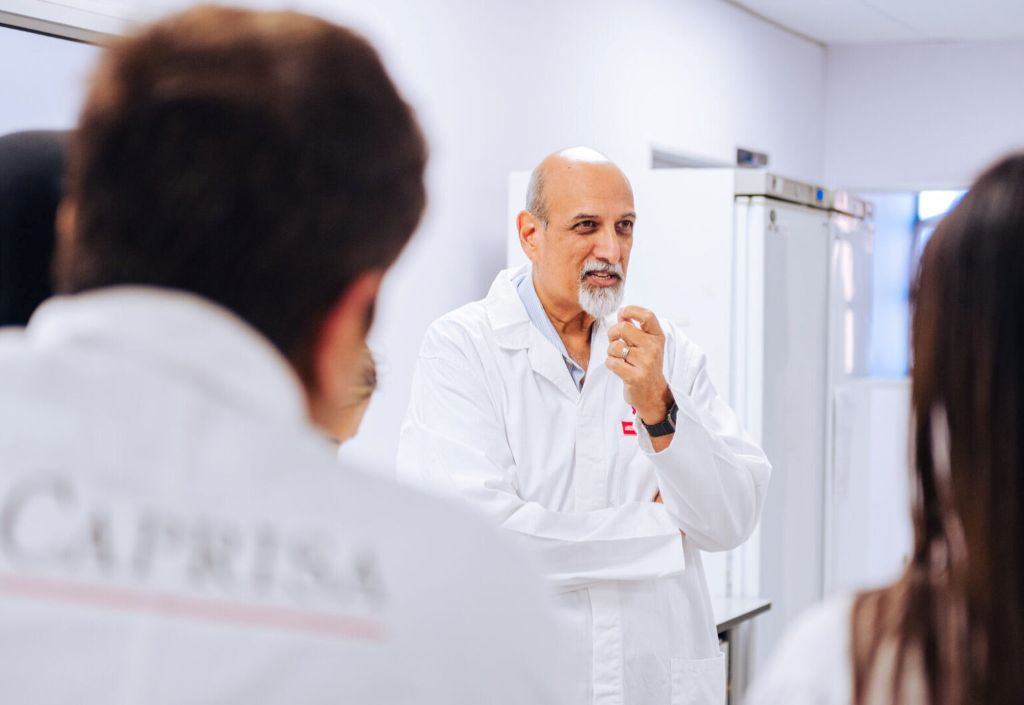
Epidemiologist Professor Salim Abdool Karim is internationally recognised for his significant contributions to research on HIV treatment and prevention. (Photo: Supplied)
By Salim Abdool Karim
As World AIDS Day 2025 swings by, CAPRISA Director Professor Salim Abdool Karim reflects on the frantic days following this year’s unprecedented cuts to health aid and research funding from the US, arguing that the deliberate disruptiveness was designed to be cruel. Nonetheless, he argues, our HIV response must now forge ahead on a path that is more affordable, sustainable and independent.
STOP WORK!
A “STOP WORK” order is immediate.
The Centre for the AIDS Programme of Research in South Africa (CAPRISA) received its first US government “STOP WORK” order from the US Agency for International Development (USAID) on 27 January 2025, imposing a 90-day suspension on a major HIV prevention research project.
A week earlier, on 20 January 2025, incoming US President Donald Trump signed an Executive Order imposing a 90-day freeze on USAID funding. Shortly thereafter, Elon Musk and his Department of Government Efficiency arrived at the USAID headquarters to systematically dismantle it and terminate most of its projects. Within 7 days, the full effect of Trump’s decision was reverberating across the world. The acute US funding cuts disrupted its foreign aid programmes that had for years worked to improve the lives of the most vulnerable communities across the globe.
The impact was instantaneous. Several US-funded projects ground to a halt. Feeding programmes for the hungry, shelter projects for those displaced by war and conflict, daycare for abandoned children and many other programmes in dozens of countries around the world were stopped. The swiftness of the implementation of the USAID dismantling caught the world off-guard.
On 3 February, Secretary of State, Marco Rubio, declared himself to be the new head of USAID, giving Musk carte blanche to destroy it. That day, I was contacted by journalists from The New York Times and from the prestigious magazine Science for information on the impact of US funding cuts on our HIV research.
On 7 February, the New York Times front page headline, “Clinical Trials Left in Lurch By Aid Freeze” informed the world of the impact of the US funding cuts on AIDS research in Africa. It described in graphic detail the impact of the funding cuts on research Dr Leila Mansoor and Dr Disebo Potloane of CAPRISA were undertaking in partnership with world-leading US scientist Dr Sharon Hillier, in developing new HIV prevention technologies for women.
Exactly a month after the initial 90-day “STOP WORK” order, we were notified that this US government funded project had been officially terminated for good. Several other large US-funded projects in South Africa, such as an HIV-vaccine development project led by Professor Glenda Gray, also received termination notices.
While the US government is perfectly entitled – as it sees fit – to stop funding for any of its projects, the deliberate disruptiveness of its implementation was sadly designed to be cruel. Musk relished his destruction of USAID with a chainsaw performance on stage at the Conservative Political Action Conference on 21 February. Ironically, the chainsaw, which he had just received as a gift from Argentine President Javier Milei, was engraved with the phrase “Viva la libertad, carajo”, which is Spanish for “Long live liberty, damn it.”
‘Disownment of science’
The Trump administration effectively dislocated the highly effective partnerships forged by the US and South African scientific communities over the past three decades. It was not simply a withdrawal of funding, but the disownment of science that rocked these research collaborations. A devaluing of science and an era of disinformation set in.
False information from the Trump administration is now rife, from debunked theories regarding autism from vaccines to the supposed dangers of paracetamol during pregnancy to the fictitious “white genocide” in South Africa or “Christian genocide” in Nigeria. This is a threat to democracy and to the decades of progress made in the AIDS pandemic.
Science, in its search for the truth, is under attack, as disinformation-based policies become official.
No time to wallow
Following the initial shock, we realised that we had zero time to wallow in this grief of sorts. CAPRISA went to work mobilising our own resources, reaching out to participants in terminated studies to offer them medical and emotional support. In March and April, our scientists routinely worked late into the night on new grant applications to research funders besides the US government. That hard work is now beginning to bear fruit as new grants begin to fill the gaps in our research funding.
These unprecedented disruptive funding cuts have been a stark reminder to never take donor funding for granted. And certainly, never to be as heavily reliant on a single donor again. While overseas development aid is intended to be altruistic, it has often come with strings attached. Those strings were a rude awakening in 2025 and has left several governments and non-governmental organisations, who were dependent on US foreign aid, in the lurch.
Scientific breakthroughs in HIV, including those by South Africa’s many highly accomplished AIDS researchers, have had widespread global impact benefitting vulnerable groups from all walks of life. Ironically, the funding cuts comes at a time when even greater resources are needed for research to successfully navigate the “last mile” on the way to the Sustainable Development Goal of ending AIDS by 2030.
As this year’s World AIDS Day theme, “Overcoming disruption, transforming the AIDS response” reminds us, this is the time to forge ahead on a path that transforms the response to one that is more affordable, sustainable and independent. As African scientists, we have already begun to take bold steps on the path to greater independence, thereby shifting our focus away from the disruption towards charting a determined path to a world without AIDS.
*Abdool Karim is the Director of CAPRISA and Pro Vice-Chancellor (Research) at the University of KwaZulu-Natal in Durban.
Note: Spotlight aims to deepen public understanding of important health issues by publishing a variety of views on its opinion pages. The views expressed in this article are not necessarily shared by the Spotlight editors.
#InsideTheBox is a column by Dr Andy Gray, a pharmaceutical sciences expert at the University of KwaZulu-Natal and Co-Director of the WHO Collaborating Centre on Pharmaceutical Policy and Evidence Based Practice. (Photo: Supplied)
By Andy Gray
There has been much confusion and misunderstandings about how cannabis and associated products are regulated in South Africa, with government’s own missteps adding to the uncertainty. In his last #InsideTheBox column for the year, Dr Andy Gray clearly sets out the current legal and regulatory situation and where we’re heading.
There is a fundamental assumption that underpins much of the legislation relating to pharmacologically active substances, especially those that have neuropsychiatric effects. Some are recognised as having legitimate medicinal uses, in humans and/or animals, and so are regulated as medicines. Others are deemed to have no legitimate medicinal uses, and so their possession and use is prohibited or even criminalised. Some of these substances are obtained from natural sources, such as plants or fungi, and some have been recognised and used since antiquity, precisely for their effects, both for pleasure and ritual.
Cannabis is a prime example, which grows on all continents other than Antarctica and has been used for a wide variety of purposes, both for its pharmacological actions and for its physical attributes, as a source of fibre and nutrition.
South Africa has a long and complex history with regard to cannabis. It was the South African government which proposed to the League of Nations Dangerous Drugs Committee in 1923 that cannabis be subjected to international regulation. That status remains in place, in terms of the Single Convention on Narcotic Drugs, 1961, to which South Africa is a signatory. Schedule I to the Convention, which is maintained by the International Narcotics Control Board, includes “the flowering or fruiting tops of the cannabis plant”, as well as “the separated resin, crude or purified, obtained from the cannabis plant”. Parties to the Convention are required to “adopt such measures as may be necessary to prevent the misuse of, and illicit traffic in, the leaves of the cannabis plant”. Cultivation of cannabis is to be regulated in the same manner as that applied to opium poppies, but with an important caveat: “This Convention shall not apply to the cultivation of the cannabis plant exclusively for industrial purposes (fibre and seed) or horticultural purposes.”
As a result, cannabis was for many years listed as a Schedule 7 substance in terms of South Africa’s Medicines and Related Substances Act, 1965, and also included in the “Undesirable Dependence-Producing Substances” in terms of the Drugs and Drug Trafficking Act, 1992. While exceptional access was allowed for research, analysis or use by a particular patient, substances in those categories could not ordinarily be possessed or sold.
That entire legal construct was overturned by a 2018 Constitutional Court judgment which declared the relevant sections of both laws unconstitutional “to the extent that they criminalise the use or possession in private or cultivation in a private place of cannabis by an adult for his or her own personal consumption in private”. The court allowed legislators a period of 24 months to remedy the situation.
THC and CBD
Although the cannabis plant contains over 100 identifiable chemical components, two are of particular importance. Tetrahydrocannabinol (THC) is the psychoactive component, whereas cannabidiol (CBD) is not psychoactive. At higher doses, cannabidiol has been shown to be effective in the management of some paediatric epilepsy syndromes.
The first change made to comply with the Constitutional Court judgment involved moving THC to Schedule 6 (alongside morphine, for example) and CBD to Schedule 4 (as a prescription medicine). The Schedule 6 inscription also included an exception to allow adult use, echoing the wording in the court judgment. The control measures applicable to a Schedule 6 substance (such as the need for a prescription) do not apply when “raw cannabis plant material is cultivated, possessed and consumed by an adult, in private for personal consumption”. The Schedule 4 inscription also allowed for low-dose CBD products (containing a maximum of 20mg per day and 600mg per pack) to be regulated as a complementary medicine, provided the labelling made only a low-risk claim (a general health enhancement or health maintenance claim or a claim of relief from minor symptoms).
The South African Health Products Regulatory Authority (SAHPRA) has issued just over a hundred licences for the cultivation and export of cannabis for medicinal purposes. These licences are for the preparation of the raw material from which medicines could be made, but no THC-containing products have yet been registered in South Africa. SAHPRA does not report on the number of section 21 permits issued to individual patients seeking access to THC-containing medicines, nor on the sources of unregistered medicines approved in that manner (section 21 permits allows for access to medicines not registered by SAHPRA).
SAHPRA’s cannabis cultivation permits do not allow the sale of cannabis products directly to the public. SAHPRA has not issued licences to any retail outlets for cannabis or cannabis-containing products. Retail outlets claiming to be licensed “dispensaries” are therefore operating illegally.
In 2024, the Schedules were again updated, with this exception inserted: “in raw cannabis plant material cultivated and possessed in accordance with a permit issued in terms of the Plant Improvement Act (Act 11 of 2018) and processed products manufactured from such material, intended for agricultural or industrial purposes, including the manufacture of consumer items or products which have no pharmacological action or medicinal purpose”.
The Plant Improvement Act, 2018, is intended to regulate the propagation and sale of particular plants, setting quality standards for economically important varieties, such as wheat. In November 2025, the Minister of Agriculture, Land Reform and Rural Development issued regulations in terms of this Act, setting a THC limit of 2% for the leaves and flowering heads of cannabis plants considered to be “hemp” (low-THC cannabis). That action provides the clarity required to interpret the Schedules to the Medicines Act and creates a process for the issuing of “hemp” permits for the cultivation and sale of low-THC cannabis for industrial applications.
‘A work in progress’
Bringing the Drugs and Drug Trafficking Act into alignment with the Constitutional Court judgment has been far more complex than the Medicines Act and is still a work in progress. The section of the Drugs Act which enabled the Minister of Justice to make schedules listing substances in different categories was found to be unconstitutional in 2020. Future changes to the schedules will require an Act of Parliament. Distinct from the Schedules to the Medicines Act, these lists designate which substances, for example are considered “Undesirable Dependence-Producing Substances”, the possession of which may be a criminal offence.
Instead, the Minister of Justice and Correctional Services tabled a separate Bill in 2019, which was finally passed as the Cannabis for Private Purposes Act, 2024. While that Act has been assented to by the President, it has not yet been promulgated and no regulations have been issued. The legislation is therefore not yet in operation. Regulations are needed, for example, to specify the amounts of cannabis that can be cultivated, possessed or transported. Most importantly, though enabling the possession or cultivation of cannabis in a private place, and therefore personal consumption by an adult, the Act does not enable the commercialisation of cannabis for “recreational” or “adult use”, as is the case with alcoholic beverages or tobacco products.
South Africa’s Cannabis Master Plan, which envisages three separate value chains, covering medicinal cannabis, hemp, and adult use, is now being driven by the Department of Trade, Industry and Competition (DTIC). The DTIC plans to submit a Hemp and Cannabis Commercialisation Policy to Cabinet by April 2026 and to table an Overarching Cannabis Bill by mid-2027.
The 2018 Constitutional Court judgment overturned almost a century of established practice. While the evidence for the medicinal value of cannabis and specific cannabinoids is still scanty, the assumption that such products have no medicinal value at all is no longer tenable. As with all pharmaceutical products, this is a highly regulated market with high barriers to entry.
An industrial market for low-THC cannabis is already well established and the necessary steps to enable its growth are now in place. However, the ill-informed ban on the inclusion of any cannabis components in foodstuffs, which was issued and then rapidly repealed in 2025, is indicative of the lack of coherence in government policy. The challenge remains the commercialisation of an adult use market, and whether that will enable the involvement of the small-scale rural growers who have traditionally met demand for the product.
Cannabis policy therefore remains in flux, and the entire legislative process has been marked by missteps, missed steps, reverses, ambivalence and confusion. Some pieces of the picture are in place, but others remain uncertain or incomplete.
*Dr Gray is a Senior Lecturer at the University of KwaZulu-Natal and Co-Director of the WHO Collaborating Centre on Pharmaceutical Policy and Evidence Based Practice. This is part of a series of #InsideTheBox columns he is writing for Spotlight.
Disclosure: Gray serves on three technical advisory committees at the South African Health Products Regulatory Authority and previously chaired the Cannabis Working Group.
Note: Spotlight aims to deepen public understanding of important health issues by publishing a variety of views on its opinion pages. The views expressed in this article are not necessarily shared by the Spotlight editors.
By Lushan Sundram, Senior Sales & Business Development Manager at Essential Employee Benefits
Despite making significant investments in employee benefits, many organisations continue to struggle with low employee engagement, growing healthcare expenses, and diminishing productivity. A lack of insight, not a lack of investment, seems to be the problem.
Even the most extensive medical coverage may fall short if the true health needs of the workforce are not thoroughly understood. Employers must first understand the individuals they are attempting to assist in order to make health benefits genuinely meaningful.
The business case for healthier workforces
It is now indisputable that employee well-being and company performance are related. Investing in the physical, mental, and social well-being of employees yields quantifiable benefits, according to numerous studies. According to research, a single unit improvement in staff health can result in an 80% boost in productivity, and well-run wellness programmes can yield a Return on Investment (ROI) of up to 6:1. Healthy workers are more engaged, more productive, and less likely to quit, demonstrating that promoting health, benefits businesses as well as individuals.
Moving from guesswork to insight
Understanding that health encompasses more than just physical well-being is the first step in creating pertinent and efficient medical coverage. Four important aspects are taken into account in a holistic approach: social, financial, mental and emotional, and physical welfare. The difficulty, though, is in understanding worker health without violating personal privacy. Data-driven platforms that provide aggregated insights while maintaining privacy hold the key to the solution. Digital nurse checks, for example, can evaluate vital signs including Body Mass Index (BMI) , blood pressure, body composition and more. Analysis of this anonymised data can then reveal patterns across age groups, genders, and departments. Employers can use these data to identify areas where their employees most need help, such as managing stress, preventing chronic diseases, or improving nutrition, all while maintaining complete compliance with privacy laws. Essentially, it gives leaders the insight they need to allocate resources strategically.
From one-size-fits-all to tailored support
Once health insights are gathered, employers can move beyond generic benefit structures. Tailored medical cover ensures that plans address the most pressing needs of specific employee groups. For example, one division might prioritise diabetes prevention, while another invests in weight management or mental health programmes.
Barriers to access are also addressed by meaningful medical cover. Employees may be deterred from obtaining private medical care by expensive premiums or difficult claims procedures. Instead, offering basic yet comprehensive cover promotes prompt treatment and keeps small problems from becoming more serious and expensive. Rather than concentrating only on reactive treatment, integrating preventative care contributes to the development of a sustainable culture of wellbeing.
Building loyalty through wellbeing
A targeted, data-driven benefits strategy does more than optimise healthcare spending, it strengthens trust and retention. Employee loyalty and engagement increase when they see that their employer truly cares about their well-being. Businesses with wellness programmes that are very successful report voluntary attrition rates of only 9%, whereas those with programmes that are less successful report rates of 15%.
This exemplifies the principles of Social Exchange Theory: when employees perceive that the organisation values them and supports their health, they reciprocate with loyalty and effort. In this way, wellbeing becomes a performance strategy, not merely a perk.
Partnering for precision and impact
To move from assumption to precision, many organisations are partnering with experts who use innovative, privacy-preserving tools to provide data-backed insights into workforce health. These insights enable executives to create inclusive and appropriate benefits that yield quantifiable increases in retention and productivity.
The capacity to act on data-driven health insights is a strategic imperative in a setting where healthcare expenditures and talent competitiveness are both on the rise. The healthiest, most resilient, and most dedicated workforces of tomorrow will be created by employers who make the investment to understand their employees today.
By Vishal Barapatre, Group Chief Technology Officer at In2IT Technologies
Artificial Intelligence (AI) is revolutionising healthcare as profoundly as the discovery of antibiotics or the invention of the stethoscope. From analysing X-rays in seconds to predicting disease outbreaks and tailoring treatment plans to individual patients, AI has opened new possibilities for precision medicine and increased efficiency. In emergency rooms, AI-driven diagnostic tools are already helping doctors detect heart attacks or strokes faster than human eyes alone.
However, as AI systems become increasingly embedded in the patient journey, from diagnosis to aftercare, they raise critical ethical questions. Who is accountable when an algorithm gets it wrong? How can we ensure that patient data remains confidential in the era of cloud computing? And how can healthcare institutions, often stretched thin on resources, balance innovation with responsibility?
When algorithms diagnose: the promise and the problem
AI’s strength lies in its ability to process massive amounts of data, such as medical histories, imaging scans, and lab results, and detect patterns that human clinicians might miss. This can dramatically improve diagnostic accuracy and treatment outcomes. For instance, AI models trained on thousands of mammogram images can help identify subtle indicators of breast cancer earlier than traditional methods.
However, the same data that powers AI can also introduce bias. If the datasets used to train an algorithm are skewed, say, over-representing one demographic group, the results may unfairly disadvantage others. A diagnostic model trained primarily on data from urban hospitals, for example, might misinterpret symptoms in patients from rural areas or underrepresented ethnic groups. Bias in healthcare AI isn’t just a technical flaw; it’s an ethical hazard with real-world consequences for patient trust and equity.
The privacy paradox
The integration of AI in healthcare requires access to vast quantities of sensitive data. This creates a privacy paradox: the more data AI consumes, the smarter it becomes, but the greater the risk to patient confidentiality. The digitisation of health records, combined with AI’s hunger for data, exposes systems to new vulnerabilities. A single breach can compromise thousands of medical histories, potentially leading to identity theft or misuse of personal health information. The paradox underscores the need for robust data protection measures in AI-driven healthcare systems.
Striking a balance between data utility and privacy protection has become one of the healthcare industry’s most pressing ethical dilemmas. Encryption, anonymisation, and strict access controls are essential, but technology alone isn’t enough. Patients need transparency: clear explanations of how their data is used, who has access to it, and what safeguards are in place. Ethical AI requires not only compliance with regulations but also the cultivation of trust through open communication.
Accountability in the age of automation
When an AI system makes a medical recommendation, who is ultimately responsible for the outcome – the algorithm’s developer, the healthcare provider, or the institution that deployed it? The opacity of AI decision-making, often referred to as the “black box” problem, complicates accountability and transparency. Clinicians may rely on algorithmic outputs without fully understanding how conclusions were reached. This can blur the line between human and machine judgment.
Accountability must therefore be clearly defined. Human oversight should remain central to any AI-powered decision, ensuring that technology supports rather than replaces clinical expertise. Ethical frameworks that mandate explainability, where AI systems must provide understandable reasoning for their outputs, are key to maintaining trust. Moreover, continuous auditing of AI models, which involves regularly reviewing and testing the system performance, can help detect and correct biases or errors before they lead to harm, thereby ensuring the ongoing ethical use of AI in healthcare.
Behind the code: who keeps AI ethical
While hospitals and clinics focus on patient care, many lack the internal capacity to manage the complex ethical, security, and technical demands of AI adoption. This is where third-party IT providers play a pivotal role. These partners act as the backbone of responsible innovation, ensuring that AI systems are implemented securely and ethically.
By embedding ethical principles into system design, such as fairness, transparency, and accountability, IT providers help healthcare institutions mitigate risks before they become crises. They also play a crucial role in securing sensitive data through advanced encryption protocols, cybersecurity monitoring, and compliance management. In many ways, they serve as both architects and custodians of ethical AI, ensuring that the pursuit of innovation does not compromise patient welfare.
Building a culture of ethical innovation
Ultimately, the ethics of AI in healthcare extend beyond technology; they are about culture and leadership. Hospitals and healthcare networks must foster environments where ethical reflection is as integral as technical innovation. This involves establishing multidisciplinary ethics committees, conducting bias audits, and training clinicians to critically evaluate and question AI outputs rather than accepting them without examination.
The future of AI in healthcare depends not on how advanced our algorithms become, but on how wisely we use them. Ethical frameworks, transparent governance, and responsible partnerships with IT providers can transform AI from a potential risk into a powerful ally. As the healthcare sector continues to evolve, the institutions that will thrive are those that remember that technology should serve humanity, not the other way around.
By Henry Adams, Country Manager, InterSystems South Africa
When people think about artificial intelligence (AI) in healthcare, they often picture complex machines in high-tech hospitals. But some of the most exciting uses of AI are happening in primary care, right at the first point of contact between doctor and patient.
Globally, AI is helping general practitioners, nurses, and clinicians make faster, more accurate decisions by giving them access to clean, connected data. It helps detect early signs of disease, spot patterns across patient populations, and ensure the right people get the right care sooner.
South Africa is not there yet, but that is exactly why we should be paying attention.
Learning from what is working elsewhere
In countries where healthcare data is already digitised and connected, AI-assisted tools are starting to prove their worth. In parts of Europe, AI systems are helping GPs analyse symptoms, lab results and patient histories to identify possible conditions much earlier. In the US, data platforms are used to surface insights from millions of patient records, helping clinicians identify patterns that might otherwise go unnoticed.
At InterSystems, we have seen firsthand how this combination of reliable data and intelligent technology is changing the way care is delivered. In the UK, our data platform helps care providers securely connect across places of care to patient information across multiple systems, making it easier for AI tools to interpret symptoms in context. In France, AI-assisted prescriptions through partners like Posos are helping doctors reduce errors and improve treatment safety.
These examples show what is possible when data, people and technology come together in the right way.
Why data comes first
AI is only as powerful as the data it works with. If a clinician’s system lacks complete or up-to-date patient information, the AI cannot provide reliable support. That is why data quality and interoperability are so important; they form the foundation for everything else.
Many countries that are seeing success with AI in primary care started by getting their data in order, building connected health records, standardising information, and ensuring privacy and compliance at every step. Once those pieces were in place, they could start introducing AI tools that help doctors and nurses make better decisions without adding extra admin or complexity.
Again, in South Africa, we are not quite there yet, but we are heading in the right direction. There are ongoing efforts to digitise health records and bring together fragmented systems. As that process continues, it will open the door for more advanced AI-driven support tools, from diagnosis assistance to population health management.
What this could mean for South Africa
Imagine a community clinic in Limpopo or the Eastern Cape, where a doctor sees dozens of patients a day. With AI support, they could instantly access each patient’s medical history, flag high-risk symptoms, or receive early alerts about potential complications like diabetes or hypertension.
AI will not replace the doctor’s or their judgment. It simply gives them more context and better information. It is like having a quiet assistant in the background, helping spot what is easy to miss when you are under pressure.
This kind of technology could also help identify broader health trends, guiding public health decisions and making sure resources are sent where they are needed most. It is not about high-end tech for big hospitals, it is about making everyday healthcare smarter, safer and more efficient for everyone.
Building the foundations
Before we can get there, we need to focus on the basics: connected systems, reliable data, and trust. AI tools cannot function properly in silos. They need access to consistent, secure information, the kind that interoperable platforms like InterSystems IRIS for Health are designed to manage.
Once we have that in place, the rest becomes achievable. Doctors can use AI to compare patient data against proven medical knowledge bases. Clinics can share insights securely across regions. And the healthcare system becomes more proactive instead of reactive.
It is easy to look at what is happening overseas and feel that South Africa is far behind. But I see it differently. Every success story abroad gives us a roadmap, lessons we can adapt to our own realities. We do not have to reinvent the wheel; we just have to make sure it is fit for our local terrain.
By Thom Renwick, General Manager, Roche Pharma South Africa
Early screening and treatment. Much higher survival rates. And savings in the billions of dollars. From AI-powered medicine development to teleconsultations, technology can boost Africans’ health and livelihoods while growing economic and social impact across the continent.
Access to quality healthcare is fundamental to leading a fruitful, economically active life. Yet, breast cancer is still the number one cancer killer of women in Africa – in most cases, while they’re still in their prime. Tragically, most are diagnosed too late for curative treatment.
Across the continent, non-communicable diseases – such as treatable breast cancer – cause hundreds of thousands of preventable deaths every year[1], devastating families and hampering economic growth.
Global projections indicate a worrying 38% rise in incidence of breast cancer and a 68% increase in deaths by 2050 without urgent intervention, with the least developed countries being the most affected, according to a new white paper[2] by independent German economic think tank the WifOR Institute.
The Value of Investing in Innovative Medicines report outlines the economic burden from not treating the aggressive HER2-positive type of breast cancer over five years in seven African countries – South Africa, Kenya, Nigeria, Algeria, Tunisia, Côte d’Ivoire and Morocco. The findings are staggering, indicating a $10.3-billion loss in productivity from 2017 to 2023.[3]
The data also shows that, in Africa, 89% of the economic burden of HER2-positive breast cancer – representing 15% to 20% of all breast cancer cases around the world – falls on women of working age.[4]
It goes beyond economics. Mothers hold households together and when they die that has huge ramifications for entire families and communities.
In sub-Saharan Africa, every 100 deaths among women under 50 leave around 210 children without their mothers[5], resulting in unstable, vulnerable households and long-term developmental challenges.
These figures are a wake-up call, but in challenge lies scope for innovation. I believe we can – and must – turn the burden into opportunity.
Closing the gap through health-tech partnerships
Every woman diagnosed and treated early is not only more likely to survive but also able to remain active in her family and community[6], contributing to shared prosperity.
Through healthcare and technology partnerships, we can leapfrog traditional healthcare models and turn the tide towards survival.
Excitingly, this process has already started. Governments are increasingly setting strategies and allocating funding for digital health. Start-ups and companies are driving the uptake of digital health tools that could revolutionise care delivery.
Artificial intelligence stands out as the breakthrough technology. Pharmaceutical and biotech companies such as Roche are already using AI throughout their value chains, both in the early stage of drug development and also to correctly interpret the enormous amounts of data generated to deliver effective health solutions.
In most sub-Saharan countries, more than 20% of the population lives more than two hours from essential health services.[7] Tech’s role in Africa’s future is about much more than connectivity or commerce. It’s about lives and well-being – AI, apps, telemedicine and other digital solutions can close the gap to bring care closer to people.
But without individuals and organisations working together, innovation can’t come to life.
And since the journey for a patient experiencing a health crisis such as breast cancer involves many stakeholders, we must urgently identify opportunities for partners to come together and spur real action.
This week, Roche sponsored the 28th annual Africa Tech Festival’s first-ever health track. Policymakers, innovators, professionals and experts met to thrash out actionable solutions to the continent’s biggest health challenges.
This was part of an ambitious broader strategy to transform healthcare in Africa – investment in early intervention strategies can generate returns that far outstrip their cost.
Research by McKinsey & Company shows that the African digital health space is already seeing unprecedented growth, with $123-million in investment secured by 55 start-ups in 2021.[8]
The consultancy’s analysis showed that digital health tools – such as virtual platforms for consultations; electronic health records; mobile apps to help patients self-manage their diseases; and patient e-booking platforms – could help South Africa, Kenya and Nigeria capture efficiencies of up to 15% in total healthcare expenditure by 2030.[9]
Widespread adoption could free up an astounding $1.9-billion to $11-billion in South Africa alone.[10]
Speaking with one voice for a better future
Innovation has been the backbone of progress across any major public health disease – whether it’s HIV, cancer or ophthalmology. It takes a combination of passionate people and expert innovation to make a difference.
One existing solution and real-life example of African innovation and partnership is EMPOWER, a groundbreaking digital health platform developed to improve coordinated breast and cervical cancer care in Kenya.[11]
The initiative has grown from a single clinic in 2019 to a 76-site national platform and is integrated into Kenya’s National Cancer Registry.[12]
Empower ensures that the entire patient journey, from screening to treatment and follow-up, is digitally powered.
The current average five-year survival rate for breast cancer across Africa is roughly five out of 10 patients that are diagnosed (48%).[13] My vision is that this will increase to 80% within the next 5 years.
Realising this audacious goal will take commitment from stakeholders to drive action for the tens of thousands of African women who desperately need it.
There is no reason why someone in a Western society should have a better health outcome than here in Africa. The health of our people is the wealth of our nations. We must speak with one voice and act now.
––––––––––
Thom Renwick is general manager of Roche South Africa and the sub-region. He began his journey with the company in 2012 on its United Kingdom graduate programme, following his studies at King’s College London, Cranfield School of Management and the University of Oxford.
During his career at Roche, he has worked in global product strategy in Basel, Switzerland, as head of ophthalmology in the UK and as chief of staff for Pharma International. He won the PharmaTimes New Marketer of the Year Award in 2015 and was featured in the publication’s Smart People series in 2021.
[2] WifOR Institute, ‘The Value of Investing in Innovative Medicines: Socioeconomic Burden of HER2+ Breast Cancer and Annual Social Impact of Roche’s Treatments for the Disease in Africa’. Accessed: Nov. 7, 2025 [Online]. Available: https://africa.roche.com/stories/what-s-it-worth-the-value-of-innovation
[3] WifOR Institute, ‘The Value of Investing in Innovative Medicines: Socioeconomic Burden of HER2+ Breast Cancer and Annual Social Impact of Roche’s Treatments for the Disease in Africa’. Accessed: Nov. 7, 2025 [Online]. Available: https://africa.roche.com/stories/what-s-it-worth-the-value-of-innovation
[4] WifOR Institute, ‘The Value of Investing in Innovative Medicines: Socioeconomic Burden of HER2+ Breast Cancer and Annual Social Impact of Roche’s Treatments for the Disease in Africa’. Accessed: Nov. 7, 2025 [Online]. Available: https://africa.roche.com/stories/what-s-it-worth-the-value-of-innovation
[5] WifOR Institute, ‘The Value of Investing in Innovative Medicines: Socioeconomic Burden of HER2+ Breast Cancer and Annual Social Impact of Roche’s Treatments for the Disease in Africa’. Accessed: Nov. 7, 2025 [Online]. Available: https://africa.roche.com/stories/what-s-it-worth-the-value-of-innovation
[6] WifOR Institute, ‘The Value of Investing in Innovative Medicines: Socioeconomic Burden of HER2+ Breast Cancer and Annual Social Impact of Roche’s Treatments for the Disease in Africa’. Accessed: Nov. 7, 2025 [Online]. Available: https://africa.roche.com/stories/what-s-it-worth-the-value-of-innovation
[7] Mckinsey, ‘How digital tools could boost efficiency in African health systems.’ Accessed: Nov. 7, 2025 [Online]. Available: https://www.mckinsey.com/industries/healthcare/our-insights/how-digital-tools-could-boost-efficiency-in-african-health-systems
[8] Mckinsey, ‘How digital tools could boost efficiency in African health systems.’ Accessed: Nov. 7, 2025 [Online]. Available: https://www.mckinsey.com/industries/healthcare/our-insights/how-digital-tools-could-boost-efficiency-in-african-health-systems
[9] Mckinsey, ‘How digital tools could boost efficiency in African health systems’. Accessed: Nov. 7, 2025 [Online]. Available: https://www.mckinsey.com/industries/healthcare/our-insights/how-digital-tools-could-boost-efficiency-in-african-health-systems
[10] Mckinsey, ‘How digital tools could boost efficiency in African health systems’. Accessed: Nov. 7, 2025 [Online]. Available: https://www.mckinsey.com/industries/healthcare/our-insights/how-digital-tools-could-boost-efficiency-in-african-health-systems
[11] Roche Africa, ‘From vision to national platform: EMPOWER scales through Kenya’s National Cancer Institute’. Accessed: Nov. 7, 2025 [Online]. Available: https://africa.roche.com/stories/empower-scales-through-kenya-national-cancer-institute
[12] Roche Africa, ‘From vision to national platform: EMPOWER scales through Kenya’s National Cancer Institute’. Accessed: Nov. 7, 2025 [Online]. Available: https://africa.roche.com/stories/empower-scales-through-kenya-national-cancer-institute
[13] A. Padu-Pebrah, et al., ‘Five-Year Survival Outcomes for Breast Cancer Patients Across Continental Africa: A Contemporary Review of Literature with Meta Analysis’, eLife. Accessed: Nov. 7, 2025 [Online]. Available: https://elifesciences.org/reviewed-preprints/105488#mainMenu