Category: COVID

South African Biotech Company Replicates Moderna Vaccine

Photo by Mat Napo on Unsplash

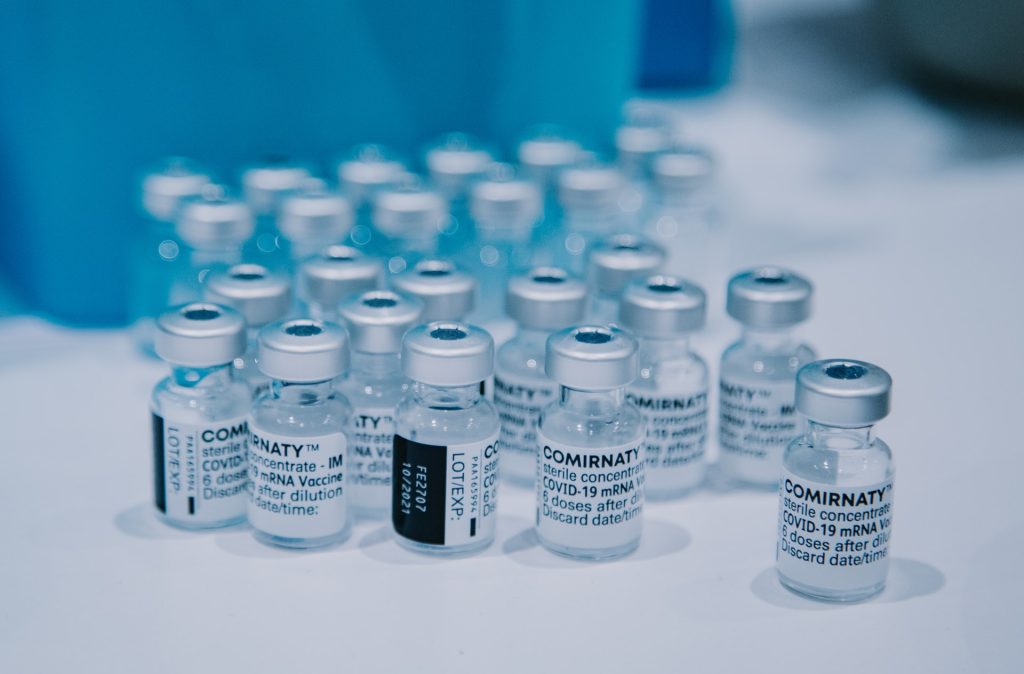
Afrigen Biologics and Vaccines, a South African biotechnology company, has nearly created a copy of Moderna’s COVID mRNA vaccine, without Moderna’s involvement, Nature reports.

The Cape Town-based company has so far made only microlitres of the vaccine, based on Moderna’s publicly available development data. This nevertheless is a success for a major initiative launched by the World Health Organization (WHO): a technology transfer hub meant to build vaccine manufacturing capacity in low- and middle-income countries.

During the COVID pandemic, the developers of mRNA vaccines, Moderna and Pfizer/BioNTech have sent more than 70% of their doses to wealthy nations. Meanwhile, millions of vaccine orders for southern hemisphere countries have been delayed. “Moderna and Pfizer-BioNTech’s vaccines are mainly still going to just the richest countries,” says Martin Friede, the WHO official coordinating the hub. “Our objective is to empower other countries to make their own.”

Much work needs to be done before Afrigen’s mRNA vaccine mimic can be distributed. But the WHO hopes that the process of creating it will lay the foundation for a more globally distributed mRNA vaccine industry in the future.

Gerhardt Boukes, chief scientist at Afrigen is proud to have helped complete this first step of the plan. Afrigen and its collaborators completed the process, beginning with mRNA encoding a modified portion of the SARS-CoV-2 coronavirus, and finishing by encapsulating it in a lipid nanoparticle that delivers the vaccine to cells. “We didn’t have help from the major COVID vaccine producers,” he says, “so we did it ourselves to show the world that it can be done, and be done here, on the African continent.”

When the mRNA hub was launched by the WHO in June 2021, Moderna, Pfizer and BioNTech did not respond to requests to help make their vaccines, so the WHO proceeded without their help. The Moderna vaccine was chosen to copy because there is more freely available data on it, and it has not vowed to enforce its patents.

The project started in late September, with a Wits University team spearheading the first step: making a DNA molecule that would serve as a template to synthesise the mRNA needed in the vaccine. While Moderna controversially patented this sequence, Stanford University researchers had deposited it into the online database Virological.org in March last year.

Patrick Arbuthnot, director of gene therapy research at Wits says, “We were not intimidated, because mRNA synthesis is a fairly generic procedure.” Despite delays in the shipment of raw materials, the team completed this process in ten weeks and sent vials of mRNA to Afrigen in early December.

Around this time, scientists worldwide emailed offers of assistance. Some were researchers at the US National Institutes of Health who had conducted foundational work on mRNA vaccines. Petro Terblanche, Afrigen’s managing director, said that it was “extraordinary”. “I think a lot of scientists were disillusioned with what had happened with vaccine distribution, and they wanted to help get the world out of this dilemma.”

On 5 January, Afrigen’s researchers accomplished another tricky part of the process: They encapsulated the mRNA in a fatty nanoparticle made of a mixture of lipids. Boukes says they haven’t yet used Moderna’s specific lipid mixture, but rather another one that was immediately available from the manufacturer of the machine that the laboratory uses to create lipid nanoparticles. They plan to use Moderna’s lipid mixture in the coming days, as soon as one last analytical instrument arrives. After that, the team will analyse the formulation to ensure that it is truly a near copy of Moderna’s vaccine.

Once a reliable copy is made, the next step is increasing production. Jason McLellan, a structural biologist at the University of Texas at Austin whose work was foundational to the development of several COVID vaccines, says he is not surprised that SA scientists seem to have copied Moderna’s vaccine, but he adds that scaling up production of that original shot required a lot of additional innovation by manufacturers.

For the next phase of the project, several southern hemisphere companies will learn from Afrigen and attempt to create batches of vaccines themselves, in preparation for animal testing. By end November, the WHO expects a Moderna clone to be ready for phase I trials in humans.

What happens beyond that is unclear. Moderna might choose to license its patent (lab research is usually not subject to patent rules), or alternatives may become available, such as next-generation mRNA vaccines that do not require ultracold storage.

Source: Nature

SA Doctors Report SARS-CoV-2 Mutations in a Patient with HIV

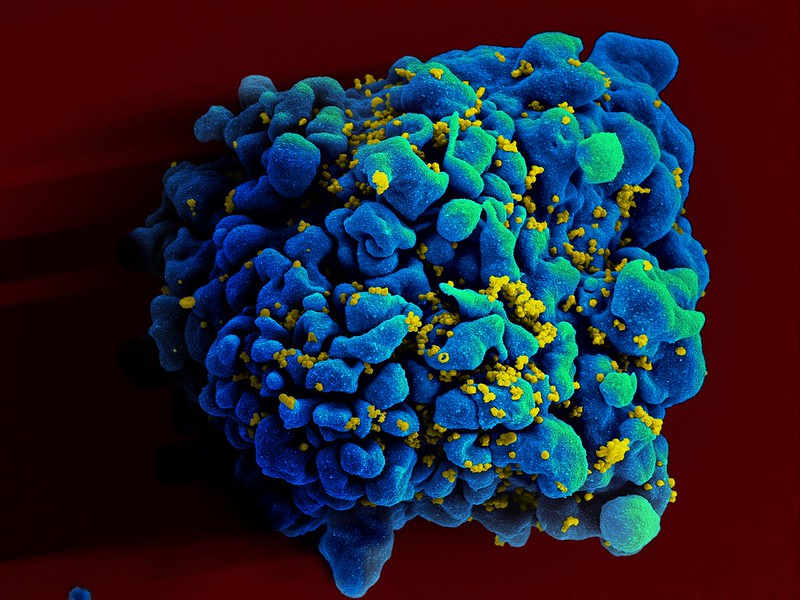
HIV Infecting a T9 Cell. Credit: NIH

In an article awaiting peer review, doctors in South Africa report on the case of a 22-year-old female with uncontrolled advanced HIV infection and a SARS-CoV-2 infection that lasted 9 months, during which time the virus accumulated more than 20 additional mutations. Antiretroviral therapy suppressed HIV and cleared the coronavirus within 6–9 weeks. 

One hypothesis for novel variants is that they arise in severely immunocompromised individuals. Being unable to clear the virus because of a weakened immune response results in a persistent infection, letting mutations accumulate – some of which may allow immune evasion. In one case, SARS-CoV-2 in a female leukaemia patient developed seven mutations over three months of infection.

The authors describe a case of persistent SARS-CoV-2 infection, lasting for at least 9 months, in a severely immunocompromised woman with HIV that had challenges with adherence to antiretroviral therapy.

In mid-September 2021, a female in her 20s was admitted to a tertiary hospital in Cape Town with a one-week history of sore throat, malaise, poor appetite and dysphagia. The patient was infected with HIV at birth. In January 2021, her antiretroviral therapy (ART) regimen had been changed to tenofovir, emtricitabine and efavirenz, but she had difficulty adhering. In August 2021 she moved from rural KwaZulu-Natal to Cape Town. She stated that she had not received a COVID vaccination.

“On physical examination, the patient was wasted but had no palpable lymph nodes,” the authors report. “She was awake and lucid, with no focal neurological deficits. She was not in respiratory distress with an oxygen saturation of 98% on room air. The cardiovascular and abdominal examinations, renal function, white cell count and liver enzymes were without abnormalities. Her CD4 count was 9 cells/μL and her plasma HIV viral load 4.60 log10 viral RNA copies/mL, indicating advanced HIV infection, poorly controlled by ART.

“During a prolonged hospital stay the patient experienced multiple complications requiring treatment. Following adherence counselling, antiretroviral therapy was reinitiated with a new regimen of tenofovir/efavirenz/dolutegravir a week after admission.” 

The patient tested positive for COVID on 25 September 2021, with genomic sequencing indicating the Beta variant. However, in October, the patient later revealed that she had tested positive for COVID in January 2021. On 25 November 2021, the patient’s HIV viral load was <50 copies/ml and a PCR test was negative for COVID. While there was no CD4 count performed, suppressed HIV replication and clearance of the SARS-CoV-2 infection suggest her immune system had recovered to some degree.

Phylogenetic analysis showed that the samples indicated an ongoing infection instead of re-infections. During the 9 months of infection, the virus acquired at least 10 mutations in the spike glycoprotein and 11 other mutations over and above the lineage-defining mutations for Beta.

The authors consider it unlikely that the novel variant described spread into the general population, and stress that it does not prove that any of the other novel variants originated from an immunocompromised host in this fashion.

Increased vigilance is warranted to benefit affected individuals and prevent the emergence of novel SARS-CoV-2 variants. They ascribed the detection of the case to good connections between sequencing laboratories, routine diagnostic laboratories and frontline clinicians.

The authors concluded that their experience “reinforces previous reports that effective ART is the key to controlling such events. Once HIV replication is brought under control and immune reconstitution commences, rapid clearance of SARS-CoV-2 is achieved, probably even before full immune reconstitution occurs. This underscores the broader point that gaps in the HIV care cascade need to be closed which will benefit other conditions and public health problems, too, including COVID.”

Bleeding from Full-dose Anticoagulants in COVID ICU Patients

Photo by Mufid Majnun on Unsplash

COVID patients in intensive care units (ICU) receiving full-dose anticoagulants are significantly more likely to experience heavy bleeding than patients prescribed a smaller yet equally effective dose, according to a recent study.

The research, which compared the safety and effectiveness of blood clot treatment strategies for more than 150 critically ill COVID patients at two hospitals, found that almost all patients who experienced significant bleeding were on mechanically ventilation and receiving full-dose anticoagulants.

The results, published last month in Hospital Pharmacy, may inform treatment guidelines for blood clots in hospitalised COVID patients, who are at an increased risk for both blood clots and severe bleeding. Previous reports have found that 17% of hospitalised COVID patients experience blood clots, said first author Maya Chilbert, PharmD, clinical assistant professor in the UB School of Pharmacy and Pharmaceutical Sciences.

“A wide variety of practice exists when it comes to approaching blood clots in hospitalized patients with COVID, and there is little data to suggest improved outcomes using one strategy versus another,” said Chilbert. “Caution should be used in mechanically ventilated patients with COVID when selecting a regimen to treat blood clots, and the decision to use full-dose blood thinners should be based on a compelling indication rather than lab markers alone.”

The study analysed the outcome of blood clot treatments and the rate of bleeding events for more than 150 patients with COVID-19 who received either of two blood thinner regimens: a full-dose based on patient levels of D-dimer, and the other a smaller but higher-than-standard dosage.

Patients’ average age was 58, and all experienced elevated levels of D-dimer, fibrinogen, and prothrombin time.

Significant bleeding events were experienced by almost 14% of patients receiving full-dose anticoagulants, compared to only 3% of patients who received a higher-than-standard dosage. All patients who experienced bleeding events were on mechanical ventilation. No difference was reported in the regimens’ effectiveness at treating blood clots.
Further investigation is needed to determine the optimal strategy for treating blood clots and bleeding in hospitalised COVID patients, said Asst Prof Chilbert.

Source: University at Buffalo

Nitazoxanide Flops in South African COVID Trial

Photo by Artem Podrez on Pexels

Interim analysis of a South African clinical trial has revealed that nitazoxanide, an oral antiparasitic agent with antiviral properties, was ineffective in improving outcomes in ambulatory patients with mild-to-moderate COVID.

Funded by the South African Medical Research Council (SAMRC), the study was performed at four sites in South Africa. The primary goal of the trial was to evaluate the effectiveness of nitazoxanide (1g twice daily for 7 days) in reducing the progression from mild to severe COVID in ambulatory patients. Progression to severe disease was defined as hospitalisation or death. The trial underwent an interim analysis at 67% of the recruitment target (290 participants), and the data was reviewed by an independent data and safety monitoring board (DSMB). Following the interim analysis, the DSMB recommended halting recruitment of the trial on the grounds of futility.

No significant difference was seen in serious adverse events, which included all causes of hospitalisation and death, between the nitazoxanide and the placebo groups [12/144 (8.3%) vs 10/146 (6.8%)]. Hospitalisation and death specifically due to COVID showed the same pattern [7/144 (4.9%) vs 8/146 (5.5%)].

Principal investigator Prof Keertan Dheda from the University of Cape Town (UCT) and the London School of Hygiene and Tropical Medicine, said that the results of the trial, although disappointing, contributes to the growing body of evidence, clarifying what works and what doesn’t for the treatment of COVID. Thus, clarifying what does not work is as important as finding effective therapies so that clinically useful management algorithms can be developed.

Nitazoxanide is a low-cost broad-spectrum antiviral drug with an extensive safety record. Originally developed as antiparasitic, it seemed promising against SARS-CoV-2 in the lab but the real world test did not show any benefit. It is still possible that nitazoxanide may be of benefit at higher doses (greater than the dose used in the trial, which was already twice the normal dose), however this will most likely cause an increase in intolerable gastrointestinal side effects. “The next step will be to focus on formally publishing the data in a peer reviewed journal and to evaluate secondary objectives of the study, including assessing the efficacy of nitazoxanide in reducing the duration of illness, reducing SARS-CoV-2 viral load, and its efficacy, if any, in preventing COVID in close contacts,” said Prof Dheda.

Prof Dheda concluded that nitazoxanide could have a less than 30% benefit which may be detectable in a larger study. However, it is questionable whether such an effect size is clinically relevant given the number needed to treat to prevent disease progression, adverse events, cost and that other therapies have emerged (eg paxlovid) with an efficacy benefit of greater than 80%.

SAMRC President and CEO, Prof Glenda Gray said although the study did not meet its primary endpoint, the results are an important addition into the scientific repository. “COVID and HIV in their very nature are unique and complex viruses which have posed unprecedented challenges for vaccine development, globally – however, the knowledge gained from this trial will help us advance our pursuit of effective therapies and vaccines for both COVID and HIV alike,” said Prof Gray.

Prof Gray, who also has led numerous trials in search of effective HIV and COVID vaccines, said COVID poses substantial challenges for those living with HIV which evades the immune system. “Until an effective vaccine has been found, all people living with HIV should take all recommended preventive measures to minimise their exposure to COVID,” concluded Prof Gray.

Source: South African Medical Research Council

Study Confirms COVID Vaccination does not Affect Fertility in IVF

Photo by Shvets Productions on Pexels

Vaccination against COVID did not affect fertility outcomes in patients undergoing in-vitro fertilisation (IVF), according to a new study. The findings, which were published in Obstetrics & Gynecology, add to the growing body of evidence providing reassurance that COVID vaccination does not affect fertility.

Investigators compared rates of fertilisation, pregnancy, and early miscarriage in IVF patients who had received two doses of vaccines manufactured by Pfizer or Moderna with the same outcomes in unvaccinated patients.

“The study found no significant differences in response to ovarian stimulation, egg quality, embryo development, or pregnancy outcomes between the vaccinated compared to unvaccinated patients.” said first author Devora Aharon, MD.

The study involved patients whose eggs were frozen and then thawed for in vitro fertilisation and womb transfer, and patients who underwent medical treatment to stimulate the development of eggs. The two groups of patients who underwent frozen-thawed embryo transfer (214 vaccinated and 733 unvaccinated) had similar rates of pregnancy and early pregnancy loss. The two groups of patients who underwent ovarian stimulation (222 vaccinated and 983 unvaccinated) had similar rates of eggs retrieved, fertilisation, and embryos with normal numbers of chromosomes, among several other measures.

The authors of the study anticipate that the findings will ease the anxiety of people considering pregnancy. 

Patients undergoing IVF treatment are closely tracked, enabling the researchers to capture early data on the implantation of embryos in addition to pregnancy losses that might be undercounted in other studies.

Previous studies have found that COVID vaccination helped protect pregnant persons (already at greater risk from severe illness and death from COVID) from severe illness, conferred antibodies to their infants, and did not raise the risk of preterm birth or foetal growth problems.

Source: EurekAlert!

Existing COVID Vaccines Trigger Lasting T Cell Response

Image from Pixabay

Scientists have found that four COVID vaccines (Pfizer-BioNTech, Moderna, J&J/Janssen, and Novavax) prompt the body to make effective, long-lasting T cells against SARS-CoV-2. These T cells can recognise SARS-CoV-2 Variants of Concern, including Delta and Omicron.

The new study, published in Cell, showed that the vast majority of T cell responses are also still effective against Omicron, reducing the odds of illness for up to six months, regardless of vaccine.

These data come from adults who were fully vaccinated, but not yet boosted. The researchers are now investigating T cell responses in boosted individuals and people who have experienced “breakthrough” COVID cases.

The study also shows that fully vaccinated people have fewer memory B cells and neutralising antibodies against the Omicron variant. This finding is in line with initial reports of waning immunity from laboratories around the world.

Without enough neutralising antibodies, Omicron is more likely to cause a breakthrough infection, and fewer memory B cells means a slower production of more neutralising antibodies.

Co-first author Camila Coelho, PhD, said: “Our study revealed that the 15 mutations present in Omicron RBD can considerably reduce the binding capacity of memory B cells.”

Neutralising antibodies and memory B cells are only two arms of the body’s adaptive immune response. , T cells do not prevent infection, rather they patrol the body and destroy cells that are already infected, which prevents a virus from multiplying and causing severe disease.

The team believes the “second line of defence” from T cells helps explain Omicron’s reduced severity in vaccinated people. The variant also appears to infect different tissues.

To know whether the vaccine-induced T cells they detected in their study were actually effective against variants such as Delta and Omicron, the scientists took a close look at how the T cells responded to different viral “epitopes.”

Every virus is made up of proteins that form a certain shape or architecture. A viral epitope is a specific landmark on this architecture that T cells have been trained to recognise. Current COVID vaccines were designed to teach the immune system to recognise specific epitopes on the initial variant of SARS-CoV-2, specifically targeting the Spike protein which the virus uses to access human cells. As the virus has mutated, its architecture has changed, and the concern is that immune cells will no longer recognise their targets.

The new study shows that while the architecture of Omicron is different enough to evade some neutralising antibodies and memory B cells, memory T cells still do a good job of recognising their targets, even on the highly mutated Omicron variant. Overall, at least 83 percent of the CD4+ (helper) T cell responses and 85 percent of the CD8+ T cell responses stayed the same, no matter the vaccine or the variant.

The memory B cells that do bind Omicron are likely to also contribute to protection against severe disease, forming multiple lines of defence. 

Researchers are now focusing on measuring T cells, B cells and antibody responses after COVID booster shots, and also characterising immune responses after a breakthrough infection.

Source: La Jolla Institute

Omicron Not ‘Mild’ for US, Experts Say

In stark contrast to South Africa’s approach to COVID and the country’s experts characterising Omicron as “mild”, US experts have said that calling it “mild” ignores the harsh situation their country faces: record hospitalisations, sick children, other conditions being worsened by COVID, and staff shortages.

While Omicron’s odds of causing a person’s hospitalisation or death are lower, US numbers suggest that Omicron is, in fact, serious on a population level.

“What’s mild about hospitals at or near the breaking point? What’s mild about hundreds of healthcare workers per hospital out ill with COVID? What’s mild about 1.3 million cases in the U.S. just yesterday? What’s mild about the rising titer of burnout? What’s mild about an unprecedented number of children now ill and hospitalised with COVID?” Clyde Yancy, MD, chief of cardiology at Northwestern University’s Feinberg School of Medicine in Chicago, wrote in an email to MedPage Today.

“I think prudence would suggest that we reframe ‘mild’ and think more about ‘self-limited,'” he added. “We are likely at or near a plateau but how long will it last and how much more agony awaits?”

Americans were hospitalised in record numbers last week. “When there are many more people sick in large numbers – in millions – even if it’s a smaller percentage that’s going to be severely sick, that is going to result in large numbers in the hospitals,” said Biykem Bozkurt, MD, PhD, a cardiologist at Baylor College of Medicine in Houston.

While Omicron is still a threat for those unvaccinated or without previous infection, its high breakthrough rate is a cause for concern, especially in vulnerable people.

“Individuals who have breakthroughs after being vaccinated, including the elderly who have comorbid heart disease, are now flooding our emergency departments with decompensated cardiovascular diagnoses and a positive coronavirus test,” said cardiologist Jim Januzzi, MD, of Massachusetts General Hospital and Harvard Medical School in Boston.

As well as buckling healthcare systems, vulnerable and overlooked populations are being affected by Omicron even more.

Paediatric hospitalisations in the US reached a new peak in mid-January, with 20% of the entire pandemic’s hospitalisations of children happening in just two weeks in January. Over 1000 children have died from COVID by the CDC’s numbers, including 359 under five.

Moreover, patients on immunosuppressive medications may be less protected by the vaccines. “The labelling of the Omicron infection as ‘mild’ overlooks the important features and the messaging to the public,” rheumatologist Vaidehi Chowdhary, MBBS, MD, DM, of Yale School of Medicine in New Haven, Connecticut, wrote in an email to MedPage Today.

“Some patients who are on strong immunosuppressive medications do not have adequate vaccine titers and remain vulnerable,” she said, pointing out that there’s a shortage of monoclonal antibodies and antivirals, which means that this group must take extra precautions to ensure they aren’t infected in the first place.

Omicron’s impact on those who are immunosuppressed or have long COVID is not yet known, Dr Chowdhary noted. “For immunosuppressed patients, to minimise infections, many in-person appointments have been converted to telehealth or elective procedures deferred. The impact of these practices and their impact on overall patient health are not known.”

People living with disabilities and chronic illnesses continue to be faced with worsened infections, delaying consultations and difficulty accessing healthcare.

Then there are those whose infection has exacerbated their condition, whatever it may be. Omicron could be the thing that tips them over the edge, or that keeps them in the hospital for longer, experts have said. Examples seen include patients with blood clots having those clots exacerbated by COVID, and COVID-positive trauma patients having complications and longer recovery times.

Healthcare workers falling ill due to Omicron has seriously stressed US healthcare, with staff shortages have been reported in almost 20% of the country’s hospitals, leaving their already overworked colleagues to work extra.

Dr Januzzi’s hospital has been “completely full, with a huge number of individuals with COVID. So, we’re really at a breaking point where staff are getting sick. Patients and physicians alike are exhausted … the hope would be that we can get through this time and get to the other side of this.”

Source: MedPage Today

Little COVID Viral Contamination Risk in Hospital Rooms

Source: Martha Dominguez de Gouveia on Unsplash

A study found that hospital rooms where COVID patients were treated had little to no active virus contaminations on surfaces. The finding, published in Clinical Infectious Diseases, concluded that contaminated surfaces in the hospital environment are unlikely to be a source of indirect transmission of the virus, contrary to earlier views.

“Early on in the pandemic, there were studies that found that SARS-CoV-2 could be detected on surfaces for many days,” said the study’s senior author, Professor Deverick Anderson. “But this doesn’t mean the virus is viable. We found there is almost no live, infectious virus on the surfaces we tested.”

The researchers tested a variety of surfaces in the hospital rooms of 20 COVID patients at Duke University Hospital over several days of hospitalisation, including on days 1, 3, 6, 10 and 14.

Samples were collected from the patients’ bedrail, sink, medical prep area, room computer and exit door handle. A final sample was collected at the nursing station computer outside the patient room.

PCR testing found that 19 of 347 samples gathered were positive for the virus, including nine from bedrails, four from sinks, four from room computers, one from the medical prep area and one from the exit door handle. All nursing station computer samples were negative.

Of the 19 positive samples, most (16) were from the first or third day of hospitalisation.

All 19 positive samples were screened for infectious virus via cell culture with only one sample, obtained on day three from the bedrails of a symptomatic patient with diarrhoea and a fever, demonstrating the potential to be infectious.

“While hospital rooms are routinely cleaned, we know that there is no such thing as a sterile environment,” Prof Anderson said. “The question is whether small amounts of viral particles detected on surfaces are capable of causing infections. Our study shows that this is not a high-risk mode of transmission.”

Prof Anderson said the findings reinforce the understanding that SARS-CoV-2 primarily spreads through person-to-person encounters via respiratory droplets in the air. He noted that people should concentrate on known anti-infection strategies such as masking and socially distancing to mitigate exposures to airborne particles.

Source: Duke University

SA Scientists Criticise Developed Nations’ ‘Scepticism’ over Omicron

Image by Quicknews

South African scientists have criticised developed nations for ignoring early evidence that Omicron was “dramatically” milder than the previous strains of the coronavirus, an attitude which could be construed as “racism”.

“It seems like high-income countries are much more able to absorb bad news that comes from countries like South Africa,” said Prof Shabir Madhi, vaccinologist at Wits University.

“When we’re providing good news, all of a sudden there’s a whole lot of scepticism. I would call that racism.”

Prof Salim Karim, former head of the South African government’s COVID advisory committee and vice-president of the International Science Council concurs.

“We need to learn from each other. Our research is rigorous. Everyone was expecting the worst and when they weren’t seeing it, they were questioning whether our observations were sufficiently scientifically rigorous,” he said, though he acknowledged that Omicron’s high number of mutations may have led to an overabundance of caution.

But by early December, anecdotal evidence was already indicating that Omicron caused far fewer hospitalisations than the Delta Wave, despite being more transmissible.

“The predictions we made at the start of December still hold. Omicron was less severe. Dramatically. The virus is evolving to adapt to the human host, to become like a seasonal virus,” said Prof Marta Nunes, senior researcher at the Vaccines and Infectious Diseases Analytics department at Wits

“It didn’t take even two weeks before the first evidence started coming out that this is a much milder condition. And when we shared that with the world there was some scepticism,” Prof Karim added.

While some have argued that Africa’s pandemic experience is different due to factors such as its younger population, any advantage South Africa has is outweighed by poor health, with excess deaths during COVID at 480 per 100 000, one of the highest in the world. Prof Madhi points out a high prevalence of comorbidities such as obesity and HIV.

A majority of those excess deaths are probably due to the pandemic, many SA scientists believe. Half occurred during the Delta wave, but only 3% transpired during the Omicron wave so far, Prof Madhi pointed out.

The government chose not to tighten restrictions during the fourth wave, and criticised the reimposition of travel bans coming from South Africa. South African scientists have mostly welcomed this, even though the WHO continues to warn that Omicron should not be considered “mild”.

“We believe the virus is not going to be eradicated from the human population. We must now learn how to live with this virus and it will learn how to live with us,” said Prof Nunes.

The low death rate from Omicron indicates a different phase of the pandemic. “I’d refer to it as a convalescent phase,” said Prof Madhi. The government has already effectively stopped quarantining and contact tracing.

Source: BBC News

COVID is Turning Some Children into ‘Fussy Eaters’

Photo by Anna Shvets on Pexels

More and more children could be turning into ‘fussy eaters’ after a bout of COVID, according to smell experts at the University of East Anglia and Fifth Sense, a charity for people affected by smell and taste disorders.

This is because they may be suffering parosmia – a symptom where people experience strange and often unpleasant smell distortions. Once-loved foods like chicken may taste like petrol, for example, making it hard for children to eat those foods and maintain a healthy diet – or even take in enough calories to maintain their weight.

Together, Fifth Sense and leading smell expert Professor Carl Philpott from University of East Anglia, are launching guidance to help parents and healthcare professionals better recognise the disorder.

Prof Carl Philpott said: ”Parosmia is thought to be a product of having less smell receptors working which leads to only being able to pick up some of the components of a smell mixture. It’s a bit like Eric Morecambe famously said to Andre Previn – ‘it’s all the right notes but not necessarily in the right order’.

He said that as COVID swept through classrooms in the UK, there has been a growing awareness that it is affecting children too. “In many cases the condition is putting children off their food, and many may be finding it difficult to eat at all.

“It’s something that until now hasn’t really been recognised by medical professionals, who just think the kids are being difficult eaters without realising the underlying problem. For Prof Philpott, he is seeing teenage patients with parosmia for the first time in his career.

Fifth Sense Chair and founder Duncan Boak said: “We’re hearing anecdotal evidence that children are really struggling with their food after covid.

“If children are suffering smell distortions – and food smells and tastes disgusting – it’s going to be really hard for them to eat the foods they once loved.

“We’ve heard from some parents whose children are suffering nutritional problems and have lost weight, but doctors have put this down to just fussy eating. We’re really keen to share more information on this issue with the healthcare profession so they’re aware that there is a wider problem here.”

Together with Prof Philpott, Fifth Sense have put together guidance for parents and healthcare providers to help recognition and understanding of the problem.

The guidance shows that children should be listened to and believed. Parents can help by keeping a food diary noting those that are safe and those that are triggers.

“Establishing what the triggers are and what tastes ok is really important,” said Prof Philpott.

“There are lots of common triggers – for example cooking meat and onions or garlic and the smell of fresh coffee brewing, but these can vary from child to child.

“Parents and healthcare professionals should encourage children to try different foods with less strong flavours such as pasta, bananas, or mild cheese – to see what they can cope with or enjoy.

“Vanilla or flavour-free protein and vitamin milkshakes can help children get the nutrients they need without the taste. And it may sound obvious, but children could use a soft nose clip or hold their nose while eating to help them block out the flavours.”

Smell training’ has emerged as a simple and side-effect free treatment option for various causes of smell loss, and is a final option to consider.

Prof Philpott said: “Smell training involves sniffing at least four different odours – for example eucalyptus, lemon, rose, cinnamon, chocolate, coffee, or lavender – twice a day every day for several months.

“Children should use smells that they are familiar with and are not parosmia triggers. In younger children this might not be helpful, but in teenagers this might be something they can tolerate.”

Source: University of East Anglia