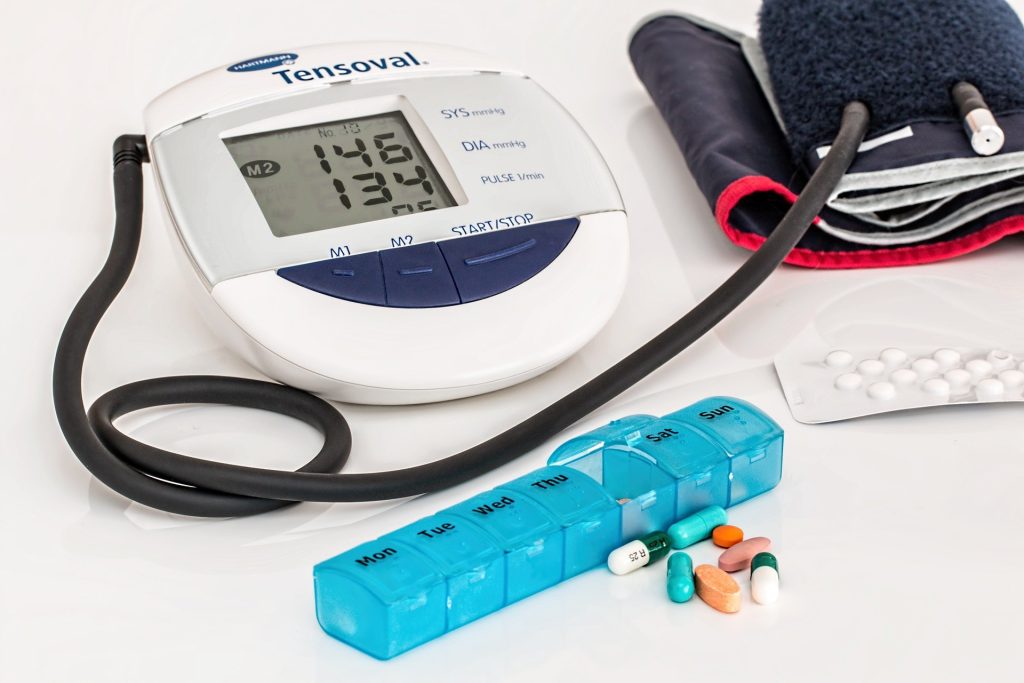
Results from a clinical trial published in the Journal of Internal Medicine reveal several health benefits of moderate salt restriction in patients on standard medical treatment for primary aldosteronism/ These included lowered blood pressure and reduced depressive symptoms.
Primary aldosteronism – when adrenal glands produce excess aldosterone – is a common cause of secondary hypertension. The combination of aldosterone excess and high dietary salt intake leaves affected patients with a higher risk of cardiovascular disease than patients with hypertension from other causes. Mineralocorticoid antagonists are the main treatment of primary aldosteronism, but these medications do not completely normalise patients’ elevated cardiovascular risk.
Because elevated aldosterone and high dietary salt intake have detrimental effects on patients’ health, investigators wanted to find out whether salt restriction might benefit patients. In the non-randomised single-arm Salt CONNtrol trial that included 41 patients, moderate salt restriction reduced blood pressure and depressive symptoms without detectable adverse effects.
“The study shows that a moderate dietary salt restriction is feasible, when combined with a dedicated smartphone app for continuous motivation, and has a strong antihypertensive effect in patients with primary aldosteronism,” said corresponding author Christian Adolf, MD, of Ludwig Maximilian University of Munich, in Germany. “Our findings will help to improve care for patients with primary aldosteronism and, likely, also for subgroups of patients with essential hypertension.”
Survivors of out-of-hospital cardiac arrest (OHCA) who received initial bystander defibrillation with a nearby automated external defibrillator (AED) reported better outcomes at 12 months after arrest compared with those initially defibrillated by paramedics, according to a new study from Monash University which appears in Heart.
The retrospective study recruited adult non-traumatic OHCA with initial shockable rhythms between 2010 and 2019. Survivors at 12 months after arrest were invited to participate in structured telephone interviews. Outcomes were identified using the Glasgow Outcome Scale-Extended (GOS-E), EuroQol-5 Dimension (EQ-5D), 12-Item Short Form Health Survey and living and work status-related questions.
Of 6050 patients, 3211 (53.1%) had a pulse on hospital arrival, while 1879 (31.1%) were discharged alive. Survival rates were highest with bystander defibrillation (52.8%), followed by dispatched first responders (36.7%) and paramedics (27.9%). Of the survivors, 1802 (29.8%) survived to 12-month post-arrest; of these 1520 (84.4%) were interviewed. 1088 (71.6%) were initially shocked by paramedics, 271 (17.8%) by first responders and 161 (10.6%) by bystanders. Bystander-shocked survivors reported higher rates of living at home without care (87.5%), upper good recovery (GOS-E=8) (41.7%) and EQ-5D visual analogue scale (VAS) ≥ 80 (64.9%) compared with first responder and paramedics, respectively. After adjustment, initial bystander defibrillation was associated with higher odds of EQ-5D VAS ≥ 80 (adjusted OR (AOR) 1.56), good functional recovery (GOS-E ≥ 7) (AOR 1.53), living at home without care (AOR 1.77) and returning to work (AOR 1.72) compared with paramedic defibrillation.
University of Helsinki and Taiwanese researchers have found a new way to remove waste from the brain after haemorrhage, using a protein called cerebral dopamine neurotrophic factor (CDNF).
Intracerebral haemorrhage, and bleeding into the brain tissue, is a devastating neurological condition affecting millions of people annually. It has a high mortality rate, with long-term neurological deficits experienced by many survivors. To date, no medication has been identified that supports brain recovery following haemorrhage.
In an international collaboration, researchers from the Brain Repair laboratory, University of Helsinki, together with their Taiwanese colleagues investigated whether CDNF, a protein being currently tested for Parkinson’s disease treatment, could be a potential treatment for brain haemorrhage.
Research suggests that CDBF also has therapeutic effects and enhances immune cell’s response after brain haemorrhage. The authors found that the administration of cerebral dopamine neurotrophic factor accelerates haemorrhagic lesion resolution, reduces brain swelling, and improves functional outcomes in an animal model of brain haemorrhage.
“Surprisingly, we found that cerebral dopamine neurotrophic factor acts on immune cells in the bleeding brain, by increasing anti-inflammatory mediators and suppressing the production of the pro-inflammatory cytokines that are responsible for cell signalling. This is a significant step towards the treatment of injuries caused by brain haemorrhage, for which we currently have no cure,” says Professor Mikko Airavaara, from University of Helsinki.
Dr.Vassileios Stratoulias from the Brain Repair laboratory comments, “It’s interesting to note that after a bleeding episode, the brain contains a lot of waste and debris. Cerebral dopamine neurotrophic factor encourages immune cells in the brain to consume and remove the waste and debris, which is essential for the brain’s recovery!.”
The administration of cerebral dopamine neurotrophic factor also resulted in the alleviation of cell stress in the area that surrounds the haematoma.
Finally, the researchers demonstrated that systemic administration of cerebral dopamine neurotrophic factor promotes scavenging by the brain’s immune cells after brain haemorrhage and has beneficial effects in an animal model of brain haemorrhage.
A long-term Danish study found that high physical activity at work was associated with higher risk of ischaemic heart disease (IHD) in men, but in women, this was associated with lower risk. The findings, published in the European Journal of Preventive Cardiology, highlight the importance of taking gender into account when considering the impact of high levels of occupational physical activity (OPA).
While previous studies have shown that physical activities in leisure time are protective against cardiovascular disease, high levels of OPA were shown to have no benefit – or even a detrimental effect.
The study followed up participants aged 30–61 years old after 34 years who took part in the Danish Monica 1 study in 1982–84. Participants, 1399 women and 1706 men, were actively employed, without prior IHD and who answered a question on OPA. The participants’ medical records were located in the Danish National Patient Registry and the researchers analysed the data, controlling for increasing numbers of factors such as age, then age and sex, and then age and sex plus factors such as smoking.
Compared to women doing sedentary work, women in all other OPA categories had a lower hazard ratio (HR) for IHD. Among men, the risk of IHD was 22% higher among those with light OPA, and 42% and 46% higher among those with moderate OPA with some lifting or strenuous work with heavy lifting, respectively, compared to men with sedentary OPA. Compared to women with sedentary work, HR for IHD was higher among men in all OPA categories, and a statistically significant interaction between OPA and sex was found.
Demanding or strenuous OPA seems to be a risk factor for IHD among men, whereas a higher level of OPA seems to protect from IHD among women. The researchers wrote that this underlines the importance of taking into account sex differences in studies of health effects of OPA. Future studies should investigate the underlying mechanisms for this difference, such as differences in exposure and physiology.
Compared with seven to eight hours, sleeping less than five hours a night is associated with a 74% raised likelihood of developing peripheral artery disease (PAD) according to a study published in the European Heart Journal – Open.
“Our study suggests that sleeping for seven to eight hours a night is a good habit for lowering the risk of PAD,” said study author Dr Shuai Yuan of the Karolinska Institute.
A Lancet study showed that more than 200 million people globally have peripheral artery disease (PAD), where arteries in the legs are clogged, restricting blood flow and increasing the risk of stroke and heart attack.
Dr Yuan said: “Insufficient night-time sleep and daytime napping have previously been associated with a raised risk of coronary artery disease which, like PAD, is caused by clogged arteries. In addition, sleeping problems are among the top ranked complaints in PAD patients. There are limited data on the impact of sleep habits on PAD and vice versa, and our study aimed to fill that gap.”
The two-part study included more than 650 000 participants. First, the researchers analysed the associations of sleep duration and daytime napping with the risk of PAD. In the second part, the investigators used genetic data to perform naturally randomised controlled trials – called Mendelian randomisation – to examine causality of the associations.
Dr Yuan said: “Observational analyses are limited by reverse causality – meaning that if an association between sleep habits and PAD is found, we cannot be certain if sleep habits caused PAD or having PAD caused the sleep habits. Mendelian randomisation is a robust method for evaluating causality and provides more certainty about the results.”
Taken together, the strongest evidence was for short sleep, where the relationship with PAD went both ways. In an observational analysis of 53 416 adults, sleeping less than five hours a night was associated with a nearly doubled risk of PAD compared with seven to eight hours (hazard ratio [HR] 1.74). This finding was supported by further analyses in 156 582 and 452 028 individuals. In the causal studies, short sleep was associated with an increased risk of PAD and, in addition, PAD was associated with an increased likelihood of short sleep. Dr Yuan said: “The results indicate that brief night-time sleep can raise the chance of developing PAD, and that having PAD increases the risk of getting insufficient sleep.”
Regarding long sleep, in an observational analysis of 53 416 adults, sleeping eight hours or more per night was linked with a 24% higher risk of PAD compared with seven to eight hours (HR 1.24). This finding was supported by analyses in two larger populations of 156 582 and 452,028 individuals. However, no causal relationships were found between long sleep and PAD. Similar results were reported for napping, where daytime nappers had a 32% higher risk of PAD compared to those who did not nap (HR 1.32) but no causal links were found. “More studies are needed on the relationships between lengthy night-time sleep, daytime napping and PAD,” said Dr Yuan. “Although we found associations in the observational studies, we could not confirm causality.”
He concluded: “More research is needed on how to interrupt the bidirectional link between short sleep and PAD. Lifestyle changes that help people get more sleep, such as being physically active, may lower the risk of developing PAD. For patients with PAD, optimising pain management could enable them to have a good night’s sleep.”
A clinical study published in the European Heart Journal shows that the hunger hormone ghrelin can increase the heart’s pump capacity in patients with heart failure.
Heart failure occurs when the heart muscles are weakened, such as from myocardial infarction, reducing the ability to pump blood. Current treatments can slow disease progression, but none directly increase the heart’s pumping capacity.
Ghrelin is an endogenous hormone that has many receptors distributed in cardiac muscle tissues. It increases the appetite and stimulates the release of growth hormones. The researchers believe that its receptors are a promising target for enhancing the heart’s pumping capacity.
“Heart failure is the most common cause of hospitalisation in older generations and is associated with a poor quality of life and high mortality,” says principal investigator Lars Lund, professor at the Department of Medicine, Solna, Karolinska Institutet, and senior consultant at Karolinska University Hospital. “If we can find ways to increase the heart’s pump function, we can potentially improve life quality and prognosis for these patients.”
In this double-blind study, 30 patients with heart failure at Karolinska University Hospital’s cardiology unit were randomly assigned to two groups, receiving either active treatment with ghrelin or a placebo given intravenously for two hours. The participants were followed up after two to five days.
Pump function up by 28%
After two hours’ treatment, the cardiac output had increased by an average of 28% in the ghrelin group, (4.08 ± 1.15 to 5.23 ± 1.98 L/min) compared to a small reduction in the placebo group (4.26 ± 1.23 to 4.11 ± 1.99 L/min). The increase was from more blood being pumped per beat, as the heart rate remained unchanged or was even slightly slower. At the two- to five-day follow-up, the pump capacity was still 10% higher in the ghrelin group compared to in the placebo group.
No serious adverse reactions were seen, though the ghrelin group had slightly elevated levels of a heart-failure biomarker, which would need to be investigated further. The small size of the group makes limits the generalisability of the results.
Using mouse heart cells, the researchers observed that treatment with ghrelin increased the contractile function of the heart cells, and they identified a novel molecular mechanism for this increase. The researchers now plan to do larger clinical studies.
A large representative study found that individuals with newly diagnosed atrial fibrillation had a modestly elevated risk of developing dementia. The Journal of the American Heart Associationstudy found that this risk was higher in younger adults and those without chronic kidney disease, but did not substantially vary across sex, race, or ethnicity.
In this study of nearly 200 000 adults, incidence rates for dementia over a median follow-up of 3.3 years were 2.79 versus 2.04 per 100 person-years in individuals with versus without atrial fibrillation, respectively. (This means that over one year, there would be an average of 2.79 dementia diagnoses among 100 people with atrial fibrillation and 2.04 diagnoses among 100 people without atrial fibrillation. This translates to 279 per 10 000 and 204 per 10 000.)
After adjustments, atrial fibrillation was associated with a 13% higher risk of dementia. Adults aged <65 years had a 65% higher risk compared with older adults, those without chronic kidney disease had a 14% higher risk than those with chronic kidney disease.
“These data highlight a possible link between atrial fibrillation and risk of subsequent dementia in certain populations. Further studies are needed to understand the mechanisms to explain this association, which may inform the use of treatments for atrial fibrillation,” said corresponding author Nisha Bansal, MD, MAS, of the University of Washington School of Medicine.
Researchers in Sweden have performed a nation-wide study of patients who underwent bioprosthetic aortic valve replacement between 2003 and 2018. The study, published in the Journal of the American College of Cardiology, shows that it is less dangerous than previously believed to receive a small bioprosthetic aortic valve in relation to the patients size.
During surgical aortic valve replacement, the patient receives a valve prosthesis that matches the size of the aortic root. Sometimes, that size is too small in relation to the patient’s body size. This puts strain on the heart to pump enough blood that the body needs through a narrow valve. The level of “narrowness” is measured as Prosthesis Patient Mismatch, PPM.
“Prior studies have shown that both moderate and severe PPM decreases survival and increases the risk for heart failure. In our study, we can confirm that severe PPM decreases survival and increases the risk for heart failure, while moderate PPM has a very limited effect on survival and no effect on the risk for heart failure”, says Michael Dismorr, postdoctoral researcher at the Department of Molecular Medicine and Surgery and first author of the study.
The study
The study included all patients who underwent bioprosthetic aortic valve replacement in Sweden between 2003 and 2018. Patients were identified from the Swedish cardiac surgery register, part of the SWEDEHEART register. The database was enriched with data from other national health data registers. By using the statistical method regression standardization we were able to estimate the risk for the outcomes death, heart failure and reintervention in absolute terms between the groups no, moderate and severe PPM.
The study shows that the estimated risk difference between no and moderate PPM for death after 10 years of follow-up was -1.7% (-3.3% to -0.1%) compared to -4.6% (-8.5% to -0.7%) for severe PPM.
The risk difference for heart failure after 10 years of follow-up was -1.1% (-2.5% to 0.2%) between patients with no and moderate PPM.
“A risk difference of a single percent after 10 years of follow-up cannot be said to be of clinical significance, even if it is statistically so. However, it is important to note that these are hard clinical outcomes. We did not have access to “soft” outcomes such as quality of life, which might be decreased in patients with moderate PPM, and in that case of course of great importance to those patients”, says Michael Dismorr.
Next steps
“Now we want to study the effect of PPM in patients who underwent transcatheter aortic valve replacement, a so called TAVR procedure. This is important knowledge when deciding which patients will benefit the most from a surgical replacement, and which patients will benefit the most from a transcatheter replacement”, says Michael Dismorr.
A phase II trial with the novel antihypertensive baxdrostat did not replicate the impressive results in a similar trial for the drug in treatment-resistant hypertension, failing to improve on placebo effect.
Deepak Bhatt, MD, MPH, of Mount Sinai Heart in New York City, presented the disappointing findings at the American College of Cardiology (ACC) annual meeting, but noted that the findings were not a complete write-off for the drug, hampered as the trial was by poor patient adherence and the confounding effect of other antihypertensives.
For baxdrostat, seated systolic blood pressure was lowered by 16.0–19.8mmHg across the doses tested, compared to 16.6mmHg for placebo, a nonsignificant difference. Diastolic blood pressure drops showed a similar pattern, even slightly favouring placebo.
HALO included 249 participants with a mean seated systolic blood pressure of 140–180 mmHg at baseline despite treatment with a stable regimen of an ACE inhibitor or one of those drugs plus a thiazide diuretic or a calcium channel blocker. They were randomised to placebo or a 0.5-, 1.0-, or 2.0-mg dose of baxdrostat for 8 weeks.
In the prior phase II BrighHTN trial, baxdrostat reduced systolic blood pressure by 11 and 8.1 mm Hg more than placebo in the two higher dose groups.
The drug, which is in a new class of highly selective aldosterone synthase inhibitors, did decrease serum aldosterone and increase plasma renin activity as expected compared with placebo in HALO.
A post hoc analysis to understand why the trial failed despite high pill-count based adherence showed that 36% of the baxdrostat patients in the highest, 2-mg dose group (20 of 54) were actually not adherent, based on plasma levels < 1% of expected.
ACC session moderator Kim Eagle, MD, of the University of Michigan in Ann Arbor wondered if the patients were flushing their pills, and Bhatt replied that these were clustered at a few sites, highlighting issues of site selection and providing patient support.
The adherence problem does not explain away the placebo effect, Eagle told MedPage Today. “The placebo effect may well be that by enrolling in a trial, the patient is also taking their other meds for hypertension. Recall that the patients were already supposed to be taking several antihypertensives.”
Nevertheless, he called it compelling that, in “patients who were taking the larger dose and who had evidence of adherence by blood levels, the drug clearly seems to work.”
A new thesis by Karolinska Institutet student Tessa Schillemans has found that exposure persistent environmental pollutants did not increase biomarkers of cardiovascular disease risk – rather, exposure reduced them, raising further questions on their complex interactions with the environment and within the human body.
What is the thesis about? The thesis is about a group of environmental pollutants called per- and polyfluoroalkyl substances (PFAS), also called “forever-chemicals”. Since we all are exposed and their chemical structure resembles that of fatty acids, we wanted to investigate whether exposure to PFAS associated with increased risk of cardiovascular disease. Additionally, we also explored if we could gain insight in potential underlying molecular pathways by linking PFAS exposure to biological molecules in the blood.
Can you tell us about some interesting results? We found no evidence that PFAS was linked to increased risk of cardiovascular disease in the general population. If anything, rather the opposite – which also deserves careful consideration. We did observe associations with higher cholesterol, lower triglycerides and with lipid metabolism intermediates, which all point towards potential perturbations in lipid metabolism.
What further research is needed in the area? It is essential to fully understand any adverse consequences that PFAS may have, since they are omnipresent and persistent. Thus, epidemiological studies involving other outcomes and vulnerable subgroups (such as pregnant women and children) should also be performed, as disturbances in lipid metabolism could impact other physiological processes. For a deeper mechanistic understanding, integration of data from different biological systems (genome, epigenome, transcriptome, proteome, metabolome) in human and experimental settings would be optimal. Additionally, since humans are exposed to many different chemicals simultaneously and these could interact with each other, there is a need for studies that investigate multiple exposures at the same time (exposome studies).