Meta-analysis including millions of middle-aged to older adults supports recommended activity and sleep duration to reduce dementia risk
Photo by Barbara Olsen on Pexels
Regular physical activity and getting the recommended amount of sleep may reduce dementia risk later in life, according to a new study by Akinkunle Oye-Somefun and colleagues of York University, Canada, published April 8, 2026 in the open-access journal PLOS One.
An estimated 55 million people live with dementia worldwide, and both its prevalence and cost are expected to increase, with global costs projected to reach $2 trillion dollars by 2030. Current treatments for preventing or treating dementia have limited efficacy; therefore, public health efforts have also aimed at healthy lifestyle factors to reduce the risk of dementia before symptoms occur. Healthy behaviours such as regular physical activity and good sleep hygiene are known to support cognitive health; however, there remains a need to better understand their relationship to dementia.
In this systematic review and meta-analysis, researchers analysed data from 69 prospective cohort studies representing millions of community-dwelling adults aged 35+, to see if there was a link between the development of dementia and three lifestyle behaviours: physical activity, sedentary behaviour, and sleep duration. Each of the observational studies recorded behaviours of cognitively healthy participants, then followed up at a later timepoint to report subsequent rates of dementia.
Overall, the meta-analysis found that regular physical activity, less sedentary time, and appropriate nightly sleep (7–8 h) were associated with a lower subsequent risk of dementia. Regular physical activity was associated with an average 25% lower risk of dementia among the 49 studies analysed; however, the researchers note that there was considerable heterogeneity between the studies.
Too little sleep (< 7 h) or too much sleep (> 8 h) was associated with an 18% and 28% higher subsequent risk of dementia, respectively, compared to optimal nightly sleep of 7–8 hours, though there was again considerable heterogeneity among the 17 studies analysed. Prolonged sitting (> 8 hours per day) was associated with a 27% higher risk of dementia among the three relevant studies analysed.
The study is consistent with and expands on previous research, using a large, diverse population with long follow-up times. While the study design cannot show any causative link between physical activity, sleep and dementia, the findings suggest an association between adherence to recommended physical activity and sleep levels in middle- and older-age adults and lowered dementia risk later in life.
The authors add: “Dementia develops over decades, and our findings suggest that everyday behaviours such as physical activity, time spent sitting, and sleep duration may be linked to dementia risk. Understanding how each of these behaviours relates to risk over time may help researchers identify opportunities to support brain health across the life course.”
“Separately, one aspect I personally found most interesting while conducting the study was the relatively limited evidence base on sedentary behaviour. Despite growing recognition that prolonged sitting is distinct from physical inactivity, we found only a small number of cohort studies examining its relationship with dementia risk. This highlights an important gap for future research.”
In the analysis of data from the Health and Retirement Study, a nationally representative sample of older US adults, optimism was assessed using the validated Life Orientation Test-Revised in 9071 cognitively healthy individuals within 2 years of obtaining each person’s first measure of cognitive function. Dementia was assessed during up to 14 years of follow-up.
A 1-standard deviation increase in optimism was associated with a 15% lower risk of developing dementia, after adjusting for age, sex, race/ethnicity, education, depression, and major health conditions.
“Identifying optimism as a protective psychosocial factor highlights the potential value of optimism in supporting healthy aging,” the authors wrote.
Australian study tracking more than 11 000 women found that meeting exercise guidelines during midlife had strong benefits for mortality
Photo by Teona Swift on Unsplash
Women who consistently met physical activity guidelines throughout middle age had half the risk of dying from any cause compared to women who remained inactive, according to a new paper publishing March 26th in the open-access journal PLOS Medicine by Binh Nguyen of the University of Sydney, Australia, and colleagues.
Physical activity is known to provide numerous health benefits and to reduce the risk of chronic diseases and premature mortality. However, most prior studies have measured physical activity at only a single point in time, which fails to capture how activity levels change over time.
In the new study, researchers used data from 11 169 women born between 1946 and 1951 who enrolled in the Australian Longitudinal Study on Women’s Health. Participants were surveyed nine times between 1996 and 2019, approximately every three years. Data was collected on how often the women met the World Health Organization’s recommendation of at least 150 minutes of moderate-to-vigorous physical activity (MVPA) per week.
The researchers found that consistently meeting MVPA recommendations throughout midlife was associated with a relative risk of all-cause mortality that was half that of those who consistently did not meet the recommendations (relative risk: 0.50). In absolute terms, the incidence of death was 5.3% among women who consistently met guidelines versus 10.4% among those who consistently did not. The magnitude of effect appeared similar or even stronger for cardiovascular disease and cancer mortality, though greater uncertainty in those estimates made the findings less conclusive, possibly because fewer deaths from those causes were observed. The evidence for benefits of starting to meet recommendations later in midlife – at age 55, 60, or 65 – rather than throughout all of midlife was also uncertain and inconclusive.
The study was limited by the fact that physical activity was self-reported and that the study sample may not be representative of all mid-aged Australian women.
“This study supports the growing evidence that maintaining an active lifestyle in midlife provides health benefits,” the authors say. “Women should be encouraged to meet physical activity recommendations throughout mid-age to derive these benefits.”
Nguyen adds, “Staying active throughout midlife can make a real difference for women’s long-term health. Our study shows that maintaining recommended levels of physical activity over multiple years helps protect against early death.”
Part of the brain disappears in mice treated with dasatinib and quercetin
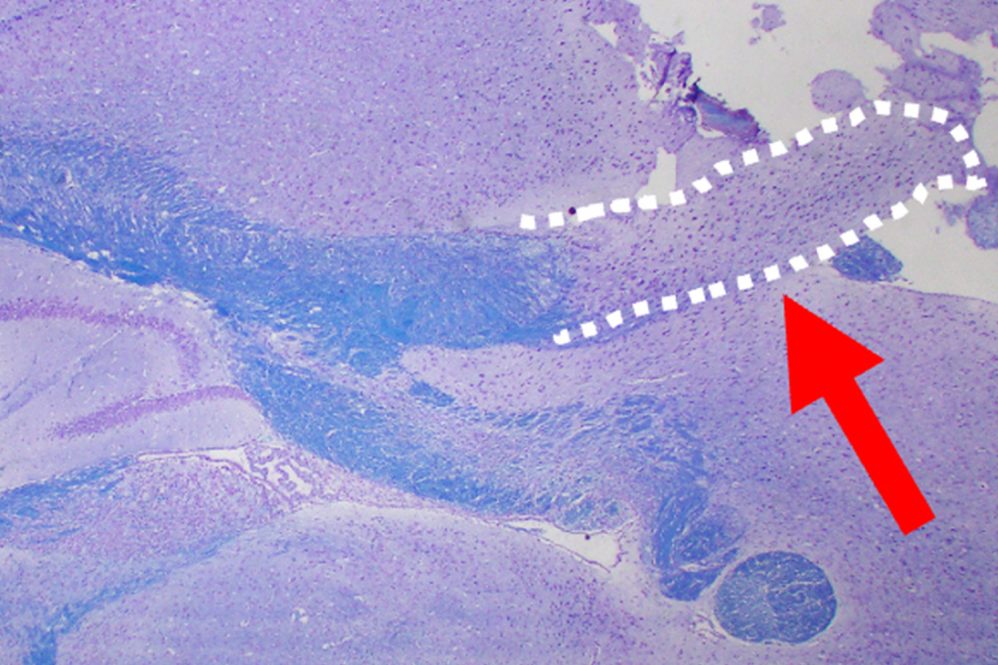
The image shows a section of the brain of a mouse treated with dasatinib and quercetin. The bluish area is the corpus collosum. The dotted outline shows the part of the corpus collosum that is affected by the medication. (Image courtesy of Crocker Lab/UConn School of Medicine)
A two-drug combination frequently used in anti-ageing research causes brain damage in mice, University of Connecticut researchers report in the March 16 issue of PNAS. The findings should make doctors cautious about prescribing the drug combo prophylactically, but also suggest new ways to understand multiple sclerosis.
“When you administer this cocktail to an animal, young or old, the myelin is damaged, which makes it disappear. Even worse in the young animals” than in the aged ones, says UConn School of Medicine immunologist Stephen Crocker.
Myelin is the insulation around the nerves. When it disappears, nerves don’t work as well, and people can develop numbness, pain, and lose the ability to walk. They can also have problems thinking and remembering. Missing myelin is the primary cause of multiple sclerosis. And Crocker and his colleagues saw it happen to mice when treated with dasatinib+quercetin (D+Q) at doses often used to treat ageing-related inflammation and metabolic disorders.
D+Q is a popular combination of medicines in anti-ageing research. Many studies have shown it works to eliminate aged cells that contribute to inflammation and other age-related symptoms. It is being tested for a range of diseases, from type II diabetes to Alzheimer’s. People in the anti-ageing scene sometimes even use it off-label, though the medical community discourages this. Very few studies have looked at its effect on the brain.
Evan Lombardo ’23 (CLAS), currently a Dartmouth neuroscience graduate student, and Robert Pijewski ’21 PhD, now at Anna Maria College, were working in Crocker’s lab when they wondered if it was possible to rejuvenate the brains of people with multiple sclerosis, and potentially heal their symptoms, using D+Q. They tried it on mice, both young (6 to 9 months) and old (22 months), as well as on brain cells cultured in a dish in the lab. The brain cells were oligodendrocytes, the cells that are supposed to grow and maintain myelin.
The results were dramatic. Healthy mice have myelin surrounding the axons (nerve cells) in the brain. It looks like dark rings around the lighter axon (see figure 1, the left panel.) But the mice treated with D+Q had much less myelin around their axons after the treatment, and the damage was worse in the younger mice. The corpus callosum, a region that connects the cerebral cortex to other parts of the brain and is associated with a range of important functions, also disappeared in mice treated with D+Q. This is known to happen sometimes to people who received chemotherapy, and causes the symptoms sometimes referred to as “chemo brain.”
When the researchers looked closely at the damaged brain tissue, they found clues as to why the myelin had disappeared. The myelinating cells – oligodendrocytes – hadn’t died. They’d regressed into a juvenile form of themselves. And the metabolism of the cells was abnormal, too.
“We suspect the drugs are choking off energy the cells need, and the cells respond by reducing complexity, reverting to a younger state, but less functional,” Crocker says.
Interestingly, these cells that have reverted look very much like a distinct population of cells found in people with multiple sclerosis. It suggests that in multiple sclerosis, myelinating cells might come under stress and revert to a younger stage. It also means those cells might be able to recover. And that is what the researchers are working on now.
“If we can mimic this, we have an amazing opportunity to see if the cells can recover and repair the brain,” Crocker says.
From genetics to stress myths, researchers reveal what really drives greying and the breakthroughs pointing to natural colour restoration
Photo by Ravi Patel on Unsplash
Grey hair is more than a cosmetic concern – it drives a booming industry, influences how people are perceived, and can affect confidence. Globally, the hair colour market was valued at nearly USD 28 billion in 2025, with over half of purchases linked specifically to concealing greys. In South Africa, spending on hair colourants is projected to grow from roughly USD 172 million in 2021 to over USD 228 million by 2028, highlighting the demand for solutions that go beyond temporary cover-ups.
By age 50, roughly 50-70% of adults have visible grey hair, while premature greying can appear in some as early as the 20s. The psychological weight is clear: studies indicate grey hair can make people appear 20-30% older, influencing workplace perception, social interactions, and self-esteem. Studies show faces with grey hair are consistently perceived as more subdued than the same faces without greys, confirming that hair colour alone can shape social impressions.
“Many popular beliefs about greying hair are misleading,” says Dr Kashmal Kalan, Medical Director at Alvi Armani. “Stress does not turn hair grey overnight, plucking one strand won’t trigger several more, and no supplement or home remedy has been proven to restore pigment reliably. The reality is far more biological – genetics and pigment cell behaviour are the keys we are finally beginning to understand.”
At the heart of greying are melanocyte stem cells (McSCs) within hair follicles. In youth, these cells migrate and maintain melanin production, the pigment responsible for hair colour. With age, many become inactive or “trapped,” interrupting pigment delivery and causing grey strands. In mouse models, freeing these cells restored pigment production in roughly half of cases – a major step toward therapies that could reawaken natural colour without dyes.
Emerging research aims to tackle the root cause rather than just the appearance of grey hair. Scientists are exploring topical agents that target dormant pigment cells, metabolic modulators that influence follicle behaviour, and activation therapies designed to revive pigment production. These innovations could allow hair to regain its natural shade – not just cover it – while supporting overall follicle health.
“We are witnessing science that was once purely theoretical become reality,” says Dr Sunaina Paima, aesthetic and hair-restoration physician at Alvi Armani Johannesburg. “For patients, this could mean seeing grey strands regain their original shade naturally – a moment the hair science world has long dreamed of. The potential impact on confidence and self-esteem is enormous, because this isn’t just about covering colour, it’s about restoring it at a biological level.”
While most pigment-restoring therapies remain in development, advances in genetics, dermatology, and biotechnology are converging at unprecedented speed. “For decades, grey hair was seen as an irreversible hallmark of ageing,” adds Dr Kalan. “Today, that assumption is being seriously challenged. We’re on the brink of options that rejuvenate hair from the inside out, not just cosmetically.”
These breakthroughs signal a new era in hair science: ageing hair may no longer be inevitable or purely cosmetic, but a biological process that can be understood, guided, and ultimately restored.
An analysis led by Mass General Brigham investigators found slower aging in older adults after two years of a daily multivitamin, with greater benefits for those who began the trial with accelerated biological age.
‘Biological age’, age on a cellular level, can differ from chronological age. Using data from a large randomised clinical trial of older adults, researchers at Mass General Brigham evaluated the effects of taking a daily multivitamin over the course of two years on five measures of biological ageing and found a slowing equivalent to about four months of ageing. The benefits were increased in those who were biologically older than their actual age at the start of the trial. Their results are published in Nature Medicine.
“There is a lot of interest today in identifying ways to not just live longer, but to live better,” said senior author Howard Sesso, ScD, MPH, associate director of the Division of Preventive Medicine in the Mass General Brigham Department of Medicine. “It was exciting to see the benefits of a multivitamin linked with markers of biological ageing. This study opens the door to learning more about accessible, safe interventions that contribute to healthier, higher-quality ageing.”
Epigenetic clocks estimate biological ageing based specific sites in our DNA that regulate gene expression (known as DNA methylation) and change naturally as we get older, helping track mortality and the pace of ageing. This study, which uses data from the well-established COcoa Supplement Multivitamins Outcomes Study (COSMOS), analysed DNA methylation data from blood samples of 958 randomly selected healthy participants with an average chronological age of 70.
The study participants were randomised to take a daily cocoa extract and multivitamin; daily cocoa extract and placebo; placebo and multivitamin; or placebos only. Samples were analysed for changes in five epigenetic clocks from the start of the trial and at the end of the first and second years. Compared to the placebo only group, people in the multivitamin group had slowing in all five epigenetic clocks, including statistically significant slowing seen in the two clocks that are predictive of mortality. The changes equated to about four months less biological ageing over the course of two years. Additionally, people who were biologically older than their actual age at the start of the trial benefited the most.
“We plan to do follow-up research to determine if the slowing of biological ageing – observed through these five epigenetic clocks, and additional or new ones – persists after the trial ends,” said co-author and collaborator Yanbin Dong, MD, PhD, director of Georgia Prention Institute, Medical College of Georgia at Augusta Univeristy.
Further studies are also needed to determine how improvements in biological aging may explain reductions in clinical outcomes. The COSMOS team plans to investigate how the effects of a daily multivitamin on biological aging may extend to different outcomes they have seen evidence of benefits for, such as improvements in cognition and reductions in cancer and cataracts.
“A lot of people take a multivitamin without necessarily knowing any benefits from taking it, so the more we can learn about its potential health benefits, the better,” said Sesso. “Within COSMOS, we are fortunate and excited to build upon a rich resource of biomarker data to test how two interventions may improve biological aging and reduce age-related clinical outcomes.”
Ageing in later life is often portrayed as a steady slide toward physical and cognitive decline. But a new study by scientists at Yale University suggests an alternate narrative – that older individuals can and do improve over time and their mindset toward ageing plays a major part in their success.
Analysing more than a decade of data from a large, nationally representative study of older Americans, lead author Becca R. Levy, a professor of social and behavioural sciences at the Yale School of Public Health (YSPH), found that nearly half of adults aged 65 and older showed measurable improvement in cognitive function, physical function, or both, over time.
The improvements were not limited to a small group of exceptional individuals and, notably, were linked to a powerful but often overlooked factor: how people think about ageing itself.
“Many people equate ageing with an inevitable and continuous loss of physical and cognitive abilities,” said Levy, an international expert on psychosocial determinants of ageing health. “What we found is that improvement in later life is not rare, it’s common, and it should be included in our understanding of the ageing process.”
The findings are published in the journal Geriatrics.
For the study, the researchers followed more than 11 000 participants in the Health and Retirement Study, a federally supported longitudinal survey of older Americans. The research team tracked changes in cognition using a global performance assessment, and physical function using walking speed — often described by geriatricians as a “vital sign” because of its strong links to disability, hospitalisation, and mortality.
Over a follow-up period of up to 12 years, 45% of participants improved in at least one of the two domains, according to the study. About 32% improved cognitively, 28% improved physically, and many experienced gains that exceeded thresholds considered clinically meaningful. When participants whose cognitive scores remained stable over that period (rather than declining) were included, more than half defied the stereotype of inevitable deterioration in cognition.
“What’s striking is that these gains disappear when you only look at averages,” said Levy, author of the book “Breaking the Age Code: How Your Beliefs About Aging Determine How Long & How Well You Live.” “If you average everyone together, you see decline. But when you look at individual trajectories, you uncover a very different story. A meaningful percentage of the older participants that we studied got better.”
The authors also examined potential reasons for why some people improve and some do not. They hypothesized that an important factor could be participants’ baseline age beliefs — or, specifically, whether they had assimilated more positive or more negative views about ageing by the start of the study. In support of this hypothesis, they found that those with more positive age beliefs were significantly more likely to show improvements in both cognition and walking speed, even after accounting for factors such as age, sex, education, chronic disease, depression, and length of follow-up.
The findings build on Levy’s stereotype embodiment theory, which posits that age stereotypes absorbed from culture – through a range of domains including social media and advertisements – eventually become self-relevant and biologically consequential. Levy’s prior studies have found negative age beliefs predict poorer memory, slower walking speed, higher cardiovascular risk, and biomarkers associated with Alzheimer’s disease.
The current study shows that those who have assimilated more positive age beliefs often show improvement, Levy said.
“Our findings suggest there is often a reserve capacity for improvement in later life,” she said. “And because age beliefs are modifiable, this opens the door to interventions at both the individual and societal level.”
The improvements were not limited to people who started out with impairments. Even among participants who had normal cognitive or physical function at baseline, a substantial proportion improved over time. That challenges the assumption that later-life gains reflect only people getting better after being sick or rebounding from earlier setbacks, the authors said.
The authors hope their findings will reverse the popular perception that continuous decline is inevitable and encourage policy makers to increase their support for preventive care, rehabilitation, and other health-promoting programs for older persons that draw on their potential resilience.
The knee joint of a young mouse (left), aged mouse (middle) and treated aged mouse (right). The red indicates cartilage. Credit: Nidhi Bhutani
An injection that blocks the activity of a protein involved in ageing reverses naturally occurring cartilage loss in the knee joints of old mice, a Stanford Medicine-led study has found. The treatment also prevented the development of arthritis after knee injuries mirroring the ACL tears often experienced by athletes or recreational exercisers. An oral version of the treatment is already in clinical trials with the goal of treating age-related muscle weakness.
Samples of human tissue from knee replacement surgeries – which include both the extracellular scaffolding, or matrix, in the joint as well as cartilage-generating chondrocyte cells – also responded to the treatment by making new, functional cartilage.
The study results suggest it may be possible to regenerate cartilage lost to ageing or arthritis with an oral drug or local injection, rendering knee and hip replacement unnecessary.
The treatment directly targets the cause of osteoarthritis, a disease for which no drug can slow down or reverse its progress; the primary treatments for osteoarthritis are pain control and surgical replacement of the affected joints.
The protein, 15-PGDH – termed a gerozyme due to its increase in prevalence as the body ages – is a master regulator of ageing. Gerozymes, identified by the same researchers in 2023, also drive the loss of tissue function. They are a major force behind age-related loss of muscle strength in mice. Blocking the function of 15-PGDH with a small molecule results in an increase in old animals’ muscle mass and endurance. Conversely, expressing15-PGDH in young mice causes their muscles to shrink and weaken. The gerozyme has also been implicated in the regeneration of bone, nerve and blood cells.
In each of these tissues, regeneration is due to increases in the proliferation and specialisation of tissue-specific stem cells. However, chondrocytes change their patterns of gene expression to assume a more youthful state without the involvement of stem cells.
“This is a new way of regenerating adult tissue, and it has significant clinical promise for treating arthritis due to ageing or injury,” said Helen Blau, PhD, professor of microbiology and immunology. “We were looking for stem cells, but they are clearly not involved. It’s very exciting.”
“Millions of people suffer from joint pain and swelling as they age,” Bhutani said. “It is a huge unmet medical need. Until now, there has been no drug that directly treats the cause of cartilage loss. But this gerozyme inhibitor causes a dramatic regeneration of cartilage beyond that reported in response to any other drug or intervention.”
There are three main types of cartilage in the human body. One, elastic cartilage, is soft and flexible and forms structures like the outer ear. A second, fibrocartilage, is dense and tough, absorbing shock in areas such as between the spinal vertebrae. The third, hyaline cartilage, is smooth and glossy, providing a low-friction surface for lubrication and flexibility in joints like the ankles, hips, shoulders and parts of the knee. Hyaline cartilage, also known as articular cartilage, is the cartilage most commonly affected by osteoarthritis.
Osteoarthritis occurs when a joint is stressed by ageing, injury or obesity. The chondrocytes begin to release pro-inflammatory molecules and to break down collagen, which is the primary structural protein of cartilage. When collagen is lost, the cartilage thins and softens; the accompanying inflammation causes the joint swelling and pain that are hallmarks of the disease. Under normal circumstances, articular cartilage rarely regenerates. Although some populations of putative stem or progenitor cells capable of generating cartilage have been identified in bone, attempts to identify similar populations of cells in the articular cartilage have been unsuccessful.
Previous research from Blau’s lab has shown that a molecule called prostaglandin E2 is essential to muscle stem cell function. 15-PGDH degrades prostaglandin E2. Inhibiting 15-PGDH activity, or increasing levels of prostaglandin E2, supports the regeneration of damaged muscle, nerve, bone, colon, liver and blood cells in young mice.
Blau, Bhutani and their colleagues wondered if 15-PGDH might also play a role in ageing cartilage and joints. They wanted to find out if a similar pathway contributes to cartilage loss from ageing or in response to injury. When they compared the amount of 15-PGDH in the knee cartilage in young versus old mice, they saw that, as in other tissues, levels of the gerozyme increased about two-fold with age.
They next experimented with injecting old animals with a small molecule drug that inhibits 15-PGDH activity – first into the abdomen, which affects the entire body, then directly into the joint. In each case, the knee cartilage, which was markedly thinner and less functional in older animals as compared with younger mice, thickened across the joint surface. Further experiments confirmed that the chondrocytes in the joint were generating hyaline, or articular, cartilage, rather than less-functional fibrocartilage.
“Cartilage regeneration to such an extent in aged mice took us by surprise,” Bhutani said. “The effect was remarkable.”
Addressing ACL tears
Similar results were observed in animals with knee injuries like the ACL tears that frequently occur in people participating in sports such as soccer, basketball and skiing that require sudden pivoting, stopping or jumping. While the tears can be surgically repaired, about 50% of people develop osteoarthritis in the injured joint within about 15 years.
The researchers found that a series of injections twice a week for four weeks of the gerozyme inhibitor after injury dramatically reduced the chance that osteoarthritis develops in the mice. Animals treated with a control drug had levels of 15-PGDH that were twice as high as in their uninjured peers, and they developed osteoarthritis within four weeks.
The animals treated with the gerozyme inhibitor also moved more typically and put more weight on the paw of the affected leg than did untreated animals.
“Interestingly, prostaglandin E2 has been implicated in inflammation and pain,” Blau said. “But this research shows that, at normal biological levels, small increases in prostaglandin E2 can promote regeneration.”
A closer investigation of the chondrocytes in the joints of old mice and young mice showed that old chondrocytes expressed more detrimental genes involved in inflammation and the conversion of hyaline cartilage to unwanted bone, and fewer genes involved in cartilage development.
The researchers were also able to pinpoint subcategories of old chondrocytes that change their patterns of gene expression after treatment. One, which expresses 15-PGDH and genes involved in cartilage degradation, decreased in prevalence from 8% to 3% after treatment. Another, which does not express 15-PGDH but does express genes involved in the production of fibrocartilage, also decreased in prevalence: from 16% to 8% after treatment. A third population, which does not make 15-PGDH and which expresses genes involved in hyaline cartilage formation and the maintenance of the extracellular matrix necessary for its function, increased in prevalence after treatment from 22% to 42%. The findings indicate an overall shift in gene expression after treatment to a more youthful cartilage composition – without the involvement of stem or progenitor cells.
Finally, the researchers studied human cartilage tissue removed from patients with osteoarthritis undergoing total knee replacements. Tissue treated with the 15-PGDH inhibitor for one week exhibited lower levels of 15-PGDH-expressing chondrocytes and lowered cartilage degradation and fibrocartilage genes than control tissue and began to regenerate articular cartilage.
“The mechanism is quite striking and really shifted our perspective about how tissue regeneration can occur,” Bhutani said. “It’s clear that a large pool of already existing cells in cartilage are changing their gene expression patterns. And by targeting these cells for regeneration, we may have an opportunity to have a bigger overall impact clinically.”
Blau added, “Phase 1 clinical trials of a 15-PGDH inhibitor for muscle weakness have shown that it is safe and active in healthy volunteers. Our hope is that a similar trial will be launched soon to test its effect in cartilage regeneration. We are very excited about this potential breakthrough. Imagine regrowing existing cartilage and avoiding joint replacement.”
Photo by Kampus Production: https://www.pexels.com/photo/man-in-blue-and-black-crew-neck-shirt-8638036/
A new study has shown how muscle stem cells protect themselves from loss in old age: as we age, muscles lose their ability to regenerate quickly, due to increased production of the protein NDRG1 in muscle stem cells. Prof Dr Julia von Maltzahn from the BTU Cottbus-Senftenberg, who has spent many years researching muscle regeneration during ageing as a group leader at the Leibniz Institute on Aging – Fritz Lipmann Institute (FLI), has published a commentary on this article, as these new findings will change the way we look at changes in stem cells during ageing.
Muscle stem cells are essential for repairing our skeletal muscles. In young people, they respond very quickly to injuries, dividing and helping to rapidly replace damaged muscle tissue. However, these cells change with age, and muscles regenerate much more slowly – this has been known for some time.
A study on “Cellular survivorship bias as a mechanistic driver of muscle stem cell aging” by Jengmin Kang et al. from Stanford University School of Medicine, USA, now published in the journal Science, reveals for the first time an important mechanism behind the changes in muscle stem cells during aging. In aging muscle stem cells in mice, the protein NDRG1 is produced in increased amounts, which slows down their activation after injuries but at the same time increases their survivability. This balance of delayed activity during regeneration and increased resistance explains a fundamental trade-off in the aging process of muscle regeneration – and provides a new cellular mechanism behind the observed loss of function of aging cells.
Prof Dr Julia von Maltzahn classifies the new findings by Kang et al. against the background of relevant work on changes in muscle stem cells associated with aging as follows.
“The study shows that muscle stem cells develop a kind of protective mechanism during the aging process that leads to the survival of a subpopulation of stem cells. It is therefore important to look at the aging process and not the final stage.”
Study finds genetic contribution to human lifespan is about 50% – more than double previous estimates
Photo by Matteo Vistocco on Unsplash
What determines how long we live – and to what extent is our lifespan shaped by our genes? Surprisingly, scientists believed for decades that the heritability of human lifespan was relatively low compared to other human traits, standing at just 20 to 25%; some recent large-scale studies even placed it below 10%. Now, a new study from the Weizmann Institute of Science, published in Science, presents an entirely different picture. According to the findings, genetics accounts for about 50% of variation in human lifespan – twice as much, or more, than previously thought.
The study was led by Ben Shenhar from the lab of Prof Uri Alon of Weizmann’s Molecular Cell Biology Department.
“For many years, lifespan was attributed mainly to non-genetic factors, fuelling scepticism about genetic determinants of longevity”
Using mathematical models and analyses of three large twin databases from Sweden and Denmark – including, for the first time in this context, a dataset of twins who were raised apart – the researchers showed that earlier heritability estimates were masked by high levels of extrinsic mortality, such as deaths caused by accidents, infections and environmental hazards. Filtering out such extrinsic factors was impossible in historic datasets because they provided no information about the cause of death. To compensate for this limitation, the researchers developed an innovative framework that included mathematical simulation of virtual twins to separate deaths due to biological ageing from those caused by extrinsic factors. The new results are consistent with the heritability of other complex human traits and with findings from animal models.
Science Numbers
Up to age 80, the risk of dying from dementia shows a heritability of about 70% – far higher than that of cancer or heart disease.
The results have far-reaching implications for ageing research and public health. “For many years, human lifespan was thought to be shaped almost entirely by non-genetic factors, which led to considerable scepticism about the role of genetics in ageing and about the feasibility of identifying genetic determinants of longevity,” says Shenhar. “By contrast, if heritability is high, as we have shown, this creates an incentive to search for gene variants that extend lifespan, in order to understand the biology of ageing and, potentially, to address it therapeutically.”