

Tag: progeria

Somatic Mutations Linked to Vascular Damage in Progeria
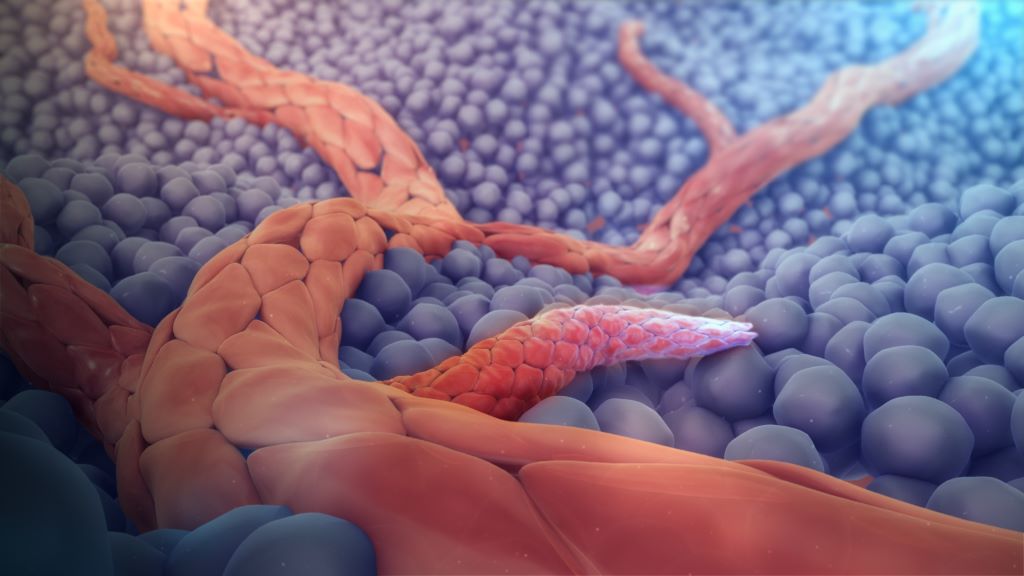
Angiogenesis. Credit: Scientific Animations CC BY-4.0

In the rare disease progeria, blood vessels deteriorate prematurely. A study from Karolinska Institutet shows how different cell types in the vascular wall undergo progressive changes and accumulate mutations over time. The findings are published in the journal Genome Medicine.

Hutchinson–Gilford progeria syndrome (HGPS) is a genetic disorder that causes remarkable premature ageing. Most patients die during their teenage years from cardiovascular disease, but the precise mechanisms underlying vascular damage remain unclear.

In the new study, researchers analysed cells from the aorta of mice carrying the same genetic mutation found in people with progeria. Using single-cell RNA sequencing, which enables gene activity to be studied in individual cells, they tracked how the vascular wall changes over time. In total, nearly 9000 cells from mice of different ages were analysed.

“This approach allows us to follow, step by step, how different cell types are affected throughout the course of the disease,” says Maria Eriksson, professor at the Department of Medicine, Huddinge, Karolinska Institutet.

Reduced numbers of smooth muscle cells

The researchers focused particularly on vascular smooth muscle cells, which provide blood vessels with strength and elasticity and are essential for normal vascular function. They observed that these cells gradually declined in number.

“Smooth muscle cells are progressively lost both in HGPS and during normal ageing. As these cells die, the vessel wall becomes weaker and more susceptible to disease,” says Lara Garcia Merino, doctoral student at the same department and first author of the study.

The study also showed that smooth muscle cells accumulated higher numbers of so-called somatic mutations, meaning genetic alterations that arise during an individual’s lifetime. The mutation burden was associated with increased cellular stress and activation of genes involved in DNA damage responses.

“This is the first evidence that the accumulation of somatic mutations is a hallmark of vascular disease in HGPS,” says Maria Eriksson.

Reveals a new mechanism

The findings link DNA damage to cellular stress, loss of cellular identity and cell death, thereby revealing a previously unrecognised mechanism driving irreversible vascular injury.

The researchers also found evidence that changes in cell behaviour may be influenced by signalling between different cell types within the vessel wall, suggesting that the process is not driven solely by alterations within individual cells.

“We see that cells undergo multiple changes over time, from stress to identity changes and ultimately cell death. Our results suggest that several different mechanisms interact in the development of vascular damage in progeria,” says Lara Garcia Merino.

The researchers believe that the findings may contribute to a better understanding of how vascular damage develops in progeria and underline the importance of initiating treatment early, before irreversible DNA damage has accumulated.

“New gene-editing approaches can correct the disease-causing mutation in HGPS, but correcting the mutation alone is unlikely to reverse damage in cells that have already accumulated a large number of somatic mutations. Early intervention is therefore essential,” says Maria Eriksson.

The study also provides new insights into the biological processes underlying normal vascular ageing. Several important similarities exist between HGPS and the cardiovascular disease that affects the general population. HGPS is therefore widely used as a model for understanding normal ageing and vascular disease.

The researchers emphasise that further studies are needed to confirm the findings in humans.

The study was conducted in collaboration with researchers from, among others, the Indian Institute of Technology in India and the University of Bergen in Norway. The research was funded by the Swedish Research Council, the European Research Council (ERC), the Swedish Cancer Society and the Center for Innovative Medicine, among others.

Source: Karolinska Institutet

Longevity Gene from Supercentenarians Offers Hope for Rapid Ageing Disease in Children

Photo by Matteo Vistocco on Unsplash

A new breakthrough in a rare genetic disease which causes children to age rapidly has been discovered using ‘longevity genes’ found in people who live exceptionally long lives – over 100 years old. The research, by the University of Bristol and IRCCS MultiMedica, found these genes which helps keep the heart and blood vessels healthy during ageing could reverse the damage caused by this life-limiting disease.

This is the first study, published in Signal Transduction and Targeted Therapy, to show that a gene from long-lived people can slow down heart ageing in a progeria model. Also known as Hutchinson-Gilford Progeria Syndrome (HGPS), Progeria is a rare, fatal genetic condition of “rapid-ageing” in children.

HGPS is caused by a mutation in the LMNA gene, which leads to the production of a toxic protein called progerin. Most affected individuals die in their teens due to heart problems, although a few, like Sammy Basso, the oldest known person with progeria, have lived longer.  Sadly, late last year (24 October) at the age of 28 Sammy passed away.

Progerin damages cells by disrupting the structure of their nucleus leading to early signs of ageing, especially in the heart and blood vessels.

Currently, the only United States Food and Drug Administration (FDA)-approved treatment is a drug called lonafarnib, which helps reduce the build-up of progerin. A newer clinical trial is now testing lonafarnib in combination with another drug called Progerinin to see if the combination works better.

In this study, researchers from Bristol Heart Institute, Dr Yan Qiu and Professor Paolo Madeddu, in collaboration with Professor Annibale Puca’s team at IRCCS MultiMedica in Italy, sought to explore whether genes from supercentenarians could help protect children with Progeria from the damaging effects of progerin.

The team focused on a ‘longevity gene’ found in centenarians, called LAV-BPIFB4. Previous research has showed that this gene helps keep the heart and blood vessels healthy during ageing.

Using mouse models genetically engineered to have Progeria, the research team were able to show early heart problems like those seen in children with the disease. The team found that a single injection of the longevity gene helped to improve heart function, specifically diastolic function.

It reduced heart tissue fibrosis and decreased the number of ‘aged’ cells in the heart. The gene also boosted the growth of new small blood vessels, which could help keep heart tissue healthy.

The team then tested the effect of the longevity gene in human cells from Progeria patients. Their findings showed adding the longevity gene to these cells reduced signs of ageing and fibrosis, without changing progerin levels directly. This suggests the gene helps protect cells from the effects of progerin, rather than removing it.  Importantly, the treatment doesn’t try to eliminate progerin but instead helps the body cope with its toxic effects.

Dr Yan Qiu, Honorary Research Fellow in the Bristol Heart Institute at the University of Bristol, said: “Our research has identified a protective effect of a “supercentenarian longevity gene” against progeria heart dysfunction in both animal and cell models.

“The results offer hope to a new type of therapy for Progeria; one based on the natural biology of healthy ageing rather than blocking the faulty protein. This approach, in time, could also help fight normal age-related heart disease.

“Our research brings new hope in the fight against Progeria and suggests the genetics of supercentenarians could lead to new treatments for premature or accelerated cardiac ageing, which might help us all live longer, healthier lives.”

Professor Annibale Puca, Research Group Leader at IRCCS MultiMedica and Dean of the Faculty of Medicine at the University of Salerno, added: “This is the first study to indicate that a longevity-associated gene can counteract the cardiovascular damage caused by progeria.

“The results pave the way for new treatment strategies for this rare disease, which urgently requires innovative cardiovascular drugs capable of improving both long-term survival and patient quality of life. Looking ahead, the administration of the LAV-BPIFB4 gene through gene therapy could be replaced and/or complemented by new protein- or RNA-based delivery methods.

“We are currently conducting numerous studies to investigate the potential of LAV-BPIFB4 in counteracting the deterioration of the cardiovascular and immune systems in various pathological conditions, with the goal of translating these experimental findings into a new biologic drug.”

Source: University of Bristol