

ADAR1 inhibitor researched in outer space holds promise for AML and myelofibrosis now – and possibly cancers like glioblastoma multiforme in the future
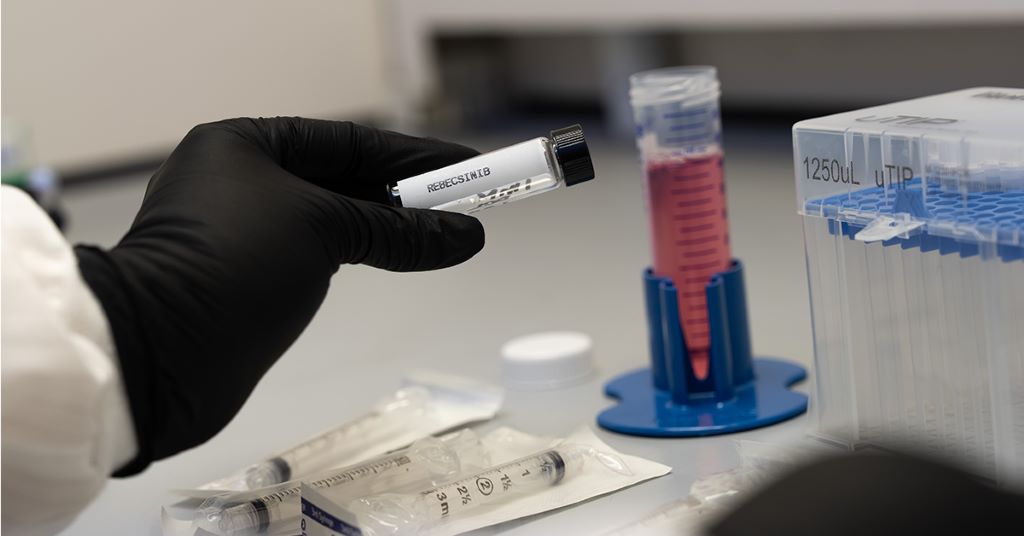
A clinical trial of rebecsinib – a first-in-class investigational drug that inhibits the ADAR1 gene involved in the proliferation of more than 20 cancers – is underway at UC San Diego.
The first patient was treated July 6, according to principal investigator James Mangan, MD, PhD, professor of medicine at UC San Diego School of Medicine and a haematologist and oncologist at UC San Diego Health. He called the drug “promising.”
“This trial has great science behind it,” Mangan said. “It uses a totally novel mechanism and really is for patients who have a desperate, unmet need.”
The Phase 1 clinical trial, sponsored by Aspera Biomedicines, is open to adults 18 years of age and older who have secondary acute myeloid leukaemia (AML) that has either recurred or not responded to treatment. It’s also open to patients with higher-risk myelofibrosis. Both are rare blood cancers for which few treatment options exist initially – and no good options if they return.
For AML and myelofibrosis patients, the rebecsinib clinical trial means hope, Mangan said: “If this works, it’s a good option for those who don’t otherwise have targeted agents available to them.”
UC San Diego Sanford Stem Cell Institute Director Catriona Jamieson, MD, PhD, a haematologist and researcher who discovered the drug, said she is “thrilled to take it from bench – and a bench on the International Space Station (ISS), no less – to the bedside of patients who need it most.”
“Rebecsinib shows all the promise in the world not only to halt the progression of multiple cancers, but to shrink them, as well as prevent their spread to multiple sites in the body,” she added.
One of the First Drugs Tested in Space
The U.S. Food and Drug Administration green-lit rebecsinib for clinical trial in March of last year, making it the first and only ADAR1 inhibitor with an investigational new drug application.
It’s one of the very first drugs studied in the cosmos. Jamieson, who is also a professor of medicine at UC San Diego School of Medicine and chief of its Division of Regenerative Medicine, has sent multiple research payloads to the ISS, testing the drug on various types of highly lethal cancers with ADAR1 involvement like ovarian cancer, metastatic breast cancer, AML and glioblastoma multiforme – experiments made possible by millions in grants from NASA’s In-Space Production Applications program.
In fact, in the summer of 2024, Jamieson received the prestigious ISS National Laboratory Compelling Results Award in Biology and Medicine for her discovery that the drug blocks the activation of ADAR1 in cancer – in space.
“Seeing Dr Jamieson’s cancer stem cell research launch on SpaceX CRS-34 – mere weeks before the first patient received rebecsinib in clinical trial – was nothing short of extraordinary,” said donor Rebecca Moores, whose funding of Jamieson’s lab made possible the drug’s development. “Hope is literally on the horizon for patients with blood cancer – and, hopefully, soon, those with other types of cancer as well.”
Scientists are still learning about the distinctive properties of space that threaten human health, including microgravity and galactic cosmic radiation. Such conditions create a uniquely stressful environment that mimics an accelerated version of aging and disease progression on Earth. Depending on the experiment, one month in microgravity can give researchers a preview of a few years, if not more than a decade, of maturation on Earth. This allows them to quickly see how a patient’s cells might age or how a medical condition like cancer might manifest in extended time. It also gives them a quick preview of how a drug might work long-term on a patient’s cells, whether a tumour or a miniature organ created from stem cells.
The landmark NASA Twins Study of 2015-2016 found that space can affect the immune system, gut bacteria, body weight, serum metabolites, immune system, gene expression and cognition of astronauts, among other health factors. Jameison’s research found that space also activates ADAR1, which, in turn, produces ADAR1p150, a protein that promotes tumor growth by hiding cancer from the immune system.
“Space gives Dr Jamieson a tremendous chance to see a lot of changes in stem cell DNA in a short period of time,” Mangan said.
Rebecsinib, he added, could be “a therapeutic mechanism to restore stem cell function after space travel” for astronauts. “If that’s true, it could also be very applicable to an analogous situation that occurs not in a two-week space journey, but over the course of 60 years of life as a human being, over which we accumulate similar stresses to, and mutations in, stem cells.”
‘Every Patient Needs Hope’
Rebecsinib’s June clinical trial launch is only the beginning. The trial may eventually expand to other ADAR1-involved cancers, including lymphoma, glioblastoma multiforme and metastatic breast cancer.
Among those hopeful for the impact of rebecsinib is patient advocate Andrew Schorr, 75, who has lived with myelofibrosis and chronic lymphocytic leukemia (CLL), another blood cancer, for decades.
His myelofibrosis is relatively stable at the moment, he said. If that were to change, however, rebecsinib “might be another option – and I would be grateful.”
Schorr is no stranger to clinical trials. He has participated in two over the years – one for CLL and another for deep vein thrombosis – and has covered many over his career as a medical journalist.
“Every patient needs hope for what could be their next treatment, because these drugs peter out,” he said. “Cancer finds a way around them. They’re not as effective over time, as your disease progresses. You’re always left wondering what the next option is. The fact that there could be a next option gives me a lot of hope.”
