Ingredients of our daily diet – including caffeine – can influence the resistance of bacteria to antibiotics. This has been shown in a new study by a team of researchers at the Universities of Tübingen and Würzburg led by Professor Ana Rita Brochado. They discovered bacteria such as Escherichia coli (E. coli) orchestrate complex regulatory cascades to react to chemical stimuli from their direct environment which can influence the effectiveness of antimicrobial drugs such as ciprofloxacin.
In a systematic screening, Brochado’s team investigated how 94 different substances – including antibiotics, prescription drugs, and food ingredients – influence the expression of key gene regulators and transport proteins of the bacterium E. coli, a potential pathogen. Transport proteins function as pores and pumps in the bacterial envelope and control which substances enter or leave the cell. A finely tuned balance of these mechanisms is crucial for the survival of bacteria.
Researchers describe phenomenon as an ‘antagonistic interaction’
“Our data show that several substances can subtly but systematically influence gene regulation in bacteria,” says PhD student Christoph Binsfeld, first author of the study. The findings suggest even everyday substances without a direct antimicrobial effect – eg, caffeinated drinks – can impact certain gene regulators that control transport proteins, thereby changing what enters and leaves the bacterium. “Caffeine triggers a cascade of events starting with the gene regulator Rob and culminating in the change of several transport proteins in E. coli – which in turn leads to a reduced uptake of antibiotics such as ciprofloxacin,” explains Ana Rita Brochado. This results in caffeine weakening the effect of this antibiotic. The researchers describe this phenomenon as an ‘antagonistic interaction.’
“Caffeine triggers a cascade of events starting with the gene regulator Rob and culminating in the change of several transport proteins in E. coli – which in turn leads to a reduced uptake of antibiotics such as ciprofloxacin,” says Prof Brochado.
This weakening effect of certain antibiotics was not detectable in Salmonella enterica, a pathogen closely related to E. coli. This shows that even in similar bacterial species, the same environmental stimuli can lead to different reactions – possibly due to differences in transport pathways or their contribution to antibiotic uptake.
The study, which has been published in the scientific journal PLOS Biology, makes an important contribution to the understanding of what is called ‘low-level’ antibiotic resistance, which is not due to classic resistance genes, but to regulation and environmental adaptation. This could have implications for future therapeutic approaches, including what is taken during treatment and in what amount, and whether another drug or food ingredient – should be given greater consideration.
Since President Cyril Ramaphosa signed the NHI Act into law last year in May, eight different groups have challenged it in court. One common argument is that it is irrational and unreasonable to restructure the health system when there’s no money to do so. In this feature, Spotlight dissects how the argument is being applied, and whether it has any chance of success.
Earlier this month, the Western Cape Government filed papers with the Constitutional Court challenging the validity of the National Health Insurance (NHI) Act. In doing so, it became the eighth group to litigate against the Act, which aims to provide the same state-funded medical cover for all South Africans.
Not only are there now numerous litigants, each with their own distinct set of arguments, but some have also launched multiple applications, challenging different steps that led to it becoming law.
In this context, figuring out on which legal questions the future of the NHI Act will ultimately turn is difficult. Thus, Spotlight combed through some of the founding affidavits and spoke with legal experts to get a sense of the arguments litigants are betting on. A first key argument relates to the affordability of the scheme – in part two of this series we will turn to whether the NHI leads to an unreasonable regression in health services for certain groups.
Rationality and reasonability
Section 1(c) of the Constitution of the country holds that South Africa is a state governed by the rule of law. One of the implications of this is that governments can’t simply introduce laws arbitrarily without any justification. Instead, when an Act is passed, there has to be some aim behind that legislation, and some logical reason as to why passing it would advance that aim.
In other words, laws have to be rational.
Not only this, but Section 27 of the Constitution states that when it comes to the advancement of certain social rights like healthcare, government must act “reasonably”. This is a more demanding requirement than “rationality”. It doesn’t just require that an Act be logically related to its purpose but that it is practically feasible, and that it meets a range of other criteria (for instance, costs and benefits have to be fairly weighed).
A central argument of several litigants is that the NHI simply doesn’t meet basic standards of rationality or reasonability. One of the reasons for this, they argue, is that the government is unable to finance the NHI, and thus the Act has no hope of achieving its goals.
There are at least two ways in which this argument is being advanced. The first is as part of a series of applications seeking to invalidate the NHI Act itself. The second is as part of a procedural challenge to President Cyril Ramaphosa’s decision to sign the NHI Act into law. Here, the focus is on the rationality of the President’s decision, rather than the Act.
Challenging the act itself
The first party to take legal action against the NHI was the conservative trade union, Solidarity, which launched its application in the North Gauteng High Court in Pretoria on 24 May 2024.
In its founding affidavit, Solidarity argued that for the NHI to achieve its stated aim of universal access to quality healthcare services, the “requisite level of funding” must be available to establish the NHI Fund and its various mechanisms. But according to Solidarity’s application, it has already been shown that the government is incapable of raising enough tax revenue to support the scheme.
For instance, Solidarity references the position of the Davis Tax Committee, which was a group of experts chaired by Judge Dennis Davis that used to advise the government on how it could raise money to advance various policy goals. In 2017, the committee released a 48-page report on the NHI, which found that the state couldn’t cover the full cost of the NHI unless there was “sustained economic growth”.
Solidarity stated that this, in combination with its own research, showed that the NHI simply can’t be rolled out comprehensively. Thus, there was a “complete absence of a rational relation between the means selected and the objective sought to be achieved”.
Similarly, in February, a separate challenge was brought by the Hospital Association of South Africa (HASA), which argued that the NHI should be set aside because it is “fundamentally unreasonable and therefore unconstitutional”.
HASA’s submission argued that the burden of proof lay with the government to show that the NHI was financially feasible before passing the Act. This is particularly important given that the scheme involves a radical restructuring of healthcare with potentially detrimental knock-on effects for the private sector. The government thus had a duty to show that the scheme could lead to material benefits that justified these harms.
However, HASA argues that “no recent comprehensive and accurate financial feasibility and affordability assessment was conducted” by the government before pushing through the NHI, rendering “the passing of the legislation unreasonable and irrational”.
For its part, the National Department of Health has argued in court papers that trying to work out the full cost of the NHI would be a futile exercise. For instance, the health department’s NHI lead, Nicholas Crisp, filed an affidavit in response to Solidarity which stated that “attempts to conduct a once-off accounting exercise” were “not useful”.
He said: “The outcome of such an exercise is inevitably inaccurate, misleading and does not support informed decision making for reform.” Crisp argued that this was already evident from the “extremely wide range of figures that various parties have claimed to reflect the cost of the NHI in the public domain”.
Instead, Crisp stated that the World Health Organization (WHO) had advised the department to conduct an “ongoing costing approach for specific steps of the NHI implementation process”, which is something they were already doing, he said.
Nonetheless, many of the litigants have pushed back against this, arguing that this approach still leaves us without any evidence that the NHI can be funded in the medium to long term. In its affidavit, HASA argues: “In the context of constrained public finances and very challenging economic conditions… it is wholly irrational to commence the wholesale restructuring of the healthcare sector without long-term costing, and only with short-term piece-meal analysis”.
Challenging the President’s decision
While the above applications have sought to review and set aside the NHI Act itself, a separate set of challenges has instead focused on the decision of Ramaphosa to sign the Bill into law.
Section 79(1) of the Constitution states that if the President “has reservations about the constitutionality of the Bill”, then he should refer it back to Parliament for reconsideration.
If it can be proved that Ramaphosa had good evidence that the NHI may have been unconstitutional, but signed it anyway, then his decision can potentially be overturned by a court. In this case, the NHI wouldn’t be completely invalidated and set aside, but the President’s decision to sign it into law would be. Therefore, the NHI would go back to being a Bill, and would likely need to be reworked by Parliament.
President Cyril Ramaphosa holds a copy of the NHI Act after publicly signing into law in May 2024. (Photo: GCIS)
The Board of Health Funders (BHF), which represents medical insurance companies, is one of the litigants taking this approach. In addition, the South African Private Practitioners Forum (SAPPF) has a two-part application challenging both the Act itself and Ramaphosa’s decision to sign it.
Once again, the affordability argument has been central in these cases. In particular, the BHF and SAPPF have both highlighted a number of documents that were sent to Ramaphosa before he signed the NHI Act, which they argue should have caused the President to reconsider whether the Act was affordable.
For instance, the parties note that in 2018, the Office of the Presidency received a letter from the acting director-general of Treasury which expressed several concerns about what was then the NHI Bill. One of them was that the “financial implications are not costed”. As a result of issues such as this, the acting director-general felt “unable to support the bill in the current form submitted to cabinet”.
The BHF affidavit points out that the version of the Bill that Treasury had commented on was “not materially altered” later on. It further states that the letter from Treasury “was before the president when he assented to the NHI Bill and it is unclear at this stage the basis on which the president disagreed with the views of Treasury”.
In order to properly evaluate the rationality of Ramaphosa’s decision, the applications by BHF and SAPPF have been seeking to have the full record of his decision made public. The record refers to any information he would have had before him when signing the bill into law, as well as any minutes of correspondences he had which related to the Act.
The BHF and SAPPF have already made some progress with their case. In May, the North Gauteng High Court in Pretoria ruled that it was able to review Ramaphosa’s decision to sign the NHI Bill into law, and gave the President 10 days to provide the full record of his decision to do so.
Neil Kirby, who heads the healthcare and life science practice area at Werksman’s Attorneys, which represents BHF, told Spotlight that after the ruling, “both the [health] minister and the president made application for leave to appeal that judgment which is a process that’s supposed to happen before the original judge. They also then proposed that they appeal directly to the constitutional court.”
He adds: “At this point in time the high court has taken a step back on the basis that the high court wants to wait for the constitutional court via the chief justice to see what to do about those direct applications.”
Thus, until the Chief Justice provides direction, Kirby says “everything is in limbo”.
In the meantime, the BHF has also launched a separate application at the Constitutional Court, which challenges the public participation process prior to Ramaphosa signing the NHI Act. The focus here is on the rationality and reasonability of Parliament’s consideration of the NHI Bill, which they argue failed to consider input from various parties. As with the other application, the affordability argument plays a role.
Kirby explains: “If you’re sitting in the National Assembly and you’re being asked to vote on a Bill that proposes a significant financial burden on the state in due course and you don’t have the figures in front of you to understand what that burden actually is, then you’re not in a position to say that such a thing is a good idea… It’s grounds for review based on the reasonableness and the rationality of [that] decision”.
How powerful is the affordability argument?
According to Kirby, the argument about affordability is by no means the only strong line of attack that the BHF possesses against the NHI, but it is easily one of the most powerful.
According to Dr Larisse Prinsen, a medico-legal expert at the University of the Free State, who is not involved in the litigation, the affordability argument is more likely to be successful as a line of attack against the President’s assent to the legislation (as with the BHF’s case). Though it would be unlikely to suffice on its own, she says.
Prinsen explains that if the “record shows that the President ignored massive red flags, such as the warnings by the [Davis Tax Committee] and Treasury regarding concerns about the sustainability of the NHI, unresolved costing, provincial power concerns etc., this could support the claim of irrationality in the decision-making process”.
However, she says when it comes to the legal challenges to the Act itself, the argument about affordability is less likely to be successful.
“Courts often defer where a law creates a framework with a phased roll-out and which leaves fiscal choices to later money bills,” she says. “The government might use annual appropriations or future revenue decisions or phased progressive implementation to argue the NHI scheme is in fact capable of reasonable realisation over time. This means that outright invalidation on ‘infeasibility’ alone is a harder battle to fight.”
Similarly, another attorney who is also independent of the litigation, told Spotlight that rationality reviews are typically aimed at procedural steps in the formation of an Act. Thus, the challenge to the President’s decision to sign the law, would likely carry more weight, he said.
Note: In part two of this series, we will turn to whether the implementation of NHI, as set out in the NHI Act, will lead to an unreasonable regression in health services for certain groups.
As the effectiveness of antibiotics meant to fight the deadly superbug Clostridioides difficile wanes, a research team at the University of Houston is seeing positive results of a new antibiotic on the scene – ibezapolstat – which is proving successful in fighting these infectious bacteria in clinical trials.
C. diff is a leading cause of death from gastroenteritis, causing gastrointestinal illness ranging from diarrhoea and abdominal pain to toxic megacolon, sepsis and death.
Until now the frontline treatments for C. diff have been the antibiotics vancomycin, with a sustained clinical cure of 42% to 71%, and fidaxomicin at 67%.
And yet, a superbug would not be so deadly if it was not able to outlive the very medicines meant to destroy it.
“Both vanco and fidaxo are associated with emerging antimicrobial resistance. C. difficile infection recurrence is associated with increased mortality, decreased quality of life and higher healthcare costs. New antibiotics are urgently needed,” said Kevin Garey, Professor of Drug Discovery at the University of Houston College of Pharmacy and senior author on recent clinical trial results with ibezapolstat published in Lancet Microbe.
C. diff infections often return when the natural balance in the gut stays disrupted – good bacteria like Bacillota, Bacteroidota, and Actinomycetota are reduced, while harmful types like Pseudomonadota increase. These changes can weaken the gut’s defences, causing a loss of the kind of bacteria that helps break down bile acids. When that happens, harmful bacteria can easily take over.
“Ibezapolstat’s mechanism of action helps restore the healthy microbiota that causes C. diff recurrence” said study lead author Taryn A. Eubank, research assistant professor of Pharmacy Practice and Translational Research at UH.
Enter ibezapolstat
Ibezapolstat has a way of working that kills harmful C. difficile bacteria without harming the good bacteria in the gut that protect against C. diff infections.
“A randomized, double-blind, active-controlled study showed high rates of initial clinical cure in participants treated with ibezapolstat, with no recurrence,” reports Garey.
“Ibezapolstat was found to be safe, well tolerated, and was associated with the preservation of key health-promoting bacteria responsible for bile acid homoeostasis, a key component in preventing recurrent C. difficile infection.”
Eubank added, “This helps confirm the important anti-C diff recurrence properties of Ibezapolstat.”
Ibezapolstat is being developed by Acurx Pharmaceuticals progressing towards phase III clinical trials. The study was conducted at 15 centres, primarily outpatient clinics and hospitals in the United States. Participants were aged 18–90 years, with diarrhoea and a confirmed diagnosis of mild or moderate C. difficile infection.
“The findings of our study support further clinical development of ibezapolstat into phase III clinical trials and eventual use in our patients,” said Garey.
What compels someone to keep engaging in alcohol use, even if it damages their health, relationships and wellbeing? A new study from Scripps Research offers an important clue: a small midline brain region plays a key role in how animals learn to continue drinking to avoid the stress and misery of withdrawal.
In a new study, published in Biological Psychiatry: Global Open Science on August 5, 2025, the Scripps Research team zeroed in on a set of brain cells in the paraventricular nucleus of the thalamus (PVT) in rats. They found that this region becomes more active, driving strong relapse behaviour, when rats learn to associate environmental stimuli with the easing of withdrawal symptoms by alcohol. By illuminating this brain pathway, the research sheds light on one of the most stubborn features of addiction – drinking not for pleasure, but to escape pain – and could eventually lead to new treatments for substance use disorders (SUDs) as well as other maladaptive behaviours including anxiety.
“What makes addiction so hard to break is that people aren’t simply chasing a high,” says Friedbert Weiss, professor of neuroscience at Scripps Research and senior author of the study. “They’re also trying to get rid of powerful negative states, like the stress and anxiety of withdrawal. This work shows us which brain systems are responsible for locking in that kind of learning, and why it can make relapse so persistent.”
“This brain region just lit up in every rat that had gone through withdrawal-related learning,” says co-senior author Hermina Nedelescu of Scripps Research. “It shows us which circuits are recruited when the brain links alcohol with relief from stress – and that could be a game-changer in how we think about relapse.”
From behaviour to brain maps
An estimated 14.5 million people in the United States have alcohol use disorder, which encompasses a range of unhealthy drinking behaviours. Like other drug addictions, alcohol addiction is characterised by cycles of withdrawal, abstinence and relapse.
In 2022, Weiss and Nedelescu used rats to study the types of learning that happen in the brain throughout this cycle. When rats initially begin drinking, they learn to associate pleasure with alcohol and seek more. However, that conditioning becomes far stronger during multiple cycles of withdrawal and relapse. After learning that alcohol eased the unpleasant feelings of withdrawal – negative reinforcement, or a relief of ‘negative hedonic state’ – the animals sought out more alcohol and would remain persistent even when uncomfortable.
“When rats learn to associate environmental stimuli or contexts with the experience of relief, they end up with an incredibly powerful urge to seek alcohol in the presence of that stimuli –even if conditions are introduced that require great effort to engage in alcohol seeking,” says Weiss. “That is, these rats seek alcohol even if that behavior is punished.”
In the new work, the team wanted to pin down exactly what networks of cells in the brain were responsible for learning to associate environmental cues with the relief of this negative hedonic state.
The researchers used advanced imaging tools to scan entire rat brains, cell by cell, and pinpoint areas that became more active in response to alcohol-related cues. They compared four groups of rats: those that had gone through withdrawal and learned that alcohol relieves a negative hedonic state, and three different control groups that had not.
While several brain areas showed increased activity in the withdrawal-learned rats, one stood out: the PVT, which is known for its role in stress and anxiety.
“In retrospect, this makes a lot of sense,” says Nedelescu. “The unpleasant effects of alcohol withdrawal are strongly associated with stress, and alcohol is providing relief from the agony of that stressful state.”
The researchers hypothesise that this negative hedonic state, and the activation of the PVT in the brain as a response, is critical for how the brain learns and perpetuates addiction.
A better understanding of addiction
The implications of the new study extend well beyond alcohol, the researchers say. Environmental stimuli conditioned to negative reinforcement – the drive to act in order to escape pain or stress – is a universal feature of the brain, and can drive human behaviour beyond substance use disorders such as anxiety disorders, fear-conditioning and traumatic avoidance learning.
“This work has potential applications not only for alcohol addiction, but also other disorders where people get trapped in harmful cycles,” says Nedelescu.
Future research will zoom in even further. Nedelescu and colleagues at Scripps Research want to expand the study to females and to study neurochemicals released in the PVT when subjects encounter environments associated with the experience of this relief from a negative hedonic state. If they can pinpoint molecules that are involved, it could open new avenues for drug development by targeting those molecules.
For now, the new study underscores a key shift in how basic scientists think about addiction.
“As psychologists, we’ve long known that addiction isn’t just about chasing pleasure – it’s about escaping those negative hedonic states,” says Weiss. “This study shows us where in the brain that learning takes root, which is a step forward.”
A new study tracked the acute muscle-building response in adults engaged in a weight-training exercise who were fed either high-fat or lean ground pork burgers with the same amount of protein in each. The findings surprised the scientists, adding to the evidence that muscle-protein synthesis in response to weight-training and a post-exercise meal is as complex as the high-protein foods people consume.
“What we’re finding is that not all high-quality animal protein foods are created equal,” said Nicholas Burd, a professor of health and kinesiology at the University of Illinois Urbana-Champaign, who led the research with graduate student Žan Zupančič.
A previous study from Burd’s lab found that consuming whole eggs after weight training was better for muscle-protein synthesis than eating only egg whites with equal amounts of protein. Another study from his lab revealed that eating salmon showed a more favourable rate of muscle-building after weight training than a processed mixture containing the same nutrients in the same proportions as the salmon.
These studies suggest that whole foods are better at stimulating post-workout protein synthesis than their processed counterparts, and that the fat content of whole foods may, in some circumstances, improve the rate of muscle-building, Burd said.
In the new study, the researchers used state-of-the-art methods to trace and calculate muscle-protein synthesis in 16 young, physically active adults. The team turned to the U. of I.’s Meat Science Laboratory for formulation of the pork patties.
“That took us a year because it was so hard to get those fat ratios correct,” Burd said. All the meat used in the study came from a single pig, and the researchers sent the patties off to another laboratory for analysis. Once the lean-to-fat ratios and other macros were confirmed, the pork burgers were frozen until needed in the feeding part of the study.
Before the weight-training and feeding intervention, all participants received an infusion of isotope-labeled amino acids. This allowed the researchers to track how quickly the labeled amino acids were incorporated into muscle. The team also took blood samples throughout the study to measure amino acid levels in participants’ blood.
Before and after the first two hours of the infusion, researchers took muscle biopsies of each participant to get a baseline measure of muscle-protein synthesis.
“And then we took them to the gym,” Burd said. “And they were wheeling that infusion pump and everything else with them.”
At the gym, the study subjects engaged in an acute bout of leg presses and leg extensions and then returned to the lab for a meal of either a high-fat pork burger, a lean pork burger or a carbohydrate drink. Five hours after the meal, another muscle biopsy was taken to measure protein synthesis in response to the weight-training and feeding intervention.
After a break of a few days, 14 of the 16 participants “crossed over, switching to a different feeding intervention to minimise the impact of individual differences in muscle-building responses,” Burd said.
The analysis revealed, as expected, that the amino acid content of the blood was significantly higher in those who ate pork than in those who consumed a carbohydrate drink. But the lean-pork group saw the greatest gains in amino acid levels in the blood. This was true for total and essential amino acids, the team found.
“When you see an increased concentration of amino acids in the blood after you eat, you get a pretty good idea that that is coming from the food that you just ate,” Burd said.
Those who consumed the lean pork burger after a bout of weight training also had a greater rate of muscle-protein synthesis than those who ate the high-fat pork burger. This was a surprise to Burd, as “the previous studies using fattier foods, such as whole eggs or salmon, generally showed enhanced post-exercise muscle-protein synthesis compared with lower fat food such as egg whites or nutritional supplements,” he said.
Although weight training boosted muscle-protein synthesis in the groups eating pork, the protein in the high-fat burger seemed to have no added benefit in the hours after participants consumed it, while the protein in the lean pork gave muscle-protein synthesis a boost.
“For some reason, the high-fat pork truly blunted the response,” Burd said. “In fact, the people who ate the high-fat pork only had slightly better muscle-building potential than those who drank a carbohydrate sports beverage after exercise.”
Interpreting the results of this study for people who want to optimise muscle gains from weight-training is tricky, Burd said. It could be that processing the ground pork patties, which involved grinding the meat and adding the fattier meat to the lean, affected the kinetics of digestion.
“There was a little larger rise in the amino acids available from eating lean pork, so it could have been a bigger trigger for muscle-protein synthesis,” Burd said. “But that seems to be specific to the ground pork. If you’re eating other foods, like eggs or salmon, the whole foods appear to be better despite not eliciting a large rise in blood amino acids.”
Burd stresses that exercise is the strongest stimulus for muscle-protein synthesis.
“Most of the muscle response is to weight-training, and we use nutrition to try to squeeze out the remaining potential,” he said. “When it comes to eating after weight-training, what we’re finding is that some foods, particularly whole, unprocessed foods seem to be a better stimulus.”
Infants with high levels of antibiotic-resistant bacteria face a greater risk to their health if they need to be treated with antibiotics when they contract infectious diseases during their first year of life. Now, researchers at the Technical University of Denmark have discovered a way to combat antibiotic-resistant bacteria by nourishing a special subgroup of bifidobacteria found in the gut.
The research project, recently published in the renowned journal Nature Communications, points to a new, natural strategy for combating antibiotic resistance: supporting the good bacteria in the gut from the very first months of life.
“We document that special lactic acids produced by bifidobacteria play a key role in keeping antibiotic-resistant bacteria at bay, which is important for reducing the risk of resistance genes being transferred to other bacteria in the gut. Resistance genes can jump from one type of bacteria to another, and the more bacteria with resistance that are present in the gut, the greater the chance that they will encounter other bacteria and transfer resistance genes to them,” says postdoc Ioanna Chatzigiannidou from DTU Bioengineering, who participated in the research project.
The study of gut bacteria is based on 547 stool samples from 56 children and their mothers, who were followed over a five-year period.
A matter of life and death for infants
Professor Susanne Brix Pedersen from DTU Bioengineering is the head of the research project and explains that the new knowledge about bifidobacteria can be better utilized in society when researchers have developed a rapid test for use in the first weeks of a child’s life, so that parents can check whether their child already has these bifidobacteria naturally or would benefit from receiving a supplement containing them.
“It will be very important if we can strengthen their ability to handle antibiotic-resistant bacteria from the first weeks of a child’s life. This is especially true in the first year of life where infants are exposed to many infectious diseases due to an immature immune system, and when it is a matter of life and death if they have many antibiotic-resistant bacteria, for instance the pneumonia bacteria Klebsiella pneumoniae, making it difficult to treat pneumonia with certain antibiotics,” says Susanne Brix Pedersen.
There is a lot of research into antibiotic resistance, and Susanne Brix Pedersen is also involved in another study, BEGIN, which is based in the paediatric department at Aarhus University Hospital, where researchers are investigating whether a dietary supplement containing beneficial bifidobacteria can strengthen the immune system of newborn babies. So far, the trial has involved 300 women and their newborn babies, who are given either a placebo or a dietary supplement containing the special bifidobacteria.
Anyone who has taken a yoga class knows how relaxing it can be to set aside the day’s worries and focus on breathing, gentle movements, healing stretches and guided meditation, even if just for an hour.
A growing body of research suggests the soothing powers of yoga may go further than temporarily easing the day’s stress. Yoga is emerging as a potential prescription to boost brain power, offset cognitive decline and help prevent dementia.
“The evidence behind yoga has really picked up,” said Dr Neha Gothe, an associate professor and director of the PhD in Human Movement and Rehabilitation Sciences programme at Bouvé College of Health Sciences at Northeastern University in Boston. “So far, it points toward the potential for it to protect brain health as we are aging.”
Exercise for an aging brain
Research into the health benefits of yoga – the origins of which trace back to 2500 to 5000 years ago – didn’t begin in earnest until the 2000s, when the practice began to surge in popularity in the US, Gothe said. Since then, yoga practice has been shown to have a positive influence on physical as well as mental health, with studies finding it may benefit cardiovascular function, musculoskeletal conditions and overall mental well-being.
More recently, researchers have turned their attention to yoga’s potential benefits on brain health, an area of growing interest as the population ages and the number of adults developing dementia and cognitive decline rises. In the U.S., about 1 in 5 people 65 and older are living with mild cognitive impairment, and 1 in 7 have some type of dementia. Researchers predict a doubling of new dementia cases in the U.S. over the next several decades.
While there is strong evidence that physical activity can benefit brain health and help slow cognitive decline, aging adults are not always able to reach the recommended 150 minutes of moderate-intensity exercise or 75 minutes of vigorously intense physical activity needed to reap these benefits. Federal guidelines also recommend muscle-strengthening activities at least two days a week.
What the research shows about yoga
Yoga – which combines physical movement with breath work and meditation – may offer a more accessible alternative or supplement to other types of exercise, Gothe said.
Studies have shown yoga may have a positive effect on both brain structure and function. In a 2019 analysis of the evidence, Gothe found yoga could hold promise as a means of offsetting age-related and neurodegenerative declines in several regions of the brain. And in another small study comparing yoga practitioners to age- and sex-matched controls, she found women who practiced yoga regularly had more grey matter – the part of the brain that controls memory, thought and movement – and better working memory than those who didn’t.
In some cases, the ancient practice may even be better for the brain than other types of physical activity. In another small study, Gothe found cancer survivors who practiced yoga for 12 weeks reported greater cognitive improvement than those who engaged in aerobic and stretching-toning exercises.
For people who can’t engage in more vigorous activities, it’s certainly more accessible, Gothe said.
“Yoga is just as good as any other form of physical activity, such as walking or stretching,” she said. “For individuals who may not be able to engage in those activities, especially older adults who have other conditions, such as knee pain or arthritis, yoga is a neat alternative to traditional forms of exercise and is very modifiable to accommodate an individual’s abilities.”
How does yoga help?
An explanation for yoga’s brain health benefits may be the close connection yoga forms between the mind and body.
Gothe and her colleagues found the cognitive benefits of yoga may stem from limiting prolonged exposure to stress and inflammation, improving stress regulation and helping the brain communicate better with the body to work more efficiently.
“We have a lot of evidence at this point telling a cohesive story about a mind-body connection with brain health,” said Dr Helen Lavretsky, a professor of psychiatry in-residence and director of integrative psychiatry at the David Geffen School of Medicine at the University of California, Los Angeles.
Lavretsky has led numerous studies on the cognitive benefits of yoga, looking specifically at Kundalini yoga. This type of yoga blends physical postures with meditation and breathing techniques that focus on relaxation, healing and self-awareness.
In several studies, Lavretsky’s team compared Kundalini yoga to memory enhancement training in postmenopausal women: those who practised yoga experienced greater improvements in memory and cognitive function, including executive function, and were able to better prevent grey matter atrophy.
In a separate analysis of published research, Lavretsky looked more broadly at mind-body practices, including yoga and meditation. The review suggested that these practices improved brain function because they were targeting the area of the brain involved in regulating attention, emotional control, mood and cognition.
“Yoga and other mind-body therapies have an effect on stress reduction and other things that underlie brain health,” Lavretsky said. “Our research shows they are well equipped to reduce inflammation, stress, improve sleep and mental health.”
Making yoga a regular practice
How much and what type of yoga is needed to accrue these benefits remains unclear.
While Lavretsky’s studies involved Kundalini yoga, Gothe said her studies mostly involved Hatha yoga, the most widely practiced form. Both blend physical postures with breathing exercises, while Kundalini incorporates more spiritual and meditation elements.
Most studies involve at least eight weeks of yoga, with hourlong classes at least two or three times a week, Gothe said. But “there are no rigorous dose-response studies. So we don’t know exactly what dose is necessary to get an improvement in cognitive performance.”
Even so, yoga shouldn’t be considered a quick fix, Gothe said. To maintain benefits, it’s important to keep up the practice.
“It is a ‘use it or lose it’ phenomena,” she said. “If you continue practicing, you will continue to see improvement. But if you stop, you go back to square one.”
The good news is it’s never too late to begin accruing those benefits, Lavretsky said. She encourages people to begin at a young age, so they have a tool for stress management whenever it’s needed.
“The benefit of starting earlier is that it becomes a lifelong skill,” she said. “But yoga has benefits no matter what your age is.”
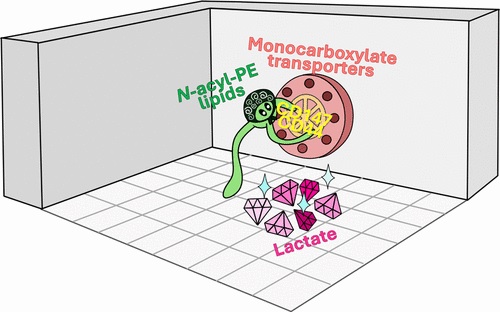
Graphical abstract. Chi et al., Journal of the American Chemical Society 2025.
When starved of oxygen during a heart attack or stroke, cells unleash a flurry of emergency measures to protect themselves and the body. For decades, scientists have observed that the body’s production of a “three-tailed” lipid molecule consistently surges during this trauma but have puzzled over why. Now, Cornell researchers have uncovered its surprising role in cellular survival: protecting against damage when oxygen runs out.
The research shows that the fat molecule, N-acylphosphatidylethanolamine (NAPE), helps cells survive ischaemia by driving lactic acid out of cells. This toxic byproduct builds up during emergency metabolism, and NAPE’s surge appears to be part of the body’s protective response. Though still in an early stage, the findings suggest that boosting or mimicking NAPE could one day help limit tissue damage in heart attack and stroke.
“During heart attack or stroke, when there is an interruption in blood flow, the cells in the affected tissue, whether it is the heart or the brain, have to scramble to be able to continue to produce energy to survive,” Baskin said.
Under normal conditions, cells largely produce energy by a longer and much higher yielding process involving mitochondria.
“However, when energy needs are imminent and oxygen is limited, such as when blood flow is restricted, a metabolic switch occurs to favour glycolysis, which is a quick and dirty way of generating energy,” he said. “But to keep glycolysis going unabated, lactate, or lactic acid, is built up, and because it can be toxic at high levels, cells need to export it to prevent it from building up inside cells to undesirable levels.”
Because NAPE repels water and is short-lived in cells, studying it directly has been nearly impossible. The research team overcame this by designing and synthesising a chemical “look-alike” probe that tagged NAPE’s protein partners under UV light, revealing its interactions.
The researchers observed NAPE latching onto proteins that regulate lactate transport. In particular, it bound to two cell-surface proteins, CD147 and CD44, which control transport proteins that act like gates controlling how lactic acid moves in and out of cells. The team’s experiments showed that when NAPE levels rise, lactate transport ramps up, and blocking those transporters erased the effect.
“The work reframes NAPE as a signaling molecule,” Baskin said. “Our finding that NAPE can stimulate lactate export supports a model in which the role of NAPE in pathological events such as heart attack or stroke is part of a protective response.”
For now, the team is exploring whether different versions of NAPE, with different tail compositions, might fine-tune lactate regulation in unique ways. They are also interested in whether NAPE plays roles in other tissues beyond the heart and brain.
“Future studies in heart and brain tissue will test this hypothesis more directly,” Baskin said. “If confirmed, the work could support the creation of therapies that boost NAPE levels as a way to limit tissue damage in cardiovascular emergencies.”
Oxybutynin is usually prescribed for an unglamorous problem: bladder incontinence. But researchers have discovered a surprising new role for this decades-old drug – one that could open the door to treatments for a devastating class of genetic illnesses known as mitochondrial diseases.
In a paper published Sept. 8 in the American Journal of Physiology-Cell Physiology, a team of Cornell researchers described their finding that the molecule oxybutynin can overcome mitochondrial dysfunction by enhancing cellular glycolysis to improve healthy muscle formation by interacting with a suite of proteins involved in mRNA function.
“Mitochondria are essential for our body to produce energy,” said Joeva Barrow, assistant professor of nutritional sciences in the College of Human Ecology who led the study. “If mitochondria are damaged and can no longer produce energy, the cells die, the tissues die and, eventually, the person dies.”
Mitochondrial diseases affect about one in every 5000 people and a large proportion of them are children, Barrow said. Patients often experience profound muscle weakness, neurological decline, heart problems and, in the most severe cases, shortened lives. There are no cures and virtually no effective treatments.
“Our approach was to test a series of small molecules that have never been used to treat mitochondrial disease before,” Barrow said. “Previous attempts at small molecules therapy were unsuccessful because of the use of artificial cell systems, but our plan was to use these molecules directly at the source – the muscle stem cells themselves.”
After running a screen of thousands of small molecules, they saw oxybutynin emerge as a clear frontrunner. They found that oxybutynin treatment can help muscle stem cells overcome one of the most severe forms of the condition, Complex III mitochondrial dysfunction. Normally, cells rely on mitochondria to generate ATP, the molecule that powers nearly every biological process. In Complex III disorders, that system grinds down, leaving cells starved.
The researchers tested oxybutynin on mouse and human muscle stem cells, the cells responsible for repairing and growing new muscle. These cells, normally stunted by the disease, began multiplying and forming muscle fibers again when treated with the drug.
The effect didn’t come from fixing the broken mitochondria. Instead, oxybutynin rewires the cellular energetic pathways to perform glycolysis: the quick-burning process of breaking down glucose. That backup system provided just enough energy to revive growth.
Using a high-tech small molecule binding protein analysis method, the team discovered that oxybutynin binds to proteins involved in RNA processing – the machinery that fine-tunes how cells interpret their genetic code. That interaction set off a cascade of changes, including a boost in amino acid and glucose transport into the cells.
In other words, the drug seems to rewire how diseased muscle cells fuel themselves, finding clever ways to survive without fully functioning mitochondria.
The results held true not only for mouse stem cells but also for human ones. Treated muscle stem cells grew stronger, produced more muscle fibres and maintained higher energy levels than untreated controls.
“Translating these findings to children with mitochondrial disease is happening in real time at the Children’s Hospital of Philadelphia with collaboration with Dr Marni Falk,” Barrow said. Dr Marni Falk, is the executive director of the Mitochondrial Medicine Frontier Program at the Children’s Hospital of Philadelphia. “Their team performs biopsies with kids with mitochondrial diseases, and they are currently testing oxybutynin with those cells.”
While this is still far from a clinical therapy – no human patients have yet received oxybutynin for mitochondrial disease – the findings raise hopes that an old, inexpensive drug might be repurposed for a devastating illness. “Oxybutynin already has FDA approval for treatment of bladder disorders” she said.
For families facing mitochondrial disease, even small advances can be a lifeline. Most patients today rely only on supportive care, managing symptoms without any way to slow or reverse the disease.
If further studies confirm its benefits, oxybutynin could speed its way into trials, bypassing years of costly development, Barrow said.
By Dr Dumisani Bomela, Chief Executive Officer of the Hospital Association of South Africa
There’s an old African idiom: “When elephants fight, the grass suffers.” The “elephants”, however, are two interdependent players in healthcare: the government, which is pushing for the National Health Insurance (NHI), and private healthcare providers and funders, who have long raised serious concerns about the initiative.
At the heart of the dispute is whether a single-fund NHI is constitutional, viable, and sustainable. The legal conflict is shaping up to be unlike anything we have seen in this country.
Dr Dumisani Bomela, CEO of HASA
Some legislators argue that the private healthcare sector opposes reform because it is driven by profit and harbours anti-poor sentiments. But no one in the private healthcare sector is opposed to the objectives of the National Health Insurance. We are in favour of healthcare reform that works. There is a crucial difference.
It is a difference dismissed by those determined that only their view matters. The result is that not only has the country spent nearly two decades in a fruitless debate about the NHI, but it appears that those in charge of the healthcare system have prioritised stagnation over progress. When alternatives could have been explored, expert advice considered, research examined, and insights heard, none were.
Instead, constructive dialogue leading to a positive compromise benefiting patients is perceived as a weakness to be denied and overcome. Perspectives have become so entrenched that mutual understanding seems out of reach. Consequently, energy, effort, and resources will be spent in courts rather than on designing solutions.
Meanwhile, the country’s healthcare users are not getting the attention they deserve. South Africans continue to suffer in under-resourced facilities or struggle to afford medical coverage.
Current legislation and regulation already allow for immediate reforms that could lower healthcare costs and ease pressure on the system and public hospitals. We could complete the reform pathway that would support the affordability of medical aid for millions more South Africans, a move that experts and the Health Market Inquiry have recommended.
Through public–private collaboration and innovation, we can upgrade healthcare infrastructure and develop a stronger base of critical healthcare skills, particularly in nursing, ultimately creating jobs and strengthening the national fiscus. These are realistic and achievable solutions that would deliver real progress in the short term and better position us to move more confidently towards universal healthcare coverage.
Our greatest achievement as a nation has been our ability to unite in times of crisis. We can do it again, but only if all role players are meaningfully involved in healthcare reform – including the private sector – and are willing to listen, consider, and compromise with each other to meet the needs of all healthcare users. To begin with, the government must view private healthcare as a strategic partner, a national asset that can offer significant ideas to resolve the national health delivery crisis. Private healthcare, on the other hand, faces challenges, some of which were identified in the Health Market Inquiry, and others that will undoubtedly be raised in the roundtable debates accompanying the collaborative initiatives crucial to strengthening the system.
If we don’t change course, patients waiting in overcrowded facilities will continue to suffer, and families will continue to struggle to afford care. Dedicated doctors and nurses already working under increasingly difficult conditions will face a darkening future, and the entire system will creak more ominously.
The path to reform does not have to be adversarial. We can redesign healthcare together, combining the strengths of both public and private sectors in the spirit of recognising our shared humanity and interdependence. We can still choose collaboration over confrontation, practical solutions over political battles, and progress over passivity.
But we must act now. Time is running out, and every day spent fighting in courtrooms rather than sitting eye to eye and exchanging ideas is another day that South Africans suffer without the healthcare they deserve. The choice is ours: Will we fight each other, or will we fight together for a healthcare system that serves everyone?