Author: ModernMedia

“Silent Disease” Outed at African Hepatitis Convention

Many South Africans with hepatitis go undiagnosed

By Liezl Human for GroundUp

The African Viral Hepatitis Convention, held in Cape Town, has put a spotlight on the need to eliminate from the African continent hepatitis B and C, the “silent disease”.

The World Health Organisation(WHO) says Africa “accounts for 63% of new hepatitis B infections, and yet only 18% of newborns in the region receive the hepatitis B birth-dose vaccination”.

In South Africa, 2.8-million people are infected with hepatitis B and 240 000 have chronic hepatitis C. Of those with hepatitis B, only about 23% have been diagnosed.

The convention, hosted by The Gastroenterology and Hepatology Association of sub-Saharan Africa (GHASSA) in conjunction with the International Hepato-Pancreato Biliary Association (IHPBA), took place over several days.

On the last day, a declaration was adopted, demanding the “immediate prioritisation of national elimination plans”, allocation of resources domestically, and the political commitment to eliminate hepatitis.

“As a community of people living with viral hepatitis, advocates for those living with viral hepatitis, healthcare workers, academics and those who simply care, we say no more … All the tools to eliminate viral hepatitis are available and are uncomplicated interventions,” the declaration read.

Hepatitis B

– Liver infection caused by the Hepatitis B virus

– Usually transmitted from mother to child, as well as between children under the age of five, and via injection drug use and sex in adults

Source: Wikipedia

Hepatitis C

– Liver infection caused by the Hepatitis C virus

– Usually transmitted by injection drug use, poorly sterilised medical equipment, needlestick injuries, and transfusions

Source: Wikipedia

The convention follows a WHO 2024 global hepatitis report that says globally deaths are on the rise and that 1.3 million people died of viral hepatitis in 2022, with hepatitis B causing 83% and hepatitis C causing 17% of deaths.

In Africa, 300,000 people died from hepatitis B and C. This is despite having the “knowledge and tools to prevent, diagnose and treat viral hepatitis”.

There are vaccines available for hepatitis B, and hepatitis C can be cured with medication. Hepatitis B is spread through blood and bodily fluids.

Hepatitis-related liver cancer rates and deaths are also on the rise, according to the WHO report.

At the convention Mark Sonderup, a hepatologist at Groote Schuur Hospital, said, “Inaction now results in a bigger problem later.”

Danjuma Adda, former president of the World Hepatitis Alliance, spoke about stigma as barriers to receiving care.

“Because of high stigma we have low testing because people are not motivated to be tested … We need to change the narrative,” he said.

Anban Pillay, the deputy director-general of the National Department of Health, said that at a national level, guidelines around hepatitis education and treatment can be created, but there “has to be advocacy at a local level” too. He also stressed the importance that voices of patients on the challenges they face be heard at a national and provincial level.

Pillay said that the conference had highlighted “gaps in our programme” and that it will identify and implement interventions that have worked in other countries.

At the end of the last session of the hepatitis convention, the declaration was read and signed by those in attendance.

Republished from GroundUp under a Creative Commons Attribution-NoDerivatives 4.0 International License.

Source: GroundUp
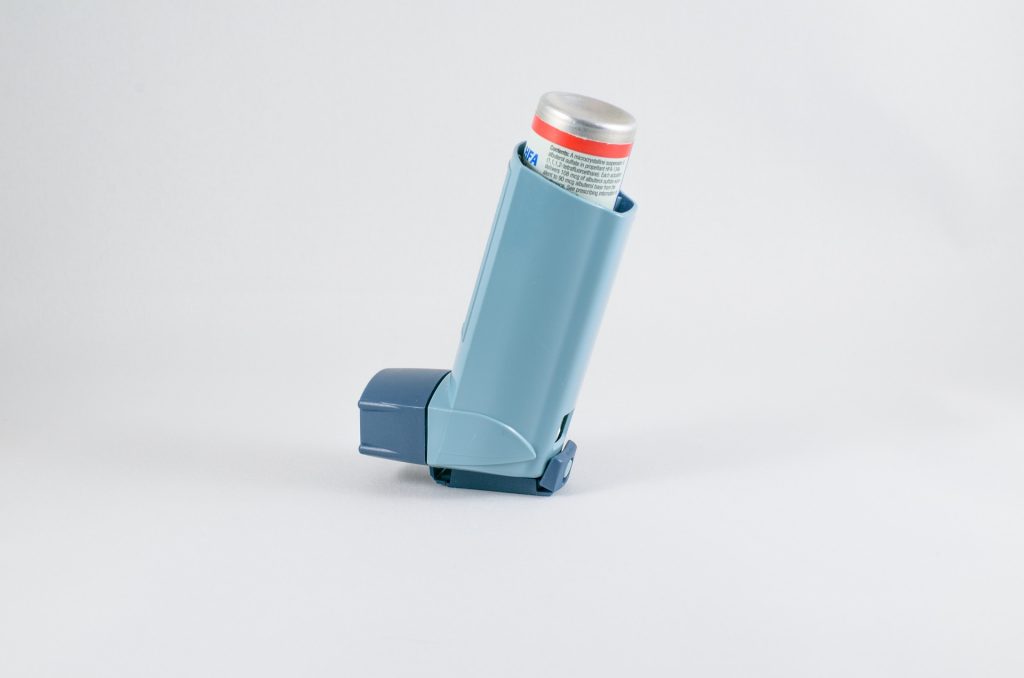
Extreme Heat Linked to Children’s Asthma Hospital Visits

Credit: Pixabay CC0

For children seeking care at a California urban paediatric health centre, extreme heat events were associated with increased asthma hospital visits, according to research published at the ATS 2024 International Conference.

“We found that both daily high heat events and extreme temperatures that lasted several days increased the risk of asthma hospital visits,” said corresponding author Morgan Ye, MPH, research data analyst, Division of Pulmonary and Critical Care Medicine, University of California, San Francisco School of Medicine. “Understanding the impacts of climate-sensitive events such as extreme heat on a vulnerable population is the key to reducing the burden of disease due to climate change.”

Ms Ye and colleagues looked at 2017-2020 electronic health records from the UCSF Benioff Children’s Hospital Oakland, which included data on asthma hospital visits by patients of the hospital, some of whom are from Benioff Oakland’s Federally Qualified Health Center, and demographics including patients’ zip codes. They used data from the PRISM Climate Group of Oregon State University to determine the timing of daily maximum (daytime heat waves) and minimum (nighttime heat waves) for each zip code. The researchers restricted their analyses to the region’s warm season (June to September). To evaluate the potential range of effects of different heat wave measurements, they used 18 different heat wave definitions, including the 99th, 97.5th and 95th percentile of the total distribution of the study period for one, two or three days.

They designed the study in a way that allowed them to determine the association between each heat wave definition and a hospital visit. They repeated the analysis for Bay Area and Central California zip codes.

The team discovered that daytime heat waves were significantly associated with 19% higher odds of children’s asthma hospital visits, and longer duration of heat waves doubled the odds of hospital visits. They did not observe any associations for night-time heat waves.

According to Ye, “We continue to see global temperatures rise due to human-generated climate change, and we can expect a rise in health-related issues as we observe longer, more frequent and severe heat waves. Our research suggests that higher temperatures and increased duration of these high heat days are associated with increased risk of hospital visits due to asthma. Children and families with lower adaptation capacity will experience most of the burden. Therefore, it is important to obtain a better understanding of these heat-associated health risks and susceptible populations for future surveillance and targeted interventions.”

The authors note that past research has suggested positive associations between extreme heat and asthma, but findings regarding hospitalisations and emergency room visits have been conflicting. Additionally, many other studies have focused on respiratory hospitalizations and not hospitalizations for asthma, specifically, and have not included or had a focus on children. This study is also unique because it investigated the effect of daily high temperatures but also the effects of persistent extreme temperatures.

The San Francisco Bay Area and California overall are unique areas of interest because the state is considered a coastal region with less prevalence of cooling units, such as air conditioners. While temperatures may not reach the extremes experienced in other parts of the country, this study demonstrates that even milder extreme heat temperatures may significantly impact health. These effects are more pronounced in climate-susceptible populations, including children and those who are medically vulnerable, such as those served by the urban paediatric health centre in this study. The authors hope these study results will lead to more equitable health outcomes and reduce racial/ethnic disparities observed in climate-sensitive events.

“These results can be used to inform targeted actions and resources for vulnerable children and alleviate health-related stress during heat waves,” they conclude.

Source: American Thoracic Society

First Test of Drug in a Patient with Rare Blood Clotting Disorder is a Success

Source: Wikimedia CC0

A team led by investigators from Massachusetts General Hospital, a founding member of the Mass General Brigham healthcare system, used a new drug to save the life of a patient with immune thrombotic thrombocytopenic purpura (iTTP), a rare disorder characterised by uncontrolled clotting throughout the small blood vessels. The group describes the first clinical use of the drug for iTTP in the New England Journal of Medicine.

“The drug is a genetically engineered version of the missing enzyme in iTTP, and we showed that it was able to reverse the disease process in a patient with an extremely severe form of this condition,” said lead author Pavan K. Bendapudi, MD, an investigator in the Division of Hematology and Blood Transfusion Service at Massachusetts General Hospital and an assistant professor of Medicine at Harvard Medical School.

iTTP results from an autoimmune attack against an enzyme called ADAMTS13 that is responsible for cleaving a large protein involved in blood clotting. The current mainstay of therapy for this life-threatening blood disorder is plasma exchange, which removes the harmful autoantibodies and provides extra ADAMTS13. Plasma exchange induces a clinical response in most patients but can restore at best only about half of normal ADAMTS13 activity. By contrast, a recombinant form of human ADAMTS13 (rADAMTS13) offers the possibility of greatly increased ADAMTS13 delivery.

rADAMTS13 was recently approved for patients with congenital thrombotic thrombocytopenic purpura, which occurs in patients born with complete loss of the ADAMTS13 gene. It’s questionable whether rADAMTS13 could be effective in iTTP given the presence of inhibitory anti-ADAMTS13 autoantibodies, but Bendapudi and his colleagues received permission from the US Food and Drug Administration to utilize rADAMTS13 donated from the manufacturer under a compassionate use protocol in a dying patient with treatment-resistant iTTP.

“We found that rADAMTS13 rapidly reversed this patient’s disease process despite the current dogma that inhibitory autoantibodies against ADAMTS13 would render the drug useless in this condition,” said Bendapudi. “We were the first physicians to use rADAMTS13 to treat iTTP in the United States, and in this case it helped to save the life of a young mother.”

Bendapudi noted that the infused rADAMTS13 overwhelmed the inhibitory autoantibodies in the patient and reversed the thrombotic effects of iTTP. This impact was observed almost immediately upon administration of rADAMTS13, after daily plasma exchange had failed to induce remission.

“I think rADAMTS13 has the potential to replace the current standard of care in acute iTTP. We will need larger, well-designed trials to evaluate this possibility,” said Bendapudi.

A phase 2b randomized clinical trial of rADAMTS13 in iTTP was recently initiated.

Source: Massachusetts General Hospital

SARS-CoV-2 can Cross the Blood–Retinal Barrier, Infecting the Eyes

Photoreceptor cells in the retina. Credit: Scientific Animations

The blood-retinal barrier is designed to protect vision from infections by preventing microbial pathogens from reaching the retina where they could trigger an inflammatory response with potential vision loss. But researchers at the University of Missouri School of Medicine have discovered that SARS-CoV-2 can breach this protective retinal barrier with potential long-term consequences in the eye. Their findings are reported in PLOS Pathogens.

Pawan Kumar Singh, PhD, an assistant professor of ophthalmology, leads a team researching new ways to prevent and treat ocular infectious diseases. Using a humanised ACE2 mice model, the team found that SARS-CoV-2, can infect the inside of the eyes even when the virus doesn’t enter the body through the surface of the eyes. Instead, they found that when viruses enter the body through inhalation, it not only infects organs like lungs, but also reaches highly protected organs like eyes through the blood-retinal barrier by infecting the cells lining this barrier.

This finding is important as we increase our understanding of the long-term effects of SARS-CoV-2 infection,” said Singh. “Earlier, researchers were primarily focused on the ocular surface exposure of the virus. However, our findings reveal that SARS-CoV-2 not only reaches the eye during systemic infection but induces a hyperinflammatory response in the retina and causes cell death in the blood-retinal barrier. The longer viral remnants remain in the eye, the risk of damage to the retina and visual function increases.”

Singh also discovered that extended presence of SARS-CoV-2 spike antigen can cause retinal microaneurysm, retinal artery and vein occlusion, and vascular leakage.

“For those who have been diagnosed with COVID-19, we recommend you ask your ophthalmologist to check for signs of pathological changes to the retina,” Singh said. “Even those who were asymptomatic could suffer from damage in the eyes over time because of COVID-19 associated complications.”

While viruses and bacteria have been found to breach the blood-retinal-barrier in immunocompromised people, this research is the first to suggest that the virus that causes COVID-19 could breach the barrier even in otherwise healthy individuals, leading to an infection that manifests inside the eye itself. Immunocompromised patients or those with hypertension or diabetes may experience worse outcomes if they remain undiagnosed for COVID-19 associated ocular symptoms.

“Now that we know the risk of COVID-19 to the retina, our goal is to better understand the cellular and molecular mechanisms of how this virus breaches the blood-retinal barrier and associated pathological consequences in hopes of informing development of therapies to prevent and treat COVID-19 induced eye complications before a patient’s vision is compromised,” Singh said.

Source: University of Missouri-Columbia

Researchers Identify New Marker for Breast Cancer Prognosis

Photo by National Cancer Institute on Unsplash

A protein called retinitis pigmentosa GTPase regulator interacting protein 1-like (RPGRIP1L) performs various functions that are important for development and for health throughout life, and mutations in the RPGRIP1L gene have been linked to different diseases. New research published in The FASEB Journal indicates that expression levels of the RPGRIP1L gene might serve as a new prognostic marker for individuals with invasive breast cancer.

When investigators examined breast tissue specimens from different women, they found that the expression of RPGRIP1L was elevated in invasive breast cancer specimens compared with normal breast tissue specimens. Also, among patients with invasive breast cancer, those with higher RPGRIP1L gene expression had shorter survival times than those with low expression. Furthermore, elevated expression of RPGRIP1L corresponded with a spectrum of unfavourable clinicopathological features such as the presence of more aggressive forms of cancer and larger tumours.

The researchers also identified 50 genes and 15 proteins whose expression was positively related to RPGRIP1L expression, with most of these proteins and genes being involved in different aspects of the immune response and metabolism.

Finally, the team found that 4 compounds used against cancer – abrine, epigallocatechin gallate, gentamicin, and tretinoin – showed potential for reducing the expression of RPGRIP1L in lab experiments.

“The findings of our research underscore the potential of RPGRIP1L as a significant prognostic biomarker for breast cancer and suggest the viability of novel therapeutic strategies that may modify disease progression, thus potentially enhancing survival rates among affected individuals,” said co–corresponding author Jie Zeng, PhD, of the First Affiliated Hospital of Hunan Normal University, in China.

Source: Wiley

With Gain, No Pain: Exercise Protects against Chronic Pain

Photo by Jonathan Borba on Unsplash

In 2023, researchers in Norway found that among more than 10 000 adults, those who were physically active had a higher pain tolerance than those who were sedentary; and the higher the activity level, the higher the pain tolerance.

After this finding, the researchers wanted to understand how physical activity could affect the chances of experiencing chronic pain several years later. And they wondered if this was related to how physical activity affects our ability to tolerate pain.

This prompted a new study from the researchers at UiT The Arctic University of Norway, the University Hospital of North Norway (UNN), and the Norwegian Institute of Public Health, which was published in the journal PAIN.

“We found that people who were more active in their free time had a lower chance of having various types of chronic pain 7-8 years later. For example, being just a little more active, such as going from light to moderate activity, was associated with a 5% lower risk of reporting some form of chronic pain later,” says doctoral fellow Anders Årnes at UiT and UNN and study author.

He adds that for severe chronic pain in several places in the body, higher activity was associated with a 16% reduced risk.

Measured cold pain tolerance

The researchers found that the ability to tolerate pain played a role in this apparent protective effect. That explains why being active could lower the risk of having severe chronic pain, whether or not it was widespread throughout the body.

“This suggests that physical activity increases our ability to tolerate pain and may be one of the ways in which activity helps to reduce the risk of severe chronic pain,” says Årnes.

The researchers included almost 7000 people in their study, recruited from the large Tromsø survey, which has collected data on people’s health and lifestyle over decades.

After obtaining information about the participants’ exercise habits during their free time, the researchers examined how well the same people handled cold pain in a laboratory. Later, they checked whether the participants experienced pain that lasted for three months or more, including pain that was located in several parts of the body or pain that was experienced as more severe.

Among the participants, 60% reported some form of chronic pain, but only 5% had severe pain in multiple parts of the body. Few people experienced more serious pain conditions.

Pain and exercise

When it comes to exercising if you already have chronic pain, the researcher says:

“Physical activity is not dangerous in the first place, but people with chronic pain can benefit greatly from having an exercise program adapted to help them balance their effort so that it is not too much or too little. Healthcare professionals experienced in treating chronic pain conditions can often help with this. A rule of thumb is that there should be no worsening that persists over an extended period of time, but that certain reactions in the time after training can be expected.”

Source: UiT The Arctic University of Norway

Singing Repairs the Language Network of the Brain after Stroke

Photo by Sergio Capuzzimati on Unsplash

Cerebrovascular accidents, or strokes, are the most common cause of aphasia, a speech disorder of cerebral origin. People with aphasia have a reduced ability to understand or produce speech or written language. An estimated 40% of people who have had a stroke have aphasia. As many as half of them experience aphasia symptoms even a year after the original attack.

Researchers at the University of Helsinki previously found that sung music helps in the language recovery of patients affected by strokes. Now, the researchers have uncovered the reason for the rehabilitative effect of singing. The recently completed study was published in the eNeuro journal.

According to the findings, singing, as it were, repairs the structural language network of the brain. The language network processes language and speech in the brain, which has been damaged.

“For the first time, our findings demonstrate that the rehabilitation of patients with aphasia through singing is based on neuroplasticity changes, that is, the plasticity of the brain,” says University Researcher Aleksi Sihvonen from the University of Helsinki.

Singing improves language network pathways

The language network encompasses the cortical regions of the brain involved in the processing of language and speech, as well as the white matter tracts that convey information between the different end points of the cortex.

According to the study results, singing increased the volume of grey matter in the language regions of the left frontal lobe and improved tract connectivity especially in the language network of the left hemisphere, but also in the right hemisphere.

“These positive changes were associated with patients’ improved speech production,” Sihvonen says.

A total of 54 aphasia patients participated in the study, of whom 28 underwent MRI scans at the beginning and end of the study. The researchers investigated the rehabilitative effect of singing with the help of choir singing, music therapy and singing exercises at home.

Singing is a cost-effective treatment

Aphasia has a wide-ranging effect on the functional capacity and quality of life of affected individuals and easily leads to social isolation.

According to Sihvonen, singing can be seen as a cost-effective addition to conventional forms of rehabilitation, or as rehabilitation for mild speech disorders in cases where access to other types of rehabilitation is limited.

“Patients can also sing with their family members, and singing can be organised in healthcare units as a group-based, cost-efficient rehabilitation,” Sihvonen says.

Source: University of Helsinki

Metformin Use Linked to Lower Risk of Developing Blood Cancers

Depiction of multiple myeloma. Credit: Scientific Animations

People who use metformin are less likely to develop a myeloproliferative neoplasm (MPN) over time, indicating that the treatment may help prevent the development of certain types of cancers, according to a study published in Blood Advances.

Metformin is a therapy used to treat high blood sugar in people with type 2 diabetes that increases the effect of insulin, reduces how much glucose is released from the liver and helps the body absorb glucose. A meta-analysis of previous studies connected the therapy with a reduction in the risk of gastrointestinal, breast, and urologic cancers, while a retrospective study of US veterans found that metformin users have a reduced risk for solid and haematological cancers.

Metformin’s anti-inflammatory properties in focus

“Our team was interested in understanding what other effects we see with commonly prescribed treatments like metformin,” said Anne Stidsholt Roug, MD, PhD, chief physician at Aarhus University Hospital and clinical associate professor at Aalborg University Hospital in Denmark. “The anti-inflammatory effect of metformin interested us, as MPNs are very inflammatory diseases. This is the first study to investigate the association between metformin use and risk of MPN.”

MPNs are a group of diseases that affect how bone marrow produces blood cells, resulting in an overproduction of red blood cells, white blood cells, or platelets that can lead to bleeding problems, a greater risk of stroke or heart attack, and organ damage.

Surprisingly strong association

The researchers compared metformin use among patients diagnosed with MPNs and a matched population from the Danish general population between 2010 and 2018. Of the 3816 MPN cases identified from the sample, a total of 268 (7.0%) individuals with MPN had taken metformin as compared to 8.2% (1573 out of 19 080) of the control group of people who had taken metformin but were not diagnosed with MPN. Just 1.1% of MPN cases had taken metformin for more than five years, as compared to 2.0% of controls. The protective effect of metformin was seen in all subtypes of MPN when adjusting for potential confounders.

“We were surprised by the magnitude of the association we saw in the data,” said Daniel Tuyet Kristensen, MD, PhD student, at Aalborg University Hospital and lead author of the study. “We saw the strongest effect in people who had taken metformin for more than five years as compared to those who had taken the treatment for less than a year.” Dr Kristensen added that this makes clinical sense, as MPNs are diseases that develop over a long period of time, like other types of cancer.

The researchers noted that while the protective effect of long-term metformin use was seen in all subtypes of MPN, the study was limited by its registry-based retrospective design. Further, they could not account for risk-modifying lifestyle factors, such as smoking, obesity, and dietary habits.

Dr Roug noted that while the study team were unable to assess exactly why metformin seems to protect against the development of MPN, they hope additional research will be conducted to better understand why this may be. Moving forward, the researchers aim to identify any similar trends with myelodysplastic syndromes and acute myeloid leukaemia in population-level data for future study.

Source: American Society of Hematology

Increase in Global Life Expectancy of Nearly 5 Years by 2050

Photo by Tima Miroshnichenko on Pexels

The latest findings from the Global Burden of Disease Study (GBD) 2021, published in The Lancetforecast that global life expectancy will increase by 4.9 years in males and 4.2 years in females between 2022 and 2050.

The largest increases are expected in countries where life expectancy is lower, such as in sub-Saharan Africa, contributing to a convergence of increased life expectancy across geographies. The trend is largely driven by public health measures that have prevented and improved survival rates from cardiovascular diseases, COVID, and a range of communicable, maternal, neonatal, and nutritional diseases (CMNNs).

This study indicates that the ongoing shift in disease burden to non-communicable diseases (NCDs) like cardiovascular diseases and cancer, and exposure to NCD-associated risk factors, such as obesity and smoking, will have the greatest impact on disease burden of the next generation.

Longer lives, but more years of poor health

As the disease burden continues to shift from CMNNs to NCDs and from years of life lost (YLLs) to years lived with disability (YLDs), more people are expected to live longer, but with more years spent in poor health. Global life expectancy is forecasted to increase from 73.6 years of age in 2022 to 78.1 years of age in 2050 (a 4.5-year increase). Global healthy life expectancy (HALE) – the average number of years a person can expect to live in good health – will increase from 64.8 years in 2022 to 67.4 years in 2050 (a 2.6-year increase).

To come to these conclusions, the study forecasts cause-specific mortality; YLLs; YLDs; disability-adjusted life years (DALYs, or lost years of healthy life due to poor health and early death); life expectancy; and HALE from 2022 through 2050 for 204 countries and territories.

“In addition to an increase in life expectancy overall, we have found that the disparity in life expectancy across geographies will lessen,” said Dr Chris Murray, Chair of Health Metrics Sciences at the University of Washington and Director of the Institute for Health Metrics and Evaluation (IHME). “This is an indicator that while health inequalities between the highest- and lowest-income regions will remain, the gaps are shrinking, with the biggest increases anticipated in sub-Saharan Africa.”

Dr Murray added that the biggest opportunity to speed up reductions in the global disease burden is through policy interventions aimed to prevent and mitigate behavioural and metabolic risk factors.

These findings build upon the results of the GBD 2021 risk factors study, also released today in The Lancet. This accompanying study found that the total number of years lost due to poor health and early death (measured in DALYs) attributable to metabolic risk factors has increased by 50% since 2000. Read more on the risk factors report at https://bit.ly/GBDRisks2021.

Alternative scenarios for 2050

The study also puts forth various alternative scenarios to compare the potential health outcomes if different public health interventions could eliminate exposure to several key risk factor groups by 2050.

“We forecast large differences in global DALY burden between different alternative scenarios to see what is the most impactful on our overall life expectancy data and DALY forecasts,” said Dr Stein Emil Vollset, first author of the study who leads the GBD Collaborating Unit at the Norwegian Institute of Public Health. “Globally, the forecasted effects are strongest for the ‘Improved Behavioural and Metabolic Risks’ scenario, with a 13.3% reduction in disease burden (number of DALYs) in 2050 compared with the ‘Reference’ (most likely) scenario.”

The authors also ran two more scenarios: one focused on safer environments and another on improved childhood nutrition and vaccination.

“Though the largest effects in global DALY burden were seen from the ‘Improved Behavioural and Metabolic Risk’ scenario, we also forecasted reductions in disease burden from the ‘Safer Environment’ and ‘Improved Childhood Nutrition and Vaccination’ scenarios beyond our reference forecast, said Amanda E. Smith, Assistant Director of Forecasting at IHME. “This demonstrates the need for continued progress and resources in these areas and the potential to accelerate progress through 2050.”

“There is immense opportunity ahead for us to influence the future of global health by getting ahead of these rising metabolic and dietary risk factors, particularly those related to behavioural and lifestyle factors like high blood sugar, high body mass index, and high blood pressure,” continued Dr Murray.

Source: Institute for Health Metrics and Evaluation

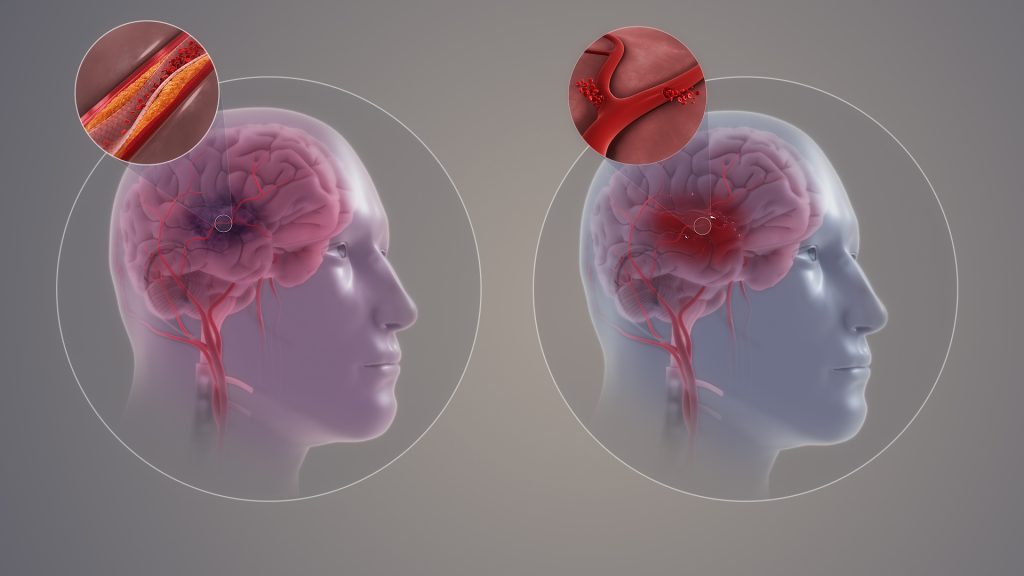
New Blood Test for Ischaemic Stroke is a ‘Game-changer’

Ischaemic and haemorrhagic stroke. Credit: Scientific Animations CC4.0

A new study led by investigators from Brigham and Women’s Hospital has developed a new test by combining blood-based biomarkers with a clinical score to identify patients experiencing large vessel occlusion (LVO) stroke with high accuracy. Their results are published in the journal Stroke: Vascular and Interventional Neurology.

“We have developed a game-changing, accessible tool that could help ensure that more people suffering from stroke are in the right place at the right time to receive critical, life-restoring care,” said senior author Joshua Bernstock, MD, PhD, MPH, a clinical fellow in the Department of Neurosurgery at Brigham and Women’s Hospital.

Most strokes are ischaemic, in which blood flow to the brain is obstructed. LVO strokes are an aggressive type of ischaemic stroke that occurs when an obstruction occurs in a major artery in the brain, causing brain cells to rapidly die off from lack of oxygen. Major medical emergencies, LVO strokes require the swift treatment with mechanical thrombectomy, a surgical procedure that retrieves the blockage.

“Mechanical thrombectomy has allowed people that otherwise would have died or become significantly disabled be completely restored, as if their stroke never happened,” said Bernstock. “The earlier this intervention is enacted, the better the patient’s outcome is going to be. This exciting new technology has the potential to allow more people globally to get this treatment faster.”

The research team previously targeted two specific proteins found in capillary blood, one called glial fibrillary acidic protein (GFAP), which is also associated with brain bleeds and traumatic brain injury, and one called D-dimer. In this study, they demonstrated that the levels of these blood-based biomarkers combined with field assessment stroke triage for emergency destination (FAST-ED) scores could identify LVO ischaemic strokes while ruling out other conditions such as bleeding in the brain. Brain bleeds cause similar symptoms to LVO stroke, making them hard to distinguish from one another in the field, yet treatment for each is vastly different.

In this prospective, observational diagnostic accuracy study, the researchers looked at data from a cohort of 323 patients coded for stroke in Florida between May 2021 and August 2022. They found that combining the levels of the biomarkers GFAP and D-dimer with FAST-ED data less than six hours from the onset of symptoms allowed the test to detect LVO strokes with 93% specificity and 81% sensitivity. Other findings included that the test ruled out all patients with brain bleeds, suggesting that it may also eventually be used to detect intracerebral haemorrhage in the field.

Bernstock’s team also sees promising potential future use of this accessible diagnostic tool in low- and middle-income countries, where advanced imaging is not always available. It might also be useful in assessing patients with traumatic brain injuries. Next, they are carrying out another prospective trial to measure the test’s performance when used in an ambulance. They have also designed an interventional trial that leverages the technology to expedite the triage of stroke patients by having them bypass standard imaging and move directly to intervention.

“In stroke care, time is brain,” Bernstock said. “The sooner a patient is put on the right care pathway, the better they are going to do. Whether that means ruling out bleeds or ruling in something that needs an intervention, being able to do this in a prehospital setting with the technology that we built is going to be truly transformative.

Source: Brigham and Women’s Hospital