

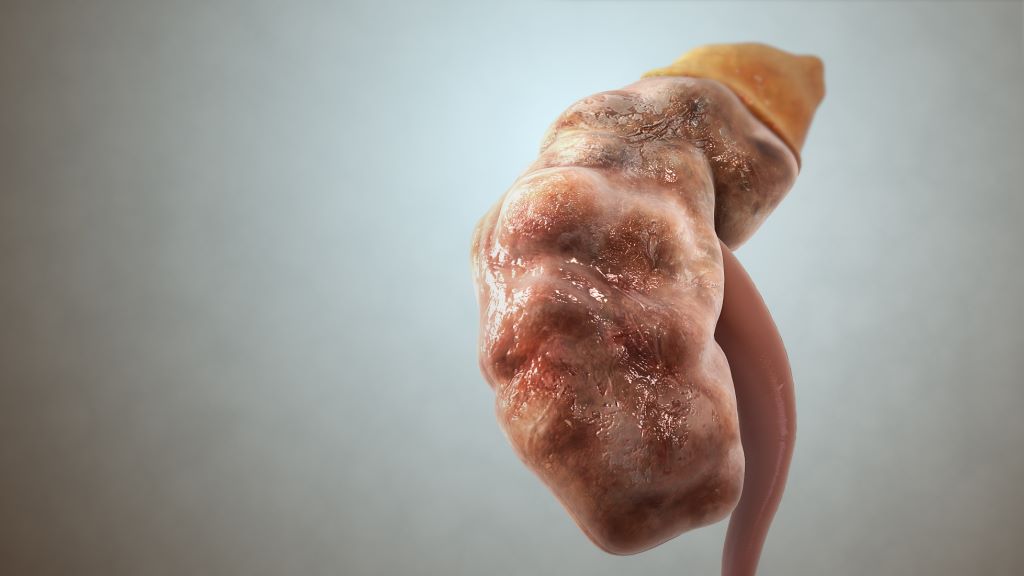
Kidney damage is a serious complication affecting individuals with lupus, an autoimmune disease where immune B cells malfunction and produce antibodies that attack the body’s own cells, tissues, and organs.
B cells, when they make autoantibodies, have been blamed for the illness, prompting the development of several FDA-approved medications that target them. However, lupus nephritis is inevitable in more than half of patients with lupus and B cell depletion is often ineffective therapeutically.
Now, in a study published April 20 in Immunity, Yale scientists have found that the kidney damage culprit is actually a specific T cell – the CD8 T cell.
“People have been, to some extent, ignoring CD8 T cells because of their focus on B cells and the production of autoantibodies,” says lead author Jafar Al Souz, an MD-PhD student in the lab of Joseph Craft, MD, Paul B. Beeson Professor of Medicine (Rheumatology) and professor of immunobiology at Yale School of Medicine. “But we need to think more deeply about why current therapies fail in some patients.”
T cells drive kidney damage in lupus
Previous work in the Craft Lab has shown that blocking T cells’ activity in mouse models of lupus could spare the animals from kidney injuries. That result prompted Al Souz to look closer at this subset of the immune cells.
“What I saw was that these T cells in the sick kidney had a killer phenotype; they were very activated with the potential to cause kidney damage,” he says. Nearly all of these cells were CD8 T cells – also known as cytotoxic T lymphocytes – which are generally tasked with identifying and killing pathogens. That they are aggravated in the kidneys of mouse models of lupus shows that the cells see the kidney as a foreign invader that needs to be destroyed, Al Souz says.
He also found that when the CD8 T cells were depleted, the kidney function was maintained.
Using single-cell multiomics, a high-resolution technique to simultaneously measure the various molecular characteristics of a cell, analysing simultaneous RNA production, gene regulation, and T cell identity, the researchers pinned down the origin of the CD8 T cells to the renal lymph nodes.
“What gave us the biggest clue was that the CD8 T cells in the kidney had very strong overlap with the cells in renal lymph nodes,” Al Souz says. T cells normally undergo rapid proliferation, where one T cell multiplies and generates identical offspring that target the same antigen proteins. “We know that once a T cell is activated in renal lymph nodes, it will leave, go to the circulation and then enter kidneys. So, the fact that we saw identical T cells in renal lymph nodes, circulation, kidneys tells us that the lymph nodes were actually the site of origin.”
What is unique about these CD8 T cells is their capacity to self-renew like stem cells, a discovery that sheds light on a long-held mystery of why it’s hard to stop treatment in patients with lupus. “Constant therapy is needed because these CD8 T cells in the lymph nodes continually supply the kidney with T cells that can damage the organ,” says Craft, who is also the director of the Colton Center for Autoimmunity at Yale.
Targeting T cells for treatment
To draw parallels in humans, the researchers used single-cell RNA sequencing to analyse biopsies from 156 patients with lupus nephritis and 30 healthy individuals. Just as they found in mice, the researchers identified kidney-infiltrating CD8 T cells with the stem-like property in the patients. Unlike in healthy individuals, there was a significantly higher proportion of CD8 T cells that were always active and ready to cause damage in the patients’ kidneys.
“Generally, CD8 T cells are good at pumping the brakes and limiting damage potential upon chronic activation. But we found that in lupus, even when molecules that should stop these T cells from damaging healthy cells are present, it didn’t make the T cells lose function and the capacity for kidney injury,” Al Souz says.
The tendency for T cells to attack a person’s own cells is a typical autoimmune response. For example, in type 1 diabetes – an organ-specific autoimmune disease – T cells mistakenly recognise pancreatic beta cells as foreign and destroy them, thereby stopping insulin production. In cancer and chronic diseases, the ability for T cells to replenish could be beneficial, leading to the elimination of pathogens and tumours. However, the role of T cells in systemic autoimmune diseases like lupus has not been fully described.
“Our results show that there’s more to it than what we understand,” Al Souz says.
By identifying the real culprit, the researchers hope that future treatment of lupus nephritis will be more targeted. “The first step is knowing that it’s abnormal in the first place,” Craft says. “Now, we can think about strategies to lower the number of active CD8 T cells back to the normal range.”
By Kristel Tjandra
Source: Yale School of Medicine
