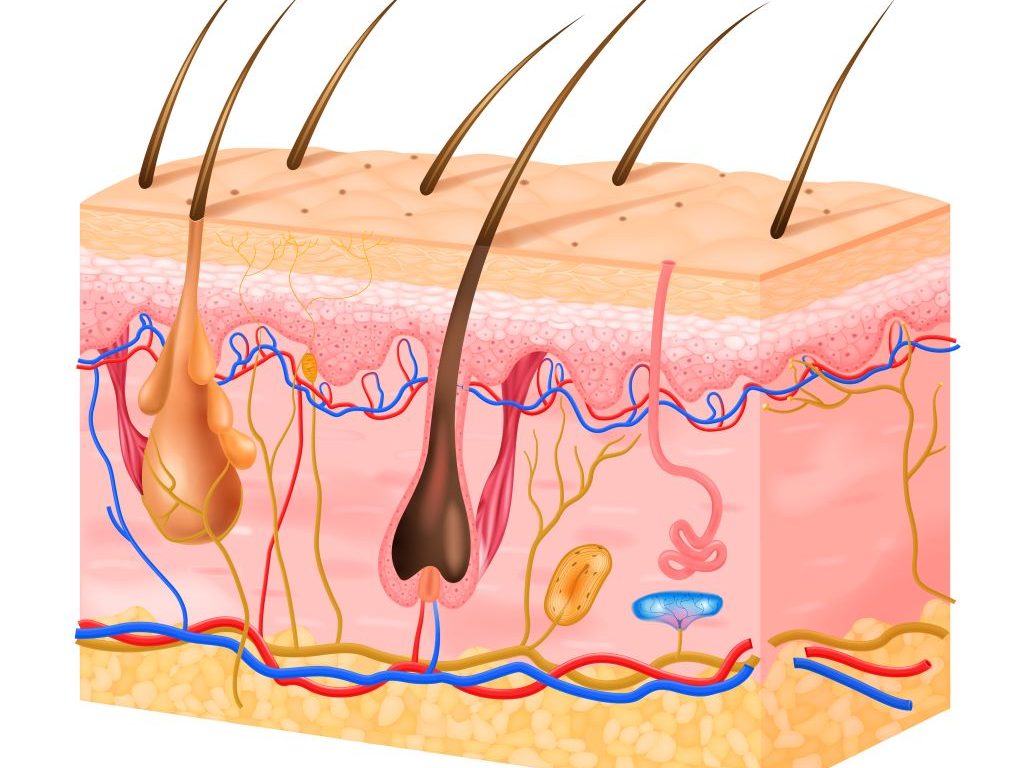
In a study in the Journal of Cosmetic Dermatology that included 60 individuals with mild to moderate acne, following the Mediterranean diet and taking omega-3 fatty acid supplements led to significant reductions in inflammatory and non-inflammatory skin lesions, as well as improved quality of life.
Notably, 98.3% of participants had omega-3 fatty acid deficits at the start of the study. Acne severity lessened significantly in those who reached target omega-3 fatty acid levels during the study.
“Lifestyle interventions, including dietary recommendations, should not be considered in opposition to prescription medications, but rather as a valuable adjunct to any modern acne treatment plan,” said corresponding author Anne Guertler, MD, of the Ludwig Maximilian University of Munich, in Germany. “Future studies should build on the foundation laid by our current findings in a randomised, placebo-controlled design to improve dietary recommendations for acne patients.”
The cerebellum has traditionally been viewed only as a motor control centre; however, recent studies have revealed its involvement in non-motor functions such as cognition, emotion, memory, autonomic function, satiety and meal termination.
In a recent mouse-model study, published in Nature Neuroscience, researchers at University Hospitals (UH), Harrington Discovery Institute at UH, and Case Western Reserve University have now found that the cerebellum also controls thirst, a major function necessary for survival. Specifically, the research team found that a hormone, asprosin, crosses from the periphery into the brain to activate Purkinje neurons in the cerebellum. This leads to an enhanced drive to seek and drink water.
“Asprosin, a hormone our lab discovered in 2016, is known to stimulate food intake and maintain body weight by activating key ‘hunger’ neurons in a part of the brain called the hypothalamus, and works by binding a protein on the neuron surface called a ‘receptor,’” explained Associate Professor Atul Chopra, MD, PhD, senior author on the study.
A receptor is necessary for a hormone to work, and in the case of asprosin’s ability to control appetite and body weight, that receptor is Ptprd. Besides the hypothalamus, the team found that it is also highly expressed in the cerebellum, although the functional significance of this was unknown.
“At the outset, we wondered whether asprosin action in the cerebellum was to coordinate food intake with the hypothalamus, which turned out to be incorrect. The breakthrough came when Ila Mishra, a postdoctoral fellow in the lab, and now the head of her own lab at the University of Kentucky, discovered that mice generated to lack cerebellar responsiveness to asprosin exhibited reduced water intake. Our intended endpoint was measurement of food intake, not water intake, making this a serendipitous observation.”
These mice also showed reduced Purkinje neuron activity accompanied by hypodipsia (reduced feelings of thirst). Their food intake, motor coordination, and learning remained unaffected. By contrast, mice generated to preclude hypothalamic responsiveness to asprosin show reduced food intake without impacting thirst.
“Our results identified not only a new function of cerebellar Purkinje neurons in the modulation of thirst, but also its independent regulation from their well-established role in motor coordination and learning,” added Dr Chopra. “It is fascinating that after a century or more of neuroscience, we are still discovering major new functions of parts of the brain long thought to be understood. The broader implication of this discovery lies in its potential to inform the management of thirst disorders like polydipsia (excessive thirst), hypodipsia and adipsia, for which no current treatments exist.”
Cancer patients who participate in clinical trials hoping for better outcomes fare no better than those who do not, when setting aside the new treatment’s effect, according to the results of a study published in the Journal of the American Medical Association. The analysis found that while overall, trials had a positive benefit, this effect diminished after accounting for various factors common to trial participants such as being younger. Evidence of publication bias was also uncovered.
Participation in a clinical trial may confer a survival benefit to cancer patients is known as a trial effect, and results from access to effective new therapies (the treatment effect), but it is also thought that a trial’s closer monitoring provides a distinct benefit as well (the participation effect). The treatment effect only applies if the treatment proves to be effective, while the participation effect should apply regardless of treatment effect. But the evidence for the participation effect has been conflicting. A pair of reviews, one conducted in 2001 and the other in 2004, found no evidence of a participation effect.
The researchers therefore sought to account for biases and confounding in differences between routine care patients and trial patients. A search was performed for studies comparing survival outcomes for the two groups between January 1 2000 and August 31 2022, which turned up 12 791 records. After screening for eligibility and duplicates, this yielded 39 studies (85 comparisons) for analysis. These comparisons involved haematologic (21%), breast (16%), lung (14%), central nervous system (7%), prostate (7%), and pancreatic cancers (5%), as well as melanoma (6%). The remaining 24% consisted of bladder, cervical, colorectal, oesophageal, gastric, head and neck, kidney, ovarian, and solid mix tumours. One-third of the comparisons involved advanced or metastatic cancer.
Initially, the meta-analysis revealed a statistically significant overall survival benefit for trial participants (HR [hazard ratio], 0.76) when all studies were pooled without regard to their design or quality. But in study subsets matching trial participants and routine care patients for eligibility criteria, the survival benefits diminished (HR, 0.85). Finally, the survival benefit disappeared when only high-quality studies were pooled (HR, 0.91). They also disappeared when estimates were adjusted for potential publication bias (HR, 0.94).
Further analysis (using funnel plots and Egger’s regression test) indicated there was a publication bias against studies which lacked a participation effect.
In an accompanying editorial, Wilson et al. note that the participation effect explains that, “Patients in trials are generally younger, fitter, have fewer comorbidities, and come from higher socioeconomic groups; this enrollment bias largely explains the participation effect. The implications of this finding are important for understanding how trials are often viewed in clinical practice. The participation effect is often used to promote the view that “a clinical trial is the best treatment option, ‘but this may be a false narrative.”
Corresponding author Jonathan Kimmelman, PhD concluded: “Our findings provide reassurance that inability to enroll in a cancer trial doesn’t disadvantage a patient, at least in terms of survival. Our findings can help patients (and physicians) focus their consent discussions on the most relevant and evidence-based benefits of trial participation: the prospects of advancing the care of future patients.”
Children lining up to see the dentist at the Ekuphumleni Community Hall, near Whittlesea. (Photo: Sue Segar/Spotlight)
By Sue Segar
The Keready project uses mobile clinics to take healthcare services to rural areas. Sue Segar spent time with the project as they took eye, dental, and other healthcare services to communities in the Eastern Cape.
In the small Eastern Cape town of Bizana, hundreds of children stream into a large hall at the Oliver and Adelaide Tambo Regional Hospital on a brisk Tuesday morning in May. There’s a festive but orderly vibrancy in the air – the scene made all the more colourful by different school uniforms and young voices from tiny six-year-olds to learners in their late teens.
They’ll be assessed, and helped by doctors from Keready – an organisation offering mobile health services in many far-flung communities lacking healthcare services.
For weeks leading up to today, outreach teams from Keready’s mobile clinic operation have gone from school to school, asking teachers to identify children with eye problems. Today they arrived on various forms of transport – some on the back of a bakkie – from deeply rural communities as far as 100 kms away. Most of the children have little access to health services, particularly eye care, so the response is substantial.
I have travelled here with three doctors and an admin assistant from Keready’s East London office. They join other healthcare staff, including from the health department, for this two-day mega outreach in partnership with the Umbono Eye Project.
“Over the past three months, school educators identified 492 learners from 26 schools who have impaired vision,” says Ewan Harris, a pharmacist and consultant by training and a former deputy director-general of education in the Eastern Cape, who heads up Keready’s Eastern Cape team. “We will attend to these learners and if necessary, provide them with prescription spectacles and meds.”
Ntombizedumo Bhekizulu, a teacher at the Mhlabuvelile Senior Primary School at Ludeke Mission, has come with 16 children, “the ones who struggle to see what we write on the chalkboard”.
Bulelwa Mqhayi from Nomathebe Primary School in Isithukutezi adds: “It’s great that they can help these kids. Most of the parents are unemployed and on social grants and don’t have the money to take the kids to specialists. The clinics don’t help us with eye problems.”
The youngsters will also have a range of other health checks and will be sent to see one of the doctors on site if found to be in need of further health assistance. The health department has deployed a mobile dental unit, an audiologist, as well as a medic to provide advice on family planning and reproductive health.
A child being signed in for a health check at Bizana. (Photo: Sue Segar/Spotlight)
Before arriving at the registration desk, the children have already been given deworming tablets and a Vitamin A supplement, provided by the health department, while each group is given a health talk on age-dependent topics ranging from hand hygiene, to TB and HIV.
After handing in their registration and consent forms, the children go through basic vision screening tests by a team of “eye care ambassadors” – young people supported with employment opportunities through the Social Employment Fund, which is managed by the Industrial Development Corporation.
If the school children fail the eye screening test, they are sent to see optometrist Johan van der Merwe.
In between patients, he tells Spotlight he’s already found a number of “low vision candidates” and one who might need to be placed in a special school. “I’ve just done a full refraction on one child … It’s clear that he has a lens defect,” says Van der Merwe. Placing his hand on the head of another small boy, he continues: “This little one has been very quiet … he’s struggling to communicate. He needs thick lenses, or an operation by a specialist.”
Van der Merwe, who has been an optometrist for 22 years, joined the Umbono Eye Project permanently almost two years ago after volunteering his services once a week. “Before I joined, I was working in a mall in East London. I never saw sunlight.” He adds: “It has been very rewarding to make a difference to these children.”
Optometrist Johan van der Merwe assesses a child at Bizana. (Photo: Sue Segar/Spotlight)
At another mobile site, health department dentist, Dr Unathi Mponco, has been busy with youngsters suffering from a range of dental ailments. “There were sore teeth, rotten teeth, mobile teeth, and some children had very swollen gums…. Whatever I can treat on the mobile truck, I deal with here – otherwise if they need X-rays or the cases are more serious, I refer them to the hospital’s dental unit for a comprehensive exam,” she says.
In a mobile van outside the hall, health department medic Siyabonga Chonco has been consulting teenage girls all day offering family planning services. “The Alfred Nzo district has the highest rate of teen pregnancies in the Eastern Cape. We are trying hard to curb teenage pregnancy,” he says.
The teens are invited to ask any questions and to say whether they are sexually active and ready to take contraceptives. Chonco says in almost every case, he senses great relief from the learners to speak to an impartial young person. “They tell me that, at the clinics, the older nurses can be quite harsh…. They open up to me, especially with questions about contraceptives.”
He says broadly, young people are interested in long-term contraceptives. “They don’t want to have to go to clinics all the time.” Some will walk away with a contraceptive implant – a flexible plastic rod about the size of a matchstick that is placed under the skin of the upper arm to prevent pregnancy over three years – while others will choose injectables or pills.
At the end of two days in Bizana, the team has seen nearly 750 youngsters from about 40 schools, with 432 having had their eyes screened and 52 eligible for specs. For six of those children, the spectacles will be life-changing, says Van der Merwe.
Doctors Eileen Kaba and Anda Gxolo consulting with their little patients. (Photo: Sue Segar/Spotlight)
Apart from a few “high” prescriptions that might have to be ordered from overseas, a member of the team will deliver the specs personally to each learner, an occasion which is a highlight for the team. “When we first put the glasses on their faces, you just see smiles. The parents are so thankful. It makes this so worthwhile,” says Van der Merwe.
Keready is working closely with the provincial departments of health and education. The NGO recently received the Eastern Cape’s Batho Pele Award for enhancing healthcare in the province.
“We could never reach all these children as government,” says TD Mafumbatha, mayor of the Winnie Madikizela-Mandela municipality, adding “this is what collaboration looks like”.
But where did it all begin?
Keready, loosely translated as “We are ready”, was set up in February 2022 to encourage young people to vaccinate against COVID-19.
One of the people behind Keready is Harris, a pharmacist and consultant by training and a former deputy director-general of education in the Eastern Cape. Harris was working as a consultant for the Fort Hare Institute of Health, when he was asked to help design the Eastern Cape’s COVID vaccine rollout strategy.
“The COVID programme was a success because, through advanced digitisation, we were able to map the 84 000 communities in South Africa to their nearest schools, clinics and hospitals,” he says.
And it is out of that awareness of the spatial distribution of healthcare needs that Keready was born.
After the COVID programme ended, Harris, as national lead for the project, was tasked with setting up Keready’s offices in four provinces, including employing provincial leads, and staff as well as doctors and nurses. “Our vision was to give young doctors the opportunity to manage at the highest level, under our guidance.”
Implemented by DG Murray Trust (a South African philanthropic foundation) in partnership with the National Department of Health, Keready is funded by the German government through the KfW Development Bank.
The project reached full scale late last year with 46 mobile health clinics in four provinces: Eastern Cape (8), Gauteng (16), KwaZulu-Natal (13), and the Western Cape (9).
These mobile clinics move into different communities every day. At times they use a loud-hailer to attract people. Sometimes they are based at schools, other times at taxi ranks and other hubs of activity.
People of all ages who visit the clinics are provided with a range of health services, including screenings and tests for HIV, TB and diabetes, as well as given family planning advice and immunisations. Medication is prescribed, and, where possible, dispensed on the spot.
Keready also runs a WhatsApp line where youth can ask young doctors and nurses any health-related questions and get straightforward, non-judgemental answers.
When learning about Keready during a walkthrough of exhibition stands set up at the Birchwood Hotel in Boksburg during the 2023 Presidential Health Summit, President Cyril Ramaphosa described the movement as “NHI on Wheels” because of its efforts in addressing universal health coverage.
From Bizana to Whittlesea
Two weeks later, I am again travelling with the same Keready team – this time to Whittlesea, outside Queenstown. Over two days, we visit the Ekuphumleni Community Hall and Kopana School in Ntabethemba. A highlight of this outreach is that teenage girls will be supplied with sanitary pads, thanks to a collaboration with pharmaceutical and healthcare company Johnson & Johnson.
On day one, hundreds more pupils than anticipated arrive. School principals were over-enthusiastic in spreading the word of the outreach resulting in taxi-loads of pupils from unexpected schools arriving. Irate teachers try to negotiate a way for their pupils to be seen.
Teacher Nolitha Tuta tells me many of the children she’s brought are from child-headed households and some have had little to no access to healthcare services.
While waiting in the queue, a mother of a child from Bhongolethu Primary School describes how she walked for hours to bring her child for eye testing.
Children line up for their health checks at the Kopana School in Ntabethemba. (Photo: Sue Segar/Spotlight)
Despite having waited until the end of the day, students from Zweledinga High end up being driven back home at sunset without being assisted.
After two days in Whittlesea, nearly 1 200 pupils from 36 schools have arrived. Nine schools were turned away. Nearly 700 learners have been screened for eye conditions, with 88 eligible for specs and four referred to an ophthalmologist.
The doctors look exhausted. Dr Anda Gxolo says over the past two days numerous children presented with ear problems. There were also long lines for dental care this time.
Despite the long hours, Dr Phumelele Sambumbu, who manages five of the eight Keready mobile clinics in the Eastern Cape, says she loves her work. “I come from these parts – from a village between Cofimvaba and Tsomo. My old grandmother is bedridden. I know first-hand how difficult it is to have access to care when you’re from a village like that and when you suffer from ailments like that. The idea of bringing health services to people who would otherwise struggle to access them is what drives me,” she says.
Mapping the need
Based on its relationship with the department of health, Keready has ambitious plans to expand its grassroots outreach programmes to help narrow the gaps in healthcare nationally.
A map on the wall of Keready’s office shows the number of government clinics in the Eastern Cape relative to schools. There are around 700 clinics in the province, but over 5000 schools (which works out to more than seven schools per clinic). Nationally, the ratio is similar with around 3 400 clinics and 25 000 schools.
It’s no surprise then that, according to Harris, staff on Keready’s 46 mobile clinics in the four provinces where it operates cannot keep up with demand for their services.
“Based on our mapping of the national population, we know there are 2 500 communities that don’t have reasonable access to a clinic. Just to deal with the gaps, we need 2 500 mobile clinics. We can tell you exactly where in the country to put them,” says Harris.
To reach ill people who are ill but don’t know it, Keready aims for nurse-supervised ambassadors to do door to door visits in communities to check who has TB, HIV and hypertension. “We have digitised every street and every house by satellite. Each house would be marked off; if TB’s picked up, it is mapped,” says Harris.
Plans for the door to door programme are well under way, he says. “In the Eastern Cape, Keready has partnered with the Small Projects Foundation to train 80 young people [as nurse-supervised ambassadors] from the Industrial Development Corporation’s Social Employment Fund to do health testing house to house.”
Eventually, says Harris, there could be 80 people linked to each of the 46 mobile clinics, meaning that a total of 3 680 trained people could be going from door to door.
“Going forward we’d want to find the disease before the disease finds us – TB, HIV, hypertension, diabetes and general growth issues [in children] are the core areas we will address in this programme,” he says.
But the extent to which Keready can deliver on its ambitious expansion plans will depend on funding and to what extent government continues to implement services using mobile clinic outreach programmes. The German financial contribution to the Keready project comes to an end in September. “We are working day and night to get more funding,” says Harris. He says they will soon be meeting with potential donors.
Images of a hip and lumbar spine, where bone density is typically measured.
Osteoporosis is often called a ‘silent disease,’ because it progresses, without symptoms, until a fracture occurs most commonly in your hips, spine and wrists.However, a bone density scan can alert doctors to the disease before a patient has experienced any symptoms.
Radiology imaging techniques play a crucial role in the early diagnosis, management and monitoring of low bone density. The rapid evolution of high-quality imaging techniques, using reduced radiation doses, has positioned radiology ideally for this role.
What is osteoporosis
A healthy bone viewed under a microscope, looks like honeycomb. Osteoporosis, put simply, is when the ‘holes and spaces’ in the honeycomb increase in size, causing the bones to lose density or mass and develop abnormal tissue structure. This is caused by the body losing too much bone or making too little bone because of a lack of calcium, vitamin D and not doing any weight-bearing exercises or both. This can lead to a decrease in bone strength which, in turn, can increase the risk of broken or fractured bones.
There are degrees of bone density loss which are determined by radiologists doing a DEXA scan.
‘The standard method of determining your bone density,’ says Dr Hein Els, director at SCP Radiology, ‘is a DEXA scan (dual-energy X-ray absorptiometry). This involves using two X-ray beams, at different energy levels. to measure the bone mineral density. It has a high accuracy for overall bone density and is commonly found in clinics and hospitals.’
The scan uses a low radiation exposure making it safer for routine screening and follow-up.
‘The amount of radiation is minimal,’ says Dr Els, ‘it’s equivalent to 1 or 2 days of background radiation at sea level.’
Osteoporosis vs osteopenia
Osteoporosis and osteopenia are both conditions measured on a DEXA scan and characterised by decreased bone density. While they are related, they differ in severity and implications for bone health.
The fracture risk is higher in osteoporosis due to more significant bone fragility.
Understanding and managing both conditions are crucial for maintaining bone health and preventing fractures.
Measuring bone density
‘We measure your bone mass density by comparing it to that of a healthy, young adult. The result will tell us how much lower (or higher) your bone mass score,’ explains Dr Els. ‘Software is also used to calculate a predicted 10-year fracture risk for a major osteoporotic fracture and a hip fracture. The result is a T-score which you will be given by your doctor.’
Who is at greater risk
The vast majority of patients referred for a DEXA scan are women. However, men over the age of 50 are also at risk, though not to the same degree as women. The aim is to prevent fractures later in life by maintaining healthy bone mineral density, which means it is beneficial to know your bone mineral density. Fractures in the elderly population are a significant cause of morbidity and mortality.
Apart from diagnosing osteoporosis and osteopenia and assessing fracture risk, DEXA scans are helpful in the following ways:
Monitoring bone density changes over time: For individuals diagnosed with osteoporosis or those undergoing treatment for bone loss, DEXA scans are used to monitor changes in bone density. This helps in evaluating the effectiveness of treatment
Postmenopausal women: Are at a higher risk of developing osteoporosis due to decreased oestrogen levels. DEXA scans are recommended for postmenopausal women, especially those with additional risk factors
Men over 50 can also be at risk of osteoporosis
A family history of osteoporosis or fractures can increase an individual’s risk. DEXA scans can help assess bone density in those with a genetic predisposition
Individuals with a low body mass index (BMI) are at a higher risk for osteoporosis and may benefit from bone density testing
Smokers and heavy alcohol users are risk factors for osteoporosis
Patients with fragility fractures: Individuals who have experienced fractures from minor falls or injuries may undergo DEXA scans to determine if osteoporosis is the underlying cause
How do you treat low bone mass density?
This can be done through medication such as bisphosphonates, hormone-related therapy and other bone-building medications or through lifestyle changes. This includes an adequate intake of calcium and vitamin D, regular weight-bearing exercise, quitting smoking and limiting alcohol.
The DEXA scan is the safest, most reliable method of determining your bone loss and whether your bones are normal or if you are osteopenic or osteoporotic – the precursor to osteoporosis or full-blown osteoporosis. Regular medical check-ups and proactive lifestyle changes can significantly mitigate the risks associated with these conditions.
‘There is no need to be harbouring this silent disease,’ says Dr Els, ‘when radiography is available to test for these and can put you on a path to wellness.’
At the start of the COVID pandemic in 2020, scientists quickly recognised that a handful of characteristics, including age, smoking history, high body mass index (BMI) and the presence of other diseases such as diabetes, increased the risk of severe disease and death. But one suggested risk factor remains unconfirmed more than four years later: cannabis use. Evidence has emerged over time indicating both protective and harmful effects.
Now, a new study by researchers at Washington University School of Medicine in St. Louis points decisively to the latter: Cannabis is linked to an increased risk of serious illness for those with COVID.
The study, published in JAMA Network Open, analysed the health records of 72 501 people seen for COVID at Midwestern US health centres during the first two years of the pandemic. The researchers found that people who reported using any form of cannabis at least once in the year before developing COVID were significantly more likely to need hospitalisation and intensive care than were people with no such history. This elevated risk of severe illness was on par with that from smoking.
“There’s this sense among the public that cannabis is safe to use, that it’s not as bad for your health as smoking or drinking, that it may even be good for you,” said senior author Li-Shiun Chen, MD, DSc, a professor of psychiatry. “I think that’s because there hasn’t been as much research on the health effects of cannabis as compared to tobacco or alcohol. What we found is that cannabis use is not harmless in the context of COVID. People who reported yes to current cannabis use, at any frequency, were more likely to require hospitalisation and intensive care than those who did not use cannabis.”
Cannabis use was different than tobacco smoking in one key outcome measure: survival. While smokers were significantly more likely to die of COVID than nonsmokers, a finding that fits with numerous other studies, the same was not true of cannabis users, the study showed.
“The independent effect of cannabis is similar to the independent effect of tobacco regarding the risk of hospitalisation and intensive care,” Chen said. “For the risk of death, tobacco risk is clear but more evidence is needed for cannabis.”
The study analysed deidentified electronic health records of people who were seen for COVID at BJC HealthCare hospitals and clinics in Missouri and Illinois between Feb. 1, 2020, and Jan. 31, 2022. The records contained data on demographic characteristics such as sex, age and race; other medical conditions such as diabetes and heart disease; use of substances including tobacco, alcohol, cannabis and vaping; and outcomes of the illness: specifically, hospitalisation, intensive-care unit (ICU) admittance and survival.
COVID patients who reported that they had used cannabis in the previous year were 80% more likely to be hospitalised and 27% more likely to be admitted to the ICU than patients who had not used cannabis, after taking into account tobacco smoking, vaccination, other health conditions, date of diagnosis, and demographic factors. For comparison, tobacco smokers with COVID9 were 72% more likely to be hospitalized and 22% more likely to require intensive care than were nonsmokers, after adjusting for other factors.
These results contradict some other research suggesting that cannabis may help the body fight off viral diseases such as COVID.
“Most of the evidence suggesting that cannabis is good for you comes from studies in cells or animals,” Chen said. “The advantage of our study is that it is in people and uses real-world health-care data collected across multiple sites over an extended time period. All the outcomes were verified: hospitalisation, ICU stay, death. Using this data set, we were able to confirm the well-established effects of smoking, which suggests that the data are reliable.”
The study was not designed to answer the question of why cannabis use might make COVID worse. One possibility is that inhaling marijuana smoke injures delicate lung tissue and makes it more vulnerable to infection, in much the same way that tobacco smoke causes lung damage that puts people at risk of pneumonia, the researchers said. That isn’t to say that taking edibles would be safer than smoking joints. It is also possible that cannabis, which is known to suppress the immune system, undermines the body’s ability to fight off viral infections no matter how it is consumed, the researchers noted.
“We just don’t know whether edibles are safer,” said first author Nicholas Griffith, MD, a medical resident at Washington University. Griffith was a medical student at Washington University when he led the study. “People were asked a yes-or-no question: ‘Have you used cannabis in the past year?’ That gave us enough information to establish that if you use cannabis, your health-care journey will be different, but we can’t know how much cannabis you have to use, or whether it makes a difference whether you smoke it or eat edibles. Those are questions we’d really like the answers to. I hope this study opens the door to more research on the health effects of cannabis.”
Infections and neurodegenerative diseases cause inflammation in the brain. But for unknown reasons, patients with brain inflammation often develop muscle problems that seem to be independent of the central nervous system. Now, researchers at Washington University School of Medicine in St. Louis have revealed how brain inflammation releases a specific protein that travels from the brain to the muscles and causes a loss of muscle function.
The study, published in Science Immunology, also identified ways to block this process, which could have implications for treating or preventing the muscle wasting sometimes associated with inflammatory diseases, including bacterial infections, Alzheimer’s disease and long COVID.
“We are interested in understanding the very deep muscle fatigue that is associated with some common illnesses,” said senior author Aaron Johnson, PhD, an associate professor of developmental biology. “Our study suggests that when we get sick, messenger proteins from the brain travel through the bloodstream and reduce energy levels in skeletal muscle. This is more than a lack of motivation to move because we don’t feel well. These processes reduce energy levels in skeletal muscle, decreasing the capacity to move and function normally.”
Fruit fly and mouse models
To investigate the effects of brain inflammation on muscle function, the researchers modelled three different types of diseases – an E. coli bacterial infection, a SARS-CoV-2 viral infection and Alzheimer’s. When the brain is exposed to inflammatory proteins characteristic of these diseases, damaging chemicals called reactive oxygen species build up. The reactive oxygen species cause brain cells to produce an immune-related molecule called interleukin-6 (IL-6), which travels throughout the body via the bloodstream. The researchers found that IL-6 in mice – and the corresponding protein in fruit flies – reduced energy production in muscles’ mitochondria, the energy factories of cells.
“Flies and mice that had COVID-associated proteins in the brain showed reduced motor function – the flies didn’t climb as well as they should have, and the mice didn’t run as well or as much as control mice,” Johnson said. “We saw similar effects on muscle function when the brain was exposed to bacterial-associated proteins and the Alzheimer’s protein amyloid beta. We also see evidence that this effect can become chronic. Even if an infection is cleared quickly, the reduced muscle performance remains many days longer in our experiments.”
Johnson, along with collaborators at the University of Florida and first author Shuo Yang, PhD (who did this work as a postdoctoral researcher in Johnson’s lab) make the case that the same processes are likely relevant in people. The bacterial brain infection meningitis is known to increase IL-6 levels and can be associated with muscle issues in some patients, for instance. Among COVID-19 patients, inflammatory SARS-CoV-2 proteins have been found in the brain during autopsy, and many long COVID patients report extreme fatigue and muscle weakness even long after the initial infection has cleared. Patients with Alzheimer’s disease also show increased levels of IL-6 in the blood as well as muscle weakness.
Potential treatment targets
The study pinpoints potential targets for preventing or treating muscle weakness related to brain inflammation. The researchers found that IL-6 activates what is called the JAK-STAT pathway in muscle, and this is what causes the reduced energy production of mitochondria. Several therapeutics already approved by the Food and Drug Administration for other diseases can block this pathway. JAK inhibitors as well as several monoclonal antibodies against IL-6 are approved to treat various types of arthritis and manage other inflammatory conditions.
“We’re not sure why the brain produces a protein signal that is so damaging to muscle function across so many different disease categories,” Johnson said. “If we want to speculate about possible reasons this process has stayed with us over the course of human evolution, despite the damage it does, it could be a way for the brain to reallocate resources to itself as it fights off disease. We need more research to better understand this process and its consequences throughout the body.
“In the meantime, we hope our study encourages more clinical research into this pathway and whether existing treatments that block various parts of it can help the many patients who experience this type of debilitating muscle fatigue,” he said.
Glaucoma occurs when retinal ganglion cells start to die, and the main risk factors are high eye pressure and older age. Currently, all licensed treatments are designed to lower pressure in the eye – also known as intraocular pressure. However, some patients still continue to lose their sight following treatment.
Retinal cells are particularly energy hungry. To help doctors better understand who will lose their vision faster, the new study, published in Nature Medicine, asked whether mitochondrial function, measured in white blood cells, is lower in people with glaucoma than those without glaucoma and if mitochondrial function is associated with the rate at which glaucoma patients lose vision.
The researchers assessed 139 participants who were already receiving treatment to lower intraocular pressure and 50 healthy people acting as a control (comparison) group.
They measured how well cells in the blood use oxygen, how much vision was lost over time and nicotinamide adenine dinucleotide (NAD) levels. NAD is a molecule in the body that helps cells produce energy and is made from vitamin B3 in the diet.
Firstly, the researchers discovered that certain cells in the blood, known as peripheral blood mononuclear cells, use oxygen differently in people with glaucoma. The team measured how much oxygen these cells use and found that people whose blood cells used less oxygen tended to lose their vision faster, even if they were being treated to lower intraocular pressure. This measurement explained 13% of the differences in how fast patients lost vision.
Additionally, people with glaucoma were found to have lower levels of NAD in their blood cells compared to people without glaucoma. These lower NAD levels were linked to the lower oxygen use in the blood cells.
Senior author, Professor David (Ted) Garway-Heath (UCL Institute of Ophthalmology and Moorfields Eye Hospital), said: “White blood cell mitochondrial function and NAD levels, if introduced as a clinical test, would enable clinicians to predict which patients are at higher risk of continued vision loss, allowing them to be prioritised for more intensive monitoring and treatment.
“If further research shows that low mitochondrial function or low NAD levels are a cause for glaucoma, then this opens the way for new treatments.
“UCL and Moorfields Eye Hospital are currently leading a major clinical trial funded by the Medical Research Council and the National Institute for Health and Care Research, to establish whether high-dose vitamin B3 can boost mitochondrial function and reduce vision loss in glaucoma.*
“We hope that this will open a new avenue for treatment of glaucoma patients which does not depend on lowering the eye pressure.”
As many as half of all patients admitted to hospital, other healthcare facilities are malnourished. This has serious consequences for the individual in terms of poorer quality of life and mortality. Providing nutrients can alleviate these problems, but not enough attention is paid to this knowledge, write researchers from Uppsala University and the University of Gothenburg published in the NEJM.
“Far too few patients are diagnosed with malnutrition. Underdiagnosis and undertreatment of the condition remains a problem in healthcare and elderly care, not only in Sweden but worldwide. However, by using fairly simple methods, patients and older adults could be made to feel much better,” says Tommy Cederholm, professor of clinical nutrition at Uppsala University.
Together with Ingvar Bosaeus, a consultant at Sahlgrenska University Hospital, Cederholm is coauthor of a review article on undernourishment published in the New England Journal of Medicine. The article summarises the global state of knowledge over the last 50 years, with the emphasis on developments over the last 5 years, concluding that the healthcare sector needs to make much greater use of the experience and knowledge revealed in the research.
It is estimated that between 5 and 10% of all older adults in Sweden are malnourished. This figure rises to up to 50% of patients being cared for in hospitals, nursing homes or similar facilities. Weight loss and malnutrition have traditionally been viewed as a natural expression of disease or aging, and something about which nothing can be done. It is now recognised that the most common cause is an underlying disease that causes the individual to eat less, leading to the breakdown of bodily organs and tissues.
People suffering from malnutrition will lose weight and the lack of nutrients may lead to muscle atrophy, making it difficult to cope with everyday life. They may also be more susceptible to infection and require more care, possibly involving long periods of hospitalisation and increased mortality.
Great strides have been made in knowledge about malnutrition and how to treat it over recent years. There is now global consensus among researchers and clinicians on the criteria for diagnosing malnutrition: weight loss, low body mass index, and reduced muscle mass in an individual with poor appetite, either with or without an underlying disease.
Recent large-scale clinical studies clearly show that malnutrition can be reversed. Counselling and treatment offered in collaboration with dietitians and the use of nutritional drinks can slow weight loss and reduce mortality.
“These are simple measures that are ignored every day. We now know that, with the exception of those in the advanced stages of terminal illnesses such as metastatic cancer, the vast majority of patients can be treated. In Sweden, for example, we have been working on this for many years, but we need to be even better,” says Ingvar Bosaeus, a consultant at Sahlgrenska University Hospital.
The researchers propose concrete measures to reduce suffering among older adults.
“It is crucial to register risk factors for malnutrition at an early stage and to be alert to weight loss and loss of appetite. One also needs to recommend nutrient-dense foods at an early stage and begin nutritional therapy in good time with, for example, nutritional drinks. This knowledge must become a much more explicit component of both basic and specialist training for doctors and nurses,” says Tommy Cederholm.
Essenwood Residential Home, a haven for senior women since the 1850s in Durban, South Africa, provides exceptional care for its residents. However, managing the complexities of HR for a growing number of caregivers became a burden, taking away time and resources from core resident care duties. This is where Allmed, a specialist medical personnel solutions provider, stepped in to make a significant difference.
A long history of caring Founded by the Durban Benevolent Society to provide care for elderly women, it initially resided on Victoria Street and in 1921, the home relocated to its current location on Essenwood Road, a larger and more suitable site. The Greenacre family played a pivotal role in this development, with Walter Greenacre donating the land and a bequest from his father, Sir Benjamin Greenacre, facilitating the construction.
Over the years, Essenwood has continuously evolved to meet the needs of its residents. It acquired autonomy in 1950 and established a dedicated assisted living wing in 1970. Most recently, in 2015, the home underwent extensive renovations to ensure it remained a safe and comfortable haven for its residents. Currently, Essenwood is home to 85 residents, with the capacity to care for 110.
The challenge of HR burdens stifling quality care Essenwood, like many care facilities, struggled with the time-consuming tasks of HR management. Nursing Services Manager, Colleen Dempers, found herself spending a considerable amount of time on tasks like rostering, replacements for absent staff, and disciplinary issues. This detracted from the home’s primary focus – ensuring the well-being and individual care of residents.
“We found that we were spending so much time on HR issues that it became a huge distraction, Dempers explains. “It detracted us from additional time on HR issues that could be better spent on quality of care. This is what led us to Allmed for a solution.”
Allmed to the rescue with a partnership for success Building on their established trust with Allmed, a partnership that began in 2016, Essenwood Residential Home made a strategic move to elevate resident care. Allmed was already providing relief support for registered nurses and enrolled nurses, offering a flexible solution for fluctuating staffing needs. The governing board made the tactical decision to entrust Allmed with their entire caregiving staff, ensuring continuity and quality.
“Our core function is resident care,” clarifies Chad Saus, Essenwood Residential Home’s General Manager. “We need to provide individual attention, activities, and a stimulating environment. By outsourcing HR, IR and payroll for 56 caregivers, along with the flexibility of additional resources when needed, Allmed frees us to focus on what truly matters – our residents.”
Streamlining operations for quality care with the Allmed advantage The partnership with Allmed has yielded multiple benefits for Essenwood:
Reduced HR burden: Allmed took over recruitment, payroll, and disciplinary processes for caregivers, freeing up Essenwood’s staff to focus on resident care and quality of service.
Enhanced responsiveness: Allmed provided prompt and efficient support, addressing Essenwood’s concerns quickly and professionally. Whether it was staffing issues, training needs, or resident care challenges, Allmed offered round-the-clock support, solutions, and a “can-do” attitude.
Improved caregiver fit: Allmed understood Essenwood’s care philosophy and resident needs. The caregivers placed by Allmed at Essenwood integrated seamlessly into the environment, providing the high-quality care residents deserve.
Leadership that listens: Essenwood valued Allmed’s commitment to open communication. Any concerns raised by Essenwood were addressed promptly and collaboratively.
The impact: residents feel the difference The positive ripple effects of the Essenwood-Allmed partnership are evident in the high standard of care received by residents. With a dedicated and well-matched caregiving staff, Essenwood can cater to individual needs and provide a more enriching environment for its residents.
A model partnership for senior care The Essenwood Residential Home exemplifies the success achievable through a well-structured healthcare staffing partnership. By outsourcing HR and leveraging a qualified care staffing agency, Essenwood has demonstrably improved the quality of care for its residents. This model can serve as an inspiration for senior care facilities seeking to elevate their services and prioritise resident well-being.