Day: April 24, 2026

Participatory Democracy: What Will Be on the Line When the Country’s Highest Court Turns to NHI in May?

Photo by Bill Oxford on Unsplash

By Sasha Stevenson

From 5–7 May, the Constitutional Court will hear two of the multiple challenges to the NHI Act. Sasha Stevenson, Executive Director of SECTION27, considers what will be on the line in these first potentially landmark cases that deal with the process that led to the Act.

The public discussion on National Health Insurance has gone from abstract; to alternatively excited or worried about implementation; to dizzying references to a range of court cases filed over the course of 2024 and 2025. It can be difficult to keep up with what NHI may mean for our health system and when the promised system reform may happen.

We may now be approaching a decisive moment, with the Constitutional Court set to hear two of the NHI challenges.

From 5–7 May 2026, the Constitutional Court will be hearing challenges brought by the Board of Healthcare Funders and the Premier of the Western Cape. These two challenges deal with public participation in the making of what is now the NHI Act.

In February 2026, parties challenging the constitutionality of specific sections of the NHI Act agreed with government to put their cases on hold, pending a decision of the Constitutional Court in the May 2026 public participation challenges. The parties bringing constitutional challenges include the South African Private Practitioners Forum, the Hospital Association of South Africa, the South African Medical Association, and the Health Funders Association, among others. They agreed to hold off because a decision of the Constitutional Court on public participation could make the constitutional challenges unnecessary.

So for now, all eyes are on the Constitutional Court, whose judges will decide whether government must go back to the drawing board and follow a different procedure, or whether it may go ahead (and face a slew of constitutional challenges).

The Western Cape’s case

The Western Cape government is challenging the NHI Act because it argues that consultation with the Western Cape government, over legislation that restructures health services provided by provinces, was lacking. They argue that the National Council of Provinces (NCOP) failed to respond to a request for an extension for the Western Cape to submit the outcome of its provincial consultation on the NHI Bill and its voting mandate, and then went ahead without the Western Cape documents.

The NCOP also did not, the Western Cape government alleges, consider or debate any proposed amendments to the NHI Bill arising from the public participation in other provinces. When the Western Cape government submission and public participation report came in, the NCOP merely confirmed its earlier decision to approve the Bill.

In essence, the Western Cape’s challenge is about the NCOP’s role of ensuring that provinces and their residents have a say in the making of new laws, and whether that role was properly played. It argues that the NCOP’s failure to play its constitutional role should result in the NHI Act being declared unconstitutional and invalid.

The Board of Healthcare Funders case

While the Western Cape challenge does not deal with public participation in the NHI law-making writ large, the Board of Healthcare Funders (BHF) case fills this gap.

The BHF argues that both the National Assembly and the NCOP failed to comply with their constitutional obligations to facilitate meaningful and effective public involvement in the NHI law-making process. The BHF contends that the public was not provided with sufficient information to allow for meaningful engagement (such as details about the costs and the benefits package of the NHI Fund); and that law makers were not open to persuasion in the participation process.

The BHF asks that the NHI Act is declared invalid and set aside.

Why should we care about public participation?

The Constitutional Court has held that “[i]t is apparent from the preamble of the Constitution that one of the basic objectives of our constitutional enterprise is the establishment of a democratic and open government in which the people shall participate to some degree in the law-making process.”

There was a huge amount of public participation in the law-making process for the NHI Act, with roadshows, written submissions and oral presentations. Government respondents in the BHF case point to the fact that 338 891 written submissions were made at various stages, and many oral presentations were heard by Parliament. Few could argue that, if you wanted to, you did not have a chance to have your say on the NHI Bill.

But is being able to say something enough?

In a constitutional democracy where citizens participate in law-making between elections as a way of directly influencing the law, if there is no chance of having that influence, merely being able to speak is insufficient.

There is, of course, no obligation on government to adopt proposed changes as a result of public participation. Parliament cannot be required to agree with all submissions, and the validity of a process does not turn on whether amendments were made to take into account submissions. But when few or no amendments are made, it inevitably raises eyebrows.

In the case of the NHI Bill, while there were limited changes to the Bill when it went through the National Assembly, no changes at all were made following the NCOP public participation process. Given the hundreds of thousands of submissions, many of which were substantive, the small number of amendments is surprising. Particularly given that some submissions that were consistently made are now being conceded by the Department of Health, in public or in private. These include submissions related to the position of asylum-seekers, transitional provisions, and the role of medical aids.

SECTION27 and the Treatment Action Campaign made submissions at Draft Bill stage, before the National Assembly, and before the NCOP. As health activists and health rights lawyers, our submissions were carefully considered and proposed amendments to bring the Bill in line with the Constitution and the needs of healthcare users. Our experience was of MPs engaging to a very limited extent with the substance of the submissions, focusing rather on whether we were ‘for’ or ‘against’ the NHI, or their party’s position on it. It was an experience that brought into question how seriously real public participation was being taken.

The Constitutional Court will now be able to consider whether the public participation processes on the NHI Act were in line with the constitutional call for participatory democracy; or whether they were an unconstitutional tick box exercise. Its decision will determine if the NHI Act will be further scrutinised for substantive constitutionality through litigation, or if it should be returned to the legislature for further consideration and participation.

Either way, what NHI may mean for our health system is a question that may yet take some time to answer. On the other hand, what participatory democracy requires of parliament (arguably an even more consequential question) may soon be answered by the Constitutional Court.

*Stevenson is a human rights lawyer and executive director of SECTION27SECTION27 is representing the Treatment Action Campaign in an application to be admitted as amicus curiae in a court case relating to the NHI.

Note: Spotlight is published by SECTION27, but is editorially independent – an independence that the editors guard jealously. Spotlight aims to deepen public understanding of important health issues by publishing a variety of views on its opinion pages. The views expressed in this article are not necessarily shared by the Spotlight editors.

Republished from Spotlight under a Creative Commons licence.

Read the original article.

Family Environment Shapes Life Outcomes Across Generations

Source: CC0

Adopted children who have grown up in more favourable family environments than their siblings are at lower risk of mental health issues, criminality and social problems – benefits that, in some cases, extend to the next generation. These are the findings of a new study of Swedish siblings published in The BMJ.

Children who grow up in difficult family circumstances are at greater risk of experiencing problems later in life. These may include mental health issues, difficulties at school or criminal behaviour. 

To determine the extent to which these factors can be influenced, researchers at Karolinska Institutet studied pairs of siblings in Sweden where one sibling was adopted away from a high-risk family while the other remained with and grew up with their biological parents. This allowed them to compare the long-term effects of different family environments while taking genetic factors into account.

“Our study shows that a more favourable home environment can make a big difference, particularly for children who start life with clear risk factors,” says Erik Pettersson, associate professor at the Department of Medical Epidemiology and Biostatistics at Karolinska Institutet.

Followed over 12 000 siblings

The study is based on Swedish population registers and covers just over 12 000 full and half-siblings born between 1950 and 1980. All come from families where at least one parent had experienced some form of psychiatric or social issue, such as mental illness, criminality or attempted suicide, and where at least one child had been given up for adoption before the age of ten. Families who took in adopted children often had greater resources and higher socio-economic status.

The results show that the adopted children had a lower risk of mental illness, criminality and dependence on social security benefits as adults, compared to their siblings who grew up with their biological parents. They also performed better at school and, on average, attained a higher level of education. Furthermore, men who had been adopted performed better during military conscription, both on intelligence tests and in interviews measuring stress resilience and social adaptability.

May affect the next generation

The researchers also investigated whether these differences were passed on to the next generation. In total, nearly 22,000 children of the sibling pairs were studied. 

On average, the children of adopted siblings displayed higher functioning than their cousins, for example a lower risk of criminality and financial problems. The effects were weaker than in the previous generation, but pointed in the same direction.

“This suggests that improved living conditions benefit not only the individual, but also the next generation,” says Erik Pettersson.

Value of support measures

He emphasises that the results should not be seen as an argument for adoption, which is currently uncommon in Sweden. However, he believes the study highlights the value of interventions for children in vulnerable environments.

“Research into the effects of various support measures aimed at giving children a better upbringing is both limited and fragmented,” he says. “Some studies show significant long-term benefits; others show little or none at all. Our study suggests that the potential is considerable, even though we cannot say which measures are most important.” 

Source: Karolinska Institutet

Common Fluid Treatments for Paediatric Sepsis Found to Have Similar Efficacy and Safety

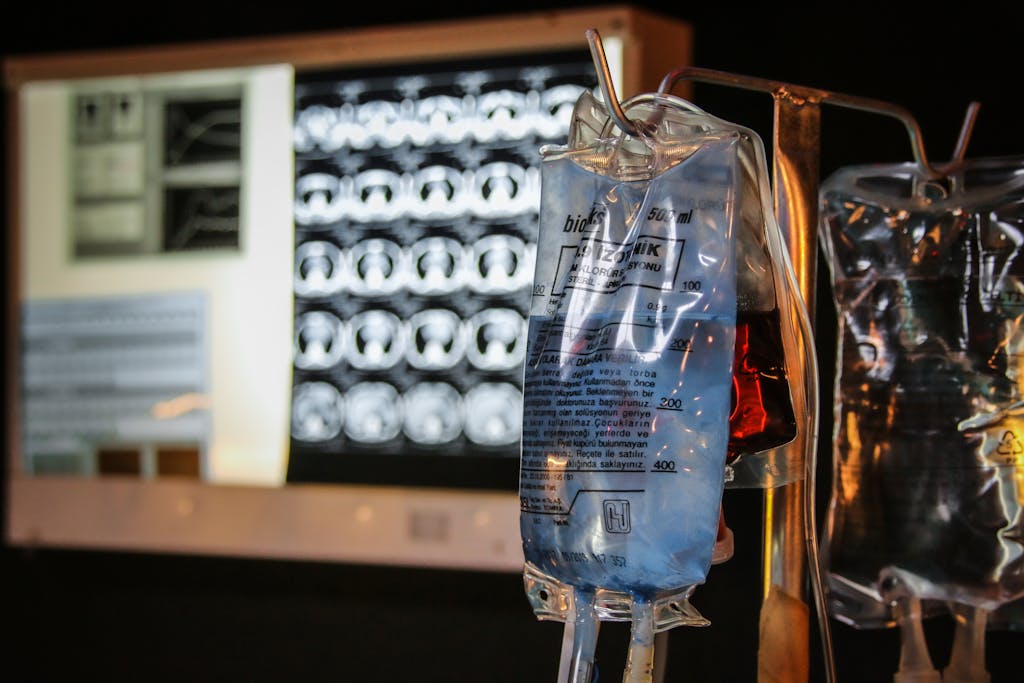
Trial found that balanced fluids and saline solution are equally effective for treating patients and reducing the risk of major adverse kidney events

Photo by Furkan İnce

A major study, led by researchers at Children’s Hospital of Philadelphia, Nemours Children’s Health, and Children’s National Hospital, found that different types of crystalloid fluid resuscitation were equally effective for staving off the most serious adverse kidney events after the treatment of paediatric patients with suspected septic shock. The findings of this large clinical trial are detailed in a study published by The New England Journal of Medicine and are being presented at the Pediatric Academic Societies (PAS) Meeting in Boston.

Sepsis is a life-threatening response to infection that causes organ failure. The combination of the body’s immune system and the infection together cause an abnormal response, which can prevent different organ systems from working normally. While many decades of research and improvements in clinical care have significantly improved outcomes for paediatric sepsis patients, about 1 in 10 children in the US with sepsis or septic shock are still at risk of dying.

In some previous multi-centre studies, researchers found that critically ill adults who received balanced crystalloid fluid – an intravenous (IV) treatment meant to exhibit similar properties to human plasma – resulted in lower risk of complications and death compared with a standard 0.9% saline IV solution. This prompted researchers to explore whether a similar study could determine whether one fluid treatment was superior for pediatric sepsis patients.

“We knew we were going to need thousands of patients to answer this question, which we knew would be a challenge,” said co-lead author Fran Balamuth, MD, PhD, an attending physician and Division Chief of Emergency Medicine at CHOP. “Yet we were excited to proceed because these fluids are inexpensive and universally available around the world, meaning that we wouldn’t have decades of waiting to take action once the study was complete; we could be pragmatic and take immediate action based on the results that we found.”

Because suspected cases of sepsis are uncommon among the general population, Balamuth, co-lead author Scott L. Weiss, MD, attending physician and Division Chief of Critical Care at Nemours Children’s Hospital, Delaware, and their colleagues required the collaboration of many hospitals to achieve the data standards needed for meaningful conclusions. For this, they collaborated with Nathan Kuppermann, MD, Executive Vice President and Chief Academic Officer of Children’s National Hospital and Director of the Children’s National Research Institute, who has a history of running successful clinical trials in acutely ill children, and served as the senior author.

“This trial demonstrates the power of large collaborative research networks to answer important clinical questions for children,” Kuppermann said. “By enrolling thousands of patients across multiple countries, we were able to provide the kind of evidence clinicians need to guide care for children with suspected septic shock.”

In the end, a total of 47 emergency departments across five countries were represented in the study, with more than 9000 patients enrolled who received either balanced fluid or 0.9% saline.

The primary outcome of the study was Major Adverse Kidney Events by 30 days (MAKE30), an important outcome for kidney injury that accounts for death, new renal replacement therapy or persistent renal dysfunction. The researchers found that MAKE30 occurred in 3.4% of patients enrolled in the balanced fluid group and 3.0% in the 0.9% saline ground. The study found biochemical differences in children treated with the two fluids, including a higher frequency of elevated blood chloride levels in the 0.9% saline group, and higher lactate levels in the balanced fluid group. Both groups had 23 median hospital-free days of 28, and there were no differences in mortality or other safety outcomes or adverse events. 

“This trial confirms that either balanced fluid or 0.9% saline are effective and safe for the initial resuscitation of children with suspected septic shock, and that a fluid strategy that reduces hyperchloraemia does not necessarily translate to improved patient outcomes,” said Weiss, an attending physician and Division Chief of Critical Care at Nemours Children’s Hospital, Delaware. “We also did not identify differences across subgroups. However, despite the large number of participants, it is important to note that we cannot exclude the possibility of benefit of one fluid or the other in a subset of children with the most severe illness.”

“A large trial like this definitively answers a question we’ve had in our field for many, many years,” Balamuth said. “In an emergency department with a child with suspected sepsis, you can treat the child with whichever fluid is readily available. And we think that’s great news for children around the world.”

Source: EurekAlert!

Genetic Study in Indians Finds New Pathways Involved in Cardiometabolic Disease

Study of 3000 Punjabi Sikhs may yield new targets for treating Type 2 diabetes and other disorders

Photo by Sangharsh Lohakare on Unsplash

A study conducted in an Indian population has identified new molecular pathways that contribute to cardiovascular disease, which had not been reported previously in studies of Europeans. Dharambir Sanghera of the University of Oklahoma Health Sciences Center, US, led the new study, which was published April 23rd in the open access journal PLOS Medicine.

Worldwide, rates of cardiometabolic disease, which includes obesity, Type 2 diabetes and heart disease, are on the rise, and South Asian people living abroad appear to be especially susceptible. Previous studies have looked for genes that influence the levels of various breakdown products of lipids in the blood and their connection to different diseases, but most of this research has been conducted in people of European ancestry.

In the new study, researchers looked at how genetics influenced the levels of 516 lipid metabolites in the blood of 3000 Punjabi Sikh individuals, in an effort to better understand how these genetic pathways contribute to disease in different ethnic groups. They compared their findings to previous results from more than 1 million Europeans and 15 000 individuals with Indian ancestry. The team identified new genetic pathways that link specific lipid metabolites to disease. Notably, they confirmed that one metabolite, LPC O-16:0, which is known to be involved with immune cell signaling and inflammation, influences Type 2 diabetes risk. They also identified a genetic variant that may protect Indians from developing heart disease by modulating levels of the metabolite PC 38:4.

These findings offer new insights into the diverse molecular origins of cardiometabolic disease and provide potential pathways to be explored for designing innovative therapies. The researchers conclude that including more non-European participants in this type of research would help in identifying distinct disease subtypes linked to different genetic pathways. These advances would likely be beneficial in clinical practice by enabling more personalised therapies and preventive strategies for people from different backgrounds.

The authors add, “This study reveals new genetic pathways and lipid markers that contribute to type 2 diabetes and heart disease, specifically emphasising how immune system signaling affects metabolic health. By identifying unique genetic signatures in Asian Indians, the research advocates for ancestry-specific medical approaches to address chronic immuno-vascular conditions in cardiometabolic disease.”

Provided by PLOS

Vitamin D May Help Prevent Diabetes – Depending on Genetics

New analysis of a major clinical trial finds supplementation reduced diabetes risk in prediabetic adults with certain variations in the vitamin D receptor gene

Photo by Michele Blackwell on Unsplash

Prediabetes is a condition marked by higher-than-normal blood sugar levels that often leads to type 2 diabetes. A new study finds that vitamin D may help delay or prevent that progression – but only in people with certain genetic variations.

The study, published today in JAMA Network Open, found that prediabetic adults with certain variations in the vitamin D receptor gene had a 19% lower risk of developing diabetes when taking a high daily dose of vitamin D.  

The researchers analysed data from the D2d study, a large, multi-site clinical trial that tested the effect of 4,000 units of vitamin D per day versus placebo in more than 2000 US adults with prediabetes to see if a daily high dose of vitamin D would lower the chance of these particularly high-risk individuals developing diabetes.

The original trial did not find a significant reduction in diabetes risk across all participants.  

“But the D2d results raised an important question: Could vitamin D still benefit some people?” said Bess Dawson-Hughes, M75, the study’s lead author and a senior scientist at the Jean Mayer USDA Human Nutrition Research Center on Aging at Tufts University. “Diabetes has so many serious complications that develop slowly over years. If we can delay the time period that an individual will spend living with diabetes, we can stop some of those harmful side effects or lessen their severity.”

Through an earlier analysis, the D2d research team found that blood levels of 40 to 50 ng/mL of 25-hydroxyvitamin D or higher were linked to substantial and progressively larger reductions in participants’ risk of developing diabetes.  

Vitamin D circulating in the blood is converted into its active form in the body before binding to the vitamin D receptor, a protein that helps cells respond to the vitamin. The researchers wondered whether genetic differences in this receptor might explain why some people benefited from vitamin D while others did not. The pancreas’s insulin-producing cells have vitamin D receptors, suggesting the vitamin may help influence insulin release and blood sugar control.  

For the new study, Dawson-Hughes and her colleagues analysed genetic data from 2098 trial participants who had consented to DNA testing according to two groups: participants who appeared to benefit from vitamin D supplementation and those who did not. They then compared response rates by subgroups of patients sorted according to three common variations in the vitamin D receptor gene. 

This analysis revealed that adults with the AA variation of the ApaI vitamin D receptor gene (about 30% of the study population) did not respond to daily treatment with a high dose of vitamin D, compared with placebo. In contrast, the analysis found that the same treatment in adults with the AC or CC variations of the vitamin D receptor gene saw a significantly reduced risk of developing diabetes compared with those taking a placebo. 

“Our findings suggest we may eventually be able to identify which patients with prediabetes are most likely to benefit from additional vitamin D supplementation,” said Dawson-Hughes. “In principle, this could involve a single, relatively inexpensive genetic test.”

By Genevieve Rajewski

Source: Tufts University