

Tag: intravenous solutions

Common Fluid Treatments for Paediatric Sepsis Found to Have Similar Efficacy and Safety

Trial found that balanced fluids and saline solution are equally effective for treating patients and reducing the risk of major adverse kidney events
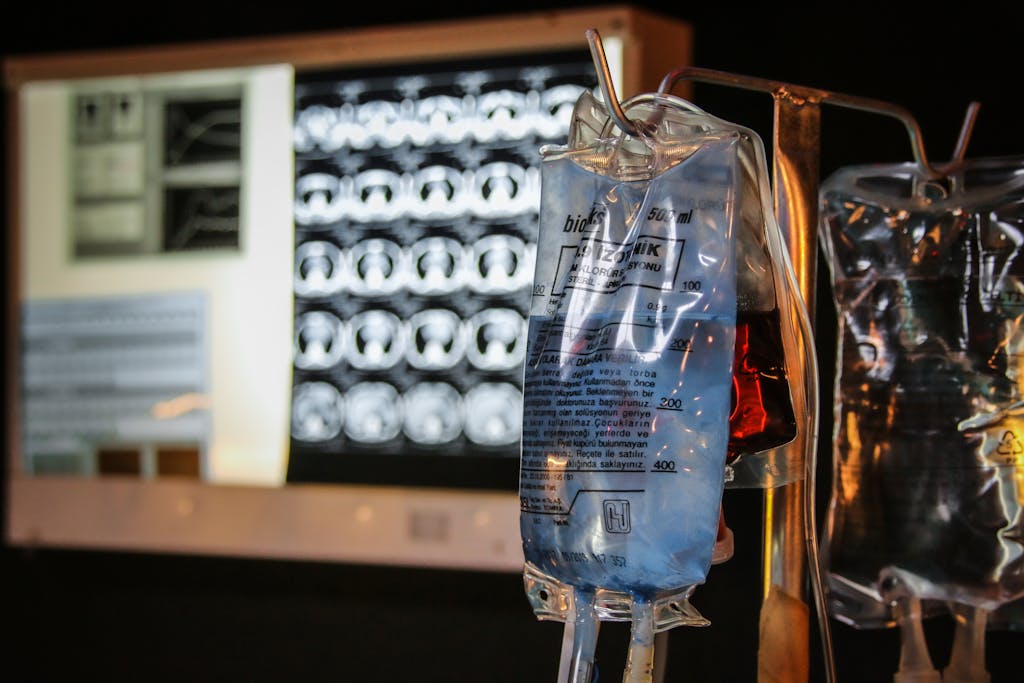
Photo by Furkan İnce

A major study, led by researchers at Children’s Hospital of Philadelphia, Nemours Children’s Health, and Children’s National Hospital, found that different types of crystalloid fluid resuscitation were equally effective for staving off the most serious adverse kidney events after the treatment of paediatric patients with suspected septic shock. The findings of this large clinical trial are detailed in a study published by The New England Journal of Medicine and are being presented at the Pediatric Academic Societies (PAS) Meeting in Boston.

Sepsis is a life-threatening response to infection that causes organ failure. The combination of the body’s immune system and the infection together cause an abnormal response, which can prevent different organ systems from working normally. While many decades of research and improvements in clinical care have significantly improved outcomes for paediatric sepsis patients, about 1 in 10 children in the US with sepsis or septic shock are still at risk of dying.

In some previous multi-centre studies, researchers found that critically ill adults who received balanced crystalloid fluid – an intravenous (IV) treatment meant to exhibit similar properties to human plasma – resulted in lower risk of complications and death compared with a standard 0.9% saline IV solution. This prompted researchers to explore whether a similar study could determine whether one fluid treatment was superior for pediatric sepsis patients.

“We knew we were going to need thousands of patients to answer this question, which we knew would be a challenge,” said co-lead author Fran Balamuth, MD, PhD, an attending physician and Division Chief of Emergency Medicine at CHOP. “Yet we were excited to proceed because these fluids are inexpensive and universally available around the world, meaning that we wouldn’t have decades of waiting to take action once the study was complete; we could be pragmatic and take immediate action based on the results that we found.”

Because suspected cases of sepsis are uncommon among the general population, Balamuth, co-lead author Scott L. Weiss, MD, attending physician and Division Chief of Critical Care at Nemours Children’s Hospital, Delaware, and their colleagues required the collaboration of many hospitals to achieve the data standards needed for meaningful conclusions. For this, they collaborated with Nathan Kuppermann, MD, Executive Vice President and Chief Academic Officer of Children’s National Hospital and Director of the Children’s National Research Institute, who has a history of running successful clinical trials in acutely ill children, and served as the senior author.

“This trial demonstrates the power of large collaborative research networks to answer important clinical questions for children,” Kuppermann said. “By enrolling thousands of patients across multiple countries, we were able to provide the kind of evidence clinicians need to guide care for children with suspected septic shock.”

In the end, a total of 47 emergency departments across five countries were represented in the study, with more than 9000 patients enrolled who received either balanced fluid or 0.9% saline.

The primary outcome of the study was Major Adverse Kidney Events by 30 days (MAKE30), an important outcome for kidney injury that accounts for death, new renal replacement therapy or persistent renal dysfunction. The researchers found that MAKE30 occurred in 3.4% of patients enrolled in the balanced fluid group and 3.0% in the 0.9% saline ground. The study found biochemical differences in children treated with the two fluids, including a higher frequency of elevated blood chloride levels in the 0.9% saline group, and higher lactate levels in the balanced fluid group. Both groups had 23 median hospital-free days of 28, and there were no differences in mortality or other safety outcomes or adverse events. 

“This trial confirms that either balanced fluid or 0.9% saline are effective and safe for the initial resuscitation of children with suspected septic shock, and that a fluid strategy that reduces hyperchloraemia does not necessarily translate to improved patient outcomes,” said Weiss, an attending physician and Division Chief of Critical Care at Nemours Children’s Hospital, Delaware. “We also did not identify differences across subgroups. However, despite the large number of participants, it is important to note that we cannot exclude the possibility of benefit of one fluid or the other in a subset of children with the most severe illness.”

“A large trial like this definitively answers a question we’ve had in our field for many, many years,” Balamuth said. “In an emergency department with a child with suspected sepsis, you can treat the child with whichever fluid is readily available. And we think that’s great news for children around the world.”

Source: EurekAlert!
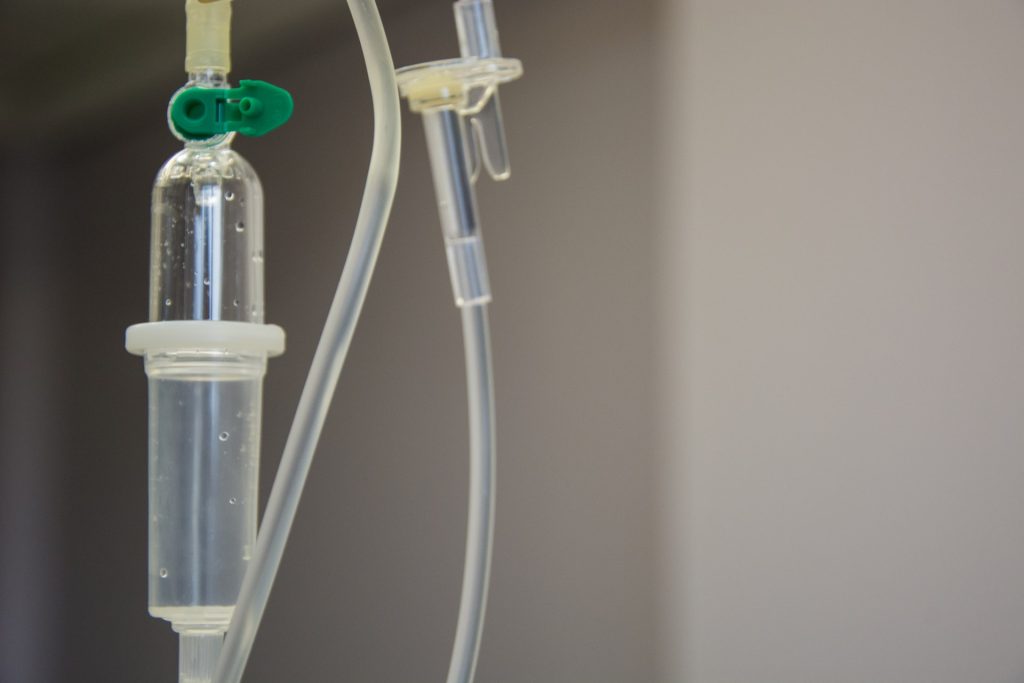
Which IV Fluids to Use in Sepsis… and When Not to Use Them

Photo by Marcelo Leal on Unsplash

In the leading Journal of the American Medical Association, two researchers outline how to use intravenous fluids to treat sepsis, a deadly condition that affects nearly a third of all ICU patients. Despite the fact that IV fluid therapy is a cornerstone of sepsis treatment, it’s not always a sure bet – in fact, as the authors outline in their paper, giving IV fluids can sometimes worsen sepsis.

Which fluids to give, how much to give and when have been fiercely debated for years.  

“This is an intervention that is cheap and easy to use and it can be life-saving, but it can also be harmful for patients if too much fluid is given,” explains first author Fernando Zampieri, a newly recruited assistant professor at University of Alberta.    

The new JAMA article sums up the latest science on the phases of sepsis and how much IV fluid to give at each stage of treatment. 

“It’s aimed at the clinician who works on the wards, who works in community hospitals, who works in emergency departments, explaining the mechanisms to assess whether patients are responding or not and decide whether more fluid needs to be given,” says Sean Bagshaw, professor and chair of critical care medicine, who co-wrote the paper with Zampieri and Matthew Semler of Vanderbilt University.

“These are really fundamental issues that have been challenging for clinicians to reconcile and have long been controversial, so this concise review bundles all recent evidence together,” Bagshaw says.

A complex and life-threatening condition

One in four patients who develop sepsis die from it, and it’s responsible for 11 million deaths per year, Zampieri estimates. Sepsis is an extreme response by the body to an infection, leading to a drop in blood pressure and thus a lack of oxygen circulation. Death occurs when oxygen-deprived organs such as the brain, kidneys or liver fail. 

Treatment almost always includes administering intravenous fluids, along with other interventions such as antibiotics and medications to boost blood pressure and oxygen delivery to tissues. The goal is to restore circulation without causing edema, or swelling, which can also be harmful to organs. 

Sepsis can occur at any time in life from infancy to old age, says Bagshaw. Zampieri points out that sepsis is not really one disease, but a complex condition with multiple causes. 

“When we talk about sepsis, you can be talking about things as different as a young woman with an infection after delivery all the way through to an elderly patient with a urinary tract infection. Those are two completely separate sources of infection, and the patient’s other conditions make treatment more complicated,” he says.

Zampieri says there are numerous clinical trials underway to refine sepsis treatment, but much is still unknown. Zampieri himself has been involved with trials in Brazil to determine whether slower fluids make a difference to clinical outcomes, to compare the efficacy of using saline versus a balanced solution (Plasma-Lyte 148), and to find out whether measuring lactic acid, which is produced when the body is starved of oxygen, is a good indicator of whether enough fluids have been given.

Digging for evidence to improve practice

Zampieri plans to continue his program of clinical trials and also wants to help physicians and health systems adopt best treatment practices as they are verified. Eventually he hopes to develop an accurate bedside test, such as using ultrasound, to better determine what level of fluids a patient requires.  

“Clinical trials are the best way to provide evidence that will change practice,” he says.

Bagshaw expects sepsis treatment to improve rapidly over the next decade thanks to such work.

“It took us 30 or 40 years to get to this point, and I think there’s still lots of questions to be answered about how best to individualise the resuscitation strategies amongst patients with life-threatening infection and sepsis,” Bagshaw says. “My hope is that Fernando will help catalyse some of those advances here at the U of A.”

Source: University of Alberta

Slight Safety Edge for Ringer’s Lactate over Standard Saline

Intravenous IV drip
Source: Marcelo Leal on Unsplash

A new US study has found that Ringer’s lactate may be a better and safer treatment option for emergency department and hospital patients than saline solution, especially in sepsis.

According to the study of nearly 150 000 hospital patients, which was published in JAMA Network Open, Intermountain Healthcare researchers found that patients who received Ringer’s lactate solution instead of normal saline for IV fluids had a lower risk of kidney injury and death than when they were given saline.

Saline solution has long been the standard for IV solution with more than 200 million litres administered to hospital patients annually in the US.

Intermountain researchers found that patients who were given Ringer’s lactate as an alternative to saline solution had a 2.2% reduced risk of kidney injury and death.

Joseph Bledsoe MD, principal investigator of the study, said: “That might not sound like a big difference but considering how many patients receive IV fluids every day, it could lead to a major improvement in health outcomes. For our health system alone, that’s 3000 people every year who may avoid complications from normal saline, at no additional cost.”

For this large-scale, study researchers encouraged clinicians, through education and electronic order entry alerts, to use Ringer’s lactate solution rather than saline solution for IV fluid treatment.

Saline solution is a combination of sodium chloride and water at a concentration of 9g of salt per litre (0.9%) which are levels higher than blood, commonly called normal saline.

Mounting evidence points to intravenous normal saline solution increasing the risk of metabolic acidosis, acute kidney injury, and death. This could be due to normal saline having higher levels of chloride and being slightly more acidic than fluids in the human body.

Though they have different ingredients, both Ringer’s lactate and normal saline are used for replacing fluids and electrolytes in hospital patients who have low blood volume or low blood pressure.

Ringer’s lactate contains electrolytes more similar to blood plasma than saline solution. Ringer’s lactate, which is a type of balanced crystalloid, is also much closer to human fluid pH and did not show the same related risk of kidney injury, in line with previous smaller studies.

The study included 148 423 adult patients admitted to the emergency department or inpatient units at 22 Intermountain Healthcare hospitals in Utah and Idaho between November 1, 2018, and February 29, 2020.

At 30 days post treatment, researchers found a 2.2% reduction in major adverse kidney events, including persistent kidney dysfunction, new initiation of dialysis, and death in patients who were given Ringer’s lactate rather than normal saline solution during their emergency department or hospital treatment course.

The impact was even greater on patients with sepsis and on patients who received more fluids as part of their treatment. Not all patients benefit from Ringer’s lactate – patients with brain injury may still benefit from normal saline, but further studies are needed.

Researchers determined that before the study, approximately 25% of patients received Ringer’s lactate, and 75% received normal saline solution. Afterward, the percentages flipped to 25% receiving normal saline and 75% Ringer’s lactate.

Researchers found that nudges in the Intermountain electronic order system were more effective in changing clinician habits than relying on education.

“Given the success of nudges in making this change, our success could be replicated in other health systems and allows for sustained improvement,” said Dr. Bledsoe. “Given the scope of this study, and its success in addition to previous studies, hospitals around the country should consider what they use for IV fluids, too.”

In an editorial about these findings published in the same issue of JAMA Network Open, Matthew W. Semler, MD, MSc, assistant professor of medicine at Vanderbilt University Medical Center, wrote that the study “raises important questions about the choice between Ringer’s lactate solution and saline and, more broadly, how we should make evidence-based choices between widely available, commonly used treatment alternatives in acute care.”

Source: News-Medical.Net