
Month: January 2024

High Cholesterol from Childhood Sedentary Time could be Reversed with Light Exercise

Photo by Victoria Akvarel on Pexels

Increased sedentary time in childhood can raise cholesterol levels by two thirds as an adult, but a new study has found light physical activity may completely reverse the risks and is far more effective than moderate-to-vigorous physical activity.

The study was published in The Journal of Clinical Endocrinology & MetabolismResearchers used data from the University of Bristol study Children of the 90s (also known as the Avon Longitudinal Study of Parents and Children), which included 792 children aged 11 years who were followed up until the age of 24.

Results from this study found that accumulated sedentary time from childhood can increase cholesterol levels by two thirds (67%) by the time someone reaches their mid-twenties. Elevated cholesterol and dyslipidaemia from childhood and adolescence have been associated with premature death in the mid-forties and heart problems such as subclinical atherosclerosis and cardiac damage in the mid-twenties.

Healthy lifestyles are considered important in the prevention of dyslipidaemia and one of the primary ways of lowering cholesterol, apart from diet, is movement behaviour. For the first time, this study objectively examined the long-term effects of sedentary time, light physical activity, and moderate-to-vigorous physical activity on childhood cholesterol levels.

The World Health Organization currently recommends children and adolescents should accumulate on average 60 minutes of moderate-to-vigorous physical activity a day and reduce sedentary time but have limited guidelines for light physical activity. Yet this new study and other recent studies has found light physical activity – which includes exercises such as long walks, house chores, or slow dancing, swimming, or cycling – is up to five times more effective than moderate-to-vigorous physical activity at promoting healthy hearts and lowering inflammation in the young population.

Dr Andrew Agbaje from the University of Exeter led the study and said: “These findings emphasise the incredible health importance of light physical activity and shows it could be the key to preventing elevated cholesterol and dyslipidaemia from early life. We have evidence that light physical activity is considerably more effective than moderate-to-vigorous physical activity in this regard, and therefore it’s perhaps time the World Health Organization updated their guidelines on childhood exercise — and public health experts, paediatricians, and health policymakers encouraged more participation in light physical activity from childhood.”

During the research, accelerometer measures of sedentary time, light physical activity, and moderate-to-vigorous physical activity were collected at ages 11, 15, and 24 years. High-density lipoprotein cholesterol, low-density lipoprotein cholesterol, triglyceride, and total cholesterol were repeatedly measured at ages 15, 17, and 24 years. These children also had repeated measurement of dual-energy X-ray absorptiometry assessment of total body fat mass and muscle mass, as well as fasting blood glucose, insulin, and high sensitivity C-reactive protein, with smoking status, socio-economic status, and family history of cardiovascular disease.

During the 13-year follow-up, sedentary time increased from approximately six hours a day to nine hours a day. Light physical activity decreased from six hours a day to three hours a day while moderate-to-vigorous physical activity was relatively stable at around 50 minutes a day from childhood until young adulthood. The average increase in total cholesterol was 0.69 mmol/L. It was observed without any influence from body fat.

An average of four-and-a-half hours a day of light physical activity from childhood through young adulthood causally decreased total cholesterol by (-0.53 mmol/L), however, body fat mass could reduce the effect of light physical activity on total cholesterol by up to 6%. Approximately 50 minutes a day of moderate-to-vigorous physical activity from childhood was also associated with slightly reduced total cholesterol (-0.05 mmol/L), but total body fat mass decreased the effect of moderate-to-vigorous physical activity on total cholesterol by up to 48%. Importantly, the increase in fat mass neutralised the small effect of moderate-to-vigorous physical activity on total cholesterol.

Source: University of Exeter
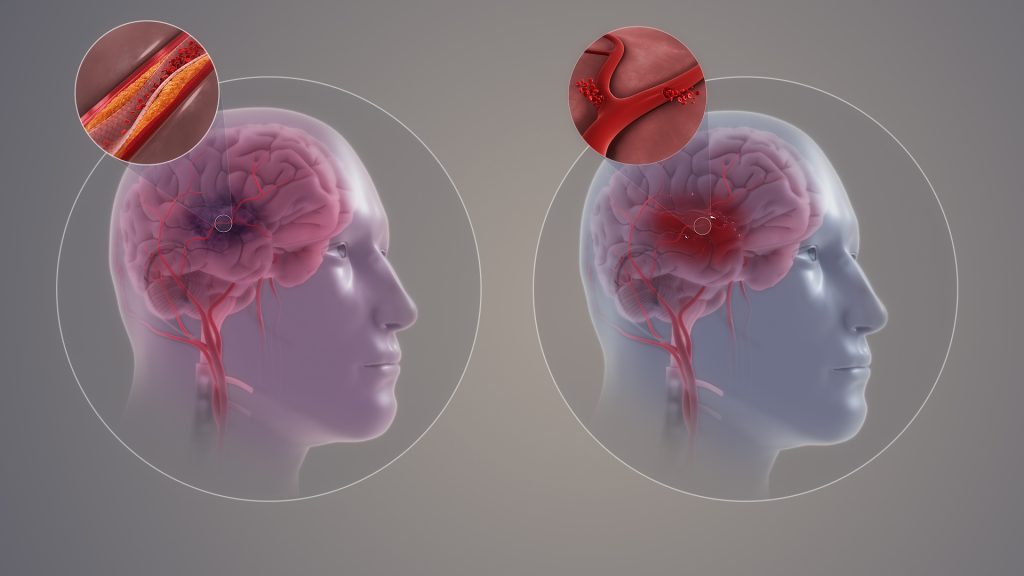
Trial Finds Argatroban Promising in Acute Ischaemic Stroke with Early Neurological Deterioration

Ischaemic and haemorrhagic stroke. Credit: Scientific Animations CC4.0

Early neurological deterioration (END) within the first 48 hours after acute ischaemic stroke (AIS) onset is relatively common, and is a predictor of poor outcomes. Treatment options are limited and unproven, but but a clinical trial has shown that the anticoagulant argatroban was safe and effective in improving outcomes. The results were published in JAMA Neurology.

Apart from straightforward causes, such as intracerebral haemorrhage and malignant oedema, the mechanism of END remains mostly unclear. Interventions for unexplained END can include plasma volume expansion, induced hypertension, and intensified antithrombotic therapy, but none has been formally proved so far.

The direct thrombin inhibitor argatroban is rapid acting, short acting, and has low bleeding rates, which could help prevent thrombus propagation and provide additional benefit after stroke/TIA. Argatroban has been associated with a reduction in ischaemic stroke damage but the safety and efficacy of argatroban is not well established for AIS treatment, and evidence is lacking for the effect of argatroban in patients with AIS and END.

Researchers conducted a randomised clinical trial that initially included 628 patients, average age 65 and 400 (63.7%) male. Eligible patients were adults with AIS who experienced END, which was defined as an increase of 2 or more points on the National Institutes of Health Stroke Scale within 48 hours from symptom onset.

Patients were randomly assigned to the argatroban group and control group within 48 hours of symptom onset. Both groups received standard therapy based on guidelines, including oral mono or dual antiplatelet therapy. The argatroban group received intravenous argatroban for 7 days (continuous infusion at a dose of 60mg per day for 2 days, followed by 20mg per day for 5 days) in addition to standard therapy.

The results showed that good neurological function at 90 days in those randomised to receive argatroban plus antiplatelet compared with antiplatelet alone was observed in 80.5% vs 73.7%)of participants, a statistically significant difference.

The authors concluded that the trial “shows that the combination of argatroban and antiplatelet therapy resulted in a significantly greater likelihood of good functional outcome at 90 days in patients with END after AIS, with no additional risk of major intracranial or extracranial haemorrhage.”

Vigorous Exercise Improves Walking in Chronic Stroke Patients

Photo by Kampus Production on Pexels

When 67-year-old Larry Christian suffered a sudden loss of balance, he was diagnosed with a haemorrhagic stroke, and referred to the University of Delaware’s Physical Therapy Clinic for rehabilitation. 

“Initially, I had a lot of balance problems that we worked pretty intensely to correct,” Christian said. 

He enrolled in a clinical trial at UD, led by co-investigator Darcy Reisman, professor and chair of the Department of Physical Therapy, that sought to explore whether high-intensity interval training (HIIT) aids in improved gait post-stroke. UD was one of three sites selected for the clinical trial led by primary investigator and associate professor Pierce Boyne of the University of Cincinnati. Sandra Billinger, professor and vice chair of stroke translation research at the University of Kansas Medical Center, is also a co-investigator and represents the third site involved in the clinical trial. 

Now, seven years later, Christian is walking better. 

“Participating in this study got me to a point where I could walk better and even take a walk outside,” Christian said. “I’ve been pretty healthy all my life, and while I can’t play volleyball anymore, walking again made me feel great.”

Christian is among the lucky ones. Among 7 million stroke survivors in the US, fewer than 10% have adequate walking speed and endurance to complete normal daily activities like grocery shopping. 

Reisman said the results of the multi-million-dollar, five-year clinical trial showed HIIT helped more people than just Christian. The results, published in JAMA Neurology, show that chronic stroke survivors who engaged in high-intensity exercise with bursts of maximum-speed walking alternated with recovery periods saw a significant difference in their walking capacity over 12 weeks. The improvements were so dramatic Boyne and Reisman have secured a clinical trial grant renewal to triple the size of their study to 165 participants. 

She added HIIT looks different for each stroke survivor, and the optimal exercise program for each person with stroke remains unknown. 

“We want them to train at the fastest possible speed, which varies from person to person,” Reisman said. “But we don’t want them running.”

For those already walking at a reasonably fast pace, research associate Henry Wright in Reisman’s lab will add an incline or a weighted vest or wrap a bungee cord around their waist to create resistance. 

“It’s self-reported data, but participants tell me they have more energy, or they’re able to do more around the house, or they’re not winded when they go shopping,” Wright said. “By the end of the training, I can see their walking is smoother, they’re getting farther on clinical testing, and it’s rewarding to see their gains.”  

The results from the initial clinical trial showed Reisman and collaborators that HIIT was feasible and safe in a small group of stroke survivors, who saw sustained gains in walking capacity, more so than patients engaged in moderate-intensity exercise. 

However, further study of the intervention in larger populations is crucial to change the standard of care.

“Many physical therapists were trained during a time when patients with neurologic conditions, particularly stroke, were treated with kid gloves, partly because they say stroke is the heart attack of the brain,” Reisman said. “It’s common they also have cardiovascular conditions, so people tend to be extra careful with those patients in terms of pushing them.

“But what we know now is at least moderate-intensity, and likely high-intensity interval training, is essential not only for stroke survivors’ cardiovascular system but also for their brain,” Reisman said. “The evidence shows that intensity is linked to the release of neurotrophins in the brain that help the brain remodel after a stroke.” 

Kiersten McCartney, a physical therapist obtaining her doctorate in biomechanics and movement science, worked on the clinical trial with Reisman. She spent the 2022 Winter Session at Magee Rehabilitation Hospital in Philadelphia, helping them implement moderate-to-high-intensity exercise and saw the benefits first-hand. 

“I’ll never be able to say there’s no risk of heart attack. Even the fittest people can have a heart attack when exercising,” McCartney said. “Still, the data points to the idea that you’re doing more harm than good by not engaging your patients with stroke in high-intensity exercise when we talk about those longer-term outcomes.”

The HIIT-Stroke Trial 2 will continue to examine dosing to confirm whether a full 12 weeks of vigorous exercise is needed to see significant improvements in walking. Reisman and collaborators will identify whether differences in sex and other factors played a role in rehabilitation. If the five-year study results are similar and show significant gains from high-intensity interval exercise in a larger population, investigators would next work with NIH Strokenet to launch a nationwide clinical trial in people with stroke.  

“We’ve known about the value of moderate-intensity exercise for more than a decade, and it’s still not the standard of care,” Reisman said. “If we find that HIIT is the optimal intervention, the next phase would be the knowledge translation phase, where we’d systematically develop a methodology to get HIIT into clinics.” 

For HIIT to work as an intervention, Reisman said therapists will need the proper tools. She’s been pushing for commercially available heart rate monitors, placed around the chest during exercise, to be the standard of care in clinics for years.

“They’re already a standard of care for people in the community,” Reisman said. “Getting them into clinics is imperative so PTs can monitor patients’ heart rate the entire time they exercise. That constant monitoring gives therapists data on how a person is responding beyond visible signs and symptoms, and in turn, more peace of mind.” 

But beyond tools and training, Reisman said, it comes down to evidence and education. 

“If we have hundreds and hundreds of stroke survivors who’ve gone through our high-intensity exercise intervention, and we’ve seen no major adverse events – that will help,” Reisman said. “The more data we have to show therapists, the better we can implement this intervention that will change lives.”

Source: University of Delaware

Optimal Placement for Bleeding Control Kits for the Public in Disaster Situations

Photo by Camilo Jimenez on Unsplash

In the event of an accident or an attack, members of the public can save lives by performing first aid measures until the arrival of emergency medical services. But those people willing and able to serve as first responders will also need access to first aid equipment.

“There must also be certain equipment available to manage major bleeding. The question then is where this equipment should be placed, so that people who want to help can quickly access bleeding control kits,” says Carl-Oscar Jonson, adjunct senior associate professor at the Department of Biomedical and Clinical Sciences at Linköping University and head of research at the Center for Disaster Medicine and Traumatology in Linköping.

The first recommendations

Until now, there have been no guidelines for where such bleeding control kits should be located to ensure maximal utility. The current study, published in the journal Disaster Medicine and Public Health Preparedness, now contributes research-based recommendations.

“We found that the largest number of lives saved correlated with bleeding control kits being placed in two or more locations on the premises, but most importantly they shouldn’t be placed at entrances. We also concluded that the equipment must be accessible within 90 seconds’ walking distance,” says Anna-Maria Grönbäck, doctoral student at the Department of Science and Technology at Linköping University, who was involved in developing the simulation.

This means that bleeding control kits should not be placed at entrances, which is often the case with automated external defibrillators (AEDs). The reason for this is that they may be difficult to reach in a situation where many people have to be evacuated at once, such as in the case of attack or major accident. According to attack statistics, roughly 20 injured people will need first aid including a bleeding control kit each. It may be helpful to locate bleeding control kits in the same places as clearly marked AEDs, as long as not located at the entrances.

Bomb consequences simulated

The recommendations are based on conclusions reached by the research team by developing a computer-based simulation of an explosion in a large shopping centre with thousands of simultaneous visitors. In their simulation, the researchers have looked at what happens right after an explosion. The majority of the simulated people try to get out of the premises and move towards the exits. Simulated people close to the blast suffer varying degrees of injury and start bleeding.

In the simulation, some individuals help those injured by applying direct pressure to reduce bleeding, or by trying to find equipment. It is a race against time. Depending on how long it takes to get the equipment, the simulated casualty may die from blood loss.

To find the best strategy for the placement of bleeding control kits, the researchers tested four different scenarios in their simulation. They weighed together the outcomes of the many simulated courses of events for each scenario and compared them to understand which placement of equipment saved the largest number of lives.

Source: Linköping University

Poor Sleep Quality in Midlife Linked to Cognitive Problems Later on

Photo by Andrea Piacquadio

People who have more disrupted sleep in their 30s and 40s may be more likely to have memory and thinking problems a decade later, according to new research published in Neurology. The study does not however prove that sleep quality causes cognitive decline, it only shows an association.

“Given that signs of Alzheimer’s disease start to accumulate in the brain several decades before symptoms begin, understanding the connection between sleep and cognition earlier in life is critical for understanding the role of sleep problems as a risk factor for the disease,” said study author Yue Leng, PhD, of the University of California, San Francisco.

“Our findings indicate that the quality rather than the quantity of sleep matters most for cognitive health in middle age.”

The study involved 526 people, average age of 40, who were followed for 11 years. Researchers looked at participants’ sleep duration and quality, and had them perform cognitive tests.

Participants wore a wrist activity monitor for three consecutive days on two occasions approximately one year apart to calculate their averages. Participants slept for an average of six hours.

Participants also reported bedtimes and wake times in a sleep diary and completed a sleep quality survey with scores ranging from zero to 21, with higher scores indicating poorer sleep quality. A total of 239 people, or 46%, reported poor sleep with a score greater than five. Participants also completed a series of memory and thinking tests.

Researchers also looked at sleep fragmentation, which measures repetitive short interruptions of sleep. They looked at both the percentage of time spent moving and the percentage of time spent not moving for one minute or less during sleep. Added together, participants had an average sleep fragmentation of 19%.

Researchers then divided participants into three groups based on their sleep fragmentation score. Of the 175 people with the most disrupted sleep, 44 had poor cognitive performance 10 years later, compared to 10 of the 176 people with the least disrupted sleep.

After adjusting for age, gender, race, and education, people who had the most disrupted sleep had more than twice the odds of having poor cognitive performance when compared to those with the least disrupted sleep.

There was no difference in cognitive performance at midlife for those in the middle group compared to the group with the least disrupted sleep.

“More research is needed to assess the link between sleep disturbances and cognition at different stages of life and to identify if critical life periods exist when sleep is more strongly associated with cognition,” Leng said.

“Future studies could open up new opportunities for the prevention of Alzheimer’s disease later in life.”

The amount of time people slept and their own reports of the quality of their sleep were not associated with cognition in middle age.

Source: American Academy of Neurology

Slower Long-term Weight Gain Seen for Low-carb, Plant-rich Diets

Photo by Charlotte Karlsen on Unsplash

Low-carbohydrate diets of mostly plant-based proteins and fats with healthy carbohydrates such as whole grains were associated with slower long-term weight gain than low-carbohydrate diets of mostly of animal proteins and fats with unhealthy carbohydrates like refined starches, according to a new study led by Harvard T.H. Chan School of Public Health. The study was published in JAMA Network Open.

“Our study goes beyond the simple question of, ‘To carb or not to carb?'” said lead author Binkai Liu, research assistant in the Department of Nutrition. “It dissects the low-carbohydrate diet and provides a nuanced look at how the composition of these diets can affect health over years, not just weeks or months.”

While many studies have shown the benefits of cutting carbohydrates for short-term weight loss, little research has been conducted on low-carbohydrate diets’ effect on long-term weight maintenance and the role of food group quality.

Using data from the Nurses’ Health Study, Nurses’ Health Study II, and Health Professionals Follow-up Study, the researchers analysed the diets and weights of 123 332 healthy adults from 1986 to 2018.

Each participant provided self-reports of their diets and weights every four years.

The researchers scored participants’ diets based on how well they adhered to five categories of low-carbohydrate diet: total low-carbohydrate diet (TLCD), emphasising overall lower carbohydrate intake; animal-based low-carbohydrate diet (ALCD), emphasising animal-based proteins and fats; vegetable-based low-carbohydrate diet (VLCD), emphasising plant-based proteins and fats; healthy low-carbohydrate diet (HLCD), emphasising plant-based proteins, healthy fats, and fewer refined carbohydrates; and unhealthy low-carbohydrate diet (ULCD), emphasising animal-based proteins, unhealthy fats, and carbohydrates coming from unhealthy sources such as processed breads and cereals.

The study found that diets comprised of plant-based proteins and fats and healthy carbohydrates were significantly associated with slower long-term weight gain. None of these diets strictly excluded animal or dairy products.

Participants who increased their adherence to TLCD, ALCD, and ULCD on average gained more weight compared to those who increased their adherence to HLCD over time.

These associations were most pronounced among participants who were younger (< 55 years old), overweight or obese, and/or less physically active.

The results for the vegetable-based low carbohydrate diet were more ambiguous: Data from the Nurses’ Health Study II showed an association between higher VLCD scores and less weight gain over time, while data around VLCD scores from the Nurses’ Health Study and Health Professionals Follow-up Study were more mixed.

“The key takeaway here is that not all low-carbohydrate diets are created equal when it comes to managing weight in the long-term,” said senior author Qi Sun, associate professor in the Department of Nutrition.

“Our findings could shake up the way we think about popular low-carbohydrate diets and suggest that public health initiatives should continue to promote dietary patterns that emphasise healthful foods like whole grains, fruits, vegetables, and low-fat dairy products.”

Source: Harvard T.H. Chan School of Public Health

Why Vaccines don’t Work as Well for Some Older People

Photo by Mufid Majnun on Unsplash

Age-related changes in the immune system also play a role in variable responses to vaccines and overall lower efficacy of vaccines compared to younger adults. Researchers at The Jackson Laboratory (JAX) and UConn Health are investigating why vaccines don’t work as well in some older adults, and have published their insights in Nature.

Protection against pneumococcal infections

Infants and older adults are at greatest risk for pneumococcal infections, and case-fatality rates increase with age for reasons still not well understood. Fortunately, several vaccines developed against the polysaccharides found on the surface of Streptococcus pneumoniae, including PPSV23 (Pneumovax), are generally effective in older adults, though less in younger adults. Conjugating the polysaccharide with a protein, such as a nontoxic variant of a diphtheria toxin, can induce additional adaptive immune activation, resulting in better protection. The strategy was used to develop a new class of FDA-approved conjugated vaccines (eg, PCV13, Prevnar). Despite these advances, responses to pneumococcal vaccines still decline with age. Moreover, it remains unclear which of these two vaccines are preferable in subpopulations of older adults.

To address these gaps in knowledge, a team led by JAX Associate Professor Duygu Ucar, PhD, UConn Health Professor George Kuchel, MD, CM, and Jacques Banchereau, PhD (Immunoledge, Montclair, NJ), compared pre- and post-vaccine immune characteristics. Their findings identify the biological traits underlying variable responses to the two different vaccines. Importantly, they also reveal distinct baseline (ie, pre-vaccination) predictors that have the potential to affect vaccination strategies and lead to interventions that are more effective, by virtue of being more specific.

Efficacy indicators

A cohort of 39 pneumococcal vaccine-naïve healthy adults, all aged 60 or above, received a single dose of PPSV23 or PCV13 from May to early fall. Blood was drawn before vaccination, then one, 10, 28 and 60 days after to provide longitudinal data. Following vaccination, the researchers developed measures to quantify vaccine responses and rank donors with respect to responsiveness within the cohort. While overall responses to both vaccines were comparable, there were clear differences in baseline immune phenotypes, separating the strong and weak responders.

The baseline abundance of two specific T cell types, Th1 and Th17 cells, played an important role in PCV13 responses. Th1 cells produce molecular signals to activate early innate immune responses to pathogens, while Th17 cells also contribute to the defence response by producing a different group of inflammatory signalling molecules. For PCV13 vaccine responses, higher levels of Th1 cells showed a positive association and higher levels of Th17 cells a negative association. Thus, a pre-vaccination Th1/ Th17 ratio can be predictive of PCV13 response strength. Interestingly, women have a higher frequency of Th1 and lower frequency of Th1 7 cells compared to men and responded more strongly to the PCV13 vaccine.

From the pre-vaccination gene expression data, the researchers uncovered a gene module that included cytotoxic genes that was associated with reduced PCV13 responses, called the CYTOX signature. Single cell profiling linked this gene expression signature to mature CD16+ Natural Killer (NK) cells. The abundance of mature CD16+ NK cells in blood was associated with responses to PCV13, where weak responders had more CD16+ NK cells than strong responders. The CYTOX signature was not associated with responses to the alternative PPSV23 vaccine, however – another, distinct gene set predicted responses to PPSV23.

“Our study offers a reminder that ‘one size fits all’ approaches do not work well for older patients,” says Kuchel. “Moreover, if our findings can be replicated in other populations, they may offer remarkable opportunities for implementing care models for older adults involving Precision Gerontology that are more effective by virtue of being more precise, ultimately matching individuals with those vaccines that work best for them. Precision Gerontology represents the thematic focus of the UConn Older Americans Independence ‘Pepper’ Center award from NIH.”

Implications for disease prevention

A surprising aspect of the study is that the baseline predictors for the two available classes of pneumococcal vaccines are quite distinct and independent from each other, despite both vaccines using the same bacterial polysaccharides to provoke the protective immune response. Importantly, however, the paper shows that responses to the two vaccines can be predicted in older adults based on specific pre-vaccination characteristics, and the findings imply that individuals can be readily stratified based on which vaccine is likely to work best for them. For example, older adults with low CYTOX/CD16+ NK cell levels will likely respond well to the PCV13 vaccine, while those with high CYTOX would more likely benefit from the PPSV23 vaccine. Overall, the results have important implications for more precise vaccination strategies for pneumococcal vaccines, and potentially for other vaccines as well, to better protect older adults from infection and disease.

Source: University of Connecticut

For Extremely Prem Babies’ Milk, Which Enrichment is Best?

Photo by Hush Naidoo on Unsplash

Infants born extremely prematurely need enrichment in addition to breast milk, but it wasn’t clear as to whether enrichments were made from breast milk or cow’s milk had an effect on the risk of severe complications. This has been investigated by a large clinical study led by Linköping University, Sweden, published in eClinicalMedicine.

Infants born extremely prematurely, between weeks 22 and 27 of pregnancy, are among the most vulnerable patients in healthcare, at high risk of serious complications and mortality.

There is strong research support for giving breast milk to these children rather than formula made from cow’s milk. Formula based on cow’s milk is known to increase severe the risks for intestinal inflammation and sepsis.

“In Sweden, all extremely preterm infants receive breast milk from their mother or donated breast milk. Despite this, almost one in ten children get a severe inflammation of the intestine called necrotising enterocolitis. It’s one of the worst diseases you can have. At least three out of ten children die and those who survive often have neurological problems afterwards,” says Thomas Abrahamsson, professor at Linköping University and senior physician at the neonatal department at the University Hospital in Linköping, who led the current study.

Historically, there have been very few studies on extremely preterm infants where treatments have been compared against each other.

Therefore, there is a great need for clinical studies that can provide scientific support for how these children should be treated to have better chances of survival and a good life.

In some countries, such as Sweden, infants are fed exclusively with either their mother’s breast milk or donated breast milk.

However, in order for extremely preterm infants to grow as well as possible, they need more nutrition than breast milk contains. This is why breast milk is supplemented with extra protein, so-called enrichment.

The enrichment has previously been made from cow’s milk. But there have been suspicions that cow’s milk-based enrichment increases the risk of severe complications. Today, there is enrichment that is based on donated breast milk, and which has begun to be used in healthcare in some places.

The big question is whether it can reduce the risk of diseases in extremely preterm infants.

The current study, called N-Forte (the Nordic study on human milk fortification in extremely preterm infants), is the largest that has been carried out to seek answers to this question.

The results have been eagerly awaited by paediatricians and others caring for these fragile infants.

“We concluded that it doesn’t matter whether extremely preterm infants get enrichment made from cow’s milk or made from donated breast milk,” says Thomas Abrahamsson.

Although the study indicates that there was no difference between the two options, its results can be useful – the breast milk enrichment is fairly expensive.

“On the one hand, we’re disappointed that we didn’t find a positive effect of enrichment based on breast milk. On the other hand, it’s a large and well-done study and we can now say with great certainty that it doesn’t have an effect in this patient group. This is also important knowledge, so that we don’t invest in expensive products that don’t have the desired effect,” says Thomas Abrahamsson.

The N-Forte study included 228 extremely preterm infants, randomised 1:1 to receive enrichment made from breast milk and cow’s milk respectively.

The researchers examined whether the two groups differed in the incidence of necrotising enterocolitis, sepsis and death.

Of the children treated with breast milk-based enrichment, 35.7% had these complications, while the corresponding proportion was 34.5% in the group receiving cow’s milk-based enrichment, which means that there was no difference between the groups.

The results of the study are in line with a smaller study from Canada published in 2018, where researchers also saw no difference between the two types of enrichment on necrotising enterocolitis and severe sepsis.

Source: Linköping University

Researchers Figure out Why Cancer Immunotherapy can Cause Colitis

Gastrointestinal inflammation. Credit: Scientific Animations CC4.0

Researchers have identified a mechanism behind immunotherapy sometimes causing colitis. They also found a way to deliver immunotherapy’s cancer-killing impact without the unwelcome side effect. The researchers, from the University of Michigan Health Rogel Cancer Center, published their findings in Science.

“This is a good example of how understanding a mechanism helps you to develop an alternative therapy that’s more beneficial. Once we identified the mechanism causing the colitis, we could then develop ways to overcome this problem and prevent colitis while preserving the anti-tumour effect,” said senior study author Gabriel Nunez, MD, professor of pathology at Michigan Medicine.

Immunotherapy is a promising treatment for several types of cancer. But immune checkpoint inhibitors can also cause severe side effects, including colitis. Colitis can cause severe gastrointestinal discomfort, causing some patients to discontinue their cancer treatment because of it.

The problem facing researchers was that while patients were developing colitis, the laboratory mice were not, preventing them from studying the cause of this side effect.

To get past this, the Rogel team, led by first author Bernard C. Lo, PhD, created a new mouse model, injecting microbiota from wild-caught mice into the traditional mouse model.

In this model, the mice did develop colitis after administration of antibodies used for tumour immunotherapy. Now, researchers could trace back the mechanism to see what was causing this reaction.

In fact, colitis developed because of the composition of the gut microbiota, which caused immune T cells to be hyper-activated while regulatory T cells that put the brakes on T cell activation were deleted in the gut. This was happening within a specific domain of the immune checkpoint antibodies.

Researchers then removed that domain, which they found still resulted in a strong anti-tumour response but without inducing colitis.

“Previously, there were some data that suggested the presence of certain bacteria correlated with response to therapy. But it was not proven that microbiota were critical to develop colitis. This work for the first time shows that microbiota are essential to develop colitis from immune checkpoint inhibition,” Nunez said.

To follow up what they saw in mice, researchers reanalysed previously reported data from studies of human cells from patients treated with immune checkpoint antibodies, which reinforced the role of regulatory T cells in inducing colitis.

The Rogel team plans additional studies to further understand the mechanisms causing colitis and seeks clinical partners to move this knowledge to a clinical trial.

Source: Michigan Medicine – University of Michigan

Opinion piece: Specialist TES Providers Optimising Healthcare Operations – a Prescription for Patient Care Success

By Sandra Sampson, Director at Allmed

The healthcare sector in South Africa is beset with numerous challenges, ranging from high turnover rates to skilled staffing shortages and complex regulations in addition to stressful working environments, and communication barriers. Despite these formidable obstacles, patients have the right to expect top-tier care from their medical facilities. Here, specialised Temporary Employment Services (TES) providers can become indispensable partners, adeptly assisting medical facilities to navigate these challenges in their quest to ensure a seamless continuum of care.

Streamlining healthcare staffing to counter shortages

Specialist TES providers offer a multifaceted remedy to the relentless staffing challenges in healthcare. Capable of promptly supplying temporary staff to bridge immediate gaps, TES providers ensure that all resources have already been rigorously screened, recruiting qualified professionals to function as a buffer against high turnover and staffing scarcities. Through tailored training, specialist providers ensure that their temporary staff placements align seamlessly with organisational expectations to consistently uphold care standards. Furthermore, specialist TES providers alleviate the burden of complex healthcare regulations on management and staff by taking on the responsibility of handling the entire employment relationship, from end to end, including managing human resources and labour relations components, as well as payroll. This provides significant relief for healthcare facilities giving them the staffing resources that they need, without the additional administrative complexities involved with recruiting, on-boarding and managing such resources.

Addressing skills gaps to raise the bar on healthcare resources

Maintaining consistent levels of patient care without compromising quality is challenging in the face of staffing shortages and high turnover rates. With so many specialised healthcare staff, including ICU personnel, leaving for better opportunities abroad due to financial considerations, such an exodus necessitates urgent strategies to retain and fill gaps within healthcare facilities. Specialist TES providers are already playing a critical role in addressing these concerns by focusing on nurse competencies and facilitating targeted courses to upskill their resources. These courses address critical gaps in patient safety and empower nurses to provide better care. Through the development of these essential courses, such as ECG interpretation and cannulation, TES providers are taking significant steps to ensure nurses possess the necessary skills and knowledge. This proactive approach not only enhances patient care at a facility level, but also contributes to nurse competence and job satisfaction, ultimately benefiting the healthcare ecosystem.

The strategic advantages of enhancing workforce dynamics

In addition to operational bolstering and sector-specific upskilling, specialist healthcare TES providers present strategic benefits for healthcare facilities. Access to a diverse, extensive talent pool makes it simpler for medical organisations to find the ideal fit for each role, effectively mitigating the risk of hiring mismatches usually associated with permanent placements. Medical facilities also benefit from the cost-effectiveness of the TES operating model, which aligns with the dynamic nature of healthcare to optimise resource allocation. This is particularly important in hospitals where patient occupancy levels fluctuate daily. Many healthcare organisations now operate with a 50/50 ratio of permanent placements and temporary resources, which gives them the flexibility to accommodate the ever-shifting demands of patient care staffing, while safeguarding the delivery of quality care. By efficiently managing both permanent and agency staff, TES providers optimise recruitment efforts and ensure that the right candidates are placed in suitable roles, benefiting the healthcare organisation’s operations and patient care. TES providers uphold patient confidentiality and provide comprehensive training, ensuring staff are cognisant of privacy protocols and handle sensitive information appropriately.

Boosting patient care excellence: the vital role of specialist TES providers

In an era where healthcare value is intricately tied to workforce excellence, TES providers play a pivotal role in elevating the sector by helping medical facilities conquer their industry-specific challenges, enabling the fundamental mission of enhancing patient well-being. Ultimately, Specialist TES providers represent a crucial element in the healthcare sector’s quest for excellence, as their strategic approach to staffing not only addresses immediate needs but also upholds patient care standards, while easing administrative burdens, and enhancing workforce competencies. As such, collaboration with specialist TES providers is a progressive strategy that medical organisations should prioritise to effectively navigate the intricate challenges of the healthcare landscape today while significantly enhancing patient care outcomes.