Tag: colitis

Crohn’s Disease Cut Activity by 40% in Study of Time-restricted Fasting

Irritable bowel syndrome. Credit: Scientific Animations CC4.0

A new randomised controlled study funded by the Crohn’s & Colitis Foundation found that time-restricted feeding, a form of intermittent fasting, significantly reduced symptomatic disease activity and systematic inflammation in adults with Crohn’s disease and overweight or obesity. The University of Calgary-led trial is the first to show that eating only within an 8-hour window can reduce Crohn’s disease activity by 40% and abdominal discomfort by 50% in just 12 weeks, compared to a standard eating schedule.

Participants practicing intermittent fasting not only lost about 2.5kg while controls gained approximately 1.7kg, but also showed notable improvements in blood markers of inflammation and immune health, including lower levels of leptin and PAI-1 – all without cutting calories.

Results of the study were published in Gastroenterology. People with IBD should talk with their healthcare team before changing their eating schedule to determine whether intermittent fasting is appropriate for them.

Time-restricted feeding (TRF) involves eating all meals within a set 8-hour window each day, followed by fasting for the remaining 16 hours.  This 12-week randomised trial included 35 adults with Crohn’s disease and living with obesity or overweight, with 20 assigned to TRF and 15 to their regular diet. Researchers measured disease activity, inflammation, and body composition at the start and end of the study.​​

“This study shows that while weight loss is an important outcome in people with overweight and Crohn’s disease, time-restricted feeding offers additional benefits beyond just the scale,” said Maitreyi Raman, MD, Associate Professor of Medicine at the University of Calgary, the study’s senior author. “We saw meaningful improvements in disease symptoms, reduced abdominal discomfort, favourable shifts in metabolism and inflammation, and promising changes in gut bacteria – all suggesting that intermittent fasting may help patients maintain lasting remission from Crohn’s disease.”​

The research was supported by the Crohn’s & Colitis Foundation’s Litwin IBD Pioneers program. “Time-restricted feeding is showing real promise as a new way to help people with Crohn’s disease manage not only their symptoms but also their overall health,” said Andres Lorenzo Hurtado, PhD, Senior Vice President of Translational Research & IBD Ventures at the Crohn’s & Colitis Foundation. “This research suggests that changing when we eat – not just what we eat – can improve metabolism, help the immune system work better, and support long-term remission from Crohn’s disease. We are excited to support studies like this that put patients at the centre of new solutions and encourage more research to make these benefits last for everyone living with IBD.”

“People with Crohn’s disease often look for practical tools to support their health alongside medication,” said Natasha Haskey, PhD, RD, Research Associate at the University of British Columbia and lead investigator in the study. “Our research suggests time-restricted eating may be a sustainable option grounded in biology, offering patients more ways to manage their own wellness.”

In addition to reducing Crohn’s disease activity, the study found a marked decrease in harmful visceral fat and key inflammatory signals in the blood of those who practiced intermittent fasting. The changes were not simply due to diet quality or calorie restriction, as both groups ate similar foods and amounts—indicating the timing of meals themselves may play a unique role in supporting digestive and immune health.​

Researchers note that, while these results are promising, larger trials are needed to confirm the long-term safety and effectiveness of this approach for broader groups of patients with IBD.

By Rachel Peifer

Source: Crohn’s and Colitis Foundation of America

No Evidence that Common Medications Trigger Microscopic Colitis in Older Adults

Study suggests that patients with the condition do not need to stop taking important medications.

Photo by Kampus Production

Microscopic colitis (MC) is a chronic inflammatory bowel disease that severely reduces quality of life. MC is responsible for over 30% of all chronic diarrhoea cases in people over 65 years of age, and its prevalence is rising worldwide. Although little is known about what causes MC, previous studies have suggested that a range of common medications could trigger the condition, including non-steroidal anti-inflammatory drugs (NSAIDs), blood pressure medications, and selective serotonin reuptake inhibitors (SSRIs).

However, according to a new large-scale, longitudinal study of older adults in Sweden from Mass General Brigham, Broad Institute of MIT and Harvard, and Karolinska Institutet researchers, most of these medications are not associated with increased risk of MC. Results are published in Annals of Internal Medicine.

“Our study demonstrated that, contrary to the previous belief, it’s unlikely that medications are the primary triggers for microscopic colitis,” said corresponding author Hamed Khalili, MD MPH, associate director of the Clinical and Translational Epidemiology Unit and director of Clinical Research at the Crohn’s and Colitis Center at Massachusetts General Hospital, a founding member of the Mass General Brigham health care system. “Clinicians should carefully balance the intended benefits of these medications against the very low likelihood that they cause microscopic colitis.”

To look for associations between medication use and MC diagnosis, the researchers analyzed data for over 2.8 million individuals aged 65 years and older in Sweden. The data included information on prescribed medications, hospitalizations, medical diagnoses, and gastrointestinal biopsy results.

Overall, they found that the risk of developing MC was less than 0.5%. There was no association between NSAIDs, angiotensin converting enzyme (ACE-I) inhibitors, angiotensin II receptor blockers (ARBs), proton pump inhibitors (PPIs), or statins and the risk of developing MC, but individuals prescribed SSRIs had a 0.04% higher risk of developing MC. However, the researchers also showed that individuals prescribed SSRIs were also more likely to receive a colonoscopy, which is necessary to diagnose MC.

“Our analyses suggest that surveillance bias is a likely explanation for earlier findings that implicated medications in the pathogenesis of microscopic colitis and may also explain the continued association with SSRIs,” said senior author Jonas F. Ludvigsson, MD PhD, paediatrician at Örebro University Hospital and Professor at the Department of Medical Epidemiology and Biostatistics, Karolinska Institutet in Sweden.

The study did not include data on primary care visits, which could impact the likelihood of colonoscopy, or lifestyle factors such as diet and smoking status.

Source: Mass General Brigham

Researchers Figure out Why Cancer Immunotherapy can Cause Colitis

Gastrointestinal inflammation. Credit: Scientific Animations CC4.0

Researchers have identified a mechanism behind immunotherapy sometimes causing colitis. They also found a way to deliver immunotherapy’s cancer-killing impact without the unwelcome side effect. The researchers, from the University of Michigan Health Rogel Cancer Center, published their findings in Science.

“This is a good example of how understanding a mechanism helps you to develop an alternative therapy that’s more beneficial. Once we identified the mechanism causing the colitis, we could then develop ways to overcome this problem and prevent colitis while preserving the anti-tumour effect,” said senior study author Gabriel Nunez, MD, professor of pathology at Michigan Medicine.

Immunotherapy is a promising treatment for several types of cancer. But immune checkpoint inhibitors can also cause severe side effects, including colitis. Colitis can cause severe gastrointestinal discomfort, causing some patients to discontinue their cancer treatment because of it.

The problem facing researchers was that while patients were developing colitis, the laboratory mice were not, preventing them from studying the cause of this side effect.

To get past this, the Rogel team, led by first author Bernard C. Lo, PhD, created a new mouse model, injecting microbiota from wild-caught mice into the traditional mouse model.

In this model, the mice did develop colitis after administration of antibodies used for tumour immunotherapy. Now, researchers could trace back the mechanism to see what was causing this reaction.

In fact, colitis developed because of the composition of the gut microbiota, which caused immune T cells to be hyper-activated while regulatory T cells that put the brakes on T cell activation were deleted in the gut. This was happening within a specific domain of the immune checkpoint antibodies.

Researchers then removed that domain, which they found still resulted in a strong anti-tumour response but without inducing colitis.

“Previously, there were some data that suggested the presence of certain bacteria correlated with response to therapy. But it was not proven that microbiota were critical to develop colitis. This work for the first time shows that microbiota are essential to develop colitis from immune checkpoint inhibition,” Nunez said.

To follow up what they saw in mice, researchers reanalysed previously reported data from studies of human cells from patients treated with immune checkpoint antibodies, which reinforced the role of regulatory T cells in inducing colitis.

The Rogel team plans additional studies to further understand the mechanisms causing colitis and seeks clinical partners to move this knowledge to a clinical trial.

Source: Michigan Medicine – University of Michigan

Traditional Japanese Herbal Medicine Found to Alleviate Colitis

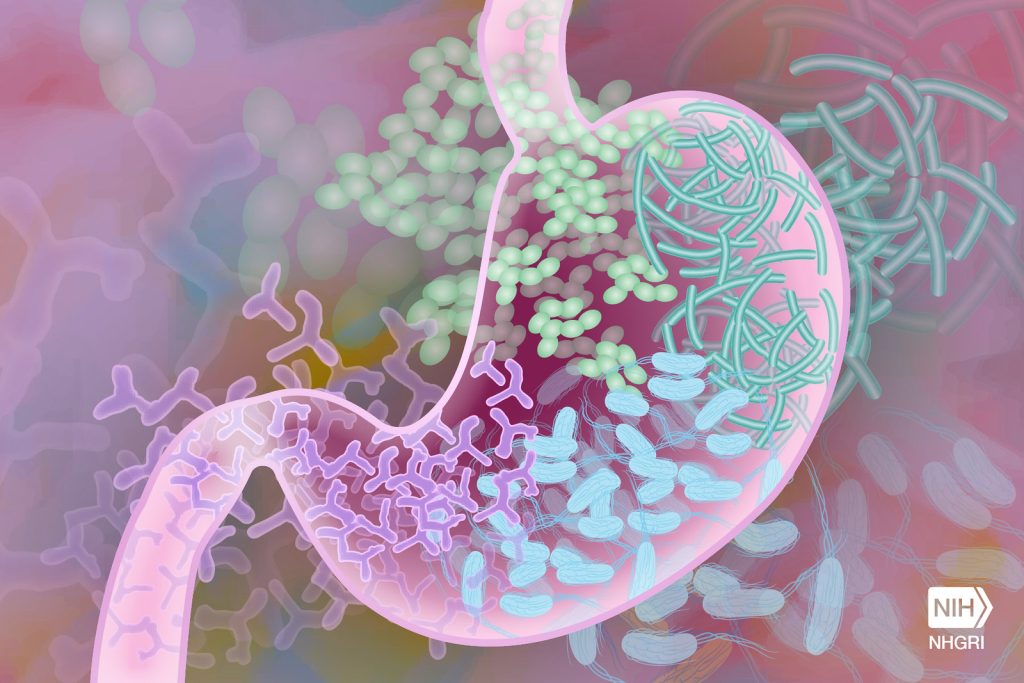
Gut microbiome. Credit: Darryl Leja, NIH

A Japanese study published in Frontiers in Immunology shows that a traditional herbal mix called daikenchuto reduced the severity of colitis in lab mice by preventing the loss of important gut bacteria and by raisin levels of anti-inflammatory immune cells in the colon.

Colitis is a chronic inflammation of the colon, characterised by an imbalance in gut bacteria and an abnormal immune response. Its prevalence has doubled over the last 20 years and although there are many treatments, they are only partially effective. This has led some researchers to take a closer look at traditional Asian herbal medicines.

Daikenchuto (DKT) is a formula containing specific amounts of ginger, pepper, ginseng, and maltose, and is one of 148 herbal medicines called Kampo, which have been developed in Japan and are often prescribed by doctors to treat a variety of illnesses. Numerous studies conducted in Japan and the United States have provided clinical evidence of DKT’s effect on colonic transit and postoperative ileus.

DKT was shown by previous research to have possible use in colitis treatment, but molecular level evidence has been lacking. Researchers at the RIKEN Center for Integrative Medical Sciences (IMS) in Japan conducted a detailed examination of its effects on a mouse model of colitis.

Colitis was induced in mice using dextran sodium sulfate, which is toxic to the cells that line the colon. When these mice were given DKT, their body weights remained normal, and they had lower clinical scores for colitis. Additional analysis revealed much less damage to the cells lining the colon. Having thus shown that DKT does indeed help protect against colitis, the researchers proceeded to analyze the gut microbiome of the mice and expression levels of anti-inflammatory immune cells.

Colitis is associated with an imbalance in gut microbiota, and analysis showed that a family of lactic acid bacteria were depleted in the colitic mice of this study. Also depleted was one of their metabolites, a short-chain fatty acid called propionate. Treating the model mice with DKT restored much of these missing bacteria – particularly Lactobacillus – and levels of propionate were normal.

Colitis is also associated with an abnormal immune response that causes the characteristic intestinal inflammation. When the team looked at innate intestinal immune cells, they found that levels ILC3 cells were lower in the untreated colitic mice than in the DKT-treated colonic mice, and that mice engineered to lack ILC3 suffered more and could not benefit from DKT treatment. This means that ILC3s are critical for protecting against colitis and that DKT works by interacting with them. Lastly, qPCR analysis indicated that these important immune cells had receptors for propionate, called GPR43, on their surface.

Daikenchuto is commonly prescribed to prevent and treat gastrointestinal diseases, as well as for reducing intestinal obstruction after colorectal cancer surgery,” said Naoko Satoh-Takayama. “Here we have shown that it can also alleviate intestinal diseases like colitis by rebalancing Lactobacillus levels in the gut microbiome. This likely helps reduce inflammatory immune responses by promoting the activity of type 3 innate lymphoid cells.”

Source: RIKEN