Atherosclerosis is almost twice as common in night owls compared to early birds, according to a study from the University of Gothenburg, Sweden. Circadian function appears to be particularly important during the early stages of cardiovascular disease.
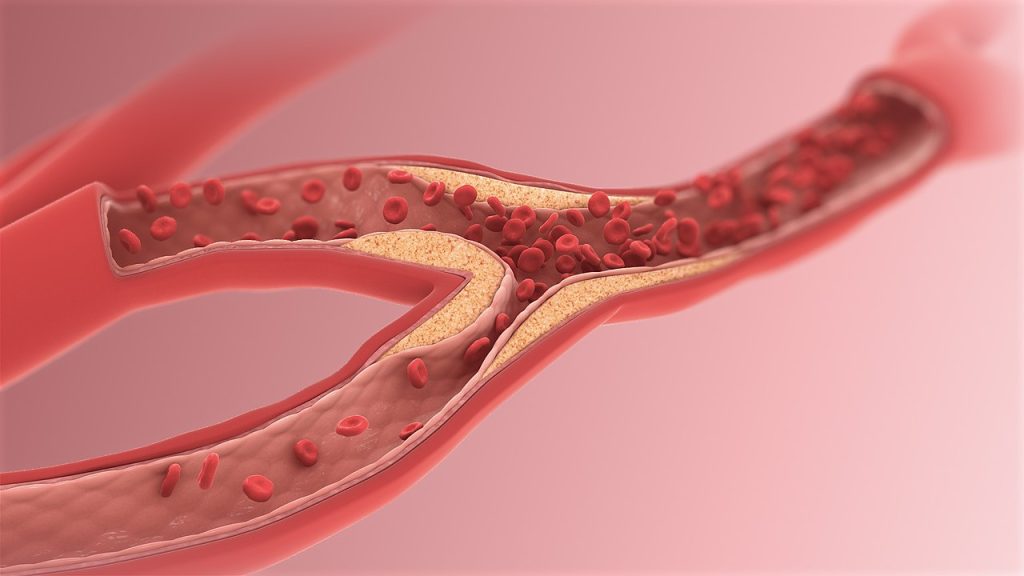
Atherosclerosis involves fatty deposits gradually accumulating on the inside of the arteries, making it harder for blood to pass through. The disease is usually not noticed until it leads to blood clots causing angina, heart attack, or stroke.
Previous research has shown that people with late-night habits have an increased risk of cardiovascular disease, but this is the first study to show how circadian rhythms specifically affect calcification of the arteries.
Coronary artery calcification
The study, which has been published in the journal Sleep Medicine, involved 771 men and women aged between 50 and 64, all of whom are part of the larger population study SCAPIS.
The degree of artery calcification in the heart’s coronary arteries was examined using computer tomography.
Participants themselves indicated their so called chronotype on a five-point scale: extreme morning type, moderate morning type, intermediate type, moderate evening type, or extreme evening type.
Of the 771 participants, 144 identified as extreme morning types, and 128 as extreme evening types.
Among the group who were most alert in the morning, 22.2% had pronounced artery calcification — the lowest proportion of all five chronotypes.
The extreme evening type group had the highest prevalence of severe coronary artery calcification, at 40.6%.
The first author of the study is Mio Kobayashi Frisk, a doctoral student at Sahlgrenska Academy, University of Gothenburg:
“Our results indicate that extreme evening chronotype may be linked not only to poorer cardiovascular health in general, but also more specifically to calcification in the coronary arteries calcification and atherosclerosis,” Mio Kobayashi Frisk says.
Preventive treatment
The statistical analysis considered a range of other factors that can affect the risk of atherosclerosis, including blood pressure, blood lipids, weight, physical activity, stress level, sleep, and smoking.
The last author of the study is Ding Zou, a researcher at Sahlgrenska Academy, University of Gothenburg:
“As well as the previously known factors, the individual circadian rhythm also appears to be an important risk factor for atherosclerosis. We interpret our results as indicating that circadian rhythms are more significant early in the disease process. It should therefore particularly be considered in the preventive treatment of cardiovascular diseases,” says Ding Zou.
Self-reported chronotype
Those who had experienced a heart attack were excluded from the study, meaning that the study participants were healthier than the general population.
Another weakness identified by the researchers is that participants themselves provided their chronotype.
Each chronotype can be said to have an average time when half of the night’s sleep has passed.
In a previous study on the same population, though not necessarily the same individuals, this time occurred at 02:55 AM for the extreme morning type group and at 04:25 AM for the extreme evening type group.
With the remaining chronotype groups’ mid-sleep times were somewhere in between these extremes.
The Vikings, famous as raiders who terrorised many parts of Europe, may have been quite ruthless, but their society seems to have had access to surprisingly advanced dental care for the era. A University of Gothenburg analysis of Viking Age teeth showed that although caries and toothache were widespread, there was also evidence of dental practices not too dissimilar from modern ones.
The study examined 3293 teeth from 171 individuals among the Viking Age population of Varnhem in Västergötland, Sweden.
The site is known for extensive excavations of Viking and medieval environments, including tombs where skeletons and teeth have been preserved well in favourable soil conditions.
The research team from the University of Gothenburg’s Institute of Odontology worked with an osteologist from Västergötland’s Museum. The skulls and teeth underwent clinical examinations at Gothenburg using standard dentistry tools under bright light.
A number of X-ray examinations were also performed using the same technique used in dentistry, where the patient bites down on a small square imaging plate in the mouth.
Caries and tooth loss
The results, which have been published in the journal PLOS ONE, show that 49% of the Viking population had one or more caries lesions.
Of the adults’ teeth, 13% were affected by caries – often at the roots. Children with milk teeth or a mix of milk and adult teeth, were entirely caries-free however. (Presumably sweets for the kids were not high on the Viking raiders’ lists.)
Tooth loss was also common among adults. The studied adults had lost an average of 6% of their teeth, excluding wisdom teeth, over their lifetimes. The risk of tooth loss increased with age.
The findings suggest that caries, tooth infections, and toothache were common among the Viking population in Varnhem – but the study also reveals examples of tooth care.
“There were several signs that the Vikings had modified their teeth, including evidence of using toothpicks, filing front teeth, and even dental treatment of teeth with infections,” says Carolina Bertilsson, a dentist and Associate Researcher, and the study’s first-named and corresponding author.
Not unlike today’s treatments
One sign of more sophisticated procedures was molars with filed holes, from the crown of the tooth and into the pulp, probably in order to relieve pressure and alleviate severe toothache due to infection.
“This is very exciting to see, and not unlike the dental treatments we carry out today when we drill into infected teeth. The Vikings seem to have had knowledge about teeth, but we don’t know whether they did these procedures themselves or had help.”
The filed front teeth may have been a form of identity marker. In both this and previous studies, the cases found were male.
Carolina Bertilsson continues: “This study provides new insights into Viking oral health, and indicates that teeth were important in Varnhem’s Viking culture. It also suggests that dentistry in the Viking Age was probably more sophisticated than previously thought.”
The inability to burp, called retrograde cricopharyngeus dysfunction (R-CPD), is caused by failure of the throat’s cricopharyngeal muscle to relax to allow the outward passage of gas. An interview-based study in Neurogastroenterology & Motility reveals the impact of R-CPD on quality of life.
The study included 199 adults affected by the condition, most of whom reported abdominal bloating, socially awkward gurgling noises, excessive flatulence, and difficulty vomiting. Only half discussed their symptoms with their primary care clinician, and 90% felt they did not receive adequate help. Participants also reported embarrassment, anxiety/depression, negative impacts on relationships, and work disruption due to R-CPD.
“R-CPD encompasses more than just the physical challenge of being unable to burp; it also significantly impacts people’s daily lives, relationships, and mental well-being,” said corresponding author Jason N. Chen, a medical student at Texas Tech University Health Sciences Center. Future efforts should concentrate on raising awareness about R-CPD, which can help increase identification and treatment rates.”
New research indicates that higher doses of topical corticosteroids, commonly used to treat inflammatory skin conditions, are linked with elevated risks of osteoporosis and bone fractures associated with osteoporosis. The findings are published in the Journal of the European Academy of Dermatology and Venereology.
Drawing on the Taiwan National Health Insurance Research Database, the study’s investigators selected 129 682 osteoporosis cases and 34 999 major osteoporotic fracture (MOF) cases and matched them with 518 728 and 139 996 controls (without osteoporosis or MOF) by sex and age.
The team found clear dose–response relationships between long-term use of topical corticosteroids and osteoporosis and MOF, as well as differences in sex and age.
All topical corticosteroids prescriptions were converted to prednisolone equivalents (mg) according to their anti-inflammatory potency. Effects were not clear in exposure periods of six or 12 months, but effects were seen when analysis was extended to the longer term (three to five years). Compared with no doses, low, medium, and high cumulative of doses topical corticosteroids were associated with 1.22-, 1.26-, and 1.34-times higher odds of developing osteoporosis over five years. These respective doses were linked with 1.12-, 1.19-, and 1.29-times higher odds of experiencing MOF. Women had higher risks of osteoporosis and MOF than men. Also, younger people (under the age of 50 years) had a higher risk of osteoporosis compared with other age groups.
“This study emphasises that using topical corticosteroids to treat inflammatory skin conditions should be done very carefully and clinicians should be aware of these potential side effects,” said corresponding author Chia-Yu Chu, MD PhD, of National Taiwan University Hospital and National Taiwan University College of Medicine.
The Kensington Treatment Centre, one of few in-patient rehabilitation centres in Cape Town, has stopped accepting adults because of financial constraints.
The Western Cape Department of Social Development (DSD) confirmed that the Kensington Treatment Centre no longer takes adults “due to the need to accommodate more children in secure care without any additional funds”.
In the past financial year, the facility had treated 120 people.
The department says it is necessary to focus on youth at risk.
Its budget for substance abuse programmes has been cut by R600 000 for the 2023/24 financial year.
New applications will be directed to other substance treatment centres funded by the department, which currently has six in-patient facilities: Metro South, North, East, Cape Winelands, Overberg and West Coast. Enquiries and admissions can be made through self-referral or external referrals.
Bianca Rabbaney, who works for U-Turn Homeless Ministries, has personal experience of how difficult it is to access rehab facilities in times of need. She lived on the streets for more than 20 years, because her family couldn’t cope with her. For most of that time she had a substance use problem.
“My life just spiralled down to almost completely nothing, and in that time I did search for help,” she says.
“There are so many of us who want to come out of drug addiction but we can’t do that when we’re out on the street. From my personal experience when I walked my journey, there were so many places I went to that rejected me.”
“They used to send us away because we didn’t have money to come into the facility or we didn’t have a place to stay. It made it difficult for someone like me to access that kind of assistance,” she says.
Rabbaney eventually got help at the Matrix Rehabilitation Programme Parkwood. She has been abstinent for eight years now.
“I never forgot the struggle that I had to go through to get to a shelter, get myself into a rehabilitation program and to get my life back together. We don’t have many of those facilities at the moment.
“I would like to send a message out there that there is hope after addiction. There is hope after being homeless. We just need more facilities.”
Budget cuts
The provincial DSD is concerned about possible further cuts to its budget.
“We will only know the impact on this programme next year after the final budget allocation,” said Monique Mortlock-Malgas, spokesperson to MEC Sharna Fernandez.
The department is also looking to regulate illegal rehabilitation centres.
“This process may assist with the demand for services to the extent that DSD can help more centres provide proper quality services to the public. Centres that are unable to comply will, however, need to be closed,” said Mortlock-Malgas.
Lise van den Dool, chief programme officer at U-Turn, says there are also state-funded beds in registered facilities but there is a long waiting period for these and this is a problem because people may lose motivation. “When a person is ready to walk that journey you’ve got a short window period,” she said.
Van den Dool said the biggest issue is what happens after the rehabilitation process. She said work programmes are fundamental to recovery – not just preparing people to be ready for work, but helping them keep their jobs.
According to data from the 2022 census, after loss of income, substance abuse is the main cause of homelessness in the country. Some studies, including one by U-Turn, suggest that there are at least 14 000 homeless people in Cape Town.
New Year’s Day saw the Gauteng Department of Health welcoming 112 babies into the world, the lion’s share of more than 400 births in total for the country. According to data released by Gauteng Health on X/Twitter, in the province’s public healthcare facilities, there were a total of 59 boys and 53 girls. Thelle Mogoerane Regional Hospital topped the table with 10 babies, followed by Chris Hani Baragwanath Academic Hospital (CHBAH) with 9 babies. But all of this was relatively quiet compared to Christmas Day, which saw more than three times the New Years’ Day number.
MEC Nkomo Nomantu together with MMC for Health Rina Marx joined the postpartum mothers at Dr George Mukhari Academic Hospital on the morning of New Year’s Day in welcoming their new arrivals. Gauteng’s academic hospitals recorded 19 births, while there were 10 births at the tertiary hospitals. Regional and district hospitals had 69 births and community healthcare centres had 14.
Christmas Day saw 387 babies born, 201 of them girls and 186 boys. CHBAH welcomed the most, with 46 births, followed by Tembisa Hospital with 38.
Like many countries, South Africa has a shortage of healthcare workers – particularly of doctors. One response to such shortages is task-shifting – in short, to let doctors focus on the things only they can do, and to shift some other less specialised tasks to other healthcare workers like nurses or pharmacists.
Task-shifting can take many forms. Earlier this year Spotlight reported on a court case that gave the green light to specially trained pharmacists to dispense antiretroviral treatment without a script (the judgement is being appealed). Similarly taking pressure off public sector clinics, the Department of Health has for several years now allowed some people to pick up their medicines at participating private sector pharmacies or other pickup points. Less well implemented, was the introduction of clinical associates in 2008 as a new type of mid-level healthcare worker that can take some of the pressure off of doctors and stand-in for them in some situations.
Probably the most impactful example of task-shifting in South Africa, however, was the introduction of Nurse Initiated and Managed Antiretroviral treatment (NIMART) in 2010.
What is NIMART?
Dr Silingene Ngcobo, a lecturer at the School of Nursing and Public Health at the University of KwaZulu-Natal and a Board Member of the Southern African HIV Clinicians Society, says NIMART is a clinical management program for people living with HIV which is driven by registered nurses. This means that registered nurses can independently manage a person living with HIV, starting from screening and diagnosis, all the way to treating, and monitoring throughout the HIV care continuum in the absence of a medical doctor.
As explained by Mmotsi Moloi, Training Programme Manager at the Aurum Institute (an NGO), prior to the introduction of NIMART in 2010 only doctors were authorised to prescribe antiretroviral therapy.
The rollout of antiretrovirals in South Africa technically started in 2004, but it only gathered momentum after the end of state-backed AIDS denialism in 2008. It soon after became clear that South Africa would not have enough doctors to handle the demand for HIV treatment and nurses would have to be roped in.
“The waiting lists became long, and the doctors could not meet the increasing demand of clients in need of antiretroviral treatment, this led to the death of clients while awaiting to be initiated,” says Moloi. “There was an urgent need to remedy the situation which was to decentralise management of HIV to Primary health care facilities and professional nurses to be trained and authorised to manage HIV infected clients.”
Ngcobo says nurses are often the only healthcare providers available to provide HIV prevention, care, and treatment services. She says the South African healthcare delivery system approach has changed from hospital-centred care to promotion of health and prevention of disease through primary healthcare and the introduction of NIMART fits this shift.
Hard to quantify
According to estimates from Thembisa, the leading mathematical model of HIV in the country, the number of people taking HIV treatment in South Africa increased from 1.2 million in 2010 to 5.7 million in 2022. How big a part NIMART played in this remarkable scale-up of treatment is hard to quantify, but that it played a pivotal role seems clear.
A review study published in 2021 that looked back at 10 years of NIMART in South Africa, found that adequate NIMART training “results in improved knowledge of HIV management, greater confidence and clinical competence, particularly if accompanied by mentoring”.
The review summarised results from several smaller studies conducted in different provinces on NIMART – which show, on a small scale at least, what potential impact NIMART has had. Among other things, the training of nurses to initiate and manage HIV treatment led to feelings of empowerment, and when coupled with appropriate training and support can “lead to increased quality of patient care, confidence and professional development”.
Studies conducted in Johannesburg cited by the review found that NIMART training increased access to HIV treatment, reduced workloads at referral facilities, and reduced referrals to tertiary hospitals. Nurses also saw an “improvement in the quality of life of their patients and the retention of patients in care, which they felt reflected the success of NIMART”.
When asked how many NIMART-qualified nurses we have in the country, Foster Mohale, spokesperson for the National Department of Health, says he can’t provide an exact number since they no longer collect data on NIMART since it has been incorporated in broader HIV training. He also says that provinces are the custodians of data for all trained healthcare workers and points out that the numbers change all the time due to attrition.
What NIMART nurses do
Ngcobo says NIMART nurses assess and screen people living with HIV for treatment eligibility, initiate antiretroviral therapy, provide adherence counselling and monitoring, screen for opportunistic infections, offer various preventative therapies, psychological support, as well as appropriate referrals to other members of the disciplinary team, and oversee repeat visits throughout the healthcare user’s life while managing any other health condition that the person might have.
Nurses also have to support people with tuberculosis and non-communicable diseases (such as diabetes and hypertension) to take treatment as prescribed.
“For effective management of other diseases, NIMART nurses should actually work with all other conditions because a person living with HIV still can gets various other conditions which still need to be managed. Therefore, the role of [the] NIMART nurse is to wholistically manage the patient and provide all the necessary healthcare services that the healthcare user in front of them will be requiring,” says Ngcobo.
Training requirements
The NIMART programme has changed somewhat since its launch back in 2010. Mohale says the programme now also covers the majority of healthcare professionals like medical doctors, pharmacists, registered or professional nurses, and other healthcare professionals who are authorised by their statutory bodies to assess, diagnose, prescribe, and dispense medications. He says in 2017 NIMART was changed to “Basic HIV for Health Care Professionals”, but the name NIMART is still in wide use.
The essence of the programme however remains that a professional nurse, or other qualifying healthcare professional, must complete special training (see this online course for example) before they are authorised to prescribe HIV treatment and manage the treatment and care of people living with HIV. Training typically requires both an exam and some practical work, ideally with the support of a mentor.
All prescribing by nurses in the public sector relies on section 56(6) of the Nursing Act, which allows an exception to the Medicines Act and other health-related laws, explains Andy Gray, Senior Lecturer in pharmaceutical sciences at the University of KwaZulu-Natal. “They therefore do not need section 22A(15) permits or section 22C(1)(a) dispensing licences in terms of the Medicines Act,” he says.
The legalities of how nurse prescribing works in South Africa is set out in a 2016 policy document issued by the National Department of Health. Amongst others, the document states that, “a nurse may only perform the functions authorised by Section 56(6) in public sector facilities in the district or municipality where the authorisation was granted to him/her”. In other words, nurses who move to jobs at other facilities or in other districts will often require new authorisation before they may prescribe medicines such as antiretrovirals.
Some concerns
But there are signs that training and mentorship is not functioning optimally across the board.
“There is non-standardised training and inadequate mentoring as the country doesn’t have enough trainers,” says Mohale. “There are human resource constraints for both trainers and nurses to be trained. Some districts rely on their district support partners to carry out trainings on their behalf.”
“Staff shortage from the facilities also leads to some nurses not being able to be trained due to demand for other health services at their service delivery points. Some challenges include failure to identify and manage drug-drug and drug-food interactions which are important in making sure that the patients are suppressing their viral loads,” he adds.
Mohale’s comments echo several barriers to the success of NIMART that were identified in the 2021 review study, including: “non-standardised training, inadequate mentoring, human resource constraints, health system challenges, lack of support and empowerment, and challenges with legislation, policy and guidelines”.
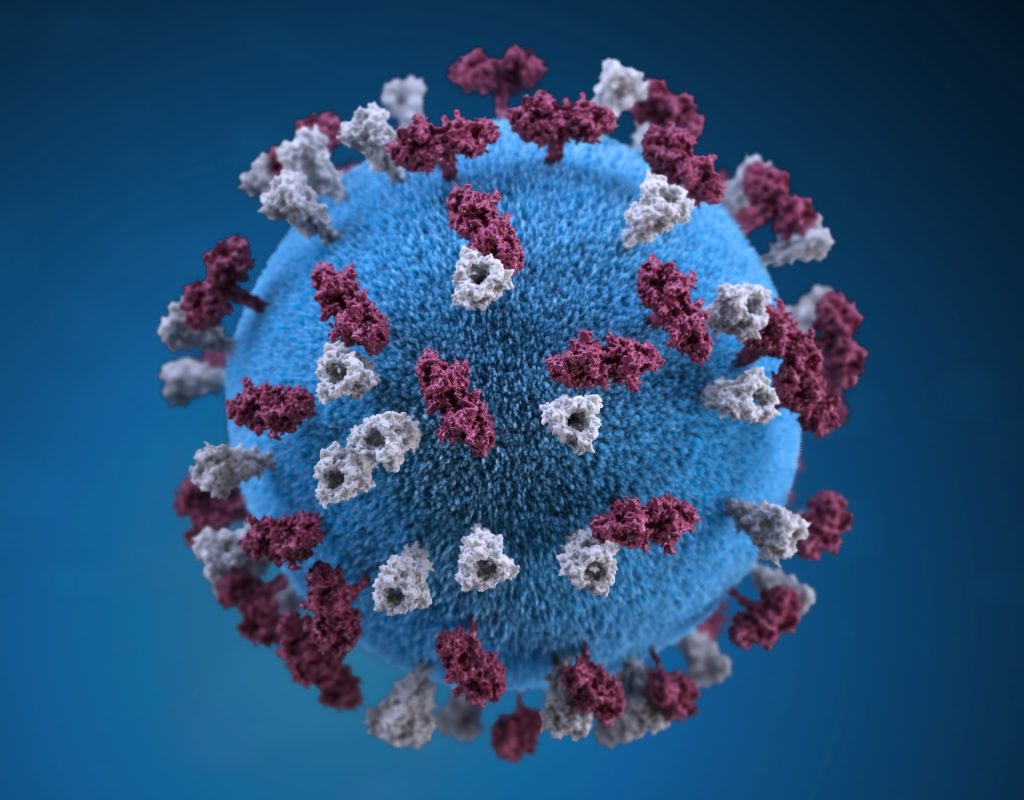
Mayo Clinic researchers mapped how the measles virus mutated and spread in the brain of a person who succumbed to a rare, lethal brain disease. New cases of this disease, which is a complication of the measles virus, may occur as measles re-emerges among the unvaccinated, say researchers.
Using the latest tools in genetic sequencing, researchers at Mayo Clinic reconstructed how a collective of viral genomes colonised a human brain.
The virus acquired distinct mutations that drove the spread of the virus from the frontal cortex outward.
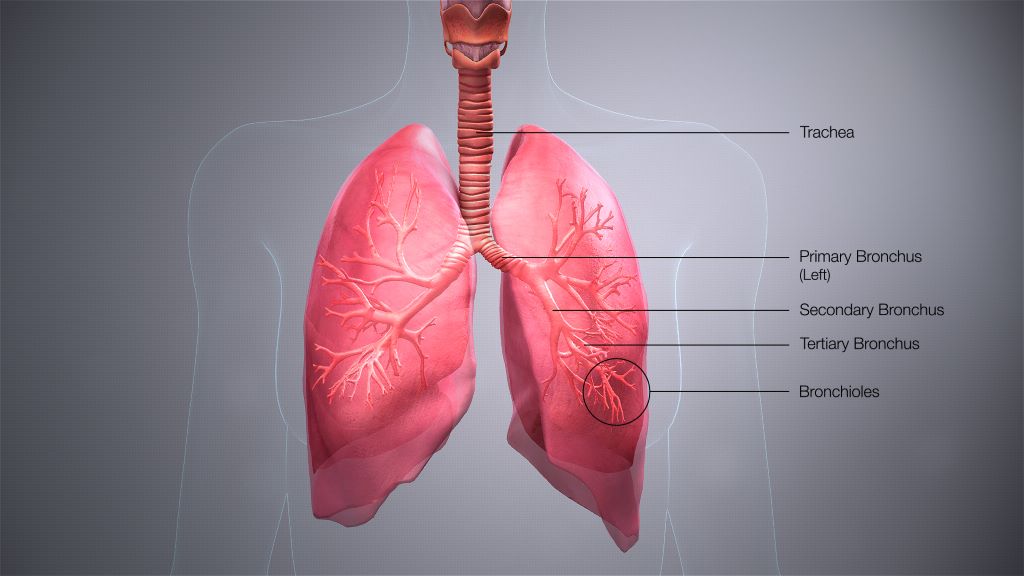
The highly contagious measles virus infects the upper respiratory tract where it uses the trachea as a trampoline to launch and spread through droplets dispersed when an infected person coughs or sneezes.
Dr Cattaneo pioneered studies on how the measles virus spreads throughout the body. He first began to study the measles virus about 40 years ago and was fascinated by the rare, lethal brain disease called subacute sclerosing panencephalitis (SSPE), which occurs in about 1 in every 10 000 measles cases.
It can take about five to 10 years after the initial infection for the measles virus to mutate and spread throughout the brain.
Symptoms of this progressive neurological disease include memory loss, seizures and immobility.
Dr. Cattaneo studied SSPE for several years until the lethal disease nearly disappeared as more people were vaccinated against measles. But now, measles is resurging due to vaccine hesitancy and missed vaccinations.
During the COVID pandemic, millions of children missed receiving their measles vaccinations, which has resulted in an estimated 18% increase in measles cases and 43% increase in death from measles in 2021 compared to 2022 worldwide, according to a recent Centers for Disease Control and Prevention (CDC) report.
“We suspect SSPE cases will rise again as well. This is sad because this horrible disease can be prevented by vaccination. But now we are in the position to study SSPE with modern, genetic sequencing technology and learn more about it,” says Iris Yousaf, co-lead author of the study and a fifth-year Ph.D. candidate at Mayo Clinic Graduate School of Biomedical Sciences.
Dr Cattaneo and Yousaf had a unique research opportunity through a collaboration with the CDC. They studied the brain of a person who had contracted measles as a child and had succumbed to SSPE years later as an adult.
They investigated 15 specimens from different regions of the brain and conducted genetic sequencing on each region to piece together the puzzle of how the measles virus mutated and spread.
The researchers discovered that, after the measles virus entered the brain, its genome began to mutate in harmful ways over successive generations, creating a population of varied genomes.
“In this population, two specific genomes had a combination of characteristics that worked together to promote virus spread from the initial location of the infection – the frontal cortex of the brain – out to colonise the entire organ,” says Dr Cattaneo.
The next steps in this research are to understand how specific mutations favour virus spread in the brain. These studies will be done in cultivated brain cells brain organoids. This knowledge may help in creating effective antiviral drugs to combat virus spread in the brain. However, pharmacological intervention in advanced disease stages is challenging, and preventing SSPE through measles vaccination remains the best method.
It has long been known that people with diabetes are at a substantially increased risk of developing severe lung disease if they become infected with viruses such as influenza, as well as other pathogens. When the COVID-19 pandemic started in early 2020, it became even more important to understand this mysterious phenomenon. It became clear that people with diabetes were at a significantly higher risk of coming down with severe, even fatal, lung disease after developing severe COVID, but no one understood why. In fact, some 35% of the pandemic’s COVID mortalities had diabetes.
Now, research conducted at the Weizmann Institute of Science and published in Nature has revealed how, in diabetics, high levels of blood sugar disrupt the function of key cell subsets in the lungs that regulate the immune response. It also identifies a potential strategy for reversing this susceptibility and saving lives.
Prof. Eran Elinav‘s team in his lab at Weizmann, headed by Drs. Samuel Nobs, Aleksandra Kolodziejczyk and Suhaib K. Abdeen, subjected multiple mouse models of types 1 and 2 diabetes to a variety of viral lung infections. Just as in diabetic humans, in all these models the diabetic mice developed a severe, fatal lung infection following exposure to lung pathogens such as influenza. The immune reaction, which in nondiabetics eliminates the infection and drives tissue healing, was severely impaired in the diabetic mice, leading to uncontrolled infection, lung damage and eventual death.
Next, to decode the basis of this heightened risk, the team performed an evaluation of gene expression on the level of individual cells, in more than 150 000 single lung cells of infected diabetic and nondiabetic mice. The researchers also performed an extensive array of experiments involving immune and metabolic mechanisms, as well as an in-depth assessment of immune cell gene expression in infected diabetic mice. In the diabetic mice they identified a dysfunction of certain lung dendritic cells, the immune cells that orchestrate a targeted immune response against pathogenic infection. “High blood sugar levels severely disrupt certain subsets of dendritic cells in the lung, preventing these gatekeepers from sending the molecular messages that activate the critically important immune response,” says Nobs, postdoctoral fellow and study first author. “As a result, the infection rages on, uncontrolled.”
Next, they explored ways to prevent the harmful effects of hyperglycaemia in lung dendritic cells, as a means of lowering the infection’s risk in diabetic animals. Indeed, tight control of glycaemic levels by insulin supplementation prompted the dendritic cells to regain their capacity to generate a protective immune response that could prevent the cascade of events leading to a severe, life-threatening viral lung infection. Alternatively, administration of small molecules reversing the sugar-induced regulatory impairment corrected the dendritic cells’ dysfunction and enabled them to generate a protective immune response despite the presence of hyperglycaemia.
“Correcting blood sugar levels, or using drugs to reverse the gene regulatory impairment induced by high sugar, enabled our team to get the dendritic cells’ function back to normal,” says Abdeen, a senior intern who co-supervised the study. “This was very exciting because it means that it might be possible to block diabetes-induced susceptibility to viral lung infections and their devastating consequences.”
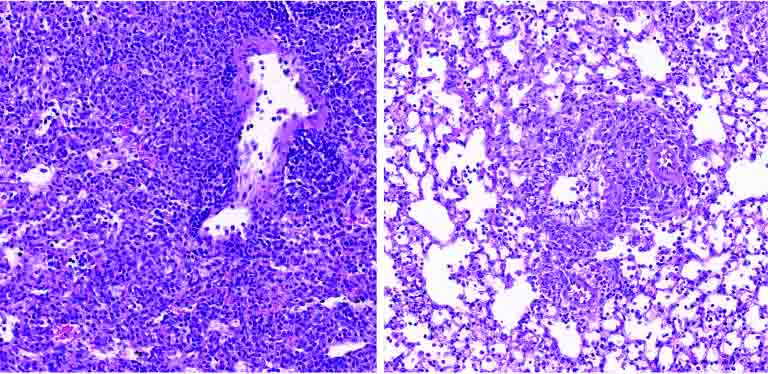
Lung tissue of a diabetic mouse (right) contains fewer immune cells (small purple dots) than that of a non-diabetic animal (left)
With over 500 million people around the world affected by diabetes, and with diabetes incidence expected to rise over the next decades, the new research has significant, promising clinical implications.
“Our findings provide, for the first time, an explanation as to why diabetics are more susceptible to respiratory infection,” Elinav says. “Controlling sugar levels may make it possible to reduce this pronounced diabetes-associated risk. In diabetic patients whose sugar levels are not easily normalized, small molecule drugs may correct the gene alterations caused by high sugar levels, potentially alleviating or even preventing severe lung infection. Local administration of such treatments by inhalation may minimize adverse effects while enhancing effectiveness, and merits future human clinical testing.”