Year: 2023

Frank Dialogue on NHI: Medical Schemes are a Government Asset

As the National Health Insurance (NHI) Bill makes its way through the approval process in the National Council of Provinces (NCOP), many actors in various sectors have called on the South African government to carefully consider the concerns raised regarding the proposed bill.

Stressing this point as one of the panellists in the Kwa-Zulu Natal leg of the Frank Dialogue on NHI hosted by media anchor and Leadership magazine editor, Prof JJ Tabane, and his team, recently in Umhlanga, Dr Katlego Mothudi, Board of Healthcare Funders (BHF) MD, acknowledged that both the public and the private sectors were not perfect, but cited that destroying the private sector was not going to accelerate the attainment of the global agenda of Universal Health Coverage. Strengthening a health system requires reform of six pillars; and the National Health Insurance formed part of the finance pillar only. He further noted that the private sector was a national asset to contribute to the success of health reform.

Other participants in the dialogue were the Minister of Health, Dr Joe Phaahla, Dr Kgosi Letlape (former Health Professions Council of SA and SA Medical Association chair), Zwelinzima Vavi (SA Federation of Trade Unions chair), Dr Nicholas Crisp (Department of Health Deputy-Director: NHI), and Nozibele Tshobeni (Sizwe Hosmed Acting PO).

The primary aim of these events has been to facilitate a constructive and inclusive discourse among various professionals in the sector, with the Minister of Health, regarding the proposed NHI Bill. 

Emphasising the importance of overcoming several issues before the Bill could be successfully rolled out, Prof Tabane acknowledged that the health crisis in South Africa was of significant concern, rendering the implementation of universal health coverage (UHC) a necessity.

Asked about the future role of medical schemes under NHI, Crisp reiterated that NHI was not about scrapping medical aids, but about the right of all South Africans to access affordable healthcare: “The bill does not abolish or repeal the National Health Act. It merely goes about a different way of financing – a single fund to care for the majority of the health benefits that we need as a nation to strive.

However, Dr Mothudi disagreed with Crisp and highlighting that a multi-payer system was a better model given the south African context that has load of fraud and corruption.  “Why not a multi-payer system, as originally proposed in the first NHI Green Paper?” he asked.

“Between now and that point,” Crisp explained, “we need the medical schemes to continue what they are doing but to do it more effectively than they are doing at present. They criticised us in the Health Market Inquiry, saying we did not provide leadership. Now we are providing leadership – we want to have a multilateral negotiating forum, we want to set prices, want to introduce other related measures:

A moot point made by Sizwe Hosmed’s Ms Tshobeni in her concluding remarks was that while she agreed that NHI was “overall, a good idea”, pushing the Bill through was putting the cart before the horse: “How we are going about it is really the problem.

“We are not that far apart in our discussions on this, but where we are drifting apart can be answered by the question ‘why are we here?’” asked Dr Mothudi.

“Going on blaming apartheid etc is not good. The Medical Schemes Act, for example, was promulgated in 1998 – post-apartheid. So, we must take responsibility for these challenges. Secondly, Government must provide stewardship, being responsible for the lives and healthcare of every citizen. Right now, we only have one Department of Health, not one for the public and one for the private sector.”

Also noted was that the private sector “does not run itself”. The National Health Act is there to guide practitioners and establishments how they should behave, while the Medical Schemes Act is enforced by the Council for Medical Schemes under stewardship of Department of Health.

While many views were expressed about the pros and cons of NHI, among the most common once again were, as already mentioned, the wisdom of a single payer system. Contributing his views on this, the BHF’s Dr Mothudi revived the originally drafted concept of a multipayer system for the fund: “A multipayer system was proposed in the first NHI Green Paper but was thrown out! A multipayer system would work in the same way as it did during the COVID vaccination campaign. When standing in the vaccination queue you wouldn’t know who was paying for the service for the person in front of you – employer, medical aid, or government?

“The pricing and service for the vaccine and procedure,” he said, “was set the same for all and for everyone.”

To watch the Frank Dialogue Click Here

AfriForum Report Exposes Dangers of National Health Insurance

The National Health Insurance (NHI) will further widen the inequality gap, put even more pressure on the already overburdened taxpayer and lead to an outflow of medical expertise should it be implemented. AfriForum has detailed these and other consequences of the NHI in a new research report.

In its report, the organisation details, among other things, the ideological basis of the NHI, the place it occupies in the ANC’s National Democratic Revolution (NDR), the economic consequences of the centralisation of health financing and the vagueness in the bill itself. Furthermore, the report provides an overview of centralised health systems in a number of other countries and how they compare or contrast with the economic and policy environment in South Africa.

One of the biggest issues with the NHI Bill is its funding. According to the report, four possible sources of income are currently being investigated that will have a negative impact on taxpayers – including payroll tax. This option entails that the government will require employers to recover a portion of their employees’ salaries which will then be remitted to the government – this on top of the deductions that are already recovered from employees’ salaries. South Africa’s marginal income tax is already higher than that of most other countries such as Canada, the USA and Namibia. Although this is the same as Australia, Switzerland and South Korea’s marginal income tax, South Africa has little in terms of service delivery to show for it.

The research finds in almost all the areas of investigation that NHI will be harmful to the economy and negative for the well-being of most South Africans and concludes that the bill should be rejected by parliament and opposed by the health sector.

According to Louis Boshoff, Campaign Officer at AfriForum, this report appears at a critical time where the parliamentary battle over the NHI Bill rages on and many misconceptions about it are circulating. “NHI is easily summarized incorrectly with slogans such as ‘free health care for all’, but the report takes a step back to obtain a more sober and objective picture, namely that the policy is expensive, unmotivated and unworkable,” says Boshoff.

The full report is available at www.jougesondheid.co.za, where the latest information on NHI is posted.

New Drug Effective for 3 of 4 Trial Patients with Relapsed Blood Cancer

Photo by National Cancer Institute on Unsplash

A new targeted drug, may offer a new treatment option for patients with blood cancers, including chronic lymphocytic leukaemia (CLL) and Non-Hodgkin lymphoma (NHL) whose disease has stopped responding to standard treatments.

In the first clinical trial of this drug in humans, nemtabrutinib was effective in three-fourths of cancer patients tested, without severe side effects. The results of the trial were published in the journal Cancer Discovery.

Haematologist and study lead investigator Jennifer Woyach, MD, notes that about half a dozen drugs are available to treat these B-cell cancers. Although most patients respond to these drugs initially, over time, many patients experience disease progression. The study was done by researchers at The Ohio State University Comprehensive Cancer Center – Arthur G. James Cancer Hospital and Richard J. Solove Research Institute (OSUCCC – James).

“Blood cancers that have relapsed after initial treatments can be difficult to treat, and even with our effective medications, some patients run out of standard treatment options.  In this trial, nemtabrutinib looks very promising for patients whose cancer has progressive after other treatments.” said Woyach, who is co-leader of the Leukemia Research Program at the OSUCCC – James.

How this drug therapy works

When an antigen, such as a virus or bacteria, enters the bloodstream, it triggers a set of signals in B-cells to produce antibodies. In some people, said Woyach, this process goes haywire. Instead of fighting infections, the B-cells begin to divide uncontrollably, resulting in cancer. Drugs against B-cell cancers work by binding to a key enzyme, called Bruton’s tyrosine kinase (BTK). This enzyme is involved in the signaling process. The drugs block the action of the enzyme, and as a result, the abnormal B-cells die.

In many patients, this effect is temporary with available drugs. Over time, the BTK enzyme to which the drugs bind mutates so they can no longer stop its action. Soon, the cancer returns. Nemtabrutinib was designed to bind to BTK even in the presence of common mutations that make other BTK inhibitors stop working. It also binds to a number of proteins besides BTK that are important in B cell cancers. These two properties made this drug very appealing to study in this patient population.

Study methods and results

The researchers tested the new drug on 47 patients who have had at least two prior therapies for their blood cancer. Over half of these patients had relapsed CLL, while the others had NHL. The researchers gave these patients one pill of nemtabrutinib every day, with different doses along the trial. They observed the patients’ response to the drug over time and monitored them for side effects.

The study found more than 75% of the patients with relapsed CLL responded to the drug, at an optimal dose of 65mg. These included patients who had mutations in BTK. Most patients remained cancer free for at least 16 months during the trial. While all patients experienced some side effects – which is common with chemotherapeutic drugs – many of these were minor and manageable, proving that the drug was also very safe.

“The drug is being moved to larger and more definitive trials, where it will be compared against other standard-of-care drugs, and in combination with other active medications,” said Woyach.

The blood cancers investigated in this trial affect B lymphocytes, which is a cell that is responsible for producing antibodies and fighting infections. CLL is the most common leukaemia making up a quarter of leukaemia cases among adults, and NHL accounts for 4% of all cancers in the United States.

Source: Ohio State University

Opinion Piece: Prostate Cancer is One of the Most Common Male Cancers in South Africa – How Would You Deal with a Diagnosis?

Credit: Darryl Leja National Human Genome Research Institute National Institutes Of Health

By James White, Head of Sales and Marketing at Turnberry Management Risk Solutions

According to the National Cancer Registry (NCR) of South Africa, prostate cancer is the most commonly diagnosed cancer among men in South Africa. In 2020, it accounted for more than 22% of all male cancers, with the average age of diagnosis being 65 years old. While prostate cancer is more common among older populations, it can affect men of any age, and although the disease is often treatable, the success of treatment and survival rate depends heavily on an early diagnosis and access to appropriate treatment. The last thing anyone wants to think about after a diagnosis is how they will pay for the treatment, or if they can even afford it, which is why gap cover has become an essential weapon in the fight against cancer.

Key points about prostate cancer

While the exact cause of prostate cancer is unknown, there are several risk factors that increase a man’s likelihood of developing the disease. These include age, family history, and lifestyle factors such as diet and exercise. However, if it is caught early, prostate cancer can often be successfully treated, so it is important for men to get regular check-ups and prostate cancer screenings starting at age 50 (or earlier if they have a family history or other risk factors). Regular screenings can help detect prostate cancer before it has a chance to spread, giving men the best chance of a favourable outcome.

It is also important to know that help and support are available. Prostate cancer can be a difficult diagnosis for men and their families, but there are many resources available for support, including support groups like the Machi Filotimo Cancer Project, as well as online forums, and counselling services. These resources can help men and their families cope with the emotional and practical challenges of a prostate cancer diagnosis and treatment. When it comes to the financial side, it is important to understand your medical aid scheme and plan option, and how treatments will be covered.

Shortfalls and PMB conditions

Prostate cancer is a Prescribed Minimum Benefit (PMB) condition, which means that medical aid schemes in South Africa are required by law to provide cover for diagnosis, treatment, and care, in line with that which is available at a state hospital. However, this does not mean that medical expense shortfalls will not occur. Co-payments may still apply for certain aspects of treatment and making use of a non-Designated Service Provider (DSP) may attract penalties. Depending on the scheme and plan option a patient has, there may also be other limitations on the cover received for cancer treatment.

For example, a PMB will cover the treatments that are available as per the protocols of a state hospital, including surgery, chemotherapy, immunotherapy, radiation, and hormone therapy. There are also next-generation biological cancer drugs that are used to successfully treat prostate cancer while being minimally invasive and having fewer side effects. These drugs, however, are not part of the basket of PMB care, and will be covered according to the cancer benefits of a patient’s medical aid scheme and plan. There is significant potential for shortfalls here, as these drugs are expensive, are not often fully covered, and need to be administered multiple times to be effective.

A significant gap

As with all cancers, early detection saves lives, and the sooner a patient can start to get the treatment they need, the better their prognosis. However, having to think about the financial implications can add strain to an already stressful situation. Having the right gap cover policy can be invaluable in ensuring that you can receive the best treatment, quickly, to give you the highest chance of surviving and thriving after a prostate cancer diagnosis.

At Turnberry, prostate cancer claims make up a significant 17% of all cancer-related claims, and the amounts claimed for are substantial sums of money. In 2022 alone, we paid out several high-value claims related to prostate cancer – a shortfall of R29 530 from a total bill of R84 889.50; a shortfall of R31 496.60 from a bill of R47,244.90; a claim of R54 555.50 from a total charged amount of R84 899.50; a claim of R53 722 from a total bill of R80 583; and a shortfall claim of R26 765.86 from a total bill of R39 392.80. Without gap cover, these patients would have had to fund these shortfalls out of pocket, which could significantly impact their financial wellbeing long after they received a clean bill of health.

Always talk to your broker

Medical aid schemes and the various plan options within the schemes vary in the coverage they provide as well as the way in which their cancer benefits are structured. In addition, different gap cover policies have different coverage options, which means that it is important to talk to your broker or financial advisor to find the best gap cover policy to augment your medical aid cover. Ultimately, gap cover is a small price to pay for the peace of mind it offers, that you will be covered for cancer treatments and that the financial burden of shortfalls will not fall on your shoulders, or on those of your family members either.

About Turnberry Management Risk Solutions

Founded in 2001, Turnberry is a registered financial services provider (FSP no. 36571) that specialises in Accident and Health Insurance, Travel Insurance, and Funeral Cover.

With extensive experience across healthcare and insurance industries in South Africa, Turnberry offers unsurpassed service to Brokers and clients. Turnberry’s gap cover products are available to clients on all medical aid schemes, as they are independently provided and are therefore transferable in the event of a change in the client’s medical aid scheme.

Turnberry is well represented nationally, with its Head Office based in Bedfordview, Johannesburg with Business Development Managers in Cape Town and Durban. The Turnberry Team’s focus on outstanding client service comes from having extensive knowledge and experience in the financial services sector and is underwritten by Lombard Insurance Company Limited. Lombard Insurance Company Limited is an Authorised Financial Services Provider (FSP 1596) and Insurer conducting non-life insurance business.

Study Finds Epigenetic Changes Behind Cancer Progression

Photo by Sangharsh Lohakare on Unsplash

The journey a cell makes from healthy to metastatic cancer is mostly driven by epigenetic changes, according to a new computational study that has been recently published in the journal Nature.

Every cell makes its own proteins by accessing its genetic information, but genetic mutations may ruin the function of the affected proteins. In oncology, this is regarded as the genetics of cancer. The last decades, however, have seen the rise of a new field: the epigenetics of cancer.

Epigenetic modifications do not change the information but temporarily modify the cell’s ability to read some of its own genes and produce the associated proteins instead. This forms a vast epigenetic program that controls general cell functions and, when altered, it may put it at the starting line of malignant transformation. Is there a way to track these changes and understand the epigenetics of cancer transition?

Now an international team of researchers has made headway towards this goal. They analysed 1.7 million cells from 225 samples from primary and metastatic origin, from 205 patients of 11 different cancer types. For each cell, the team obtained the full transcriptome, exome and epigenome. This covers virtually all gene mutations, gene accessibility and its consequences. With the help of enormous computational resources, they were able deduce the whole functional status of each analysed cell and link it to its particular cancer type.

The results of the work demonstrate that many regions in the DNA are differentially activated or inactivated in a cancer-specific manner, creating a signature for each tumour. These differences are relevant for cancer progression and many correspond to already identified hallmarks of cancer, the steps a cell must undergo to become malignant. Dr Eduard Porta, group leader at the Josep Carreras Leukaemia Research Institute (IJC-CERCA), is part of the team and contributed with his experience in the analysis of large amounts of biological data.

Epigenetic changes at the DNA level stand out as an underlying cause of cancer, according to the new publication. Particularly, the accessibility of enhancer regions, a kind of master regulator acting upon many genes at once. Taken together, the results converges into a short list of genes that can be used as markers for good or poor prognosis, valuable information for the clinical management of patients.

The analysis has also identified the cellular pathways of these important genes, making it possible to track their distant interactions. Sometimes, the affected genes are so fundamental that is impossible to drug them directly without side effects but, knowing the full pathway, researchers may develop strategies to target the weakest link in the chain, maximising the therapeutic benefits while minimising undesirable effects.

Source: Josep Carreras Leukaemia Research Institute

Diabetes Worsens Colorectal Cancer Survival Odds by 41%

Photo by Nataliya Vaitkevich on Pexels

In an analysis of information on adults with colorectal cancer, patients who also had diabetes, particularly those with diabetic complications, faced a higher risk of early death. The results are published in CANCER, a peer-reviewed journal of the American Cancer Society.

For the study, Kuo‐Liong Chien, MD, PhD, of National Taiwan University, and his colleagues examined data registered between 2007 and 2015 in the Taiwan Cancer Registry Database, which is linked to health insurance and death records. Their analysis included 59 202 individuals with stage I–III colorectal cancer who underwent potentially curative surgery to remove their tumours. Among these patients, 9448 experienced a cancer recurrence and 21 031 died from any cause during the study period.

Compared with individuals without diabetes, those with uncomplicated diabetes were at a minimally or insignificantly higher risk of all‐cause and cancer‐specific death, whereas those with complicated diabetes had 85% higher odds of death from any cause and 41% higher odds of death from cancer. These associations were more pronounced in women and in patients with early‐stage colorectal cancer.

Also, compared to patients without diabetes, patients with uncomplicated or complicated diabetes had a 10–11% higher risk of colorectal cancer recurrence.

The mechanisms behind the relationship between diabetic severity and poor colorectal cancer prognosis could involve various pathways and responses triggered by high insulin and glucose levels in the blood, as well as elevated inflammatory states, which are characteristic of type 2 diabetes.

“While a higher diabetes prevalence was noted in patients with colorectal cancer, the study suggests that coordinated medical care involving multiple specialists can help prevent diabetes complications, potentially improving long-term colorectal cancer oncological outcomes, particularly in women and patients with early-stage cancer,” said Dr Chien.

Source: Wiley

Could an Existing Drug be Repurposed to Treat Type 1 Diabetes?

Photo by Photomix Company on Pexels

A new study appearing in Cell Medicine Reports suggests that an existing drug could be repurposed to treat type 1 diabetes, potentially reducing dependence on insulin as the sole treatment.

Type 1 diabetes, an autoimmune disease which attacks insulin-producing beta cells in the pancreas, is traditionally managed by replacing the missing insulin with injections which, though effective, can be expensive and burdensome.

The research, led by researchers at the University of Chicago Medicine and Indiana University, focuses on α-difluoromethylornithine (DFMO), which inhibits an enzyme that plays a key role in cellular metabolism. The latest translational results are a culmination of years of research: In 2010, while corresponding author Raghu Mirmira, MD, PhD, was at Indiana University, he and his lab performed fundamental biochemistry experiments on beta cells in culture. They found that suppressing the metabolic pathway altered by DFMO helped protect the beta cells from environmental factors, hinting at the possibility of preserving and even restoring these vital cells in patients diagnosed with type 1 diabetes.

The researchers confirmed their observations preclinically in zebrafish and then in mice before senior author Linda DiMeglio, MD, MPH, Edwin Letzter Professor of Pediatrics at Indiana University School of Medicine and a pediatric endocrinologist at Riley Children’s Health, launched a clinical trial to evaluate the safety and tolerability of the drug in type 1 diabetes patients. The results of the trial, which was funded by the Juvenile Diabetes Research Foundation (JDRF) and used DMFO provided by Panbela Therapeutics, indicated that the drug is safe for type 1 diabetes patients and can help keep insulin levels stable by protecting beta cells.

“As a physician-scientist, this is the kind of thing we’ve always strived for – to discover something at a very basic, fundamental level in cells and find a way to bring it into the clinic,” said Mirmira, who is now Professor of Medicine and an endocrinologist at UChicago Medicine. “It definitely underscores the importance of supporting basic science research.”

“It’s been truly thrilling to witness the promising results in the pilot trial after this long journey, and we’re excited to continue our meaningful collaboration,” said DiMeglio.

Importantly, DFMO has already been FDA-approved as a high dose injection since 1990 for treating African Sleeping Sickness and received breakthrough therapy designation for neuroblastoma maintenance therapy after remission in 2020. Pre-existing regulatory approval could potentially facilitate its use in type 1 diabetes, saving effort and expense and getting the treatment to patients sooner.

“For a drug that’s already approved for other indications, the approval timeline can be a matter of years instead of decades once you have solid clinical evidence for safety and efficacy,” said Mirmira. “Using a new formulation of DFMO as a pill allows patients to take it by mouth instead of needing to undergo regular injections, and it has a very favorable side effect profile. It’s exciting to say we have a drug that works differently from every other treatment we have for this disease.”

To follow up on the recently published results, a multi-centre clinical trial was launched to gather even stronger data regarding the efficacy of DFMO as a type 1 diabetes treatment.

“With our promising early findings, we hold hope that DFMO, possibly as part of a combination therapy, could offer potential benefits to preserve insulin secretion in individuals with recent-onset type 1 diabetes and ultimately also be tested in those who are at risk of developing the condition,” said Sims.

“A new era is dawning where we’re thinking of novel ways to modify the disease using different types of drugs and targets that we didn’t classically think of in type 1 diabetes treatment,” said Mirmira.

Source: University of Chicago Medicine

New Synthetic Melanin Cream Could Boost Skin’s Natural Healing Process

The synthetic melanin is being applied to inflamed skin. Just under the surface of the skin are green free radicals, also known as reactive oxygen species (ROS). Credit: Yu Chen, Northwestern University

Imagine a skin cream that heals damage occurring throughout the day when your skin is exposed to sunlight or environmental toxins. That’s the potential of a synthetic, biomimetic melanin developed by scientists at Northwestern University.

In a new study, published in Nature npj Regenerative Medicine, the scientists show that their synthetic melanin, mimicking the natural melanin in human skin, can be applied topically to injured skin, where it accelerates wound healing. These effects occur both in the skin itself and systemically in the body.

When applied in a cream, the synthetic melanin can protect skin from sun exposure and heals skin injured by sun damage or chemical burns, the scientists said. The technology works by scavenging free radicals, which are produced by injured skin such as a sunburn. Left unchecked, free radical activity damages cells and ultimately may result in skin aging and skin cancer.

Melanin in humans and animals provides pigmentation, protecting cells from sun damage with increased pigmentation in response to sunlight. That same pigment in skin also naturally scavenges free radicals in response to damaging environmental pollution from industrial sources and automobile exhaust fumes.

Everyday skin injury

“People don’t think of their everyday life as an injury to their skin,” said co-corresponding author Dr. Kurt Lu, the Eugene and Gloria Bauer Professor of Dermatology at Northwestern University Feinberg School of Medicine and a Northwestern Medicine dermatologist. “If you walk barefaced every day in the sun, you suffer a low-grade, constant bombardment of ultraviolet light. This is worsened during peak mid-day hours and the summer season. We know sun-exposed skin ages versus skin protected by clothing, which doesn’t show age nearly as much.”

The skin also ages due to chronological aging and external environmental factors, including environmental pollution.

“All those insults to the skin lead to free radicals which cause inflammation and break down the collagen,” Lu said. “That’s one of the reasons older skin looks very different from younger skin.”

When the scientists created the synthetic melanin engineered nanoparticles, they modified the melanin structure to have higher free radical scavenging capacity.

“The synthetic melanin is capable of scavenging more radicals per gram compared to human melanin,” said co-corresponding author Nathan Gianneschi, the Jacob and Rosaline Cohn Professor of Chemistry, Materials Science & Engineering, Biomedical Engineering and Pharmacology at Northwestern. “It’s like super melanin. It’s biocompatible, degradable,nontoxic and clear when rubbed onto the skin. In our studies, it acts as an efficient sponge, removing damaging factors and protecting the skin.”

Once applied to the skin, the melanin sits on the surface and is not absorbed into the layers below.

“The synthetic melanin stabilises and sets the skin on a healing pathway, which we see in both the top layers and throughout the body,” Gianneschi said.

Both Lu and Gianneschi are members of the Robert H. Lurie Comprehensive Cancer Center of Northwestern University

Topical cream quiets immune system

The scientists, who have been studying melanin for nearly 10 years, first tested their synthetic melanin as a sunscreen.

“It protected the skin and skin cells from damage,” Gianneschi said. “Next, we wondered if the synthetic melanin, which functions primarily to soak up radicals, could be applied topically after a skin injury and have a healing effect on the skin? It turns out to work exactly that way.”

Lu envisions the synthetic melanin cream being used as a sunscreen booster for added protection and as an enhancer in moisturiser to promote skin repair.

“You could put it on before you go out in the sun and after you have been in the sun,” Lu said. “In both cases, we showed reduction in skin damage and inflammation. You are protecting the skin and repairing it simultaneously. It’s continuous repair.”

The cream could also potentially be used for blisters and open sores, Lu said.

Gianneschi and Lu discovered that the synthetic melanin cream, by soaking up the free radicals after an injury, quieted the immune system. The stratum corneum, the outer layer of mature skin cells, communicates with the epidermis below. It is the surface layer, receiving signals from the body and from the outside world. By calming the destructive inflammation at that surface, the body can begin healing instead of becoming even more inflamed.

“The epidermis and the upper layers are in communication with the entire body,” Lu said. “This means that stabilising those upper layers can lead to a process of active healing.”

The scientists used a chemical to create a blistering reaction to a human skin tissue sample in a dish. The blistering appeared as a separation of the upper layers of the skin from each other.

“It was very inflamed, like a poison ivy reaction,” Lu said.

They waited a few hours, then applied their topical melanin cream to the injured skin. Within the first few days, the cream facilitated an immune response by initially helping the skin’s own radical scavenging enzymes to recover, then by halting the production of inflammatory proteins. This initiated a cascade of responses in which they observed greatly increased rates of healing. This included the preservation of healthy skin layers underneath. In samples that did not have the melanin cream treatment, the blistering persisted.

“The treatment has the effect of setting the skin on a cycle of healing and repair, orchestrated by the immune system,” Lu said.

Melanin could protect from toxins including nerve gas

Gianneschi and Lu are studying melanin as part of US government-funded research, which has included looking at melanin as a dye for clothing that would also act as an absorbent for toxins in the environment, particularly nerve gas. They showed they could dye a military uniform black with the melanin, and that it would absorb the nerve gas.

Melanin also absorbs heavy metals and toxins. “Although it can act this way naturally, we have engineered it to optimise absorption of these toxic molecules with our synthetic version,” Gianneschi said.  

The scientists are pursuing clinical translation and trials testing for efficacy of the synthetic melanin cream. In an initial step, the scientists recently completed a trial showing that the synthetic melanins are non-irritating to human skin.

Given their observation that melanin protects biologic tissue from high energy radiation, they surmise that this could be an effective treatment for skin burns from radiation exposure.

The promising work may well provide treatment options for cancer patients in the future, undergoing radiation therapy.

Source:

Lung Cancer Metastases in the Brain Trick Astrocytes for Protection

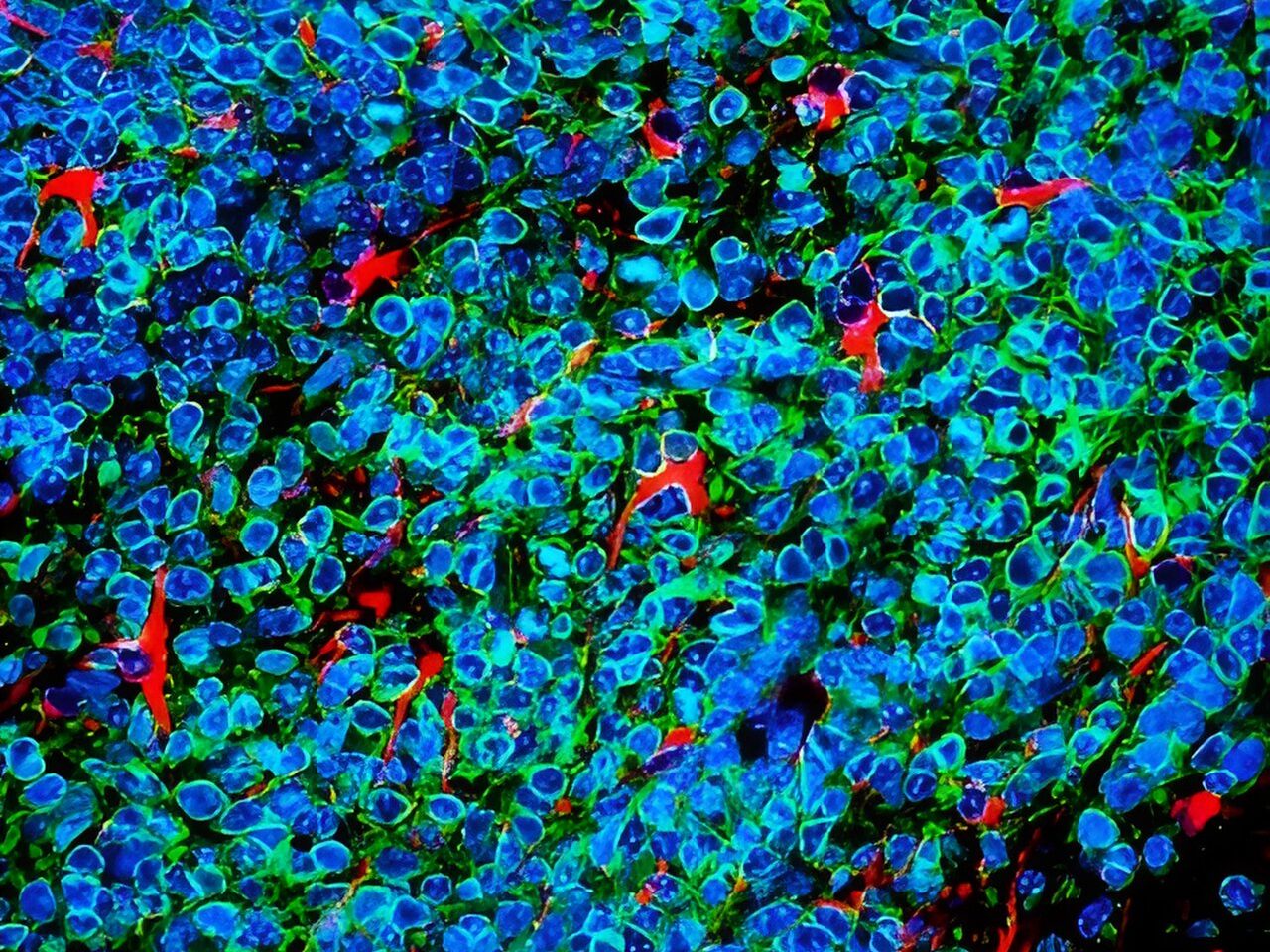
Small cell lung cancer cells (green and blue) that metastasised to the brain in a laboratory mouse recruit brain cells called astrocytes (red) for their protection. Credit: Fangfei Qu

Lung cancer cells that metastasise to the brain survive by convincing brain cells called astrocytes that they are baby neurons in need of protection, according to a study by researchers at Stanford Medicine published in Nature Cell Biology.

The cancer cells carry out their subterfuge by secreting a chemical signal prevalent in the developing human brain, the researchers found. This signal draws astrocytes to the tumour, encouraging them to secrete other factors that promote the cancer cells’ survival. Blocking that signal may be one way to slow or stop the growth of brain metastases of small cell lung cancer, which account for about 10% to 15% of all lung cancers, the researchers believe.

In the adult brain, astrocytes play a critical role in maintaining nerve function and connectivity. They are also important during brain development, when they facilitate connections between developing neurons.

The researchers studied laboratory mice, human tissue samples and human mini-brains, or organoids, grown in a lab dish to dissect the unique relationship between the cancer cells and their ‘big sister’ astrocytes, which hover nearby and shower them with protective factors.

“Small cell lung cancers are known for their ability to metastasise to the brain and thrive in an environment that is not normally conducive to tumour growth,” said professor of paediatrics and of genetics Julien Sage, PhD. “Our study suggests that these cancer cells reprogram the brain microenvironment by recruiting astrocytes for their protection.”

Professor Sage is the senior author of the study, while postdoctoral scholar Fangfei Qu, PhD, is the lead author.

Invasion of the brain

Small cell lung cancer excels at metastasising to the brain – about 15% to 20% of people already have clusters of cancer cells in their brains when their lung tumours are first diagnosed. As the cancer progresses, about 40% to 50% of patients will develop brain metastases. The problem is so prevalent, and the clinical outcome so dire, that clinicians recommend cranial radiation even before brain metastases have been found.

How and why small cell lung cancer has such an affinity for the brain has been something of a mystery. Brain metastases are rarely biopsied or removed because doing so has not been shown to affect a patient’s survival, and brain surgery is so invasive. Using laboratory mice is also of little help since small cell lung cancers in those animals rarely develop metastases in the brain, perhaps due to subtle biological differences between species.

Small cell lung cancers have another distinguishing feature – they are neuroendocrine cancers, meaning they arise from cells with similarities to both neurons and hormone-producing cells. Neuroendocrine cells link the nervous system with the endocrine system throughout the body, including in the lung.

Sage and his colleagues wondered whether neuronal-associated proteins on the surface of small cell lung cancer cells give them a leg up when the cells first begin to infiltrate the brain.

“We know the brain is full of neurons,” Sage said. “Maybe that’s why these cancer cells with some neuronal traits are happy in the brain and are accepted into that environment.”

Qu and Sage developed a way to inject mouse small cell lung cancer cells grown in the laboratory into the brains of mice to spark the development of brain tumours. They saw that astrocytes, a subtype of glial cell, flocked to the infant tumours and began to churn out proteins critical during brain development, including factors that stimulate nerve growth.

A plethora of astrocytes

A similar call happens in human brains, they noted: Brain tissue samples from people who had died of metastatic small cell lung cancer, shared by professor of pathology and paper co-author Christina Kong, MD, had many more protective astrocytes in the interior of the tumours than did metastases of melanoma, breast cancer and another type of lung cancer called adenocarcinoma.

Qu worked with assistant professor of paediatrics and co-author Anca Pasca, MD, to fuse aggregates of small cell lung cancer, lung adenocarcinoma or breast cancer cells with what are called cortical organoids – in vitro-grown clumps of brain cells including neurons and astrocytes that begin to mimic the organisation and connectivity of a human cortex. Within 10 days, many more protective astrocytes had infiltrated the small cell lung cancer pseudo-tumours than the adenocarcinoma or breast cancer.

“This showed us that the astrocytes actively move toward the small cell lung cancer cells, rather than simply being engulfed by the growing tumour,” Sage said. “What’s more exciting, though, is that these organoids, or mini-brains, realistically model the developing human brain. So, we’re no longer relying on a mouse model. It’s a perfect system to study brain metastases.”

Further research showed that the small cell lung cancer cells summon protective astrocytes by secreting a protein called Reelin that mediates the migration of neuronal and glial cells during brain development. Triggering Reelin expression in mouse breast cancer cells injected into the brain significantly increased the number of astrocytes in the resulting tumours in the mice, and the tumours were larger than in control animals injected with cells with low Reelin expression.

The apparent reliance of the cancer cells on chemical signals and responses specific to the developing brain may give clues for the development of future therapies, Sage believes.

“Some of these signals may not be as relevant or as highly expressed in the adult brain,” Sage said. “As a result, perhaps they could still be targeted to slow or prevent brain metastases without harming a normal brain. This might be an important window of opportunity for therapy.”

Source: Stanford Medicine

New Drug Offers Hope against Untreatable Gonorrhoea

Photo by Myriam Zilles on Unsplash

By Catherine Tomlinson for Spotlight

Newly announced results of a pivotal phase 3 trial have demonstrated the effectiveness of a new one-dose treatment for gonorrhoea. The medicine, called zoliflodacin, is the first new drug developed to treat gonorrhoea in over 30 years. More than half of the 930 patients included in the trial were from South Africa, including women, adolescents, and people living with HIV.

Zoliflodacin, which was shown to be non-inferior to (as good as) the currently used treatment in treating uncomplicated gonorrhoea, provides an important new tool to combat rising rates of drug resistant gonorrhoea. It was found to be generally well tolerated and there were no serious adverse events or deaths recorded in the trial. So far, only top line results have been shared in a media release and the findings have not yet been published in a medical journal. (You can see some technical details of the study design on ClinicalTrials.gov)

The World Health Organization raised the alarm about increasing rates of drug resistant gonorrhoea in 2017, noting the emergence of cases of untreatable gonorrhoea resistant to all available antibiotics. According to the United States Centers for Disease Control and Prevention “medication to treat gonorrhoea has been around for decades, but the bacteria has grown resistant to nearly every drug ever used to treat it”. They say: “only one class of antibiotics known as cephalosporins remains to treat the infection”.

As a drug from a new class of antibiotics, zoliflodacin, offers a new potential treatment for patients whose gonorrhoea was previously untreatable, as well as a new tool for safeguarding the ongoing effectiveness of currently available antibiotics.

How zoliflodacin may change gonorrhoea treatment

Professor Sinead Delany-Moretlwe, Director of Research for Wits RHI and the National Principal Investigator for the trial in South Africa, told Spotlight that while zoliflodacin may be used to treat drug resistant gonorrhoea, it also provides an attractive new treatment option for first-line treatment of gonorrhoea in some countries (in other words, gonorrhoea that is not resistant to other treatments).

Zoliflodacin, which is taken as a single oral dose, is simpler to administer than the current standard of care, which involves a combination of injectable ceftriaxone and oral azithromycin. Removing the need for an injection could simplify the administration of gonorrhoea treatment and improve its uptake.

Using zoliflodacin as first-line gonorrhoea treatment can also help safeguard the ongoing effectiveness of cephalosporins (including ceftriaxone), according to Delany-Moretlwe, which she adds are needed not just for treatment of gonorrhoea, but also other infections.

According to Delany-Moretlwe, because zoliflodacin is the first of a new class of antibiotics with novel mechanisms of action and without existing cross resistance, the hope is that widespread use of zoliflodacin as first-line gonorrhoea treatment will slow the emergence of resistance compared with the medicines currently being used.

The Global Antibiotic Research and Development Partnership (GARDP), a non-profit that sponsored the trial, points out that: “Antimicrobial resistance [AMR] has been around for millions of years, long before the first man-made antibiotics. So, drug-resistant bacteria are inevitable and will eventually affect all antibiotics”. They state: “to beat AMR we need a steady supply of new antibiotics to be developed that are effective against drug-resistant bacteria, particularly for priority pathogens that have the greatest public health impact.”

Gonorrhoea in South Africa

South Africa has incredibly high rates of gonorrhoea, with an estimated 2 million new cases annually. While data on rates of drug resistance in the country is limited, the data that is available indicates that ceftriaxone resistance in the country is low, but azithromycin resistance is concerningly high in some parts of the country.

As there is no routine screening for gonorrhoea in South Africa, linkage to treatment remains a challenge. Currently, diagnosis is largely done through symptomatic reporting by patients. But this approach misses many cases as some patients do not self-report symptoms and some cases of gonorrhoea are asymptomatic.

In 2022, the Southern African HIV Clinicians Society released new guidelines for the management of sexually transmitted infections which called for provider-initiated symptomatic screening and provider-initiated diagnostic screening in high-risk populations.

The country’s new National Strategic Plan on HIV, TB and STIs has set a target to increase the number of pregnant women tested for gonorrhoea from 10% in 2023 to 80% by 2028 and has committed to implementing diagnostic testing in other priority populations, including adolescent girls and young women.

How will new gonorrhoea treatments be commercialised?

Zoliflodacin was developed by GARDP in collaboration with the company Innoviva Specialty Therapeutics. According to GARDP, it holds the rights to register and commercialise zoliflodacin in more than three-quarters of the world’s countries, including all low-income countries, most middle-income countries, and several high-income countries. While, Entasis Therapeutics Limited, an affiliate of Innoviva Specialty Therapeutics, “retains the commercial rights for zoliflodacin in the major markets in North America, Europe, Asia-Pacific, and Latin America”.

South Africa is one of the countries in which GARDP holds the rights to register and commercialise zoliflodacin. It is anticipated that this will be done through selection and licensing of companies to manufacture and supply zoliflodacin in South Africa and other countries where GARDP holds commercialisation rights.

GARDP recently launched a request for proposals from partners that are interested in commercialising zoliflodacin. GARDP has also signed a memorandum of understanding with two generic producers to explore opportunities to commercialise the medicine in low-and-middle-income countries.

While the price that will be offered by commercial partners for the product remains to be seen, it is anticipated that products will be made available at affordable prices in line with GARDP’s goal to ensure that “all GARDP products are available, affordable, and appropriately used across populations that need them”.

“This is the first study to address a World Health Organization priority pathogen that has been sponsored and led by a non-profit organization,” says GARDP.

“This demonstrates that GARDP’s model can play a crucial role in helping to fix the public health failure at the heart of the global AMR crisis,” says Professor Glenda Gray, GARDP board member and President of the South African Medical Research Council.

SA involvement

According to GARDP, South Africa had the highest number of participants in the global trial, across six sites in four provinces: Wits RHI in Hillbrow, Johannesburg; the Desmond Tutu HIV Foundation in Masiphumelele, Cape Town; Setshaba Research Centre in Soshanguve, Gauteng; the SAMRC’s clinical research sites in Botha’s Hill and Tongaat in KwaZulu-Natal; and Ndlovu Research Centre in Groblersdal, Limpopo.

“We have also been able to leverage our HIV experience to build capacity for trials of novel STI technologies, a previously neglected area. Undertaking this vital work on a new treatment for gonorrhoea has also given us the opportunity to focus sharply on the local situation in South Africa,” says Delany-Moretlwe.

Republished from Spotlight under a Creative Commons Licence.

Source: Spotlight