Year: 2021

Unleashing the Immune System to Attack Cancers
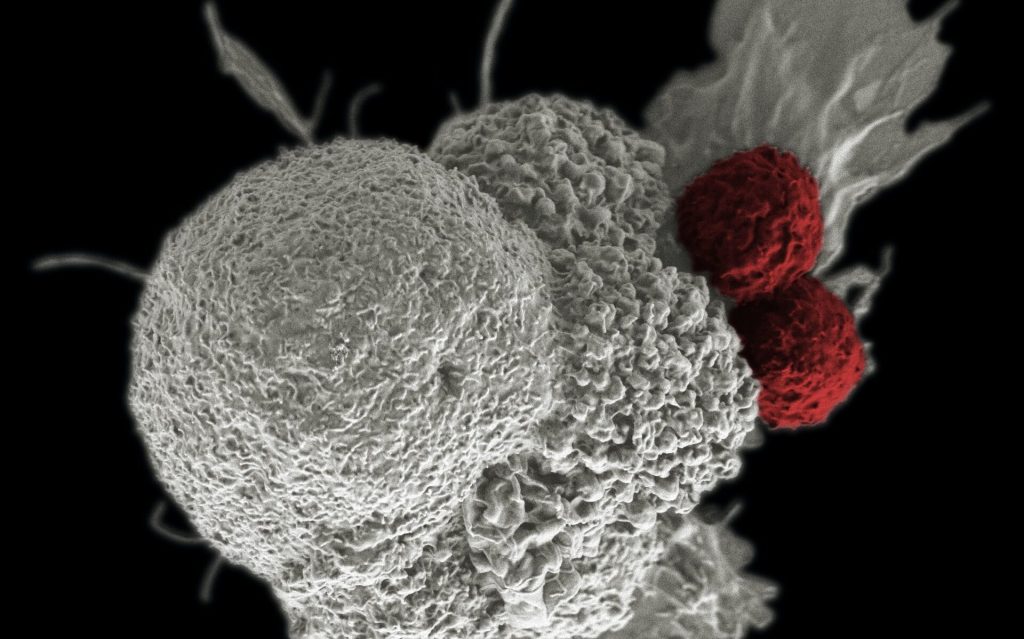
Shown here is a pseudo-colored scanning electron micrograph of an oral squamous cancer cell (white) being attacked by two cytotoxic T cells (red), part of a natural immune response. Photo by National Cancer Institute on Unsplash

A potential treatment has been identified, that could boost the immune system’s ability to find and destroy cancer cells, by impeding certain cells which regulate the immune system, which in turn can unleash other immune cells to attack tumours in cancer patients.

“A patient’s immune system is more than able to detect and remove cancer cells and immunotherapy has recently emerged as a novel therapy for many different types of cancers,” explained study leader Nullin Divecha, Professor of Cell Signalling at the University of Southampton. “However, cancer cells can generate a microenvironment within the tumour that stops the immune system from working thereby limiting the general use and success of immunotherapy,” he continued.

One of a number of types of T cells, Teffector cells (Teffs) carry out the task of detection and removal of cancer cells . How well Teff cells work in detecting and removing cancer cells is partly governed by other T cells called T-regulatory cells, or Tregs for short. Tregs physically interact with the Teff cells, producing molecules which dampen the functioning of the Teff cells.

Prof Divecha added, “Tregs carry out an important function in the human body because without them, the immune system can run out of control and attack normal cells of the body. However, in cancer patients we need to give the Teff cells more freedom to carry out their job.”

Molecules released by tumour cells exacerbate the problem by attracting and gathering Tregs, reducing the activity and function of Teff cells even further. Though there are mechanisms to inhibit Treg cells, since Treg and Teff cells are very similar, Teff cells are also generally inhibited.

In this new study, published in PNAS, scientists from the University of Southampton and the National Institute of Molecular Genetics in Milan showed that inhibition of a family of enzymes in cells called PIP4K could be the answer to how to restrict Tregs without affecting Teffs.

The research team isolated Tregs from healthy donors and used genetic technology to suppress the production of the PIP4K proteins. They saw that loss of PIP4Ks from Treg cells stopped their growth and response to immune signals, in turn stopping them from impeding Teff cell growth and function.

Importantly, the loss of the same enzymes in Teff cells did not limit their activity.

“This was surprising because PIP4Ks are in both types of T cells in similar concentrations but our study shows that they seem to have a more important function for Tregs than Teffectors,” said Dr. Alessandro Poli who carried out the experimental research.

Scientists must next develop molecules in order to inhibition of PIP4K as a potential therapy for patients. “Towards this end we show that treatment with a drug like inhibitor of PIP4K could enable the immune system to function more strongly and be better equipped to destroy tumour cells.”

Source: EurekAlert!

Excess Body Fat Associated with Dementia Risk

Photo by Siora Photography on Unsplash

Researchers at the University of South Australia are warning that high levels of body fat can add to the risk of dementia and stroke.

Having examined grey brain matter from about 28 000 people, the reseachers’ study demonstrated that increased body fat incrementally leads to increased atrophy of grey matter in the brain, resulting in greater risk of declining brain health. Obesity is a major and growing issue worldwide; World Health Organization data shows that more than 1.9 billion adults are overweight, with 650 million being obese. 

The lead researcher, Dr Anwar Mulugeta of UniSA, said the findings add to the growing number of issues known to be associated with being overweight or obese.

“Obesity is a genetically complex condition characterised by the excessive body fat,” Dr Mulugeta said. “Commonly linked to cardiovascular disease, type 2 diabetes, and chronic inflammation (a marker of dementia), obesity currently costs Australia’s economy about $8.6 billion dollars each year.

“While the disease burden of obesity has increased over the past five decades, the complex nature of the disease means that not all obese individuals are metabolically unhealthy, which makes it difficult to pinpoint who is at risk of associated diseases, and who is not.

“Certainly, being overweight generally increases your risk for cardiovascular disease, type 2 diabetes, and low-grade inflammation, but understanding the level of risk is important to better direct supports.

“In this study, we investigated the causal relationships of individuals within three metabolically different obesity types* ­– unfavourable, neutral and favourable – to establish whether specific weight groups were more at risk than others.”

These three obesity subtypes are:

  • ‘unfavourable’ – people who tend to have fat around their lower torso and abdominal area. These people have a higher risk of type 2 diabetes and heart diseases.
  • ‘favourable’ – people who have have wider hips but a lower risk of type 2 diabetes and heart diseases.
  • ‘neutral’ – people who have relatively low or very low risk of the cardiometabolic diseases.

Dr Mulugeta continued, “Generally, the three obesity subtypes have a characteristic of higher body mass index, yet, each type varies in terms of body fat and visceral fat distribution, with a different risk of cardiometabolic diseases.

“We found that people with higher levels of obesity especially those with metabolically unfavourable and neutral adiposity subtypes had much lower levels of grey brain matter, indicating that these people may have compromised brain function which needed further investigation.

“However, we did not find conclusive evidence to link a specific obesity subtype with dementia or stroke. Instead, our study suggests the possible role of inflammation and metabolic abnormalities and how they can contribute to obesity and grey matter volume reduction.”

The study analysed the genetic data of up to 336 000 individual records in the UK Biobank, along with self-reported information and linked hospital and death register records to connect dementia and stroke.

It found that, in middle to elderly age groups (37-73), grey brain matter decreased by 0.3 percent for every extra 1 kg/m2, which is equivalent of an extra 3 kg of weight for persons of average height (173 cm).

Senior investigator Professor Elina Hyppönen, Director of UniSA’s Australian Centre for Precision Health based at SAHMRI, said keeping to a healthy weight is important for general public health.

“It is increasingly appreciated that obesity is a complex condition, and that especially excess fat which is located around the internal organs have particularly harmful effects on health,” Prof Hyppönen said.

“Here, we used the individuals’ genetic and metabolic profiles to confirm different types of obesity. In practice, our findings very much support the need to look at the type of obesity when assessing the type of likely health impact.

“Even in a relatively normal weight individual, excess weight around the abdominal area may be a cause of concern.”

Source: University of South Australia

AI Model Identifies Compounds That Could Extend Life

Photo by Tara Winstead from Pexels
Photo by Tara Winstead from Pexels

The University of Surrey has developed an artificial intelligence (AI) model that identifies chemical compounds that promote healthy ageing, which could help the development of pharmaceuticals for human lifespan extension.

In a paper published in Scientific Reports, a team of chemists from Surrey built a machine learning model based on the information from the DrugAge database to predict whether a compound can extend the life of Caenorhabditis elegans, a translucent worm whose metabolism is similar to humans. Because the worm has such a short lifespan, the researchers were able to test the effectiveness of the compounds.

The AI model identified three compounds that have an 80 percent chance of increasing the lifespan of elegans:

  • flavonoids (anti-oxidant pigments found in plants that promote cardiovascular health, examples include certain spices and herbs),
  • fatty acids (such as omega 3), and
  • organooxygens (compounds that contain carbon to oxygen bonds, such as alcohol).

Co-author Sofia Kapsiani, final year undergraduate student at the University of Surrey, said: “Ageing is increasingly being recognized as a set of diseases in modern medicine, and we can apply the tools of the digital world, such as AI, to help slow down or protect against ageing and age-related diseases. Our study demonstrates the revolutionary ability of AI to aid the identification of compounds with anti-aging properties.”

Commenting on the research, lead author Dr Brendan Howlin, Senior Lecturer in Computational Chemistry at the University of Surrey, said: “This research shows the power and potential of AI, which is a specialty of the University of Surrey, to drive significant benefits in human health.”

Source: SciTech Daily

Journal information: “Random forest classification for predicting lifespan-extending chemical compounds” by Sofia Kapsiani and Brendan J. Howlin, 5 July 2021, Scientific Reports.
DOI: 10.1038/s41598-021-93070-6

Researchers Hit upon a Possible Biomarker for Schizophrenia

Investigators at Sanford Burnham Prebys have discovered that a certain protein circulating in blood could be a potential biomarker for schizophrenia. The activity of this protein, present in both the brain and blood, affects neural connections in human brains and is uniquely imbalanced in people with schizophrenia. 

The study, an international collaboration among groups at Yokohama City University Graduate School of Medicine in Japan and the Department of Psychiatry at Harvard Medical School in Belmont, Massachusetts, was recently published in PNAS.

“This study examined the activity of CRMP2, a protein found in the brain (called a ‘cytoskeletal protein’) that regulates how neurons make connections with each other,” said co-senior author of the study Evan Y Snyder, MD, PhD, director of the Center for Stem Cells and Regenerative Medicine at Sanford Burnham Prebys. “CRMP2 also happens to be expressed in lymphocytes in the blood and can therefore be readily sampled in people by doing nothing more than a simple venipuncture.

“There was an abundance of CRMP2 levels in samples from people with schizophrenia compared to people without the disorder. We also saw structural abnormalities in the dendrites of neurons that could potentially be disabling because dendrites play an important role in receiving impulses from other nerve cells in the brain.”

In previous research, most people were found to maintain an even proportion of the two forms of CRMP2: its active, non-phosphorylated form and its inactive, phosphorylated form. Postmortem brain tissue and then blood samples from people with schizophrenia were examined and compared these levels to those in people without the disorder.

The findings indicated that the amount of active CRMP2 was too high in people with schizophrenia and, at least in young people with schizophrenia, was not balanced by an appropriate amount of increased inactive CRMP2. That imbalance between active and inactive CRMP2 could account for some dysfunctions in neural connections.

Testing blood for high levels of active CRMP2, along with low levels of inactive CRMP2, could support schizophrenia diagnosis.

“Schizophrenia can be challenging to diagnose early on or in young patients for a number of reasons,” explained Dr Snyder. “Pairing a blood test with psychiatric and neurobehavioral exams could help doctors distinguish schizophrenia from other conditions that have somewhat similar symptomologies, such as the manic phase of bipolar disorder or other behavioral, personality, or thought disorders.

“Our results were most striking in people under the age of 40, and even more so in people under the age of 30. An early diagnosis could improve the clinical management of affected individuals as well as accelerate the development of new therapeutic options,” Dr Snyder added.

As a next step, the researchers want to delve into the molecular biology of the disease to discover the ‘regulator’  that balances most people’s CRMP2 levels. They also want to conduct a larger, multi-centre clinical study that compares schizophrenia with other psychiatric disorders, which would include participants from more ethnicities and age groups.

Source: Sanford Burnham Prebys Medical Discovery Institute

Journal information: Munetaka Nomoto el al., “Clinical evidence that a dysregulated neural network modulator may aid in diagnosing schizophrenia,” PNAS (2021). www.pnas.org/cgi/doi/10.1073/pnas.2100032118

Quality of Life Improvements with Continuous Glucose Monitoring

Photo by Towfiqu barbhuiya on Unsplash

A study found that patients with poorly controlled type 2 diabetes benefitted more from continuous blood glucose monitoring than standard blood glucose monitoring using finger pricks.

While continuous glucose monitoring has well-demonstrated benefits for patients with diabetes, the benefits have only been well studied in patients with type 1 diabetes or patients with type 2 treated with  prandial insulin, consisting of multiple daily insulin injections, and not those treated with basal insulin, which is long-lasting and injected only once or twice daily.

Study author Rodica Busui, MD, PhD, at University of Michigan Health, said this of the first studies to assess the impact of continuous glucose monitor in adults with poorly controlled type 2 diabetes with basal insulin.

“Not only does this trial demonstrate the benefits of continuous glucose monitoring for these patients, a technology that hasn’t been covered by many insurers for those with type 2 diabetes, but these benefits were seen across a broad spectrum of socio-economic status and racial backgrounds,” said Dr Busui, adding that about half of the study’s participants were of a racial or ethnic minority.

The randomised clinic trial began enrolling patients in mid-2018 to late-2019, with follow up in mid-2020. The participants received basal insulin, with or without non-insulin medications to help lower blood sugar levels.

“This work wouldn’t have been possible without the partnership between endocrinologists and primary care physicians, as all the patients were recruited and treated by our primary care teams,” said Busui, who is also associate director for clinical research in the Elizabeth Weiser Caswell Diabetes Institute.

The investigators found that continuous glucose monitoring, compared to blood glucose meter monitoring using finger pricks, significantly decreased their haemoglobin A1C over eight months (-1.1% versus -0.16%, respectively).

In addition to testing the efficacy of continuous glucose monitoring paired with basal insulin, Dr Busui and her team sought approach affected patients’ adherence to managing their disease as well as their overall life satisfaction. The 175 study participants exhibited better adherence to managing their diabetes, and their life satisfaction was higher.

“For me, what’s most exciting is that this work demonstrates that using continuous glucose monitoring is effective in substantially improving blood sugars levels and decreasing the risks of hypoglycemia in those that were randomized to use a continuous glucose monitor compared with the usual finger-prick,” said Busui.

“This may open the door for broader coverage of this game-changing technology for all patients with diabetes. More patients can manage their diabetes if they have access to this resource and their primary care physicians are educated on the benefits of their patients utilising it.”

Source: Science Daily

Journal information: Thomas Martens et al, Effect of Continuous Glucose Monitoring on Glycemic Control in Patients With Type 2 Diabetes Treated With Basal Insulin, JAMA (2021). DOI: 10.1001/jama.2021.7444

Initial Immune Reaction Determines Severity of COVID

Image source: CDC on Unsplash

Researchers have found that the course of severe COVID could be determined very early on, depending on the body’s initial reaction to the disease in the upper airway as well as inflammatory reactions.

Scientists at the Ragon Institute of MGH, MIT, and Harvard; the Broad Institute of MIT and Harvard; Boston Children’s Hospital (BCH); MIT; and the University of Mississippi Medical Center (UMMC) wondered whether COVID’s path towards severe disease could start much earlier than expected — perhaps even within the initial response created when the virus enters the nose.

To test this, they studied cells taken from nasal swabs of patients at the time of their initial COVID diagnosis, comparing patients who went on to develop mild COVID to those who progressed into more severe disease and eventually required respiratory support. Their results showed that patients who went on to develop severe COVID exhibited a much more muted antiviral response in the cells collected from those early swabs, compared to patients who had a mild course of the disease. The paper appears in Cell.

“We wanted to understand if there were pronounced differences in samples taken early in the course of disease that were associated with different severities of COVID as the disease progressed,” said co-senior author José Ordovás-Montañés, an associate member in the Klarman Cell Observatory at Broad and assistant professor at BCH and Harvard Medical School. “Our findings suggest that the course of severe COVID may be determined by the body’s intrinsic antiviral response to initial infection, opening up new avenues for early interventions that could prevent severe disease.”

To understand the early response to infection, Sarah Glover of the Division of Digestive Diseases at UMMC and her laboratory collected nasal swabs from 58 people, 35 of whom were just recently diagnosed with COVID, representing a variety of disease states from mild to severe. Seventeen swabs came from healthy volunteers and six came from patients with other causes of respiratory failure. The team  sequenced RNA from these samples to find out what kind of proteins the cells were making — a snapshot of the cell’s activity when collected.

By studying a cell’s transcriptome, which is its collection of RNA, can researchers understand how a cell is responding to environmental changes such as a viral infection. It can even be used to see if individual cells are infected by an RNA virus-like SARS-CoV-2.

“Our single-cell sequencing approaches allow us to comprehensively study the body’s response to disease at a specific moment in time,” said co-senior author Alex Shalek, who is also an associate professor at MIT in the Institute for Medical Engineering & Science, the Department of Chemistry, and the Koch Institute for Integrative Cancer Research. “This gives us the ability to systematically explore features that differentiate one course of disease from another as well as cells that are infected from those that are not. We can then leverage this information to guide the development of more effective preventions and cures for COVID and other viral infections.”

Analysing the transcriptome, the team investigated how epithelial and immune cells were responding to early COVID infection from the single-cell transcriptome data. Firstly, in patients who progressed to severe COVID, the initial interferon-driven antiviral response was muted. Second, patients with severe COVID had higher amounts of highly inflammatory macrophages, and high inflammation levels are often seen in severe or fatal COVID.

Since these samples were taken well before COVID had peaked in the patients, both these findings indicate that COVID’s course may be determined by the initial response of the nasal epithelial and immune cells to the virus. The weak initial antiviral response may allow a rapid spread of the virus, making it more likely to move from upper to lower airways, while the recruitment of inflammatory immune cells could help drive the dangerous inflammation in severe disease.

Finally, the team also identified infected host cells and pathways associated with protection against infection — cells and responses unique to patients that went on to develop mild disease. These findings may allow researchers to discover new therapeutic strategies for COVID and other respiratory viral infections.

If the early stages of infection can determine disease, it could enable the development of early interventions that can help prevent the development of severe COVID. Potential markers of severe disease were also identified, genes that were expressed in mild, but not severe COVID.

“Nearly all our severe COVID samples lacked expression of several genes we would typically expect to see in an antiviral response,” said co-first author Carly Ziegler, a graduate student in the Health Science and Technology Program, MIT and Harvard.

“If further studies support our findings, we could use the same nasal swabs we use to diagnose COVID-19 to identity potentially severe cases before severe disease develops, creating an opportunity for effective early intervention,” said Ziegler.

Source: Broad Institute of MIT and Harvard

Journal information: Ziegler, C G K., et al (2021) Impaired local intrinsic immunity to SARS-CoV-2 infection in severe COVID-19. Cell. doi.org/10.1016/j.cell.2021.07.023.

Comprehensive Genome Sequencing Can Improve Cancer Outcomes

Image source: National Cancer Institute

Researchers from St Jude Children’s Research Hospital have demonstrated the feasibility of comprehensive genomic sequencing for all paediatric cancer patients, which maximises the lifesaving potential of precision medicine.

All 309 patients who enrolled in the study were offered whole genome and whole exome sequencing of germline DNA. For the 253 patients for whom adequate tumour samples were available, whole genome, whole exome and RNA sequencing of tumour DNA was carried out.

Overall, 86% of patients had at least one clinically significant variation in tumour or germline DNA. Those included variants related to diagnosis, prognosis, therapy or cancer predisposition. An estimated 1 in 5 patients had clinically relevant mutations that would not have been picked up with standard sequencing methods.

“Some of the most clinically relevant findings were only possible because the study combined whole genome sequencing with whole exome and RNA sequencing,” said Jinghui Zhang, PhD, St Jude Department of Computational Biology chair and co-corresponding author of the study.

While such comprehensive clinical sequencing is not widely available, as the technology becomes less expensive and accessible to more patients, comprehensive sequencing will become an important addition to paediatric cancer care.

“We want to change the thinking in the field,” said David Wheeler, PhD, St Jude Precision Genomics team director and a co-author of the study. “We showed the potential to use genomic data at the patient level. Even in common pediatric cancers, every tumor is unique, every patient is unique.

“This study showed the feasibility of identifying tumour vulnerabilities and learning to exploit them to improve patient care,” he said.

Tumour sequencing resulted in a change in treatment for 12 of the 78 study patients for whom standard of care was unsuccessful. In four of the 12 patients, the treatment changes stabilised disease and extended patient lives. Another patient, one with acute myeloid leukaemia, went into remission and was cured by blood stem cell transplantation.

“Through the comprehensive genomic testing in this study, we were able to clearly identify tumor variations that could be treated with targeted agents, opening doors for how oncologists manage their patients,” said co-corresponding author Kim Nichols, MD, St Jude Cancer Predisposition Division director.

The results of the study were published online in the journal Cancer Discovery.

Source: St. Jude Children’s Research Hospital

Journal information: Newman, S., et al (2021) Genomes for Kids: The scope of pathogenic mutations in pediatric cancer revealed by comprehensive DNA and RNA sequencing. Cancer Discovery. doi.org/10.1158/2159-8290.CD-20-1631.

Organ-on-a-chip Enables Rapid Cancer Treatment Evaluation

Researchers at Texas A&M University are advancing organ-on-a-chip devices to new levels, which may change the way clinicians approach cancer treatment, particularly for ovarian cancer.

The research team, led by Abhishek Jain, an assistant professor in the Department of Biomedical Engineering with a joint appointment in the College of Medicine, has developed a device focusing on platelets. The ovarian tumour microenivornment-chip (OTME-Chip) is about the size of a USB and models the properties of a tumour in a laboratory setting. The microdevice is able to recreate events within platelets circulating in the blood as they approach the tumour, making it more potent and metastatic.

“We claim several novelties in technological design as well as biological capabilities that didn’t exist in prior organs-on-chips,” Prof Jain said.

Advances in organ-on-a-chip microdevices allow researchers to discover more about cancer outside the human body. These organs-on-chips serve as a model of the state a cancer patient is in, giving clinicians a chance to find the correct treatment before administering it to the patient.

“We are creating a platform technology using the organ-on-a-chip approach where tumour biology can be advanced, and new drugs can be identified by recreating the platelet-tumor and platelet-tumour-drug interactions under the influence of flow, supporting blood vessels and the extracellular matrix,” Jain said.

Ovarian cancer is one of the leading causes of cancer deaths for women in developed countries. Tumours typically form deep inside a patient’s tissue, and it can be difficult to obtain real-time information of the tumour’s properties and its interaction with blood cells. Ovarian tumours can also rapidly metastasise, meaning that analysis and intervention must be prompt.

The OTME-Chip builds on current understanding of how blood platelets move inside tumour tissue and what triggers them to spread outside the tumour. The actual mechanism behind this process, however, had remained mostly unknown, until now.

“For the first time, we identified a crucial interaction between platelets and the tumor via their surface proteins,” Prof Jain said. “By applying high-resolution imaging, advanced cell and molecular readouts and RNA sequencing methods leveraging the OTME-Chip, we discovered the actual genetic signaling pathways behind the blood cell triggered metastasis of ovarian cancer and a new drug strategy to stop this process.”

Their study was recently published in the journal Science Advances.

Prof Jain said the OTME-Chip has several applications, both in observing cancer cells interactions with vascular and blood cells and testing novel complementary ways to treat cancer.

“This multimodal OTME-Chip is going to provide an ideal platform to the health care researchers to evaluate their anti-cancer, vascular and haematological drugs individually or in combination in an artificially created human-level tumor microenvironment,” Prof Jain said.

Source: Texas A&M University

Journal information: Saha, B., et al. (2021) Human tumor microenvironment chip evaluates the consequences of platelet extravasation and combinatorial antitumor-antiplatelet therapy in ovarian cancer. Science Advances. doi.org/10.1126/sciadv.abg5283.

Junk DNA Yields Insights into Ageing and Cancer

Findings from a new study into ‘junk DNA’ have brought scientists one step closer to solving the mysteries of ageing and cancer.

Jiyue Zhu, a professor in the College of Pharmacy and Pharmaceutical Sciences, led a team which recently identified a DNA region known as VNTR2-1 which seems to drive activity of the telomerase gene, which has been shown to prevent ageing in certain types of cells. The study was published in the journal Proceedings of the National Academy of Sciences (PNAS).

The telomerase gene controls the activity of the telomerase enzyme, which helps produce telomeres, the caps at the end of each strand of DNA that protect the chromosomes within our cells and which shorten over time until cells are no longer able to divide.

However, in certain cell types, such as reproductive cells and cancer cells, the telomerase gene’s activity ensures that telomeres are reset to the same length when DNA is copied. This is essentially what restarts the aging clock in new offspring but is also the reason why cancer cells can continue to multiply and form tumors.

Understanding how the telomerase gene is regulated and activated and why it is only active in certain types of cells could someday be the key to understanding how humans age, as well as how to stop the spread of cancer. That is why Prof Zhu has focused the past 20 years of his career as a scientist solely on the study of this gene.

Zhu said that VNTR2-1’s discovery is especially noteworthy due to the type of DNA sequence it represents.

“Almost 50% of our genome consists of repetitive DNA that does not code for protein,” noted Prof Zhu. “These DNA sequences tend to be considered as ‘junk DNA’ or dark matter in our genome, and they are difficult to study. Our study describes that one of those units actually has a function in that it enhances the activity of the telomerase gene.”

In previous work, deleting the DNA sequence from human and mouse cancer cells caused telomeres to shorten, cells to age, and tumours to stop growing. They conducted a subsequent study measuring the length of the sequence in DNA samples taken from Caucasian and African American centenarians and control participants in the Georgia Centenarian Study, a study that followed a group of people aged 100 or above between 1988 and 2008. The researchers found that the length of the sequence ranged from as short as 53 repeats of the DNA to as long as 160 repeats.

“It varies a lot, and our study actually shows that the telomerase gene is more active in people with a longer sequence,” Prof Zhu said.

Since very short sequences were found only in African American participants, they looked more closely at that group and found that there were relatively few centenarians with a short VNTR2-1 sequence as compared to control participants. However, Prof Zhu said that a shorter sequence does not necessarily translate to a shorter lifespan, since the telomerase gene is less active with possibly a shorter telomere length which could reduce cancer risk.

“Our findings are telling us that this VNTR2-1 sequence contributes to the genetic diversity of how we age and how we get cancer,” Prof Zhu said. “We know that oncogenes–or cancer genes–and tumor suppressor genes don’t account for all the reasons why we get cancer. Our research shows that the picture is a lot more complicated than a mutation of an oncogene and makes a strong case for expanding our research to look more closely at this so-called junk DNA.”

Prof Zhu observed that many African Americans in the United States for generations have Caucasian ancestry, which could have added this sequence. So he and his team hope to next be able to study the sequence in an African population.

Source: Washington State University

Journal information: Xu, T., et al. (2021) Polymorphic tandem DNA repeats activate the human telomerase reverse transcriptase gene. PNAS. doi.org/10.1073/pnas.2019043118.

First South African-produced Vaccine Batch Shipped as Lockdown Eases

The day after President Cyril Ramaphosa announced an easing of COVID restrictions to an adjusted Level 3 lockdown, Durban-based pharmaceutical company Aspen stated that it was releasing its first batch of locally-produced COVID vaccines under a licensing deal with the US giant Johnson & Johnson.

The first batch was leaving its manufacturing unit in Gqeberha, to be further distributed throughout South Africa. The company also stated that vaccines from these batches will be made available through the African Vaccine Acquisition Task Team/African Union platform.

In a statement, Aspen’s Group Chief Executive Stephen Saad, said, “Aspen is proud of the role we are playing in producing vaccines for distribution in South Africa, across Africa and the world. Our ability to produce these vaccines on behalf of Johnson & Johnson builds on our strategic vision of delivering high quality, affordable medicines that improve health outcomes for patients in our own country, continent and around the world.  Supply for Africa and South Africa is particularly rewarding, given the current global inequality in accessing vaccines. This represents a big step forward in ensuring that Africa can address its healthcare priorities. The manufacture of the Johnson & Johnson COVID vaccine builds on the global contributions we have already made in fighting the COVID-19 pandemic with both our anaesthetics portfolio and dexamethasone supply.”
Aspen has invested over R3 billion at the Gqeberha sterile manufacturing site, which contains high-technology, state-of-the-art pharmaceutical equipment and systems that will be used to manufacture advanced sterile medicines, including vaccines.

BioNTech and Pfizer last week signed a deal with South African manufacturer Biovac to help produce vaccine doses in Cape Town through what is known as a ‘fill and finish’ process. Once completed, this is expected to produce 100 million doses per year. President Cyril Ramaphosa has been vocal about global inequality in vaccine procurement, and has been pushing for an African source of vaccines to help the continent fend for itself.
With new cases falling in Gauteng, South Africa’s lockdown was lowered to an adjusted Level 3 on Sunday, with the sale of alcohol once again permitted during the week and at bars and restaurants.

Source: Aspen Holdings