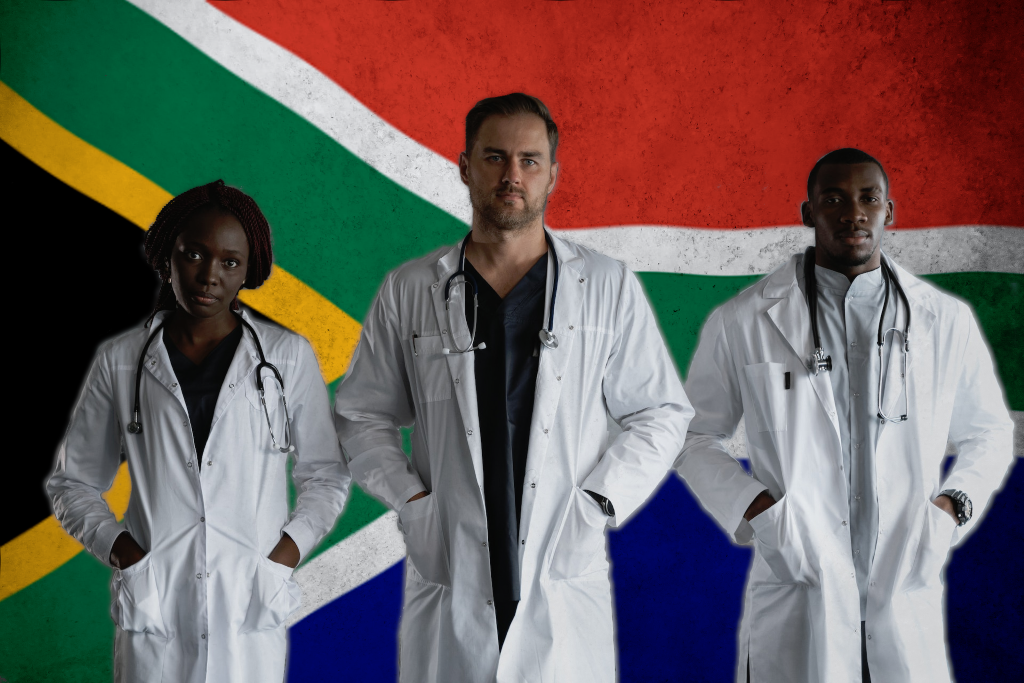
New Year’s Day saw the Gauteng Department of Health welcoming 112 babies into the world, the lion’s share of more than 400 births in total for the country. According to data released by Gauteng Health on X/Twitter, in the province’s public healthcare facilities, there were a total of 59 boys and 53 girls. Thelle Mogoerane Regional Hospital topped the table with 10 babies, followed by Chris Hani Baragwanath Academic Hospital (CHBAH) with 9 babies. But all of this was relatively quiet compared to Christmas Day, which saw more than three times the New Years’ Day number.
MEC Nkomo Nomantu together with MMC for Health Rina Marx joined the postpartum mothers at Dr George Mukhari Academic Hospital on the morning of New Year’s Day in welcoming their new arrivals. Gauteng’s academic hospitals recorded 19 births, while there were 10 births at the tertiary hospitals. Regional and district hospitals had 69 births and community healthcare centres had 14.
Christmas Day saw 387 babies born, 201 of them girls and 186 boys. CHBAH welcomed the most, with 46 births, followed by Tembisa Hospital with 38.
HFA outlines presidential petition to prevent decimation of the SA healthcare system
The NHI Bill presented to President Cyril Ramaphosa cannot be permitted, as in its current form, it will infringe the rights of all South Africans by destroying the South African healthcare system. The Health Funders Association (HFA) has petitioned the President to withhold assent of the Bill on constitutional and procedural grounds and intends to take the matter as far as necessary and to the Constitutional Court if need be.
“We have taken a strong stand by respectfully urging the President to withhold assent of the Bill, citing constitutional and procedural concerns that pose a significant threat to the integrity of the country’s healthcare system,” remarks HFA Chairperson Craig Comrie.
“Should the need arise, the HFA is prepared to escalate the matter to the courts. Our goal is to meticulously align the legislation with the authentic objectives of Universal Health Coverage and the principles enshrined in the South African Constitution.
“Our action in opposing the NHI Bill being signed into law protects the interests of ALL South Africans who will require healthcare in future, including the people we are duty-bound to safeguard through the medical schemes and healthcare administrators we represent,” Comrie says.
While expressing unwavering support for achieving Universal Health Coverage (UHC) in South Africa, the HFA questions Parliament’s endorsement of a bill that raises significant constitutional and procedural concerns and fundamentally cannot achieve a sustainable system of UHC.
Some of the primary concerns outlined in the letter include:
Constitutional concerns: The NHI Bill’s clear infringement on constitutional rights, particularly the right to access healthcare and freedom of choice for South Africans, and by implication, the right to life. The Bill is seriously flawed in that regard, undermining the rule of law.
Procedural concerns: Questioning the extent and effectiveness of public consultation during the drafting and review of the NHI Bill, where thousands of submissions resulted in no meaningful changes to the Bill, the HFA advocates for a more inclusive and consultative approach.
The letter implores President Ramaphosa to exercise the powers granted by the Constitution to refer the NHI Bill back to Parliament for review.
“In addition to petitioning the President directly as guardian of the Constitution, the HFA will oppose the NHI Bill in its current form through every possible avenue, including approaching the courts to set aside the Bill on constitutional and procedural grounds.
“The HFA will also seek a High Court interdict against implementation of the NHI Act until the merits of our case have been heard and ruled upon by the High Court.
Craig Comrie concludes, “It is with a heavy heart that we make this plea, urging the President to secure the rights and wellbeing of our people. We will persist to ensure that what is right triumphs in our nation. South Africa deserves leadership that prioritises the welfare of all of its citizens, above all.”
2023 was a busy year for healthcare in South Africa. There were several policy developments, landmark court cases, important pieces of legislation, and some changes in leadership. Yet, take a step back and not much seems to have changed. Shortages of healthcare workers persist, corruption is still rife, budgets tight, and our health governance crisis remains as acute as ever.
Start with some positives. Following the release in 2022 of a non-communicable disease policy with important diabetes and hypertension targets, this year saw the release of South Africa’s overdue new mental health policy, an obesity policy, and a new strategic plan for HIV, TB and STIs. These policy documents were generally welcomed, although most experts we spoke to had questions over the state’s ability to implement them.
That ability to implement was dealt another blow this year with continued budget cuts in the public healthcare sector and the freezing of posts in some areas. As shown in several of the community healthcare monitoring group Ritshidze’s excellent provincial reports this year, staff shortages remain acute across much of the country – something that is unlikely to change given budget constraints. Though South Africa has a good healthcare worker strategy on paper, another year has passed with no clear indication that the state is committed to implementing it.
Instead, much of the political oxygen in 2023 was again consumed by National Health Insurance (NHI). As the year draws to an end, the NHI Bill has cleared parliament and chances are the President will sign it ahead of next year’s national and provincial elections – though actual implementation will take years.
Reforms to South Africa’s procurement legislation are also making its way through parliament, although critics have slammed the bill for not doing enough to clamp down on corruption. The State Liability Bill was delayed again because a report from the South African Law Reform Commission on medico-legal claims has still not been finalised.
In the courts, an important judgment in the Eastern Cape limited the extent to which the state can be held financially liable for medical negligence, although the law in this area remains somewhat unsettled. There were also major court victories for the right to transparency, with a court ordering the disclosure of COVID-19 contracts entered into by government, and for the ability of pharmacists to provide antiretrovirals without a script from a doctor – this latter judgment is being appealed. This year also saw the pieces put in place for what is set to be a landmark court case for access to medicines, as Cheri Nel and others challenge a monopoly on life-changing cystic fibrosis medicines.
As for leadership changes, this year South Africa got a new health ombud (we interviewed the outgoing ombud here) and a new registrar of the Health Professions Council – the latter institution remains in urgent need of reform. Maybe the most important leadership change this year, however, was the controversial removal in September of Dr Rolene Wagner as head of the Eastern Cape Health Department. Wagner’s removal seems symptomatic of ongoing and excessive political interference in the running of provincial health departments.
Several of these departments again made the headlines for the wrong reasons. Current and former Officials in both the North West and Northern Cape Department of Health are facing serious charges, but maybe most dispiriting was the ongoing dysfunction in the Gauteng Department of Health. From botched food and security contracts to the lacklustre response to alleged corruption at Tembisa Hospital, those who hoped for a turnaround in the department were disappointed. The end of the inquest into the Life Esidimeni tragedy this year served as reminder that the department’s problems are entrenched and long-standing.
South Africa’s TB response was given a boost this year with the adoption of an ambitious new test-and-treat strategy, whereby people who test positive for TB are treated and at-risk people who test negative are offered preventive therapy. Some new TB treatment regimens have been rolled out, but we are unfortunately still waiting for others. A reduced price for the DR-TB drug bedaquline was secured, largely due to the work of South African and international TB activists, and two philanthropies put up the money for a critically important phase 3 TB vaccine trial.
Photo by Sergey Mikheev on Unsplash
Pilot programmes testing HIV prevention injections and HIV prevention rings in South Africa were set to start at the beginning of the year, but the injection part of those pilots ended up being delayed. It is still not clear when the many young women in South Africa who could benefit from the prevention injection will be able to get it. A recently announced price for the injection is calculated to be far too high for our healthcare system.
There was some good news this year in that more people in South Africa are finally able to access breakthrough hepatitis C cures developed over the last decade. The picture looks less promising with new weight loss medicines – high prices, supply constraints, and monopolies are likely to keep these exciting medicines out of reach for most people in South Africa, despite the rising number of people with obesity who could benefit from them.
As for the numbers, the WHO this year estimated that in 2022 280 000 people fell ill with TB in South Africa and 54 000 people died of TB. According to the latest estimates from the Thembisa model, in 2022 around 13% of the population were living with HIV, 164 000 people were newly infected with HIV, and 48 000 died of HIV-related causes (there is substantial overlap since many people with HIV die of TB). The Human Sciences Research Council (HSRC) raised some eyebrows when it estimated that 91% of people diagnosed with HIV were on treatment in 2022, UNAIDS and the Thembisa model have this number at well under 80%. New UNAIDS and Thembisa estimates due in 2024 will be closely watched to see how they are impacted by the HSRC findings.
A study by researchers at the South African Medical Research Council (MRC) recommends that the murder of men in South Africa deserves an urgent national response.
Richard Matzopoulos of the MRC’s Burden of Disease Unit and his team, which included scientists from the UCT School of Public Health, studied postmortem reports from 2017 to compare murders of women and men. Among the factors looked at were cause of death, age, geographic location and whether alcohol played a role.
The study, published in PLOS Global Public Health, found that 87% of people murdered in 2017 were men. The authors note similar percentages in 2009 (86%) and 2000 (84%).
According to the researchers, this is the first study on male murders in South Africa. Previous studies have focused mainly on femicide (the killing of women). The study focused on 2017 to coincide with the third national femicide study (previous femicide studies were in 2000 and 2009).
The researchers faced challenges getting the paper published in a peer-reviewed journal. Dr Morna Cornell, one of the study’s authors, told GroundUp that men’s health is generally understudied. Cornell believes “we are living in an outdated paradigm which regards all men as powerful and able to navigate health systems etc, and therefore less deserving of care”.
The most common causes of death among male murder victims were sharp stabbings and shootings. For people between the ages of 15 and 44, rates of male murders were more than eight times higher than female murders. The Western Cape has the biggest gap between male and female victims: for every female killed, 11.4 men were killed.
Male murders peaked over December and weekends, suggesting the role alcohol plays.
The study aims to challenge the idea that men are “invulnerable”.
“The fact that men are both perpetrators and victims of homicides masks the strong evidence that men are extremely vulnerable in many contexts,” the study reads.
Murder in South Africa is concentrated in poor neighbourhoods where the effects of poverty and inequality are most significant. According to the study, “violence has been normalised as a frequent feature of civil protest and political discourse”.
High levels of firearm ownership and imprisonment also contribute to violence in South Africa.
“Men are socialised into coping by externalising through anger, irritability, violence against intimate partners and others, and increased engagement in risk-taking behaviours. This, alongside the high levels of violence to which males are exposed across [life], [causes] a continuous, and often intergenerational cycle of violence,” the study says.
While the study acknowledges that “violence against women is endemic in South Africa, with rates almost six times the global figures”, it argues that “men’s disproportionate burden of homicide has not resulted in targeted, meaningful prevention”.
Interventions recommended by the researchers include stricter control of alcohol and firearms, programs to address societal norms that drive physical violence, and efforts to overcome the root causes of poverty and inequality.
Professor Richard Matzopolous, the main author of the study, told GroundUp that more research is needed to understand risks and interventions, especially in a South African context.
“Phase 2 of this study will explore victim/perpetrator and situational contexts,” said Matzopolous.
Universal Health Coverage Day calls on us to reflect on the progress that we have achieved in providing healthcare for all. As the health and pharmaceutical industries, it is time to question if our strides in achieving healthcare for all are successful and identify areas for improvement. The theme “A Time for Action”, speaks to the urgency of healthcare access regardless of socioeconomic status, age, race or demographic. It is not an ambitious dream and can be attained in our lifetime, writes Bada Pharasi, CEO of the Innovative Pharmaceutical Association of South Africa (IPASA).
Universal Health Coverage (UHC) means access to primary healthcare for everyone. In South Africa, this is referred to as National Health Insurance (NHI). Regardless of its name, the objective remains the same – to ensure that all citizens, regardless of where they live or their socioeconomic status, have access to healthcare.
A 2021 report released at the Africa Health Agenda International Conference (AHAIC) revealed that 615 million, or 52%, of the people in Africa, did not have access to the healthcare that they needed¹. It was also estimated that 97 million Africans face catastrophic healthcare costs, which push 15 million people into poverty every year¹.
The effective implementation of UHC would mean that no person would have to go without appropriate healthcare. It would also mean that no person would have to undergo financial strain to receive treatment for ill health.
UHC covers a spectrum of health needs from health promotion to prevention, treatment, rehabilitation, and palliative care across the life course². In 2015, 193 United Nations (UN) member states agreed on the 2030 Sustainable Development Goals (SDG). These goals are aimed at seeing an end to poverty and a sustainable future by 2030², and ensuring health coverage for all is an integral part of reaching these goals.
The World Health Organization (WHO) believes that UHC can be achieved by using the primary healthcare approach as it remains the most accessible, inclusive and cost-effective method to reach the majority of the population².
Globally, as many as 72 countries have included UHC in their national healthcare systems. The countries where UHC has been the most successful include Canada, Australia, and several European countries, such as Switzerland and Sweden. It is from these countries that we can glean valuable lessons on the importance of strong healthcare systems, well-trained healthcare professionals and a cohesive relationship between governments and the private sector³.
Ensuring a healthier nation may seem like an exorbitant mission. However, when we consider that a healthier population will be beneficial to the economy, it makes for a worthwhile investment. The World Bank adds that UHC allows countries to make the most of their strongest asset: human capital. A nation in good health is one where children can go to school and adults can go to work⁴.
There is a common perspective that for a country’s overall health to improve, its economy must improve first. This idea fuels the understanding of why low- to middle-income countries have such poor healthcare infrastructure. The World Bank offers an alternative perspective, suggesting that when a country’s overall health improves, so will its economy. This as more citizens will be able to contribute to its economic growth and the workplace⁵.
Some of the reasons why the adoption of UHC in African countries has seemed to stall include inadequate financial and technology support, limited pharma manufacturing companies, and unclear policies and regulatory frameworks⁶.
In South Africa, the greatest hindrance to people receiving the healthcare they require boils down to numbers. With a population of more than 60 million people, there is a greater need for healthcare than there is capacity to meet the demand⁷.
At IPASA, we believe that healthcare is a basic right and that citizens in any given country should be given the necessary access to healthcare. We understand that working with key stakeholders, such as the government, is critical to the success of universal healthcare. Our ongoing work with patient advocacy groups ensures we understand what patients need from a treatment perspective.
We recently attended the Access Dialogue conference with patient advocacy groups including Rare Diseases South Africa and Campaigning for Cancer to gain an understanding of some of the concerns faced by patients and share insights on the proposed NHI Bill.
IPASA believes that an adequate supply of medicines is a critical pillar of any healthcare scheme, and the NHI is no different. For the NHI to succeed, it must be backed by a sustainable healthcare sector to ensure the security of healthcare provision and medicine supply.
To this end, the NHI must allow for a flexible, responsive pricing model that includes alternative/innovative reimbursement models to cover the cost of medicines and health products. This allows responsiveness to the needs of geographical areas, quality and levels of care, and negotiations directly with healthcare providers.
Healthcare for all can only be achieved by the joint commitment of the health and pharmaceutical industries, government stakeholders and patient advocacy groups for the benefit of patients. No person should be faced with the obstacle of finance at a time when they need healthcare: providing healthcare for all results in a healthier society and healthier world for us all.
Dr Vuyiseka Dubula-Majola, the former General Secretary of the Treatment Action Campaign, reflects on her journey and new role at the Global Fund. PHOTO: Joyrene Kramer
By Biénne Huisman for Spotlight
Dressed in a dark jacket, rain is pelting Vuyiseka Dubula-Majola’s face as she rushes past bare trees in Geneva, Switzerland. Along with her two children, Dubula-Majola has newly moved into a house in nearby Genthod, from where she commutes to work by train.
In October, the Global Fund to Fight AIDS, Tuberculosis [TB] and Malaria, appointed Dubula-Majola as head of their community, rights and gender department. The Global Fund has allocated tens of billions of dollars around the world to fight HIV since its inception in 2002.
Five weeks into the job, Dubula-Majola tells Spotlight that a big challenge for her will be to hone a new tool – that of diplomacy.
Laughing, the former General Secretary of the Treatment Action Campaign (TAC) says that in the past, diplomacy has not been her greatest strength.
“In this new job, I am required to be diplomatic,” she says. “Basically, diplomacy is being nice in the face of atrocities, and I am not that person. So it will be a huge challenge for me, it’s going to take a shift. I will have to keep asking myself, ‘what value I can add in this position?’ While developing new tools and new ways of fighting, without being the noisy person in the room.”
The power of collective action
Known for not mincing her words, the activist-scholar is talking to Spotlight over Zoom while walking to the Global Fund’s offices in central Geneva. She adds: “Activists don’t like bureaucracies by nature, but you have a voice here. You have political currency to shift things. It’s a tough one, but I’m there.”
In a 2014 TedX talk hosted in London, an inflamed Dubula-Majola told the audience that she is angry – angry with her father, angry with her government, angry at everyone. But that she was using her anger to fuel her work.
Vuyiseka Dubula-Majola was recently appointed at head of the Global Fund’s community, rights and gender department. PHOTO: Supplied
While she is in Switzerland, Dubula-Majola’s heart still brims with African proverbs, such as: “When spider webs unite, they can tie up a lion.” She has experienced the power of such collective action first-hand at the TAC, but now she’ll be applying it on a different stage. Indeed, her new job is “to ensure that the Global Fund strongly engages civil society and promotes human rights and gender equality”, with a particular focus on supporting community led organisations.
As a role model for her new diplomatic duties, Dubula-Majola cites American public health official Loyce Pace. “Loyce Pace who runs the health program in the United States government, she is very effective in what she does while hardly saying anything in public. But she is shifting norms – bringing priority to black and poor people. She uses her allies and many other people similar to her to say things louder than she could…I guess this is another step of growth in my activist journey – to still be as effective, as radical, the very same eagerness and passion, but silently.”
‘There was no time to dream’
Dubla-Majola grew up in a village near Dutywa in the Eastern Cape. Aged 22 in Cape Town in 2001, she spiralled with depression after being diagnosed with HIV. But instead of resigning herself to what was then still a death sentence for most people, she joined the TAC – working night shifts at the McDonalds drive-through in Green Point, while by day she joined the fight to bring antiretrovirals and other medicines to South Africa.
“As a 22-year-old, I did not have fun, there was no time to dream,” she recalls. “I was fighting for my life and the lives of others. I never thought I would have children, I never thought I would get married, I never thought I would love again. Because there was also the issue of who infected me, how did this happen? You start resenting relationships.”
At the forefront of social justice activism for most of South Africa’s young democracy – a role model for people living with HIV, and for those fighting inequality – Dubula-Majola lead the TAC from 2007 to 2013, after which she joined Sonke Gender Justice as director of policy and accountability. She holds an MA in HIV/AIDS management from Stellenbosch University; her PhD from the University of KwaZulu-Natal examined “grassroots policy participation after a movement has succeeded to push for policy change,” using MSF’s [Médecins Sans Frontières] pioneering antiretroviral sites in Khayelitsha and Lusikisiki as samples.
‘Build and regain the dignity of poor people’
In 2018, when Stellenbosch University offered her a job as director of its Africa Centre for HIV/AIDS Management, Dubula-Majola was circumspect. Why take up appointment at a white male-dominated institution shackled by slow transformation, in an elitist town? But she took on the challenge to become the transformation she wanted to see.
Dubula-Majola tells Spotlight that while relishing the privilege of academia – a space to reflect – it saw her away from “the heat of the activist fire” for too long. Five years later, a new challenge awaits.
Reflecting on Stellenbosch, she says: “This [job at the Global Fund] is even harder, because it’s not just one country, one university. This is all the continents of the world. All of them facing the same thing, the struggle here is to build and regain the dignity of poor people around the globe.”
Despite her early misgivings about relationships, Dubula-Majola married fellow TAC activist, Mandla Majola. Their children, now aged 10 and 16, are HIV-negative. Presently Majola is helping with their friend Zackie Achmat’s independent campaign for the 2024 general elections, after which he will join his wife in Geneva. The family will unite in Switzerland for Christmas though – “which will be the most miserable and cold Christmas,” says Dubula-Majola, laughing. “It will be our first winter Christmas and our last. As we just arrived a month ago, it doesn’t make sense to travel back to South Africa for the holidays.”
Overall she says she remains hopeful, adding that movements like #MeTo are lessons in global solidarity.
Her thoughts on continuing the fight against HIV: “It is up to HIV positive people, and those who want to remain HIV negative, to steer towards an AIDS-free generation. We must stop complaining, thinking politicians will do everything for us, and do it ourselves.”
Meanwhile, Global Fund representatives have voiced confidence in Dubula-Majola’s ability to lead. Marijke Wijnroks, head of the organisation’s strategic investment and impact division, said in a statement: “Following an extensive search process, I am delighted to say that we found the ideal person for this role. As a person living with HIV, Vuyiseka’s lived experience and leadership style are well aligned to what we need from this critical role.”
Note: Dubula-Majola is a former General Secretary of the TAC. Spotlight is published by SECTION27 and the TAC, but is editorially independent – an independence that the editors guard jealously. Spotlight is a member of the South African Press Council.
A coherent, achievable path to universal health coverage now imperative
Glaring voids highlighted in submissions on the National Health Insurance (NHI) Bill threaten South Africa’s path to equitable healthcare access for all, cautions the Health Funders Association (HFA). The organisation has voiced its profound concern, emphasising the disconcerting sway of politics over the bedrock mission of prioritising the well-being of our nation within this critical healthcare deliberation.
“The practical barriers to successfully executing NHI as it is laid out in the Bill are hard to ignore, and yet the numerous concerns and suggestions raised in the consultation process have not been considered or implemented,” says Craig Comrie, chairperson of the National Health Funders Association (HFA).
“The clear shortcomings of the NHI Bill in terms of practical funding mechanisms and lack of collaboration with experienced health funders, among other aspects, have been overlooked for the most part, with only the Western Cape so far rejecting the Bill in its current form.”
The National Council of Provinces (NCOP) Committee on Health’s approval of the NHI Bill with insignificant edits does not address the numerous concerns raised in submissions made by the public and informed stakeholders, including the HFA, on behalf of its members.
The HFA is a professional body representing medical schemes and half of South Africa’s medical aid membership.
“There are constructive solutions to address the problems identified in the NHI Bill effectively, and it is not too late to fix the legislation. While the Bill is rushing towards the President’s pen to be enacted, the HFA respectfully appeals to the President to reconsider the wisdom of signing into law a Bill that has no workable funding mechanism while disregarding solutions proposed by private health funders, leading organisations, businesses and other key constituents,” Comrie says.
“We anticipate considerable resistance to the NHI Bill on Constitutional grounds, and as the HFA, we will continue to advocate for a more achievable approach to fulfilling universal health coverage aims.
“The timing of the recent flurry of activity in moving the Bill through the necessary hoops ahead of next year’s election invites the notion of a blunt instrument, an unrealistic election promise rather than a pragmatic solution for the highly complex health challenges South Africa faces,” he says.
Health Funders Association members, including leading lights in the industry such as Bankmed, CAMAF Medical Scheme, Discovery Health Medical Scheme, Fedhealth, Glencore Medical Scheme, Momentum Medical Scheme, Profmed and PPS Healthcare Administrators, to mention but a few, are ready to work with government to develop evidence-based solutions that will help secure access to quality healthcare for all South Africans.
“There is so much opportunity to make the NHI work. Private public partnerships and collaboration have achieved so much good for the benefit of South Africans in other sectors, and there is much our industry can contribute to help make quality healthcare more accessible and sustainable for all,” Comrie concludes.
An estimated 5.5 million people died of heart conditions linked to lead poisoning in 2019 – more than the number killed by outdoor air pollution over the same period. That’s according to a recent study in the journal Lancet Planetary Health. The number is substantially higher than previous estimates. According to a 2021 World Health Organization (WHO) report there were roughly 900 000 deaths linked to lead exposure in 2019.
The researchers also found that exposure to lead (a powerful neurotoxin) causes more harm to children’s intellectual development than previously thought. The paper estimates that in developing countries, where the condition is most prevalent, a child with average levels of lead exposure loses nearly six IQ points from the metal in their first five years of life (average IQ is 100).
While only about 2% of those living in wealthy countries have lead poisoning, the situation is very different for those in poorer parts of the world. A 2021 study found that nearly half of all children living across 34 low-and-middle income countries have lead poisoning – which is typically defined as a person having at least five micrograms of lead per 100mL of blood.
It’s estimated that the average child in South Africa is well above this threshold – at about 5.59 micrograms. And worryingly, the metal can still cause harm below the clinical threshold. Indeed, any increase in a person’s blood-lead levels is associated with greater health risks, even at the lowest detectable levels.
The metal can make its way from these products into people’s bodies through a number of routes. In some cases – like with alternative medicines or spices – people directly ingest contaminated goods. In others, people breathe in lead dust, which can be generated by unregulated industrial practices. For instance if lead-acid battery recyclers lack proper safety and environmental standards – as is often the case in developing countries – recyclers may simply pour lead-based battery solution onto the ground, contaminating the soil.
Children are most at risk. For one, they’re more likely to put items that contain lead in their mouths, like toys covered in lead paint, or even a thumb coated in lead dust. Secondly, they’re closer to the ground and therefore breathe in more lead-contaminated dust. The theme of this year’s WHO-backed International Lead Poisoning Prevention Week was “End childhood lead poisoning”.
After it’s ingested or inhaled, some lead is excreted, while the rest is absorbed into the bones, teeth and blood. Children absorb more of the metal than adults and once it’s in the blood, lead can be distributed to various organs in the body. This includes the heart as well as the brain, where it can interfere with neurotransmitter systems involved in learning and memory.
No threshold
The new study in Lancet Planetary Health adds to a growing body of evidence that global lead exposure is far more detrimental to human health than previously thought. While people began understanding that lead was poisonous several thousand years ago, it was only recently that evidence accumulated showing that even tiny amounts of lead can cause damage.
Part of the reason is simply because we didn’t have data on low-level exposure until recently, explains Bjorn Larsen, the study’s lead author. Most people in industrialised countries had very high blood-lead levels during most of the 20th century. For instance, in the late 1970s the average American child had about 15 micrograms of lead per 100mL of blood, which is about 25 times the average today, and three times the present-day threshold for lead poisoning. A major reason was leaded gasoline, which was introduced in the 1920s and phased out from the 1970s onward.
Thus, says Larsen, testing the effects of blood-lead levels that we would now perceive as low wasn’t always possible. For instance, to show that even one or two micrograms of lead per 100ml of blood is harmful, researchers would need to compare people at this (very low) level to those with no lead to observe if they come off worse. But if almost everyone is above two micrograms, this becomes close to impossible as there isn’t anyone to test. And in the absence of data, some simply assumed that the metal was only problematic above a particular threshold.
Bruce Lanphear, a professor of public health at Simon Fraser University, was the lead author of a seminal 2005 paper that showed that lead was associated with declines in IQ even below the clinical threshold set at the time (10 micrograms of lead per 100mL of blood). He explains that by the mid-1990s, when 95% of people were below that threshold, many felt that lead was no longer much of an issue: “my advisors at that point said get out of this line of research, the problem seems to be going away and there won’t be any funding for it. And they were right about one of those two things – I haven’t gotten much funding,” Lanphear says.
As blood-lead levels continued to drop and scientists like Lanphear could study the effects of lead on children’s intellectual development at lower levels, a new consensus emerged. Larsen explains: “Now people are willing to say that in all likelihood the correct way to estimate things is that there is some effect on IQ as soon as we can detect lead in the blood – even at the lowest level these effects start”. Indeed, according to a WHO factsheet, “there is no known safe blood-lead concentration”.
Not only that, adds Lanphear, but research shows that “proportionately, we see greater harms – greater reductions in IQ – at the lowest measurable lead levels”. In other words, the more lead you have in your body, the worse it is, but going from one microgram of lead per 100ml of blood to two micrograms causes more additional harm than going from 15 micrograms to 16. Thus, it’s strangely only through the decline in lead poisoning that its most pernicious effects have been revealed.
Lead ‘poisons’ our cells
As more data is gathered, estimates of the harm caused by lead are constantly being revised upward. The finding that lead is linked to 5.5 million cardiovascular deaths a year is over six times the number previously determined by a 2019 study. It should be noted however that the new estimate is relatively uncertain – the researchers estimate the real value is most likely in the range 2.3 to 8.3 million.
Part of the reason for the updated estimates is that the 2019 research had only looked at the effects of lead on blood pressure, while the new paper considers a wide variety of cardiovascular problems associated with lead.
According to a statement by the American Heart Association from earlier this year these effects include injury to the cells that line the blood vessels, oxidative stress (which can result in cell and tissue damage) and coronary heart disease, which is when the blood flow is restricted, increasing the risk of a stroke or heart attack.
Gervasio Lamas, Chief of cardiology at Mount Sinai Medical Centre and the lead author of the statement, explains that heavy metals like lead can erode cardiovascular health through two broad channels: “one is that toxic metals typically will end up replacing essential metals or ions in vital cellular reactions,” he says.
For instance, lead replaces the calcium in our cells, a mineral which is involved in keeping our hearts pumping, our blood clotting and our heart muscles properly functioning. By removing calcium, lead “poisons these cells,” says Lamas.
He tells Spotlight that the other main route is that toxic metals often interfere with our antioxidant mechanisms. Antioxidants are molecules which deactivate harmful free radicals (chemicals that can attack our cells and DNA). Lead disrupts these antioxidant defences, he says. As a result, free radicals build up, which may cause the blood vessels to harden (called atherosclerosis), blocking blood flow.
Different strands of evidence point in the same direction
To arrive at the conclusion that 5.5 million people died from lead-induced heart conditions, Larsen and his colleague relied on two large observational studies from the United States (where there is lots of data). These studies measured the blood-lead levels of thousands of people and looked at what happened to them over time. They showed that those who had more lead in their blood were more likely to die of heart complications at a younger age, even when controlling for lots of other factors.
Larsen and his colleagues used estimates from these studies to develop a model which calculates the increase in a person’s risk of dying of heart disease at different levels of lead exposure. They then plugged in the blood-lead levels that we observe among people around the world to estimate how much cardiovascular death the metal is linked to.
One contention that emerges from research like this is whether it really shows cause and effect. As Lamas notes, “the populations that are most affected by high lead levels are [more likely] to be underprivileged in some way. They are often either poor or have access to less healthcare or live in areas that are more generally contaminated – things that you would expect would in any case cause [health] problems for them”.
When we find that people who have more lead in their blood die of heart disease more often, this may be due to one of these other factors.
But according to Lamas, there are a number of reasons to be confident that lead is actually the driver of heart disease. The first is that when observational studies (like the ones discussed above) measure the relationship between people’s lead levels and cardiovascular disease, they control for a range of other risk factors, including their socioeconomic status. “Even when you do that, lead still sticks out like a big sore thumb,” Lamas notes.
The other reason is that there are lots of different sources of evidence that all find lead damages cardiovascular health: “there are direct experiments where patients or animals are infused with lead and those show that arterial function [i.e. the ability of our arteries to transport blood] is diminished,” Lamas explains.
Finally, Lamas points to the results of a randomised clinical trial which he and his colleagues published in 2013. In it, they took over 1700 patients who had recently suffered from a heart attack and randomly split them into different groups. One group received a treatment for lead poisoning called EDTA chelation. This is an intravenous medicine that binds with toxic metals in the body before being urinated out. Those who didn’t receive the chelation therapy got a placebo drug.
Five years later, those who got chelation therapy appeared to be better off. They performed better than the placebo group when measured by a composite index that combines factors like patients’ risk of dying and their need to return to hospital for further procedures.
With so many different kinds of research pointing in the same direction, Lamas believes the evidence that lead plays a causal role in heart disease is about as conclusive as in the case of high cholesterol.
And if lead truly is killing 5.5 million people through heart conditions each year, this places it among the top risk factors for cardiovascular disease globally. Despite this, lead poisoning along with exposure to other toxic metals, remains a remarkably overlooked issue. Lamas explains, “at the individual physician level – sitting across from a patient – I’m the only cardiologist I know who routinely checks lead, mercury, arsenic and cadmium”.
Note: This is part one of a two-part Spotlight special series on lead poisoning.
Photo by Sora Shimazaki: https://www.pexels.com/photo/diverse-anonymous-colleagues-shaking-hands-at-table-with-coffee-and-folders-5673475/
As various players in South Africa’s health arena give input into the National Health Insurance, and the form it should take, they are agreed on one thing: its goal to achieve quality universal healthcare for all South Africans.
The recent COVID-19 vaccine rollout is a good foretaste of what is possible for South Africa’s healthcare system through the power of cross-sectoral collaboration – and a great case study for health systems strengthening in other countries too.
The rollout saw the public and private sectors, trade unions and community organisations pooling their resources and expertise to get the vaccines to South Africans as fast as possible, and the campaign showed that the country has the resources and expertise to provide a better, more equitable healthcare service.
The question is how we take these lessons and embed them in a healthcare system that serves all of a country’s citizens, and does so in a sustainable way, while adhering to best practice standards.
The clear answer is through the power of partnership – which has been demonstrated to work both here and in the rest of the developing world. Promoting public-private partnerships (PPPs), can accelerate access and distribution of innovative medications. By working together, government, originator companies, and funders can ensure that patients benefit from the latest advancements in healthcare.
Rwanda, for instance, has made significant progress in managing non-communicable diseases (NCDs) through community-based health insurance schemes. Brazil has successfully implemented a comprehensive primary healthcare approach. These countries have prioritised prevention, early detection, and treatment of NCDs, which can be adapted to the South African context.
Locally implemented initiatives under the global Making More Health (MMH) programme include training community health workers to provide primary care services, supporting local entrepreneurs in developing innovative healthcare solutions, and partnering with NGOs to improve access to healthcare in rural areas. These initiatives have helped address complex healthcare issues by empowering local communities and leveraging local resources.
MMH is a social initiative from Boehringer Ingelheim in collaboration with Ashoka, which combines business and social values to unleash innovation and achieve economic and social progress in healthcare. The objective of this long-term initiative is to source social innovation around the world, to explore unconventional partnerships and business models, and to encourage Boehringer Ingelheim employees.
We must also turn our attention to NCDs, which are a major health threat. The WHO estimates that globally, they are responsible for 74% of all deaths. Research into South Africa’s NCD states can play a crucial role in health systems strengthening by identifying the most prevalent diseases, understanding their risk factors, and informing evidence-based policies and interventions. This would help target resources more effectively and improve health outcomes.
This requires robust health data, hosted on a digital infrastructure, which would promote data-sharing among healthcare providers, and encourage the use of standardised data collection methods. This would help create a more accurate picture of the population’s health needs and enable better decision-making across the entire health ecosystem.
We also need to make sure we retain our world-class doctors, and address our critical nursing shortage – it’s estimated we need about 26 000 additional nurses to fill the gap. Without sufficient personnel to deliver healthcare, all the best intentions in the world will not deliver universal health coverage.
We must invest in improving the working conditions and incentives for healthcare professionals in the public sector, strengthen primary healthcare services, and promote collaboration between public and private providers. This would help to ensure that the expertise and experience of these professionals is effectively employed to benefit the broader population.
Moreover, increased collaboration with innovator companies in the private sector, many of whom are already involved in initiatives to strengthen the health system, would ensure patients receive the right treatment while expanding reach across the entire population. This would help tackle inefficiencies, streamline processes, and enable better resource allocation.
The fundamentals of health system strengthening in South Africa include adequate financing, a well-trained and motivated healthcare workforce, efficient supply chain management, and strong governance and leadership. Addressing these gaps – through partnership and collaboration – would help build a more resilient and responsive healthcare system and ensure that South African citizens have access to better healthcare.
To mark Men’s Health Awareness Month, International SOS, the world’s leading health and security risk services company, emphasises the importance of creating supportive workplace environment that foster men’s health and mental wellbeing.
Men’s health remains a significant concern and poorer health profiles for men than for women have been reported, with discrepancies found in metrics including life expectancy, mortality rates, disability-adjusted life years, and non-sex-specific disease death rates.1 The World Health Organization (WHO) reports that non-communicable diseases (NCDs), are claiming around 74% of all lives lost each year2, and in 2018, NCDs and injuries accounted for 86% of all male fatalities.3
The WHO data shows that men across all socioeconomic groups demonstrate unhealthier smoking practices, unhealthier dietary patterns, higher alcohol consumption levels and higher rates of injuries than women.3 In fact, among the global population that used tobacco in 2020, a significantly higher percentage were men (36.7%), compared to women (7.8%).4 These statistics highlight the need to focus on improving men’s health and organisations can play a vital role in enhancing men’s health within their workplaces.
Men are significantly less likely than women to seek preventive care services, which can often lead to undiagnosed conditions.1 Men are also found to be less likely to have received mental health treatment than women. The stigma attached to illness and men perceiving illness as a weakness are often found to be the reasons why men are not as vocal about their health and mental wellbeing concerns.5
Dr Anthony Renshaw, Regional Medical Director at International SOS, said “Men’s Health Awareness Month provides a crucial opportunity for organisations to re-evaluate their approach to supporting the health and wellbeing of male employees. In addition to physical health, we must also prioritise mental health, as it has a direct impact on overall productivity and workplace satisfaction. Employers can play a pivotal role in fostering open discussions, reducing stigma, and promoting a supportive environment for men to seek the help they may need.”
International SOS offers guidelines for organisations to provide workplace support specific for men’s health and wellbeing with the ‘H-O-P-E’ approach:
Hold workplace men’s forum that can act as a safe space. Having a supportive work environment where everyone, particularly men, know that they are allowed the time to address any health concerns is extremely enabling.
Offer male-specific confidential support from mental health professionals.
Provide your team leads with appropriate training to enable them to spot early signs of poor physical and mental health and know where they can signpost their employees to.
Encourage employees to have regular health check-ups, particularly screening for early detection and treatment of NCDs, as well as a mental health assessment if needed.