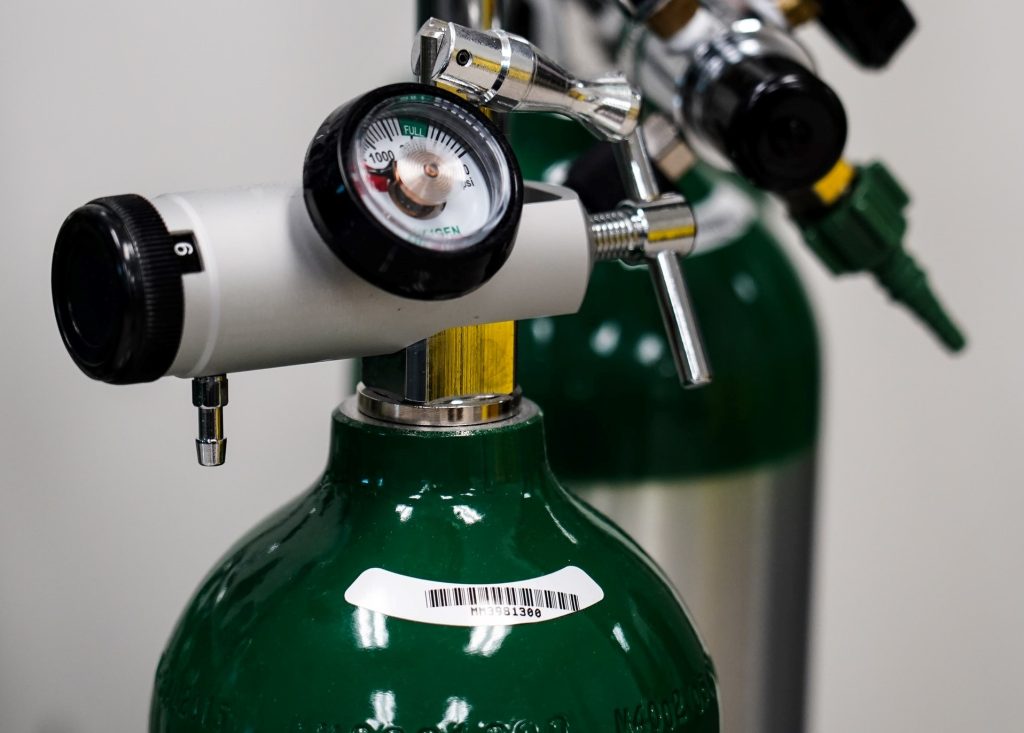
Supplies of medical oxygen in Ukraine are dangerously low due to disruption caused by the Russian invasion, the World Health Organization has warned.
Due to the crisis, the WHO estimates that the country needs an additional 20–25% increase in oxygen supplies over and above its normal needs. As it currently stands, the transport of oxygen cylinders across the country is being disrupted, especially into the capital Kyiv. As of 27 February, many hospitals across the country, including in Kyiv, had less than 24 hours’ supply remaining.
Furthermore, oxygen production facilities are experiencing shortages of zeolite, which is needed for the safe production of oxygen in the pressure swing absorption process.
Prior to the conflict, the WHO had worked with Ukraine to improve its oxygen supply infrastructure, especially during the COVID pandemic. “Of the over 600 health facilities nationwide assessed by WHO during the pandemic, close to half were directly supported with supplies, technical know-how and infrastructure investments, enabling health authorities to save tens of thousands of lives,” the WHO said. This progress is threatening to be undone.
“Compounding the risk to patients, critical hospital services are also being jeopardised by electricity and power shortages, and ambulances transporting patients are in danger of getting caught in the crossfire,” the WHO said in its press release.
To offset this, the WHO is working through regional networks to bring in oxygen, as well as providing trauma treatment supplies. These would be brought in through a safe logistics corridor in Poland.
Médecins Sans Frontières (MSF) has announced that it is suspending activities in Ukraine. “These included care for people living with HIV in Severodonetsk; care for patients with tuberculosis in Zhytomyr; and improving access to healthcare access in Donetsk, in eastern Ukraine, where we have been providing much-needed healthcare, including for mental health, to conflict-affected communities,” the organisation said in an announcement.
However, it is working to ensure some continuity of its operations, and are working to provide trauma training to certain hospitals and have provided some trauma supplies.
The Ukrainian capital of Kyiv has also put out a call for donations of medicines, such as the antiviral amixin, the antibiotic nifuroxazide and the haemostatic agent aminocaproic acid.
Hundreds of pensioners queuing for their old age grants are being screened and tested for hypertension at paypoints in Mpumalanga. In this way, care is provided where and to whom it’s needed most.
In total, more than 4.2 million people in South Africa aged 60 and older currently receive the Older Persons Grant. For many of them, particularly in rural areas, grant collection days often involve standing in queues for hours.
In a pilot project in Bushbuckridge, Mpumalanga, the South African Medical Research Council (SAMRC) and SAMRC/WITS’s Rural Public Health and Health Transitions Research Unit. are using these queues as an opportunity to take screening for hypertension to some of the most vulnerable and often neglected people in the country.
The study is being conducted in collaboration with local communities, the South African Social Security Agency (SASSA), the South African Post Office (SAPO) in Ximhungwe and Boxer Superstores in Thulamahashe.
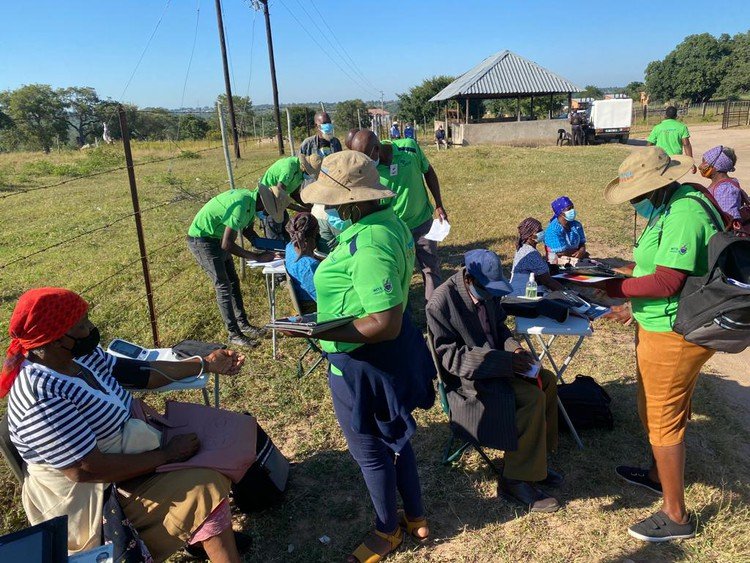
The project called “Know Your Numbers” was launched in April 2021 with 20 fieldworkers from local communities at six sites where hundreds of pensioners gather each month to collect their grants. The teams take people’s blood pressure using mobile Omron machines.
“Screening about 100 people per queue, we are picking up high blood pressure in about 60% of the participants. These people are all referred to their closest local clinic for further assessment, treatment and care as required. About 30% of the participants are male and about 70% female and that’s because there are sadly less men alive to collect social grants,” said Jane Simmonds, Know Your Numbers project manager at SAMRC/WITS’s Rural Public Health and Health Transitions Research Unit.
Silent killer Hypertension is known as the ‘silent killer’ because there are no exclusive symptoms that point directly to the disease. A 2021 study by the SAMRC found that the prevalence of hypertension rose between 1998 and 2016, from 27% to 45% in men and 31% to 48% in women. This has a significant impact on the health of older persons. “Older adults contribute critical support to local households, fostering orphans, enabling schooling and countering food insecurity. We can ill afford a rising toll of deaths from stroke and heart failure, or greater vulnerability to Covid-19,” said Steve Tollman, Unit Director.
“Many people don’t have money to travel to the doctor or clinic before they’re already very sick,” said Simmonds. Measuring blood pressure in people standing in the queue could help them manage and improve their health and save them the costs and time involved in visiting a clinic for a simple monthly health check.
“People will not go to town or clinics for treatment or vaccines if they have to choose between spending their R1800 grant on food or for transport,” said Simmonds, who lobbied for what became a successful project to offer the Covid vaccine directly to pensioners while they were queuing.
She explained how transport costs and problems accessing the Electronic Vaccination Data System (EVDS) had become barriers to vaccination for older people when the vaccine was first rolled out.
“When the Covid vaccines became available to people 60 and older in July last year, I thought that if we could meet people in queues for hypertension screening, then why not reach them for vaccines? I spent a lot of time talking to the Minister Of Health, Deputy-Director General or anyone that would listen to me about this concept. Eventually the Solidarity Fund came on board to fund vaccine outreach sites through the national health department. These sites have done over 500 000 vaccines since July 2021,” she said.
SASSA’s Dianne Dunkerley told GroundUp that SASSA had agreed to a pilot project with strict conditions to protect the security of beneficiaries and to avoid prolonging their already lengthy wait in line.
Dunkerley said the project is being welcomed by older people. “Older people who didn’t realise they had hypertension were identified, and could then go to local clinics for treatment and further monitoring,” she said.
“In cases where people did not want to make decisions immediately, they were sent home with information to discuss with family and friends which is great.”
Fieldworkers from the community speaking to pensioners about the health screening outside the SA Post Office where they collect their social grant.
Dunkerly said SASSA “would not be averse to expanding this project to other provinces” and discussions were underway.
“We really have started seeing the benefits and the reduction of costs, both of transport and of time, for older people. We think that because they’re old, they don’t have anything else to do. Well, many pensioners look after entire families and do all kinds of things. Where we can minimise the time they spend looking for services, it really is a good thing,” she said.
Professor Andre Kengne, Director of the Non-Communicable Diseases Research Unit at SAMRC, told GroundUp, “Early lessons from the ‘Know Your Number’ project are strongly suggesting that the reach of prevention and control services for common health conditions including chronic diseases such as hypertension, can be substantially improved by taking some of the essential services such as health screening and health promotion to the most vulnerable people in the community.”
He said older persons are the most affected by chronic non-communicable diseases and that improving the detection, linkage to care and control of those conditions through appropriate community-based approaches, significantly reduces the related harmful health effects.
The researchers hope that lessons from the ongoing and thorough pilot evaluation can be used to lobby the government to include screening and tests for diabetes, HIV, TB, cancers and other health issues which affect older persons.
Helping people feel better about how they are ageing could result in real improvements in health and well-being later on, according to research from the University of British Columbia which was published in JAMA Network Open.
Over a four-year period, researchers tracked changes in how participants felt about their own ageing, then looked for measurable changes in health and well-being after another four years had passed. Those participants whose attitudes had improved over the first four years were more likely to have measurable health improvements in the next four years.
“Prior research has looked at how psychological risk factors like depression and stress might adversely influence health and well-being outcomes, but we are interested in factors that might positively influence health and well-being outcomes,” said Julia Nakamura, a graduate student in UBC’s department of psychology and first author of the study. “With further research, our findings suggest that interventions to increase aging satisfaction might improve the health and well-being of our rapidly growing older adult population.”
Health and well-being are gaining favor as indicators of societal progress, over pure economic indicators. Governments and intergovernmental organisations have recognised that using gross domestic product as the primary measure of success can lead to policies that devalue environmental, psychological and social health. Increasingly, they are looking for more holistic ways to measure societal well-being.
In this study, more than 13 000 adults over age 50 contributed data through the Health and Retirement Study in the U.S. between 2008 and 2018. The research team analysed participants’ data at three separate intervals, four years apart.
At the first interval, the researchers recorded initial measures of health and well-being. They also captured aging satisfaction through participants’ responses to statements such as:
Things keep getting worse as I get older.
I am as happy now as I was when I was younger.
The older I get, the more useless I feel.
At the second interval, they assessed ageing satisfaction again.
At the third and final interval, they measured how health and well-being measures had changed four years after the second measurement of aging satisfaction.
Of the 35 outcomes they measured, 27 had improved in association with improved aging satisfaction four years earlier. Decreases in ageing satisfaction from the first to second interval were associated with worsening health and well-being outcomes by the third interval.
The order in which these measurements were taken is important. People in better health could be expected to have more positive attitudes about ageing than those with health problems, but this analysis in fact showed that increases in ageing satisfaction clearly preceded improvements in health and well-being.
“Interventions that make people feel better about aging could potentially produce concrete benefits,” said Nakamura. “Those interventions could come at both the individual level and the broader, societal level. At the societal level, combating ageism and reducing harmful stereotypes about aging are potential paths to improving individual aging satisfaction. If a person thinks ageing is destined to be a negative experience, that might become a self-fulfilling prophecy.”
While the proposed National Health Insurance (NHI) could make use of existing private healthcare human resources, the necessary tax increases to fund it could drive more healthcare professionals from the country, the Professional Provident Society (PPS) has said. Economic and other factors, such as the Durban unrest, have already caused a surge of emigrations of professionals since July last year. In addition, foreign students graduates who study critical skills in South Africa (such as nurses and GPs) will no longer have an easy route to permanent residency.
The PPS, which counts about 30 000 healthcare professionals among its membership, pointed out the vulnerability of South Africa’s tax base – which has shrunk to only 6.9 million taxpayers, down from 7.6 million the year from the year before.
While it raised a number of concerns about the NHI, the group stated that it was broadly supportive of establishing universal healthcare in the country, and this goal could still be accomplished by using a dual public-private system. The PPS further noted that the government could benefit from the exceptional administrative capabilities and existing patient management systems.
However, NHI is dependent on strong, competitively remunerated human resources, with PPS pointing out that “South Africa has experienced a mass exodus of nurses in the 90s; we cannot risk that again. Both the government and private sector need to find a solution for South Africa and it cannot ‘import solutions’.”
“Professionals are a big proportion of healthcare delivery and the tax base. Their voices need to be considered.
“We urgently need to see the funding model, the implementation of the Health Market Inquiry (HMI) and details of how the system will work.”
The PPS said in a 2019 report that the highest risk to effective universal health cover in South Africa is losing highly skilled professionals to emigration. Healthcare professionals have a great deal of geographic freedom, and it is becoming easier to work in their trades the world over. COVID with its restrictions may have slowed emigrations by skilled professionals, but since July 2021, experts have seen a surge backed up by 18 months of pent-up demand.
The PPS noted that research has shown “that the decision to emigrate is a complex one that is driven by various personal and societal pull and push factors.” The NHI could be yet another push factor adding to the list of healthcare professionals’ sore points. “Healthcare worker migration from South Africa in the past has been driven by policy decisions and socio-economic and political considerations.
“In 2001, the number of nurse emigrants was roughly 20% of the total number working within the public sector in South Africa. That, together with being ranked as having the eighth-highest global number of emigrating physicians in the year 2000, created a dire situation for the sustainability of healthcare in South Africa at the time.”
Among general professionals, PPS’s research has indicated that many are considering emigration. A majority of respondents surveyed (73%) cited NHI as a potential reason for emigration, with 15% unsure and only 12% not considering leaving at all.
In addition to losses from emigration, the Department of Home Affairs has ended a 2014 waiver which allowed a quicker path to a residency permit for foreign students who acquire critical skills in South African higher learning institutions. Going forward, foreign students will no longer be able to apply for permanent residency visas without complying with the usual requirements such as providing proof of five years’ work experience. This is seen as detrimental to South Africa’s ability to attract and retain skilled professionals. This may further impact NHI implementation as the necessary skilled human resources are squeezed further as fewer foreign students may choose to study and then work in South Africa.
The National Treasury is proposing to impose a tax on both the non-nicotine and nicotine solutions in e-cigarettes (EC), and is asking for public comment by 7 February 2022.
The National Treasury published a draft discussion paper in December 2021 on the proposed taxation of e-cigarettes (ECs). The National Treasury defines e-cigarettes as battery powered devices that do not burn or use tobacco leaves but vaporise e-liquid solutions for inhalation.
In its discussion paper, the Treasury notes the uncertainty of e-cigarettes’ health risks, so it seeks stakeholder engagement on its proposal for the taxation of ECs.
The National Treasury proposes to introduce a specific excise tax on both the non-nicotine and nicotine solutions used in ECs and intends to use its existing policy guidelines applicable to other excisable products to do so. For example, traditional tobacco products are subject to excise duties at a rate of 40% of the price of the most popular brand in each tobacco category.
For EC users, that would mean paying R2.03 per mL of EC solution nicotine-containing nicotine and R0.87 per mL of nicotine-free EC solution, if the draft proposals are accepted and become legislation. It is also proposed that EC products with a higher nicotine content will attract a higher duty rate. Certain stakeholders may question that the Treasury’s proposed EC tax extends to nicotine-free liquids, as it does not necessarily support the government’s stated policy intention of reducing the consumption of tobacco products. The use of ECs as a means of quitting tobacco products is well established, with a Cochrane review showing that nicotine-containing ECs resulted in increased odds of quitting than nicotine-free ECs. It could also generate a knock-on illicit trade in e-cigarettes, as has already happened in the tobacco sector.
Manufacturers and importers who would be taxed on ECs will need stringent certifications by accredited laboratories, which use either South African National Accreditation or International Laboratory Accreditation Cooperation (ILAC) approved methodologies. Where such certifications are not available, a penalty rate of duty is being proposed.
Comments on the draft discussion document are due by 7 February 2022.
Private hospital group Mediclinic has warned that the government’s proposed National Health Insurance (NHI) system will threaten public health in South Africa, and bring about the destruction of private healthcare and medical aid cover.
The NHI Bill is currently undergoing a public consultation process, with a number of healthcare, civil society and political groups presenting on why the new system should or should not be introduced.
The Bill as it stands will have a direct impact on access to healthcare services in South Africa. Mediclinic notes that there are insufficient resources to implement it; private-sector hospitals will be curtailed; and medical aids will be eroded.
The financial and human resources necessary to effectively implement the NHI scheme is a legitimate concern, Mediclinic said. It pointed out South Africa’s low doctor- and nurse-to-population ratios are low compared to peer countries.
“Everyone’s right of access to health care services would be threatened if the existing health care delivery system is uprooted and the NHI scheme envisaged in the Bill cannot be effectively implemented,” it said.
Private healthcare is an integral part of the healthcare system with everything from hospital beds to staff at risk if replaced by the NHI.
The Bill’s key components threaten the private hospital sector, with the contracting and reimbursement frameworks proposed in it unable to accommodate private hospital participation.
Additionally, the NHI Fund will create a monopoly by acting as the single purchaser of health care services in South Africa, capable of harming the competition and eroding private sector resources.
Medical scheme provider Discovery said that current private health care funding amounts to R212 billion, some 44% of the total healthcare spend. If the government were to finance this through direct taxation, this would equate to 4.1% of GDP, an unfeasible amount.
Mediclinic also warned that medical aid in South Africa would be significantly eroded under the NHI, meaning only the bare basics for South Africans needing medical care, and expensive treatments being unavailable. It gave the example of a patient with chronic renal failure receiving haemodialysis treatment currently covered by a medical scheme, and showed that the patient would be placed on a long waiting list for this life-saving treatment since it was covered (but not properly funded) by the NHI.
The CGE cited an article published in Obstetrics and Gynaecology which found that women receiving Pfizer-BioNTech, Moderna or J&J COVID vaccines, vaccine administration was associated with less than a one-day change in cycle length for both vaccine-dose cycles compared with pre-vaccine cycles. The article concluded that clinically meaningful change in menstrual cycle duration associated with COVID vaccination was found.
The CGE used this study as justification, cautioning businesses and institutions against mandatory vaccination and recommended against sanctions for employees who chose to remain vaccinated.
The signatories expressed their concern at the contents of the statement which is at odds with the scientific understanding of COVID vaccinations, a concern which is compounded by the “enormous influence” of the GCE.
They accept that the vaccine mandates are subject to legal scrutiny, but take issue with the commission “trying to bolster its argument by wrongly insinuating that COVID vaccination has the potential to harm women’s health.”
They also point out that the commission seems to disregard the much greater risks to women and their unborn babies of COVID infection, while misinterpreting evidence on minor menstrual cycle lengthening. This creates fear and confusion in vaccinated women, and may increase vaccine hesitancy.
“It fails to appreciate that one in six unvaccinated pregnant women admitted to hospital in South Africa with COVID infection requires mechanical ventilation, and one in 16 has a fatal outcome,” the signatories stated.
They noted that COVID vaccination provides upwards of 80% protection against severe disease, hospitalisation and death.
The evidence is “indisputable” that COVID vaccination is safe, does not negatively affect women’s bodies and saves the lives of women, they stress. Statements to the contrary are strongly repudiated.
“We are of the view that the CGE, like all state institutions, medical and scientific bodies, social partners and civil society formations working in the fields of women’s rights, empowerment and equality, should urge women to get vaccinated and advance and defend their rights to all relevant information about and access to vaccination.”
The signatories call on the CGE to withdraw its 16 January statement and to share with it scientific facts on COVID vaccination and women’s health.
The global burden of Chronic Obstructive Pulmonary Disease (COPD) could be significantly reduced with a simple health assessment available in low- and middle-income countries (LMICs), according to a large-scale international study.
The greatest burden on COPD is in LMICs, which account for around 90% of COPD related deaths.
In high-income countries, COPD is typically caused by tobacco smoking and is diagnosed using a spirometer, the straightforward ‘gold standard’ diagnosis, and symptoms can be effectively treated.
However, in LMICs the primary cause of COPD is more varied and includes household air pollution in the form of biomass smoke for cooking and heating; other causes include impaired lung growth, chronic asthma and post-tuberculosis lung damage. Spirometry is often unavailable in LMICs. These reasons, combined with a shortage of clinicians, means COPD is commonly undiagnosed in LMICs.
In the new study, published in JAMA, researchers found that people with a high risk of COPD could be identified in 7 to 8 minutes using either a questionnaire on its own or a questionnaire combined with a Peak Expiratory Flow (PEF) assessment.
Explaining the study, lead researcher Professor John Hurst said: “Chronic Obstructive Pulmonary Disease is one of the world’s major public health issues, causing both individual and economic harm: there is a clear and pressing need to find better ways to identify people early, in all manner of settings.
“Screening tools for COPD have been shown to have reasonable diagnostic accuracy in high-income countries, but due to better population health and treatment in these settings, this has tended to identify milder disease, not requiring much intervention.
“Up until now the performance of these screening tools has not been adequately studied in LMICs; we aimed to test both the diagnostic accuracy and feasibility of simple screening tools.”
Researchers assessed three COPD screening tools (a combination of PEF and/or questionnaires) on populations in three distinct settings: semiurban Bhaktapur, Nepal, urban Lima, Peru and rural Nakaseke, Uganda.
To establish diagnostic accuracy of the tools, all participants were also given a spirometry test.
In total 10709 adults aged 40 years or older from the three communities took part.
Study findings:
Prevalence of COPD varied by site, from 3% in Lima (Peru) to 7% in Nakaseke (Uganda) and 18% in Bhaktapur (Nepal).
49% of COPD cases were clinically significant as defined by symptoms and or exacerbation burden, and 16% had severe or very-severe disease measured on spirometry. 95% of cases were previously undiagnosed.
The screening instruments performed similarly within each population setting and were feasible to deliver using trained research staff, taking an average of 7 to 8 minutes.
Commenting Professor Hurst said: “Our findings support the accuracy and feasibility of using simple screening tools to identify people affected by COPD living in diverse low- and middle-income settings.
“It is alarming that a high percentage of screen-identified COPD cases were clinically important, had severe or very severe changes in lung function, and that most were unaware of their diagnosis despite the high prevalence of symptoms and lower quality of life.
“In addition, only a minority of people had a history of smoking, further highlighting the poor conditions, exacerbated by biomass smoke, that people in low- and middle-income countries are living.”
Professor Hurst added: “Action is needed: the global health community has neglected the burden of chronic respiratory diseases for too long. It is now time for people with chronic respiratory diseases such as COPD to be promptly identified, informed about their condition and treated – wherever they live in the world.”
Researchers say more work is needed to assess whether COPD screening can be implemented in routine LMIC healthcare settings; if screening for COPD is of benefit to those testing positive, and it is cost-effective, for a given population, to implement COPD screening in LMIC settings.
South African scientists have criticised developed nations for ignoring early evidence that Omicron was “dramatically” milder than the previous strains of the coronavirus, an attitude which could be construed as “racism”.
“It seems like high-income countries are much more able to absorb bad news that comes from countries like South Africa,” said Prof Shabir Madhi, vaccinologist at Wits University.
“When we’re providing good news, all of a sudden there’s a whole lot of scepticism. I would call that racism.”
Prof Salim Karim, former head of the South African government’s COVID advisory committee and vice-president of the International Science Council concurs.
“We need to learn from each other. Our research is rigorous. Everyone was expecting the worst and when they weren’t seeing it, they were questioning whether our observations were sufficiently scientifically rigorous,” he said, though he acknowledged that Omicron’s high number of mutations may have led to an overabundance of caution.
But by early December, anecdotal evidence was already indicating that Omicron caused far fewer hospitalisations than the Delta Wave, despite being more transmissible.
“The predictions we made at the start of December still hold. Omicron was less severe. Dramatically. The virus is evolving to adapt to the human host, to become like a seasonal virus,” said Prof Marta Nunes, senior researcher at the Vaccines and Infectious Diseases Analytics department at Wits
“It didn’t take even two weeks before the first evidence started coming out that this is a much milder condition. And when we shared that with the world there was some scepticism,” Prof Karim added.
While some have argued that Africa’s pandemic experience is different due to factors such as its younger population, any advantage South Africa has is outweighed by poor health, with excess deaths during COVID at 480 per 100 000, one of the highest in the world. Prof Madhi points out a high prevalence of comorbidities such as obesity and HIV.
A majority of those excess deaths are probably due to the pandemic, many SA scientists believe. Half occurred during the Delta wave, but only 3% transpired during the Omicron wave so far, Prof Madhi pointed out.
The government chose not to tighten restrictions during the fourth wave, and criticised the reimposition of travel bans coming from South Africa. South African scientists have mostly welcomed this, even though the WHO continues to warn that Omicron should not be considered “mild”.
“We believe the virus is not going to be eradicated from the human population. We must now learn how to live with this virus and it will learn how to live with us,” said Prof Nunes.
The low death rate from Omicron indicates a different phase of the pandemic. “I’d refer to it as a convalescent phase,” said Prof Madhi. The government has already effectively stopped quarantining and contact tracing.
The emergence of the Omicron SARS-CoV-2 variant which has resulted in renewed lockdowns and travel bans around the world, which have been criticised by the WHO. In contrast, South Africa will stick to an adjusted Level 1 lockdown for the time being, though pushing for mandatory vaccinations. Business and civil society groups had warned that increasing restrictions would have provoked backlash as recent election campaign events had effectively ignored them.
Many nations around the world have reacted quickly to the new variant, which has a large number of mutations compared to the Delta variant. The UK’s decision to suspend flights from South Africa as well as nine other African countries has provoked criticism from a number of quarters, including President Cyril Ramaphosa. The sudden move has caught many travellers by surprise, including a Welsh rugby team which had two members test positive, one of which was for Omicron. They will have to self-isolate before they are able to return, depending on flight availability.
Japan and Israel have taken the more extreme steps of closing their borders to foreigners. The first cases of Omicron that were recorded in Botswana were revealed to be in visiting diplomats, although which country they came from has not been revealed.
The World Health Organization criticised the imposition of travel restrictions, acknowledging that although they may play a role in slightly reducing the spread of COVID, they still place a heavy burden on lives and livelihoods. It pointed out that if restrictions are implemented, they should not be unnecessarily invasive or intrusive, and should be scientifically based, under international law, the International Health Regulations. It notes South Africa followed International Health Regulations, and informed WHO as soon as its national laboratory identified the Omicron variant.
“The speed and transparency of the South African and Botswana governments in informing the world of the new variant is to be commended. WHO stands with African countries which had the courage to boldly share life-saving public health information, helping protect the world against the spread of COVID,” said Dr Matshidiso Moeti, WHO Regional Director for Africa. “On the eve of a special session on pandemic preparedness I urge all countries to respect their legal obligations and implement scientifically based public health actions. It is critical that countries which are open with their data are supported as this is the only way to ensure we receive important data in a timely manner.”
Although a full picture of the new variant’s severity is still two or three weeks away, Angelique Coetzee, chair of the South African Medical Association, told the AFP she had recently seen around 30 patients at her Pretoria practice who tested positive for COVID but had unfamiliar symptoms.
“What brought them to the surgery was this extreme tiredness,” she said, something she said was unusual for younger patients. Most were men under 40, and just under half were vaccinated. Other symptoms included mild muscle aches, a “scratchy throat” and dry cough, she said. Just a few had a slightly high temperature. These very mild symptoms stand in contrast to other variants, which typically result in more severe symptoms.