Vigorous exercise produces a similar level of aerosol particles as speaking, but high-intensity exercise produces more, according to new research published in Communications Medicine. This is the first study to measure exhaled aerosols generated during exercise, to help inform the risk of airborne viral transmission of SARS-CoV-2 for gyms and indoor physical training.
Inhalation of infectious aerosol is considered to be the main route of SARS-CoV-2 transmission. In this study, researchers performed a series of experiments to measure the size and concentration of exhaled particles (up to 20µm diameter) which are generated in our respiratory tracts and breathed out, during vigorous and high-intensity exercise.
Using a cardiopulmonary exercise test, 25 healthy participants (13 male, 12 female) with a range of athletic abilities were recruited to undertake four different activities (breathing at rest, speaking at normal conversational volume, vigorous exercise and high-intensity exercise) on a cycle ergometer. Airflow and particles emitted were measured by particle counter. Experiments were carried out in an orthopaedic operating theatre — an environment with ‘zero aerosol background’, letting the researchers to unambiguously identify the aerosols generated by the participants.
The results showed that the size of airborne particles emitted during vigorous exercise was consistent with those emitted while breathing at rest. However, the rate of aerosol mass exhaled during vigorous exercise was found to be similar to speaking at a conversational volume.
Jonathan Reid, scientific lead on the paper, said: “COVID has profoundly impacted sports and exercise, and this study provides a comprehensive analysis of the mass emission rates of aerosol that can potentially carry infectious virus produced from an individual during exercise. Our research has shown that the likely amount of virus that someone can exhale in small aerosol particles when exercising is comparable to when someone speaks at a conversational volume. The most effective way to reduce risk is to ensure spaces are appropriately ventilated to reduce the risk of airborne transmission.”
Damage has been sustained to the roofs, floors and fencing of healthcare facilties, the KwaZulu-Natal health department said. Water shortages from infrastructure damage had forced some hospitals to divert patients elsewhere. Environmental health practitioners are monitoring clinical data for early identification of any waterborne diseases.
Health MEC Nomagugu Simelane said there had been an influx of patients due to the torrential rains.
“We can confirm that our hospitals and clinics have been seeing a higher number of trauma and emergency patients than usual, particularly in the densely populated districts,” she said.
Simelane thanked the courage and dedication of the province’s healthcare workers, noting that many had simply put in extra hours to compensate. Damage to infrastructure such as roads meant that some healthcare workers have had to sleep at the facilities, she noted. Other facilities will try and provide accommodation for them.
To cope with the strain on morgues, KZN Premier Sihle Zikalala said: “We have mobilised additional resources, including seven doctors, to ensure that post mortems are completed speedily, in order to avoid congestion and to enable those who are grieving to bury their loved ones. Our officials are constantly monitoring the situation and sending bodies to those facilities that do have space.”
“All the resources allocated for flood relief and the recovery and rebuilding process will be utilised in line with fiscal rectitude, accountability, transparency and openness. We want to emphasise the fact that, having learnt lessons of Covid-19, no amount of corruption, maladministration and fraud will be tolerated or associated with this province,” Premier Zikalala said.
One in four preschool children (aged four to five years) shows signs of long-term malnutrition, according to a new survey.
The Thrive by Five Index, released on 8 April, was produced by First National Bank and Innovation Edge in collaboration with the Department of Basic Education (DBE). The study surveyed more than 5000 children enrolled in early learning programmes across the country.
The study found about 25% of children were physically stunted, as a result of malnutrition in pregnancy and the early years of life. About 65% of children are either cognitively delayed, physically stunted, or both. This means they are not meeting the learning or growth standards expected of a child their age, and will start school at a disadvantage.
“Children from poorer households tended to perform worse,” said Sonja Giese, the lead researcher in the study. Giese is the founder of Innovation Edge, which was set up to support innovation in early childhood development. The rates of stunting were highest among the poorest children.
She said each child was assessed for about an hour. Children were assessed for things such as early mathematical skills, literacy and communication, motor development and coordination, among other things.
But Giese also drew attention to the positive outcomes of the study, saying that even within the poorest group of children there were some children who performed very well, causing a kind of “positive deviance”.
“I think there are some really interesting lessons we can learn from these outliers …Some children just thrive in difficult circumstances,” said Giese. She said more research could help to figure out how and why these children are thriving.
Giese said as the DBE had just taken over responsibility for early childhood education from the Department of Social Development, the study could show where attention should be focused.
In a statement about the survey, the DBE said that the first five years of the child’s life are the most important and stressed the importance of physical development during this stage.
Data for the survey was collected in late 2021 from a nationally representative sample of children aged 50-59 months enrolled in early learning programmes. The final weighted sample used for analysis included 5,139 children from 1,247 programmes across the country. The school quintile system was used to measure the probable socio-economic background of the children who were assessed. School quintiles are based on the income, education and unemployment levels of households in the school catchment area and for the purposes of the Thrive by Five study, the researchers assumed that the income level of children attending early learning programmes within each school cluster matched the income level of children attending the nearest school.
The researchers included more children from quintile 1 – the poorest – in order for the study to be representative of the country and each province. “That’s how we tried to make sure that it really provides a window into the world of children today in South Africa, exactly where they are and how they’re living,” said Giese.
Giese said that some of the data had not yet been analysed and further findings would be released over the next year.
This story was written by Liezl Human for GroundUp and is reproduced under a Creative Commons 4.0 Licence.
Self-measurement of oxygen levels with pulse oximeters is no better than just regularly asking patients with COVID if they are short of breath, according to new research published in the New England Journal of Medicine. Pulse oximeters have often been applied because of concerns that patients might not notice their blood oxygen levels sliding dangerously.
However, people in Penn Medicine’s COVID Watch programme, which monitors patients recovering at home via automated text messaging, had the same outcomes whether they used oxygen-measuring devices or not.
“Compared to remotely monitoring shortness of breath with simple automated check-ins, we showed that the addition of pulse oximetry did not save more lives or keep more people out of the hospital,” said the study’s co-lead author, Anna Morgan, MD, medical director of the COVID Watch program and an assistant professor of General Internal Medicine. “And having a pulse oximeter didn’t even make patients feel less anxious.”
The COVID Watch was launched in March 2020 to remotely monitor COVID patients at home, with 28 500 people enrolled to date. Twice a day for two weeks, text messages were automatically sent to these patients asking how they felt and if they were having difficulty breathing. If patients indicated dyspnoea, the programme would alert a nurse to make contact and arrange care.
“The programme made it easy to identify the sickest patients who needed the hospital, and keep the others at home safely,” said David Asch, MD, executive director of the Center for Health Care Innovation and a professor of Medicine, Medical Ethics and Health Policy. “The programme was associated with a 68 percent reduction in mortality, saving a life approximately every three days during peak enrollment early in the pandemic.”
However it was not known if monitoring blood oxygen would help.
“Early in the pandemic, there was a prevalent theory that oxygen levels in the blood dropped before a COVID patient became symptomatic and short of breath,” said study co-lead author Kathleen Lee, MD. “Detecting this earlier with a home pulse oximeter might provide an opportunity to get patients who are on the cusp of deteriorating to the hospital faster and initiate time-sensitive therapies to improve outcomes.”
The use of pulse oximeters was so intuitively appealing that the process got adopted even before this trial, the first randomised trial to test whether it actually worked.
“Several health systems, and even states like Vermont and countries like the United Kingdom, have integrated pulse oximetry into the routine home management of patients with COVID, but there’s been scant evidence to show this strategy makes a difference,” said the research project’s principal investigator M. Kit Delgado, MD.
In this study, more than 2000 patients enrolled in COVID Watch between Nov. 29, 2020, and Feb. 5, 2021, were randomised to receive standard COVID Watch care or the same program with the addition of a pulse oximeter.
However, no statistical difference was seen in the main study measure, the average number of days enrolled patients spent alive and out of the hospital in the 30 days after they were enrolled. For patients with pulse oximeters, the measure was 29.4 days; for those without, it was 29.5, with no difference across racial liines. This was important as black patients are known to have had worse COVID outcomes and concerns had been raised about the accuracy of pulse oximeters in people with darker skin. The researchers cautioned that the study focused on pulse oximeters in established programme of remote monitoring, and patients don’t have access to a system like COVID Watch or on-call clinicians, self-monitoring with pulse oximeters may still be a reasonable approach until there is evidence to the contrary.
“Overall, these findings suggest that a low-tech approach for remote monitoring systems based on symptoms is just as good as a more expensive one using additional devices. Automated text messaging is a great way for health systems to enable a small team of on-call nurses to manage large populations of patients with COVID,” said co-principal investigator, Krisda Chaiyachati, MD. “There are a lot of other medical conditions where the same kind of approach might really help.”
A Danish cohort study published in Brain shows that people with epilepsy live 10-12 years fewer than those without the condition, with a slightly greater reduction for men than women. The study researchers also found that excess mortality is particularly pronounced among people with epilepsy and mental disorders.
One of the most frequently occurring neurological diseases, epilepsy affects 50 million people worldwide, and is known to increase the risk of early death by three times.
“The significantly reduced life expectancy is found both in people who develop epilepsy as a result of an underlying condition, such as brain cancer or stroke, and in those who develop epilepsy without an obvious underlying cause,” explained Julie Werenberg Dreier, one of the researchers behind the study.
The average reduction in life expectancy was 12 years for men with epilepsy and 11 years for women. Among people with epilepsy and mental disorders life expectancy was on average reduced by up to 16 years.
“We discovered that the reduced life expectancy for people with epilepsy was related to a wide range of causes of death which don’t just include the neurological, but also cardiovascular diseases, psychiatric disorders, alcohol related conditions, accidents and suicide,” said Jakob Christensen, one of the researchers behind the study.
Researchers used Danish healthcare register to follow almost six million Danes, including more than 130 000 people with epilepsy.
“The large study has enabled detailed analyses of a range of different causes of death and, for the first time, we’ve been able to estimate the number of years lost due to individual causes of death in people with epilepsy. This is important information as it can be used to target preventive efforts in order to reduce the mortality gap that we currently see in people with epilepsy,” said Julie Werenberg Dreier.
The mortality rate among people with epilepsy is due to a wide range of different conditions that cut across virtually all medical specialities, the researchers said. There is therefore a need for a collective effort to reduce mortality.
“The alarming results provide important knowledge for all healthcare professionals who, in one way or another, come into contact with people with epilepsy — also when prioritising and allocating resources in the healthcare system. The results clearly show how serious a disease epilepsy can be, and the findings of the study should be used in the prioritisation and planning of preventive measures,” said Jakob Christensen, emphasising that the results confirm the tendencies that have been shown in a few smaller studies which have estimated reduction in life expectancy in people with epilepsy.
“The study should be followed up by additional research, for example into the questions of how medical treatment and recurring seizures affect life expectancy.”
More than two years since the start of the COVID pandemic. President Cyril Ramaphosa on Monday evening (4 April) announced the repeal of South Africa’s national state of disaster. A transition to new regulations to manage the pandemic will take place in coming weeks.
However, the end of the state of emergency had already been extended, a decision met with much criticism. Its end had long been called for, including experts such as Professor Shabir Madhi of Wits University.
Speaking about the extension in January, Prof Madhi told the Daily Maverick that the state of disaster regulations “have done very little when it comes to protecting people from being infected, because, had it had any impact, we wouldn’t have had 70% of the population infected with the virus at least once since the start of the pandemic.”
In the announcement, President Ramaphosa said the state of disaster and associated lockdown restrictions had been needed to properly deal with the COVID pandemic.
The state of disaster also allowed the establishment of the COVID TERs scheme, the R350 social relief of distress grant, the extension of driving licences and other necessary changes.
President Ramaphosa stated that the state of disaster and its powers were always ‘temporary and limited’, with the country now entering a new phase in the pandemic. While SARS-CoV-2 continues to circulate in the country, experience had already shown early in the fourth wave that the Omicron variant has decoupled COVID infection from rates of hospitalisation or deaths.
“Going forward, the pandemic will be managed in terms of the National Health Act. The draft Health Regulations have been published for public comment. Once the period for public comment closes on the 16th of April 2022 and the comments have been considered, the new regulations will be finalised and promulgated.
“Since the requirements for the National State of Disaster to be declared in terms of the Disaster Management Act are no longer met, Cabinet has decided to terminate the National State of Disaster with effect from midnight tonight.”
President Ramaphosa said certain provisional regulations will remain in place for a further 30 days to ensure a smooth handover to the new regulations under the National Health Act.
The transitional measure which will automatically lapse after 30 days include:
Wearing face masks must continue to be worn in an indoor public space.
Gatherings will continue to be restricted in size. Indoor and outdoor venues can accept 50% of capacity subject to vaccination or a COVID test. Gatherings of 1000 people indoors and 2000 people outdoors are permitted for the unvaccinated.
Travellers entering South Africa will need to show proof of vaccination or proof of a negative test.
The R350 SRD grant will remain in place, with the Department of Social Development finalising separate regulations allowing it to continue.
The grace period for driving licence extensions remain in place.
All other regulations fall away from midnight and the COVID alert levels will no longer apply, President Ramaphosa said. The no-fault vaccination compensation scheme will also continue operating.
Writing for MedPage Today, two experts examine the possibility of chemical weapon use in Ukraine. Gavin Harris, MD assistant professor of infectious diseases and critical care, and Joel Zivot, MD, an associate professor of anaesthesiology/critical care, both of Emory University School of Medicine, explained the consequences of such an attack, noting that Russia has used such weapons in the past.
Though it’s uncertain whether Russia would launch a chemical attack, A/Profs Harris and Zivot wrote: “one thing is clear: in a large-scale chemical attack within the current Russian-Ukrainian conflict, the prospect of any meaningful healthcare response is bleak.”
Chemical agents fall under a number of classifications, which include blistering/vesicants such as mustard gas, blood agents such as hydrogen cyanide, choking/pulmonary agents such as chlorine gas, incapacitating agents such as opioids, and nerve agents such as sarin or the Russian-made Novichok. Development of modern chemical weapon traces back to the 1930s with the development of various nerve agents: organophosphorus cholinesterase inhibitors, each with particular potency.
Russia has recently complained to the UN Security Council that Ukraine and the US were cooperating to produce chemical and biological weapons for use in the war. The US government has responded that Russia is laying this claim to prepare for its own use of such weapons in Ukraine.
The preparation of chemical and biological agents can be done in secret, and easily introduced into the air, water, or food supply.
Invisible and odourless, nerve agents include sarin, soman, tabun, and the American-produced VX. The V agents were at one time considered to be the most toxic agents ever produced and are ten times more toxic than sarin. VX, tonnes of which was produced by the US government, can kill a person rapidly after they have been exposed to an infinitesimal amount.
Exposure to such nerve agents can cause a “constellation of symptoms,” according to the authors. “Nerve agents block the action of acetylcholinesterase, and this leads to accumulation of the neurotransmitter acetylcholine,” they wrote. “High levels of acetylcholine in the synaptic cleft causes overstimulation of cholinergic receptors. Symptoms related to excess accumulation of acetylcholine are divided into three groups: muscarinic, nicotinic, and central. Overstimulation of muscarinic cholinergic receptors causes pupil constriction, glandular hypersecretion, urination, defecation, sweating, and vomiting. Nicotinic symptoms are weakness and ultimately paralysis. Central nervous system poisoning will manifest as irritability, delirium, fatigue, lethargy, seizures, coma, and death by respiratory depression.”
Chemical weapons would have a devastating impact on already strained healthcare systems, A/Profs Harris and Zivot concluded. “Such weapons can create a complex mass casualty event where the treating personnel and the healthcare facilities may themselves be within the zone of conflict,” they wrote. “Chemical and biologic attacks require intense and complex treatment, and in both types of attacks, treating personnel may themselves be at risk of becoming exposed and therefore decontamination may be required before the initiation of any supportive treatments. Emergency and medical providers would also need to have access to proper respiratory protection and hazardous material/chemically resistant suits, and in a widespread attack, in an ever-deteriorating war zone like Ukraine, such treatment capacity would be highly limited.”
The authors note that such an attack would not be the first for Russia, which has shown a willingness to use chemical agents on more than one occasion.
During a hostage crisis in 2002, where Chechen rebels took over a Moscow theatre and took 700 hostages, Russian authorities used a gas to incapacitate the rebels – as well as the hostages. The gas may have been a mixture of remifentanil/halothane or an aerosolised form of carfentanil, a synthetic opioid that is approximately 10 000 times more potent than morphine. Overdoses from carfentanil from substance abuse have been seen in recent years. In many cases of opioid overdose, death from respiratory failure is a consequence. After the raid, at least 33 Chechens and 129 hostages died, mostly from gas exposure and inadequate medical care. Russian authorities refused to release information on the gas used, hindering emergency response.
Russia has also apparently used Novichok, which may be up to eight times as potent as VX, in recent high-profile attempts to kill opponents of the Russian government. The most recent use of Novichok was an attempted assassination of Alexei Navalny, a prominent Russian dissident. Though whether Novichok was the agent, Navalny’s treatment was for nerve agent exposure, featuring large doses of atropine. Though he survived, his treatment was an intensive, organised effort. A large attack using Novichok or other chemical agent in Ukraine promises to be almost entirely lethal to civilians, military and first responders.
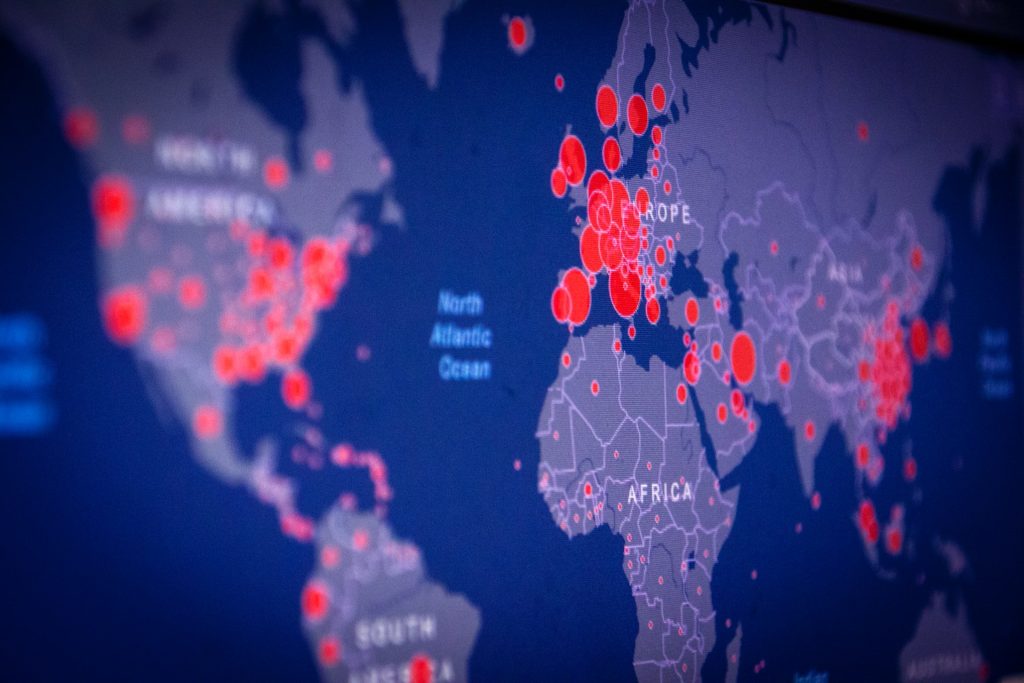
COVID heat map. Photo by Giacomo Carra on Unsplash
According to an analysis of excess mortality published in The Lancet, COVID’s global death toll could be as much as three times higher than official estimates.
From the start of 2020 to the end of 2021, official estimates of the global deaths directly attributed to COVID-19 5.9 million, however this new estimate puts excess deaths at a staggering 18.2 million.
The highest number of excess deaths were reported for India (4.07 million), more than eight times its 489 000 reported COVID deaths, followed by the U.S. (1.13 million), where the official count reached 824,000 by the end of 2021. According to the study, the excess mortality rate in the US (179.3 per 100 000) was about on par with Brazil (186.9 per 100,000). South Africa’s mortality rate was 293·2 per 100 000, just below the rate for Southern Sub-Saharan Africa (308.6 per 100 000). Sub-Saharan Africa’s mortality rate was 101.6 per 100 000, as a result of significant regional variation.
First author Haidong Wang, PhD, of the University of Washington, said in a statement: “Understanding the true death toll from the pandemic is vital for effective public health decision-making. Studies from several countries including Sweden and the Netherlands, suggest COVID-19 was the direct cause of most excess deaths, but we currently don’t have enough evidence for most locations.”
The massive undertaking derived models using all-cause mortality reports for 74 countries and territories and 266 subnational locations, which included 31 locations in low and middle-income countries. These locations reported all-cause death from 2020-2021, and up to 11 years prior. Excess mortality reports were also obtained for the 9 South African provinces 12 Indian states.
Overall, the global rate of estimated excess mortality from COVID was 120.3 deaths per 100 000. A total of 21 countries exceeded 300 per 100 000, with Bolivia having the highest mortality rate at 734.9 per 100 000. Bulgaria, Eswatini, North Macedonia, and Lesotho had the next highest mortality rates. Iceland had the lowest excess mortality rate (-47.8 per 100 000). Australia, Singapore, New Zealand, and Taiwan also had negative excess mortality rates.
Behind India and the U.S. for most excess deaths were Russia (1.07 million), Mexico (798 000), Brazil (792 000), Indonesia (736 000), and Pakistan (664 000). These seven countries were noted to account for more than half of the excess deaths globally during the study period.
Changes in mortality rates also reflected the impact of other diseases suppressed by the same measures that limited the spread of COVID. The researchers wrote: “The most compelling evidence to date of a change in cause-specific mortality in the pandemic period is the decrease, especially in the Northern Hemisphere, in flu and respiratory syncytial virus (RSV) deaths seen in the months of January to March, 2021,” they added. “Given the scarce and inconsistent evidence of the effect of the COVID-19 pandemic on cause-specific deaths, and the extremely scarce high-quality data on causes of death during the pandemic, our excess mortality estimates reflect the full impact of the pandemic on mortality around the world … not just the deaths directly attributable to SARS-CoV-2 infection.”
Limitations included different modelling strategies being used to estimate excess mortality rate, and excess mortality rate by week or month was not estimated.
On Sunday 13 March, the World Health Organization released a statement condemning recent attacks on hospitals and other healthcare facilities in Ukraine, which it called “horrific”. It also called for an immediate end of all such attacks, which are killing and injuring both patients and health care workers, as well as threatening vital health services.
“To attack the most vulnerable – babies, children, pregnant women, and those already suffering from illness and disease, and health workers risking their own lives to save lives – is an act of unconscionable cruelty,” the organisation said.
WHO’s Surveillance System for Attacks on Health Care (SSA) has documented 31 attacks on health care since the outset of the war that started with the Russian invasion on 24 February, now in its third week. These include 24 incidents of damage to or destruction of health care facilities, and five cases of ambulances.
In one incident, a maternity hospital was hit by a Russian air strike, causing three deaths including a child.
There have been 12 deaths and 34 injuries as a result of these attacks, and impaired access to and availability of essential health services, the WHO stated. Since attacks are ongoing, this is expected to continue.
The organisation also stresses that such attacks also directly impact the needs of vulnerable groups, and the health care needs of pregnant women, new mothers, younger children and older people inside Ukraine are rising even as violence curtails health care access.
“For example, more than 4,300 births have occurred in Ukraine since the start of war and 80 000 Ukrainian women are expected to give birth in next three months. Oxygen and medical supplies, including for the management of pregnancy complications, are running dangerously low,” the WHO statement read. WHO warned that Ukraine’s health care system is “clearly under significant strain” and a collapse would be a “catastrophe”. It stresses that “every effort must be made” to prevent this.
“International humanitarian and human rights law must be upheld, and the protection of civilians must be our top priority.
They call for international humanitarian and human rights laws to be upheld, with the protection of civilians as a top priority. Aid and health care workers must be able to continue and strengthen service delivery, and health services should be provided at border crossing, to provide prompt care and referral for children and pregnant people. Care should be unimpeded, with access to civilians in all areas of the conflict, and health care and services should be protected from attacks.
WHO stated that, in the wake of COVID’s huge strain, “such attacks have the potential to be even more devastating for the civilian population.” As such, it called for an urgent ceasefire.
“Finally, we call for an immediate ceasefire, which includes unhindered access so that people in need can access humanitarian assistance. A peaceful resolution to end the war in Ukraine is possible.”
10 March 2022: Shabir Madhi addresses the crowd outside Baragwanath hospital. Credit: Nation Nyoka
Despite falling struggling staff and falling patient care at Baragwanath Hospital, the contracts of 800 support staff will not be renewed, writes Nation Nyoka for New Frame.
Budget cuts at the Gauteng Department of Health mean that it will not renew the contracts of more than 800 COVID support staff at Chris Hani Baragwanath Academic Hospital, south of Johannesburg, on 31 March.
A picket was held outside the hospital on Thursday 10 March after it emerged that suppliers hadn’t been paid for services such as bread delivery and biohazardous waste removal.
Chief executive Nkele Lesia said on 11 March that the picket was less about the COVID staff and more about staff shortages. But she offered no plan to address the inadequate number of hospital personnel. Lesia said the COVID staff knew their contracts were not going to be renewed.
“Those 800 posts may have been created for COVID-19, but it provides us an opportunity to redress this imbalance that exists with this hospital having been chronically understaffed,” said Shabir Madhi, a vaccinology professor and the dean of health sciences at the University of the Witwatersrand (Wits). “We can’t just remove the staff – we need to incorporate them into the system so that we can have this hospital better staffed to ensure better quality of patient care.”
He said the issue goes beyond staff shortages. “If we remove them, we will find that the permanent staff come under greater pressure and burn out. They are going to resign, creating a greater disaster. Poor planning on the part of the government is not an excuse to punish patients and healthcare workers.”
Gauteng member of the executive council for health Nomathemba Mokgethi said the department is unable to absorb the temporary staff because of budget constraints. But she extended her appreciation for their help and support during the waves of COVID.
A chronic situation
Madhi said neglect and the inadequate management and training of healthcare workers over the past two years will materialise as a heavier burden from chronic diseases, which have been on the back-burner as the healthcare industry prioritised COVID.
“For the next two to three years, we need to expect high levels of people ending up in hospital dying not because of COVID. With COVID, there has unquestionably been a disruption in the care of patients with other conditions because people haven’t been able to access facilities. People have been delayed in the diagnosis, and for some time they probably delayed with the treatment,” he said.
Mokgethi and her team did not offer a plan to handle diseases that have been neglected either.
Madhi said training has been hampered and Baragwanath – one of the biggest academic teaching hospitals on the Wits circuit – needs to function properly for students to learn comprehensively. “It is going to impact patient care in the years to come, so the disaster we sit upon today is just the beginning of a further rot of the system if we don’t reverse it immediately.”
Mmampapatla Ramokgopa, chairperson of the hospital’s medical advisory committee, said resilient and hard-working staff who have gone the extra mile are what has kept Baragwanath going.
“We have doctors and nurses pushing patients because there are no porters. The same with cleaning. You find nurses and doctors scrubbing the floors because there are not enough cleaners. Sometimes patients delay to get into theatres because the cleaners are not there. They dig into their pockets and make contributions to buy either bread or flour to make bread,” said Ramokgopa.
Patient care at risk
The department denied that Gauteng hospitals have run out of food, saying other types of food are being served at Baragwanath. It did admit that the hospital, along with other facilities, experienced “a short supply of bread in the recent past” and that the issue had been resolved.
Madhi said the hospital and surrounding area were compromised when the department failed to pay the service provider who removes biohazardous waste. The department said on 11 March that it had paid the relevant service providers to collect the waste and supply bread.
“The fact that we are in a province where patients are not provided something as basic as bread for two weeks speaks volumes about the incompetence and uncaringness of those responsible for the management of this facility … at the level of the province,” said Madhi.
Ramokgopa said the committee has raised these matters over time. People who have worked at the hospital for years have a collective memory of its legacy and they are eager to engage and find solutions.
National Union of Public Service and Allied Workers branch secretary Monwabisi Somi said employees are providing much-needed staff for an institution that is under strain, and the COVID workers need to be absorbed. “We’ve also got the issue of telephone lines that have not been working for some time in some units, which compromises communication. This is to the detriment of patient care,” he said.
Lerato Madyo, the provincial department’s acting chief financial officer, said its finances are healthy but it is dealing with a backlog of unprocessed invoices from previous years. The department owed service providers R4.2 billion at the end of January.
Madhi said what is happening in state healthcare facilities is compromising the future care of people in South Africa. “It is undermining our ability to provide adequate training to healthcare workers.”