Chris Hani Baragwanath Academic Hospital (CHBAH) has been hit with shortages of essential foods as contractors fail to deliver the quantities of food tendered for, Daily Maverick reports.
Last week, a head of department at CHBAH notified Daily Maverick of the developing crisis, saying “So once again there is a food crises at Bara – suppliers weren’t paid, also no soap and hand towels and as a result infections spreading 😡.”
The unnamed healthcare worker said that the crisis was due to small suppliers being unable to fulfil the quantities for tenders they secured. Dry goods were particularly affected, and protein substitutes were having to be purchased from petty cash which was now depleted. This was verified by another healthcare worker, who described a situation of hospital kitchens having to borrow from one another.
One doctor spoke of elective surgeries being cancelled due to financial pressure, and an atmosphere of intimidation. Motalatale Modiba, spokesperson for the Gauteng Department of Health, denied that there was a food shortage situation, but said that delivery of some protein food items, such as chicken and fish, had been withheld due to administrative payment delays.
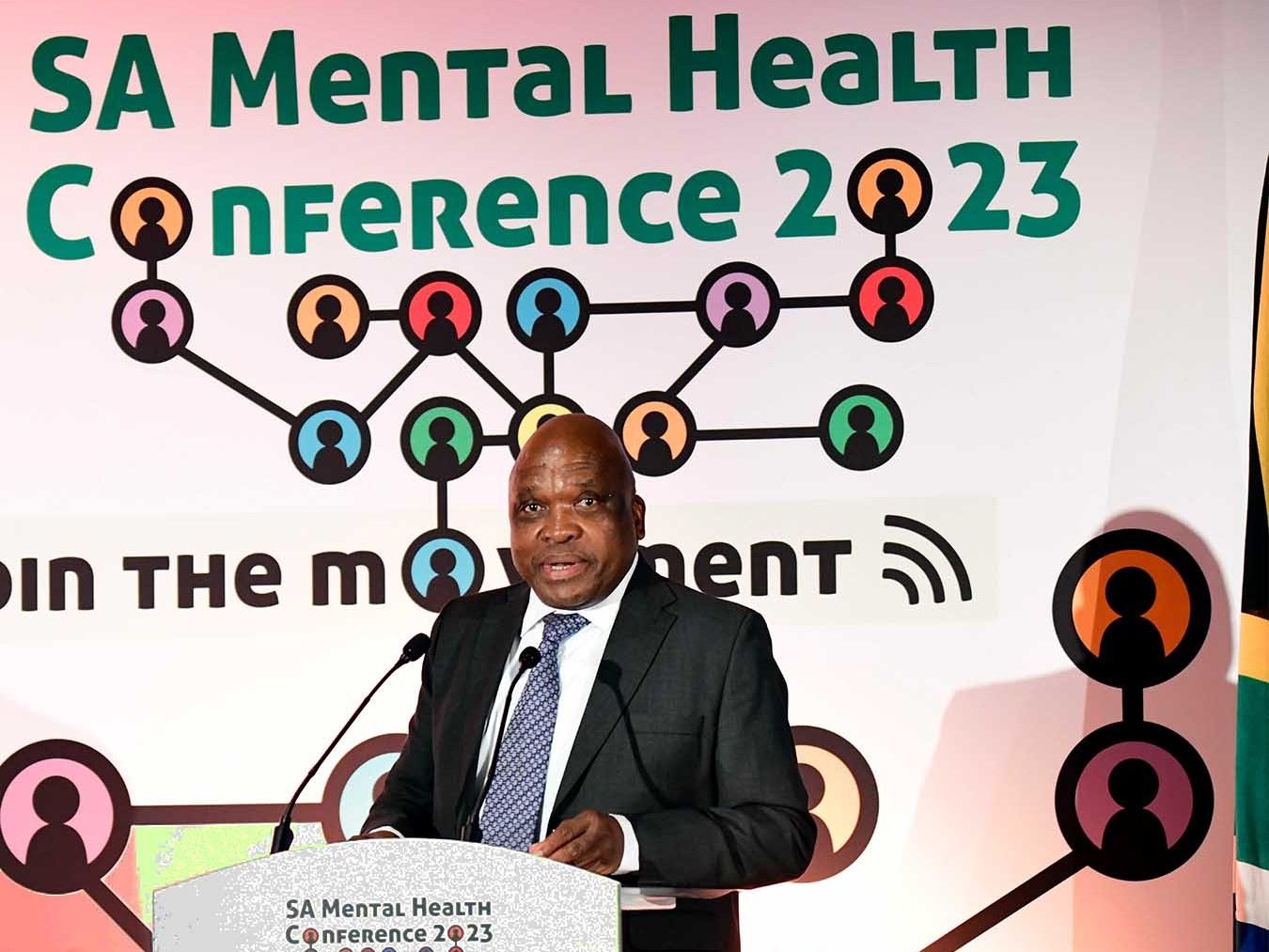
South Africa’s long-awaited new National Mental Health Policy Framework and Strategic Plan 2023 – 2030 has been published. The policy framework was presented at the SA mental health conference this week. PHOTO: DOH/Twitter
But even though there has been a gap from 2020 to 2023, speaking to Spotlight at the conference, Minister of Health Dr Joe Phaahla said that it doesn’t mean there was a gap in terms of updating. “Every either three or five years, we revise the policy. So, it is not that there has been a gap. There has been a policy, which has been guiding,” he said.
“But as things change, and in each cycle of the strategy and planning, we have a particular timeframe so that we can evaluate. And so now we have evaluated, and that’s why we are adding [additional things], as we learned from the previous implementation.”
Phaahla said that gaps in the country’s mental health services are not because of a lack of policy and plans but due to implementation issues and sometimes the shortage of resources and psychiatrists.
“If you look at the area of psychiatrists, it is just the two-tier system of our health service, which makes it very difficult because what psychiatrists can earn providing the services to more of the insured patients – it is something we can’t really match with the public sector salaries generally,” he said. Phaahla said that psychiatrists, who mostly work in the private sector, were typically trained at public-sector teaching hospitals. “But once they’re qualified, they stay for one year or so, then they are attracted by better income,” he told Spotlight.
According to Phaahla, to deal with the shortage of psychiatrists in provinces such as the Northern Cape where there are only three psychiatrists, the department plans to contract psychiatrists from other provinces. “We can have part-time psychiatrists, maybe take some from Gauteng where the majority are and in Western Cape and contract them to provide services in Northern Cape. Even if it’s on a weekly rotation,” he said.
Concerns over delays
While several mental health experts have welcomed the new policy framework and agree with Phaahla about the importance of implementation, they are not happy about the delays.
“We’re now sitting in 2023, three years late,” said Cassey Chambers of the South African Depression and Anxiety Group (SADAG). What that means, she said, is that civil society did not have a working document with which to engage government at provincial or district level.
Bharti Patel of the South African Mental Health Federation expressed similar concerns. “As the Federation for mental health, we are disappointed that it has taken this long for the policy to be reviewed, given the fact that the initial policy was launched in 2013,” said Patel.
“We had a crisis during that period from 2013 to 2020. We have witnessed mental healthcare users losing their lives during Life Esidimeni. The [Health] ombud report, the South African Human Rights Commission Report, have all given recommendations,” Patel said. Patel argues that those recommendations should have informed policy and implementation more quickly.
Implementation problems
Chambers described the previous strategic policy framework as a “very good document”. Then, she said, the problem came in the implementation. “And I think perhaps this is [why there was a] delay in having an updated document that is now running from 2023 to 2030. It is because the document was good, the policy was good. However, how it was implemented was not happening,” she said.
Speaking to Spotlight, Professor Crick Lund, Co-Director, of the Centre for Global Mental Health at King’s College London, explained that there are a number of factors that create implementation challenges. “The one is ignorance on the part of senior decision-makers about mental health, ignorance about the scale of the problem, and ignorance about the fact that something can be done about it,” he said.
According to Lund, the new policy framework has stronger implementation monitoring mechanisms and implementation can be tracked in a much clearer way over time.
For the new policy framework to work better than the previous one, Lund believes there is a need to create greater public awareness about mental health and about the mental health policy. He says, “We need to get all the sectors involved working together – the Department of Health, Education, Social Development, the criminal justice system, and also the NGO sector.”
Along similar lines, Patel stressed the importance of getting more government departments involved. “While the policy is developed at the national level, the National Department of Health is responsible for training the provinces and not only the Department of Health; they need to train all government departments within the province who have bought this policy,” she said. “You can’t have the Department of Health alone implement a policy. This is a policy that requires inter-sectoral collaboration so that different departments can also put budgets towards implementation.”
Lund said that there is a lot of common agreement on what the priorities are and a lot of energy going forward. “So I’m hopeful that we can move things forward.”
Budgets and human resources
While there seems to be consensus on the need for more training and getting wider buy-in, there is also a shared awareness that successful implementation will depend on the availability of sufficient funds and human resources.
“We need to see structured action plans in the provinces with budgets allocated so that we can hold the government departments accountable,” said Patel.
Chambers agrees that in order to get implementation of the new policy framework right, we will have to get the budgets right. “You need to allocate a budget in order to help with the implementation plan, especially knowing that our previous policy framework was not implemented. So, we have to overcompensate for that now, which is concerning because this year, the health budget has been reduced. Therefore, meaning that the national mental health budget has been reduced,” she said.
According to the new policy framework, the case for investing in mental health is strong. It states that at a societal level, lost income associated with mental illness far exceeds public sector expenditure on mental healthcare – in other words, it costs South Africa more to not treat mental illness than to treat it. The impact of mental illnesses such as depression and anxiety has been estimated to cost the economy more than US$3.6 billion (R61.2 billion) in lost earnings per year. Certain conditions such as perinatal depression and anxiety have lifelong cost consequences. For example, it is estimated that the lifetime costs of perinatal depression and anxiety in South Africa amount to US$2.8 billion (R47.6 billion) per annual cohort of births.
Chambers also stressed that we are facing shortages of human resources and appropriate facilities. “We don’t have the human resources or the capacity to fulfil that implementation plan and that’s a worry and a concern,” she said.
NHI and provincial plans
According to the new policy framework, mental health will be financed according to the principles adopted for all health financing in South Africa, and people will be protected from the catastrophic financial consequences of mental ill-health.
According to the policy framework, in the financing of the National Health Insurance (NHI) system, mental health services will be given parity with other health conditions, in proportion to the burden of disease and evidence for cost-effective interventions. NHI will specifically include packages of care for mental health, in line with the evidence for the most cost-effective interventions. The policy framework states that private medical aid schemes should be required to provide similar parity between mental health and other health conditions.
“Budget will be allocated to meet targets set for the implementation of the policy and regular discussions will be held with provinces to discuss strategies and monitor progress with implementation. At provincial level, mental health budgets will be reviewed annually to align mental health with national priorities, for each of the areas for action in 2023 and annually thereafter,” the policy framework reads.
The policy also says that all provinces will develop provincial strategic plans for mental health, in keeping with national policy, which outlines specific strategies, targets, timelines, budgets, and indicators in 2023 and annually thereafter, informed by specific unique local challenges.
Survivors of out-of-hospital cardiac arrest (OHCA) who received initial bystander defibrillation with a nearby automated external defibrillator (AED) reported better outcomes at 12 months after arrest compared with those initially defibrillated by paramedics, according to a new study from Monash University which appears in Heart.
The retrospective study recruited adult non-traumatic OHCA with initial shockable rhythms between 2010 and 2019. Survivors at 12 months after arrest were invited to participate in structured telephone interviews. Outcomes were identified using the Glasgow Outcome Scale-Extended (GOS-E), EuroQol-5 Dimension (EQ-5D), 12-Item Short Form Health Survey and living and work status-related questions.
Of 6050 patients, 3211 (53.1%) had a pulse on hospital arrival, while 1879 (31.1%) were discharged alive. Survival rates were highest with bystander defibrillation (52.8%), followed by dispatched first responders (36.7%) and paramedics (27.9%). Of the survivors, 1802 (29.8%) survived to 12-month post-arrest; of these 1520 (84.4%) were interviewed. 1088 (71.6%) were initially shocked by paramedics, 271 (17.8%) by first responders and 161 (10.6%) by bystanders. Bystander-shocked survivors reported higher rates of living at home without care (87.5%), upper good recovery (GOS-E=8) (41.7%) and EQ-5D visual analogue scale (VAS) ≥ 80 (64.9%) compared with first responder and paramedics, respectively. After adjustment, initial bystander defibrillation was associated with higher odds of EQ-5D VAS ≥ 80 (adjusted OR (AOR) 1.56), good functional recovery (GOS-E ≥ 7) (AOR 1.53), living at home without care (AOR 1.77) and returning to work (AOR 1.72) compared with paramedic defibrillation.
By Vincent Lali, Chris Gilili, Liezl Human, Tariro Washinyira, Nombulelo Damba-Hendrik, Thamsanqa Mbovane, and Mkhuseli Sizani
“You have shown the power of the people by closing all the hospitals,” National Education Health and Allied Workers’ Union (NEHAWU) Western Cape provincial secretary Baxolise Mali told striking union members on Wednesday. “The employer says people are dying. It is not our responsibility to keep people’s lives.”
Mali was speaking to strikers outside the Khayelitsha District Hospital in Cape Town, as NEHAWU members continued a wage strike which has disrupted hospitals and government offices across the country. The government considers the wage negotiations for 2022 to be settled but NEHAWU and several other unions are still demanding up to 12%.
Police presence outside the hospital had kept protesters away, said hospital CEO David Binza. He said the situation was “better than yesterday”, when “things were bad”.
Binza said services at the hospital had been severely affected by the strike on Monday.
Protesters had prevented people coming in and out of the hospital. Staff had ended up working 24 hours because there were not enough nurses to relieve them, and there was a shortage of nurses in childbirth wards. “Yesterday they prevented night staff from gaining access into the facility. It was mostly doctors that they allowed in. Doctors alone can’t work properly,” he said.
Today things had been better, he said, as the police had arrived early and kept protesters away from the hospital.
Western Cape health spokesperson Mark van der Heever said shift changes at the hospital were being closely monitored after patients in critical condition had to be transferred to other hospitals such as Helderberg, Tygerberg, Mitchells Plain and Karl Bremer.
Striking workers outside Khayelitsha District Hospital on Wednesday. Photo: Vincent Lali
“On Tuesday night, 7 March, protesters disrupted services and blocked staff from entering Khayelitsha District Hospital until 11pm. The ongoing disruption has directly resulted in staff shortages as they are prevented from entering, backlogs building up and other operational challenges.”
He said protests had been reported at Karl Bremer and Tygerberg hospitals, but services had not been disrupted.
Mali said NEHAWU’s intention was to “collapse the provision of government services” to force the government to the negotiating table. “Our tactics involve closing workplaces, to force workers to get out and switch off their computers.”
Home Affairs offices in Khayelitsha were closed. Disappointed, Luthando Tiso said he has been going to Khayelitsha Home Affairs to collect his ID since Monday. “I can’t get a job without an ID,” he said.
In the city centre, the Home Affairs office in Barrack Street and the offices of the Department of Labour were closed and there was a strong police presence.
One man said he had been to the Mitchells Plain Labour Department offices on Monday and Tuesday only to find them closed because of the strike, and had come to Cape Town hoping for help. “I desperately need to claim from the Unemployment Insurance Fund. I lost my job in January. My rent and children’s school fees are already behind,” he said.
Eastern Cape
In the Eastern Cape, Department of Health spokesperson Yonela Dekeda said hospitals were being run by skeleton staff.
“We had an incident early in the morning where striking workers blocked the Cecilia Makiwane Hospital’s entrance in East London. But police were called to remove them.”
Dekeda said unions which were not supporting the strike action had raised concerns that their members were being intimidated and denied access to workplaces.
“We do appreciate responsible shop stewards who have called their members to order, where necessary, and ensured that critical services continue and that our patients receive necessary care,” she said. “However, we take very seriously those employees who intimidate others, and cause services to be affected negatively.
“Appropriate action will be taken in all such instances, and law enforcement agencies are being deployed.”
At Laetitia Bam Day Hospital in KwaNobuhle, Kariega, Eastern Cape deputy secretary of NEHAWU, Busiswa Stokwe told about 100 striking workers: “We know we will be attacked even in the community, accused of not caring for patients. But the same community when you are doing the work of ten people, whilst you are four, would insult you, saying you are lazy. We must put ourselves first.”
A patient who did not want to give his name said he had arrived at 5am to have three teeth removed but had been ordered out by striking workers at 7am. “They came by car and on foot and sang in the corridors. We realized that we should go back home, with aching teeth.”
“We were about ten and have no money to remove teeth at a private doctor, who charges R350 per tooth,” he said.
Gauteng
In Tshwane, striking workers closed down the offices of the Department of Public Service and Administration, shouting and insulting some workers who were inside the offices.
There was a stand-off between the striking workers and police, as the workers closed off Hamilton and Edmond Streets with huge stones and turned cars away. Police moved the workers away.
Phumuzo Malahleni, a registry clerk at the Department of Agriculture, said his R12,000-a-month salary was too low to cope with the soaring cost of living. “As public servants we can’t afford anything. Violence and going to the streets is the only language our government understands.”
NEHAWU Gauteng provincial chairperson Mzikayise Tshontshi told GroundUp that the battle for a wage increase was far from over.
He said NEHAWU had been called to the Public Sector Bargaining Council on Thursday. “Our negotiators will be there, but the rest of us will continue shutting down public services.
“We believe our strike has been resoundingly successful. From Monday to today, the numbers have been growing. Tomorrow we want to intensify the strike,” said Tshontshi.
Addressing the crowd outside the department, Tshontshi called out those who were still at work.
“We are also aware of ‘amagundwane’ (rats). Some are sitting in cosy offices, and then when we win this battle they are going to be first in the queue because they think they deserve what we have fought for. There have always been traitors in every struggle; this is no different.”
At Tembisa hospital, striking workers blocked the entrance with burning tyres and debris while chanting slogans. Calm was later restored.
Free State
Free State health spokesperson Mondli Mvambi said the province had obtained an interdict on Wednesday morning to prevent strikers from disrupting services at hospitals and clinics. “The order does not stop the strike but stops acts of intimidation, violence, disruptions and instigating.”
Mvambi said hospitals hardest hit were National District Hospital, Universitas, Pelonomi and Medical Depot in Bloemfontein. “There were no nurses at work and patient care was seriously compromised.” Mvambi said calm had been restored but services remained strained as nurses were still not at work.
“At Manapo in QwaQwa they are not allowing nurses into the hospital. At Boitumelo in Kroonstad, picketers were singing at the gate but services are said to be continuing. At Pelonomi Hospital, nurses in ICU were forced out by the strikers.”
North West
In the North West, services at least six hospitals were disrupted by the strike: Klerksdorp-Tshepong, Potchefstroom, Taung District, Moses Kotane, Ganyesa District, and Gelukspan. There were pickets outside several other clinics and hospitals.
Mpumalanga
In Mpumalanga, spokesperson Christopher Nobela said that all health facilities had been affected and hospitals were working with skeleton staff in hospitals.
Limpopo
Limpopo health spokesperson Neil Shikwambana said, “We do not have reports of disruptions in any of our facilities so far.”
KwaZulu-Natal
Workers stopped work at Inkosi Albert Luthuli Central Hospital in Durban for several hours on Wednesday morning, singing outside the hospital. Patients were allowed to enter.
NEHAWU branch secretary Sikhumbuzo Gumbi said workers decided to go back to work at midday so they could assist patients. “As workers we decided to protest in the morning then attend to patients around lunchtime.”
Gumbi said the staff would continue protesting in the mornings until the strike ends.
Prince Mthalane, Durban NEHAWU regional secretary, said clinics had been closed in KwaMashu and at Polyclinic workers had burned tyres. Police had been called but workers had talked to them and no-one had been arrested.
“The aim is to have a peaceful strike,” he said.
GroundUp was unable to reach the health department spokespersons in KwaZulu-Natal or the Northern Cape.
Police
“Innocent patients have been caught in the crossfire and inconvenienced by something which has nothing to do with them,” said Department of Health national spokesperson Foster Mohale. He said the Minister of Health had asked the Minister of Police to strengthen the police presence in areas affected by the strike.
“Skeleton staff has also been available to give care to patients who could not be discharged,” said Mohale.
South African Police Union spokesperson Lesiba Thobakgale said the union had joined NEHAWU in the protest. “As SAPU, from today we have served a strike notice and we are joining the other unions,” said Thobakgale.
Striking members of the National Education, Health and Allied Workers Union (NEHAWU) blocked the department of Home Affairs offices in Cape Town on Tuesday. Photo: Thomas Kachere
Patients were turned away from some hospitals as members of the National Education, Health and Allied Workers Union (NEHAWU) and other unions pressed forward with their wage strike, in spite of a court interdict.
Many government offices were closed for several hours.
NEHAWU has approached the Labour Appeal Court to appeal against a decision to enforce the interdict against the strike granted by the Labour Court to the Department of Public Service and Administration.
In Cape Town, police intervened after a scuffle broke out after a member of the public who was queuing for service at the Department of Home Affairs office in Cape Town called protesters names.
The police warned the protesters not to engage in any violence.
Provincial General Secretary of NEHAWU, Baxolise Mali said, “Today we have escalated matters”. He said hospitals including Khayelitsha Day Hospital and Somerset Hospital had closed, and the offices of Home Affairs and Labour were closed. “SASSA offices will close soon for social grants,” he said.
NEHAWU served the department with a notice to strike on 24 February after wage negotiations deadlocked. The department offered a 4.7% increase while unions demanded between 10% and 12%.
Ronald Ruiters had queued at the Home Affairs office in Cape Town for hours for a temporary ID, without getting help, he said. “Yesterday I was here at 4:30am. I am an old man. What about people who are suffering now including sick people in hospitals? There should be a better way of dealing with these issues.”
“Since morning the police were here but they could not control the protesters, nothing is working here.”
Mali said workers were angry at a statement by acting Public Service Minister Thulas Nxesi who had described the strike as reckless.
“The acting minister called people reckless and said they need to go back to work … go back to work on what basis? Come with an offer: we are willing to negotiate.”
“It is reckless for the government to impose salaries on people. It is reckless for the government to expect the people who have been praised during the time of Covid for having to work hard in very difficult conditions to serve our people to get peanuts.”
“The ‘no work no pay’ principle is not a new thing. Let them deduct the money, we are used to poverty. “
Mali said members of the public did not understand. “They stand in long queues because the government is refusing to employ more people to work for Home Affairs, [Department of] Labour and SASSA. Instead they increase the cabinet. Too many deputy ministers and what work do they have to do?”
“What needs to be done is to create employment so that people get served quickly. That is all we are fighting for. We are not going to compromise.”
In Pretoria, striking workers occupied the Department of Labour Head office, singing and shouting at workers inside to come out. They also closed entrances to the offices of the Department of Higher Education and Training, and disrupted traffic on Francis Baard Street.
A striking cleaner at the Department of Labour, Boitumelo Motaung said she earns R6000 a month and supports a family of four people. She says she spends about R1000 on transport from Ga-Rankuwa to Pretoria for work.
“We are suffocating, and we are earning peanuts. I have three kids that are attending school and their father is unemployed. I am taking care of everything and a few days after payday, I am left without a penny and survive off loan sharks. We need government to recognise our value as people. Sometimes I am forced to do the work of three people where I work because they are not employing enough cleaning staff. That is why I am supporting this NEHAWU strike,” said Motaung.
Motaung said she has been working as a cleaner for seven years.
In a statement, DPSA director general Yoliswa Makhasi said work stoppages and pickets by NEHAWU and its members would be contempt of court.
“We will strike until our demands are met”
NEHAWU deputy secretary-general December Mavuso
Spokesperson for the department Moses Mushi said the minister had called on unions to return to the negotiating table.
NEHAWU deputy secretary-general December Mavuso said the strike had expanded. He said the union’s lawyers and government lawyers were in discussion about an appeal to the Labour Appeal Court. “We don’t know when an outcome will be available . In the meantime, our workers are on the picket lines,” said Mavuso. “We will strike until our demands are met”.
Department of Health spokesperson Foster Mohale said the department was working with provincial health authorities and law enforcement agencies to monitor the situation to ensure rapid response and if necessary urgent intervention.
In Fort Beaufort in the Eastern Cape, community health care workers were ordered to stop their services at clinics and hospitals. Striking NEHAWU members blocked the entrance of the Fort Beaufort Provincial Hospital and turned away patients. Top management was allowed to enter but other staff were locked outside the gates.
NEHAWU also shut down several government offices in the Eastern Cape.
Mphakamisi Shooter, regional NEHAWU treasurer, told GroundUp the union had used its resources to put President Cyril Ramaphosa in power. “But now he is failing to give us what we deserve.”
“We have over 5,000 members in this region. Today we made sure that we shut down all government departments in this region until Ramaphosa gives us a decent wage.”
MEC for Health Nomakhosazana Meth condemned the unprotected strike. “We understand that workers have a right to demonstrate but when they do they cannot infringe on the rights of others. We cannot afford to have a situation where the lives of patients and staff not on strike are in danger as a result of the action of those who have embarked on this action.”
She said there were reports of disruptions and acts of intimidation in some areas.
In Makhanda, clinics were closed as were the offices of the departments of Home Affairs, Labour, and Social Development by a group of about 80 protesters.
Madoda Toni, who was part of the protest, said the government cannot continue to pay workers low salaries while prices of food and other items were rising so fast. “We need permanent jobs, decent wage increases, and contract workers should be absorbed to be full time government employees and paid decent salaries,” said Toni.
In Qonce (King Williams Town) it was also reported that SASSA and Home Affairs offices were closed down by the protesters.
In Durban, patients were prevented from entering Prince Mshiyeni Memorial Hospital by NEHAWU members. The protest started about 6am and ended just before lunchtime when workers dispersed and returned to work. By 1pm, everything was back to normal.
Health activists demonstrating in Cape Town for a rise in the tax on sugary drinks were disappointed by Finance Minister Enoch Godongwana’s announcement in his Budget speech that the tax would be frozen for two years. Godongwana said this was “due to the difficult operating environment for the sugar industry from the impact of flooding and social unrest.”
The tax on sugary drinks was first introduced in 2018 to reduce consumption. The tax is imposed on drinks with more than 4g of sugar per 100ml. Research from the University of the Witwatersrand in 2021 showed that it has been effective in reducing the consumption of sugar-sweetened drinks.
HEALA, a coalition of organisations focused on nutrition, organised a flash mob in the Cape Town city centre ahead of the Finance Minister’s Budget Speech on Wednesday, advocating for an increase in the sugary drinks tax. They want the tax to be increased from 11% to 20%, following the guidance of the World Health Organisation.
The flash mob was part of HEALA’s “Less Sugar, More Life” campaign, and featured school pupils from Cape Town in a dance.
“We don’t even notice how much sugar we are drinking in sugary drinks and it’s harmful to our health. I want other young people to know that it’s dangerous,” said one of the dancers, Enkosi Stofile.
“The announcement by the Finance Minister, coupled with ineffective increases on other health taxes such as alcohol and tobacco, is a direct attack on the lives of millions of people at risk of serious health conditions such as diabetes, cardiovascular diseases and cancer,” said Nzama Mbalati, HEALA’s Programmes Manager.
Mbalati said there was no rationale for the decision to maintain the rate of tax on sugary drinks. “This decision is not in the interest of ordinary people. Instead, it puts profits ahead of people.”
About 10 000 new cases of diabetes are reported in South Africa each month, according to the International Diabetes Federation. Up to 70% of women and 39% of men are obese or overweight. Sugar is a cause of obesity and tooth decay, and is linked to a range of other non-communicable diseases. The national budget for 2023, tabled by Godongwana in parliament today, includes a R200-million reduction in health spending this year.
Before the budget speech, News24 reported that the South African Sugar Association said 6000 jobs could be lost if the tax was increased. SASA also said 9,000 jobs had already been lost since the levy was introduced.
However, in the aftermath of a fraud scandal at Tongaat Hulett, South Africa’s largest sugar producer, in 2018, 5,000 workers were served with retrenchment letters.
Disclosure: Community Media Trust does work for HEALA. GroundUp was once a project of Community Media Trust and still has a close relationship with Community Media Trust.
Despite being one of the most common non-communicable diseases globally and there being highly effective treatments for it, asthma is often not well controlled in many low-resource settings, according to a cross-sectional study recently published in the Lancet medical journal.
Closer to home, the Global Asthma Report from 2022 showed that there has been an increase in severe asthma symptoms among adolescents in Cape Town over the last few years. There is little data available for the rest of the country, which makes comparisons with other South African cities very tricky.
‘Disproportionate number of children have severe asthma’
Dr Ahmed Ismail Manjra, a paediatrician and allergologist at the Allergy and Asthma Centre in Durban, tells Spotlight that globally more children than adults have asthma. The centre is in the Life Westville Hospital and provides specialist services to adults and children with asthma or allergic disorders.
“Asthma is quite common in children. It is estimated [globally] that one in ten children have asthma, and in adults, the prevalence is less than in children,” he says. “But the problem is that in South Africa we see a disproportionate number of children with severe asthma. And what has been shown is that over the years the prevalence of asthma is rising, and the severity is rising.” (For more on what asthma is and how it is treated in South Africa’s public sector, see this Spotlight article from December 2022.)
Impact of undiagnosed uncontrolled asthma
The impact of undiagnosed or uncontrolled asthma on children is huge. First, according to Professor Refiloe Masekela, Paediatric Pulmonologist and the Head of Department of Paediatrics and Child Health at the University of KwaZulu-Natal, the symptoms are very noticeable, which can affect children socially. Secondly, a child with undiagnosed asthma will miss school because of their symptoms and be unable to participate in school activities like sport. They will also become less active because exercise may trigger symptoms, which have further effects on their health.
Another implication of uncontrolled asthma, according to Manjra, is poor sleep quality, which can impact a child’s academic performance.
“And in severe asthma without proper treatment, it can lead to recurrent admissions to hospital. This places a burden on the healthcare system, which can be easily prevented by proper management of asthma. And of course, in a small percentage of cases where the asthma is not well controlled, it can also lead to fatality,” he says.
Manjra urges parents to take their children to be checked for asthma if they have recurrent respiratory symptoms.
“The asthma treatment is extremely effective, very safe as well, [and] they have very few side effects. Parents should not be afraid to use asthma treatments to control their children’s asthma,” he says. “Although we don’t have a cure for asthma, we do have medicines that can control it and give better quality of life.”
Asthma trends in children: what the data says
Masekela explains that the data published in the Global Asthma Report is published by the Global Asthma Network (GAN), which consists of a network of centres across the world – including three in South Africa – that contribute data on asthma in their regions every few years.
This data collection effort started with the ISAAC one and ISAAC three studies (International Studies of Asthma and Allergens in Children). The GAN centre in Cape Town contributed data to ISAAC I in 1995 and for ISAAC III data was collected in Cape Town in 2002 and Polokwane in 2004-2005 where adolescents were also included.
According to Masekela, the latest study collecting data on asthma was the Global Asthma Network (GAN) Phase one study, to which the Cape Town centre contributed. Masekela says the data from the ISAAC studies – ISAAC 1 and ISAAC 3 as well as GAN is available in South Africa only for Cape Town.
This means that it is possible to compare trends in childhood asthma in Cape Town over a longer time period, and data from ISAAC 3 can be used to compare Polokwane and Cape Town. But there isn’t current data collected by the GAN to give a clear picture of childhood asthma in the other cities and provinces.
In the 2022 Global Asthma report changes among the prevalence of asthma symptoms – measured as a 12-month prevalence rate of wheezing among adolescents aged 13 to14 – showed that in ISAAC 1, 16% of the around 5 000 adolescents surveyed in Cape Town had symptoms, which increased to 20.3% of just over 5 000 surveys in ISAAC 3 and finally 21.7% of the just under 4 000 adolescents surveyed for the 2022 study.
Masekela says in Cape Town if we look at the period between ISAAC Phase 1 and phase three, there was an increase in the prevalence [of asthma in children], but from the ISAAC 3 to the GAN Phase 1, there has been a stabilisation in the asthma prevalence [among children. “So, it’s very high, it’s over 20%, but it’s stable so it hasn’t been increasing, which it was doing before.”
When comparing data from Polokwane and Cape Town in ISAAC 3, at the time of the study, more children and adolescents in Cape Town had severe asthma than in Polokwane. The prevalence of asthma in children and adolescents was also higher in Cape Town.
Situation is ‘interesting and worrying’
Masekela explains that in many low-and-middle-income countries, those living with asthma don’t have access to the right asthma medications, namely inhalers. What also happens is that when those individuals have access to asthma medications, they are only able to get the reliever inhaler, not the controller inhaler.
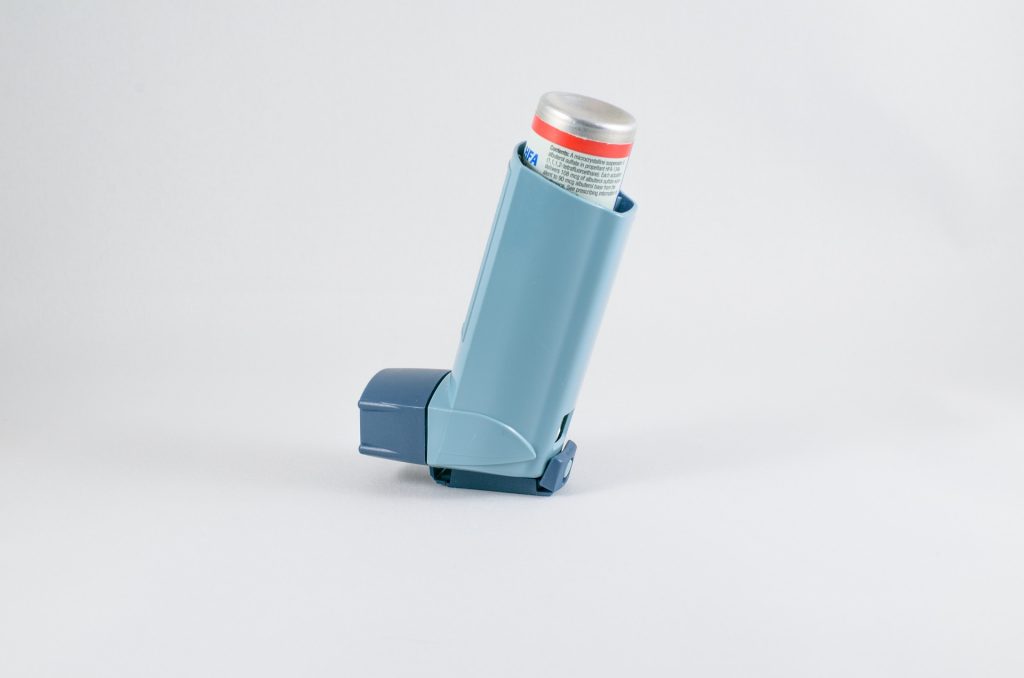
People living with asthma need two types of inhalers, a reliever inhaler which brings relief and opens up the chest during an asthma attack and a control medication which is used every day to reduce inflammation in the long run. In order to control asthma adequately, both inhalers need to be used and used correctly.
In South Africa, both types of inhalers are on the Essential Medicines List.
“The story of South Africa is interesting and worrying. We have in our essential medicine list inhalers [both relievers and controllers],” she says. “It should be available. It’s on the essential medicine list for the primary care level. So any person who has asthma in South Africa should have access to that first step of treatments.”
Yet the data from South Africa suggests there is a problem. When looking at the symptoms of asthma among schoolchildren from the GAN phase one study, Masekela says it is worrying because they found that many children in South Africa with asthma symptoms don’t have an asthma diagnosis and of those that do have the diagnosis most only have the reliever inhaler and very few are using both the reliever and the controller inhaler.
“We know that asthma is under-diagnosed and actually the data from Cape Town, as well as Durban, is very similar. You see that 50% of adolescents have severe symptoms, half of them have never got the label – they’ve never been diagnosed as having asthma,” she says.
Under-diagnosed
A possible reason for the under-diagnosis, according to Masekela, is that when a child presents to a clinic with wheezing, the child is treated for something else that might be causing the symptoms and sent home. Then when the child goes back a few weeks or months later with the same symptoms, they are seen by a different doctor or nurse and there isn’t continuity, so the fact that the symptoms are recurrent isn’t picked up on.
Manjra tells Spotlight that asthma can sometimes be difficult to diagnose in small children because its symptoms – wheezing, shortness of breath, tight chest, and coughing – can be caused by a number of other diseases. Wheezing, in particular, can be caused by a number of conditions that can affect children.
“The most common being viral upper respiratory tract infection, particularly with RSV [respiratory syncytial virus] and rhinovirus. And sometimes in young children, it can be extremely difficult to make a correct diagnosis of asthma because there’s overlap between viral-induced wheezing and asthma,” he says.
“However, if the child has an underlying – what we call atopic predisposition – that means if the child has eczema or has allergic rhinitis or food allergy or has [an] inhalant allergy, then the possibility of that child having asthma is very high,” he says.
Other childhood conditions that can cause wheezing in children are TB and inhaling foreign bodies into the lungs.
“So, the diagnosis of asthma in young children is basically made by an exclusion of other causes of wheezing,” he says. “Asthma diagnosis is made over a period of time because, as I’ve mentioned, it’s recurrent wheezing.”
Another problem, according to Masekela, is that those people who do receive a diagnosis of asthma are often not getting the right treatment.
“People who have a label at least should have access to the treatments, but we do see that even in those that have the diagnosis, a lot of them are not using their medicine because they’re getting repeated attacks, they have severe symptoms,” she says. “So, something is not right. Either they are not getting the label, we know that’s happening, or they’re not getting the right treatment.”
This is a bi-directional problem, Masekela says, in that either healthcare workers are not adequately teaching patients how to use both inhalers or patients are relying on the reliever medications despite being taught how to use both.
Manjra says that while inhalers are on the EML, this doesn’t necessarily translate to healthcare facilities having stock. Meaning that there can be stock-out of the medication, but also of the spacers that children need to use with the inhalers.
According to Manjra, children are unable to use inhalers properly with spacers, because the inhaler releases the plume of medication too quickly for the child to be able to breathe it into their lungs. The spacer allows the medication to go into a holding chamber where the child is able to breathe the medication into their lungs in a controlled way, through a special valve.
Better education needed
The solution to the problems of the under-diagnosis of asthma and incorrect inhaler use is better education on all fronts, says Masekela. There needs to be better training among healthcare workers on how to recognise asthma, how to manage it and how to teach patients how to manage it properly.
“We know that there is a system problem about them [children] getting the correct medication, using the correct medication and that all boils down to education of the patient, education of the health workers. And really, overall education in the community about how to handle asthma,” she says.
She adds that patients and the wider community also need to be educated on what asthma is and how to manage it properly and destigmatise it. A good starting place is in schools so that children who are living with asthma and their peers are able to better understand the condition and be more accepting of the use of inhalers.
“It’s important that we then find strategies to get people to understand the need for using these medicines, even when they’re feeling well,” she says.
In October last year, Eastern Cape Health MEC Nomakhosazana Meth announced a three-phase plan to address key challenges with the province’s emergency medical services. PHOTO: Black Star/Spotlight
By Siyabonga Kamnqa for Spotlight
Gogo Nothembile Fanti (76) says she suffers from a heart condition and every time her grandchildren call an ambulance, they are told to wait, but it never arrives. She is one of about 40 patients – mostly older persons – sleeping on the floor and in chairs at All Saints Hospital in Ngcobo in the Eastern Cape during Spotlight’s visit on 30 January. They are all waiting for an ambulance to take them to referral hospitals such as Nelson Mandela Academic Hospital and Bedford Hospital about 60 kilometres away in Mthatha. They come from various villages around Ngcobo.
Fanti, like many other patients, says they are forced to sleep there overnight as the free transport provided by the hospital leaves at the crack of dawn.
“I had to call my neighbour to [bring] me here, otherwise I could have died waiting for the ambulance. They told me that I have to be taken to Mthatha to see a specialist, but having to sleep under these conditions at my age is a terrible experience,” she says.
An old problem
The challenges with patient transport, specifically emergency medical transport in the Eastern Cape, are not new. Spotlight has previously reported on the issue here, here, and here.
In October last year, Eastern Cape Health MEC Nomakosazana Meth in a response to a written question in the provincial legislature by DA MPL Jane Cowley said that there are 84 Emergency Medical Services (EMS) bases in the Eastern Cape – 16 of those are in the Chris Hani District where All Saints Hospital is situated.
Based on the numbers Meth provided, the district also has the highest vacancy rate – 65%. This means of the 796 posts available, there were 518 vacancies for EMS staff at the time of her response in October. Overall, for the whole province, the total posts were 3 269, but 1 202 were vacant at the time.
The province needs 671 ambulances based on its population but has 447 ambulances of which only 200 were rostered, meaning they were in service at the time. In Chris Hani District, they need at least 72 ambulances but only have 62 of which just 38 were rostered and on the road to provide a service.
Staff shortages and ambulances undergoing maintenance are among the reasons why there are not enough ambulances rostered in the province. Not one of the 84 EMS bases in the province complied with the national EMS regulations for personnel numbers.
According to the DA’s provincial health spokesperson, Jane Cowley, there are 150 ambulances at any given time in for repairs. “The average turnaround time for repairs is a shocking 100 days – this is because they use the Government Fleet Management Services, who are owed in excess of R300 million by the [provincial health department] so they really don’t prioritise ambulance repairs.” She says the DA has been calling for the decentralisation of ambulance repairs and the development of public-private partnerships, which the party believes would speed up repair turnaround times dramatically.
Shouldering the burden
Providing some perspective on the impact this has on services and patient lives, a doctor says there are some districts where, at times, there is only one paramedic on duty per shift (the doctor spoke to Spotlight on condition of anonymity given the risks of reprisals from the health department). “When there is a serious call from opposite ends of the district, then you have to wait for the paramedic to deal with the one case, then come to the second. Patients in hospitals are deemed ‘less serious’ than if they are on the roadside. So, patients can wait for hours in a district hospital before being referred to a tertiary hospital. We recently had an elderly man with wet gangrene on his foot who waited in a casualty for two days. Then he died,” the doctor says.
The doctor says they often have a full casualty unit on Saturday nights. At times there may be four patients waiting for a referral. They may have gunshot wounds, been stabbed in the neck, and assaulted with a head injury. The casualty fills up as time passes and the number of patients waiting for referrals now grew by three, while the other four are still waiting in casualty. The three may be all orthopaedic patients. The doctor will ask the nurse about the patients and is told EMS said “no ambulances available”. “Maybe you have the energy to paste this update on the EMS WhatsApp group. Maybe you try to phone someone yourself to escalate this issue. Maybe someone is able to contact the provincial office and request a private ambulance to assist. But by morning, there are still six patients waiting… then one dies. The oncoming team will now have to re-discuss these patients with the new team at the referral centre. The same thing happens day after day… patients miss appointments, have to be re-discussed, get a new date due to the perseverance of the doctors, then maybe miss another date due to EMS not being available… It is extremely exhausting for all concerned,” the doctor says.
According to two paramedics (who also spoke on condition of anonymity), they struggle with inadequate equipment in EMS vehicles. This, coupled with poor road infrastructure, often puts them under enormous pressure, they say. “Cellphone network also disappears during loadshedding and this makes it impossible for patients to reach our services,” says one of the paramedics. “When we eventually arrive at the accident scene or at a sick patient, we are often met with insults from frustrated patients who said they’ve been trying to get hold of an ambulance for hours. Often, they forget about the challenges we face in trying to get to them on time,” he said.
Three-phased plan – yet to be financed
Meth in her parliamentary response last year said, “The[se] frequent transfers of patients put a heavy burden on the emergency medical services as there are no ambulances to do inter-facility transfers and therefore the emergency ambulances are used to transfer patients from hospitals to other hospitals over long distances with no ambulances left for emergency response at community level.” She said this is why there are often poor ambulance response times or no response at all.
In an attempt to address this, the provincial health department is working on a three-phased EMS plan targeting 28 hospitals across districts – among them All Saints.
This plan, however, will need funding to get off the ground.
Explaining the department’s three-phased plan, provincial health spokesperson Yonela Dekeda last week said the department plans to recruit additional personnel as funding becomes available and so did not provide timeframes. She says phase one is aimed at providing a dedicated inter-hospital transfer ambulance on a day-shift basis at the 28 priority hospitals. They aim to appoint 120 new staff members for this.
In phase two, the department wants to appoint an additional 120 personnel to make the day service a twenty-four-hour service and phase three is to extend this to other hospitals and provide them with the personnel needed.
But, says Dekeda, the department will need R27 million and they expect funding only to be made available in the 2023/24 financial year.
Working to address EMS challenges
Meanwhile, she says, the department has been working to address the many challenges facing EMS in the province and there are some improvements. “These include the response rate to priority 1 calls (life-threatening calls). Over the past three quarters – ending December 2022 – the department has been meeting its targets for priority 1 calls by responding within 30 minutes (urban areas) and 60 minutes (rural areas).” She didn’t however specify what percentage of calls met these targets.
According to her, the department has taken a developmental approach to achieve compliance with the national EMS regulations. She says over the next three years there will be continued investments in infrastructure, equipment, staffing, and vehicles to promote compliance with the ideal promulgated in the regulations.
“We have purchased an additional 50 ECG monitors at a cost of R19 million to supplement the equipment in our ambulances as required by the regulations. About R15 million has been allocated to improving the infrastructure at selected EMS stations around the province and an additional allocation is expected in the next financial year to support the strategy,” she says.
In the current financial year, she says, the Engcobo Local Service Area where All Saints Hospital is located was allocated two intermediate life support practitioners.
Dekeda says the department’s priority remains emergency patient care, so the majority of the current resources are still allocated to this.
“We are using our staff interchangeably between planned patient transport and the emergency transport service. One will understand that the planned patient transport works on weekdays (Monday to Friday) while emergency ambulance services are a 7-day operation, 24 hours a day. We are committed to increasing the number of staff on the emergency transport and then developing a separate staff complement for the planned patient transport service.”
Dekeda also says recruiting more staff is coupled with interventions to have the district hospitals offer the appropriate package of services, which will reduce the number of trips transferring patients. She says by employing dedicated teams to manage transfers of patients at the 28 priority hospitals as part of the three-phased plan, the hope is to improve the overall responsiveness of the ambulance fleet.
“We will continue with this recruitment in the next financial year and also focus on the operational staff to assist with the transfers of critical patients. All Saints is one of the district hospitals that will benefit,” she stresses.
“A total mess”
But some Eastern Cape residents remain sceptical.
Responding to the new plans, activist and community leader from Xhora Mouth, Phumzile Msaro says they are tired of empty promises. “This EMS problem is going to be with us for a long time as long as there are still unreliable people at the top. Every day we are faced with challenges as rural dwellers. Just yesterday (09 February), I called an ambulance for an elderly villager from Xhora Mouth who had fits. The assistants at the call centre lied and said the ambulance was on its way but we waited all day, only for the ambulance to arrive at 7 pm after a number of frantic calls throughout the day. The elderly person only managed to arrive and get assistance at Madwaleni Hospital at 9 pm. We keep hearing about all these so-called plans but nothing gets implemented on the ground. It’s a total mess,” he says.
Cowley echoes these sentiments. She says due to ambulance shortages and the severe shortage of EMS personnel, especially advanced life support paramedics, ambulance turnaround times are very slow, particularly in rural areas. “People can wait up to a day for an ambulance and sometimes that is too late. They have many plans but cannot seem to implement them as there is no political will to do so. It’s just a talk shop. In all my extensive oversight visits, the constant and main complaint is the lack of or slow ambulance service.”
People living in Atlantis, Cape Town, say they are struggling to access healthcare. There are two clinics run by the City – Saxon Sea and Protea Park – offering limited care, concentrating on family planning, child health, basic antenatal care, and HIV care. For any other health issues, residents have to go to Wesfleur Hospital. People queue for treatment as early as 5am.
In 2017, we wrote about the long queues and other problems at Wesfleur Hospital.
Community activists have set up the Atlantis Community Health Organisation (ACHO), which submitted a memorandum of grievances in August last year to Western Cape MEC for Health Nomafrench Mbombo, and resident Allison Adams, (not part of the ACHO) set up an online petition that has garnered over 1,275 signatures.
Adams and ACHO want the two City clinics taken over by the province so that they can be upgraded to offer primary and not just general healthcare. This would take pressure off Wesfleur.
“Clinics would serve as a conduit to relieve the hospital from everyday attendance. The hospital can’t cope. We have limited number of doctors available every day,” says Ashley Poole of ACHO.
Adams says the doctors can’t cope with treating patients, doing ward rounds and conducting medical assessments for residents seeking disability grants. It takes days for people to get help at the hospital, she says, and everyone with even a minor illness has to go to the hospital.
“We have people traveling to Dunoon Community Health Center to seek medical attention,” she says.
ACHO wants a new hospital built in Atlantis, which in the 2011 Census already had nearly 70,000 people.
Mayoral committee member for health Patricia van der Ross said the City is open to transferring the clinics, but “the Western Cape health department must have the requisite budget available to continue running the clinics”. Then a handover agreement can be concluded.
She said a task team was established and “numerous meetings” were held explaining to the community the challenges involved in doing such a transfer.
One interim measure is that stable, chronic patients are seen at Protea Park three days a week on Mondays, Thursdays and Fridays between 8am and 4pm, and at Saxonsea clinic on Mondays between 8am and 1pm.
Provincial health department spokesperson Natalie Watlington said since receiving the memorandum in August 2022, the department’s district team has implemented short and medium-term interventions to improve matters at Wesfleur Hospital.
A theatre recovery room at Boitumelo Regional Hospital. The photo was taken in January. The hospital says leaks have since been fixed. Photo: Rethabile Nyelele
Crumbling infrastructure is hampering patient care at Boitumelo Regional Hospital in Kroonstad, Free State.
We first visited the hospital two weeks ago. Buckets have been set out on the floors of some wards and theatre rooms to catch water leaking from broken ceilings.
An extension of the hospital building and upgrades started in 2010. In July 2014, further renovations were done. But staff, who spoke to GroundUp on condition of anonymity, said conditions at the hospital are deteriorating, with leaking ceilings, and broken windows covered with cardboard.
Last week, nurses and other staff downed tools over the poor condition of the hospital. They also demanded to be paid for overtime. Most staff resumed their duties on Monday night, pending further negotiations with management on 17 February.
Boitumelo is the only regional hospital in the Fezile Dabi District and caters for patients from about 19 surrounding towns. The hospital has six theatres but we were told of at least 80 patients whose surgeries had to be rescheduled between October and December 2022.
“I’ve been going to the hospital for surgery since 2018 … They keep postponing,” said Langelihle Makhoba.
Another patient, Mamiki Mnguni from Oranjeville, who lives about 100km from the hospital, said, “I was scheduled for a gallstone removal on 19 January 2023, but I was told the theatre is not working. I was told to return in April.”
Hospital CEO Sibongile Mthimkhulu referred our questions to the Free State Department of Health.
The department’s spokesperson, Mondli Mvambi, responded to our questions with a screengrab from a memo sent by Mthimkhulu which details progress made on infrastructure repairs. The memo stated that ceiling panels had been replaced and two theatres had been painted, among other things.
But when we visited the hospital again on 6 February, ceiling panels were still broken and we were told that some of the theatres were not yet fully functional.