Tag: lung cancer

Faecal Transplant Pills Show Promise in Clinical Trials for Multiple Types of Cancer

Two Canadian clinical trials show poop pills could help patients respond to immunotherapy while also reducing toxic side effects of cancer drugs

Faecal microbiota transplants (FMT), can dramatically improve cancer treatment, suggest two groundbreaking studies published in the prestigious Nature Medicine journal. The first study shows that the toxic side effects of drugs to treat kidney cancer could be eliminated with FMT. The second study suggests FMT is effective in improving the response to immunotherapy in patients with lung cancer and melanoma.

The findings represent a giant step forward in using FMT capsules – developed at Lawson Research Institute (Lawson) of St. Joseph’s Health Care London and used in clinical trials at London Health Sciences Centre Research Institute (LHSCRI) and Centre de recherche du Centre hospitalier de l’Université de Montréal (CRCHUM) – for safe and effective cancer treatment.

A Phase I clinical trial was conducted by scientists at LHSCRI and Lawson to determine if FMT is safe when combined with an immunotherapy drug to treat kidney cancer. The team found that customised FMT may help reduce toxic side effects from immunotherapy. The clinical trial involved 20 patients at the Verspeeten Family Cancer Centre at London Health Sciences Centre (LHSC).

“Standard treatment for advanced kidney cancer often includes an immunotherapy drug that helps the patient’s immune system tackle cancer cells,” says Saman Maleki, PhD, Scientist at LHSCRI. “But, unfortunately, the treatment frequently leads to colitis and diarrhoea, sometimes so severe that a patient must stop life-sustaining treatment early. If we can reduce toxic side effects and help patients complete their treatment, that will be a gamechanger.”

Separate Phase II lung and skin cancer studies were led by researchers at CRCHUM in collaboration with Lawson and LHSCRI. The studies found that 80 per cent of patients with lung cancer responded to immunotherapy after FMT, compared to only 39-45 per cent typically benefiting from immunotherapy alone. Similarly, 75 per cent of patients with melanoma who received FMT experienced a positive response to treatment, compared to only 50-58 per cent response in patients who receive immunotherapy alone. Twenty patients participated in the lung cancer clinical trial and 20 patients participated in the skin cancer clinical trial.

“Our clinical trial demonstrated that faecal microbiota transplantation could improve the efficacy of immunotherapy in patients with lung cancer and melanoma,” says Dr Arielle Elkrief, co-principal investigator and Physician Scientist, Université de Montréal-affiliated hospital research centre (CRCHUM). “The results also uncovered one possible mechanism of action of faecal transplantation – through the elimination of harmful bacteria following the transplant. Our results open up a novel avenue for personalised microbiome therapies, and faecal transplant is now being tested as part of the large pan-Canadian Canbiome2 randomised controlled trial.”

“Faecal microbiota transplantation in melanoma and lung cancer opens an entirely new therapeutic avenue, made possible by the exceptional commitment of our patients and the teamwork,” adds Dr. Rahima Jamal, Director of the Unit for Innovative Therapies (UIT) at CRCHUM. “At the Unit for Innovative Therapies (UIT) of the CRCHUM, we have had the privilege of translating laboratory discoveries into early phase clinical trials and witnessing their concrete impact on people living with cancer.”

Both studies use advanced, world-leading FMT capsules, also known as LND101, produced by Lawson in London, Ont. The research reinforces London’s place as a global leader in FMT innovation and treatment. The capsules are processed from healthy donor stools and ingested to help restore a patient’s healthy gut microbiome and treat different types of cancer.

“To use FMT to reduce drug toxicity and improve patients’ quality of life while possibly enhancing their clinical response to cancer treatment is tremendous, and it had never been done in treating kidney cancer before this,” says Dr Michael Silverman, Scientist at Lawson and Head of St. Joseph’s Infectious Diseases Program. “And none of this would be possible if not for this close collaboration: innovating the FMT capsules in Lawson labs and introducing them at LHSCRI and CHUM to advance vital research initiatives. Also, because LND101 comes from healthy donors, production can be scaled up to eventually help large numbers of cancer patients.”

The studies build on earlier London and CHUM-generated Phase I research showing FMT can safely augment treatment for people with melanoma. FMT is also being studied in people with pancreatic cancer and triple-negative breast cancer, and is already a well-established treatment for serious gut infections such as C. difficile, which can cause severe diarrhoea.

“Our hope is that our research will one day help people with cancer live longer while reducing the harmful side effects of treatment,” adds Dr Ricardo Fernandes, Scientist at LHSCRI and Medical Oncologist at LHSC. “We are world leaders in FMT research and we’re excited about its potential.”
Source: London Health Sciences Centre Research Institute

UK Launches World’s First Trial of Lung Cancer Vaccine

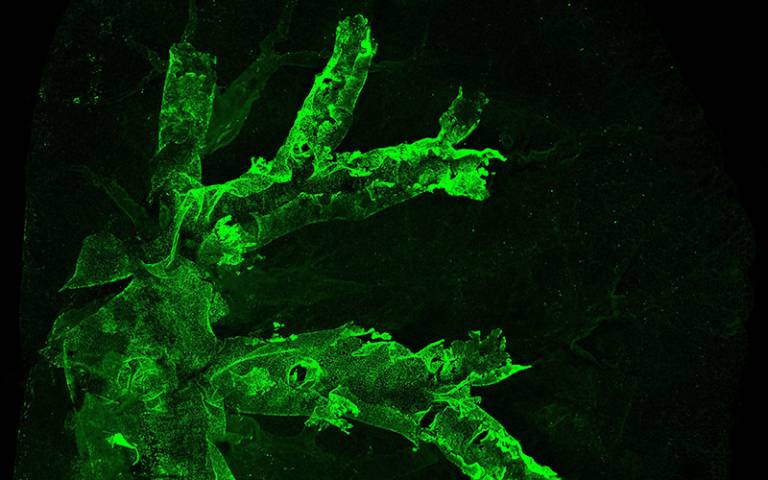
Image of a lung lobe showing cells expressing the basal cell marker Krt5 spreading. Credit: UCL.

In the UK, people at high risk of lung cancer will soon be able to receive the first ever experimental vaccine designed to prevent the disease, in a world-first clinical trial led by researchers at UCL and the University of Oxford.

The research team has been awarded up to £2.06 million from Cancer Research UK, supported by the CRIS Cancer Foundation, to run a clinical trial of LungVax over the next four years.

This phase I trial will investigate the best dose of LungVax to give to people at high risk of lung cancer, as well as looking for any potential side-effects from different doses of the vaccine.

The trial is expected to begin in summer 2026, subject to regulatory approvals.

Professor Mariam Jamal-Hanjani, co-founder and lead for the LungVax clinical trials, from UCL Cancer Institute, UCLH and the Francis Crick Institute, said: “Fewer than 10% of people with lung cancer survive their disease for 10 years or more. That must change, and that change will come from targeting lung cancer at the earliest stages.

“The LungVax clinical trial is the crucial first step in bringing this vaccine to people at the highest risk of the disease. We will be looking carefully at how people respond to the vaccine, how easy it is to deliver, and who might benefit from it most in the future.

“Preventative vaccines will not replace stopping smoking as the best way to reduce the risk of lung cancer. But they could offer a viable route to preventing some cancers from emerging in the first place.”

Lung cancer cells are different from normal cells. They have ‘red flag’ proteins made by cancer-causing mutations within their DNA. These are called neoantigens and tumour associated antigens and appear on the surface of cells at a very early stage of lung cancer formation.

The LungVax vaccine carries a series of genetic instructions which train the immune system to recognise these tumour antigens on the surface of abnormal lung cells. In trialling the vaccine, the aim is to get the immune system to recognise these early abnormal cells, and kill them before they start to become cancer. The vaccine uses technology developed by the University of Oxford during the COVID-19 pandemic to deliver these instructions to the immune system.

Professor Sarah Blagden, co-founder of the LungVax project from the University of Oxford, said: “Lung cancer is lethal and blights far too many lives. Survival has been stubbornly poor for decades. LungVax is our chance to do something to actively prevent this disease.

“Years of research into the biology of cancer, understanding the fundamental changes which occur in the very earliest stages of the disease, will now be put to the test. This funding means that, for the first time, we hope that people will be able to receive LungVax in clinical trials from next year.” 

To find out how safe and effective the vaccine is, the trial will initially focus on people who have been diagnosed with early-stage lung cancer and have had it successfully removed but are at risk of it returning. The vaccine will also be tested in people who are undergoing lung cancer screening as part of the NHS Lung Cancer Screening Programme in England.

If the trial delivers promising results, the vaccine could then be scaled up to larger trials for people at risk of lung cancer.

There are around 48 500 cases of lung cancer every year in the UK. Around 72% of lung cancers are caused by smoking, which is the biggest preventable cause of cancer worldwide.

Graeme Dickie, 55, from Kilbarchan in Renfrewshire, is helping the scientists prepare for the LungVax clinical trial. In 2013, aged 42, he was diagnosed with stage II lung cancer. By 2017, it had progressed to stage IV. He has never smoked. Over the years, he’s undergone surgery to remove part of his left lung, and more than 80 rounds of chemotherapy. When those treatments stopped working, Graeme began a new targeted treatment drug, mobocertinib, that he continues with today.

Graeme said: “I am proof that research saves lives. I have been able to enjoy many more happy years with my family thanks to scientists working hard, year after year, to bring new tests and treatments.

“For me, research is vital. I won’t be able to benefit directly from LungVax personally, but I know that my story will help others to access better interventions at an early stage.”

  • Image of a lung lobe showing cells expressing the basal cell marker Krt5 spreading. Credit: UCL.

Source: University College London

Telltale Chemical in the Breath can Warn of Lung Cancer

Credit: Scientific Animations CC4.0

Exhaled breath contains chemical clues to what’s going on inside the body, including diseases like lung cancer. And devising ways to sense these compounds could help doctors provide early diagnoses — and improve patients’ prospects. In a study in ACS Sensors, researchers report the development of ultrasensitive, nanoscale sensors that in small-scale tests distinguished a key change in the chemistry of the breath of people with lung cancer.

Besides carbon dioxide, people also exhale other airborne compounds. Researchers have determined that declines in one exhaled chemical — isoprene — can indicate the presence of lung cancer. However, to detect such small shifts, a sensor would need to be highly sensitive, capable of detecting isoprene levels in the parts-per-billion (ppb) range. It would also need to differentiate isoprene from other volatile chemicals and withstand breath’s natural humidity. Previous attempts to engineer gas sensors with characteristics like these have focused on metal oxides, including one particularly promising compound made with indium oxide. A team led by Pingwei Liu and Qingyue Wangset out to refine indium oxide-based sensors to detect isoprene at the level at which it naturally occurs in breath.

The researchers developed a series of indium(III) oxide (In2O3)-based nanoflake sensors. In experiments, they found one type, which they called Pt@InNiOx for the platinum (Pt), indium (In) and nickel (Ni) it contains, performed best. These Pt@InNiOx sensors:

  • Detected isoprene levels as low as 2ppb, a sensitivity that far surpassed earlier sensors.
  • Responded to isoprene more than other volatile compounds commonly found in breath.
  • Performed consistently during nine simulated uses.

More importantly, the authors’ real-time analysis of the nanoflakes’ structure and electrochemical properties revealed that Pt nanoclusters uniformly anchored on the nanoflakes catalyzed the activation of isoprene sensing, leading to the ultrasensitive performance.

Finally, to showcase the potential medical use of these sensors, the researchers incorporated the Pt@InNiOnanoflakes into a portable sensing device. Into this device they introduced breath collected earlier from 13 people, five of whom had lung cancer. The device detected isoprene levels lower than 40 ppb in samples from participants with cancer and more than 60 ppb from cancer-free participants. This sensing technology could provide a breakthrough in non-invasive lung cancer screening and has the potential to improve outcomes and even save lives, the researchers say.

Source: American Chemical Society

Lung Cancer Screening Prolongs Lives in Real-world Study

Among US veterans, screening led to earlier lung cancer diagnoses and improved survival.

Small cell lung cancer cells (green and blue) that metastasised to the brain in a laboratory mouse recruit brain cells called astrocytes (red) for their protection. Credit: Fangfei Qu

Among US veterans diagnosed with lung cancer through the Veterans Health Administration healthcare system, those who underwent screening before diagnosis were more likely to be diagnosed with earlier stage disease and had a higher cure rate than those who had not been screened. The findings come from an observational study published by Wiley online in CANCER, a peer-reviewed journal of the American Cancer Society.

Lung cancer is the leading cause of cancer deaths worldwide, and most patients are diagnosed at an advanced stage. Early detection through screening could save lives, and current recommendations state that adults 50–80 years old with at least a 20-pack-year smoking history who currently smoke or have quit within the past 15 years should undergo annual imaging tests for lung cancer.

Such screening has been shown to be beneficial in clinical trials, but there are limited data on the real-world effectiveness of lung cancer screening. To investigate, researchers assessed the impact of screening among patients in the Veterans Health Administration healthcare system diagnosed with lung cancer from 2011–2018.

Among 57,919 individuals diagnosed with lung cancer, 2167 (3.9%) underwent screening before diagnosis. Patients who underwent screening had higher rates of early (stage I) diagnoses compared with those who had no screening (52% versus 27%), lower rates of death from any cause (49.8% versus 72.1%), and death from cancer (41.0% versus 70.3%) over 5 years.

“It is incredible to witness how dedicated national efforts to increase lung cancer screening from the Lung Precision Oncology Program can lead to substantial improvements in lung cancer outcomes,” said co–corresponding author Michael Green, MD, PhD, of the University of Michigan and the Veterans Affairs Ann Arbor Healthcare System. 

Source: Wiley

Radon Gas Contributing to Rise in Lung Cancer among Young Adults

Photo by Vladyslav Cherkasenko on Unsplash

Although lung cancer is traditionally thought of as a “smoker’s disease,” a surprising 15–20% of newly diagnosed lung cancers occur in people who have never smoked, many of whom are in their 40s or 50s.

This concerning rise in non-smoking lung cancer cases is likely linked to long-term, high exposures of radon gas. This colourless, odourless gas is emitted from the breakdown of radioactive material naturally occurring underground that then seeps through building foundations. The gas can linger and accumulate in people’s homes and lungs silently unless they know to test for it.

Although the U.S. Environmental Protection Agency (EPA) recommends regular radon testing and corrective measures to lower exposure levels in homes, a new consumer survey conducted on behalf of The Ohio State University Comprehensive Cancer Center (OSUCCC) showed that a stunning 75% of Americans have not had their homes tested for radon, and over half (55%) are not concerned about radon exposure in their homes, community or schools.

“Anyone with lungs can develop lung cancer, and as a community we should be aware and concerned about radon exposure because it’s thought to be one of the leading causes of lung cancer in never-smokers – and there is something we can do reduce our risk,” said David Carbone, MD, PhD, a thoracic medical oncologist. “There are relatively simple tests to measure radon in the home and actions to reduce radon exposure.”

This includes installing outside the home a radon remediation system that sucks air from the basement, where radon gas typically lingers. Increasing air flow by opening windows and using fans/venting in your home, and sealing cracks in the floors, walls and foundation is also important.

Lung cancer rising in young non-smokers

The No. 1 risk factor for lung cancer is long-term cigarette smoking; however, rates of lung cancer among non-smokers continue to rise. The symptoms of the disease are the same regardless of whether the person has smoked: generally not feeling well or feeling tired all the time, frequent cough, chest pain, wheezing, shortness of breath or coughing up blood. These symptoms happen with other illnesses too, but Carbone notes anyone – regardless of age – who has a lingering symptom that doesn’t resolve despite initial treatment should insist on having it checked out.

Lung cancer screening is currently available only to people at the highest risk for the disease – older adults with a history of heavy smoking.

If detected in its earliest stages, the cure rate for lung cancer can be 90–95%. The bulk of cases, however, are not detected until the disease has spread throughout the lung or to other parts of the body, when treatments aren’t as effective. It is important that anyone deemed at risk for lung cancer get timely screening, and that people who might be at increased risk due to secondhand smoke, radon or occupational exposures (like firefighting) talk to their doctors about testing.

“Your health and the health of your family are the most important things you have. Really push to get your concerns addressed if your symptoms aren’t resolving, even if you don’t fit the typical ‘picture’ of lung cancer. It could truly save your life,” said Carbone.

Requiring radon testing in homes, schools and workplaces

Carbone noted that having high levels of radon exposure at school or work is just as much a health hazard as having high-level exposure in your basement.

He says he strongly supports potential legislation to require radon testing at schools, at places of business and during home sales to help reduce community risk. The effects of radon on your lungs is cumulative and can be delayed by decades.

“So your children playing in your basement or going to school today, exposed to unknown levels of radon, could be at risk for developing lung cancer 10, 20, 30 years from now,” Carbone said. “And because the gas is totally colourless and odourless, you would have no idea you were being exposed unless you knew the importance of proactively testing.”

Source: Ohio State University Wexner Medical Center

The Quest to Repurpose Existing Drugs for Lung Cancer that Metastasised to the Brain

Lung cancer metastasis. Credit: National Cancer Institute

The largest review of papers for brain metastases of lung cancer has found abnormalities in their genetic mutations and for which licensed drugs could be clinically trialled to find out if they could treat the disease. The research led by the University of Bristol and published in Neuro-Oncology Advances also uncovered differences in those mutations between smokers and non-smokers.

Brain metastases most commonly occur from lung and breast cancer, and in the majority of cases are fatal. The genetic mutations in primary lung cancers have been widely studied, but less is known about the changes in the cancer once it has metastasised to the brain.

The research team wanted to find out the genetic changes in brain metastasis from non-small cell lung cancer (NSCLC) and whether there are drugs already available that could potentially be offered to these patients.

The researchers carried out a review from 72 papers of genetic mutations in brain metastasis of NSCLC from 2346 patients’ data on demographics, smoking status, genomic data, matched primary NSCLC, and PD-L1 – a protein found on cancer cells.

The study found the most commonly mutated genes were EGFR, TP53, KRAS, CDKN2A, and STK11.

Common missense mutations – mutations that lead to a single amino acid change in the protein coded by the gene – included EGFR L858R and KRAS G12C

In certain cases the genetic mutations were different in the brain metastasis from the primary lung cancer.

There were also differences in the genetic mutations in smokers versus patients who had never smoked. Brain metastases of smokers versus non-smokers had different missense mutations in TP53 and EGFR, except for L858R and T790M in EGFR, which were seen in both subgroups.

The research team found from the top ten commonly mutated genes which had primary NSCLC data, 37% of the specific mutations assessed were different between primary NSCLC and brain metastases.

The researchers suggest Medicines and Healthcare products Regulatory Agency-approved drugs already licensed could potentially be tested to treat the disease in clinical trials.

The genetic landscape of the different subtypes of NSCLC is well known. TP53 and LRP1B mutations are common to all NSCLC subtypes, but certain subtypes also have specific alterations.

Lung adenocarcinoma is the most common type of lung cancer and has higher frequencies of KRAS, EGFR, KEAP1, STK11, MET, and BRAF somatic mutations – changes that have accumulated in the cancer genome.

Some studies suggested that the genomic landscape of NSCLC in smokers vs non-smokers differ independent of subtype.

One study found EGFR mutations, ROS1 and ALK fusions to be more prevalent in non-smokers, whereas KRAS, TP53, BRAF, JAK2, JAK3 and mismatch repair gene mutations were more commonly mutated in smokers.

Kathreena Kurian, Professor of Neuropathology and Honorary Consultant at North Bristol NHS Trust, Head of the Brain Tumour Research Centre at the University of Bristol and co-author of the paper, said: “Our research recommends that all patients should have their brain metastasis examined for mutations in addition to their primary lung cancer because they may be different.

“This evidence could form the backbone for new clinical trials for patients with brain metastasis in non-small cell lung cancer using drugs that are already available.”

The team suggest the next steps for the research would be to consider whole genome sequencing on brain metastasis to look for other types of mutations, such as, common insertions/deletions for which drugs are already available.

Source: University of Bristol

Lung Cancer Metastases in the Brain Trick Astrocytes for Protection

Small cell lung cancer cells (green and blue) that metastasised to the brain in a laboratory mouse recruit brain cells called astrocytes (red) for their protection. Credit: Fangfei Qu

Lung cancer cells that metastasise to the brain survive by convincing brain cells called astrocytes that they are baby neurons in need of protection, according to a study by researchers at Stanford Medicine published in Nature Cell Biology.

The cancer cells carry out their subterfuge by secreting a chemical signal prevalent in the developing human brain, the researchers found. This signal draws astrocytes to the tumour, encouraging them to secrete other factors that promote the cancer cells’ survival. Blocking that signal may be one way to slow or stop the growth of brain metastases of small cell lung cancer, which account for about 10% to 15% of all lung cancers, the researchers believe.

In the adult brain, astrocytes play a critical role in maintaining nerve function and connectivity. They are also important during brain development, when they facilitate connections between developing neurons.

The researchers studied laboratory mice, human tissue samples and human mini-brains, or organoids, grown in a lab dish to dissect the unique relationship between the cancer cells and their ‘big sister’ astrocytes, which hover nearby and shower them with protective factors.

“Small cell lung cancers are known for their ability to metastasise to the brain and thrive in an environment that is not normally conducive to tumour growth,” said professor of paediatrics and of genetics Julien Sage, PhD. “Our study suggests that these cancer cells reprogram the brain microenvironment by recruiting astrocytes for their protection.”

Professor Sage is the senior author of the study, while postdoctoral scholar Fangfei Qu, PhD, is the lead author.

Invasion of the brain

Small cell lung cancer excels at metastasising to the brain – about 15% to 20% of people already have clusters of cancer cells in their brains when their lung tumours are first diagnosed. As the cancer progresses, about 40% to 50% of patients will develop brain metastases. The problem is so prevalent, and the clinical outcome so dire, that clinicians recommend cranial radiation even before brain metastases have been found.

How and why small cell lung cancer has such an affinity for the brain has been something of a mystery. Brain metastases are rarely biopsied or removed because doing so has not been shown to affect a patient’s survival, and brain surgery is so invasive. Using laboratory mice is also of little help since small cell lung cancers in those animals rarely develop metastases in the brain, perhaps due to subtle biological differences between species.

Small cell lung cancers have another distinguishing feature – they are neuroendocrine cancers, meaning they arise from cells with similarities to both neurons and hormone-producing cells. Neuroendocrine cells link the nervous system with the endocrine system throughout the body, including in the lung.

Sage and his colleagues wondered whether neuronal-associated proteins on the surface of small cell lung cancer cells give them a leg up when the cells first begin to infiltrate the brain.

“We know the brain is full of neurons,” Sage said. “Maybe that’s why these cancer cells with some neuronal traits are happy in the brain and are accepted into that environment.”

Qu and Sage developed a way to inject mouse small cell lung cancer cells grown in the laboratory into the brains of mice to spark the development of brain tumours. They saw that astrocytes, a subtype of glial cell, flocked to the infant tumours and began to churn out proteins critical during brain development, including factors that stimulate nerve growth.

A plethora of astrocytes

A similar call happens in human brains, they noted: Brain tissue samples from people who had died of metastatic small cell lung cancer, shared by professor of pathology and paper co-author Christina Kong, MD, had many more protective astrocytes in the interior of the tumours than did metastases of melanoma, breast cancer and another type of lung cancer called adenocarcinoma.

Qu worked with assistant professor of paediatrics and co-author Anca Pasca, MD, to fuse aggregates of small cell lung cancer, lung adenocarcinoma or breast cancer cells with what are called cortical organoids – in vitro-grown clumps of brain cells including neurons and astrocytes that begin to mimic the organisation and connectivity of a human cortex. Within 10 days, many more protective astrocytes had infiltrated the small cell lung cancer pseudo-tumours than the adenocarcinoma or breast cancer.

“This showed us that the astrocytes actively move toward the small cell lung cancer cells, rather than simply being engulfed by the growing tumour,” Sage said. “What’s more exciting, though, is that these organoids, or mini-brains, realistically model the developing human brain. So, we’re no longer relying on a mouse model. It’s a perfect system to study brain metastases.”

Further research showed that the small cell lung cancer cells summon protective astrocytes by secreting a protein called Reelin that mediates the migration of neuronal and glial cells during brain development. Triggering Reelin expression in mouse breast cancer cells injected into the brain significantly increased the number of astrocytes in the resulting tumours in the mice, and the tumours were larger than in control animals injected with cells with low Reelin expression.

The apparent reliance of the cancer cells on chemical signals and responses specific to the developing brain may give clues for the development of future therapies, Sage believes.

“Some of these signals may not be as relevant or as highly expressed in the adult brain,” Sage said. “As a result, perhaps they could still be targeted to slow or prevent brain metastases without harming a normal brain. This might be an important window of opportunity for therapy.”

Source: Stanford Medicine

Why Lung Cancer Doesn’t Respond Well to Immunotherapy

A new MIT study explains why dendritic cells (green) in lymph nodes that drain from the lungs fail to stimulate killer T cells (white) to attack lung tumours.
Credits: MIT/ Courtesy of the researchers

Immunotherapy works well against some types of cancer, but it has shown mixed success against lung cancer. A new study from MIT helps to shed light on why the immune system mounts such a lacklustre response to lung cancer, even after treatment with immunotherapy drugs. In a study of mice, the researchers found that bacteria naturally found in the lungs help to create an environment that suppresses T-cell activation in the lymph nodes near the lungs.

The researchers did not find that kind of immune-suppressive environment in lymph nodes near tumours growing near the skin of mice. They hope that their findings could help lead to the development of new ways to rev up the immune response to lung tumours.

“There is a functional difference between the T-cell responses that are mounted in the different lymph nodes. We’re hoping to identify a way to counteract that suppressive response, so that we can reactivate the lung-tumour-targeting T cells,” says Stefani Spranger, the Howard S. and Linda B. Stern Career Development Assistant Professor of Biology, a member of MIT’s Koch Institute for Integrative Cancer Research, and the senior author of the new study.

MIT graduate student Maria Zagorulya is the lead author of the paper, which appears today in the journal Immunity.

Failure to attack

For many years, scientists have known that cancer cells can send out immunosuppressive signals, which leads to a phenomenon known as T cell exhaustion. The goal of cancer immunotherapy is to rejuvenate those T cells so they can begin attacking tumours again.

One type of drug commonly used for immunotherapy involves checkpoint inhibitors, which remove the brakes on exhausted T cells and help reactivate them. This approach has worked well with cancers such as melanoma, but not as well with lung cancer.

Spranger’s recent work has offered one possible explanation for this: She found that some T cells stop working even before they reach a tumour, because of a failure to become activated early in their development. In a 2021 paper, she identified populations of dysfunctional T cells that can be distinguished from normal T cells by a pattern of gene expression that prevents them from attacking cancer cells when they enter a tumour.

“Despite the fact that these T cells are proliferating, and they’re infiltrating the tumour, they were never licensed to kill,” Spranger says.

In the new study, her team delved further into this activation failure, which occurs in the lymph nodes, which filter fluids that drain from nearby tissues. The lymph nodes are where ‘killer T cells’ encounter dendritic cells, which present antigens (tumour proteins) and help to activate the T cells.

To explore why some killer T cells fail to be properly activated, Spranger’s team studied mice that had tumours implanted either in the lungs or in the flank. All of the tumours were genetically identical.

The researchers found that T cells in lymph nodes that drain from the lung tumours did encounter dendritic cells and recognise the tumour antigens displayed by those cells. However, these T cells failed to become fully activated, as a result of inhibition by another population of T cells called regulatory T cells.

These regulatory T cells became strongly activated in lymph nodes that drain from the lungs, but not in lymph nodes near tumours located in the flank, the researchers found. Regulatory T cells are normally responsible for making sure that the immune system doesn’t attack the body’s own cells. However, the researchers found that these T cells also interfere with dendritic cells’ ability to activate killer T cells that target lung tumours.

The researchers also discovered how these regulatory T cells suppress dendritic cells: by removing stimulatory proteins from the surface of dendritic cells, which prevents them from being able to turn on killer T cell activity.

Microbial influence

Further studies revealed that the activation of regulatory T cells is driven by high levels of interferon gamma in the lymph nodes that drain from the lungs. This signalling molecule is produced in response to the presence of commensal bacterial – bacteria that normally live in the lungs without causing infection.

The researchers have not yet identified the types of bacteria that induce this response or the cells that produce the interferon gamma, but they showed that when they treated mice with an antibody that blocks interferon gamma, they could restore killer T cells’ activity.

Interferon gamma has a variety of effects on immune signalling, and blocking it can dampen the overall immune response against a tumour, so using it to stimulate killer T cells would not be a good strategy to use in patients, Spranger says. Her lab is now exploring other ways to help stimulate the killer T cell response, such as inhibiting the regulatory T cells that suppress the killer T cell response or blocking the signals from the commensal bacteria, once the researchers identify them.

Reprinted with permission of MIT News

Towards Larger, More Representative Lung Cancer Clinical Trials

Source: NCI

Filling clinical trials and enrolling sufficiently diverse, representative groups of patients, has long been a challenge, partly due to stringent participation guidelines. In an effort to attain larger and more diverse trial groups, an international team of researchers and policymakers has written new recommendations on how to determine eligibility criteria for lung cancer clinical trials.

The group was led in part by David Gerber, MD, along with representatives from the Food and Drug Administration (FDA), National Cancer Institute, European Medicines Agency, pharmaceutical companies, and the LUNGevity Foundation.

The recommendations, published today in JAMA Oncology, offer the first publicly available outline of upcoming FDA draft guidance on lung cancer clinical trials that are expected to make it easier to include more patients.

“This paper is the public’s first look at the FDA’s proposed changes to how we determine who can participate in a lung cancer clinical trial,” said Professor Gerber in the Hematology/Oncology Division at UTSW. “If these changes are successful, they could make clinical trials for lung cancer as well as other cancers more powerful and more representative.”

Ensuring that people from diverse backgrounds join clinical trials is key to properly evaluating how a new treatment will work among patients of all races and ethnicities. But today, only about 5% of all cancer patients enrol in a clinical trial, and only 11% of cancer clinical trial participants identify as a racial or ethnic minority.

For patients with cancer, participation in clinical trials requires not just a decision to try an experimental treatment, but time and energy spent understanding the trial, enrolling in it, and often attending extra testing or clinic appointments. Many researchers agree that complicated, inconsistent, poorly explained, and overly strict eligibility requirements to join a cancer clinical trial exacerbate this problem and are a key reason for the low number of underrepresented minorities in clinical trials.

“So many clinical trials never finish enrollment, close prematurely, or don’t recruit a population that lets researchers generalise the results,” Dr. Gerber said. “I think there’s widespread recognition that eligibility criteria have become too stringent.”

Addressing this for one cancer subtype, advanced non-small cell lung cancer (NSCLC), – the LUNGevity Foundation convened a roundtable discussion with experts from academia, industry, and regulatory bodies. The team assembled a prioritised list of eligibility categories that should be included in the descriptions of all NSCLC clinical trials and recommended criteria for each category. Some suggestions were more lenient than what has typically been included in previous NSCLC trial eligibility criteria; for instance, the team recommended that most patients with prior or concurrent cancers, most patients with brain metastases, and most patients with mild liver impairment – all of whom would likely have been excluded in the past – still be included in trials.

The team also suggested that these categories be clearly laid out on public websites advertising clinical trials in an easily searchable format.

The FDA will be releasing draft guidance on NSCLC clinical trials in the near future and hold a public comment period before finalising them. Other interdisciplinary teams have already convened to standardise eligibility requirements for clinical trials of other cancer types.

If the new guidelines prove effective, Prof Gerber said that clinical trials will likely be easier to fill and provide more complete and timely data on new cancer interventions.

“If you can involve more patients in clinical trials, you’re more likely to complete those trials quickly. That’s going to lead to new treatments faster,” he said.

Source: UT Southwestern Medical Center

New KRAS-mutated Lung Cancer Treatment Effective in 43% of Cases

MRI or CT machine
Photo by Mart Production on Pexels

Nearly 43% of patients with non-small cell lung cancer (NSCLC) that had a specific KRAS mutation responded to the experimental drug adagrasib, which also showed activity against metastases, according to results of a study published in the New England Journal of Medicine.

Mutations in the potent oncogene known as KRAS occur in about one in four patients with NSCLC, and approximately 13% of NSCLC patients’ tumours are driven by a specific KRAS mutation called G12C. KRAS mutations have long been considered nearly impossible to attack with targeted drugs after many years of research attempts. However, in 2021 a targeted drug, sotorasib, became the first drug approved by the Food and Drug Administration for NSCLC patients with the G12C mutation, based on a clinical trial showing a 36% response rate in those patients after having initially received treatment with chemotherapy and a PD-1 immune checkpoint inhibitor.

Reporting the results of a new phase 2 trial, investigators led by Pasi Jänne, MD, PhD, director of the Lowe Center for Thoracic Oncology at Dana-Farber, showed that treatment with a different KRASG12C mutant inhibitor, adagrasib, yielded a 42.9% objective response rate and a median overall survival rate of 12.6 months in a cohort of 112 patients who had previously received both chemotherapy and immunotherapy with a PD-1 immune checkpoint blocker. Notably, adagrasib treatment also achieved a 33.3% response rate in 33 patients who had stable metastatic lesions in the brain and central nervous system that had spread from the lung tumours.

“These data highlight that inhibiting KRASG12C can lead to clinically meaningful benefits to NSCLC patients with this form of lung cancer,” said Dr Jänne. “Brain metastases are challenging to treat and having a pharmacologic agent that shows activity in this setting is an advancement and movement in the right direction.”

Patients with KRASG12C have had few options after initial chemotherapy and immunotherapy stopped working. In the new clinical trial of adagrasib, taking the oral drug twice daily resulted in a median progression-free survival (the time patients lived before the cancer began to worsen again) was 6.5 months and the median response duration was 8.5 months.

Because the KRASG12C tumor cells typically continue to proliferate, researchers believe sustained inhibition with drugs may be necessary. Thus, adagrasib was optimised for favourable properties including a long half-life of 23 hours and the ability to penetrate the central nervous system. Clinical activity with adagrasib has been shown in patients with other KRASG12C tumors, including colorectal, pancreatic, biliary tract, and other cancers.

Source: Dana-Farber Cancer Institute