Tag: dementia

Link Found Between Dementia Indicators and Metabolism

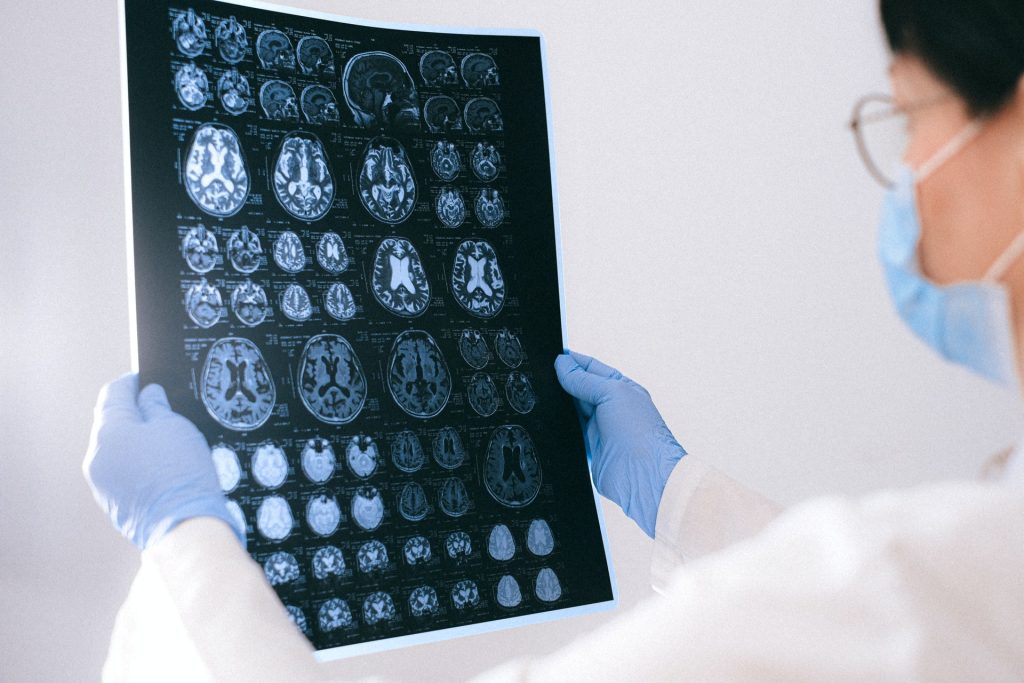
MRI images of the brain
Photo by Anna Shvets on Pexels

A world-first study published in the journal Diabetes, Obesity and Metabolism, has uncovered an association between metabolism and dementia-related brain measures, providing valuable insights about the disease.

Analysing UK Biobank data from 26 239 people, University of South Australia researchers found that those with obesity related to liver stress, or to inflammation and kidney stress, had the most adverse brain findings.

The study measured associations of six diverse metabolic profiles and 39 cardiometabolic markers, using MRI brain scan measures of brain volume, brain lesions, and iron accumulation, to identify early risk factors for dementia.

Participants with metabolic profiles associated with obesity were more likely to have adverse MRI profiles showing lower hippocampal and grey matter volumes, greater burden of brain lesions, and higher accumulation of iron.

UniSA researcher, Dr Amanda Lumsden, says the research adds a new layer of understanding to brain health.

“Dementia is a debilitating disease that affects more than 55 million people worldwide,” Dr Lumsden said.

“Understanding metabolic factors and profiles associated with dementia-related brain changes can help identify early risk factors for dementia.

“In this research, we found that adverse neuroimaging patterns were more prevalent among people who had metabolic types related to obesity.

“These people also had the highest Basal Metabolic Rate (BMR) -how much energy your body requires when resting in order to support its basic functions — but curiously, BMR seemed to contribute to adverse brain markers over and above the effects of obesity.”

Senior investigator Professor Elina Hyppönen said that the finding presents a new avenue for understanding brain health.

“This study indicates that metabolic profiles are associated with aspects of brain health. We also found associations with many individual biomarkers which may provide clues into the processes leading to dementia,” said Prof Hyppönen.

“The human body is complex, and more work is now needed to find out exactly why and how these associations arise.”

Source: University of South Australia

7 Lifestyle Habits may Reduce Dementia Risk in Diabetes

Old man jogging
Photo by Barbra Olsen on Pexels

A combination of seven healthy lifestyle habits including sleeping seven to nine hours daily, regular exercise and frequent social contact was associated with a lower risk of dementia in people with type 2 diabetes, according to a study published online in the journal Neurology.

“Type 2 diabetes is a worldwide epidemic that affects one in 10 adults, and having diabetes is known to increase a person’s risk of developing dementia,” said study author Yingli Lu, MD, PhD, of Shanghai Jiao Tong University School of Medicine in China. “We investigated whether a broad combination of healthy lifestyle habits could offset that dementia risk and found that people with diabetes who incorporated seven healthy lifestyle habits into their lives had a lower risk of dementia than people with diabetes who did not lead healthy lives.”

For the study, researchers looked at a health care database in the United Kingdom and identified 167 946 people 60 or older with and without diabetes who did not have dementia at the start of the study. Participants completed health questionnaires, provided physical measurements and gave blood samples. For each participant, researchers calculated a healthy lifestyle score of 0 to 7, with one point for each of 7 healthy habits. Habits included no current smoking, moderate alcohol consumption of up to one drink a day for women and up to two a day for men, regular weekly physical activity of at least 2.5 hours of moderate exercise or 75 minutes of vigorous exercise, and 7 to nine hours of sleep daily.

Another factor was a healthy diet including more fruits, vegetables, whole grains and fish and fewer refined grains, processed and unprocessed meats. The final habits were being less sedentary, which was defined as watching television less than four hours a day, and frequent social contact, which was defined as living with others, gathering with friends or family at least once a month and participating in social activities at least once a week or more often. Researchers followed participants for an average of 12 years. During that time, 4,351 people developed dementia. A total of 4% of the people followed only zero to two of the healthy habits, 11% followed three, 22% followed four, 30% followed five, 24% followed six and 9% followed all seven. People with diabetes who followed two or fewer of the seven healthy habits were four times more likely to develop dementia than people without diabetes who followed all seven healthy habits. People with diabetes who followed all of the habits were 74% more likely to develop dementia than those without diabetes who followed all the habits. For people with diabetes who followed all the habits, there were 21 cases of dementia for 7474 person-years, or 0.28%.

For people with diabetes who followed only two or fewer habits, there were 72 cases of dementia for 10 380 person years or 0.69%. After adjusting for factors like age, education and ethnicity, people who followed all the habits had a 54% lower risk of dementia than those who followed two or fewer. Each additional healthy habit people followed was associated with an 11% decreased risk of dementia. The association between healthy lifestyle score and dementia risk was not affected by medications people took or how well they controlled their blood sugar.

“Our research shows that for people with type 2 diabetes, the risk of dementia may be greatly reduced by living a healthier lifestyle,” Dr Lu said. “Doctors and other medical professionals who treat people with diabetes should consider recommending lifestyle changes to their patients. Such changes may not only improve overall health, but also contribute to prevention or delayed onset of dementia in people with diabetes.” A limitation of the study was that people reported on their lifestyle habits and may not have remembered all details accurately. Lifestyle changes over time were also not captured.

Source: American Academy of Neurology

Newly Discovered Neuron Type may Help Explain Memory Formation

A healthy neuron.
A healthy neuron. Credit: NIH

Scientists publishing in Neuron have described how a newly discovered neuron type may be involved with the formation of memory in the hippocampus, which is marked by high-frequency electrical events.

It is known that memory is represented by changes in the hippocampus. One of the well-established changes in the hippocampus that has been associated with memory is the presence of so-called sharp wave ripples (SWR). These are brief, high-frequency electrical events generated in the hippocampus, and they are believed to represent a major event occurring in the brain in the so-called episodic memory, such as recalling a life event or a friend’s phone number.

However, what happens in the hippocampus when SRWs are generated has not been well understood.

Now a new study sheds light on the existence of a neuron type in the mouse hippocampus that might be a key to better understanding of episodic memory.

Professor Marco Capogna and Assistant professor Wen-Hsien Hou have contributed to the discovery of the novel neuron that is associated with sharp wave ripples and memory.

Possible disruption in dementia and Alzheimer’s

The study describes the novel neuron type in the hippocampus.

“We have found that this new type of neuron is maximally active during SWRs when the animal is awake – but quiet – or deeply asleep. In contrast, the neuron is not active at all when there is a slow, synchronized neuronal population activity called “theta” that can occur when an animal is awake and moves or in a particular type of sleep when we usually dream,” Prof Capogna said.

Because of this dichotomic activity, this novel type of neuron is named theta off-ripples on (TORO).

“How come, TORO-neurons are so sensitive to SWRs? The paper tries to answer this question by describing the functional connectivity of TORO-neurons with other neurons and brain areas, an approach called circuit mapping. We find that TOROs are activated by other types of neurons in the hippocampus, namely CA3 pyramidal-neurons and are inhibited by inputs coming from other brain areas, such as the septum,” Prof Capogna explained.

“Furthermore, the study finds that TOROs are inhibitory neurons that release the neurotransmitter GABA. They send their output locally – as most GABAergic neurons do – within the hippocampus, but also project and inhibit other brain areas outside the hippocampus, such as the septum and the cortex. In this way, TORO-neurons propagate the SWR information broadly in the brain and signal that a memory event occurred,” he concluded.

The team has monitored the activity of the neuron by using electrophysiology – a technique that detects activity of the neurons by measuring voltage versus time, and by using imaging that detects activity by measuring changes in calcium signalling inside the neurons.

Demonstrating a causal link between the activity of TORO-nerve cells and memory will be the next step, and exploring whether inhibition of TORO-neurons and sharp wave ripples occurs in dementia and Alzheimer’s diseases. 

Source: Aarhus University

Soluble Fibre is Associated with Lower Dementia Risk

Source: Pixabay

Drawing on a decades-long cohort study, researchers in Japan have found that higher levels of dietary fibre, particularly soluble fibre, are associated with a lower risk of dementia.

Fibre is known to have vital importance for a healthy digestive system and also has cardiovascular benefits like reduced cholesterol. In a new study published in Nutritional Neuroscience, researchers have shown that a high-fibre diet is also associated with a reduced risk of developing dementia, adding to evidence that fibre is also important for a healthy brain.

“Dementia is a devastating disease that usually requires long-term care,” says lead author of the study Professor Kazumasa Yamagishi. “We were interested in some recent research which suggested that dietary fibre may play a preventative role. We investigated this using data that were collected from thousands of adults in Japan for a large study that started in the 1980s.”

Between 1985 and 1999, 3739 participants who were generally healthy and aged between 40–64 completed dietary information surveys. They were then followed up from 1999 until 2020, and it was noted whether they developed dementia that required care.

Participants were assigned into four groups according to the amount of fibre in their diets. They found that the groups who ate higher levels of fibre had a lower risk of developing dementia.

The team also examined whether there were differences for the two main types of fibre: soluble and insoluble fibres. Soluble fibres, found in foods such as oats and legumes, are important for the beneficial bacteria that live in the gut as well as providing other health benefits. Insoluble fibres, found in whole grains, vegetables, and some other foods, are known to be important for bowel health. The researchers found that the link between fibre intake and dementia was more pronounced for soluble fibres.

The team has some ideas as to what might underlie the link between dietary fibre and the risk of dementia.

“The mechanisms are currently unknown but might involve the interactions that take place between the gut and the brain,” said Professor Yamagishi. “One possibility is that soluble fibre regulates the composition of gut bacteria. This composition may affect neuroinflammation, which plays a role in the onset of dementia. It’s also possible that dietary fibre may reduce other risk factors for dementia, such as body weight, blood pressure, lipids, and glucose levels. The work is still at an early stage, and it’s important to confirm the association in other populations.”

Source: University of Tsukuba

In Dementia, De-cluttering is of Little Value

Image by Mar Lezhava on Unsplash

A new study has shown that a clutter-free environment may not help people living with dementia carry out daily tasks.

Researchers studied whether people with dementia were better able to carry out tasks, such as making a cup of tea, at home amidst their normal clutter or in a clutter-free environment. Surprisingly, participants with moderate dementia performed better when surrounded by their usual clutter. But the different environments made no difference to people with mild and severe dementia, who were able to perform at the same level in both settings. The findings were published in Alzheimer Disease & Associated Disorders.

Prof Eneida Mioshi, from the University of East Anglia. said: “As dementia progresses, people gradually lose their ability to carry out daily tasks due to changes in their cognitive, perceptual and physical abilities. Participation in daily tasks could then be improved by adapting the person’s environment.

“To this end, we wanted to investigate the role of clutter in activity participation, given the potential to use de-cluttering to support people with dementia to continue to be independent.

“Environmental clutter has been defined as the presence of an excessive number of objects on a surface or the presence of items that are not required for a task. It is generally assumed that a person with dementia will be better-able to carry out daily tasks when their home space is tidy and clutter free. However there has been very little research to really test this hypothesis.

“We wanted to see whether clutter was negatively affecting people with dementia. So we studied how people at different stages of dementia coped with carrying out daily tasks at home, surrounded by their usual clutter, compared to in a clutter-free setting – a specially designed home research lab.”

Occupational therapist and PhD student Julieta Camino carried out the study with 65 participants. They were grouped into those with mild, moderate and severe dementia, and were asked to carry out daily tasks including making a cup of tea and making a simple meal, both at their own home and at UEA’s specially designed NEAT research bungalow, a fully furnished research facility that feels just like a domestic bungalow. 

The researchers evaluated performance of activities in both settings, and also measured the amount of clutter in the participants’ homes. Meanwhile the NEAT home setting was completely clutter free.

Source: University of East Anglia

Elderly with Mild Dementia Benefit from Smartphone Reminder Apps

Source: Miika Luotio on Unsplash

Results from a new study show that older adults with mild dementia can learn to use smartphone memory aids to help them remember to complete everyday tasks that are important to their quality of life.

The study, which was published in the Journal of the American Geriatrics Society, recruited 52 older adults with mild cognitive impairment or mild dementia, and were coached on how to use a digital voice recorder app or a reminder app.

After a four-week intervention, participants reported improvements in performing daily intentions. They also performed relatively well when the investigators assigned them with tasks, with performance levels favouring the reminder app in week 1, but by week 4 changing to favour the digital voice recorder app. Greater usage of the digital recorder or reminder apps was associated with better memory and greater improvements in activities of daily living.

The researchers note that smartphone aids are free and widely available, and they should be shared with patients and caregivers to help support quality of life and independent functioning.

“There is this pervasive notion that older adults dislike technology, but we found that participants enjoyed learning to use smartphone memory apps and were able to improve their daily prospective memory performance,” said lead author Michael K. Scullin, PhD, of Baylor University. “Technology companies have an opportunity to improve broad adoption of smartphone memory aids in older adults and persons with mild stages of Alzheimer’s disease by tailoring the interface and user experience of their reminder apps to this demographic and by incorporating age diversity into their marketing campaigns. With the help of smart technology companies, we can make great headway on improving functioning and quality of life for families impacted by Alzheimer’s disease and related dementias.”

Source: Wiley

No Dementia Risk with Hormone Replacement Therapy

Photo by Loren Joseph on Unsplash

A large UK study found that use of menopausal hormone therapy (MHT, also known as hormone replacement therapy, HRT) is not associated with increased dementia risk.

The study, published in the BMJ, found within the subgroup of women with a specific diagnosis for Alzheimer’s disease, a slight increasing risk association was found with use of oestrogen-progestogen treatments, but only seen for long-term usage (5 years or more).

This study “brings clarity to previously inconsistent findings and should reassure women in need of menopausal hormonal therapy,” said the researchers.

MHT relieves menopausal symptoms such as hot flushes, sleep disturbance, mood swings, memory losses and depression. Treatment includes oral tablets with oestrogen only, or oestrogen and progestogen combined, as well as patches, gels and creams.

Early signs of dementia are similar to some menopausal symptoms. Research has shown a beneficial link between oestrogen and age-related brain decline. However, in the largest trial of MHT, the Women’s Health Initiative Memory Study, an increased dementia risk was found among users of oestrogen-progestogen treatments. A recent study picked up a possible link to Alzheimer’s disease among users of both oestrogen-only and oestrogen-progestogen treatments, though the study has some issues.

To address this uncertainty, researchers set out to investigate the risks of developing dementia for women using commonly available menopausal hormone therapy treatments.

They used two UK primary care databases to analyse MHT prescriptions for the 118 501 women aged 55 and older diagnosed with dementia between 1998 and 2020 (cases), and 497 416 matched women without dementia (controls).

After adjusting for confounding factors, no overall associations were found between use of hormone therapy and risk of dementia, regardless of hormone type, application, dose, or duration of treatment. Only a slightly decreased risk of dementia was found in one subgroup: those under 80 years who had been taking oestrogen-only therapy for 10 years or more.
Analysis of cases with a specific diagnosis of Alzheimer’s disease showed a slight increase in risk associated with oestrogen-progestogen therapy. This rose gradually with each year of exposure, reaching an average 11% increased risk for use of between 5 and 9 years and an average 19% for use of 10 years or more, equivalent to, respectively, five and seven extra cases per 10 000 woman years.

As this is an observational study it cannot establish cause, and some limitations include incomplete recording of menopausal symptoms, particularly for women registered after their menopause. However, its large size counts in its favour.
According to the researchers, this study provides the most detailed estimates of risk for individual treatments, and their results are in line with existing concerns in guidelines about long term exposures to combined hormone therapy treatments.

“The findings will be helpful to policy makers, doctors, and patients when making choices about hormone therapy,” they concluded.

The findings do not change the recommendation that menopausal hormone therapy should not be used to prevent dementia, US researchers commented in a linked opinion article. However, it is helpful for providers to put dementia findings in context for patients, they added.

“The primary indication for hormone therapy continues to be the treatment of vasomotor symptoms, and the current study should provide reassurance for women and their providers when treatment is prescribed for that reason,” they concluded.

Source: News-Medical.Net

Study Uncovers Assortment of New Biomarkers for Dementia

Source: National Cancer Institute on Unsplash

An international study identified 15 novel biomarkers that are linked to late-onset dementias. These protein biomarkers predict cognitive decline and subsequent increased risk of dementia 20 years before the disease onset. 

The proteins identified by the study are involved with immune system dysfunction, blood-brain-barrier dysfunction, vascular pathologies, and central insulin resistance. Six of these proteins can be modified with currently available medications.  

“These findings provide novel avenues for further studies to examine whether drugs targeting these proteins could prevent or delay the development of dementia,” explained lead author Joni Lindbohm MD, PhD from the University College London and University of Helsinki.

The study findings have been published in Alzheimer’s & Dementia: The Journal of the Alzheimer’s Association.

Pathophysiological research on dementia aetiology has focused on amyloid beta and tau proteins, but thus far prevention and treatment trials targeting these biomarkers have been unsuccessful. This has spurred the search for other potential mechanisms that could predispose to dementia. Recent development of scalable platforms has made it possible to analyse a wide range of circulating proteins, which may reveal novel dementia-linked biological processes.

In this study, the researchers analysed proteins with a novel large-scale protein panel from stored blood samples of the British Whitehall II and US Atherosclerosis Risk in Communities (ARIC) study collected 20 years ago. Using a panel of 5000 proteins, the researchers identified proteins in plasma that predicted cognitive decline in 5-yearly screenings and subsequent onset of clinical dementia. The 15 proteins that were identified were predictive of dementia in both the British and US cohorts.

“This new study is the first step in our 5-year Wellcome Trust funded research programme. We will next examine whether the identified proteins have a causal association with dementia, and whether they are likely to be modifiable, and druggable”, said study author Professor Mika Kivimäki, Director of the Whitehall II study at University College London.

The research programme ultimately aims to identify novel drug targets for dementia prevention.

Source: EurekAlert!

Sustained Antipsychotic Benefits of Pimavanesirn Shown in Study

Photo by Kindel Media from Pexels

Evidence of the sustained benefits of an investigational antipsychotic treatment for people with dementia-related psychosis has been published.

Up to half of the 45 million people worldwide who are living with Alzheimer’s disease will experience psychotic episodes, a figure that is even higher in some other forms of dementia. Psychosis is linked to a faster deterioration in dementia, and currently there is no safe and effective treatment for it. Widely-used antipsychotics have significant drawbacks in people with dementia, leading to sedation, falls and increased risk of deaths.

Pimavanserin works by blocking serotonin 5HT2A receptors, with no interaction with dopamine receptors. In the US, it is licensed to treat hallucinations and delusions in people with Parkinson’s disease psychosis.

To test this drug, a clinical trial was conducted in 392 people with psychosis associated with Alzheimer’s disease, Parkinson’s disease, Lewy body, frontotemporal, or vascular dementia. All participants were given pimavanserin for 12 weeks, with those reaching a certain level of symptom improvement were then assigned to pimavanserin or placebo for up to 26 weeks. Due to positive efficacy results however, the trial was concluded early. 

Of the 351 participants, 217 (61.8%) had a sustained initial treatment benefit, of whom 112 were assigned to placebo and 105 to pimavanserin. Relapse occurred in 28/99 (28.3%) of the placebo group, compared to 12/95 (12.6%) of the pimvanserin group, with pimvanserin more than halving the relapse rate and significantly improving the sustained benefit.

Professor Clive Ballard, Executive Dean of the University of Exeter Medical School, said: “Psychosis affects up to half of all people with dementia, and it’s a particularly distressing symptom – yet there’s currently no safe and effective treatment. Currently used antipsychotics are known to cause harms, and best practice guidelines recommend prescribing for no longer than 12 weeks for people with dementia as a result. We urgently need alternatives. It’s exciting that the relapse rate in the pimavanserin group was lower than the placebo group, indicating that the treatment benefits may be sustained over time. We now need longer and larger scale trials to explore this further.”

The trial found headache, urinary tract infection and constipation occurred more frequently in the pimavanserin group, but there was no increase in mortality or the other serious events, such as stroke, which are seen in other antipsychotics.

The full paper is published in the New England Journal of Medicine.

Source: EurekAlert!

Lifestyle Changes Shown to Reduce Risk of Dementia

Photo by Ketut Subiyanto from Pexels

After almost two decades, a new drug for Alzheimer’s disease has been approved in the US. However, some experts say it doesn’t really work — only treating amyloid plaques which are thought to cause the disease — and worry that it may cost a lot.

The amount of attention around this news reflects the importance of preventing dementia, with its devastating toll on families and patients. But millions of adults could lower their chances of needing such a drug by taking preventative measures.

That’s why a national panel of experts including the University of Michigan’s Deborah Levine, MD, MPH, recently published a guide for primary care providers on this topic as an official Scientific Statement from the American Heart Association.

People dread Alzheimer’s disease, she said. Helping people understand that they can prevent or slow future dementia by taking specific steps now could motivate them to increase their healthy behaviours for a positive effect.

The first step is to recognise that dementia risk is higher among people with seven major modifiable risk factors.

These are: depression, hypertension, physical inactivity, diabetes, obesity, hyperlipidaemia, poor diet, smoking, social isolation, excessive alcohol use, sleep disorders and hearing loss. Addressing each of these factors can, to varying extents, help reduce the risk of developing dementia, a fact backed by decades of research.

The second step is using medication, lifestyle change and other interventions to help patients reduce their dementia risk.

“Dementia is not inevitable,” said Dr Levine, a primary care provider at the University of Michigan Health, part of Michigan Medicine. “Evidence is growing that people can better maintain brain health and prevent dementia by following healthy behaviours and controlling vascular risk factors.”

These strategies can help preserve cognitive function and lower risk for heart attacks and strokes, said Dr Levine, who heads the Cognitive Health Services Research Program and sees patients at the Frankel Cardiovascular Center.

“We need to address the significant disparities that lead women, Black, Hispanic and less-educated Americans to have a much higher risk of dementia,” said Levine, a member of the U-M Institute for Healthcare Policy and Innovation.

She added that it’s never too late in life to start working on cognitive risk factor control.

“We have no treatments that will halt dementia – so it’s important to protect your brain health.”

Source: University of Michigan