Tag: antiretroviral therapy

Too Few Children with HIV are Virally Suppressed

Photo by sergey mikheev on Unsplash

Globally, less than two thirds of children and adolescents living with HIV who are receiving treatment are virally suppressed, according to new research published in The Lancet HIV.

Viral suppression [PDF] for HIV means that treatments are protecting health and preventing the transmission of HIV to others. UNAIDS has set a target of achieving 95% viral suppression among all people living with HIV on treatment by 2030.

“We estimate viral suppression one, two and three years after people start taking antiviral treatment, so that we can understand how well the treatments are working over time,” said Professor Matthew Law from the Kirby Institute.

“The data among adults on treatment in our studies show that viral suppression was achieved in an estimated 79% of adults at one year, and 65% at three years. However, viral suppression is poorer among children, at an estimated 64% at one year and 59% at three years.”

Senior study author, Dr Azar Kariminia from the Kirby Institute, said there are unique barriers to achieving viral suppression for children and adolescents. “It can be challenging for them to take treatment regularly, and children rely on caregivers who are often having to manage their own medical needs. There are also a range of factors that stem from stigma and discrimination, including a fear of disclosing the child’s HIV status.”

For this study, the researchers analysed data from 21 594 children/adolescents and 255 662 adults from 148 sites in 31 countries who initiated treatment between 2010 and 2019.

Dr Annette Sohn, from amfAR’s TREAT Asia program, is Co Principal Investigator for IeDEA Asia-Pacific (along with Prof. Law). She says that “while there has been substantial progress in the global response to HIV, the needs of children and adolescents often fall behind those of adults. Our efforts must extend beyond ensuring access to paediatric medicines to address the social and developmental challenges they face in growing up with HIV if we are to achieve the WHO targets by 2030.”

Viral load testing is essential to find out whether HIV treatments are working effectively. It is recommended by WHO at six and 12 months following the initiation of treatment, and then every 12 months thereafter. While viral load testing is common in high-income countries, scaling up accessible viral load testing in resource-limited settings remains a challenge.

With Australian government funding, the Kirby Institute and the Papua New Guinea Institute of Medical Research (PNGIMR) are partnering with the PNG government and a consortium of partners are implementing a program called ‘ACT-UP PNG’ which will scale up HIV viral load testing in two provinces with high HIV rates.

“Our work is ensuring that infants and children are afforded the same access to testing and treatment as other people with HIV,” says Dr Janet Gare from the PNGIMR and a Co-Principal Investigator on ACT-UP-PNG.

Instead of doing viral load testing in distant laboratories, ACT-UP PNG provides same-day molecular point-of-care testing in HIV clinics.

“This brings HIV viral load testing closer to patients, which currently includes children aged 10 and older, and adolescents,” says Dr Gare. “However, we are also pioneering the implementation of a diagnostic platform that will allow the same access to timely HIV viral load testing and results for infants six to eight weeks of age, and children up to nine years, who are currently unable to be included in point-of-care methods.”

Scientia Associate Professor Angela Kelly-Hanku says that these technologies will make testing for viral suppression in infants and children easier.

“We cannot end AIDS without addressing the inequalities that exist between paediatric and adult HIV programs. Projects like ACT-UP make a real difference and bring us closer to achieving the UNAIDS targets.”

Source: University of New South Wales

Scientists Find Second HIV Patient Achieved a ‘Sterilising Cure’

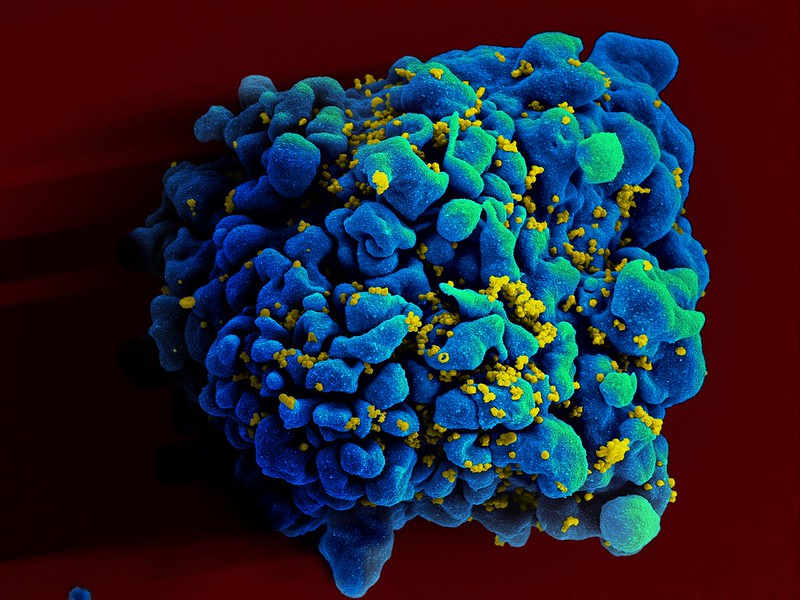
HIV infecting a human T9 cell. Credit: NIH

In a study published in the Annals of Internal Medicinescientists have reported the identification of a second HIV patient who appears to have completely eliminated HIV from their systems in a ‘sterilising cure’. 

During infection, HIV creates a viral reservoir by inserting copies of its genome into a cell’s DNA. This allows the virus to escape from anti-HIV drugs and the body’s immune response. In most people, new viral particles are constantly made from this reservoir. Antiretroviral therapy (ART) can prevent new viruses from being made but cannot eliminate the reservoir, necessitating daily treatment to suppress the virus.

Some, known as ‘elite controllers’, have immune systems that are able to suppress HIV without the need for medication. Though they still have viral reservoirs that can produce more HIV virus, a type of immune cell called a killer T cell keeps the virus suppressed without the need for medication.

Xu Yu, MD, a physician investigator at Massachusetts General Hospital, led a research group that identified one patient with no intact HIV viral sequence in her genome, indicating that her immune system may have eliminated the HIV reservoir: a sterilising cure. When they sequenced billions of cells from this patient, known as the San Francisco Patient, searching for any HIV sequence that could be used to create new virus, they found no sign. This extraordinary finding, the first known incidence of a sterilising cure without a stem cell transplant, was reported in Nature in 2020.  

Now, Dr Yu’s group reports a second untreated HIV-infected patient, known as the Esperanza Patient who also has no intact HIV genomes found in more than 1.19 billion blood cells and 500 million tissue cells sequenced. This may represent a second instance of a sterilising cure.

“These findings, especially with the identification of a second case, indicate there may be an actionable path to a sterilizing cure for people who are not able to do this on their own,” said Dr Yu.

She further explains that these findings may suggest a specific killer T cell response common to both patients driving this response, with the possibility that other people with HIV have also achieved a sterilising cure. If researchers can figure out the immune mechanisms behind this response, they could develop treatments that teach others’ immune systems to mimic these responses in cases of HIV infection.  

Yu adds: “We are now looking toward the possibility of inducing this kind of immunity in persons on ART through vaccination, with the goal of educating their immune systems to be able to control the virus without ART.”

Source: EurekAlert!

HIV Increases Risk of COVID Infection and Mortality

Man with red HIV ribbon on shirt. Photo by Anna Shvets from Pexels

New research shows that individuals living with HIV and AIDS have an increased risk of SARS-CoV-2 infection and death from COVID.

An estimated 38 million people around the world are living with HIV/AIDS, according to the World Health Organization, 7.5 million of whom are in South Africa, according to UNAIDS.

In their review, researchers at  Penn State College of Medicine found that people living with HIV had a 24% higher risk of SARS-CoV-2 infection and a 78% higher risk of death from COVID than people without HIV. They analysed data from 22 prior studies with nearly 21 million participants in North America, Africa, Europe and Asia to determine to what extent people living with HIV/AIDS are susceptible to SARS-CoV-2 infection and death from COVID.

Participants were mostly male (66%) and the median age was 56. The most common comorbidities among the HIV-positive population were hypertension, diabetes, chronic obstructive pulmonary disease and chronic kidney disease. Most patients (96%) were on antiretroviral therapy (ART).

“Previous studies were inconclusive on whether or not HIV is a risk factor for susceptibility to SARS-CoV-2 infection and poor outcomes in populations with COVID-19,” said Dr Paddy Ssentongo, lead researcher and assistant professor at the Penn State Center for Neural Engineering. “This is because a vast majority of people living with HIV/AIDS are on ART, some of which have been used experimentally to treat COVID-19.”

Pre-existing conditions common among people living with HIV/AIDS, may contribute to the severity of their COVID infections, noted the investigators. It remains inconclusive as to whether antiviral drugs, such as tenofovir and protease-inhibitors, reduce the risk of SARS-CoV-2 infection and death from COVID in people with living with HIV/AIDS.

“As the pandemic has evolved, we’ve obtained sufficient information to characterize the epidemiology of HIV/SARS-CoV-2 coinfection, which could not be done at the beginning of the pandemic due to scarcity of data,” said Vernon Chinchilli, fellow researcher and chair of the Department of Public Health Sciences. “Our findings support the current Centers for Disease Control and Prevention guidance to prioritize persons living with HIV to receive a COVID-19 vaccine.”

Source: Penn State University

Home Deliveries of Antiretrovirals Worked Better for SA HIV Patients

A study investigating the feasibility of home delivery of antiretroviral therapy (ART) was well received and had significantly more participants achieving viral suppression.

In South Africa, 27% of the population is HIV positive, with viral suppression achieved only in 64% of the population. Post-apartheid healthcare reforms have done little to improve access to healthcare for most South Africans. HIV positive pregnant women, for example, have difficulty achieving viral suppression for a number of reasons including crowded clinics that are often at a great distance.

To investigate the feasibility of home delivery of ART recruited 162 people living with HIV, 88% of those randomised to home delivery experienced viral suppression (defined as viral loads less than 100 copies/ml) compared to 74% of those randomised to clinic visits, reported Ruanne Barnabas, MBChB, DPhil, of the University of Washington. The participants were followed for a median of 47 weeks, even during COVID restrictions.

Dr Barnabas reported that the difference was even more pronounced in men (64% in clinic group vs 84% in delivery group). This is important as there are gaps in viral suppression with standard, clinic-based ART, especially among men and priority populations. Home ART delivery and monitoring can increase access and the intention to treat.

“If a client pays for the service, and the benefits are sufficient, this could become a scalable strategy,” Dr Barnabas said. This could help achieve UNAIDS viral suppression targets for South Africa of 86%, she added.

Dr Barnabas described the home delivery as an Amazon Prime-type service, where clients paid an income-scaled one-time fee, for ART delivery and monitoring.

Viral load testing was a secondary objective while testing of the ability to pay the fee and the acceptability of the service was the primary objective. The participants were from a lower income group, with 19% being labourers or semi-skilled workers, and 60% unemployed.

The participants responded well to the home delivery, with 98% of participants paying the fee, and 100% saying they thought the fee was reasonable, that it reminded them to take their medications, and that they would continue to pay it if delivery was available. The next step would be to see if the service could be financially viable if scaled up. 

Source: MedPage Today

Presentation information: Barnabas R, et al “Fee for home delivery and monitoring of ART raises viral suppression in South Africa” CROI 2021; Abstract 111LB.

T-cells can detect HIV-1

A new study reported by News 24 shows that T-cells can detect HIV-1 in patients years after commencing antiretroviral therapy (ART): 

In the HIV-1 proteome (the entire set of proteins expressed by the virus) for each participant, the team identified T-cell epitopes (regions of proteins that trigger an immune response). They sequenced HIV-1 ‘outgrowth’ viruses from resting CD4+ T cells and tested mutations in T-cell epitopes for their effect on the size of the T-cell response.

These strategies revealed that the majority (68%) of T-cell epitopes did not harbour any detectable escape mutations, meaning they could be recognised by circulating T cells.

“Our findings show that the majority of HIV-1-specific T cells in people on ART can detect HIV viruses that have the capacity to rebound following treatment interruption,” concludes senior author Nilu Goonetilleke, a faculty member at the Department of Microbiology and Immunology, University of North Carolina at Chapel Hill.