Tag: 24/3/26

Existing Medication Can Restore HIV-affected Immune Cells
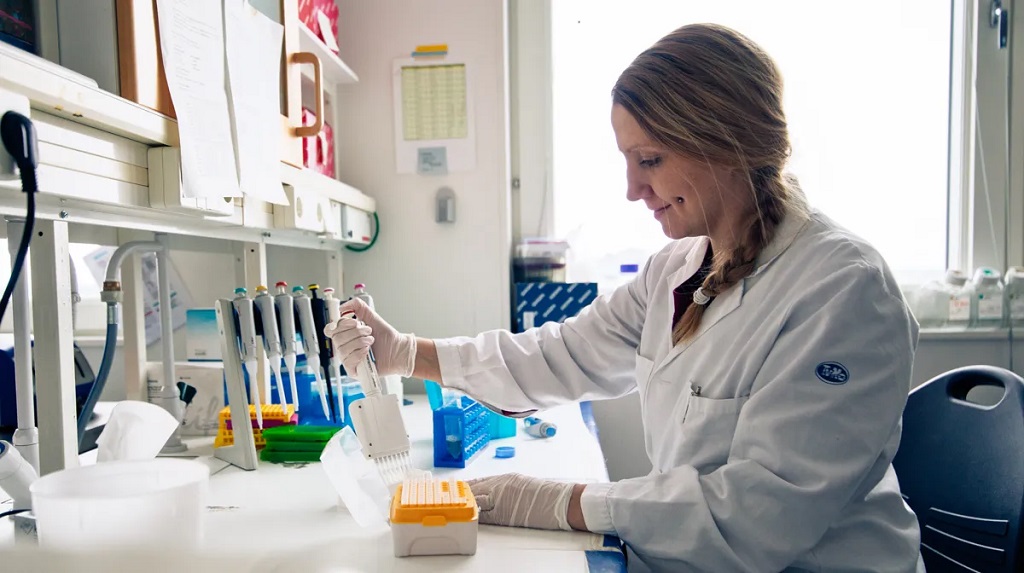
The LiU researchers have shown that HIV exhausts the body’s immune system by overactivating it, despite effective antiviral treatment. Photo: Charlotte Perhammar

HIV exhausts the body’s immune system by overactivating it, despite effective antiviral treatment. Researchers from Linköping University have conducted cell studies showing that an existing medication restores immune cell function. The findings raise hopes that this medication could improve the health of people living with HIV.

For people living with HIV, antiviral treatment is effective in limiting the amount of virus in the blood and slowing the progression of AIDS. But the virus can stay hidden in the body for many years and contribute to premature ageing of the immune system. Despite effective treatment, the immune system is commonly impaired in people with HIV. Linköping University researchers therefore investigated how the virus causes dysregulation of the immune system.

In healthy people infected with a virus, a protein called type I interferon is activated that plays a very important role in the body’s immune system. Type I interferon is the first protection against viral infections and also ensures that other parts of the immune system kick in. Once the infection is combated, the amount of type I interferon falls back to a very low level.

In their study, the researchers show how HIV exploits the body’s type I interferon signalling to drive chronic immune activation, also when the virus is under control due to medication.

“In the case of an HIV infection, type I interferon provides protection in the first stage when the body gets infected. But if the interferon is chronically activated, an overactivation of the immune system will instead facilitate the spread of HIV in the body,” says Cecilia Svanberg, postdoctoral fellow at Linköping University and lead author of the study, published in the journal PLOS pathogens.

May be treateable

A chronically activated immune system eventually leads to several different types of cells in the immune system becoming exhausted and less effective. Two important cell types affected are dendritic cells and T cells.

The researchers’ experiments on human cells showed that the chronic activation of interferon occurs precisely when dendritic cells and T cells are in contact with each other. This opens up an opportunity to restore immune cell function.

“When we treated the cells with a medication currently used to treat another disease, this perfectly restored the function of the immune cells. It looks just like when HIV is not present,” says Cecilia Svanberg.

The medication, anifrolumab, blocks type 1 interferon and is used to treat systemic lupus erythematosus, SLE, an autoimmune disease. Other research groups have conducted studies on animals with HIV-like infections, treating them with either anifrolumab or other substances with the same function. The amount of HIV virus in the blood has decreased and the animals’ health has improved.

“Using this interferon blocker together with existing antiviral treatment could possibly improve the health of people living with HIV. We think it would be worth investigating further,” says Marie Larsson, professor of virology at Linköping University, who led the study.

By Karin Söderlund Leifler

Source: Linköping University

South Africa Can End TB by Replacing Stigma with Early Action

Dr Jessica Hamuy Blanco, Product and Clinical Risk Executive at Dis-Chem

As the world marks World TB Day on 24 March under the theme “Yes! We can end TB!”, South Africa faces a clear challenge turning awareness into early action.

“TB is all around us,” says Dr Jessica Hamuy Blanco, Product and Clinical Risk Executive at Dis-Chem. “Many people don’t realise that exposure is common. The bacteria can lie dormant for years and only become active when the immune system is compromised.”

Despite widespread awareness, a critical gap remains between what people know about TB and how quickly they act on symptoms. This gap continues to shape outcomes for thousands living with this preventable and curable disease.

According to the World Health Organisation (WHO), approximately 249 000 people in South Africa developed tuberculosis in 2024.

TB remains close to home

Although preventable and curable, TB continues to spread quietly often because symptoms are ignored and treatment is delayed.

“People don’t always recognise the signs early enough or know where to seek help,” says Dr Hamuy Blanco. “This is where informed, trusted healthcare makes the difference.”

South Africa remains one of the countries hardest hit by TB globally. The disease is closely linked to HIV, with weakened immune systems increasing the risk of TB becoming active. At the same time, socio-economic realities such as overcrowding and limited access to healthcare continue to drive transmission.

Delayed diagnosis means individuals remain infectious for longer, placing families and communities at greater risk.

Early detection can change outcomes

Detecting TB early remains one of the most effective ways to reduce its spread and improve recovery. Treatment typically involves a six- to nine-month course of antibiotics, with strong success rates when completed. However early symptoms are often missed.

“The signs can be missed or ignored,” explains Dr Hamuy Blanco. “A persistent cough, fatigue, night sweats or weight loss are easy to dismiss as stress or a lingering illness. That delay gives TB time to spread.”

Creating space for early conversations, whether at a clinic, pharmacy or with a nurse can make the difference between early intervention and prolonged illness.

Finishing treatment is non-negotiable

Another major barrier to ending TB is interrupted treatment. Many patients begin to feel better within weeks and assume they are cured, while others struggle with side effects or the practicalities of repeated clinic visits.

“When treatment is stopped too soon, the bacteria are not fully eliminated,” says Dr Hamuy Blanco. “This is how drug-resistant TB develops, which is far more difficult and costly to treat.”

Supporting patients through the full course of treatment is essential, with clear communication and ongoing support improving adherence.

Bringing care closer to people

“Accessible healthcare is critical in closing the gap between awareness and action”, says Dr Hamuy Blanco. Retail health clinics and digital health platforms are increasingly helping to make care part of people’s everyday lives.

These routine touchpoints create opportunities for people to ask questions, seek advice and act early helping to normalise testing, reduce stigma and support patients throughout their treatment journey.

“Care needs to fit into people’s daily lives,” she adds. “It should be easy to access, easy to understand and supportive from start to finish.”

Turning intent into impact

TB is both preventable and curable, yet it continues to claim lives because of delayed action and incomplete treatment.

“Ending tuberculosis takes more than medicine. It requires a human-centred approach that supports people from early testing through to completed treatment. By breaking down stigma and acting sooner, South Africa can move from awareness to impact,” she concludes.

Are Psychedelics Better than Antidepressants? New Study Says No

With an innovative approach, scientists try to get around the problem of participant expectation in tests of psychedelics.

Photo by Marek Piwnicki

Psychedelic-assisted therapy may be no more effective than traditional antidepressants when patients know what drugs they are actually taking, according to a first-of-its kind analysis that compared how well each type of drug worked for major depression.

Psychedelic-assisted therapy has resisted placebo-controlled testing methods, the gold standard in clinical trial design. Due to their powerful subjective effects, nearly everyone in the trial knows whether they received a psychedelic or the placebo even if they are not told.

But in trials of antidepressants, participants may not figure out whether they have received the drug or a placebo, which makes it hard to compare them with psychedelics.

To get around this problem, researchers from UC San Francisco, UCLA, and Imperial College, London tried a different approach. They compared the results from psychedelic therapy trials to the results from so-called open-label trials of traditional antidepressants, in which the participants all knew they were getting an antidepressant. That way, both treatments benefitted equally from the positive effect of patients knowing that they were being given a drug instead of a placebo. 

The findings both surprised and disappointed them: there was virtually no difference.

“Unblinding is the defining methodological problem of psychedelic trials. What I wanted to show is that even if you compare psychedelics to open-label antidepressants, psychedelics are still much better,” said Balázs Szigeti, PhD, a clinical data scientist at UCSF’s Translational Psychedelic Research Program, who led the study. “Unfortunately, what we got is the opposite result – that they are the same, which is very surprising given the enthusiasm around psychedelics and mental health.” 

Szigeti is the co-first author of the paper with Zachary J. Williams, MD, PhD, of UCLA; Hannah Barnett, MSc, of Imperial College, London is also an author. The study appeared March 18 in JAMA Psychiatry.

A sobering view

The hype around the use of psychedelics like psilocybin, or “magic mushrooms,” and LSD, to treat such conditions as depression and addiction has grown in recent years as an increasing number of studies have shown promising results, particularly for people who haven’t responded to traditional antidepressants.

The new findings don’t mean that psychedelic therapy does not work – just that it does not work better than traditional antidepressants. Patients improved substantially from both types of treatments, reducing depression scores by about 12 points on a standard scale.

Part of what has made psychedelics seem impressive in trials than antidepressants is how much more those who received the psilocybin or LSD improved than those who did not get it.

But the researchers concluded that this was the result of the lack of blinding in psychedelic trials: those who got the drug improved more because they knew they had gotten it, while those who received a placebo did worse because they knew they did not. Whereas in trials of traditional antidepressants, the difference between the groups was much smaller, making it seem like the drugs weren’t that effective.

When this ‘knowing the treatment’ factor leveled out, the seeming advantage of psychedelics disappeared. 

“Psychedelics may still be a valuable treatment option,” Szigeti said. “But if we want to understand their true benefits, we have to compare them fairly – and when we do that, the advantage over standard antidepressants is much smaller than many people, including myself, expected.”

Source: EurekAlert!

No Benefit from Surfactant Treatment for Babies with Severe Bronchiolitis

Photo by William Fortunato on Pexels

A major UK-led clinical trial has found that a treatment commonly used to help premature babies breathe offers no benefit for infants on life support with severe bronchiolitis – a seasonal viral illness that hospitalises thousands of babies each year.

Funded by a partnership between the UK’s UKRI Medical Research Council (MRC) and National Institute for Health and Care Research (NIHR), and by Chiesi Farmaceutici SpA, Italy, the Bronchiolitis Endotracheal Surfactant Study (BESS) trial is the largest-ever randomised study of surfactant for bronchiolitis.

The results are published 21 March in The Lancet Respiratory Medicine.

Bronchiolitis occurs when a virus – most commonly respiratory syncytial virus (RSV) – infects a baby’s lungs. There is currently no specific treatment for RSV infection, and the illness can be especially severe in premature and newborn infants. Babies with bronchiolitis have reduced levels of surfactant in their lungs, a condition similar to that seen in babies born prematurely. Because surfactant is routinely used to help premature infants breathe more easily, the study team set out to determine whether this therapy could also benefit babies hospitalised with bronchiolitis.

The study ran across 15 children’s hospitals in England, Scotland, and Northern Ireland and involved 232 critically ill babies. However, surfactant did not reduce the time they needed to be on a ventilator (life-support breathing machine).

Professor Calum Semple OBE, the study’s lead from the University of Liverpool and Alder Hey Children’s NHS Foundation Trust, said: “The treatment was safe, but it didn’t make any difference to how long babies stayed on ventilators. We had hoped that surfactant might speed up recovery for these very sick babies, but the evidence doesn’t support this.”

Bronchiolitis is the leading reason why babies are admitted to hospital in the UK during winter. It typically affects babies under one year old and can be especially severe in those born prematurely. While most of the twenty-five thousand babies admitted will recover with oxygen and fluids, around a thousand of the most unwell require intensive care and a ventilator to support their breathing. Currently, there is no other treatment for bronchiolitis, but a vaccine is now being offered to the mother-to-be in the last months of pregnancy.

The BESS trial was designed to give families and clinicians clear answers. It ran over six winter seasons from 2019 to 2024.

Professor Semple added: “While we continue to research better ways to care for these sick babies, I urge Mums-to-be to accept the offer of the RSV vaccine during pregnancy, which will protect their newborn babies from severe bronchiolitis.”  

The researchers emphasise that surfactant therapy remains essential for premature newborn babies and advocate for further studies to explore targeted treatments for bronchiolitis.

Source: University of Liverpool

Why Women’s Health Drives Economic Resilience 

Photo by The Creative Exchange on Unsplash

By Merilynn Steenkamp, Managing Director, Southern Africa, Multi-Country Network, Roche Diagnostics

Across South Africa, women play a central role in sustaining economic activity. They lead classrooms, staff hospital wards, run small businesses, work in agriculture, build enterprises and manage households. In many communities, they are the primary earners and the primary caregivers.1

In March, as South Africa observes International Women’s Month, recognising women’s contribution also means ensuring that systems are structured to protect their health. Reliable access to early diagnostics remains one of the most practical levers available to support that protection.

When women experience illness, the impact extends well beyond a single diagnosis. Time away from work affects income, productivity and career progression. In informal employment, where many South African women operate without formal protections, illness can immediately reduce household earnings. The economic effects are felt first at the family level, then across communities.

Women make up the majority of South Africa’s health and social services workforce. They also carry a disproportionate share of unpaid care work in households². Globally, UN Women reports that women reinvest up to 90 percent of their income into their families and communities³. That reinvestment strengthens education, nutrition and long-term stability across generations.

Imagine a young nurse, working at a local clinic, earning a mid-level salary. As the sole breadwinner in her home, living month-to-month, she must use the funds available to pay school fees and associated costs for her children. As she also cares for her aged mother, five people rely on her steady income to survive. If she becomes seriously ill for an extended period of time, the effects are potentially catastrophic for her family, and compound pressure on the economy at large.

South Africa continues to carry a high burden of infectious diseases, including tuberculosis⁴ and HIV, while non-communicable diseases such as diabetes and cancer are rising. Cervical cancer remains the second most common cancer among South African women⁵. But when this cancer is detected early, the five-year relative survival rate exceeds 90 percent. That makes it imperative to raise awareness around early detection, as when cervical cancer is diagnosed at an advanced stage, survival drops significantly⁶.

Early and accurate diagnostics protect women’s ability to remain economically active, particularly for preventable illnesses. Early testing enables faster treatment, reduces complications and limits the need for more complex interventions later. In the case of infectious diseases, it also reduces transmission and protects colleagues, families and communities.

South Africa has a strong laboratory foundation to build on. The National Health Laboratory Service operates one of the largest diagnostic networks in the region, supporting large-scale testing every day⁷. Leveraging existing laboratory capacity allows screening and early detection programmes to expand in ways that are sustainable and aligned with national health priorities.

High-performance HPV testing, rapid HIV diagnostics, molecular tuberculosis testing and integrated blood panels are examples of tools that shorten the path from suspicion to confirmation. Reducing diagnostic delays supports workplace continuity and strengthens health system efficiency. In a country focused on improving workforce participation and economic resilience, this connection is direct.

Protecting women’s health strengthens household stability, supports workforce participation and reinforces economic resilience. Prioritising early diagnosis is a clear and measurable way to invest in South Africa’s long-term growth. 

It starts at home, with our mothers, sisters and daughters. Let’s keep reminding them, every now and then, to take a moment and consider their own well-being, for them, and for all of us.  


References

  1. Statistics South Africa. Quarterly Labour Force Survey (QLFS). Available at: https://www.statssa.gov.za/?page_id=16408
  2. Statistics South Africa. South Africa Time Use Survey. Available at: https://www.statssa.gov.za
  3. UN Women. Facts and figures: Economic empowerment. Available at: https://www.unwomen.org
  4. World Health Organization. Global Tuberculosis Report. Available at: https://www.who.int/teams/global-tuberculosis-programme/tb-reports
  5. Cancer Association of South Africa (CANSA). Cervical cancer. Available at: https://cansa.org.za/cervical-cancer/
  6. National Cancer Institute. Cervical Cancer Survival Rates. Available at: https://www.cancer.gov/types/cervical/survival
  7. National Health Laboratory Service (NHLS). About NHLS. Available at: https://www.nhls.ac.za/

Investment to Bring Quality Primary Healthcare Closer to Home for Many South Africans

Photo by Hush Naidoo on Unsplash

To significantly expand access to affordable, quality primary healthcare in underserved communities, the Cipla Foundation’s Sha’p Left initiative has partnered with the FirstRand Empowerment Foundation (FREF). The partnership aims to aggressively scale the cost-effective nurse-driven surgeries in local communities, across the Western Cape, KwaZulu-Natal and Gauteng.

HEALTHCARE CLOSER TO HOME

This collaboration will help to overcome systemic barriers to healthcare, particularly in terms of equitable access for low-income, uninsured individuals. For many people living in peri-urban and rural areas, access to quality primary healthcare services poses a significant challenge. Over-burdened State medical facilities are often congested, resulting in long waiting times for patients.

Sha’p Left is a patient-centred, cost-aware, nurse-driven primary healthcare service, in the heart of local communities. These nurse surgeries are located in easily accessible hubs such as busy taxi ranks to promote ease of access. The greatest benefit of Sha’p Left is that in addition to saving travel time, it helps to empower people both in terms of caring for their health, but also financially: the lack of queues mean that people don’t need to take a full day off work (resulting in a loss of income) to access basic healthcare.

Currently, Sha’p Left serves more than 5 000 patients monthly, with the patient profile comprising a 60% / 40% female / male split. The existing clinics are GMP compliant containerised solutions, as part of environmental sustainability initiatives and lowering overhead costs, solar solutions are being implemented at these clinics.

CHAMPIONING CHANGE

Strengthening community-based primary healthcare supports national health priorities by reducing the burden on State facilities, promotes preventative healthcare and creates an empowering, dignified experience for patients.

The investment by FREF will help Sha’p Left to deploy more nurse surgeries, and these solutions will ultimately help address inequality and reduce poverty as access to quality healthcare is basic human right. The partnership will scale Sha’p Left from 11 to 61 surgeries by the end of 2029. 

SUSTAINABLE SOCIAL IMPACT

The business model involves enterprise development in conjunction with qualified, predominantly female clinical nurse practitioners (CNPs) and assists them to establish sustainable, owner-operated clinics in identified communities to provide affordable primary healthcare services.

This fee-for-service model, driven by the “entreprenurses”, provides a dignified and holistic patient experience. The surgeries have dispensing licenses and therefore a consultations includes the necessary medication required, up to Schedule 4 medicines.

The first three nurse surgeries being deployed in 2026, as part of this partnership, are in these areas:

·      Senoane (Gauteng)

·      KwaNyuswa (KZN)

·      Verulam (KZN)

Blending social impact with sustainability creates a blueprint for scaling primary healthcare in South Africa. With FREF’s support, the Sha’p Left model will expand further into communities where access gaps remain widest, ensuring that more South Africans can easily receive the care they need. This investment ensures that good health is not merely a privilege for a select few people, but for all South Africans.