

Breast cancer is the leading type of cancer among women in South Africa, and globally. Too often it is discovered too late – but a new approach promises a radical change in survivability for patients.
The solution, called theranostics, stems from the field of nuclear medicine. It holds the potential to turn the tide against breast cancer and, like the fight against HIV/Aids, change it from an outright killer to a manageable disease.
Behind this initiative is world-renowned nuclear medicine specialist Professor Mike Sathekge, head of the Department of Nuclear Medicine at the University of Pretoria and Steve Biko Academic Hospital, and president and CEO of the South African Nuclear Medicine Research Infrastructure (NuMeRI), a globally leading, not-for-profit imaging facility situated at the hospital.
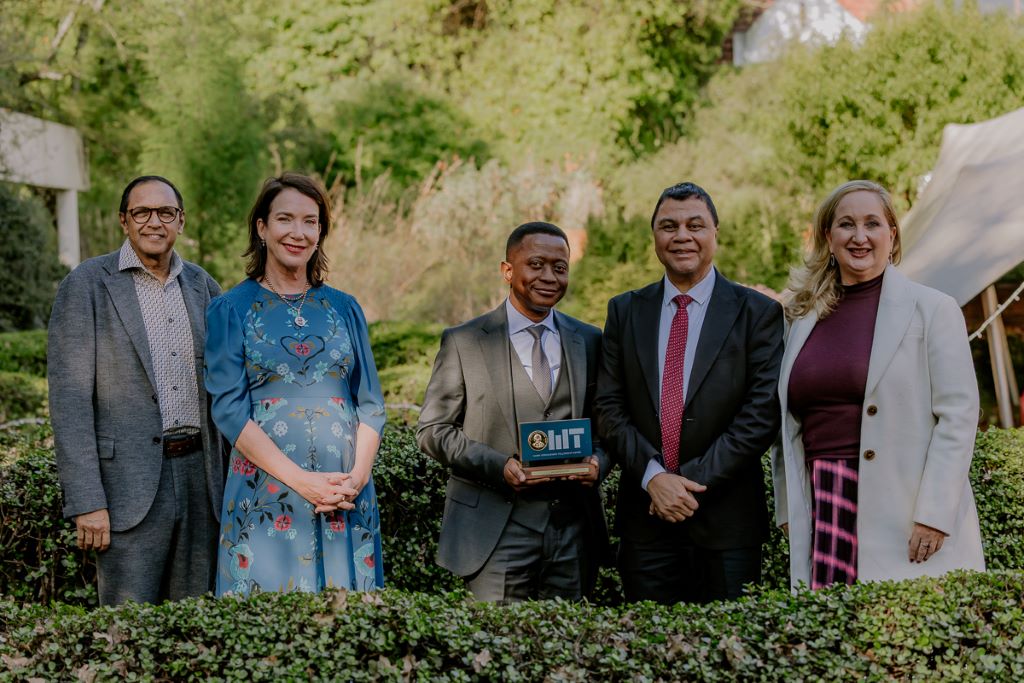
He has been presented the 2025 Harry Oppenheimer Fellowship Award, a R3-million grant from the Oppenheimer Memorial Trust (OMT) to complete his research and develop a way to make it widely available.
“Theranostics, brings diagnosis and treatment together, is a combination of early diagnosis with treatment that is personalised and precise down to mere cells, which allows us to exactly detect and assess tumours, devise specific treatment regimens and assessment of treatment response over time,” says Sathekge.
“The earlier the breast cancer is detected, the more accurately it is assessed and the more precise the treatment, the exponentially better the patient’s prognosis.”
In South Africa, however, this is too often not the outcome. A comprehensive study into the availability of breast cancer services in the public healthcare sector, published recently in the South African Medical Journal, found that 67% of patients had late-stage breast cancer at diagnosis. In other words, their cancer had metastasised and spread to other parts of their bodies, and their prognosis was poor.
The study also noted that South Africa is expected to face a substantial rise in cancer cases over coming decades, driven by population growth, ageing and changing disease patterns. Sathekge’s Harry Oppenheimer Fellowship Award nomination was one of 80 received by OMT, covering a wide range of academic fields. Finalists shortlisted included proposals on a system for measuring the environment, air and our health; frost exposure in tropical Africa; a model for testing modified gravity; conversion of CO2 into useful products (such as fertilisers); and tissue T-cell response profiling of tuberculosis. “There were so many excellent applicants for this year’s award, touching on vital issues impacting the world we live in, and worthy of further research and development,” says OMT chairperson Rebecca Oppenheimer.
“This made our selection panel’s final decision all the more challenging, but I believe we have made an exciting choice that will have far-reaching, positive ramifications for South Africa’s public healthcare system and the people who use it.
“In developing a technology that makes diagnosing and treating cancers more effective, affordable and available, Prof Sathekge and his colleagues hold in their hands the potential for a quantum leap forward in improving South African patients’ health outcomes and human dignity, as well as for beating breast cancer globally. OMT is proud to support his endeavours.”
Sathekge’s solution is, essentially, one whose time has finally come. First conceived around 15 years ago, it capitalises on a protein called trophoblast cell-surface antigen 2, or Trop2. This molecule, found in high levels in breast cancers (and others, including cervical, pancreatic and lung cancers), helps the cancer multiply and makes it stubborn to treat.
Although Trop2 is already recognised as an important target in several cancers, there is still no widely established, clinically scalable way to show exactly where Trop2 is present across a patient’s entire cancer burden.
The answer may lie in nanobodies: tiny, engineered antibody fragments that are designed to bind specifically to Trop2. Their small size allows them to reach tumours rapidly and clear from the bloodstream faster than conventional antibodies, making them particularly attractive for same-day PET imaging.
Through a long-standing collaboration with Prof Frederik Cleeren, assistant professor in the Laboratory for Radiopharmaceutical Research, in the Department of Pharmaceutical and Pharmacological Sciences, and his team at KU Leuven in Belgium and the Joint Research Centre (JRC) in Karlsruhe, who bring expertise in nanobody engineering and radiolabelling, Sathekge’s team is combining these strengths with South Africa’s capabilities in molecular imaging, actinium-225 radiopharmaceutical development and targeted radionuclide therapy.
Together, the collaborators are developing a Trop2-targeted theranostic approach that links diagnosis with treatment. The first step uses a tiny targeting protein, known as a nanobody, designed to bind specifically to Trop2 on cancer cells. This nanobody is labelled with fluorine-18, a short-lived radioactive tracer that allows doctors to visualise Trop2-positive tumours on a PET/CT scan.PET/CT is an advanced imaging method that uses a small amount of radioactive tracer to show biological activity inside the body. In this case, it could help clinicians map Trop2 expression across a patient’s full cancer burden, including disease that may not be accessible for repeated biopsy. It may also allow doctors to monitor changes in the target and treatment response over time.
Where imaging confirms sufficient Trop2 expression, the same targeting strategy can be developed for treatment using actinium-225, a powerful alpha-emitting isotope. Actinium-225 can deliver highly localised radiation over a very short distance, with the aim of concentrating treatment in Trop2-positive cancer cells while limiting radiation exposure to surrounding healthy tissue.
The ambition is to move beyond treating patients based on limited information from a single biopsy, towards a more personalised approach: seeing the target throughout the body, selecting patients more accurately, and laying the foundation for future Trop2-targeted alpha therapy.
Sathekge’s work puts South Africa at the forefront of worldwide research into effective responses to breast cancer, says the University of Pretoria’s Vice-Chancellor and Principal, Prof Francis Petersen.
“South Africa urgently needs better ways to detect, understand and treat aggressive breast cancer. Too many patients still present late, when the disease is more difficult to manage and treatment options are limited.
“Prof Sathekge’s work at NuMeRI brings together advanced imaging, radiopharmaceutical science and targeted treatment in a way that could help doctors make more informed, patient-specific decisions. The research aims to improve how cancer is identified, how treatment is selected and how response is monitored over time.
“It also demonstrates the depth of scientific talent, innovation and academic rigour in South Africa. Through work of this calibre, African researchers are not only responding to local health challenges, but helping to shape the global future of cancer care. We look forward to seeing this research strengthen South African capacity and contribute to better outcomes for patients here and internationally,” says Petersen.
For Sathekge, the most exciting element of his work is how it centres on the patient, giving them dignity and the opportunity to live long and fulfilling lives.
Provided by The University of Pretoria
