Brain Cholesterol Production Linked to Alzehimer’s
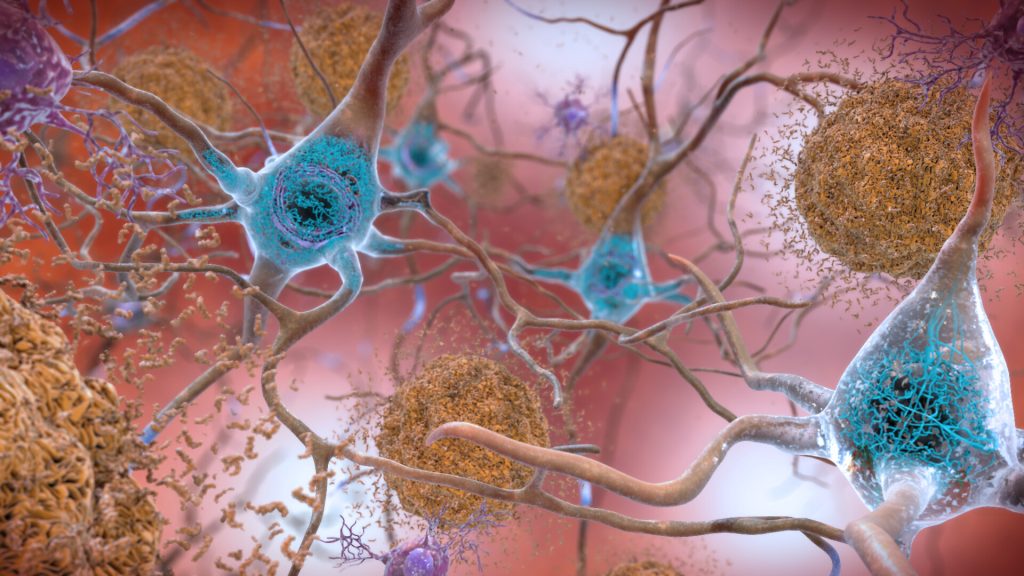
Amyloid plaques and neurons. Source: NIAH

Cholesterol manufactured in the brain appears to play a key role in the development of Alzheimer’s disease, new research indicates.

Scientists found that cholesterol produced by cells called astrocytes is required for controlling the production of amyloid beta, a sticky protein which forms the characteristic plaques in patients with Alzheimer’s. These plaques have been the target of efforts to remove or prevent them  in the hopes that this could treat or prevent Alzheimer’s.

The new findings offer important insights into how and why the plaques form and may explain why genes associated with cholesterol have been linked to increased risk for Alzheimer’s. The results also provide scientists with important direction as they seek to prevent Alzheimer’s.

“This study helps us to understand why genes linked to cholesterol are so important to the development of Alzheimer’s disease,” Heather Ferris, MD, PhD, Researcher, UVA’s Division of Endocrinology and Metabolism. “Our data point to the importance of focusing on the production of cholesterol in astrocytes and the transport to neurons as a way to reduce amyloid beta and prevent plaques from ever being formed.”

The work sheds light on the role of astrocytes in Alzheimer’s disease. Scientists have known that these common brain cells undergo dramatic changes in Alzheimer’s, but they have been uncertain if the cells were suffering from the disease or contributing to it. The new results suggest the latter.

The scientists found that astrocytes help drive the progression of Alzheimer’s by making and distributing cholesterol to brain cells called neurons. This cholesterol buildup increases amyloid beta production and, in turn, fuels plaque accumulation.

Normally, the buildup of amyloid beta is limited because cholesterol is kept quite low in neurons. But in Alzheimer’s, the neurons are no longer able to regulate amyloid beta, leading to plaque formation.
Blocking the astrocytes’ cholesterol manufacturing “robustly” decreased amyloid beta production in lab mice, the researchers reported. While it is presently unknown whether this could be applied in people to prevent plaque formation, the researchers believe that further research is likely to yield important insights that will benefit the battle against Alzheimer’s.

The fact that amyloid beta production is normally tightly controlled suggests an important role in brain cells, the researchers said. Doctors may therefore need to be cautious about blockage or removal of amyloid beta. Additional research into the discovery could shed light on how to prevent the over-production of amyloid beta as a strategy against Alzheimer’s, the researchers believe.

“If we can find strategies to prevent astrocytes from over-producing cholesterol, we might make a real impact on the development of Alzheimer’s disease,” Dr Ferris said. “Once people start having memory problems from Alzheimer’s disease, countless neurons have already died. We hope that targeting cholesterol can prevent that death from ever occurring in the first place.”


Source: University of Virginia Health System

A ‘Fountain of Youth’ for Bone Marrow Stem Cells

Source: National Cancer Institute on Unsplash

Scientists have shown that reduced bone marrow stem cell function with ageing is due to changes in their epigenome, and they were able to reverse these changes in isolated stem cells by adding acetate. This ‘fountain of youth’ for the epigenome could become important for the treatment of diseases such as osteoporosis.

One responsible mechanism for age-related osteoporosis and fracture risk involves the impaired function of the bone-marrow stem cells, which are required for the maintenance of bone integrity. 

For a long time, researchers have looked at epigenetics as a cause of ageing. Epigenetics looks at changes that affect the activity of genes. One of these is changes in proteins called histones, which package and thus control access to DNA. In this study, the researchers investigated the epigenome of mesenchymal stem cells, which are found in bone marrow and can give rise to different types of cells such as cartilage, bone and fat cells.

“We wanted to know why these stem cells produce less material for the development and maintenance of bones as we age, causing more and more fat to accumulate in the bone marrow. To do this, we compared the epigenome of stem cells from young and old mice,” explained Andromachi Pouikli, first author of the study. “We could see that the epigenome changes significantly with age. Genes that are important for bone production are particularly affected.”

The researchers then sought to find out if it was possible to rejuvenate the epigenome of stem cells. To do this, they treated isolated stem cells from mouse bone marrow with a nutrient solution which contained sodium acetate. The cell converts the acetate into a building block that enzymes can attach to histones to increase access to genes, thereby boosting their activity. “This treatment impressively caused the epigenome to rejuvenate, improving stem cell activity and leading to higher production of bone cells,” Pouikli said.

To see if this change could also be responsible for increased fracture risk and osteoporosis with age, the researchers studied human mesenchymal stem cells from hip surgery patients. In elderly patients with osteoporosis, the same epigenetic changes seen with mice were also seen in these human cells.

“Sodium acetate is also available as a food additive, however, it is not advisable to use it in this form against osteoporosis, as our observed effect is very specific to certain cells,” cautioned study leader Peter Tessarz. “However, there are already first experiences with stem cell therapies for osteoporosis. Such a treatment with acetate could also work in such a case. However, we still need to investigate in more detail the effects on the whole organism in order to exclude possible risks and side effects.”

The results were published in the journal Nature Aging.

Source: Max Planck Society

Men’s Sleep Affected by Phases of the Moon

Photo by Mert Kahveci on Unsplash

The phases of the moon may have a far greater effect on men’s sleep than women’s, according to a new study published in Science of the Total Environment.

Prior research has produced somewhat conflicting results on the link between the lunar cycle and sleep, with some reporting an association whereas others did not. There are several possible explanations for these discrepant findings, such as that some of the results were chance findings. However, a number of past studies investigating the link between lunar cycle and human sleep did not account for confounding factors, such as obstructive sleep apnoea and insomnia.

During the waxing period, the amount of illuminated moon surface as seen from Earth increases, and the time the moon appears highest in the sky gradually shifts to late evening hours. In contrast, during the waning period, the illuminated surface decreases and the moment that time the moon is highest gradually shifts to daytime hours.

“We used one-night at-home sleep recordings from 492 women and 360 men. We found that men whose sleep was recorded during nights in the waxing period of the lunar cycle exhibited lower sleep efficiency and increased time awake after sleep onset compared to men whose sleep was measured during nights in the waning period. In contrast, the sleep of women remained largely unaffected by the lunar cycle. Our results were robust to adjustment for chronic sleep problems and obstructive sleep apnea severity,” said Christian Benedict, Associate Professor at Uppsala University’s Department of Neuroscience, and corresponding author of the study.

One mechanism through which the moon may impact sleep is sunlight reflected by the moon around times when people usually go to bed. In addition, a recent study suggests that the male brain may be more responsive to ambient light than that of females.

“Our study, of course, cannot disentangle whether the association of sleep with the lunar cycle was causal or just correlative,” concluded Prof Benedict.

Source: EurekAlert!

Childhood Cancer Survivor Set to Break Barriers in Space

Hayley Arcenaux, seated furthest left, is the Medical Officer for the Inspiration4 flight. She is a survivor of childhood cancer and works as a physician assistant at St Jude’s Children’s Hospital, for which the flight is raising funds and awareness.

The first chartered spaceflight into orbit, scheduled for launch on September 15, will have a crewmember who is both a childhood cancer survivor and physician assistant as part of the crew. 

The three-day long mission aboard a SpaceX Dragon spacecraft was chartered by entrepreneur Jared Isaacman. Dubbed Inspiration4, the flight is in fact also raising money and awareness for St Jude Children’s Hospital, which was given two of the four seats on the spacecraft. The funds raised for the hospital are believed to have exceeded the cost of the flight.

Isaacman offered the first seat to 29 year-old Hayley Arceneux, who works as a physician assistant at St Jude’s and will be the medical officer for the flight. She was also a patient at the very same hospital. At age 10, she was diagnosed with osteosarcoma, the most common primary paediatric bone malignancy. In addition to a dozen rounds of chemotherapy, she had a limb-sparing operation which replaced her knee and inserted a titanium reinforcing rod in her femur. This will make her the first person with a prosthetic in space. Such a medical history would have immediately disqualified her for astronaut selection with any of the government-run space agencies like NASA.

In an interview with The Cut, she described her work as a physician assistant at St Jude’s: “I work inpatient… with leukaemia and lymphoma patients specifically. The majority of them received their cancer diagnoses pretty recently, so a big part of  my role is helping to educate and support families through the beginning of treatment. I help them understand, What is cancer? What does the treatment process look like? What should I expect?

“We also manage the kids while they are in treatment. If they get an infection or if they get a fever, we take that really seriously. So I’ll manage their IV antibiotics or other treatment-related complications that can occur.. I check on patients, assess labs, order tests, update families on the results, order meds for outpatients. It is a lot of coordinating and educating. It’s hard, but it’s the greatest job in the world.”

St Jude’s held an auction for the other crew seat that Isaacman offered. The winning bidder declined the seat and gifted it to data engineer Christopher Sembroski. The final seat was won in an entrepreneurial competition by Dr Sian Proctor, a geologist and pilot who narrowly missed out on being chosen as a NASA astronaut. 

Speaking about the auction, Richard C. Shadyac Jr, president and chief executive of American Lebanese Syrian Associated Charities, which raised fund for St Jude’s, said: “The impact of the Inspiration4 mission has been immeasurable, serving as an incredible platform to educate and engage millions in the movement to find cures and deliver care for childhood cancer and other catastrophic diseases through accelerated research and treatment. The auction is a critical component of the overall campaign as it enables us to reach new audiences and supporters as we work to fulfill our mission.”

So far, $100 million has been raised for St Jude’s.

While in space, the crew will conduct experiments such as examining fluid shifts in zero gravity using ultrasound, as well as other medical experiments including measuring blood glucose levels — in order to help expand space travel to those with diabetes.

A documentary has been made of the crew’s training, and is available to stream on Netflix.

Surprising Finding Links Asthma Risk to Meat Consumption as Infants

Source: PIxabay/CC0

Researchers looking for post-breastfeeding dietary patterns in two prospective birth cohorts, were surprised to discover meat consumption as a predictive factor.

Alexander Hose, MA, MPH, of Ludwig Maximilian University in Munich presented the study’s findings at the virtual European Respiratory Society annual meeting

After switching from breast milk, babies up to age 1 whose protein intake came largely from meat products, rather than dairy, fish, or egg proteins, had a more than eight-fold greater chance of developing asthma by age 6 versus non-meat protein consumption. Asthma prevalence reached 30% in some subgroups.

Wheezing was more common in this diet pattern, which Hose and colleagues termed “unbalanced meat consumption” (UMC); this continued up to age 10, with a five times higher odds.

The duration of breastfeeding was an important factor, likely because switching to baby foods prolonged the exposure. Odds of developing asthma by age 6 increased nearly 12-fold in UMC-fed infants whose breastfeeding stopped by week 19, versus about four-fold in those continuing longer on breast milk.

In addition, UMC was also linked to a certain intestinal microbiome profile featuring unusually high levels of Lactococcus, Granulicatella, and Acinetobacter species.

This type of microbiome scavenges iron in the gut, Hose said, which could explain why the children became especially susceptible to asthma. Additionally, milk proteins may exert an opposite effect on asthma risk by generating a type of “nutritional immunity.”

While the mechanism connecting the gut microbiome to respiratory disease is unknown, the existence of a ‘gut-lung axis‘ is well established; a recent trial showed that probiotics can prevent coughs and wheezing in older adults. The phenomenon has also been considered for COVID’s gastrointestinal symptoms.

A pair of European birth cohort studies, PASTURE and LUKAS2, provided the data for the study. In these, about 1400 infants were followed through age 10 and parents kept detailed records of their infants’ feeding, and other environmental factors, and children’s medical records were accessed as well.

However, a key limitation is the cohorts being from rural areas since investigating asthma’s relationship to animal exposure was a key goal for the studies. Partly because of this, Hose and colleagues were able to separate out ‘industrial’ meat, milk, and yoghurt from that produced at home. A trend toward greater asthma risk was observed with store-bought protein products.

Source: MedPage Today

Less than Half of Community Oncologists Use Biomarker Testing

Photo by Robina Weermeijer on Unsplash

A survey found that less than half of community oncologists surveyed indicated using biomarker testing to guide patient discussions, compared to 73% of academic clinicians.

Recent advances have substantially altered the management of lung cancer but, there is a concern these new methods, which include biomarker testing, will not be used equally throughout the health care system and worsen disparities that may already be entrenched.

To determine this, the Association of Community Cancer Centers (ACCC), led by Leigh Boehmer, Pharm.D., chief medical officer, developed a US oncology clinician-facing survey instrument.

To help guide clinicians in the use of biomarker testing, the College of American Pathologists, the IASLC, and the Association for Molecular Pathology published the 2018 CAP/IASLC/AMP Molecular Testing Guidelines for Lung Cancer. Dr. Boehmer reported that of the 99 responses collected, only 40 percent indicated they were “very” or “extremely familiar” with the 2018 Guidelines.

The researchers found that clinicians were most confident in selecting appropriate tests to use, interpreting test results, and prognosticating based on test results, but less confident in determining when to order testing and coordination of care. This lack of communication was echoed in focus groups, Dr Boehmer reported.

Clinicians are most likely to order biomarker testing to make more accurate treatment decisions and inform patient discussions, but only 48% of community clinicians indicated that they use biomarker testing to guide patient discussions compared to 73% of academic clinicians.

Asked about preferences when making a final testing decision, 41% of clinicians prefer that they share responsibility with the patient while 52% prefer to make the final decision themselves. Only 6% prefer that the patient make the final decision. Focus groups suggested that clinicians perceive that patients rarely understand what testing entails and how it affects treatment options.

To make more informed decisions about biomarker testing, clinicians indicated that they need more information on financial resources, as well as education around both published guidelines and practical implications of clinical data. Sixty-seven percent of clinicians provide printed educational materials to their patients. When asked what resources their patients need most, 27% said their patients need handouts or educational resources, followed by psychosocial support (23%) and financial assistance (22%).

“This study identifies key areas of ongoing clinician need related to biomarker testing, including increased guideline familiarity, practical applications of guideline-concordant testing, and how to optimally help coordinate multidisciplinary care,” said Dr. Leigh Boehmer, Pharm.D. “Professional organisations and advocacy groups should focus on developing impactful education materials and tools for improving patient-clinician discussions about biomarker testing.”

Source: International Association for the Study of Lung Cancer

AstraZeneca Vaccine Confers COVID Protection for People with HIV

Image by Ivan Diaz on Unsplash

Interim results from a phase 1B/2A clinical trial conducted by the Wits Vaccines and Infectious Diseases Analytical (VIDA) research unit showed that the AstraZeneca vaccine conferred COVID protection in people living with HIV.

The findings, published in Lancet HIV, show that the AstraZeneca COIVD vaccine is likely to work as well in people living with HIV compared with people who are HIV negative.

These interim findings are vital for informing the clinical management of people with HIV during the COVID pandemic.

In general, clinical trials which evaluate the safety and immunogenicity of COVID vaccines in people living with HIV are limited, and in Africa they are virtually non-existent. This is despite the overwhelming prevalence of HIV infection in Africa, especially South Africa .

“We searched PubMed for peer-reviewed articles published between 1 January 2019 and 29 June 2021, using the terms ‘safety’ and ‘Covid-19’ and ‘vaccine’, but we did not find any reports that evaluated safety and immunogenicity of COVID vaccines in this population,” said Shabir Madhi, Professor of Vaccinology and Director of Wits VIDA, which led the first South African trial for a COVID vaccine in June 2020.

Compared to the general population, people living with HIV have an increased risk of infectious diseases and have a greater mortality risk when hospitalised with severe COVID.

In addition, compared with HIV-negative individuals, people with HIV are at greater risk for infectious diseases, such as influenza, including during antiretroviral therapy (ART).

Risk factors for severe COVID in people with HIV include more advanced stage of HIV/AIDS, the HIV-1 infection not being virally suppressed, and CD4 counts below 500 cells per microlitre.

The study was an interim analysis of a randomised, double-blind, placebo-controlled, phase 1B/2A trial. In 2020, the trial enrolled 104 people living with HIV were enrolled in the trial, HIV-negative people. Eligibility criteria for people with HIV included being on ART for at least three months, with a plasma HIV viral load of less than 1000 copies per microlitre.

The HIV study was a unique addition to the AstraZeneca COVID vaccine clinical trial, and aimed to assess safety and immunogenicity of this vaccine in people with HIV and HIV-negative people in South Africa. The primary endpoint in all participants regardless of HIV status was the safety, tolerability, and reactogenicity profile of the AstraZeneca COVID vaccine.

Reactogenicity refers to a subset of reactions that occur soon after vaccination, and are a physical manifestation of the inflammatory response to vaccination. Such symptoms include pain, redness, swelling or induration for injected vaccines, and systemic symptoms, such as fever, myalgia, headache, or rash. In clinical trials, information on expected signs and symptoms after vaccination is actively sought.

The interim findings show that the AstraZeneca COVID vaccine was well tolerated and showed favourable safety and immunogenicity in people with HIV, including heightened immunogenicity in SARS-CoV-2 baseline-seropositive participants.

Source: University of the Witwatersrand

Many Hysterectomies Could be Avoided

Photo by Andrea Piacquadio on Pexels

Adenomyosis, a cause of painful menstrual cramps and heavy bleeding, is more common than generally appreciated, and many hysterectomies could be avoided with alternative treatment, suggests a review of the literature published in JAMA Network.

Adenomyosis is a gynaecologic condition characterised by ectopic endometrial tissue within the uterine myometrium. Up to a third of all women have adenomyosis, which should be considered in the differential diagnosis of abnormal uterine bleeding and/or pelvic pain, the researchers noted. It is considered a common uterine condition, but often goes undiagnosed until it results in a hysterectomy.

However, the findings suggest that surgery may be preventable for some women. The researchers identified a range of medical therapies and uterine-sparing procedures that can alleviate symptoms without resorting to hysterectomy.

“Many women come to me and say the only solution they’ve ever been offered is a hysterectomy. Other low-cost, low-risk options such as medical management or less invasive options have existed for more than 20 years,” said lead author Kimberly A Kho, MD.

Modern ultrasound and MRI imaging, combined with a pelvic examination, can often spot the condition, she added. Dr Kho and colleagues encouraged greater awareness of this condition – along with endometriosis – including among school nurses, who are frequently the first contact for young women who begin menstruating. Society may inaccurately teach women that heavy bleeding and pain during periods are normal, but these symptoms can worsen if left untreated, leading to lower quality of life, pain in sexual intercourse, and fertility problems.
“Physicians often consider adenomyosis to be a condition of women in their 40s and 50s because that’s when they have their uteruses removed and receive a diagnosis, but it develops much earlier,” said Dr Kho. “Improved clinical awareness is needed to ensure appropriate patient care and encourage additional studies to improve the understanding of adenomyosis.”

Though there are no FDA-approved therapies specifically indicated for treating adenomyosis, the condition can still be managed by using medications developed for contraception, or for symptoms such as fibroids or endometriosis. The authors noted the need for further research, including what ages and ethnicities are most commonly affected, and what could be learned from the condition about uterine cancers.

Source: UT Southwestern Medical Center

Unexpected Cognitive Effect of ARNI Therapy in Heart Failure

Source: Unsplash CC0

Despite fears about cognitive decline in heart failure patients taking angiotensin receptor-neprilysin inhibition (ARNI), an observational study found that the drug instead had a protective effect.

Adults with systolic heart failure taking sacubitril/valsartan (Entresto) starting from 2015–2019 had fewer neurocognitive diagnoses up to 5 years later compared with a those staying on angiotensin-converting enzyme (ACE) inhibitors or angiotensin receptor blockers (ARBs) alone.

  • Alzheimer’s disease: 1.11% on ARNI vs 1.24% on ACE inhibitors/ARBs
  • Dementia: 4.18% vs 6.49%
  • Cognitive decline: 11.82% vs 14.53%

On the basis of the PARAGON-HF trial,  sacubitril/valsartan won a broad heart failure indication, reaching into the normal ejection fraction range, for prevention of cardiovascular death and hospitalisation.

“Experimental studies with sacubitril/valsartan have fueled theoretical concerns about neurocognitive side effects, but long-term clinical data are scarce,” noted Prabhjot Grewal, MD, of Stony Brook University Hospital in New York, who reported the findings for the Heart Failure Society of America annual virtual meeting.

She explained that neprilysin inhibition by sacubitril could theoretically inadvertently interfere with the degradation of beta amyloid in the central nervous system, where neprilysin is expressed, in addition to the kidneys where it is most abundant.

However there are many factors in cognitive decline in heart failure, such as the circulatory deficit itself; vascular dementia resulting from comorbidities such as hypertension and vascular disease; and Alzheimer’s disease or Lewy body dementia. By ameliorating heart failure and improving blood pressure, drugs such as ACE inhibitors and sacubitril/valsartan could protect cognition, according to Mandeep Mehra, MBBS, MSc, of Brigham and Women’s Hospital and Harvard Medical School in Boston.

“Thus, even if a drug like sacubitril may cause worsening of one type of cognitive decline, it may be counterbalanced by positive effects on other domains since the reasons for cognitive decline in such patients are almost always multi-factorial and the signals may therefore be obfuscated in general analyses,” explained Mehra, who was not involved in the study.

The authors acknowledged that the observational study lacked systematic characterisation, and also leaves room for residual confounding despite propensity matching.

“This is why we require a prospective study that includes mechanistic end points (degree of beta amyloid protein deposition) in concert with functional outcomes (sensitive measures of cognitive decline) while ensuring that sufficient time is allowed to be evaluated since these are slow and subtle effects,” Mehra said, adding that the PERSPECTIVE trial will likely publish findings in 2022.

Source: MedPage Today

Elevated Cancer Risk in 9/11 Responders 20 Years On

Image by David Mark from Pixabay

Associations between responders exposed to toxins at the World Trade Center (WTC) collapse site and increased cancer risk continue to be observed 20 years after the tragic event.

Thousands of rescue workers and first responders were exposed to toxins (asbestos, polychlorinated biphenyls, benzene, dioxins) in the aftermath of the World Trade Center attacks on September 11, 2011. Two studies recently published in Occupational & Environmental Medicine reported on the cancer incidence rates among the WTC Health Program General Responder Cohort.

According to the first study, male New York City firefighters exposed to the WTC site had higher rates of all cancers 13% increase and a younger median age at diagnosis (55.6 vs 59.4 years) compared with male non-WTC-exposed firefighters.

The WTC-exposed firefighters had increased rates of a number of cancers, the highest of which was thyroid cancer (153%) reported Mayris Webber, DrPH, of the Bureau of Health Services at the Fire Department of the City of New York, and colleagues.

The second study from Charles Hall, PhD, of Albert Einstein College of Medicine in the Bronx, and colleagues, found that, beginning in 2007, rescue/recovery workers at the WTC site had a 24% increased risk for prostate cancer compared with the general population in New York State.

Webber and colleagues noted that all firefighters are repeatedly exposed to occupational hazards, including known carcinogens. Their 2016 study found no difference between WTC-exposed firefighters and a group of non-WTC-exposed firefighters from three other cities. The current study extended follow-up to allow for detection of cancers up to 15 years after WTC site exposure.

In this analysis of 10 786 WTC-exposed firefighters and 8813 non-WTC-exposed firefighters, prostate cancer was the most commonly diagnosed cancer among both groups.

In comparison to the US male population, all-cancer incidence among exposed firefighters was “higher than expected”, an increase of 9% even after adjustment for possible surveillance bias.

The researchers adjusted for earlier detection made possible through free screenings, but elevated rates persisted for all cancers (7%), prostate cancer (28%), non-Hodgkin lymphoma (21%), and thyroid cancer (111%).

Webber and colleagues acknowledged that assessment of cancer risk among WTC-exposed firefighters is complex, as “these firefighters were subject to carcinogenic exposures, while also enduring enormous physical and mental burdens related to the attacks.”

“Evidence is slowly accruing about cancer and other long latency illnesses in relation to WTC exposure, although much remains to be determined,” they added.

Research has shown a lag of 10 to 20 years from exposure to a carcinogen to prostate cancer diagnosis. While WTC exposure was known to be linked to prostate cancer risk among responders, the length of time between exposure and cancer diagnosis was unknown.

Among the 54 394 rescue/recovery workers in the study, 1120 prostate cancer cases were diagnosed from 2002 to 2015.

The median time from the attacks to a diagnosis was 9.4 years, with the majority (66%) of cases diagnosed from 2009 to 2015.

Higher screening rates among first responders may have contributed to the increased incidence of prostate cancer seen in the study, the researchers acknowledged.

Comparing the responders who arrived earliest to the site with those who arrived later revealed a positive, monotonic, dose-response association with the early (2002-2006) and late (2007-2015) periods.

“The increased hazard among those who responded to the disaster earliest or were caught in the dust cloud suggests that a high intensity of exposure may have played some role in premature oncogenesis,” Hall and colleagues wrote. “Our findings support the need for continued research evaluating the burden of prostate cancer in WTC responders.”

Source: MedPage Today