Basic Toothbrush Still Tops for Gingivitis Prevention

Photo by Diana Polekhina on Unsplash

In a review of evidence for dental hygiene techniques, only a few were able to provide additional protection against gingivitis and periodontitis beyond brushing one’s teeth with a basic toothbrush.

The paper was published in the Journal of the International Academy of Periodontology and examines the effectiveness of various oral hygiene devices.

At the moment, all other oral hygiene interventions are only supported by insufficient evidence, said principal investigator Frank Scannapieco, DMD, PhD, professor of oral biology in the UB School of Dental Medicine. The findings, he said, will help identify best practices for preventing gum disease.

“Patients can be confident that the oral care tools and practices supported by research, as described in the paper, will prevent the initiation and progression of periodontal disease, if they are performed regularly and properly,” said Prof Scannapieco.

The list of proven techniques includes: basic toothbrush; interdental brush; water pick; chlorhexidine gluconate (CHX), cetylpyridinium chloride (CPC) and essential oil (Listerine) mouth rinses.
Tooth brushing is the cornerstone of daily oral hygiene and is a reliable way to control dental plaque, said Scannapieco. Interdental brushes and water picks also performed better than other interdental oral hygiene devices at reducing gingivitis, and both should be used in combination with daily tooth brushing to prevent gum disease.

Mouth rinses based on CHX, CPC, and essential oils (such as Listerine) were proven to be effective at significantly reducing plaque and gingivitis.

While not effective at fighting gingivitis, toothpicks were useful for monitoring gum health, said Prof Scannapieco. By gently prodding the gums with a toothpick and monitoring for bleeding, patients could detect signs of gum disease.

While triclosan toothpastes and mouth rinses significantly reduced plaque and gingivitis, the compound is linked to cancer development and reproductive defects, and has been removed from most toothpastes in the US.
Unfortunately for those who invested in one, electric-powered toothbrushes are no more effective at reducing plaque and gingivitis than a basic toothbrush,  the researchers found. And little evidence has been published in support of dental floss – the mainstay of interdental cleaning – to reduce plaque and gingivitis. However, Prof Scannapieco said that flossing is still necessary:
“While there are few studies available that specifically examined toothbrushes or floss alone, both are still essential. Floss is especially useful to remove interdental plaque for people who have tight space between their teeth. Floss also likely reduces the risk for cavities that from between the teeth.”
Evidence was lacking for mouthwashes based on tea tree oil, green tea, anti-inflammatory agents, hydrogen peroxide, sodium benzoate, stannous fluoride, hexetidine or delmopinol reduced gingivitis.

Though promising as a preventive strategy against gum disease, the effectiveness of probiotics was unproven. There was also little evidence for dietary supplements improving gum health. The investigators also found insufficient evidence that professional plaque removal (known as scaling, the process of removing plaque with a scraper) prevents gum disease.

Source: University at Buffalo

New Migraine Prevention Drug Gets The Green Light from FDA

Source: Usman Yousaf on Unsplash

Atogepant (Qulipta) has become the first oral calcitonin gene-related peptide (CGRP) receptor antagonist (gepant) specifically developed for migraine prevention to win FDA approval, manufacturer AbbVie announced on Monday.

Following on after rimegepant, which is also indicated by the FDA for acute migraine treatment, atogepant became the second gepant approved for prevention of episodic migraine in adults.

The atogepant decision “reflects a broader shift in the treatment and management paradigm for the migraine community,” noted Peter Goadsby, MD, PhD, DSc, of the University of California Los Angeles and King’s College London.

“Qulipta provides a simple oral treatment option specifically developed to prevent migraine attacks and target CGRP, which is believed to be crucially involved in migraine in many patients,” said Dr Goadsby in a statement.
Atogepant has a high affinity at the CGRP receptor, and being a small-molecule drug it can be taken orally, unlike injectable anti-CGRP monoclonal antibodies approved for migraine prevention.
An oral CGRP-receptor antagonist is easier for patients, Goadsby noted when he presented data from atogepant’s pivotal phase IIb/III trial at the 2019 American Academy of Neurology annual meeting. “It could facilitate, with time, the greater use of this mechanism in primary care,” he told MedPage Today. “Primary care doctors will more easily use a medicine that’s relatively simple to use and well-tolerated, and that means more migraine patients can get treated.”

In the phase III ADVANCE trial, 873 participants were randomised to receive a once-daily dose of oral atogepant (10mg, 30mg, or 60mg) or placebo. After 12 weeks, average days with migraine per month dropped from baseline by 3.7 days with atogepant 10mg, 3.9 days with atogepant 30mg, 4.2 days with atogepant 60mg, and 2.5 days with placebo. The most common adverse events with atogepant were constipation and nausea, along with fatigue. 
Patients should notify their healthcare provider if they have kidney problems or are on dialysis, have liver problems, are pregnant or plan to become pregnant, or are breastfeeding or plan to breastfeed, AbbVie said.

Source: MedPage Today

New Connection Found Between Diabetes and Alzheimer’s

Photo by Kindel Media on Pexels

Researchers have added to the body of evidence linking Type 2 diabetes to Alzheimer’s disease.

In a study published in Communications Biology, researchers show that chronic hyperglycaemia impairs working memory performance and also alters key aspects of working memory networks. Insulin insensitivity has been linked to memory deficits, cognitive decline, and many of the characteristic symptoms that have been displayed in Alzheimer’s disease. At the same time, Type 2 diabetes has remained one of the most adjustable risk factors for the development of Alzheimer’s disease.

“Diabetes is a major risk factor for developing Alzheimer’s disease, but it is not clear why,” said James Hyman, study author and associate professor of psychology at UNLV. “We show that a central feature of diabetes, hyperglycaemia, impairs neural activity in ways that are similar to what is observed in preclinical Alzheimer’s disease models. This is the first evidence showing neural activity changes due to hyperglycemia overlap with what is observed in Alzheimer’s systems.”

“As the number of Alzheimer’s disease diagnoses rapidly rises and the incidence of diabetes and pre-diabetes has accelerated, it’s crucial that we understand what connects these two disorders,” said coauthor Jefferson Kinney, chair and professor in UNLV’s Department of Brain Health.

The researchers found that two parts of the brain crucial for memory, the hippocampus and the anterior cingulate cortex, were over-connected, or hyper-synchronised. When it came time to recall the information and complete a task, these two parts of the brain – which are affected early in Alzheimer’s progression – were over-communicating with each other, resulting in errors.

“We know synchrony is important for different parts of the brain to work together. But, we’re finding more and more these days, that the key with neural synchrony is it has to happen at the right time, and it has to happen with control,” Prof Hyman said. “Sometimes, there’s just too much ‘talking’ between certain areas and we think this leads to memory difficulties, among other things.”

Prof Hyman likens the situation to a CEO who hands over a majority of the company’s business operations to their son, who then decides to upend previous communication structures and become the sole gatekeeper of information.

“The only communication the CEO has is with one person, as opposed to talking with all of the other people in the office,” Prof Hyman explained. “It is possible that in Alzheimer’s patients there’s over-connection in certain areas where there should be flexibility. And in the models in our study, we’re seeing evidence of that in real-time at these crucial moments to do the task.”

This discovery not only provides new insights into brain activity in the hyperglycaemia model, it also provides an important new measure which can be used in future research.

“Our next step is to combine the biochemical markers and electrophysiology data to test specific mechanisms responsible and potential treatments,” said Prof Kinney. “This research will now be able to work towards understanding the risk as well as what may be able to be done to help.”

Source: University of Nevada, Las Vegas

Impact of Pandemic Delay to Cardiac Procedures

Photo by Piron Guillaume on Unsplash

A Canadian study found that after the onset of the COVID pandemic, there was a significant decline in referrals and procedures for common cardiac interventions. 

Patients awaiting coronary bypass surgery or stenting were at higher risk of dying while waiting for their procedure compared to before the pandemic, despite wait times not being longer. The study was published in the Canadian Journal of Cardiology.

“In the first wave of the COVID pandemic, we kept hearing stories from patients and other doctors that there were delays in care for patients with heart disease,” explained lead investigator Harindra C. Wijeysundera, MD, PhD, University of Toronto. “We decided to look into these claims using the Ontario database that keeps track of wait lists and wait times for individuals with heart disease who require a procedure or surgery.”

The researchers were able to link multiple population-based administrative data sources and clinical registries. The study looked at adult patients who were referred for four commonly performed cardiac procedures: percutaneous coronary intervention; isolated coronary bypass grafting; valve surgery; or transcatheter aortic valve implantation from January 1, 2014 to September 30, 2020, and the start of the pandemic was put at March 31 2020. Outcomes were defined as death while awaiting procedure and hospitalisation while waiting for procedure.

Of 584 341 patients identified, 37 718 were referred during the pandemic. As expected, a decline in referrals was observed at the outset of the pandemic, although those numbers steadily increased throughout the pandemic period, along with an initial decline in the number of procedures performed. Individuals waiting for coronary bypass surgery or stenting were at higher risk of dying while waiting for their procedure compared to before the pandemic. Mortality rates increased even though wait times did not during the pandemic, suggesting patients may have delayed in presenting to their doctors with symptoms.

“We found that the increase in wait list mortality was consistent across patients with stable coronary artery disease, acute coronary syndrome, or emergency referral,” said Dr Wijeysundera. “Coupled with reduced referrals, this raises concerns of a care deficit due to delays in diagnosis and wait list referral.”

A number of potential explanations were suggested by the researchers for the decline in referrals during the pandemic, from patient factors such as fear of contracting COVID in the hospital or concerns about missing work, to system factors including testing delays and pressures on hospital beds and staffing.

Source: EurekAlert!

Amoxicillin Flops in Simple Paediatric Chest Infections

Photo by Andrea Piacquadio from Pexels

The largest randomised placebo-controlled trial of the antibiotic amoxicillin for treating paediatric chest infections has found it is little more effective at relieving symptoms than placebo. 

While viruses are believed to cause many chest infections in children, whether antibiotics are effective in treating chest infections in children is still debated. In adults, research has shown that antibiotics are not effective for uncomplicated chest infections.

In the study, published in The Lancet, researchers sought to test whether amoxicillin reduces the duration of moderately bad symptoms in children presenting with uncomplicated (non-pneumonic) lower respiratory tract chest infections in primary care. The trial recruited 432 children aged six months to 12 years-old with acute uncomplicated chest infections from primary care practices, randomised to receive either amoxicillin or a placebo three times a day for seven days. Doctors or nurse-prescribers assessed symptoms at the start of the study and parents, with help from their children where possible, completed a daily symptom diary.

Only a small, non-significant, difference in symptom duration was seen between the two groups: children given the placebo had symptoms which were rated moderately bad or worse for around 6 days on average after seeing the doctor, and those given antibiotics only recovered 13% faster.

This held true even for groups where chest sounds were present, there was a fever, was rated more unwell by a doctor, coughing up phlegm or had a rattly chest, or the child was short of breath.

Just four children in the placebo group and five in the antibiotic group required further assessment at hospital. Parental costs such as leave taken or over-the-counter remedies, were very similar in both groups.

The study lead author, Professor Paul Little, said: “”Children given amoxycillin for chest infections where the doctor does not think the child has pneumonia do not recover much more quickly.

“Indeed, using amoxicillin to treat chest infections in children not suspected of having pneumonia is not likely to help and could be harmful. Overuse of antibiotics, which is dominated by prescribing of antibiotics in primary care, particularly when they are ineffective, can lead to side effects and the development of antibiotic resistance.”

Study co-author Alastair Hay, a GP and University of Bristol professor, added: “The ARTIC PC trial is one of the very few studies to report on the effectiveness of prescribing antibiotics among younger children presenting with chest infections in primary care. It was designed to be able to detect a clinically important 3-day improvement in symptom duration.

“Our results suggest that unless pneumonia is suspected, clinicians should provide ‘safety-netting’ advice such as explaining what illness course to expect and when it would be necessary to re-attend but not prescribe antibiotics for most children presenting with chest infections.”

Source: University of Bristol

Radiation after Breast-conserving Surgery Reduces Cancer Recurrence

Source: National Cancer Institute

A long-term follow up analysis of a trial has shown that breast radiation following lumpectomy significantly reduces incidence of ipsilateral breast recurrence (IBR) for “low risk” DCIS.

NRG-RTOG 9804 is a clinical study conducted by the National Cancer Institute National Clinical Trials Network group NRG Oncology. These results were recently published in JCO.

IBR occurs at a rate of 5-10% after breast-conserving surgery. The NRG-RTOG 9804 study enrolled 636 women with a median age of 58 between December 1999 and July 2006. Patients were randomised to breast radiation (RT) or observation (OBS) treatment groups. All patients who participated in the trial underwent annual mammography and specified clinical exam intervals. For this analysis, the median follow up time was 13.9 years.

Analysis focused on the long-term cumulative incidence of IBR, the primary endpoint in the study. The study hypothesised that radiation would significantly reduce IBR from 6% to 3.5% at 5 years, assuming that the reduction in IBR from RT would be less than previous trials that included higher grades and larger sizes of DCIS. With long-term follow-up, cumulative incidence of IBR remained statistically significantly lower with RT, as compared to OBS. At 10 and 15 years, the cumulative incidence of IBR with OBS was 9.2% and 15.1%, respectively, and was 1.5% and 7.1%, respectively, with RT. The 10 and 15 year invasive IBR incidence, respectively, was 0.4% and 5.4%  with RT; 4.3%  and 9.5% with OBS. A total of 52 IBRs were observed; 14 in the RT arm and 38 in the OBS arm.

No statistically significant differences in mastectomy, distant metastasis, overall or disease-free survival were seen between the two treatment arms.

“Since IBR risk continues to increase through at least 15 years, with radiation conferring both a delay and decrease in this risk, the data presented support the decision to treat patients who wish to minimise their IBR and particularly the invasive cancer risk long term. Factors such as age, life expectancy, and willingness (if oestrogen receptor–positive) to take antioestrogen therapy should be taken into consideration in this patient-doctor shared decision,” stated lead author Beryl McCormick, MD, of the Memorial Sloan Kettering Cancer Center.

Source: NRG Oncology

New HPV Test Enables Precision Treatment

Source: NCI on Unsplash

Researchers have made advances in improving detection of the human papillomavirus (HPV) in the bloodstream, which could further hone precision treatment of the illness.

The team sequenced circulating tumour DNA, which can lead to the detection of HPV in a person’s blood. Previous science in the field has proven that the virus, which causes cancers in the throat, mouth, and genital areas, can be found in the bloodstream but tests have had limited sensitivity. The new study enables ‘ultrasensitive’ detection, which could pave the way toward greater use of precision medicine for patients with cancers affecting these vulnerable areas of the body.

In a cohort of patients with advanced cervix cancer, the new sequencing method detected 20-fold lower levels of HPV circulating tumour DNA, making it a promising new method to monitor the disease.

The results come from the laboratory of Senior Scientist Dr Scott Bratman at Princess Margaret Cancer Center and are published in Clinical Cancer Research. “Increasingly, as clinicians we’re focused on precision medicine and making sure we’re not over-treating people while still curing them, that’s a very difficult balance to strike,” Dr Bratman said.

One way is to use liquid biopsy approaches or blood-based biomarkers, such as circulating tumour DNA, in order to monitor how the treatment is progressing, he added.

“We’re really at the cusp of a revolution from a technology, clinical implementation and standard of care standpoint, where five to 10 years from now we will not be treating everybody with the same dose of radiation and chemotherapy, and then waiting months to see if the treatment was effective,” he said. “I’m confident we will be giving much more tailored doses.”

When physicians scale back on these treatments, there is a risk of the cancer reoccurring. With more sensitive tests, reoccurrences can be detected early and patients returned to treatment.

“Patients who need more treatment will then be able to continue on, or different treatments can be added,” Dr Bratman said. “We can spare the vast majority of patients who will not need those interventions and provided them with a greater quality of life once they’re cured of the cancer.”

The work will enable further study in the field, refining the approach using larger study groups, and eventually, practice-changing clinical trials. This technique could also be applied to other cancer-causing viruses such as certain types of stomach cancer and lymphomas.

Source: Princess Margaret Cancer Center

More ACE2 Makes Pancreatic Cells a COVID Target

Source: CDC

Researchers have revealed insights into how SARS-CoV-2 attacks the insulin-producing cells of the pancreas.

There is mounting evidence of damage to the pancreas and resulting diabetes attributed to COVID, which is of great concern. The virus targets the angiotensin converting enzyme 2 (ACE2) protein on the surface of those cells, and is the subject of a special presentation at this year’s Annual Meeting of the European Association for the Study of Diabetes, given by the University of Siena’s Professor Francesco Dotta. 

“The SARS-CoV-2 virus attacks specific host tissues because of the presence of viral receptors on the surface of the target cells. As such, virus binding to ACE2 protein is the key determinant for its entry, propagation and transmissibility,” explained Prof Dotta.

“Multiple studies have shown that older adults and those with chronic medical conditions like heart and lung disease and/or diabetes are at the highest risk for complications from SARS-CoV-2 infections. Moreover, impaired blood sugar control is associated with increased risk of severe COVID, suggesting a link between COVID infection and diabetes. Several reports indicate a wide, although variable, distribution of the ACE2 protein among different tissues.”

Prof Dotta and colleagues studied the ACE2 expression pattern in pancreatic tissue samples of non-diabetic multiorgan donors to better understand the molecular link between COVID and diabetes.

In the ‘normal’ pancreas, ACE2 is highly expressed in microvasculature and in ductal cells. “Importantly, we found that ACE2 was expressed in human pancreatic islets, where it is preferentially expressed in insulin producing beta-cells. We also demonstrated that ACE2 levels were increased under pro-inflammatory conditions, thus confirming the link between inflammation and ACE2 also in pancreatic islet beta cells.”

In order to isolate the mechanism involved in the upregulation of ACE2 induced by inflammation, ACE2 levels were measured in human pancreatic islets pre-treated with Jak1/2 and TYK2 inhibitors, which block inflammation in beta cells, and then exposed to pro-inflammatory conditions. 

Prof Dotta said: “We showed that these drugs prevent the ACE2 increase induced by inflammation in human pancreatic islets, demonstrating that SARS-CoV-2 receptor ACE2 is regulated through specific molecular pathways and that its increased expression can be prevented.

“We studied the mechanisms of SARS-CoV-2 virus entry into insulin producing beta cells and we discovered that these cells express the SARS-CoV-2 receptor ACE2.” Other authors have independently confirmed such data.

Of note, additional published data confirmed that SARS-CoV-2 can indeed infect pancreatic insulin-producing cells causing their dysfunction or death. Moreover, during inflammation, ACE2 expression increases several times above standard values.

Prof Dotta concluded: “This means that these insulin-producing beta cells could be even more susceptible to viral infection when inflamed. This finding is also important from a clinical standpoint, since keeping inflammatory status under control in patients with COVID may reduce the expression of ACE2 receptor in beta cells with beneficial effects on blood sugar and metabolic control of patients.”

Source: EurekAlert!

Solar Exposure Guidelines Could be Revised

Photo by Amy Humphries on Unsplash

Previously published solar exposure guidelines for optimal vitamin D synthesis that were based on a study of skin samples may have to be revised. 

A study published in PNAS has tested the optimum ultraviolet radiation (UVR) wavelengths for human skin production of vitamin D in sunlight.

Though UVR from sunlight can cause sunburn and skin cancer, it is the most important source of vitamin D.

Public health advice on sunshine exposure balances its risk and benefit, which is not a simple task because the health outcomes from UVR exposure vary considerably with wavelength within the sun’s UVR spectrum. For example, the sun’s UVR contains less than 5% short wavelength UVB radiation but this is responsible for over 80% of the sunburn response. Each health outcome from solar exposure has its own unique wavelength dependency.

The link between specific UVB wavelengths and vitamin D production was determined more than thirty years ago in ex vivo skin samples. However, the finding is less well established, with doubts on its accuracy which compromise risk/benefit calculations for optimal solar exposure.

Researchers led by the Professor Antony Young from King’s College London measured blood vitamin D levels in 75 healthy young volunteers, before, during, and after partial or full body exposure to five different artificial UVR sources with different amounts of UVB radiation, to gauge the trade-off between solar exposure benefits, which include vitamin D synthesis, versus the risks of sunburn and skin cancer.

The results were compared against predictions from the old ex vivo vitamin D study, finding that it was not an accurate predictor of benefit from UVR exposure.

The authors’ recommendation is a systematic correction of the ex vivo wavelength dependency for vitamin D. The new study means that many risk benefit calculations for solar UVR exposure must be reviewed with a revised version of the wavelength dependency for vitamin D.

“Our study shows that risk versus benefit calculations from solar exposure may need to be re-evaluated. The results from the study are timely because the global technical committee, Commission internationale de l’éclairage, that sets UVR standards will be able to discuss the findings of this paper to re-evaluate the wavelength dependency of vitamin D. Further research from our group will determine the risk/benefit calculations.”

Professor Antony Young, King’s College London

Source: King’s College London

SSRI Antidepressants Could be Used To Fight Cancer

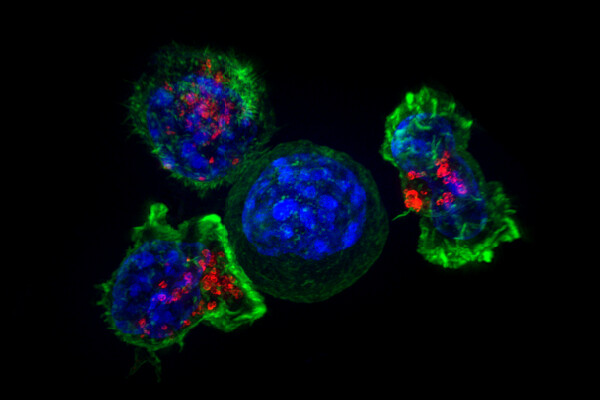
Natural killer (NK) cells target a cancel cell for destruction. Credit: NCI

Long used to treat depression, selective serotonin reuptake inhibitors (SSRIs) could help improve modern cancer treatments.

In mouse experiments, they slowed the growth of pancreatic and colon cancers, and when combined with immunotherapy, they even halted cancer growth long-term. In some cases the tumours disappeared completely. The researchers’ findings will now be tested in human clinical trials.

The neurotransmitter serotonin, known as the happiness molecule, has many other functions and is mostly found outside the brain, stored in blood platelets. Serotonin reuptake inhibitors (SSRIs), which are used to treat depression, increase serotonin levels in the brain but reduce serotonin in platelets.

Serotonin was already known to be involved  in carcinogenesis. Until now, however, the underlying mechanisms had remained obscure. Now, researchers at the University of Zurich (UZH) and University Hospital Zurich (USZ) have shown that SSRIs or other drugs that lower peripheral serotonin levels can also slow cancer growth in mice.

Pierre-Alain Clavien, Director, Department of Surgery and Transplantation, University of Zurich, said: “Drugs that are already approved for clinical use as antidepressants could help improve treatment of hitherto incurable pancreatic and colorectal cancers.”

Although recent years have seen new, effective treatments such as targeted antibodies or immunotherapies, most patients with advanced-stage abdominal tumours such as colon or pancreatic cancer die within a few years of diagnosis. Tumour cells eventually become resistant to the drugs and are no longer recognised by the immune system. Now, the researchers have discovered the role serotonin plays in this tumour cell resistance mechanism.

Cancer cells use serotonin to boost production of an immunoinhibitory molecule, PD-L1, which binds to killer T cells, rendering them dysfunctional. The cancer cells thus escape destruction by the immune system. In mouse models, the researchers were able to show that SSRIs or peripheral serotonin synthesis inhibitors prevent this mechanism. “This class of antidepressants and other serotonin blockers cause immune cells to recognise and efficiently eliminate tumor cells again. This slowed the growth of colon and pancreatic cancers in the mice,” Clavien said.
PD-L1, via which serotonin exerts its effect, is also the target of modern immunotherapies, also called immune checkpoint inhibitors. The researchers then tested a dual treatment approach in mice: immunotherapy, which increases the activity of killer T cells, was combined with drugs that reduce peripheral serotonin. Cancer growth was suppressed in the animal models in the long term, and in some mice, the tumours disappeared completely.

“Our results provide hope for cancer patients, as the drugs used are already approved for clinical use. Testing such drug combinations on cancer patients in clinical trials can be fast-forwarded due to the known safety and efficacy of the drugs,” said Clavien.

Source: University of Zurich