We are excited to extend a special invitation to you for our upcoming webinar on March 13th, titled “Advertising Your Practice.” Following the tremendous success of our previous webinars, we are thrilled to present this insightful session featuring industry experts JP Ellis, Claims & Legal expert at EthiQal, and Athol Gordon, Partner at Clyde & Co, renowned for their expertise in medical negligence.
This webinar will provide valuable insights into effectively advertising your practice, drawing from their extensive experience and expertise. Don’t miss this opportunity to gain valuable knowledge and network with other professionals in the field.
Researchers at Friedrich-Alexander-Universität Erlangen-Nürnberg (FAU) and Universitätsklinikum Erlangen have examined a man who has received more than 200 vaccinations against COVID. They learned of his case via newspaper reports.
Until now, it has been unclear what effects hypervaccination such as this would have on the immune system. Some scientists were of the opinion that immune cells would become less effective after becoming used to the antigens. This proved not to be the case in the individual in question: his immune system is fully functional. Certain immune cells and antibodies against SARS-CoV-2 are even present in considerably higher concentrations than is the case with people who have only received three vaccinations. The results have been published in the journal Lancet Infectious Diseases.
More than 60 million people in Germany have been vaccinated against SARS-Coronavirus 2, the majority of them several times. The man who has now been examined by researchers at FAU claims to have received 217 vaccinations for private reasons. There is official confirmation for 134 of these vaccinations.
“We learned about his case via newspaper articles,” explains Privatdozent Dr Kilian Schober from the Institute of Microbiology – Clinical Microbiology, Immunology and Hygiene (director Prof Dr Christian Bogdan). “We then contacted him and invited him to undergo various tests in Erlangen. He was very interested in doing so.” Schober and his colleagues wanted to know what consequences hypervaccination such as this would have. How does it alter the immune response?
As a rule, vaccinations contain parts of the pathogen or a type of construction plan that the vaccinated person’s cells can use to produce these pathogenic components themselves. Thanks to these antigens, the immune system learns to recognize the real pathogen in the event of a later infection. It can then react more rapidly and forcibly. But what happens if the body’s immune system is exposed extremely often to a specific antigen?
“That may be the case in a chronic infection such as HIV or Hepatitis B, that has regular flare-ups,” explains Schober. “There is an indication that certain types of immune cells, known as T-cells, then become fatigued, leading to them releasing fewer pro-inflammatory messenger substances.” This and other effects triggered by the cells becoming used to the antigens can weaken the immune system. The immune system is then no longer able to combat the pathogen so effectively.
Blood samples from several years investigated
The current study, which also involved researchers from Munich and Vienna, does not deliver any indication that this is the case, however. “The individual has undergone various blood tests over recent years;” explains Schober. “He gave us his permission to assess the results of these analyses. In some cases, samples had been frozen, and we were able to investigate these ourselves. We were also able to take blood samples ourselves when the man received a further vaccination during the study at his own insistence. We were able to use these samples to determine exactly how the immune system reacts to the vaccination.”
The results showed that the individual has large numbers of T-effector cells against SARS-CoV-2. These act as the body’s own soldiers that fight against the virus. The test person even had more of these compared to the control group of people who have received three vaccinations. The researchers did not perceive any fatigue in these effector cells, they were similarly effective as those in the control group who had received the normal number of vaccinations.
Memory T cells are another aspect the researchers explored. These are cells at a preliminary stage, before effector cells. Similar to stem cells, these cells can replenish numbers of suitable effector cells. “The number of memory cells was just as high in our test case as in the control group,” explains Katharina Kocher, one of the leading authors of the study. “Over all, we did not find any indication for a weaker immune response, rather the contrary.” In addition, even the 217th vaccination that the man received during the study still had an effect: the number of antibodies against SARS-CoV-2 increased significantly as a result.
Immune system remains active against other pathogens
Further tests indicated that there was no change to the immune system’s effectiveness against other pathogens. It therefore appears to be the case that the hypervaccination has not damaged the immune system as such. “Our test case was vaccinated with a total of eight different vaccines, including different available mRNA vaccines,” stated Dr Kilian Schober. “The observation that no noticeable side effects were triggered in spite of this extraordinary hypervaccination indicates that the drugs have a good degree of tolerability.”
However, this is one individual case. The results are not sufficient for making far-reaching conclusions let alone recommendations for the general public. “Current research indicates that a three dose vaccination, coupled with regular top-up vaccines for vulnerable groups, remains the favoured approach. There is no indication that more vaccines are required.”
A collaborative research endeavour by scientists in the Departments of Radiology, Neurology, and Psychology and Neuroscience at the UNC School of Medicine have demonstrated the deleterious effects of chronic cocaine use on the functional networks in the brain.
Their study titled “Network Connectivity Changes Following Long-Term Cocaine Use and Abstinence,” was highlighted by the editor of Journal of Neuroscience in “This Week in The Journal.” The findings show that continued cocaine use affects how crucial neural networks communicate with one another in the brain, including the default mode network (DMN), the salience network (SN), and the lateral cortical network (LCN).
“The disrupted communication between the DMN and SN can make it harder to focus, control impulses, or feel motivated without the drug,” said Li-Ming Hsu, PhD, assistant professor of radiology and lead author on the study. “Essentially, these changes can impact how well they respond to everyday situations, making recovery and resisting cravings more challenging.”
Hsu led this project during his postdoctoral tenure at the Center for Animal MRI in the Biomedical Research Imaging Center and the Department of Neurology. The work provides new insights into the brain processes that underlie cocaine addiction and creates opportunities for the development of therapeutic approaches and the identification of an imaging marker for cocaine use disorders.
The brain operates like an orchestra, where each instrumentalist has a special role crucial for creating a coherent piece of music. Specific parts of the brain need to work together to complete a task. The DMN is active during daydreams and reflections, the SN is crucial for attentiveness, and the CEN, much like a musical conductor, plays a role in our decision-making and problem-solving.
The research was motivated by observations from human functional brain imaging studies suggesting chronic cocaine use alters connectivity within and between the major brain networks. Researchers needed a longitudinal animal model to understand the relationship between brain connectivity and the development of cocaine dependence, as well as changes during abstinence.
Researchers employed a rat model to mimic human addiction patterns, allowing the models to self-dose by nose poke. Paired with advanced neuroimaging techniques, the behavioural approach enables a deeper understanding of the brain’s adaptation to prolonged drug use and highlights how addictive substances can alter the functioning of critical brain networks.
Hsu’s research team used functional MRI scans to explore the changes in brain network dynamics on models that self-administrated cocaine. Over a period of 10 days followed by abstinence, researchers observed significant alterations in network communication, particularly between the DMN and SN.
These changes were more pronounced with increased cocaine intake over the 10 days of self-administration, suggesting a potential target for reducing cocaine cravings and aiding those in recovery. The changes in these networks’ communication could also serve as useful imaging biomarkers for cocaine addiction.
The study also offered novel insights into the anterior insular cortex (AI) and retrosplenial cortex (RSC). The former is responsible for emotional and social processing; whereas, the latter controls episodic memory, navigation, and imagining future events. Researchers noted that there was a difference in coactivity between these two regions before and after cocaine intake. This circuit could be a potential target for modulating associated behavioural changes in cocaine use disorders.
“Prior studies have demonstrated functional connectivity changes with cocaine exposure; however, the detailed longitudinal analysis of specific brain network changes, especially between the anterior insular cortex (AI) and retrosplenial cortex (RSC), before and after cocaine self-administration, and following extended abstinence, provides new insights,” said Hsu.
A simple measure of obesity in children and adolescents that could replace body mass index (BMI) has been identified in a new study as waist circumference-to-height ratio. This measure detected excess fat mass and distinguished fat mass from muscle mass in children and adolescents more accurately than BMI. The study was conducted in collaboration between the University of Bristol in the UK, the University of Exeter in the UK, and the University of Eastern Finland, and the results were published in Pediatric Research.
The prevalence of childhood and adolescent obesity has reached an epidemic proportion and is affecting nearly 1 in 4 children in the current decade.
Unfortunately, obesity in the young population has been associated with cardiovascular, metabolic, neurological, musculoskeletal diseases and premature death in adulthood.
Accurately detecting overweight and obesity in children is critical to initiating timely interventions.
For nearly a generation, weight-to-height ratio charts and BMI for age and sex have been used to diagnose children with obesity.
However, these surrogate assessment tools are inaccurate in childhood and adolescence since they do not distinguish fat mass from muscle mass.For instance, two children with similar BMI might have different proportions of fat and muscle mass which makes obesity diagnosis difficult.
Expensive tools such as the dual-energy Xray absorptiometry (DEXA) scan accurately measures fat and muscle content of the body, but this device is not readily available in primary health care centres.
Recently, the American Academy of Pediatrics (AAP) published a clinical guideline on childhood obesity and requested urgent research on inexpensive and accurate alternative measures of obesity.
Emerging studies in adults appear to suggest that waist circumference-to-height ratio predicts premature death better than BMI and could be a potential added tool to BMI measure in improving the diagnosis of obesity.
However, there has been no former evaluation of how much waist circumference-to-height ratio measurements agree with DEXA-measured fat mass and muscle mass during growth from childhood to young adulthood.
In addition, the threshold of waist circumference-to-height ratio needed to detect excess fat in children is not clear, hence this study.
The current study is the largest and the longest follow-up DEXA-measured fat mass and muscle mass study in the world using the University of Bristol’s Children of the 90s data (also known as the Avon Longitudinal Study of Parents and Children). The study included 7,237 children (51% females) aged 9 years who were followed-up until age 24 years.
Their BMI and waist circumference-to-height ratio were measured at ages 9, 11, 15, 17, and 24 years.
When different devices measure a variable with an exact resemblance, it is described as perfect agreement of the devices with a score of 100%. For example, two DEXA scans from different manufacturers would measure fat mass with a near-perfect agreement of 99 to 100%.
Waist circumference-to-height ratio had a very high agreement of 81 — 89% with DEXA-measured total body fat mass and trunk fat mass, but a low agreement with muscle mass (24 — 39%). BMI had a moderate agreement with total fat mass and trunk fat mass (65 — 72%) and muscle mass (52 — 58%). Since BMI had a moderate agreement with DEXA-measured muscle mass, it is difficult to specify whether BMI measures excess fat or muscle mass.
The optimal waist circumference-to-height ratio cut points that predicted the 95th percentile of total fat mass in males was 0.53 and 0.54 in females.
This cut point detected 8 out of 10 males and 7 out of 10 females who truly had excess DEXA-measured fat.
The cut point also identified 93 out of 100 males and 95 out of 100 females who truly do not have excess fat.
“This study provides novel information that would be useful in updating future childhood obesity guidelines and policy statements. The average waist circumference-to-height ratio in childhood, adolescence, and young adulthood is 0.45, it does not vary with age and among individuals like BMI. Waist circumference-to-height ratio might be preferable to BMI assessment in children and adolescent clinics as an inexpensive tool for detecting excess fat. Parents should not be discouraged by the BMI or weight of their children but can inexpensively confirm whether the weight is due to increase in excess fat by examining their kid’s waist circumference-to-height ratio,” says Andrew Agbaje, an award-winning physician and pediatric clinical epidemiologist at the University of Eastern Finland.
An analysis of UK Biokank data showed that adults who reported drinking two litres or more of sugar- or artificially sweetened drinks per week had a higher risk of atrial fibrillation compared with adults who drank fewer such beverages, according to new research published in Circulation: Arrhythmia and Electrophysiology, a peer-reviewed journal of the American Heart Association.
The study also found that drinking one litre or less per week of pure, unsweetened juice, such as orange or vegetable juice, was associated with a lower risk of atrial fibrillation (AFib). However, the study could not confirm whether the sweetened drinks caused AFib, yet the association remained after accounting for a person’s genetic susceptibility to the condition.
Consuming sweetened drinks has been linked to Type 2 diabetes and obesity in previous research. This large study of health data in the UK Biobank is among the first to assess a possible link between sugar- or artificially sweetened beverages and AFib.
“Our study’s findings cannot definitively conclude that one beverage poses more health risk than another due to the complexity of our diets and because some people may drink more than one type of beverage,” said lead study author Ningjian Wang, MD, PhD, a researcher at the Shanghai Ninth People’s Hospital and Shanghai Jiao Tong University School of Medicine in Shanghai, China. “However, based on these findings, we recommend that people reduce or even avoid artificially sweetened and sugar-sweetened beverages whenever possible. Do not take it for granted that drinking low-sugar and low-calorie artificially sweetened beverages is healthy, it may pose potential health risks.”
The researchers reviewed data from dietary questionnaires and genetic data for more than 200 000 adults free of AFib at the time they enrolled in the UK Biobank, between 2006 and 2010. During the nearly 10-year follow-up period, there were 9362 cases of AFib among the study participants.
The analysis found:Compared to people who did not consume any sweetened drinks, there was a 20% increased risk of atrial fibrillation among people who said they drank more than 2 litres per week of artificially sweetened beverages; and a 10% increased risk among participants who reported drinking 2 litres per week or more of sugar-sweetened beverages.
People reporting 1 litre or less of pure fruit juice each week had an 8% lower risk of atrial fibrillation.
Participants who consumed more artificially sweetened beverages were more likely to be female, younger, have a higher body mass index and a higher prevalence of Type 2 diabetes.
Participants who consumed more sugar-sweetened beverages were more likely to be male, younger, have a higher body mass index, a higher prevalence of heart disease and lower socioeconomic status.
Those who drank sugar-sweetened beverages and pure juice were more likely to have a higher intake of total sugar than those who drank artificially sweetened drinks.
Smoking may have also affected risk, with smokers who drank more than two litres per week of sugar-sweetened beverages having a 31% higher risk of AFib, whereas no significant increase risk was noted for former smokers or people who never smoked.
“These novel findings on the relationships among atrial fibrillation risk and sugar- and artificially sweetened beverages and pure juice may prompt the development of new prevention strategies by considering decreasing sweetened drinks to help improve heart health,” Wang said.
Researchers also evaluated whether a genetic susceptibility to AFib was a factor in the association with sweetened beverages. The analysis found the AFib risk was high with the consumption of more than 2 litres of artificially sweetened drinks per week regardless of genetic susceptibility.
A new study published in JAMA Network Open shows oxygenation levels in the placenta, formed during the last three months of foetal development, are an important predictor of cortical growth and is likely a predictor of childhood cognition and behaviour.
“Many factors can disrupt healthy brain development in utero, and this study demonstrates the placenta is a crucial mediator between maternal health and foetal brain health,” said Emma Duerden, Canada Research Chair in Neuroscience & Learning Disorders at Western University, Lawson Health Research Institute scientist and senior author of the study.
The connection between placental health and childhood cognition was demonstrated in previous research using ultrasound, but for this study, Duerden, research scientist Emily Nichols and an interdisciplinary team of Western and Lawson researchers used magnetic resonance imaging (MRI), a far superior and more holistic imaging technique. This novel approach to imaging placental growth allows researchers to study neurodevelopmental disorders very early on in life, which could lead to the development of therapies and treatments.
“While ultrasound provides some measure of placental function, it is imprecise and prone to error, so MRI is just a bit more specific and precise,” said Nichols, lead author of the study. “You wouldn’t use MRI necessarily to diagnose placental growth restriction, you would use ultrasound, but MRI gives us a much better way to understand the mechanisms of the placenta and how placental function is affecting the foetal brain.”
The study was led by Duerden and Nichols and co-authored by researchers from the Faculty of Education, Schulich School of Medicine & Dentistry, Western Engineering and Lawson Health Research Institute.
The placenta, an organ that develops in the uterus during pregnancy, is the main conduit for oxygenation and nutrients to a fetus, and a vital endocrine organ during pregnancy.
“Anything a foetus needs to grow and thrive is mostly delivered through the placenta so if there is anything wrong with the placenta, the foetus might not be receiving the nutrients or the levels of oxygenation it needs to thrive,” said Nichols.
Poor nutrition, smoking, cocaine use, chronic hypertension, anaemia, and diabetes may result in foetal growth restriction and may cause problems for the development of the placenta. Foetal growth restriction is relatively common and happens in about six per cent of all pregnancies and globally impacts 30 million pregnancies each year.
“There can be many issues related to the healthy development of the placenta,” said Duerden. “If it does not develop properly, the foetal brain may not get enough oxygen and nutrients, which may affect childhood cognition and behaviour.”
Impact, affect and change
The study revealed that a healthy placenta in the third trimester particularly impacts the cortex and the prefrontal cortex, regions of the child’s brain that are important for learning and memory.
“An unhealthy placenta can place babies at risk for later life learning difficulties, or even something more serious, like a neurodevelopmental disorder,” said Duerden. “This research can open a lot of doors as we still don’t really understand everything there is to know about the placenta. We are just scratching the surface.”
The study, funded by grants from Brain Canada, The Children’s Health Research Institute, Canadian Institutes of Health Research, BrainsCAN and the Molly Towell Perinatal Research Foundation, is also an important first step in biomarking the impact of oxygenation levels in the placenta and considering changes for expectant mothers to deal with less-than-ideal placental conditions.
While oxygenation in the placenta in the third trimester predicts foetal cortical growth (development of the outermost layer of the brain – the cerebral cortex), results of the study indicate it may not affect subcortical maturation, or the deep grey and white matter structures of the brain.
Subcortical structures in the brain, responsible for children’s temperament or motor functions such as the amygdala and basal ganglia, may be more vulnerable to factors affecting the placenta in the second trimester.
“We now have a better understanding of how the placenta affects the cortex. With this basic knowledge, we now have an idea of how these two things are related and we can identify or benchmark healthy levels that lead to brain cortical growth,” said Nichols. “The subcortical regions of the brain appear to be unaffected by placental growth, at least in the healthy samples from our study.”
Duerden, Nichols, and the team scanned pregnant women twice (during their third trimester) for the study at Western’s Translational Imaging Research Facility.
“This is one of the few datasets in the world where there are two scans collected in utero during the third trimester. There are not many groups in the world doing foetal MRI, so it is a super-rich data set that allows us to look at growth over time,” said Duerden. “Western is probably one of the few places where we can do the research because we have the expertise and the facilities to do it.”
Heart disease researchers have identified a group of patients in whom international guidelines on aspirin use for heart health may not apply. In a study published in the medical journal Circulation, the findings of a review of data from three clinical trials challenge current best practice for use of the drug for primary prevention of heart disease or stroke – otherwise known as atherosclerotic cardiovascular disease.
The research examined the results from clinical trials involving more than 47 000 patients in 10 countries, including the US, the UK and Australia, which were published in 2018.
The analysis focused on findings for a subgroup of 7222 patients who were already taking aspirin before the three trials commenced. Those studied were at increased risk for cardiovascular disease and were taking aspirin to prevent the first occurrence of a heart attack or stroke.
The data showed a higher risk of heart disease or stroke – 12.5% versus 10.4% – for patients who were on aspirin before the trials and who then stopped, compared to those who stayed on the drug.
Analyses also found no significant statistical difference in the risk for major bleeding between the two groups of patients.
The research was led by Professor J. William McEvoy, Established Professor of Preventive Cardiology at University of Galway and Consultant Cardiologist at Saolta University Health Care Group, in collaboration with researchers in University of Tasmania and Monash University, Melbourne.
Professor McEvoy said: “We challenged the notion that aspirin discontinuation is a one-size-fits-all approach.”
The research team noted results from observational studies which suggest a 28% higher risk of heart disease or stroke among adults who were prescribed aspirin to reduce the risk for a first heart attack or stroke, but who subsequently chose to stop taking the aspirin without being told to do so by their doctor.
Based in large part on three major clinical trials published in 2018, international guidelines no longer recommend the routine use of aspirin to prevent the first occurrence of heart attack or stroke.
Importantly, aspirin remains recommended for high-risk adults who have already had a heart disease or stroke event, to reduce the risk of a second event.
The move away from primary prevention aspirin in recent guidelines is motivated by the increased risk of major bleeding seen with this common medication in the three trials, albeit major bleeding is relatively uncommon on aspirin and was most obvious only among trial participants who were started on aspirin during the trial, rather than those who were previously taking aspirin safely.
These trials primarily tested the effect of starting aspirin among adults who have not previously been treated with the drug to reduce the risk of atherosclerotic cardiovascular disease. Less is known about what to do in the common scenario of adults who are already safely taking aspirin for primary prevention.
Professor McEvoy said: “Our findings of the benefit of aspirin in reducing heart disease or stroke without an excess risk of bleeding in some patients could be due to the fact that adults already taking aspirin without a prior bleeding problem are inherently lower risk for a future bleeding problem from the medication. Therefore, they seem to get more of the benefits of aspirin with less of the risks.
“These results are hypothesis-generating, but at present are the best available data. Until further evidence becomes available, it seems reasonable that persons already safely treated with low-dose aspirin for primary prevention may continue to do so, unless new risk factors for aspirin-related bleeding develop.”
Participants in the Framingham Heart Study who achieved higher levels of education tended to age more slowly and went on to live longer lives as compared to those who did not achieve upward educational mobility, according to a new study at Columbia University Mailman School of Public Health and The Robert N. Butler Columbia Aging Center. Upward educational mobility was significantly associated with a slower pace of aging and lower risk of death. The results are published online in JAMA Network Open.
The Framingham Heart Study is an ongoing observational study first initiated in 1948 that currently spans three generations.
The Columbia analysis is the first to connect educational mobility with pace of biological aging and mortality. “We’ve known for a long time that people who have higher levels of education tend to live longer lives. But there are a bunch of challenges in figuring out how that happens and, critically, whether interventions to promote educational attainment will contribute to healthy longevity,” said Daniel Belsky, PhD, associate professor of Epidemiology at Columbia Mailman School and the Aging Center and senior author of the paper.
To measure pace of aging, the researchers applied an algorithm known as the DunedinPACE epigenetic clock to genomic data collected by the Framingham Heart Study. The latest findings showed that, according to the yardstick of the DunedinPACE epigenetic clock, two years of additional schooling translated to a two- to three percent slower pace of aging. This slowing in the pace of aging corresponds to a roughly 10 percent reduction in risk of mortality in the Framingham Heart Study, according to previous research by Belsky on the association of DunedinPACE with risk of death.
DunedinPACE was developed by the Columbia researchers and colleagues and reported in January 2022. Based on an analysis of chemical tags on the DNA contained in white blood cells, or DNA methylation marks, DunedinPACE is named after the Dunedin Study birth cohort used to develop it. DunedinPACE (stands for Pace of Aging Computed from the Epigenome), is measured from a blood test and functions like a speedometer for the aging process, measuring how fast or slow a person’s body is changing as they grow older.
Biological aging refers to the accumulation of molecular changes that progressively undermine the integrity and resilience capacity of our cells, tissues and organs as we grow older.
The Columbia researchers used data from 14 106 Framingham Heart Study spanning three generations to link children’s educational attainment data with that of their parents. They then used data from a subset of participants who provided blood samples during data collection to calculate the pace of biological aging using the DunedinPACE epigenetic clock. In primary analysis, the researchers tested associations between educational mobility, aging, and mortality in a subset of 3101 participants for whom educational mobility and pace of aging measures could be calculated.
For 2437 participants with a sibling, the researchers also tested whether differences in educational attainment between siblings was associated with a difference in the pace of aging.
“A key confound in studies like these is that people with different levels of education tend to come from families with different educational backgrounds and different levels of other resources,” explained Gloria Graf, a PhD candidate in the Department of Epidemiology supervised by Belsky, and first author of the study. “To address these confounds, we focused on educational mobility, how much more (or less) education a person completed relative to their parents, and sibling differences in educational attainment – how much more (or less) education a person completed relative to their siblings. These study designs control for differences between families and allow us to isolate the effects of education.”
By combining these study designs with the new DunedinPACE epigenetic clock, the researchers were able to test how education affects the pace of aging. Then, by linking the education and pace of aging data with longitudinal records of how long participants lived, the team was able to determine if a slower pace of aging accounted for increased longevity in people with more education.
“Our findings support the hypothesis that interventions to promote educational attainment will slow the pace of biological aging and promote longevity,” noted Graf. “Ultimately, experimental evidence is needed to confirm our findings,” added Belsky. “Epigenetic clocks like DunedinPace have potential to enhance such experimental studies by providing an outcome that can reflect impacts of education on healthy aging well before the onset of disease and disability in later life.”
“We found that upward educational mobility was associated both with a slower pace of aging and decreased risk of death,” said Graf. “In fact, up to half of the educational gradient in mortality we observed was explained by healthier aging trajectories among better-educated participants.” This pattern of association was similar across generations and held within family sibling comparisons: siblings with higher educational mobility tended to have a slower pace of aging as compared with their less educated siblings.
Photo by jamie he: https://www.pexels.com/photo/round-gray-bowl-563067/
New findings reveal that the body undergoes significant, systematic changes across multiple organs during prolonged periods of fasting. The results published in Nature Metabolism, demonstrate evidence of health benefits beyond weight loss, but also show that any potentially health-altering changes appear to occur only after three days without food.
By identifying the potential health benefits from fasting and their underlying molecular basis, researchers from Queen Mary University of London’s Precision Healthcare University Research Institute (PHURI) and the Norwegian School of Sports Sciences provide a road map for future research that could lead to therapeutic interventions – including for people that may benefit from fasting but cannot undergo prolonged fasting or fasting-mimicking, such as ketogenic, diets.
Over millennia, humans have developed the ability to survive without food for prolonged periods of time. Fasting is practiced by millions of people throughout the world for different medical and cultural purposes, including health benefits and weight loss. Since ancient times, it has been used to treat diseases such as epilepsy and rheumatoid arthritis.
During fasting, the body changes its source and type of energy, switching from consumed calories to using its own fat stores. However, beyond this change in fuel sources, little is known about how the body responds to prolonged periods without food and any health impacts – beneficial or adverse – this may have. New techniques allowing researchers to measure thousands of proteins circulating in our blood provide the opportunity to systematically study molecular adaptions to fasting in humans in great detail.
Researchers followed 12 healthy volunteers taking part in a seven-day water-only fast. The volunteers were monitored closely on a daily basis to record changes in the levels of around 3000 proteins in their blood before, during, and after the fast. By identifying which proteins are involved in the body’s response, the researchers could then predict potential health outcomes of prolonged fasting by integrating genetic information from large-scale studies.
As expected, the researchers observed the body switching energy sources – from glucose to fat stored in the body – within the first two or three days of fasting. The volunteers lost an average of 5.7kg of both fat mass and lean mass. After three days of eating after fasting, the weight stayed off – the loss of lean was almost completely reversed, but the fat mass stayed off.
For the first time, the researchers observed the body undergoing distinct changes in protein levels after about three days of fasting – indicating a whole-body response to complete calorie restriction. Overall, one in three of the proteins measured changed significantly during fasting across all major organs. These changes were consistent across the volunteers, but there were signatures distinctive to fasting that went beyond weight loss, such as changes in proteins that make up the supportive structure for neurons in the brain.
Claudia Langenberg, Director of Queen Mary’s Precision Health University Research Institute (PHURI), said:
“For the first time, we’re able to see what’s happening on a molecular level across the body when we fast. Fasting, when done safely, is an effective weight loss intervention. Popular diets that incorporate fasting — such as intermittent fasting — claim to have health benefits beyond weight loss. Our results provide evidence for the health benefits of fasting beyond weight loss, but these were only visible after three days of total caloric restriction — later than we previously thought.”
Maik Pietzner, Health Data Chair of PHURI and co-lead of the Computational Medicine Group at Berlin Institute of Health at Charité, said:
“Our findings have provided a basis for some age-old knowledge as to why fasting is used for certain conditions. While fasting may be beneficial for treating some conditions, often times, fasting won’t be an option to patients suffering from ill health. We hope that these findings can provide information about why fasting is beneficial in certain cases, which can then be used to develop treatments that patients are able to do.”
Photo by Miguel Á. Padriñán: https://www.pexels.com/photo/syringe-and-pills-on-blue-background-3936368/
A company headquartered in Johannesburg will start making flexible silicone rings to protect women from HIV. The move signals a strong vote of confidence in an African firm to supply the ring at adequate scale and affordable prices, and a crucial step to making the continent self-reliant, reports Catherine Tomlinson.
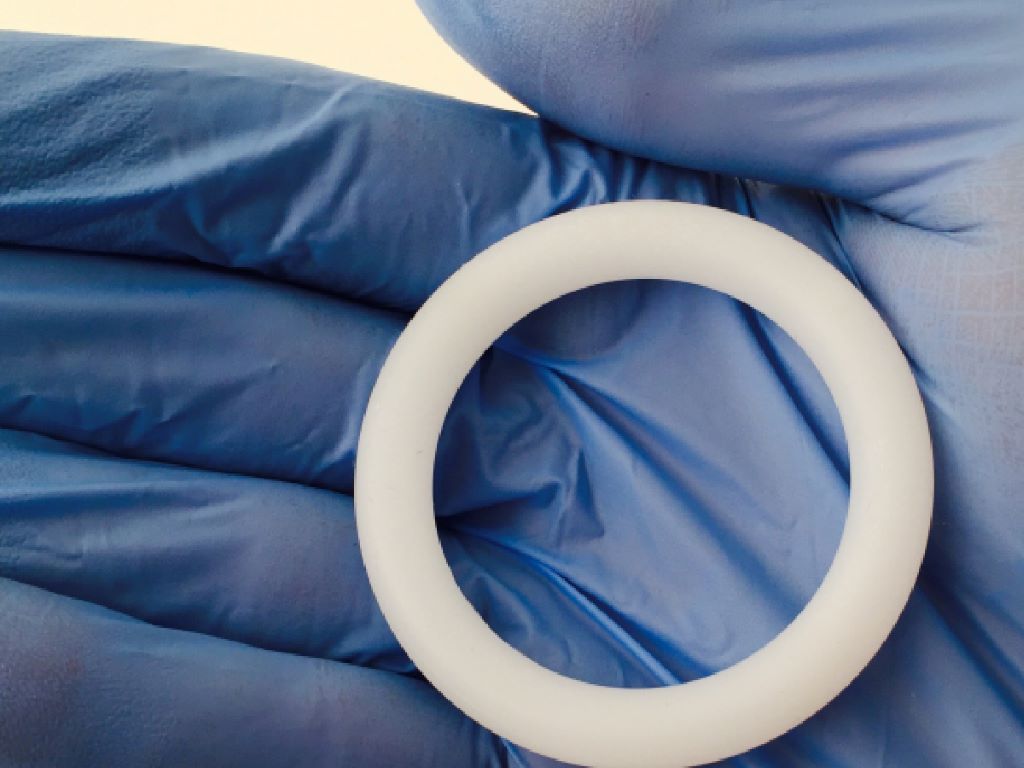
A South African company has secured the rights to manufacture a vaginal ring used to prevent HIV infection. The ring, which is inserted and removed by the user, provides protection for a month, after which it has to be replaced with a new ring. The ring contains an antiretroviral drug called dapivirine.
While studies show that the dapivirine vaginal ring is less effective at preventing HIV than HIV prevention pills and injections, it has benefits over other tools that have led the World Health Organization (WHO) to recommend its inclusion in the package of sexual health services available to women.
One advantage of the ring over HIV prevention pills is that it can be used discreetly by women, allowing users to use the ring without having to negotiate or discuss its use and purpose with their sexual partners. This is particularly important in the context of South Africa where women face high rates of gender-based violence, which erodes their autonomy over their bodies and sexual and reproductive health.
“We need to give women more control over their health and bodies and access to a range of safe and effective options, including the dapivirine ring, to choose from so they can decide to use what works best for them at different times of their lives,” wrote several prominent women African activists in 2022.
Limited access
While the WHO recommended that the ring is offered to women, its current price is a barrier to broad use and rollout in South Africa. The only dapivirine vaginal ring approved by the South African Health Products Regulatory Authority that is currently available in the country is called the DapiRing.
The DapiRing is manufactured by a Swedish company, Sever Pharma Solutions, under a licence from the Population Council (formerly the International Partnership for Microbicides). It can be bought in South Africa’s private sector for R320, excluding dispensing fees.
The DapiRing is not available in South Africa’s public sector outside of study and pilot sites, as the National Essential Medicines List Committee, the body that determines which health technologies should be available in the country’s public health facilities, determined that the product is unaffordable at its current price. They estimate that the product will become affordable for South Africa’s public sector at a threshold price of R52 per ring.
Local company to boost access
The Population Council, the entity that owns the intellectual property on the dapivirine vaginal ring, selected South African pharmaceutical company Kiara Health to manufacture and supply the ring across Africa.
Kiara Health’s CEO, Dr Skhumbuzo Ngozwana, told Spotlight that while it is not yet known what the price of the Kiara manufactured ring will be, it is expected to be lower than the current price of the Swedish-manufactured DapiRing.
Licensc to manufacture
The council told Spotlight that the initial focus of the licence and partnership will be to develop manufacturing capacity at Kiara Health to supply the dapivirine vaginal ring across Africa. In the long term it is hoped that Kiara will be able to serve markets outside of Africa where there is a need for the ring.
The Population Council’s selection of an African-based manufacturing partner is notable as holders of intellectual property protections on HIV health technologies have typically sought out companies in Asia, and India in particular, as manufacturing partners.
Professor Linda-Gail Bekker, CEO of the Desmond Tutu HIV Foundation, told Spotlight: “If the “COVID-19 pandemic taught us anything, it is the value of being self-reliant as a region – being able to manufacture the vaginal ring is a step closer to Southern African self-reliance.”
Ngozwana said that Kiara Health appreciates that the Population Council have bucked the trend by not going to the East. “[A]ll these new technologies tend to go to the East, but instead they’ve partnered with an African company”.
Dapivirine vaginal ring. Credit: Columbia University Mailman School of Public Health
He added that future technology transfers to other manufacturers in Africa may be pursued if there is a need.
Exclusive supply licence
The Council told Spotlight that it intends to pursue an exclusive supply licence with Kiara Health for the sole supply of the dapivirine ring in Africa. The pursuit of an exclusive supply licence is a strong vote of confidence by the Population Council in the ability of Kiara Health to supply the ring at adequate scale and affordable prices.
Since Kiara Health’s exclusivity is for the supply of the ring, if there is a need, the company will be able to supply a dapivirine vaginal ring that is made by the Population Council’s Swedish manufacturing partner, Sever Pharma Solutions, that is already widely authorised for use in countries in Africa.
This would also guard against supply shortfalls that sometimes occur when only one manufacturer supplies a market, doctor Brid Devlin, the Population Council’s chief scientific officer, told Spotlight. “We would have two registered manufacturers right out the gate to guard against any shortfalls and have the opportunity to continue the supply as the demand grows.”
Why Kiara Health was chosen
Devlin added that the Population Council did not have a formal bid process through which Kiara Health was selected as the manufacturing partner for the ring, but rather that Kiara Health was selected following years of engagement with the company.
“We had a team that went to Kiara last year to see this site and it was a really impressive operation, both in terms of the staff but also the entire manufacturing operation,” she said.
Ngozwana told Spotlight that Kiara Health has existing manufacturing facilities in Johannesburg where capacity to produce the ring will be established.
Kiara Health’s manufacturing facilities already hold the quality assurance certifications (cGMP certification) required to manufacture medicines and have adequate space in Johannesburg to establish and scale manufacturing capacity for the ring, Ngozwana told Spotlight.
What is needed to manufacture the ring locally?
Critical steps include technology transfer, securing financing, procuring and importing manufacturing equipment, developing validation batches, and seeking regulatory approvals.
At this stage, there are still unknowns regarding the extent of data and testing that will be required to gain regulatory approval of Kiara Health’s dapivirine vaginal ring. To aid regulatory authorisation, Ngozwana and Devlin noted that Kiara Health would use the same manufacturing technology and inputs, including active pharmaceutical ingredients (API) used by Sever Pharma Solutions. This will require Kiara Health to import manufacturing equipment and API from Europe.
However, in the long term, Ngozwana said that Kiara Health would hope to increasingly procure manufacturing inputs, including potentially dapivirine API from the Pretoria-based API manufacturer CPT Pharma. (Spotlight previously reported on CPT Pharma’s work on API production here).
Ngozwana and Devlin told Spotlight that the anticipated time-limiting factors for establishing manufacturing capacity are securing financing and procuring and importing manufacturing equipment.
Funding has long been a challenge for African-based pharmaceutical companies since it has historically been scarce and only available on unfavourable terms. However, Ngozwana told Spotlight that Kiara Health is already engaging potential funders for support and exploring different financing sources, including grants and debt instruments.
Ngozwana and Devlin noted that technology transfer, which is a process for transferring manufacturing skills and knowledge, has already begun.
Can this license boost further domestic manufacturing capacity?
While vaginal rings are a relatively new type of health technology, they have multiple potential applications. A vaginal ring to prevent pregnancy has been available since the early 2000s and work is underway to develop a ring that is effective in combating both HIV and pregnancy. A dapivirine ring that reduces one’s risk of contracting HIV for three months – as opposed to one month – is also under development.
Kiara Health will seek to position itself to manufacture other vaginal rings entering the market, Ngozwana said. He added that in the long term, the company hoped that the partnership with the Population Council will be broadened to allow for local manufacturing of other sexual and reproductive health technologies in their product portfolio.