International Women’s Day ‘24: “Creating a Future for All and Applying a Human-centred, Women-informed Lens to AI in Healthcare.”

Photo by The Creative Exchange on Unsplash

Investing in women’s health is not only a moral imperative; it makes economic sense. International Women’s Day (8 March 2024) should serve as a rallying cry that it is time to turn talk into action – and a lasting commitment to regenerating women’s health.

“Shaping the private and public health agenda through increased advocacy and awareness, with governments and medical professionals putting women’s health on – and higher up – the agenda and targeting sources of stigma and bias – this is what we need to do right now,” says Jo Pohl, Associate Director at global management consultancy Kearney.

Pohl was speaking (this week) on the eve of International Women’s Day, and following an event organised by Kearney to commemorate the day. Guests listened to the story of ‘Tina B’, the longest-surviving heart and bilateral lung transplant recipient in Africa (during a gathering at Kearney’s Johannesburg offices on Wednesday 6 March 2024).

The event explored Tina’s resilience, the challenges she faced, the odds she beat, and just how different her journey could have been with the advent of Artificial Intelligence (AI) in donor healthcare decision-making. 

She shared her opinion on the use of AI in selecting organ donors. Tina told guests at the event that she believes if AI had to decide whether she should receive her surgery or not, it would have decided against her based on inherent biases or rather what the AI was asked to solve for.

According to her, AI would have assessed the state of her lungs and heart and potentially rejected her as a candidate for organ donation. Since she needed three organs, AI would have viewed her as one, high risk candidate versus the potential to save three “better” candidates.

The human element – from intuition to hope and optimism – is key. She told guests that her doctors echoed the same in terms of leveraging experience, expertise, and an understanding of a patient’s mindset.

“I am not an expert in AI, but I am an expert in being a patient,” she said. “AI could help inform options but needs to be questioned, and experienced doctors need to be able to apply their human intuition in any results.”

Typically, there are over 4000 people on the organ transplant waiting list at any given time, with only 0.2% of the population opting-in for organ donation. These kinds of numbers lead to questions such as “how is one candidate chosen over another and why”, questions that become even more important as we increasingly incorporate AI in healthcare decisions.  

“Just think of the implications for healthcare professionals, researchers, and policymakers to develop and implement AI in healthcare ethically, equitably, and inclusively, if we consider transplant patients,” says Pohl.

“AI in healthcare should be used to benefit all members of society, regardless of gender, race, or socio-economic status. How can we co-create a world where everyone is seen, heard and the human considered in healthcare decision-making,” says Theo Sibiya, Kearney’s Africa MD.

“There needs to be a deliberate focus on keeping women front of mind and lending our expertise to continue breaking down barriers such as the gender health gap by redesigning healthcare that can put women first,” he adds.

Tina B has now become an advocate for organ donation and aims to help others going through the waiting process. She told guests of her experience of having to wait three years on the organ donor waiting list.

“You start to lose hope. You get excited to get on the list, but time drags on, and your body starts to fail you…it is a very dark place. I was tired of fighting to breathe, to stay awake; I remember saying to my God if you don’t give me a transplant, then take me home.”

AI has the potential to revolutionise the healthcare industry. With the ability to analyse large amounts of data quickly, AI can help healthcare professionals make more informed decisions, improving patient outcomes. It is an “and” versus “or” proposition.

“We need to be mindful, however, of inherent gender biases, overcome programming that favours males, and address flaws in the interpretation of data that exclude human perspectives. Doing so can make AI in healthcare more representative and inclusive,” says Sibiya.  

Pohl explains that a women-informed lens is essential to ensuring equity and inclusivity in AI development and application.

“Regenerate is Kearney’s answer to “what’s next” in a post-resilience world and a timely approach to how businesses can and should be ready for the future. Tina B is a living example of regeneration, her story amplifies our Kearney commitment to a global campaign to “be the difference” for women’s health which we launched in Davos earlier this year,” says Sibiya.

“This amplifies our vision, rooted in a regenerative mindset that recognises the interconnectedness of our actions and their impact on the world around us, including how we make and execute healthcare and people decisions.”

As part of this vision, an open letter was released by Kearney and FemTechnology during the World Economic Forum Annual Meeting on behalf of the Redesigning Healthcare with Women in Mind signatories.

The letter is addressed to all those within the healthcare ecosystem whose innovations have impact and decisions have power: from pharma, biotech, and medtech firms to investors, tech companies, and consumer health players serving women and girls.

The signatories call for a commitment to challenge institutional gender inequalities and shape the future of public and private healthcare for those it has failed for far too long.

Read the open letter here: www.kearney.com/industry/health/redesigning-healthcare-with-women-in-mind/open-letter

#KearneyWomen #AIinHealthcare #InternationalWomensDay2024 #IWD2024

Salt Substitute is an Effective Way of Cutting Hypertension in Older Adults

Credit: Pixabay CC0

Replacing table salt with a salt substitute can reduce incidence of hypertension in older adults without increasing their risk of hypotension episodes, according to a recent study in the Journal of the American College of Cardiology. Participants using a salt substitute had a 40% lower incidence and likelihood of experiencing hypertension compared to those who used regular salt.

One of the most effective ways to reduce hypertension risk, one of the world’s leading health risks, is to reduce sodium intake. This study looks at salt substitutes as a better solution to control and maintain healthy blood pressure than reducing salt alone.

“Adults frequently fall into the trap of consuming excess salt through easily accessible and budget-friendly processed foods,” said Yangfeng Wu, MD, PhD, lead author of the study and Executive Director of Peking University Clinical Research Institute in Beijing, China.

“It’s crucial to recognise the impact of our dietary choices on heart health and increase the public’s awareness of lower-sodium options.”

Researchers in this study evaluated the impact of sodium reduction strategies on blood pressure in elderly adults residing in care facilities in China.

While previous studies prove that reducing salt intake can prevent or delay new-onset hypertension, long-term salt reduction and avoidance can be challenging.

The DECIDE-Salt study included 611 participants 55 years or older from 48 care facilities split into two groups: 24 facilities (313 participants) replacing usual salt with the salt substitute and 24 facilities (298 participants) continuing the use of usual salt.

All participants had blood pressure <140/90mmHg and were not using anti-hypertension medications at baseline.

The primary outcome was participants who had incident hypertension, initiated anti-hypertension medications or developed major cardiovascular adverse events during follow-up.

At two years, the incidence of hypertension was 11.7 per 100 people-years in participants with salt substitute and 24.3 per 100 people-years in participants with regular salt.

People using the salt substitute were 40% less likely to develop hypertension compared to those using regular salt. Furthermore, the salt substitutes did not cause hypotension, which can be a common issue in older adults.

“Our results showcase an exciting breakthrough in maintaining blood pressure that offers a way for people to safeguard their health and minimise the potential for cardiovascular risks, all while being able to enjoy the perks of adding delicious flavour to their favourite meals,” Wu said.

“Considering its blood pressure – lowering effect, proven in previous studies, the salt substitute shows beneficial to all people, either hypertensive or normotensive, thus a desirable population strategy for prevention and control of hypertension and cardiovascular disease.”

Limitations of the study include that it is a post-hoc analysis, study outcomes were not pre-specified and there was a loss of follow-up visits in many patients.

Analyses indicated that these missing values were at random, and multiple sensitivity analyses supports the robustness of the results.

In an accompanying editorial comment, Rik Olde Engberink, MD, PhD, researcher, nephrologist and clinical pharmacologist at Amsterdam University Medical Center’s Department of Internal Medicine, said the study provides an attractive alternative to the failing strategy to reduce the intake of salt worldwide, but questions and effort remain.

“In the DECIDE-Salt trial, the salt substitute was given to the kitchen staff, and the facilities were not allowed to provide externally sourced food more than once per week,” Olde Engberink said. “This approach potentially has a greater impact on blood pressure outcomes, and for this reason, salt substitutes should be adopted early in the food chain by the food industry so that the sodium-potassium ratio of processed foods will improve.”

Source: American College of Cardiology

Microplastics Found in Every Human Placenta Tested in Study

Image by Scientific Animations CC4.0

A flurry of recent studies has found that microplastics are present in virtually everything we consume, from bottled water to meat and plant-based food. Now, University of New Mexico Health Sciences researchers have used a new analytical tool to measure the microplastics present in human placentas.

In a study published in the journal Toxicological Sciences, a team led by Matthew Campen, PhD, Regents’ Professor in the UNM Department of Pharmaceutical Sciences, reported finding microplastics in all 62 of the placenta samples tested, with concentrations ranging from 6.5 to 790 micrograms per gram of tissue.

Although those numbers may seem small, Campen is worried about the health effects of a steadily rising volume of microplastics in the environment.

For toxicologists, “dose makes the poison,” he said. “If the dose keeps going up, we start to worry. If we’re seeing effects on placentas, then all mammalian life on this plant could be impacted. That’s not good.”

In the study, Campen and his team, partnering with colleagues at the Baylor College of Medicine and Oklahoma State University, analyzed donated placenta tissue. In a process called saponification, they chemically treated the samples to “digest” the fat and proteins into a kind of soap.

Then, they spun each sample in an ultracentrifuge, which left a small nugget of plastic at the bottom of a tube. Next, using a technique called pyrolysis, they put the plastic pellet in a metal cup and heated it to 600 degrees Celsius, then captured gas emissions as different types of plastic combusted at specific temperatures.

“The gas emission goes into a mass spectrometer and gives you a specific fingerprint,” Campen said. “It’s really cool.”

The researchers found the most prevalent polymer in placental tissue was polyethylene, which is used to make plastic bags and bottles. It accounted for 54% of the total plastics. Polyvinyl chloride (better known as PVC) and nylon each represented about 10% of the total, with the remainder consisting of nine other polymers.

Marcus Garcia, PharmD, a postdoctoral fellow in Campen’s lab who performed many of the experiments, said that until now, it has been difficult to quantify how much microplastic was present in human tissue. Typically, researchers would simply count the number of particles visible under a microscope, even though some particles are too small to be seen.

With the new analytical method, he said, “We can take it to that next step to be able to adequately quantify it and say, ‘This is how many micrograms or milligrams,’ depending on the plastics that we have.”

Plastic use worldwide has grown exponentially since the early 1950s, producing a metric ton of plastic waste for every person on the planet. About a third of the plastic that has been produced is still in use, but most of the rest has been discarded or sent to landfills, where it starts to break down from exposure to ultraviolet radiation present in sunlight.

“That ends up in groundwater, and sometimes it aerosolizes and ends up in our environment,” Garcia said. “We’re not only getting it from ingestion but also through inhalation as well. It not only affects us as humans, but all off our animals — chickens, livestock — and all of our plants. We’re seeing it in everything.”

Campen points out that many plastics have a long half-life — the amount of time needed for half of a sample to degrade. “So, the half-life of some things is 300 years and the half-life of others is 50 years, but between now and 300 years some of that plastic gets degraded,” he said. “Those microplastics that we’re seeing in the environment are probably 40 or 50 years old.”

While microplastics are already present in our bodies, it is unclear what health effects they might have, if any. Traditionally, plastics have been assumed to be biologically inert, but some microplastics are nanometres in size and are capable of crossing cell membranes, he said.

Campen said the growing concentration of microplastics in human tissue might explain puzzling increases in some types of health problems, such as inflammatory bowel disease and colon cancer in people under 50, as well as declining sperm counts.

The concentration of microplastics in placentas is particularly troubling, he said, because the tissue has only been growing for eight months (it starts to form about a month into a pregnancy). “Other organs of your body are accumulating over much longer periods of time.”

Campen and his colleagues are planning further research to answer some of these questions, but in the meantime he is deeply concerned by the growing production of plastics worldwide.

“It’s only getting worse, and the trajectory is it will double every 10 to 15 years,” he said. “So, even if we were to stop it today, in 2050 there will be three times as much plastic in the background as there is now. And we’re not going to stop it today.”

Source: University of New Mexico Health Sciences Center

Artificial Intelligence Probes Link between Smoking in Pregnancy and Behavioural Disorders in Newborns

Source: Pixabay CC0

Although several studies have linked smoking during pregnancy with neurodevelopmental disorders, the results of behavioural experiments in mice prenatally exposed to nicotine have been inconsistent. In a recent study, scientists from Japan developed a deep learning-based framework to automatically observe and classify mice behaviour in such experiments, producing more accurate and unbiased results. In their results, published recently in Cells, they show that prenatal exposure to nicotine could increase the risk of autism spectrum- and attention deficit/hyperactivity disorders in newborns.

The fact that smoking is a risk factor for several diseases, including cancer, stroke, and diabetes, has been known for approximately half a century. However, over the past few decades, scientists have brought to light many of the detrimental effects of smoking during pregnancy, linking this habit to high infant mortality, failed delivery, and low body weight at birth. In addition, recent studies suggest that prenatal nicotine exposure (PNE) may be related to neurodevelopmental disorders, such as attention deficit/hyperactivity disorder (ADHD) and autism spectrum disorder (ASD).

For a long time now, scientists have used animal models (like rodents) to understand how PNE leads to neurodevelopmental disorders. By carefully analysing the behaviour of rodents, they can infer whether PNE is causing neurological changes and the brain regions affected by it; this can later be confirmed through histological analyses.

Unfortunately, thus far, studies on behavioural changes induced by PNE in mice have shown varied results, some of which are contradictory. Although there could be multiple reasons behind these discrepancies, human error and bias are prime suspects. In general, the assessment of complex animal behaviours, especially social interactions, relies on the efforts of human observers, which introduces a baseline level of subjectivity that is hard to dispel. But what if we can leverage artificial intelligence (AI) to produce more accurate and unbiased results from observations of PNE mice behaviour?

In this study , researchers from the Department of Molecular and Cellular Physiology at the Shinshu University School of Medicine, including graduate student Mengyun Zhou, Assistant Professor Takuma Mori, and Professor Katsuhiko Tabuchi, developed and trained a deep learning-based system to automatically analyse footage from behavioural experiments on mice. They used this tool to explore the behavioural changes induced by PNE in mice without observer biases, seeking to shed light on the link between nicotine and neurodevelopmental disorders.

The proposed AI-based framework relied on a combination of two well-established open-source toolkits, namely DeepLabCut and Simple Behavioral Analysis (SimBA). “AI tools can label the body parts of animals in a markerless video footage and precisely estimate their poses using supervised machine learning,” explains Prof Tabuchi. “Since animal behaviours are defined as a specific arrangement of body parts over a short period of time, deep-learning toolkits like SimBA can use the pose estimations obtained with DeepLabCut to classify different types of animal behaviours.”

After reaching an optimal training protocol for their framework using manually labelled data, the researchers conducted several experiments using PNE and control mice, looking for indicators of ADHD- and ASD-like behaviours. First, they carried out cliff avoidance reaction tests, which are used to test impulsivity. In these tests, they placed the subject mouse on top of a slightly elevated platform and took note, both manually and with the AI system, of how long the mouse waited before jumping down the platform. The test results suggested that PNE mice are more impulsive, a behavioural feature of ADHD in humans.

They also tested the working memory of mice using a Y-shaped maze and counted the number of times each mouse spontaneously switched from one arm of the maze to another. “We observed a decrease in the spontaneous alteration in PNE mice, suggesting that their working memory was altered, which is another behavioural feature of ADHD,” comments Mengyun Zhou. “These results suggest prenatal exposure to nicotine may cause ADHD in mice, which is consistent with clinical reports in humans.”

Finally, the researchers conducted open-field and social-interaction experiments, which represented the main challenge for their AI-based system. In these experiments, the researchers observed either one or two mice behaving freely in a large enclosure and looked for indicators of anxiety and social behaviours, such as grooming and following. Interestingly, PNE mice exhibited social behavioural deficits and increased anxiety which are features of ASD. Subsequent histological analysis of hippocampal brain tissue confirmed decreased neurogenesis, a hallmark of ASD. Thus, it appears that smoking may not only increase the risk of ADHD, but also ASD.

Worth noting, the results obtained using the AI-based system were highly reliable, as Prof Tabuchi highlights: “We validated the accuracy of our behavioural analysis framework by drawing a careful comparison between the results generated by the model and behaviour assessments made by multiple human annotators, which is considered the gold standard.” These analyses cement the potential of the proposed approach and showcase its capabilities for many types of behavioural studies.

With any luck, further efforts will pave the way to a solid understanding of mechanisms behind neurodevelopmental disorders like ASD and ADHD, ultimately leading to better diagnostic tools and therapeutic methods.

Source: Shinshu University

Revealing a Hidden Threat: Viral Infections Pose Early Heart Risks

Human heart. Credit: Scientific Animations CC4.0

In a potentially game-changing development, scientists at Virginia Tech have revealed a new understanding of sometimes fatal viral infections that affect the heart.

The focus has mostly been on myocarditis, which is often triggered by the body’s immune response to a viral infection. Now, a new study led by James Smyth, associate professor at the Fralin Biomedical Research Institute, sheds new light on this notion, revealing that the virus itself creates potentially dangerous conditions in the heart before inflammation sets in.

The discovery, now online and set to appear in the March 29 issue of Circulation Research, suggests completely new directions to diagnose and treat viral infections affecting the heart.

Given the high incidence of viral-related myocarditis leading to sudden cardiac death, the insight is crucial. Up to 42% of sudden cardiac deaths in young adults are attributed to myocarditis, and of these cases viral infection is the leading cause.

“From a clinical perspective, our understanding of viral infection of the heart has focused on inflammation, causing problems with the rate or rhythm of the heartbeat,” Smyth said. “But we have found an acute stage when the virus first infects the heart and before the body’s immune response causes inflammation. So even before the tissue is inflamed, the heart is being set up for arrhythmia.”

To make this discovery, researchers focused on adenovirus, a common culprit in cardiac infection and myocarditis, using Mouse Adenovirus Type-3 to replicate the human infection process.

They found that early in the infection, the virus disrupts critical components of the heart’s communication and electrical systems.

As a result, even before symptoms appear, the adenoviral infection creates conditions that disrupt the heart’s gap junctions and ion channels, according to virologist Rachel Padget, the study’s first author who worked in the Smyth lab while completing a doctoral degree from the Virginia Tech Translational Biology, Medicine, and Health graduate program.

Gap junctions are like tiny tunnels between heart cells that allow them to communicate, and ion channels are like gates in the cell membranes that help maintain the right balance of ions needed for the heart to generate normal patterns of electrical activity that allow it to beat properly.

When adenoviral infection disturbs these communication bridges and gatekeepers, it creates a situation where the heart might develop irregular patterns of electrical activity called arrhythmias affecting its mechanical beating and blood pumping capacity, and that can lead to sudden cardiac problems, especially in people with active infections.

Now, by targeting specific heart changes induced by viral infections at the molecular level, researchers aim to reduce the risk of cardiac issues in people grappling with viral illnesses.

“Individuals who have acute infections can look normal by MRI and echocardiography, but when we delved into the molecular level, we saw that something very dangerous could occur,” Smyth said. “In terms of diagnostics, we can now work with our colleagues here to start looking ways to analyse blood for a biomarker of the more serious problem. People get cardiac infections all the time and they recover. But can we identify what’s different about individuals that are at a higher risk to have the arrhythmia, possibly through a simple blood test in the doctor’s office.”

Source: Virginia Tech

Leakage of Mitochondrial DNA may Drive Many Inflammatory Disorders

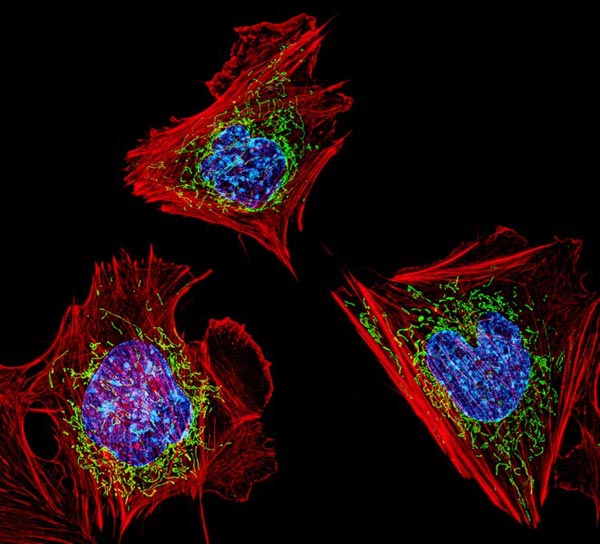
Cells with nuclei in blue, energy factories in green and the actin cytoskeleton in red. Credit: NIH

A new discovery, which was published in Nature Cell Biology, reveals how genetic material can escape mitochondria, prompting the body to launch a damaging immune response, setting off diseases such as lupus and rheumatoid arthritis. By developing therapies to target this process, doctors may one day be able to stop the harmful inflammation and prevent the toll it takes on our bodies.

“When mitochondria don’t correctly replicate their genetic material, they try to eliminate it. However, if this is happening too often and the cell can’t dispose of all of it, it can cause inflammation, and too much inflammation can lead to disease, including autoimmune and chronic diseases,” said researcher Laura E. Newman, PhD, of the University of Virginia School of Medicine. “Now that we are beginning to understand how this inflammation starts, we might be able to prevent this process, with the ultimate goal of limiting inflammation and treating disease.”

Powering inflammation

Mitochondria have their own set of genetic material, separate from the DNA that serves as the operating instructions for our cells. Scientists have known that this mitochondrial DNA, known as mtDNA, can escape into our cells and cause inflammation. But exactly what caused this has been a mystery until now.

“We knew that mtDNA was escaping mitochondria, but how was still unclear,” said Gerald Shadel, PhD, director of the San Diego-Nathan Shock Center of Excellence in the Basic Biology of Aging at the Salk Institute. “Using imaging and cell biology approaches, we’re able to trace the steps of the pathway for moving mtDNA out of the mitochondria, which we can now try to target with therapeutic interventions to hopefully prevent the resulting inflammation.”

Shadel and Newman, then a postdoctoral researcher in Shadel’s lab, and their collaborators used sophisticated imaging techniques to determine what was happening inside the leaky mitochondria. They found that the leak was triggered by a malfunction in mtDNA replication. This caused the accumulation of protein masses caused nucleoids.

To try to fix this problem, the cell containing the faulty mitochondrion begins to export the excess nucleoids to its cellular trash bins. But the trash bins, called endosomes, can become overwhelmed by the volume of debris, the scientists found. These overburdened endosomes respond by releasing mtDNA into the cell — in short, the trash can overflows.

“We had a huge breakthrough when we saw that mtDNA was inside of a mysterious membrane structure once it left mitochondria. After assembling all of the puzzle pieces, we realised that structure was an endosome,” Newman said. “That discovery eventually led us to the realisation that the mtDNA was being disposed of and, in the process, some of it was leaking out.”

The cell responds to this hazardous waste spill by flagging the nucleoids as foreign DNA, like a virus, and launches an immune response that results in harmful inflammation, the scientists determined.

“Using our cutting-edge imaging tools for probing mitochondria dynamics and mtDNA release, we have discovered an entirely novel release mechanism for mtDNA,” said researcher Uri Manor, PhD, former director of the Waitt Advanced Biophotonics Core at Salk and current assistant professor at UC San Diego. “There are so many follow-up questions we cannot wait to ask, like how other interactions between organelles control innate immune pathways, how different cell types release mtDNA, and how we can target this new pathway to reduce inflammation during disease and aging.”

Newman will continue to seek these answers in her new role at the UVA School of Medicine’s Department of Cell Biology. “We want to understand the physiological and disease contexts where this process can become activated,” she said. “For example, many viruses attack mitochondria during infection, so we will be testing whether mitochondria purposely use this pathway to sound the alarm against invading viruses, and whether over-reliance on this pathway to fight off infection can later trigger chronic diseases.”

Source: University of Virginia Health System

How Gamma Rhythm Light and Sound Strips Amyloid in Alzheimer’s Mouse Models

Photo by Fakurian Design on Unsplash

Studies at MIT and elsewhere are producing mounting evidence that light flickering and sound clicking at the gamma brain rhythm frequency of 40Hz can reduce Alzheimer’s disease (AD) progression and treat symptoms in human volunteers as well as lab mice. In a new study in Nature using a mouse model of the disease, researchers at The Picower Institute for Learning and Memory of MIT reveal a key mechanism that may contribute to these beneficial effects: clearance of amyloid proteins, a hallmark of AD pathology, via the brain’s glymphatic system, a recently discovered “plumbing” network parallel to the brain’s blood vessels.

“Ever since we published our first results in 2016, people have asked me how does it work? Why 40Hz? Why not some other frequency?” said study senior author Li-Huei Tsai, Professor of Neuroscience at Picower. “These are indeed very important questions we have worked very hard in the lab to address.”

The new paper describes a series of experiments, led by Mitch Murdock when he was a Brain and Cognitive Sciences doctoral student at MIT, showing that when sensory gamma stimulation increases 40 Hz power and synchrony in the brains of mice, that prompts a particular type of neuron to release peptides. The study results further suggest that those short protein signals then drive specific processes that promote increased amyloid clearance via the glymphatic system.

“We do not yet have a linear map of the exact sequence of events that occurs,” said Murdock, who was jointly supervised by Tsai and co-author and collaborator Ed Boyden, Professor of Neurotechnology at MIT. “But the findings in our experiments support this clearance pathway through the major glymphatic routes.”

From gamma to glymphatics

Because prior research has shown that the glymphatic system is a key conduit for brain waste clearance and may be regulated by brain rhythms, Tsai and Murdock’s team hypothesised that it might help explain the lab’s prior observations that gamma sensory stimulation reduces amyloid levels in Alzheimer’s model mice.

Working with “5XFAD” mice, which genetically model Alzheimer’s, Murdock and co-authors first replicated the lab’s prior results that 40Hz sensory stimulation increases 40Hz neuronal activity in the brain and reduces amyloid levels. Then they set out to measure whether there was any correlated change in the fluids that flow through the glymphatic system to carry away wastes. Indeed, they measured increases in cerebrospinal fluid in the brain tissue of mice treated with sensory gamma stimulation compared to untreated controls. They also measured an increase in the rate of interstitial fluid leaving the brain. Moreover, in the gamma-treated mice he measured increased diameter of the lymphatic vessels that drain away the fluids and measured increased accumulation of amyloid in cervical lymph nodes, which is the drainage site for that flow.

To investigate how this increased fluid flow might be happening, the team focused on the aquaporin 4 (AQP4) water channel of astrocyte cells, which enables the cells to facilitate glymphatic fluid exchange. When they blocked APQ4 function with a chemical, that prevented sensory gamma stimulation from reducing amyloid levels and prevented it from improving mouse learning and memory. And when, as an added test they used a genetic technique for disrupting AQP4, that also interfered with gamma-driven amyloid clearance.

In addition to the fluid exchange promoted by APQ4 activity in astrocytes, another mechanism by which gamma waves promote glymphatic flow is by increasing the pulsation of neighbouring blood vessels. Several measurements showed stronger arterial pulsatility in mice subjected to sensory gamma stimulation compared to untreated controls.

One of the best new techniques for tracking how a condition, such as sensory gamma stimulation, affects different cell types is to sequence their RNA to track changes in how they express their genes. Using this method, Tsai and Murdock’s team saw that gamma sensory stimulation indeed promoted changes consistent with increased astrocyte AQP4 activity.

Prompted by peptides

The RNA sequencing data also revealed that upon gamma sensory stimulation a subset of neurons, called “interneurons,” experienced a notable uptick in the production of several peptides. This was not surprising in the sense that peptide release is known to be dependent on brain rhythm frequencies, but it was still notable because one peptide in particular, VIP, is associated with Alzheimer’s-fighting benefits and helps to regulate vascular cells, blood flow and glymphatic clearance.

Seizing on this intriguing result, the team ran tests that revealed increased VIP in the brains of gamma-treated mice. The researchers also used a sensor of peptide release and observed that sensory gamma stimulation resulted in an increase in peptide release from VIP-expressing interneurons.

But did this gamma-stimulated peptide release mediate the glymphatic clearance of amyloid? To find out, the team ran another experiment: they chemically shut down the VIP neurons. When they did so, and then exposed mice to sensory gamma stimulation, they found that there was no longer an increase in arterial pulsatility and there was no more gamma-stimulated amyloid clearance.

“We think that many neuropeptides are involved,” Murdock said. Tsai added that a major new direction for the lab’s research will be determining what other peptides or other molecular factors may be driven by sensory gamma stimulation.

Tsai and Murdock added that while this paper focuses on what is likely an important mechanism – glymphatic clearance of amyloid – by which sensory gamma stimulation helps the brain, it’s probably not the only underlying mechanism that matters. The clearance effects shown in this study occurred rather rapidly but in lab experiments and clinical studies weeks or months of chronic sensory gamma stimulation have been needed to have sustained effects on cognition.

With each new study, however, scientists learn more about how sensory stimulation of brain rhythms may help treat neurological disorders.

Source: Picower Institute at MIT

Using Fat Tissue, Researchers 3D-Print Skin that Contains Hair Precursors

AI art image created using Gencraft

Fat tissue holds the key to 3D printing layered living skin and potentially hair follicles, according to researchers who recently harnessed fat cells and supporting structures from clinically procured human tissue to precisely correct injuries in rats. The advancement could have implications for reconstructive facial surgery and even hair growth treatments for humans.

The team’s findings published in Bioactive Materials, and the team received a patent in February for the bioprinting technology it developed and used in this study.

“Reconstructive surgery to correct trauma to the face or head from injury or disease is usually imperfect, resulting in scarring or permanent hair loss,” said Ibrahim T. Ozbolat, professor of engineering science and mechanics, of biomedical engineering and of neurosurgery at Penn State, who led the international collaboration that conducted the work. “With this work, we demonstrate bioprinted, full thickness skin with the potential to grow hair in rats. That’s a step closer to being able to achieve more natural-looking and aesthetically pleasing head and face reconstruction in humans.”

While scientists have previously 3D bioprinted thin layers of skin, Ozbolat and his team are the first to intraoperatively print a full, living system of multiple skin layers, including the bottom-most layer or hypodermis. Intraoperatively refers to the ability to print the tissue during surgery, meaning the approach may be used to more immediately and seamlessly repair damaged skin, the researchers said. The top layer — the epidermis that serves as visible skin — forms with support from the middle layer on its own, so it doesn’t require printing. The hypodermis, made of connective tissue and fat, provides structure and support over the skull.

“The hypodermis is directly involved in the process by which stem cells become fat,” Ozbolat said. “This process is critical to several vital processes, including wound-healing. It also has a role in hair follicle cycling, specifically in facilitating hair growth.”

The researchers started with human adipose, or fat, tissue obtained from patients undergoing surgery at Penn State Health Milton S. Hershey Medical Center. Collaborator Dino J. Ravnic, associate professor of surgery in the Division of Plastic Surgery at Penn State College of Medicine, led his lab in obtaining the fat for extraction of the extracellular matrix to make one component of the bioink.

Ravnic’s team also obtained stem cells, which have the potential to mature into several different cell types if provided the correct environment, from the adipose tissue to make another bioink component. Each component was loaded into one of three compartments in the bioprinter. The third compartment was filled with a clotting solution that helps the other components properly bind onto the injured site.

“The three compartments allow us to co-print the matrix-fibrinogen mixture along with the stem cells with precise control,” Ozbolat said. “We printed directly into the injury site with the target of forming the hypodermis, which helps with wound healing, hair follicle generation, temperature regulation and more.”

They achieved both the hypodermis and dermis layers, with the epidermis forming within two weeks by itself.

“We conducted three sets of studies in rats to better understand the role of the adipose matrix, and we found the co-delivery of the matrix and stem cells was crucial to hypodermal formation,” Ozbolat said. “It doesn’t work effectively with just the cells or just the matrix – it has to be at the same time.”

They also found that the hypodermis contained downgrowths, the initial stage of early hair follicle formation. According to the researchers, while fat cells do not directly contribute to the cellular structure of hair follicles, they are involved in their regulation and maintenance.

“In our experiments, the fat cells may have altered the extracellular matrix to be more supportive for downgrowth formation,” Ozbolat said. “We are working to advance this, to mature the hair follicles with controlled density, directionality and growth.”

According to Ozbolat, the ability to precisely grow hair in injured or diseased sites of trauma can limit how natural reconstructive surgery may appear. He said that this work offers a “hopeful path forward,” especially in combination with other projects from his lab involving printing bone and investigating how to match pigmentation across a range of skin tones.

Source: Penn State

A Better View of Atherosclerotic Plaques with New Imaging Technique

Source: Wikimedia CC0

Researchers have developed a new catheter-based device that combines two powerful optical techniques to image atherosclerotic plaques that can build up inside the heart’s coronary arteries. By providing new details about plaque, the device could help clinicians and researchers improve treatments for preventing heart attacks and strokes.

“Atherosclerosis, leading to heart attacks and strokes, is the number one cause of death in Western societies – exceeding all combined cancer types – and, therefore, a major public health issue,” said research team member leader Laura Marcu from University of California, Davis. “Better clinical management made possible by advanced intravascular imaging tools will benefit patients by providing more accurate information to help cardiologists tailor treatment or by supporting the development of new therapies.”

In the Optica Publishing Group journal Biomedical Optics Express, researchers describe their new flexible device, which combines fluorescence lifetime imaging (FLIM) and polarisation-sensitive optical coherence tomography (PSOCT) to capture rich information about the composition, morphology and microstructure of atherosclerotic plaques. The work was a collaborative project with Brett Bouma and Martin Villiger, experts in OCT from the Wellman Center for Photomedicine at Massachusetts General Hospital.

“With further testing and development, our device could be used for longitudinal studies where intravascular imaging is obtained from the same patients at different timepoints, providing a picture of plaque evolution or response to therapeutic interventions,” said Julien Bec, first author of the paper. “This will be very valuable to better understand disease evolution, evaluate the efficacy of new drugs and treatments and guide stenting procedures used to restore normal blood flow.”

Gaining an unprecedented view

Most of what scientists know about how atherosclerosis forms and develops over time comes from histopathology studies of postmortem coronary specimens. Although the development of imaging systems such as intravascular ultrasound and intravascular OCT has made it possible to study plaques in living patients, there is still a need for improved methods and tools to investigate and characterise atherosclerosis.

To address this need, the researchers embarked on a multi-year research project to develop and validate multispectral FLIM as an intravascular imaging modality. FLIM can provide insights into features such as the composition of the extracellular matrix, the presence of inflammation and the degree of calcification inside an artery. In earlier work, they combined FLIM with intravascular ultrasound, and in this new work they combined it with PSOCT. PSOCT provides high-resolution morphological information along with birefringence and depolarisation measurements. When used together, FLIM and PSOCT provide an unprecedented amount of information on plaque morphology, microstructure and biochemical composition.

“Birefringence provides information about the plaque collagen, a key structural protein that helps with lesion stabilization, and depolarisation is related to lipid content that contributes to plaque destabilization,” said Bec. “Holistically, this hybrid approach can provide the most detailed picture of plaque characteristics of all intravascular imaging modalities reported to date.”

Getting two imaging modalities into one device

The development of multimodal intravascular imaging systems compatible with coronary catheterisation is technologically challenging. It requires flexible catheters < 1mm diameter that can operate in vessels with sharp twists and turns. A high imaging speed of around 100 frames/second is also necessary to limit cardiac motion artefacts and ensure proper imaging inside an artery.

To integrate FLIM and PSOCT into a single device without compromising the performance of either imaging modality, the researchers used optical components previously developed by Marcu’s lab and other research groups. Key to achieving high PSOCT performance was a newly designed rotary collimator with high light throughput and a high return loss, ie the ratio of power reflected back toward the light source compared to the power incident on the device. The catheter system they developed has similar dimensions and flexibility as the intravascular imaging devices that are currently in clinical use.

After testing the new system with artificial tissue to demonstrate basic functionality on well characterized samples, the researchers also showed that it could be used to measure properties of a healthy coronary artery removed from a pig. Finally, in vivo testing in swine hearts demonstrated that the hybrid catheter system’s performance was sufficient to support work toward clinical validation. These tests all showed that the FLIM-PSOCT catheter system could simultaneously acquire co-registered FLIM data over four distinct spectral bands and PSOCT backscattered intensity, birefringence and depolarization information.

Next, the researchers plan to use the intravascular imaging system to image plaques in ex vivo human coronary arteries. By comparing the optical signals acquired using the system with plaque characteristics identified by expert pathologists, they can better understand which features can be identified by FLIM-PSOCT and use this to develop prediction models. They also plan to move forward with testing in support of clinical validation of the system in patients.

Source: Optica

Pretoria High Court Judgement On COVID-19 Vaccinations

Photo by Bill Oxford on Unsplash

On 05 January 2023, the COVID Care Alliance NPC and other applicants brought an urgent court application against the South African Health Products Regulatory Authority (SAHPRA), including the President of the Republic of South Africa and others to prevent people from being vaccinated.

The applicants wanted the court to order that all COVID-19 vaccines programs must be stopped and that all COVID-19 vaccination sections in healthcare facilities in South Africa must be closed, and the effective withdrawal from circulation of the vaccines. The applicants also sought an order interdicting the approval of vaccines for emergency authorisation or registration.

On 27 February 2024, the Pretoria High Court dismissed with costs an application filed by the applicants on the grounds that the applicants do not have the right to prevent others, who do not share in their beliefs or opinions, from being vaccinated.

SAHPRA submitted evidence to the Court to show that the applicants’ attempt to prevent government from using vaccines to address the COVID-19 pandemic was misguided, and the applicants heavily relied on hearsay and speculation, as well as supported their arguments with the opinion of persons who were not experts.

Source: SAHPRA