Radon Gas Contributing to Rise in Lung Cancer among Young Adults

Photo by Vladyslav Cherkasenko on Unsplash

Although lung cancer is traditionally thought of as a “smoker’s disease,” a surprising 15–20% of newly diagnosed lung cancers occur in people who have never smoked, many of whom are in their 40s or 50s.

This concerning rise in non-smoking lung cancer cases is likely linked to long-term, high exposures of radon gas. This colourless, odourless gas is emitted from the breakdown of radioactive material naturally occurring underground that then seeps through building foundations. The gas can linger and accumulate in people’s homes and lungs silently unless they know to test for it.

Although the U.S. Environmental Protection Agency (EPA) recommends regular radon testing and corrective measures to lower exposure levels in homes, a new consumer survey conducted on behalf of The Ohio State University Comprehensive Cancer Center (OSUCCC) showed that a stunning 75% of Americans have not had their homes tested for radon, and over half (55%) are not concerned about radon exposure in their homes, community or schools.

“Anyone with lungs can develop lung cancer, and as a community we should be aware and concerned about radon exposure because it’s thought to be one of the leading causes of lung cancer in never-smokers – and there is something we can do reduce our risk,” said David Carbone, MD, PhD, a thoracic medical oncologist. “There are relatively simple tests to measure radon in the home and actions to reduce radon exposure.”

This includes installing outside the home a radon remediation system that sucks air from the basement, where radon gas typically lingers. Increasing air flow by opening windows and using fans/venting in your home, and sealing cracks in the floors, walls and foundation is also important.

Lung cancer rising in young non-smokers

The No. 1 risk factor for lung cancer is long-term cigarette smoking; however, rates of lung cancer among non-smokers continue to rise. The symptoms of the disease are the same regardless of whether the person has smoked: generally not feeling well or feeling tired all the time, frequent cough, chest pain, wheezing, shortness of breath or coughing up blood. These symptoms happen with other illnesses too, but Carbone notes anyone – regardless of age – who has a lingering symptom that doesn’t resolve despite initial treatment should insist on having it checked out.

Lung cancer screening is currently available only to people at the highest risk for the disease – older adults with a history of heavy smoking.

If detected in its earliest stages, the cure rate for lung cancer can be 90–95%. The bulk of cases, however, are not detected until the disease has spread throughout the lung or to other parts of the body, when treatments aren’t as effective. It is important that anyone deemed at risk for lung cancer get timely screening, and that people who might be at increased risk due to secondhand smoke, radon or occupational exposures (like firefighting) talk to their doctors about testing.

“Your health and the health of your family are the most important things you have. Really push to get your concerns addressed if your symptoms aren’t resolving, even if you don’t fit the typical ‘picture’ of lung cancer. It could truly save your life,” said Carbone.

Requiring radon testing in homes, schools and workplaces

Carbone noted that having high levels of radon exposure at school or work is just as much a health hazard as having high-level exposure in your basement.

He says he strongly supports potential legislation to require radon testing at schools, at places of business and during home sales to help reduce community risk. The effects of radon on your lungs is cumulative and can be delayed by decades.

“So your children playing in your basement or going to school today, exposed to unknown levels of radon, could be at risk for developing lung cancer 10, 20, 30 years from now,” Carbone said. “And because the gas is totally colourless and odourless, you would have no idea you were being exposed unless you knew the importance of proactively testing.”

Source: Ohio State University Wexner Medical Center

Synthetic Platelets Stop Bleeding and Promote Healing in Animal Models

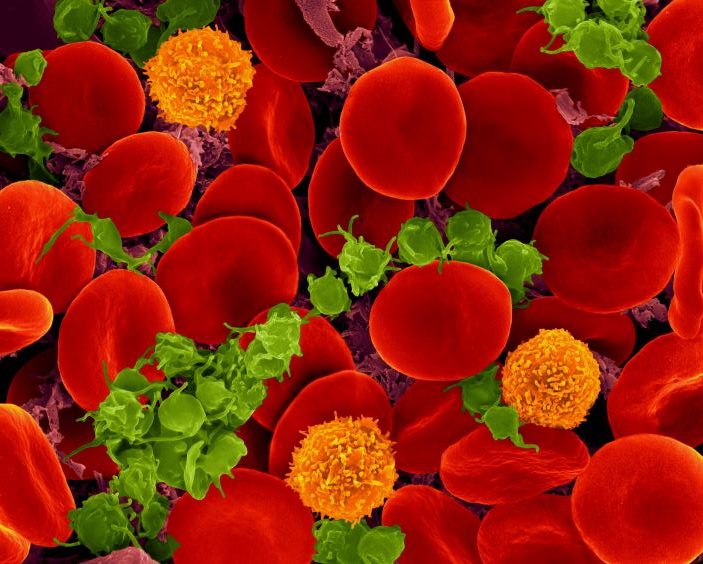
Scanning electron micrograph of red blood cells, T cells (orange) and platelets (green). Source: Wikimedia CC0

Researchers have developed hydrogel-based synthetic platelets that can be used to stop bleeding and, in animal models, has been shown to enhance healing at an injury site. The research is presented in Science Translational Medicine.

A number of medical situations require platelet transfusions – such as cases of severe bleeding, or for patients who are going into surgery or receiving chemotherapy. Currently, patients in any of those situations receive platelets harvested from blood donors, ideally from donors with a compatible blood type. This is challenging, because there is a very limited supply of platelets available, those platelets have a limited shelf life, and the platelets must be stored under controlled conditions.

“We’ve developed synthetic platelets that can be used with patients of any blood type and are engineered to go directly to the site of injury and promote healing,” says Ashley Brown, corresponding author of a paper on the synthetic platelets and biomedical engineering programme. “The synthetic platelets are also easy to store and transport, making it possible to give the synthetic platelets to patients in clinical situations sooner – such as in an ambulance or on the battlefield.”

The synthetic platelets are made of hydrogel nanoparticles that mimic the size, shape and mechanical properties of human platelets. Hydrogels are water-based gels that are composed of water and a small proportion of polymer molecules.

“Our synthetic platelets are deformable – meaning they can change shape – in the same way that normal platelets are,” Brown explains.

The researchers engineered the surface of the synthetic platelets to incorporate antibody fragments that bind to a protein called fibrin. When a body is injured, it synthesises fibrin at the site of the wound. The fibrin then forms a mesh-like substance to promote clotting.

“Because the synthetic platelets are coated with these antibody fragments, the synthetic platelets travel freely through the blood stream until they reach the wound site,” Brown says. “Once there, the antibody fragments bind to the fibrin, and the synthetic platelets expedite the clotting process.”

In addition to forming a clot within the fibrin network, the synthetic platelets act to contract the clot over time – just like normal platelets.

“This expedites the process of healing, allowing the body to move forward with tissue repair and recovery,” Brown says.

The researchers initially demonstrated the efficacy of the antibody fragments via in vitro testing, as well as demonstrating that the antibody fragments and synthetic platelets could be produced at scales that would make them viable for large-scale manufacturing.

The researchers then used a mouse model to determine the optimal dose of synthetic platelets necessary to stop bleeding.

Subsequent research in both mouse and pig models demonstrated that the synthetic platelets travelled to the site of a wound, expedited clotting, did not cause any clotting problems in areas outside of the wound, and accelerated healing.

“In the mouse and pig models, healing rates were comparable in animals that received platelet transfusions and synthetic platelet transfusions,” Brown says. “And both groups fared better than animals that did not receive either transfusion. We also found that the animals in both mouse and pig models were able to safely clear the synthetic platelets over time through normal kidney function. We didn’t see any adverse health effects associated with the use of the synthetic platelets.

“In addition, based on our preliminary estimates, we anticipate that the cost of the synthetic platelets – if they are approved for clinical use – would be comparable to the current cost of platelets,” Brown says.

“We are wrapping up preclinical efficacy testing and are in the process of securing funding for preclinical safety work that should allow us to obtain FDA approval to begin clinical trials within two years.”

Source: North Carolina State University

Deprescribing Efforts Shows that PPI Risks are Less than Expected

Photo by Towfiqu Barbhuiya on Unsplash

Whether it’s costs, safety risks or “pill fatigue” they’re trying to reduce, many health systems and clinics have started working on ways to encourage deprescribing of medications that patients may not need. Now, a new study published in the BMJ shows the potential promise, and pitfalls, of a massive effort to reduce overuse of proton pump inhibitors (PPIs), widely prescribed for heartburn.

The findings also reveal that some of the feared risks from PPIs may be overblown.

The U.S. study tracks the impact of an intervention that imposed limits on PPI prescription size and refills for patients without a documented reason to be on the medication, discontinued old prescriptions, and provided education to patients and clinicians on alternatives.

The effort was carried out in one region of the Veterans Health Administration system, called VISN 17, and involved a quarter of a million patients, making it one of the largest ever studies on deprescribing.

Key findings

In all, the intervention led to a massive reduction in PPI use: a nearly 30% reduction in prescriptions of PPIs compared to other VA regions.

But the drive to reduce potentially unnecessary PPI use had one unintended consequence: a drop in prescribing to veterans who actually have an ongoing need to take PPIs because their other medicines carry a high risk of gastrointestinal bleeding. Strong evidence shows that PPIs are effective for preventing gastrointestinal bleeding and they are recommended in clinical guidelines.

Reassuringly, no matter the reason for taking PPIs, the deprescribing effort didn’t lead to increases in health care visits with gastrointestinal diagnoses. Nor did it lead to increases in gastrointestinal bleeding in patients at high risk, which suggests that the deprescribing initiative itself was safe.

Interestingly, the rate of purported negative PPI effects, such as kidney disease, stroke, heart attack or pneumonia, didn’t go down in VISN17 relative to the other regions. Hip fractures, another risk linked with PPIs in past studies, only went down by a small percentage.

This supports evidence from other high-quality studies that suggest PPIs may be a marker of patients at risk for certain adverse outcomes, but that the drugs are unlikely to be the cause.

For this reason, the main benefits to deprescribing PPIs have more to do with cost and hassle of taking more pills than clinical risk reduction.

More about the study

The new VA-funded study uses data from multiple years before and after VISN 17 implemented its PPI deprescribing program for most veterans living in Texas, and parts of New Mexico and Oklahoma.

It was led by a multi-institutional team that includes investigators from University of Michigan and the VA Center for Clinical Management Research (CCMR) in Ann Arbor; the University of Pennsylvania and the VA Center for Health Equity Research and Promotion (CHERP) in Philadelphia; and the Yale School of Medicine and VA Center for Pain Research, Informatics, Multi-morbidities, and Education (PRIME).

“This intervention worked so well because it was involuntary to some degree – refills could no longer be on autopilot for patients without a clear indication for the medication,” says Jacob Kurlander, MD, MS, first author of the study and a gastroenterologist at Michigan Medicine, U-M’s academic medical center, and the Lieutenant Colonel Charles S. Kettles VA Ann Arbor Medical Center. “At the same time, what we saw is that is that patients who benefit from PPIs for bleeding prevention – which is sometimes overlooked by doctors – got swept up in this effort, too.”

This signals that deprescribing efforts need to take even more care to ensure providers don’t allow a patient who has a need for the drug to inadvertently go off it, Kurlander said.

“Our findings also suggest that PPIs may not be as harmful as some have feared,” he adds.

Before the VISN 17 program started, about 26% of veterans across the country who got their primary care from a VA provider were prescribed a PPI in a six-month period.

By the end of the study period in 2019, only about 15% of veterans in VISN 17 had a PPI prescription, compared with about 22% of those in the other regions.

This means PPI prescribing dropped by 30% within VISN 17, and that there was more than a 7% absolute reduction in PPI use between VISN 17 and other regions by the end of the study period.

The researchers even connected veterans’ VA records with their Medicare data in case they received care outside the VA, and also used information from death certificates to look for causes of cardiovascular-related death. There were no differences between VISN 17 and the other regions.

SAHPRA Recalls Two Batches Of Benylin Paediatric Syrup

Photo by cottonbro studio

On 10 April 2024, the South African Health Products Regulatory Authority (SAHPRA) received a report from the Nigerian National Agency for Food and Drug Administration and Control (NAFDAC) regarding the detection of high levels of diethylene glycol in a batch of Benylin Paediatric Syrup. SAHPRA immediately contacted the South African manufacturer, Kenvue (formerly Johnson and Johnson) for a response. Following engagements with the manufacturer and in the best interest of the public, it was resolved that affected batches would immediately be recalled while an investigation is ongoing.

SAHPRA, in collaboration with Kenvue, have identified the affected batch numbers as 329304 and 329303. These affected batches have been distributed to the following countries: South Africa, Eswatini, Rwanda, Kenya, Tanzania and Nigeria.

Benylin Paediatric presents as a clear, bright red syrup having a raspberry odour and taste, packed in amber glass bottles containing 100 mL with a plastic measuring cup. It is indicated for the relief of cough and its congestive symptoms and for the treatment of hay fever and other allergic conditions affecting the upper respiratory tract.

SAHPRA wishes to inform the public not to panic as the matter is being handled with priority. Batch recalls are batch-specific and do not necessarily apply to other batches/similar products. The manufacturer is a SAHPRA-licenced manufacturer and complies with Good Manufacturing Practices. The public is reminded that the recall is limited to two batches and should not panic regarding the range of products bearing the same name.

SAHPRA is alerting healthcare professionals and the public to discontinue the use of the two batches mentioned, remove them from their inventory and return them to their normal distribution channel(s) with immediate effect.

Classification of the recalls

The recall is classified as a Class 1, Type A recall, which is associated with a serious product quality concern that may have severe consequences. This is a country-wide recall. The product is being recalled from hospitals, retail outlets, healthcare professionals, authorised prescribers and individual customers or patients.

What the public should know

Diethylene glycol is toxic to humans when consumed and can prove fatal. Toxic effects can include abdominal pain, vomiting, diarrhoea, inability to pass urine, headaches, altered mental state, and acute kidney injury which may lead to death.

Members of the public who have consumed these two batches who experience any adverse reaction or witness it in children should consult their healthcare professional and report this using the Med Safety App or send an email to: adr@sahpra.org.za.

The recall is limited to batch numbers 329304 and 329303 of Benylin Paediatric Syrup.

“As a national regulatory authority, the recalling of medical products is a crucial measure to address safety concerns or quality issues so that we protect the health of the public. SAHPRA is recalling these two batches from the market due to reported high levels of diethylene glycol, with the potential to cause serious adverse events,” indicates SAHPRA CEO, Dr Boitumelo Semete-Makokotlela.

Source: SAHPRA

Respiratory Allergies: Newly Discovered Inflammatory-triggering Molecule

Photo by Andrea Piacquadio on Unsplash

One of the molecules responsible for triggering the inflammation that causes allergic respiratory diseases, such as asthma and allergic rhinitis, has just been discovered by scientists in France. This molecule, from the alarmin family, represents a therapeutic target of major interest for the treatment of allergic diseases. The study is published in the Journal of Experimental Medicine on 10 April.

The inflammation process plays a crucial role in allergic respiratory diseases, such as asthma and allergic rhinitis. Although the pulmonary epithelium is recognised as a major player in the respiratory inflammation that causes these diseases, the underlying mechanisms are still poorly understood.

The research team, from the CNRS, Inserm and the Université Toulouse III – Paul Sabatier and co-directed by Corinne Cayrol and Jean-Philippe Girard, has identified one of the molecules responsible for triggering these allergic reactions,. This molecule from the alarmin family, named TL1A, is released by lung epithelium cells a few minutes after exposure to a mould-type allergen.

It cooperates with another alarmin, interleukin-33, to alert the immune system.

This double alarm signal stimulates the activity of immune cells, triggering a cascade of reactions responsible for allergic inflammation.

Alarmins, therefore, constitute major therapeutic targets for the treatment of respiratory allergic diseases. In a few years’ time, treatments based on antibodies blocking the TL1A alarmin could benefit patients suffering from severe asthma or other allergic diseases.

Source: CNRS

SAHPRA Signs MoU with Rwanda Food and Drug Authority

Photo courtesy of Rwanda FDA

The South African Health Products Regulatory Authority (SAHPRA) has signed a Memorandum of Understanding (MoU) with the Rwanda Food and Drug Authority (Rwanda FDA).

The MOU between SAHPRA and Rwanda FDA will allow the regulators to develop a cooperative partnership towards ensuring access to safe, quality, and effective health products in the respective countries.

Areas of cooperation

SAHPRA and Rwanda FDA will cooperate in joint products reviews and inspections to enable efficient access to health products. The World Health Organization (WHO) has set up an initiative for establishing a mRNA technology transfer hub, together with six spokes, in Africa as a strategy to increase mRNA vaccine production capacity in under-served regions and thus promote regional health security. Rwanda is one of the spokes and South Africa being the hub. Thus, building on this model, SAHPRA and Rwanda FDA will collaborate in the area of mRNA vaccines regulatory oversight.  

“The forging of partnerships with fellow African National Regulatory Authorities, namely the Rwanda Food and Drug Authority allows SAHPRA to further our drive in enhancing and building capacity on the continent,” says SAHPRA CEO, Dr Boitumelo Semete-Makokotlela.

“The signing of this MoU underscores the profound potential of collaboration among African NRAs, affirming that the solutions to our shared challenges lie within our continent. Rwanda FDA staunchly believes in the power of collaboration and strategic partnerships. This MoU symbolises the culmination of dedicated efforts and signifies our unwavering commitment to facilitating mutual exchange and enhancing regulatory oversight.  Through collaborative efforts with SAHPRA, we aim to strengthen our regulatory capacity and promote public health. As we embark on this journey together, let us harness the collective strength of our agencies to advance the pharmaceutical sector in Rwanda and beyond,” shares Rwanda FDA Director-General, Professor Emile Bienvenu.

Source: SAHPRA

Approval for First-in Class Glioma Drug set to Change Practice

Photo by Anna Shvets on Pexels

A new drug for the treatment of a type of brain tumour that strikes young people could soon receive approval by the U.S. Food and Drug Administration. The drug, vorasidenib, could greatly extend the time before further therapy – and eventual resistance – is needed.

In an editorial in the New England Journal of Medicine, David Schiff, MD, the co-director of UVA Cancer Center’s Neuro-Oncology Center, outlines the potential significance of the drug vorasidenib for patients with most low-grade gliomas. The drug was fast-tracked by the FDA in August 2023 based on the strength of the findings, and filings for regulatory approval were made in February 2024. FDA approval is anticipated in the second half of 2024, and its approval in Europe will likely soon follow.

Adult-type diffuse gliomas represent approximately 81% of primary malignant brain tumours. Of those, approximately 20% harbour an isocitrate dehydrogenase (IDH) mutation, including 100% of grade 2 and grade 3 adult-type diffuse gliomas. Approximately 2500 Americans with a median age of only 40 are diagnosed with grade 2 IDH-mutant gliomas each year. The tumours cause steadily increasing disability, eventually become resistant to treatment options and typically prove fatal.

 Because of the limited treatment options available, doctors usually take a “watch and wait” approach to managing the brain tumours, holding off on treatment until after the tumour progresses.

In the randomised controlled INDIGO trial, 331 patients received either vorasidenib or placebo. The trial showed that the drug slowed tumour growth significantly and extended the average time until the tumour started growing from 11.1 months to more than 27 months. Vorasidenib also increased the time to next intervention (TTNI), the timeframe before patients need additional treatment such as radio- or chemotherapy. 

Schiff, in his editorial, describes the results as “striking.” Vorasidenib’s success could “put a nail in the coffin” of the watch-and-wait approach for such brain tumours, Schiff believes. 

“It used to be that we thought of all gliomas as being on a spectrum,” Schiff said. “We now understand that those with the IDH gene mutation have a markedly different biology, outcome and, as this study shows, vulnerabilities that new therapies can exploit.”

If the drug receives approval from the federal Food and Drug Administration, it would become the first targeted therapy for low-grade gliomas. But Schiff notes that there are also other recent advances that are improving our understanding of such gliomas.

“There are still many unanswered questions about how we can best utilise this new medication if and when it receives FDA approval,” Schiff said. “Nonetheless, considering that existing standard therapies for these tumours [radiation and chemotherapy] are tough on patients, with short- and long-term side effects, it will be wonderful to have a useful and very well-tolerated treatment option.”

‘Gang Culture’ at NHS Hospital Neurosurgery Department, Doctor Alleges

Photo by cottonbro studio

A neurosurgeon alleged during his employment tribunal that a “gang culture” exists within the neurosurgery department of an NHS hospital already beset by claims of a toxic culture and investigations into negligence.

As reported by the BBC, Dr Mansoor Foroughi was dismissed from University Hospitals Sussex in 2022 for misconduct. At a separate employment tribunal, Krish Singh, the former clinical director for general surgery, claimed that rota changes reduced the number of “safe” consultants, putting patients at risk.

Four whistleblowers had also told the BBC of a “Mafia-like” culture, where patients had died unnecessarily and others “maimed”. These new allegations came to light as the BBC and The Times fought a nine-month court battle to have the employment tribunal documents unsealed.

Dr Foroughi alleges that one colleague was signed off to do complex spinal procedures despite lacking training, another performed procedures with a “disproportionate” mortality rate, and yet another took on private work while on call to the NHS – a serious breach of conduct.

University Hospital Sussex encompasses several hospitals, which includes Royal Sussex Country Hospital, which has been the source of many complaints, and a history of poor service delivery, which was put into special measures between 2016 and 2019.

At least 105 cases of alleged medical negligence from failings at the hospital’s neurosurgery and general surgery departments are being investigated by police. According to court documents, there was “serious dysfunctionality in the neurosurgery department” with “stark divisions between colleagues”.

An investigation by the Royal College of Surgeons found that “a culture of fear” existed in the hospital’s surgery department, and that senior staff were “dismissive and disrespectful”. Two staff were allegedly assaulted.

In a statement, the trust said: “The trust will vigorously contest these claims at the Employment Tribunals, which we are keen take place at the earliest opportunity so they can be examined properly and fairly.

“Dismissing anyone, or removing someone from a leadership role, is an absolute last resort and we would always seek to avoid this outcome if possible.

“In both of these cases, due process was followed, and we are confident we did the right things, in the right way, for the benefit of our patients, their care and safety.”

Landmark Study Supports Use of Cystic Fibrosis Drug in Infants from Four Weeks of Age

Photo by William Fortunato on Pexels

A cystic fibrosis drug targeting the basic defect that causes the condition has been shown to be safe and effective in newborns aged four weeks and above, new research involving RCSI University of Medicine and Health Sciences and Children’s Health Ireland has found.

The finding is described as a “huge moment” for cystic fibrosis by one of the lead researchers. The study included the first baby in the world with cystic fibrosis to be diagnosed from birth and enrolled directly onto a trial of this sort.

The drug, ivacaftor (Kalydeko), is the first drug designed to treat the basic defect in cystic fibrosis. It was originally approved for adults, then sequentially over several years for older and younger children. Currently, it is approved for babies aged four months and older, however, this new research suggests that it is safe and effective for babies as young as four weeks of age.

Cystic fibrosis experts predict that the earlier treatments can begin, the more likely that progression of the condition can be slowed down or halted in children, and this is the focus of several international research studies led by RCSI and Children’s Health Ireland. The findings of this study could pave the way for eligible newborns to start treatment on the medicine at the time of diagnosis (typically at newborn screening) rather than having to wait until they are four months old.

“This is a huge moment in cystic fibrosis,” said Paul McNally, Associate Professor of Paediatrics at RCSI and Consultant in Respiratory Medicine at CHI. McNally is one of the authors of the new study which was published in the Journal of Cystic Fibrosis.

“Over the years ivacaftor, or Kalydeko, has been put through clinical trials in younger and younger children. Now, through this study, it has been shown to be safe and effective all the way down to four weeks of age,” he said.

“This is an important development because almost all children are diagnosed through newborn screening at around this time. The availability of a treatment that targets the underlying cause of the disease in newborns and can be started immediately at diagnosis will provide a huge sense of reassurance and hope for families.”

Cystic fibrosis is an inherited disease that mainly affects the lungs and digestive system. Ireland has the highest incidence of the condition in the world: approximately 1400 children and adults in Ireland live with the condition and more than 30 new cases of cystic fibrosis are diagnosed here each year, typically around four weeks of age through the newborn screening programme.

In recent years, new medicines have emerged that target the basic defect that causes cystic fibrosis. Ivacaftor (Kalydeko) is one such treatment. It targets a genetic change seen in around 4% of people with cystic fibrosis worldwide, and around 10% in Ireland.

Siblings Kara (aged 5) and Isaac Moss (aged 2) both participated in the study through Children’s Health Ireland. Kara was part of an earlier phase of the study that paved the approval of the drug in older infants and led to the latest trial that Isaac took part in.

Isaac was the first baby with cystic fibrosis in the world to be diagnosed from birth and enrolled directly onto a trial of these ground-breaking treatments.

“Both Kara and Isaac are doing really well and remarkably are not experiencing any of the typical symptoms of cystic fibrosis at the moment,” said their mother Debbie.

“Research studies like this one are so important to ensuring that children get access to the right treatments as early as possible. With the right medications, they can enjoy a healthy childhood and look forward to a brighter future”

Ivacaftor is manufactured by pharmaceutical company Vertex Pharmaceuticals, who are currently applying to the European Medicines Agency for an extension to the marketing authorization for Ivacaftor down to one month of age.

The study involved researchers from RCSI, Children’s Health Ireland, the U.S. and the UK.

Source: RCSI

Obese and Overweight Children at Risk of Iron Deficiency

Photo by Patrick Fore on Unsplash

Children and young people who are overweight or obese are at significantly higher risk of iron deficiency, according to a study by nutritional scientists at the University of Leeds.

Researchers from the School of Food Science and Nutrition examined thousands of medical studies from 44 countries involving people under the age of 25 where levels of iron and other vitamins and minerals had been recorded alongside weight. They found that iron deficiency was associated with both underweight and overweight children and adolescents.

By contrast, zinc and vitamin A deficiencies were only observed in children who were undernourished, leading researchers to conclude that iron deficiency in overweight children is probably due to inflammation disrupting the mechanisms that regulate iron absorption.

The results of the research appear in the journal BMJ Global Health.

Iron deficiency in children has a negative effect on brain function, including attention, concentration and memory, and can increase the risk of conditions, such as autism and ADHD.

It is already recognised as a problem in adults living with obesity, but this research is the first to look at the association in children.

Lead author Xiaomian Tan, a Doctoral Researcher in the University of Leeds’ School of Food Science and Nutrition said: “The relationship between undernutrition and critical micronutrients for childhood growth and development is well established, but less is known about the risk of deficiencies in iron, vitamin A and zinc in children and adolescents who are overweight or obese, making this a hidden form of malnutrition.

“Our research is hugely important given the high prevalence of obesity in children. We hope it will lead to increased recognition of the problem by healthcare practitioners and improvements in clinical practice and care.”

Hidden hunger

Historically the problem has been linked to malnutrition and is a particular concern for lower- and middle-income countries where hunger may be the leading cause of mortality for young children.

Increasingly though it is being recognised that vitamin and mineral deficiencies can also occur in people who are overweight and obese and who have a nutrient-poor but energy-dense diet, something which has been described as ‘hidden hunger’.

In high-income countries it is associated with ultra-processed foods that are high in fat, sugar, salt, and energy but in lower- and middle-income countries obesity is often associated with poverty and monotonous diets with limited choices of staples such as corn, wheat, rice, and potatoes.

Many developing countries are now facing a double burden of malnutrition alongside overnutrition due to the rapid increase in the global prevalence of obesity in recent decades, especially in children aged between five and 19.

Undernutrition versus overnutrition

The research also highlights differences in focus between higher income countries and developing nations, with most studies in Africa and Asia focusing on undernutrition and those from North America and Europe focusing entirely on overnutrition.

The researchers say this is particularly concerning as both Africa and Asia are experiencing the highest double burden of malnutrition due to economic growth and the transition to a western-style high-sugar, high-fat diet.

Between the years 2000 and 2017, the number of overweight children under the age of five in Africa increased from 6.6 to 9.7 million, and in Asia that figure rose from 13.9 to 17.5 million. At the same time, there was an increase in the number of stunted children under 5, from 50.6 to 58.7 million in Africa.

Research supervisor Bernadette Moore, Professor of Nutritional Sciences in Leeds’ School of Food Science and Nutrition, said: “These stark figures underscore the fact that the investigation of micronutrient deficiencies in relation to the double burden of malnutrition remains critically important for child health.

“By the age of 11 here in the UK, one in three children are living with overweight or obesity, and our data suggests that even in overweight children inflammation leading to iron deficiency can be an issue.

“Iron status may be the canary in the coalmine, but the real issue is that prolonged inflammation leads to heart disease, diabetes and fatty liver.”

Increasing physical activity and improving diet have been shown to reduce inflammation and improve iron status in children and the researchers are now calling for further studies into the effectiveness of these interventions.

They also believe that more research is needed into micronutrient deficiencies and the double burden of malnutrition and overnutrition in countries where there are currently gaps in data.

Source: University of Leeds