Category: Transplants

Living Donors Liver Transplant a Viable Option in Colorectal Cancer

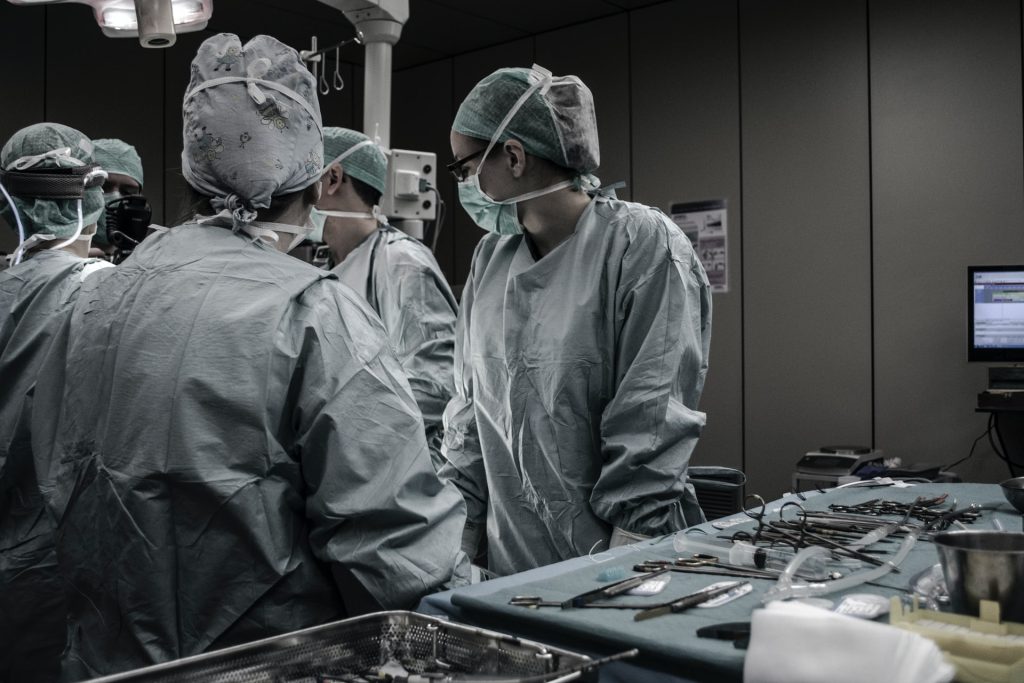
Doctors and nurses performing a surgery
Photo by Piron Guillaume on Unsplash

A recent study published in JAMA Surgery has demonstrated the viability of living-donor liver transplant for patients who have systemically controlled colorectal cancer and liver tumours that cannot be surgically removed.

“This study proves that transplant is an effective treatment to improve quality of life and survival for patients with colorectal cancer that metastasised to the liver,” said senior study author Dr Gonzalo Sapisochin.

The study focused on colorectal cancer partly for its tendency to spread to the liver. Nearly half of all patients with colorectal cancer develop liver metastases within a few years of diagnosis and 70% of liver tumours in these patients cannot be removed without removing the entire liver.

Unfortunately, most of these patients cannot get deceased-donor liver transplants because their liver function is fairly normal in spite of their tumours. This puts them near the bottom of the national organ transplant waiting list.

Thanks to recent advances in cancer treatments, many of these patients are able to get their cancer under systemic control, which means only their liver tumours prevent them getting a ‘cancer free’ label. It also increases the odds that these patients – and their new livers – will remain cancer free, which is crucial when balancing the benefit to the patient with the risk to a living donor.

“I’ve seen so many cancer patients, whose cancers were not spreading, but we couldn’t remove the tumours from their livers and we knew they would die,” said first study author Dr Roberto Hernandez-Alejandro. “We hoped living-donor liver transplant could give them another chance.”

Because it offered a last resort, the study attracted patients from near and far. All patients and donors went through a rigorous screening process to ensure they were good candidates for the procedure, and they were educated about the risks of the surgery and the possibility of cancer recurrence.

Patients and donors underwent staggered surgeries to fully remove patients’ diseased livers and replace them with half of their donors’ livers. Over time, both patients’ and donors’ livers regenerated and regain normal function.

Patient imaging and blood analysis was closely monitored for any signs of cancer recurrence and will continue to be followed for up to five years after their surgery. At the time of study publication, two patients had follow-up of two or more years and both remained alive and well, cancer-free.

“We have seen very good outcomes with this protocol, with 100 percent survival and 62 percent of patients remaining cancer free one year and a half after surgery,” said study author Dr Mark Cattral. “It is very strong data to support that we can offer this treatment safely and make appropriate use of scarce life-saving organs.”

Source: University Health Network

Two Pig Kidneys Transplanted into Human

Photo by Robina Weermeijer on Unsplash

In a new study published in the American Journal of Transplantation, researchers report that they successfully transplanted two kidneys from a genetically modified pig into a human recipient who had suffered brain death.

The use of pig organs, genetically modified to enable transplantation into humans, could ease the shortage of available donor organs for transplantation and prevent thousands of deaths that result each year due to a shortage of organs. Recently, a US man became the first human recipient of a genetically modified pig heart.

This study used a novel preclinical human model to answer numerous critical safety questions. No hyperacute rejection was seen for the 74 hours until termination. No chimerism or transmission of porcine retroviruses was detected. Longitudinal biopsies revealed thrombotic microangiopathy that did not progress in severity, without evidence of cellular rejection or deposition of antibody or complement proteins. Although the xenografts produced variable amounts of urine, creatinine clearance did not recover. Whether renal recovery was impacted by the milieu of brain death and/or microvascular injury remains unknown.

The study provides important insights and identifies several areas where additional research is needed before xenotransplantation can be used to help address the current organ shortage.

“This study provides knowledge that could not be generated in animal models and moves us closer to a future where organ supply meets the tremendous need,” said senior author Jayme E. Locke, MD, MPH, of the University of Alabama at Birmingham.

Source: Wiley

Lifestyle Changes Key for Older Kidney Transplant Recipients

Photo by Robina Weermeijer on Unsplash

Researchers discovered that deaths among kidney transplant recipients due to factors other than organ rejection is the leading cause for transplanted kidney loss. Their findings, published in Transplantation Direct, revealed that only one in four transplanted kidney losses were caused by organ rejection.

“Immunosuppression medication to prevent rejection is often the focus when caring for patients post transplant. But this study highlights the increased risk of death from cancer and infection for transplant patients, especially those who are older and have diabetes,” said Andrew Bentall, MB, ChB, MD, the study’s co-first author.

The study involved 5752 patients who underwent a kidney transplant between 2006 and 2018. Of those, 691 died with a functioning kidney. Researchers found that 20% of these patients died from cancer; 19.7%, infection; and 12.6%, cardiac disease.

Another 553 patients lost their transplant due to the failure of a transplanted kidney. Of these patients, 38.7% of the patients’ kidneys failed due to rejection; 18.6%, glomerular diseases; and 13.9%, tubular injury.

Two types of recipients were found to be most vulnerable after transplant. The first are younger, nondiabetic patients who develop kidney failure due to organ rejection. The second group includes older, often diabetic patients who are at risk of death due to causes not associated with organ rejection, including cancer, infections and heart disease.

Care providers need to treat these two populations differently to minimise risks, according to Dr Bentall. For younger patients, that includes focusing on immunosuppression medication to prevent rejection. For older, often diabetic patients, it is critical to address chronic health issues, such as obesity, high blood pressure and diabetes. Focusing on these lifestyle changes is critical for improving long-term outcomes for kidney transplant recipients.

“It is important for these older patients that care providers emphasise the need for ongoing lifestyle changes that address obesity, high blood pressure and diabetes. Those include losing weight, exercising and new strategies for managing diabetes,” he said. “Making those changes could potentially impact the patient’s life and kidney outcomes more than immunosuppression therapies.”

Source: Mayo Clinic

$16 Million Payout to BioJoint Knee Surgery Plaintiffs

The University of Missouri has settled claims over ‘BioJoint’  knee surgeries for $16.2 million, in what appears to be one of its largest public payouts in recent years.

The surgeries in question used the BioJoint system, a “biological joint restoration” which involves replacing parts of the knee with bones or cartilage from cadavers to treat arthritis or joint damage. This technology was pioneered by James Stannard, MD, and veterinarian James Cook, DVM.
The 22 plaintiffs, some of whom were minors, allege that they were not informed about the highly experimental nature of the BioJoint knee surgeries, with a failure rate of as high as 86%. This often required patients to have additional corrective surgeries or knee replacements. Some plaintiffs said that the surgery was pitched to them as a way to avoid a total knee joint replacement. They also allege that Dr Stannard negligently allowed Dr Cook—a veterinarian surgeon—to perform parts of the surgery without supervision.

The University denied wrongdoing, and settled without admission of liability or wrongdoing after claims against the defendants, Dr Stannard, Cook and another employee were dismissed. 

“It’s not uncommon to have vets as part of your research team, but it would be uncommon to have them as part of your clinical patient care team,” said Patrick McCulloch, MD, vice chairman of Houston Methodist’s orthopaedic surgery department.

“You have to be licensed as a physician to perform surgery on a human being,” added Jeff Howell, executive vice president of the Missouri State Medical Association.

A key part of the plaintiff’s case involved false advertising, including local airing at the Super Bowl and at Chicago’s O’Hare International Airport, and which they claim led them to the procedure. It was speculated that the false advertising claim made the settlement amount larger than the medical malpractice suit alone.

Source: St. Louis Post-Dispatch

COVID Vaccination in Immunosuppressed Patients Produces Weak Response

An article by Dorry Segev, MD, PhD for MedPage Today reveals poor results for COVID vaccination in immunosuppressed patients, with concerning implications. 

Dr Segev professor of surgery and epidemiology and associate vice chair of surgery at Johns Hopkins University School of Medicine and Bloomberg School of Public Health.

Dr Segev and colleagues launched a national study of vaccine immune responses in immunosuppressed solid organ transplant recipients. Among 436 COVID-naïve participants who received their first mRNA vaccine dose, only 17% of them mounted detectable antibodies to SARS-CoV-2.  The researchers also found that those taking anti-metabolites (eg, mycophenolate or azathioprine) were less likely to develop antibody responses, with 8.75% with detectable antibody found in those taking anti-metabolites versus 41.4% in those not taking them.

“Naturally, we were disappointed to see these findings, as we were hoping to be able to tell our immunosuppressed patients that the vaccines seemed to work well for them. Given this observation, the CDC should update their new guidelines for vaccinated individuals to warn immunosuppressed people that they still may be susceptible to COVID-19 after vaccination,
Dr Segev wrote. 

The current CDC guidelines are worded in a way that suggests vaccination translates into immunity, Dr Segev pointed out, but the study demonstrates that for most transplant recipients, as well as other immunosuppressed patients that the vaccine does not automatically confer immunity. This could also be a concern for the some 37.9 million people around the world living with HIV, although the effects of achieving viral suppression with antiretroviral therapy have so far not been well investigated in relation to COVID. Vaccine trials so far have not had sufficient numbers of participants living with HIV to draw any conclusions.

Notably, their previous research did show that rates of COVID infection and mortality were not greater for immunosuppressed transplant patients. 
Dr Segev noted that there are some implications for immunosuppressed patients; firstly, that they should at the very least receive the second dose of their vaccination (the current research is only on the effects of the first dose), and secondly, immunosuppressed patients should be aware that they may not necessarily be immunised after receiving a vaccination. They should speak to their provider about an antibody test to determine if the immunisation has been achieved.

The researchers are continuing to investigate other aspects of immune response besides antibodies, such as T and B cells, and are also looking at other vulnerable populations.

Source: MedPage Today

Teen Embraces Chance to ‘Live Well’ With Kidney Disease

Thanks to a young organ donor, Bronwen Fredericks has a new kidney that she and her mother Bridget are deeply thankful for.
The 15-year-old was one of two patients at Red Cross War Memorial Children’s Hospital who received their new kidneys last month. With a new chance at their childhoods, they have a chance to embrace the spirit of “Living Well with Kidney Disease”, the 2021 theme for World Kidney Day tomorrow. 

Bronwen said: “I’m really grateful to my donor and excited for my new life. I’m really looking forward to being able to dance again.”

According to her mother, a blood pressure test had alerted them to the problem.

“I would like to encourage everyone, especially parents, to do a regular general check-up with their children at a clinic or GP. A simple blood pressure test could show us that there was a serious problem and we were able to take action that saved my daughter,” she said.

“Irrespective of age, being diagnosed with kidney disease can pose a huge challenge for the patient and their family. It remains draining on those involved, be it emotional, financial, physical or a combination of these – but imagine the impact on a young child,” the Red Cross War Memorial Children’s Hospital said in a statement on Wednesday.  The hospital conducts around 10 to 12 kidney transplants a year.

The Red Cross Hospital said it is aiming to reduce stress factors through education, empowerment and by building a partnership with patients and their families.

“The diagnosis and management, particularly in the advanced stages of kidney disease, impacts severely upon the lives of our young patients by reducing their ability to participate in everyday activities like attending school, participating in extra-curricular activities and socialising, whilst the whole family’s ability to travel and parents ability to work is also affected,” said Dr Deveshni Reddy, ‎paediatric nephrologist at the hospital.

Current management includes dialysis to take the strain off of kidneys, and in more extreme cases, donor transplants.
Professor Mignon McCulloch, the hospital’s head of paediatric nephrology and solid organ transplantation, said: “While we always try our best to treat chronic kidney disease and other kidney disorders through medical intervention, sometimes a surgical intervention, or dialysis and resultant kidney transplant, is the only option.

“The Red Cross War Memorial Children’s Hospital conducts around 10-12 kidney transplants per year, making it one of the most active paediatric transplant services in South Africa, which is only possible due to the close collaboration with the multi-disciplinary role-players from Groote Schuur Hospital and Red Cross.”

Source: IOL News

Novel Transplant Technique Yields More Donor Hearts for Children

Two hospitals in the UK have reported great success in a new heart transplant technique, resulting in a record number of children receiving heart transplants in 2020.

Royal Papworth Hospital in Cambridge and Great Ormond Street Hospital (GOSH) have collaborated on a new procedure which has enabled a much larger supply of donor hearts for children, who have had to wait two and a half times as long as adults for a donation.

Royal Papworth Hospital was the first in Europe to harvest non-beating hearts from adult patients whose life support had been withdrawn, and then been restarted for transplantation, instead of waiting for brain death with a still-beating heart.

By using a special device called the organ care system, surgeons can effectively restart the heart and keep it healthy until transplantation. The first non-beating heart transplant was performed in Australia in 2014. Since February last year, the two hospitals have been offering the service to children.

The use of non-beating hearts had previously been ruled out for transplantation until recently, due to tissue damage from lack of oxygen. The new organ care system, which supplies the heart with oxygenated blood and nutrients, can be used to keep the heart alive and pumping outside the body for up to 12 hours. This is long enough for checks to be performed prior to the transplant procedure, or even transferred to another hospital.

GOSH and Freeman Hospital are the only two centres in the UK with paediatric heart transplant units. In the past five years, 39 children died while waiting for donors.

“Some patients will just not survive the wait,” said Jacob Simmonds, a transplant surgeon at GOSH. “There is also a risk that while waiting they could damage other organs, particularly the lungs.” 

Last year, six paediatric heart transplants were carried out in the UK using the new procedure, and only four elsewhere in the world. The organs came from adult donors, as the organ care system is designed to accommodate hearts from people weighing over 50kg. Development is being carried out on a system which could allow harvesting organs from children. This would increase the available transplants for infants and babies, who have a critical lack of donors.

Source: BBC News

First Successful Face and Double Hand Transplant

Doctors in New York have performed the world’s first successful face and double hand transplant.

The patient, 22 year-old Joe DiMeo, had suffered burns over 80% of his body in a 2018 crash, resulting in his fingers being amputated. His eyelids and lips were also amputated. He had been driving home from a night shift when he fell asleep at the wheel and his car crashed, bursting into flames. He spent four months in a burns unit, much of it in an induced coma. After 20 reconstructive surgeries, he still had only limited use of his hands and face.

In a 23-hour operation, doctors attached the donor’s face and hands. He then spent 45 days in ICU, then a further two months in hospital. Mr DiMeo learned to open his new eyelids and move his hands, and is now spending up to five hours a day in rehab.

Eduardo Rodriguez, director of the Face Transplant Program, said: “We wanted to give him not only an operation that made him look better, but it ultimately had to work ideally, especially with the hands.” He added that Mr DiMeo is the most motivated patient he had met.

The doctors waited to ensure that the transplant had taken before calling it successful. While a face and double hand transplants had been performed before, one patient died from complications and the other had to have their hands amputated when they failed to thrive.

Hand transplants have progressed a great deal since the first successful one in 1998. Enormous strides have been made in immunosuppression since then, requiring fewer drugs with less resultant toxicity and side effects. There is also a protocol for using donor bone marrow and stem cells to modulate the immune system in place of typical immunosuppression.

Mr Dimeo says that he can now exercise and make breakfast unaided.

“This is a once-in-a-lifetime gift, and I hope the family can take some comfort knowing that part of the donor lives on with me,” Mr Dimeo said. “My parents and I are very grateful that I’ve been given this second chance.”

Source: BBC News