Category: Obstetrics & Gynaecology

Fatty Acids in Umbilical Cord Blood Might Cause Autism Spectrum Disorder

Scientists unveil the link between cord blood fatty acid metabolites and autism spectrum disorder symptoms in children

Source: Pixabay CC0

Autism spectrum disorder (ASD) is quite prevalent, but its underlying mechanism is not well understood. In a recent study, researchers from Japan have found a significant link between the levels of specific dihydroxy fatty acids in umbilical cord blood and ASD symptoms. Their findings, published in Psychiatry and Clinical Neurosciences, highlight the role of these metabolites in the developmental trajectory of ASD and could pave the way for early diagnostic techniques and a better understanding of ASD pathophysiology.

Although the exact causes of ASD are unclear, currently available evidence points to neuroinflammation as a major factor. Several studies in mouse models of ASD have hinted at the importance of polyunsaturated fatty acids (PUFA) and their metabolites during pregnancy in playing a key role in ASD development. PUFA metabolites regulated by the cytochrome P450 (CYP) affect foetal development in mice causing impairments closely linked to ASD symptoms. However, it is still unclear if the same is true for humans and needs further investigation.

To address this knowledge gap, a research team led by Professor Hideo Matsuzaki from the Research Center for Child Mental Development, analysed the CYP-PUFA levels in neonatal umbilical cord blood samples. Their study,  sheds light on the possible causes of ASD.

Sharing the motivation behind their study, Prof. Matsuzaki explains, “CYP metabolism forms both epoxy fatty acids (EpFAs), which have anti-inflammatory effects, and dihydroxy fatty acids, or ‘diols,’ which have inflammatory properties. We hypothesized that the dynamics of CYP-PUFA metabolites during the fetal period, that is, lower EpFA levels, higher diol levels, and/or increased EpFA metabolic enzymes would influence ASD symptoms and difficulties with daily functioning in children after birth.”

To test this hypothesis, the researchers investigated the link between PUFA metabolites in umbilical cord blood and ASD scores in 200 children. The cord blood samples had been collected immediately after birth and preserved appropriately, whereas ASD symptoms and adaptive functioning were assessed when the same children were six years old, with the help of their mothers.

After careful statistical analyses of the results, the researchers identified one compound in cord blood that may have strong implications for ASD severity, namely 11,12- dihydroxyeicosatrienoic acids (diHETrE), a dihydroxy fatty acid derived from arachidonic acid. This fatty acid is found in poultry, animal organs and meat, fish, seafood, and eggs.

“The levels of diHETrE, an arachidonic acid-derived diol, in cord blood at birth significantly impacted subsequent ASD symptoms in children and were also associated with impaired adaptive functioning. These findings suggest that the dynamics of diHETrE during the foetal period is important in the developmental trajectory of children after birth,” highlights Prof Matsuzaki.

More specifically, the researchers found that higher levels of the molecule 11,12-diHETrE had an impact on social interactions, whereas low levels of 8,9-diHETrE impacted repetitive and restrictive behaviours. Moreover, this correlation was more specific for girls than for boys. This newfound knowledge could be crucial in understanding, diagnosing, and potentially preventing ASD. By measuring diHETrE levels at birth, it may be possible to predict the likelihood of ASD development in children.

“The effectiveness of early intervention for children with ASD is well established and detecting it at birth could enhance intervention and support for children with ASD,” muses Prof Matsuzaki. He also adds that inhibiting diHETrE metabolism during pregnancy might be a promising avenue for preventing ASD traits in children, although more research will be needed in this regard.

In conclusion, these findings open a promising avenue for researchers unravelling the mysteries surrounding ASD. We hope that enhanced understanding and early diagnostics will be able to improve the lives of people with ASD and their families.

Source: University of Fukui

Low-dose Aspirin Might Help Prevent Pregnancy Complications Caused by Flu Infections

Photo by SHVETS production

A world-first study has found low-dose aspirin may treat flu-induced blood vessel inflammation, creating better blood flow to the placenta during pregnancy. Animal studies examined whether the treatment for preeclampsia could be applied to flu infections – and the results, published in Frontiers in Immunology, were very promising. 

Lead researcher and RMIT Post-Doctoral Research Fellow, Dr Stella Liong, said that flu infections during pregnancy can resemble preeclampsia, a pregnancy complication that causes inflammation to the aorta and blood vessels. Low-dose aspirin is commonly taken to prevent preeclampsia, as it stops the body from creating chemicals that cause inflammation.   

“When the vascular system is inflamed, it leads to poor blood flow and affects the aorta’s function,” she said. “This is especially a problem during pregnancy where good blood flow to the placenta is crucial to the development of the foetus.” 

The research, led by RMIT University in collaboration with Trinity College Dublin, Ireland Professor John O’Leary and University of South Australia Professor Doug Brooks, found foetuses and placenta from mice with influenza A were smaller than those from uninfected mice. 

Markers of low blood oxygenation and poor blood vessel development were also evident in the foetuses. The mice treated daily with low-dose aspirin had less inflammation and improved foetal development and offspring survival. 

While the research was still awaiting human clinical trials, Liong said low-dose aspirin was already recognised as safe to take during pregnancy. The research team however recommended pregnant people seek medical advice before taking new medications.  

Brooks said influenza A infections during pregnancy was a big concern as every pregnancy overlaps with part of a flu season.  

“There are long term implications for both the mother and the foetus, and aspirin might provide a simple solution for preventing this influenza associated pathology,” Brooks said. 

Why flu infection is dangerous during pregnancy 

O’Leary said the research findings had huge implications for pregnancy and seasonal influenza virus infections for pregnant people.

“This study shines a light, for the first time, on the role of vascular inflammation associated with influenza virus and the potential dramatic effect of the disease-modifying drug aspirin, in low dosage, in pregnant women with co-morbid influenza,” O’Leary said.

While there weren’t many studies of the impacts of flu infections during pregnancy, project lead and RMIT Professor Stavros Selemidis said it was clear that pregnancy changed how the body responded to the virus.

Liong and Selemidis’ earlier breakthrough research found the flu virus during pregnancy could trigger a damaging hyperactive immune response, causing the virus to spread around the body from the lungs through the blood vessels.

“We used to think the flu virus just stayed in the lungs, but during pregnancy it escapes from the lungs to the rest of the body,” Selemidis said.

“This infection could set you up for cardiovascular disease later in life, but also set up cardiovascular disease in the offspring later in life.” 

While vaccination was still the considered the best way to prevent flu infection during pregnancy, Selemidis pointed out vaccination rates were generally low in the pregnant population

“Low vaccination rates aside, the flu shot may not generate the perfect immune response, especially if someone is pregnant or has an underlying medical condition,” he said.  

“That’s why it’s useful to have a potential back up in low-dose aspirin to help prevent vascular dysfunction during pregnancy and improve foetal development.”

Source: RMIT University

Women Lose More Years of Life After a Heart Attack Than Men

Photo by Joice Kelly on Unsplash

A new study shows that women lose more years of life after a heart attack than men. A 50-year-old woman with a large heart attack loses an average of 11 years, while an 80-year-old man with a small heart attack loses an average of 5 months of life. The results of the study, led by researchers at Karolinska Institutet and Danderyd Hospital, are published in the journal Circulation.

The new study examined 335 000 individuals with first-time myocardial infarction registered in the SWEDEHEART quality registry during the period 1991-2022. The individuals with myocardial infarction were compared with 1.6 million individuals without myocardial infarction using data from Statistics Sweden and the National Board of Health and Welfare. Using the comparator population and new statistical methods, the difference in life expectancy between heart attack individuals and comparison individuals could be calculated, providing a measure of how much life expectancy was shortened due to the disease. 

“We found that there were large differences between groups. Women and young individuals lost the most life expectancy when they had a heart attack. If the cardiac function was impaired after the infarction, the effects were even greater. For example, a 50-year-old woman with impaired cardiac function loses an average of 11 years in 2022 compared to an 80-year-old man with normal cardiac function who loses an average of 5 months in life expectancy,” says first author Christian Reitan, researcher at the Department of Clinical Sciences, Danderyd Hospital, Karolinska Institut. 

Parameters affecting heart attack risk

The researchers were also able to take into account differences in income, education, other illnesses and medication at the time of the illness – which helped to measure the effect of the heart attack itself when everything else was taken into account.

“The results showed that a fairly large part of the reduction in life expectancy disappeared, that is, much of the reduction in life expectancy is explained by factors other than the heart attack itself, but which may still be associated with heart attack, such as socioeconomics or other diseases such as hypertension and diabetes. Provided that the patient had preserved cardiac function, we saw that the gender difference had disappeared. We interpret this to mean that the effect of the heart attack, and thus also the care for heart attacks, is similar between the sexes and that the large reduction in life expectancy we see in women is due to differences in risk factors, other diseases and socioeconomics,” says Christian Reitan. 

According to the researchers, there is a lack of individualized heart attack care in Sweden for women. The study shows that women who have a heart attack lose more years of life than men of the same age.

“If a woman had impaired cardiac function, the gender difference was large. We don’t have the data to answer why, but it raises questions about whether women get as good follow-up and treatment for heart failure as men, or whether it is simply a more serious condition for a woman. Our findings are important because they challenge existing guidelines for heart attack treatment today. By identifying high-risk groups, we can hopefully better tailor treatment to the individual. We believe that ‘years of life lost’ is a good and easy-to-understand measure of risk for both doctors and patients. It makes it easier for us to assess and communicate the seriousness of the disease,” concludes Christian Reitan. 

Source: Karolinska Institutet

New Surgical Method for Cervical Cancer Shows Promising Results

Cervical cancer. Credit: Scientific Animations CC4.0

A recently published study has compared a new surgical method, called cancer field surgery (Total Mesometrial Resection, TMMR), with the current standard treatment for primary management of cervical cancer.

The new TMMR method was developed over 20 years ago by Karolinska Institutet’s partners at the Leipzig University Hospital. Previous publications have suggested favourable results without the need for radiation therapy. Omitting radiation therapy could potentially improve quality of life for treated women.

In the study, the researchers demonstrate that TMMR is associated with improved oncological outcomes for early stages of cervical cancer. The data suggest that TMMR may replace current treatment strategies and radiation therapy could be spared for salvage treatment. This breakthrough motivates continued work in this field.

Research of this kind heavily relies on well-functioning collaborations with other researchers. Beyond providing essential data for the project, it also strengthens international cooperation, facilitating the dissemination of our findings. The researchers plan to further explore the potential of cancer field surgery in gynaecological cancer to establish the method in future treatment strategies.

Source: Karolinska Institutet

Researchers Create a Hydrogel Implant to Treat Endometriosis

Photo by Andrea Piacquadio on Pexels

Researchers from ETH Zurich and Empa have developed a hydrogel implant that can help prevent endometriosis. This innovation, which is described in Advanced Materials, also acts as a contraceptive.

A hydrogel is a gel made of a type of plastic that can bind water. Hydrogels have a variety of use cases, including contact lenses, delivering doses of medication within the body, moisturisers, water storage in soil, cleaning polluted water and as gelling and thickening agents. Now, the researchers have developed the first hydrogel implant designed for use in fallopian tubes. This innovation performs two functions: one is to act as a contraceptive, the other is to prevent the recipient from developing endometriosis in the first place or to halt the spread if they do.

Around four years ago, Inge Herrmann made a new addition to her research group at the Department of Mechanical and Process Engineering at ETH and Empa. The new member was a senior physician specialising in gynaecology who was keen to pursue clinically-inspired research. This kind of interdisciplinary collaboration was an experiment for the whole team. Their initial goal had been to turn a hydrogel into a new kind of contraceptive for women. However, after the research team began talking to the gynaecologist, they realised that implanting a hydrogel to occlude the fallopian tubes could also help prevent endometriosis.

Preventing endometriosis by occluding the fallopian tubes

Around 10 percent of women suffer from endometriosis. However, it is still unclear exactly what causes this condition. The assumption is that during menstruation, blood flows back along the fallopian tubes and into the abdominal cavity. This blood contains cells from the uterine lining (endometrium), which settle in the abdominal cavity and as a result can cause inflammation, pain and the formation of scar tissue.

The researchers found a way to create a hydrogel implant capable of successfully occluding the fallopian tubes and thus preventing retrograde menstruation. “We discovered that the implant had to be made of an extremely soft gel – similar in consistency to a jelly baby – that does not impact native tissue and is not treated and rejected as a foreign body,” explains Alexandre Anthis, lead author of the study.

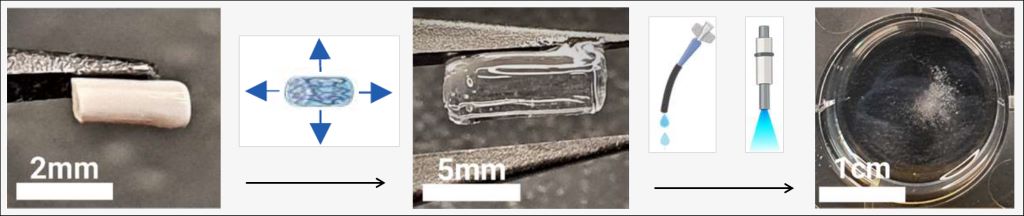
The hydrogel implant swells to around twice its original size when it comes into contact with liquid (arrow 1 left to centre) and can be easily and painlessly destroyed using UV light or a special solution (arrow 2 centre to right). (Graphic: adapted from Anthis AHC et al., Advanced Materials, 2024)

An advantage of hydrogels is that they swell when brought into contact with liquid. As a result, this new implant starts off at approximately 2mm in length. But once implanted in the fallopian tubes as part of a non-surgical procedure using a hysteroscope – an instrument for inspecting the uterine cavity – the implant swells to more than double its original size. The hydrogel then acts as a barrier to both sperm and blood. “Our hydrogel implant can be easily and quickly destroyed, either with UV light or a special solution, so that recipients don’t have to have an invasive and risky operation should they decide to reverse the procedure,” Herrmann says.

Source: ETH Zurich

Adolescent Behaviour Problems and In Utero Cannabis Exposure: A Biological Link

More evidence shows potential connection between cannabis exposure in womb and adolescent behavioural problems

Photo by Thought Catalog on Unsplash

Scientists are trying to understand how cannabis may affect long-term neurodevelopment from in utero exposure. Previous work by Washington University in St. Louis researchers Sarah Paul and David Baranger in the Behavioral Research and Imaging Neurogenetics (BRAIN) lab led by Ryan Bogdan found associations between prenatal cannabis exposure and potential mental health conditions in childhood and adolescence, but potential biological mechanisms that could possibly explain this association were unclear.

In research published in Nature Mental Health this month, Bogdan, professor of psychological and brain sciences, and senior scientist Baranger outline some of those potential mechanisms, the intermediate biological steps that could play into how prenatal cannabis exposure leads to behavioural issues down the line.

“We see evidence that cannabis exposure may influence the developing brain, consistent with associations with mental health,” Baranger said.

Trying to draw out the long-term impacts of cannabis exposure during pregnancy is not a simple knot to untangle. There are many confounding factors that affect mental health and behavior.

For example, say someone was exposed in utero to cannabis and later develops attention deficit disorder as a teen – how do you differentiate that as an inherited trait or a trait influenced by environmental factors, versus a trait that cannabis exposure somehow contributed to early on in development? It is also possible that all three potentially could contribute to eventual psychopathology.

Another complication is the increasing prevalence of the drug, including among the pregnant population, where cannabis use has increased from 3% to 7% from 2002 to 2017.

Researchers have statistical methods to filter out some of those confounding factors that they used in the previous study, but now they can point to specific biological measurements that further signal a connection to cannabis exposure and adolescent behavioral problems.

Bogdan said that nothing can establish causation with certainty, “but we can look at the plausibility of causation and identifying biological correlates that are associated with exposure and these mental health outcomes suggests it’s plausible.”

Researchers have been using data on the children and their mothers from the Adolescent Brain and Cognitive Development (ABCD) Study, an ongoing research project that includes nearly 12 000 children across the country. As part of that study, they collected data about each mother’s substance use prior to the birth as well as the neuroimaging data of their offspring when they were between 9 and 10 and 11 and 12 years old. Some 370 children were exposed to cannabis prior to the mother’s knowledge of pregnancy, and 195 were exposed before and after learning of pregnancy.

The researchers looked at a variety of neuroimaging measurements that factor into brain development, including measures of brain thickness and surface area, as well as measures reflecting water diffusion in and outside of cells. The patterns found in the group exposed to cannabis are consistent with potential reductions in neuroinflammation.

“It’s possible what we’re seeing is an anti-inflammatory effect of cannabis, which is leading to differences in how the brain is being pruned during neurodevelopment,” Bogdan said.

Much has been touted about the anti-inflammatory effects of cannabis, but it’s not always good to reduce inflammation. It’s all about the timing: too much of a reduction of inflammation at the wrong time could affect how the brain is pruned and primed.

Another theory is that cannabis exposure leads to accelerated aging. But don’t expect to find the smoking gun of biological clues pinning mental health problems to early cannabis exposure.

It might not even be about cannabis effects on pruning but the post-combustion products from smoking cannabis that set off accelerated aging and the downstream cognitive effects, Bogdan said.

Or, it could all come down to sociological factors, he added.

Trying to find the one-to-one connection that proves that prenatal cannabis exposure has negative effects during the teenage years is a challenge and may not be possible with retrospective studies. Baranger notes that the major limitation of this data set is that it was retrospective; mothers reported what their cannabis use was 10 years ago, so he’s looking forward to new data from prospective, longitudinal studies that will offer more recent, accurate and detailed information about cannabis use in pregnancy.

“That will potentially give us more answers to these questions in the future,” Baranger said.

Baranger said these results reaffirm that if someone is thinking about using cannabis while pregnant, they should “talk to their doctor about their choices and what other options there might be.”

Source: Washington University in St. Louis

Genetic Study Points to Oxytocin as Possible Treatment for Obesity and Postnatal Depression

Photo by Patrick Fore on Unsplash

Scientists have identified a gene which, when missing or impaired, can cause obesity, behavioural problems and, in mothers, postnatal depression. The discovery, reported on 2 July in Cell, may have wider implications for the treatment of postnatal depression, with a study in mice suggesting that oxytocin may alleviate symptoms.

Obesity and postnatal depression are significant global health problems. Postnatal depression affects more than one in 10 women within a year of giving birth and is linked to an increased risk of suicide, which accounts for as many as one in five maternal deaths in high income countries. Meanwhile, obesity has more than doubled in adults since 1990 and quadrupled in adolescents, according to the World Health Organization.

While investigating two boys from different families with severe obesity, anxiety, autism, and behavioural problems triggered by sounds or smells, a team led by scientists at the University of Cambridge, UK, and Baylor College of Medicine, Houston, USA, discovered that the boys were missing a single gene, known as TRPC5, which sits on the X chromosome.

Further investigation revealed that both boys inherited the gene deletion from their mothers, who were missing the gene on one of their X chromosomes. The mothers also had obesity, but in addition had experienced postnatal depression.

To test if it was the TRPC5 gene that was causing the problems in the boys and their mothers, the researchers turned to animal models, genetically-engineering mice with a defective version of the gene (Trpc5 in mice).

Male mice with this defective gene displayed the same problems as the boys, including weight gain, anxiety, a dislike of social interactions, and aggressive behaviour. Female mice displayed the same behaviours, but when they became mothers, they also displayed depressive behaviour and impaired maternal care. Interestingly, male mice and female mice who were not mothers but carried the mutation did not show depression-like behaviour.

Dr Yong Xu, Associate Director for Basic Sciences at the USDA/ARS Children’s Nutrition Research Center at Baylor College of Medicine, said: “What we saw in those mice was quite remarkable. They displayed very similar behaviours to those seen in people missing the TRPC5 gene, which in mothers included signs of depression and a difficulty caring for their babies. This shows us that this gene is causing these behaviours.”

TRPC5 is one of a family of genes that are involved in detecting sensory signals, such as heat, taste and touch. This particular gene acts on a pathway in the hypothalamus region of the brain, where it is known to control appetite.

When the researchers looked in more detail at this brain region, they discovered that TRPC5 acts on oxytocin neurons – nerve cells that produce the hormone oxytocin, often nicknamed the ‘love hormone’ because of its release in response to displays of affection, emotion and bonding.

Deleting the gene from these oxytocin neurons led to otherwise healthy mice showing similar signs of anxiety, overeating and impaired sociability, and, in the case of mothers, postnatal depression. Restoring the gene in these neurons reduced body weight and symptoms of anxiety and postnatal depression.

In addition to acting on oxytocin neurons, the team showed that TRPC5 also acts on so-called POMC neurons, which have been known for some time to play an important role in regulating weight. Children in whom the POMC gene is not working properly often have an insatiable appetite and gain weight from an early age.

Professor Sadaf Farooqi from the Institute of Metabolic Science at the University of Cambridge said: “There’s a reason why people lacking TRPC5 develop all of these conditions. We’ve known for a long time that the hypothalamus plays a key role in regulating ‘instinctive behaviours’ – which enable humans and animals to survive – such as looking for food, social interaction, the flight or fight response, and caring for their infants. Our work shows that TRPC5 acts on oxytocin neurons in the hypothalamus to play a critical role in regulating our instincts.”

While deletions of the TRPC5 gene are rare, an analysis of DNA samples from around 500,000 individuals in UK Biobank revealed 369 people – around three-quarters of whom were women – that carried variants of the gene and had a higher-than-average body mass index.

The researchers say their findings suggests that restoring oxytocin could help treat people with missing or defective TRPC5 genes, and potentially mothers experiencing postnatal depression.

Professor Farooqi said: “While some genetic conditions such as TRPC5 deficiency are very rare, they teach us important lessons about how the body works. In this instance, we have made a breakthrough in understanding postnatal depression, a serious health problem about which very little is known despite many decades of research. And importantly, it may point to oxytocin as a possible treatment for some mothers with this condition.”

There is already evidence in animals that the oxytocin system is involved in both depression and in maternal care and there have been small trials into the use of oxytocin as a treatment. The team say their work provides direct proof of oxytocin’s role, which will be crucial in supporting bigger, multi-centre trials. 

Professor Farooqi added: “This research reminds us that many behaviours which we assume are entirely under our control have a strong basis in biology, whether that’s our eating behaviour, anxiety or postnatal depression. We need to be more understanding and sympathetic towards people who suffer with these conditions.” 

This work was supported by Wellcome, the National Institute for Health and Care Research (NIHR), NIHR Cambridge Biomedical Research Centre, Botnar Fondation and Bernard Wolfe Health Neuroscience Endowment.

Source: University of Cambridge.

The original text of this story is licensed under a Creative Commons Attribution-NonCommercial-ShareAlike 4.0 International License.

Fish During Pregnancy – What’s Safe, What’s Not?

Fish consumption during pregnancy is a complex scientific topic. While fish are rich in nutrients essential to brain development, such as polyunsaturated fatty acids, selenium, iodine, and vitamin D, they also contain methyl mercury, a known neurotoxicant. This has led the US Food and Drug Administration to recommend that expectant mothers limit consumption, inadvertently causing many women to completely stop eating fish during pregnancy.

Fish consumption is an important route of methyl mercury exposure, however, efforts to understand the health risk posed by mercury are further complicated by the fact that the nutritional benefits from fish may modify or reduce the toxicity posed by mercury. A new study appearing in the American Journal of Epidemiology based on data from a cohort of residents of a coastal community in Massachusetts creates a new framework that could untangle these questions, reduce confusion, and produce clearer guidance on fish consumption for pregnant mothers.

“We propose an alternative modelling approach to address limitations of previous models and to contribute thereby to improved evidence-based advice on the risks and benefits of fish consumption,” said the authors. “In fish-eating populations, this can be addressed by separating mercury exposure into fish intake and average mercury content of the consumed fish.”

The new research comes from an analysis of data from the New Bedford Cohort, which was created to assess the health of children born to mothers residing near the New Bedford Harbor Superfund site in Massachusetts. The current study included 361 children from the cohort who were born between 1993 and 1998 and at eight years old, underwent neurodevelopment assessments, including tests for IQ, language, memory, and attention.

The researchers were able to measure mercury exposure during the third trimester of pregnancy through hair sample collected from the mothers after birth. While hair samples have been the traditional method to study maternal mercury exposure, this approach alone cannot distinguish between mothers who frequently consumed low-mercury fish compared to those who consumed a smaller quantity of high-mercury fish.

To overcome this limitation, the researchers instead created a model that includes estimates of mercury exposure per serving of fish. This was possible because mothers in the cohort also completed a food questionnaire and reported the type and frequency of fish and shellfish consumed during pregnancy. The authors estimated the average mercury levels by type of fish, and when combined with the information about the mother’s diet, they were able to create a more precise and detailed method to estimate the joint associations of pregnancy fish intake and fish mercury levels on neurodevelopment.

Using this model, the researchers found that the relation between pregnancy fish consumption and subsequent neurodevelopment varied depending on the estimated average mercury levels in the fish. Specifically, consuming low mercury-containing fish was beneficial, while consuming fish with higher levels of mercury was detrimental.

“Given methodologic limitations to previous analyses, future work expanding our alternative modelling approach to account for both the average mercury and nutritional content of fish could facilitate better estimation of the risk-benefit tradeoffs of fish consumption, a key component of many healthy diets,” said the authors.

The authors are in the process of applying this model to other large studies of maternal fish consumption, including the Seychelles Child Development Study.

Source: University of Rochester Medical Center

Low-dose Aspirin Could Help Prevent Pregnancy Complications Caused by Flu Infections

Photo by SHVETS production

A world-first study in animals has found low-dose aspirin may treat flu-induced blood vessel inflammation, creating better blood flow to the placenta during pregnancy. The study, published in Frontiers in Immunology, showed that treatment for preeclampsia could be applied to flu infections – and the results, according to the research team, were very promising. 

Lead researcher and RMIT Post-Doctoral Research Fellow, Dr Stella Liong, said flu infections during pregnancy can resemble preeclampsia, a pregnancy complication that causes inflammation to the aorta and blood vessels.  

Low-dose aspirin is commonly taken to prevent preeclampsia, as it stops the body from creating chemicals that cause inflammation.   

“When the vascular system is inflamed, it leads to poor blood flow and affects the aorta’s function,” she said. 

“This is especially a problem during pregnancy where good blood flow to the placenta is crucial to the development of the foetus.” 

The research, led by RMIT University in collaboration with Trinity College Dublin, Ireland Professor John O’Leary and University of South Australia Professor Doug Brooks, found foetuses and placenta from mice with influenza A were smaller than those from uninfected mice. 

Markers of low oxygen to the blood and poor blood vessel development were also evident in the foetuses. 

However, mice treated daily with low-dose aspirin had less inflammation and improved foetal development and offspring survival. 

While the research was still awaiting human clinical trials, Liong said low-dose aspirin was already recognised as safe to take during pregnancy.  

However, the research team recommended pregnant people seek medical advice before taking new medications.  

Brooks said influenza A infections during pregnancy was a big concern as every pregnancy overlaps with part of a flu season.  

“There are long term implications for both the mother and the foetus, and aspirin might provide a simple solution for preventing this influenza associated pathology,” Brooks said. 

Source: RMIT University

Using AI, Scientists Discover High-risk Form of Endometrial Cancer

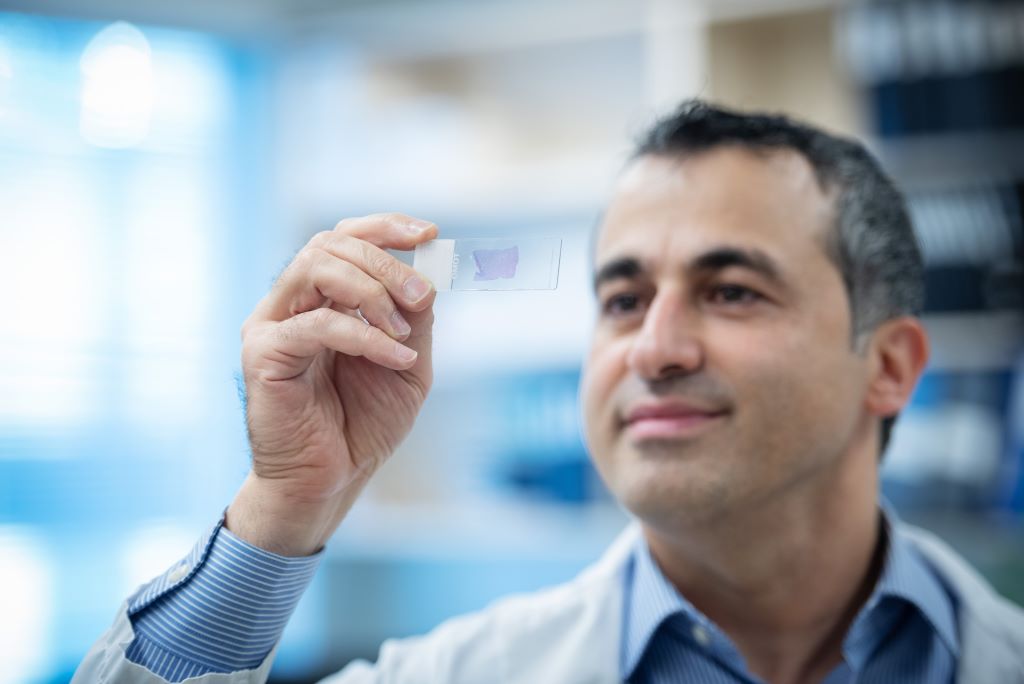
Dr Ali Bashashati observes an endometrial cancer sample on a microscope slide. Credit: University of British Columbia

A discovery by researchers at the University of British Columbia promises to improve care for patients with endometrial cancer, the most common gynaecologic malignancy.  Using artificial intelligence (AI) to spot patterns across thousands of cancer cell images, the researchers have pinpointed a distinct subset of more stubborn endometrial cancer that would otherwise go unrecognised by traditional pathology and molecular diagnostics.

The findings, published in Nature Communications, will help doctors identify patients with high-risk disease who could benefit from more comprehensive treatment.

“Endometrial cancer is a diverse disease, with some patients much more likely to see their cancer return than others,” said Dr Jessica McAlpine, professor at UBC. “It’s so important that patients with high-risk disease are identified so we can intervene and hopefully prevent recurrence. This AI-based approach will help ensure no patient misses an opportunity for potentially lifesaving interventions.”

AI-powered precision medicine

The discovery builds on work by Dr McAlpine and colleagues in the Gynaecologic Cancer Initiative, who in 2013 helped show that endometrial cancer can be classified into four subtypes based on the molecular characteristics of cancerous cells, with each posing a different level of risk to patients.

Dr McAlpine and team then went on to develop an innovative molecular diagnostic tool, called ProMiSE, that can accurately discern between the subtypes. The tool is now used across parts of Canada and internationally to guide treatment decisions.

Yet, challenges remain. The most prevalent molecular subtype, encompassing approximately 50% of all cases, is largely a catch-all category for endometrial cancers lacking discernible molecular features.

“There are patients in this very large category who have extremely good outcomes, and others whose cancer outcomes are highly unfavourable. But until now, we have lacked the tools to identify those at-risk so that we can offer them appropriate treatment,” said Dr McAlpine.

Dr McAlpine turned to long-time collaborator and machine learning expert Dr.Ali Bashashati, an assistant professor of biomedical engineering and pathology and laboratory medicine at UBC, to try and further segment the category using advanced AI methods.

Dr Bashashati and his team developed a deep learning AI model that analyses images of tissue samples collected from patients. The AI was trained to differentiate between different subtypes, and after analysing over 2300 cancer tissue images, pinpointed the new subgroup that exhibited markedly inferior survival rates.

“The power of AI is that it can objectively look at large sets of images and identify patterns that elude human pathologists,” said Dr Bashashati. “It’s finding the needle in the haystack. It tells us this group of cancers with these characteristics are the worst offenders and represent a higher risk for patients.”

Bringing the discovery to patients

The team is now exploring how the AI tool could be integrated into clinical practice alongside traditional molecular and pathology diagnostics.

“The two work hand-in-hand, with AI providing an additional layer on top of the testing we’re already doing,” said Dr McAlpine.

One benefit of the AI-based approach is that it’s cost-efficient and easy to deploy across geographies. The AI analyses images that are routinely gathered by pathologists and healthcare providers, even at smaller hospital sites in rural and remote communities, and shared when seeking second opinions on a diagnosis.

The combined use of molecular and AI-based analysis could allow many patients to remain in their home communities for less intensive surgery, while ensuring those who need treatment at a larger cancer centre can do so.  

“What is really compelling to us is the opportunity for greater equity and access,” said Dr Bashashati. “The AI doesn’t care if you’re in a large urban centre or rural community, it would just be available, so our hope is that this could really transform how we diagnose and treat endometrial cancer for patients everywhere.”

Source: University of British Columbia